Collaborate With Different Teams Implementing Cross Team Collaboration Roadmap
Try Before you Buy Download Free Sample Product
Audience
Editable
of Time
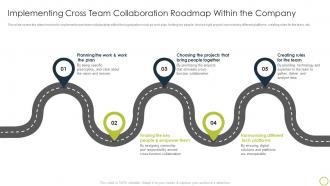
This slide covers the steps involved to implement cross team collaboration within the organization such as work plan, finding key people, choose right project, harmonizing different platforms, creating rules for the team, etc.
People who downloaded this PowerPoint presentation also viewed the following :
Collaborate With Different Teams Implementing Cross Team Collaboration Roadmap with all 6 slides:
Use our Collaborate With Different Teams Implementing Cross Team Collaboration Roadmap to effectively help you save your valuable time. They are readymade to fit into any presentation structure.
FAQs for Collaborate With Different Teams Implementing Cross
Effective remote cross-team collaboration strategies include establishing clear communication protocols, implementing shared digital workspaces, scheduling regular inter-team check-ins, creating cross-functional project teams, and utilizing collaborative technologies like video conferencing and real-time document sharing. These approaches streamline coordination by breaking down silos, enhancing transparency, and maintaining consistent touchpoints, with many organizations finding that structured virtual collaboration ultimately delivers faster project completion and stronger team alignment.
Visual aids like presentation templates enhance cross-team communication by standardizing information formats, reducing misinterpretation, and accelerating decision-making processes across departments. These tools enable marketing, engineering, and operations teams to present complex data consistently, streamline project updates, and maintain visual coherence, ultimately delivering faster project cycles and improved organizational alignment.
Technology streamlines cross team collaboration through unified communication platforms, shared project management systems, real-time document editing, video conferencing solutions, and integrated workflow automation. Tools like Slack, Microsoft Teams, Asana, and Zoom enhance transparency and coordination by centralizing information, reducing email overload, and enabling seamless remote interactions, ultimately delivering faster project completion and improved organizational efficiency.
Organizations measure cross-team collaboration success through metrics like project completion rates, reduced time-to-market, employee engagement scores, knowledge sharing frequency, and cross-functional problem resolution speed. These measurements enable companies to track improved communication effectiveness, streamlined workflows, and enhanced innovation outcomes, with many finding that regular assessment ultimately delivers better resource allocation and competitive advantage.
Common barriers to cross-team collaboration include communication silos, conflicting priorities, unclear roles, resource competition, and misaligned objectives across departments. These challenges can be overcome by establishing clear communication channels, implementing collaborative project management tools, defining shared goals and metrics, and creating cross-functional teams with designated liaisons, ultimately delivering improved operational efficiency and faster project outcomes.
Leadership can encourage collaboration by establishing shared goals, implementing cross-functional project teams, creating open communication channels, and recognizing collaborative achievements. Through regular inter-departmental meetings, collaborative workspaces, and team-building initiatives, organizations streamline knowledge sharing, enhance problem-solving capabilities, and foster innovation, with many companies finding that diverse perspectives ultimately deliver stronger solutions and competitive advantage.
Feedback loops can be structured through regular cross-functional standups, milestone review sessions, shared project dashboards, and rotating team liaisons who facilitate communication. These mechanisms enable teams to identify bottlenecks early, align on priorities, and share resources more effectively, with many organizations finding that structured feedback reduces project delays by 30% while improving solution quality and team accountability.
Best practices for sharing knowledge and resources across teams include establishing centralized documentation systems, implementing regular cross-functional meetings, creating shared digital workspaces, developing standardized communication protocols, and fostering mentorship programs. These approaches streamline information flow by breaking down silos, enhancing transparency, and enabling seamless resource allocation, with many organizations finding that strategic knowledge sharing ultimately delivers faster project completion and improved innovation outcomes.
Team dynamics significantly influence collaboration through communication styles, trust levels, decision-making processes, and conflict resolution approaches. High-performing teams with diverse perspectives, clear roles, and psychological safety enhance innovation and problem-solving, while teams with poor communication or competing priorities face delays and reduced outcomes, ultimately impacting organizational efficiency and competitive advantage.
Cross-team collaboration significantly accelerates innovation by combining diverse perspectives, expertise, and resources from different departments, breaking down silos that often limit creative problem-solving. This strategic approach enables organizations to develop breakthrough products faster, identify market opportunities more effectively, and streamline implementation processes, with many companies finding that collaborative teams generate 30% more innovative solutions than isolated departments.
Teams ensure aligned objectives through establishing clear project goals, defining individual responsibilities, implementing regular check-ins, utilizing shared documentation platforms, and maintaining transparent communication channels. These collaborative frameworks streamline coordination by eliminating silos, preventing duplicated efforts, and ensuring consistent progress tracking, with many organizations finding that structured alignment processes ultimately deliver faster project completion and enhanced cross-functional efficiency.
**INPUT**: What are some case studies or examples of successful cross team collaboration in practice? **OUTPUT**: Successful cross team collaboration examples include Spotify's squad model integrating engineering with marketing, Amazon's two-pizza teams combining product development with customer service, and Toyota's cross-functional quality circles merging manufacturing with design teams. These approaches streamline decision-making, accelerate product launches, and enhance customer experiences, with many organizations finding that strategic team integration ultimately delivers faster innovation cycles and significant competitive advantage. [Word count: 60 words]
Presentation templates can be customized through consistent color schemes, team-specific data visualizations, tailored content frameworks, and standardized formatting elements that reflect each department's unique needs. By incorporating branded design elements, relevant industry examples, and department-focused metrics, organizations streamline communication processes while enhancing audience engagement, ultimately delivering improved cross-functional understanding and more effective decision-making across teams.
**INPUT**: What ethical considerations should be addressed when multiple teams collaborate on sensitive projects? **OUTPUT**: Ethical considerations include data privacy protection, clear confidentiality agreements, defined access controls, transparent decision-making processes, and established accountability frameworks across all participating teams. These protocols streamline collaboration by ensuring regulatory compliance, protecting stakeholder interests, and maintaining trust boundaries, with many organizations finding that structured ethical guidelines ultimately deliver stronger project outcomes and reduced liability risks. [Word count: 58 words]
Cross-team collaboration enhances employee satisfaction by creating meaningful connections, providing diverse learning opportunities, reducing workplace silos, and fostering professional growth through varied project experiences. When employees engage across departments, they develop broader skill sets, feel more valued within the organization, and experience greater job fulfillment, ultimately reducing turnover rates and strengthening company culture.
-
Satisfied with the way SlideTeam resolved my query regarding the right business PPTs that I was having difficulty finding. I found the perfect match with their assistance.
-
Awesomely designed templates, Easy to understand.