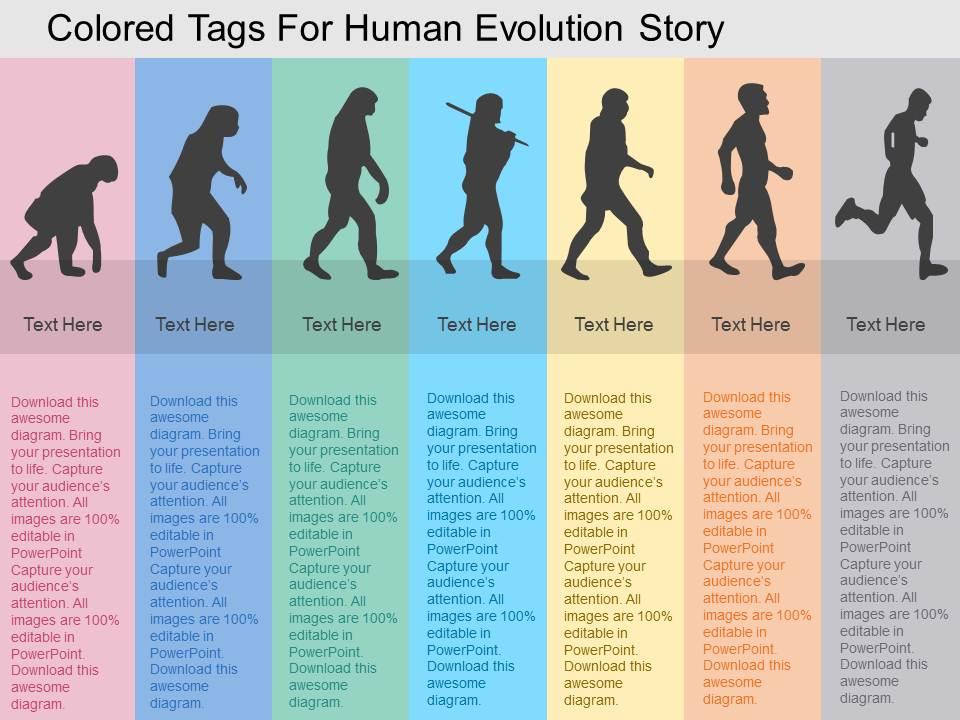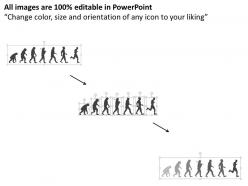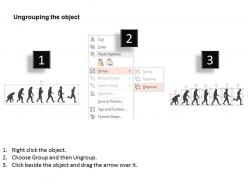
Colored tags for human evolution story flat powerpoint design

Rating:
90%
Colored tags for human evolution story flat powerpoint design
Slide 1 of 4
Favourites Favourites

Try Before you Buy Download Free Sample Product

Audience Impress Your
Audience
Editable 100%
Editable
Time Save Hours
of Time
The Biggest Sale is ending soon in
0
0
:
0
0
:
0
0
Rating:
90%
Popular and reliable PPT presentation diagrams. Capable of executing error free performance to maintain the performance of the presentation. Helps in the process of decision making and forming strategies and plans. Can be downloaded in a matter of seconds. Beneficial for the entrepreneurs, investors, clients and customers. Enables widescreen view for more clarity and vision.

People who downloaded this PowerPoint presentation also viewed the following :

FAQs for Colored tags for human evolution story

Okay so basically you've got Australopithecus around 4-2 million years ago, then Homo habilis shows up with the first tools at 2.8 million. Homo erectus comes next and they're the ones who actually left Africa around 1.8 million years ago. Modern humans (that's us) evolved about 300,000 years ago in Africa. Honestly, the whole timeline is way messier than you'd think - different species were living at the same time and everything overlaps. The big milestones are walking upright, bigger brains, making tools, and developing language. Oh, and definitely check out Jebel Irhoud if you want your mind blown - those discoveries totally changed what we thought we knew about human evolution.

So basically, when African forests started disappearing like 6-7 million years ago, our ancestors had to deal with way more open savanna land. Walking upright became super efficient for getting between trees that were now spread out everywhere. The temperature changes were crazy too - made food sources unpredictable, which probably pushed brain development and tool use. I mean, geography literally shaped who we became! Oh, and if you're digging deeper into this stuff, definitely check out East African Rift Valley research. That's where all the best environmental-evolutionary connections are.

So basically making tools was like brain training for early humans. When you're chipping away at a rock to make a hand axe, you've got to picture what it'll look like, plan each strike, adjust when you mess up. That mental workout over millions of years actually rewired our brains - crazy right? It built up the neural pathways for spatial thinking, planning ahead, and fine motor skills. There's even research showing that when people learn stone tool-making today, it lights up the same brain areas we use for language and complex problem-solving. Wild stuff.

Dude, genetic studies totally changed everything we thought about human evolution. Turns out we hooked up with Neanderthals and Denisovans way more than anyone expected - like, if you're not African, you've got 1-4% Neanderthal DNA right now! Wild, right? Also, humans didn't just leave Africa once like the old stories said. Multiple waves happened. Evolution was messier and faster than we figured, with populations constantly mixing. Honestly, it's pretty cool stuff. You should maybe get one of those ancestry tests if you're curious about your own weird evolutionary backstory.

So basically we've got way bigger brains - like 1,400cc compared to earlier humans. Our posture is completely upright too, plus we're crazy good at making tools. Physically, check out our chins (way more pronounced) and smaller brow ridges versus Neanderthals or Homo erectus. But honestly? The language thing is probably what really separated us. We can do abstract thinking, make art, organize complex societies. Also we're literally the only ones left standing after 40,000 years ago, which is kinda wild when you think about it. For studying, I'd focus on brain size and cultural stuff - that's where the real differences show up.

So basically, when humans left Africa, they created this bottleneck effect. Small groups migrated out, but they only took a fraction of Africa's genetic diversity with them. It's kinda like making a mixtape from someone else's mixtape - you lose songs each time. That's why African populations are still the most genetically diverse today. The farther people traveled from Africa, the less genetic variation they ended up with. Places like the Americas and Oceania? Way less diverse genetically. Geographic distance from Africa usually means less genetic variation - pretty wild how that works out.

So basically, genetic studies show that all non-African populations have way less genetic diversity than African ones. We're all descended from this small group that left Africa around 70,000 years ago - pretty crazy when you think about it. Archaeological evidence backs this up too, with tool-making patterns spreading along migration routes. Plus you've got fossils of anatomically modern humans showing up outside Africa in that same timeframe. The mitochondrial DNA research is fascinating though - it all traces back to African lineages. Look up "molecular clock" studies if you want the nitty-gritty on timing these migrations.

Dude, DNA testing completely changed the game for understanding where we all came from. Before this, scientists were basically just guessing from old bones and fossils. Now we can actually map out how ancient people moved around the world and when different groups split off. The crazy part? Turns out modern humans were hooking up with Neanderthals and Denisovans way more than anyone thought. Human migration was honestly a total mess - nothing like those neat timelines you see in textbooks. Companies like 23andMe basically use the same tech if you want to check out your own family tree.

Oh dude, the Neanderthal genome totally flipped everything we thought we knew! Turns out when humans left Africa, we didn't just replace Neanderthals - we hooked up with them. If you're not African, you've got like 1-2% Neanderthal DNA right now. Wild stuff. Some of those genes actually helped us survive in new places, though we ditched others pretty quickly. Evolution's messier than textbooks make it seem - more like tangled family trees than clean branches. Companies like 23andMe will even tell you your exact percentage, which is kind of cool I guess.

So basically language let early humans coordinate hunting and share complex strategies way better than other primates. They could warn each other about dangers and actually pass knowledge down instead of everyone starting from zero - which honestly seems obvious but was huge back then. Groups got way bigger because people could talk through conflicts rather than just fighting. Plus you could have specialized jobs since techniques could be explained. The whole thing worked because language created shared stories and cultural rules that kept everyone organized. It's wild that we're still doing the same thing in work meetings today.

So basically when Africa dried up like 6-7 million years ago, our ancestors got kicked out of the forests and had to figure out walking upright on open land. Then the ice ages hit - and wow, talk about pressure. Early humans developed bigger brains, better tools, language for coordinating hunts. Climate kept changing and we had to innovate or literally die out. Oh and there's this thing called the "variability selection hypothesis" that explains it way better than I can - definitely worth googling if you're into this stuff.

Yeah, we're definitely still evolving! Just not the sci-fi way you'd think. Like, some people developed lactose tolerance pretty recently in evolutionary terms, and there's cool stuff happening with high-altitude adaptation and malaria resistance. What's crazy is that our own technology is now driving evolution - antibiotics are creating resistant bacteria, and medicine changes which traits get passed down. I read somewhere that you can actually track genetic diversity patterns happening right now. Short sentences feel weird but whatever. Population genetics studies are wild if you're into that stuff.

So basically, culture and biology evolved together in humans. When our ancestors started farming, people who could digest milk had an advantage - that's why lactose tolerance spread. Same thing happened with starch digestion once cooking became common. Even mate selection plays a role. If a culture values certain traits, those genes get passed down more. Pretty crazy how fast this stuff can happen too - we're talking thousands of years, not millions. Your brain size, immune system, skin color... all shaped by this culture-biology combo. Makes you wonder what other "human nature" things are actually just evolution responding to how we lived.

So your ancestors were hunter-gatherers until about 10,000 years ago, then farming completely flipped everything. People started settling down permanently instead of wandering around. Population exploded. You suddenly needed someone to make tools, someone else to store grain, leaders to organize it all - crazy how fast society got complicated. Those permanent settlements became the first real civilizations. Down side though? Living packed together with animals brought new diseases we'd never dealt with. But yeah, if you're wondering why we have cities and governments and all that, it traces back to farming. Pretty much changed everything.

Honestly, watching chimps and bonobos is like getting a sneak peek into our own past. We share 98% DNA with them, so their social stuff - forming alliances, settling fights, sharing resources - probably looks a lot like what our ancestors were doing before anyone could write things down. It's wild when you think about it. You can see how they handle group drama, raise babies, figure out who's in charge. I got really into some primate documentaries last year and it totally changed how I think about human behavior. Worth looking into if you're curious about why we cooperate or fight the way we do.

Ratings and Reviews

90% of 100
Review Form
Write a review
Most Relevant Reviews
  1. 100%

    by Dirk Kelley

    Best Representation of topics, really appreciable.
  2. 80%

    by Darnell Tucker

    Great quality slides in rapid time.

2 Item(s)

per page: