


Beginn eines IT-Projekts Powerpoint-Präsentationsfolien
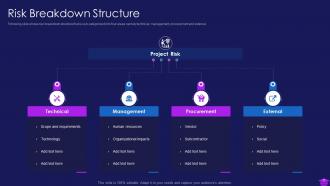
Ein gut geplanter Projektstart stellt sicher, dass Organisationen in die richtige Richtung gehen, um die gemeinsamen Ziele zu erreichen. Hier ist ein effizient gestalteter Beginn eines IT-Projekts, von dem Unternehmen profitieren werden, die ihr IT-Projekt der Systemaktualisierung und -wartung erfolgreich abschließen möchten. Das Unternehmen kann die Folie verwenden, um den Projekterfolg sicherzustellen, indem es Herausforderungen überwindet, um die Herausforderungen früherer Projekte, geringe Produktivität am Arbeitsplatz, schlechte Kommunikation und Risikomanagement zu überwinden. Um kritische Herausforderungen zu bewältigen, können Unternehmen Abschnitte verwenden, nämlich die Einrichtung eines Projektmanagementteams und die Zuweisung von Verantwortlichkeiten, die die erforderlichen Fähigkeiten abdecken, die RACI-Matrix zur Zuweisung von Rollen und Verantwortlichkeiten, den Abschnitt über effektives Risikomanagement, der die Risikoaufschlüsselungsstruktur und den Minderungsplan abdeckt, den Abschnitt zur Verwaltung einer effektiven Kommunikation, der das Projekt abdeckt Kommunikationsplan. Unternehmen können Zeitleisten für die Implementierung und Checklisten zur Benennung von Abschnitten für das Projektmanagement verwenden, die Projekt-Kickoff- und Aktivitäts-Checklisten für eine erfolgreiche IT-Projektimplementierung abdecken. Um Faktoren zu identifizieren, die den Projekterfolg beeinflussen, kann das Unternehmen die Folie Faktoren verwenden, die den Projekterfolg beeinflussen. Dashboards zur Bewertung der Projektleistung können vom Unternehmen zur Bewertung des Projekterfolgs verwendet werden. Passen Sie diese zu 100 Prozent bearbeitbare Vorlage jetzt an.




















You must be logged in to download this presentation.


Do you want to remove this product from your favourites?
Merkmale dieser PowerPoint-Präsentationsfolien:
Stellen Sie eine informative PPT zu verschiedenen Themen bereit, indem Sie diese PowerPoint-Präsentationsfolien zum Beginn eines IT-Projekts verwenden. Dieses Deck fokussiert und implementiert bewährte Branchenpraktiken und bietet so einen Überblick über das Thema aus der Vogelperspektive. Umfasst von einundfünfzig Folien, die mit hochwertigen Bildern und Grafiken gestaltet wurden, ist dieses Deck ein komplettes Paket zum Verwenden und Herunterladen. Alle Folien, die in diesem Deck angeboten werden, unterliegen unzähligen Änderungen und machen Sie so zu einem Profi im Liefern und Erziehen. Sie können die Farbe der Grafik, des Hintergrunds oder alles andere nach Ihren Bedürfnissen und Anforderungen ändern. Aufgrund seines anpassungsfähigen Layouts eignet es sich für jede Branche.

People who downloaded this PowerPoint presentation also viewed the following :
Inhalt dieser Powerpoint-Präsentation
Folie 1 : Diese Folie stellt den Beginn eines IT-Projekts vor. Geben Sie Ihren Firmennamen an und beginnen Sie.
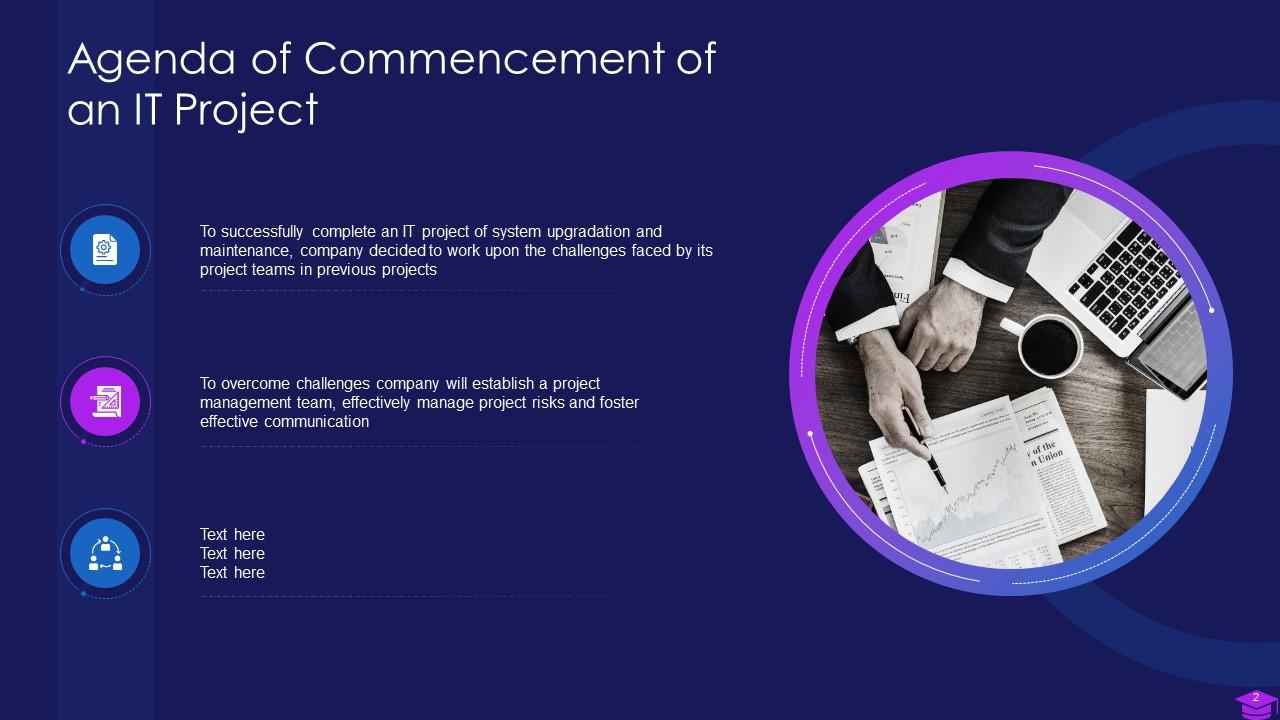
Folie 2 : Diese Folie zeigt die Tagesordnung für den Beginn eines IT-Projekts.
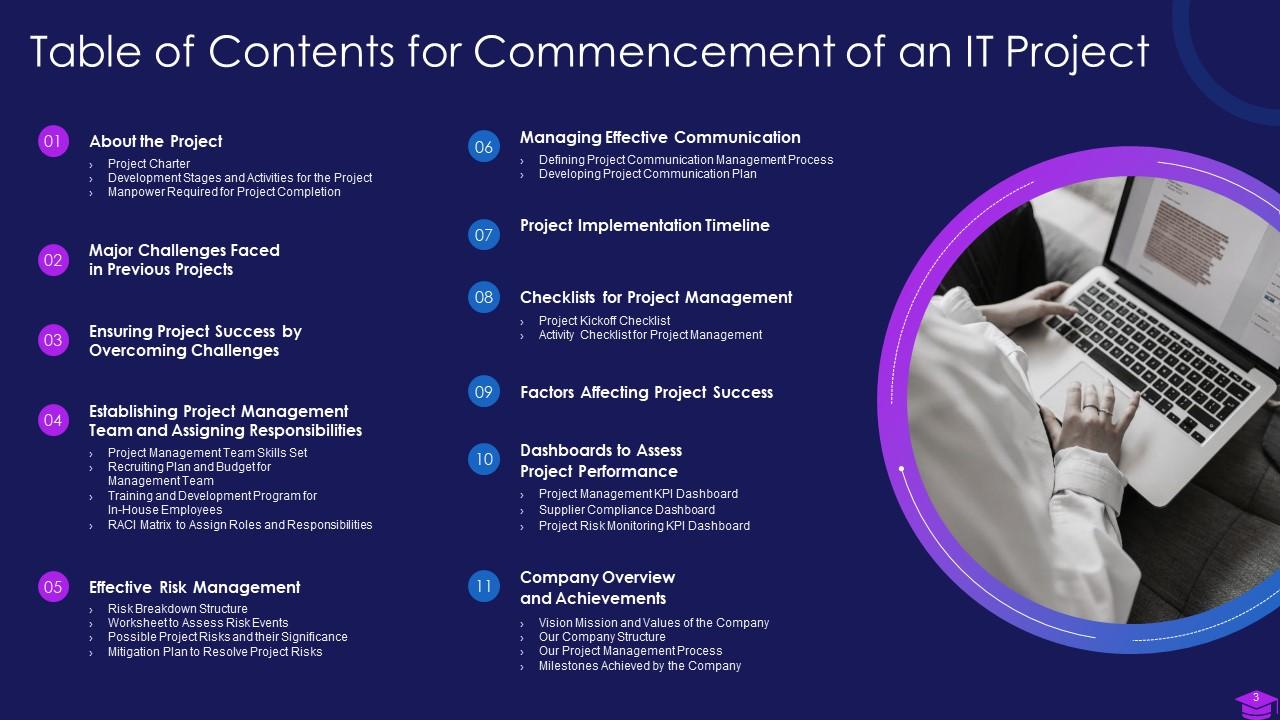
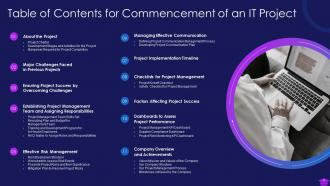
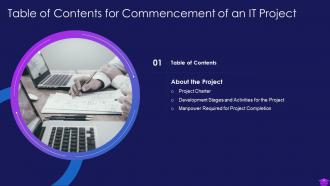
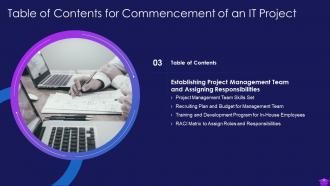
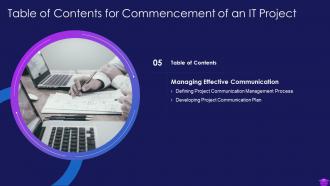
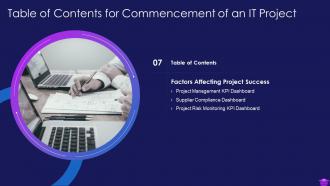
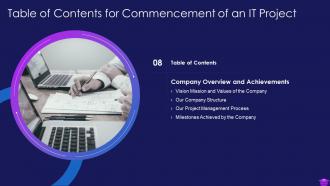
Folie 3 : Diese Folie zeigt das Inhaltsverzeichnis für den Beginn eines IT-Projekts.
Folie 4 : Diese Folie zeigt Titel für Themen, die als nächstes in der Vorlage behandelt werden sollen.
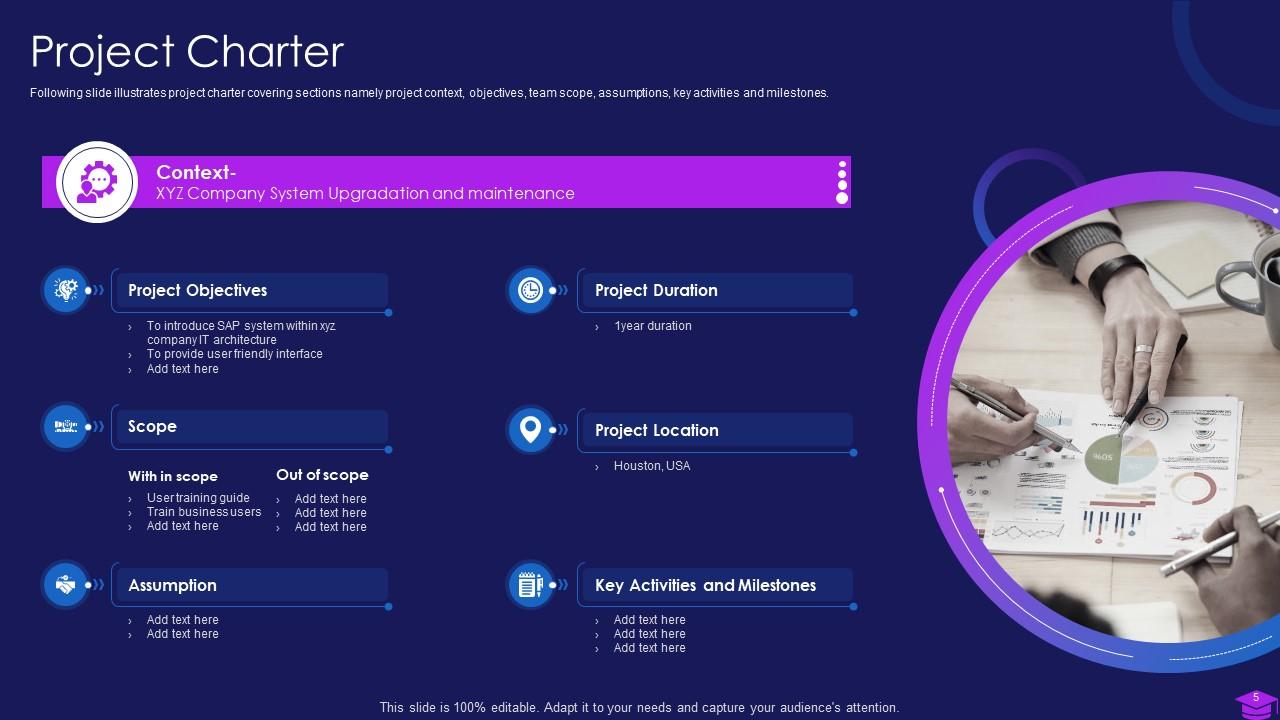
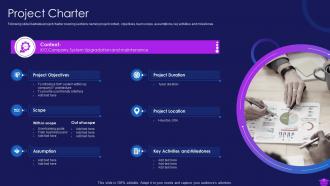
Folie 5 : Die folgende Folie veranschaulicht die Projektcharta, die Abschnitte abdeckt, nämlich Projektkontext, Ziele, Teamumfang usw.
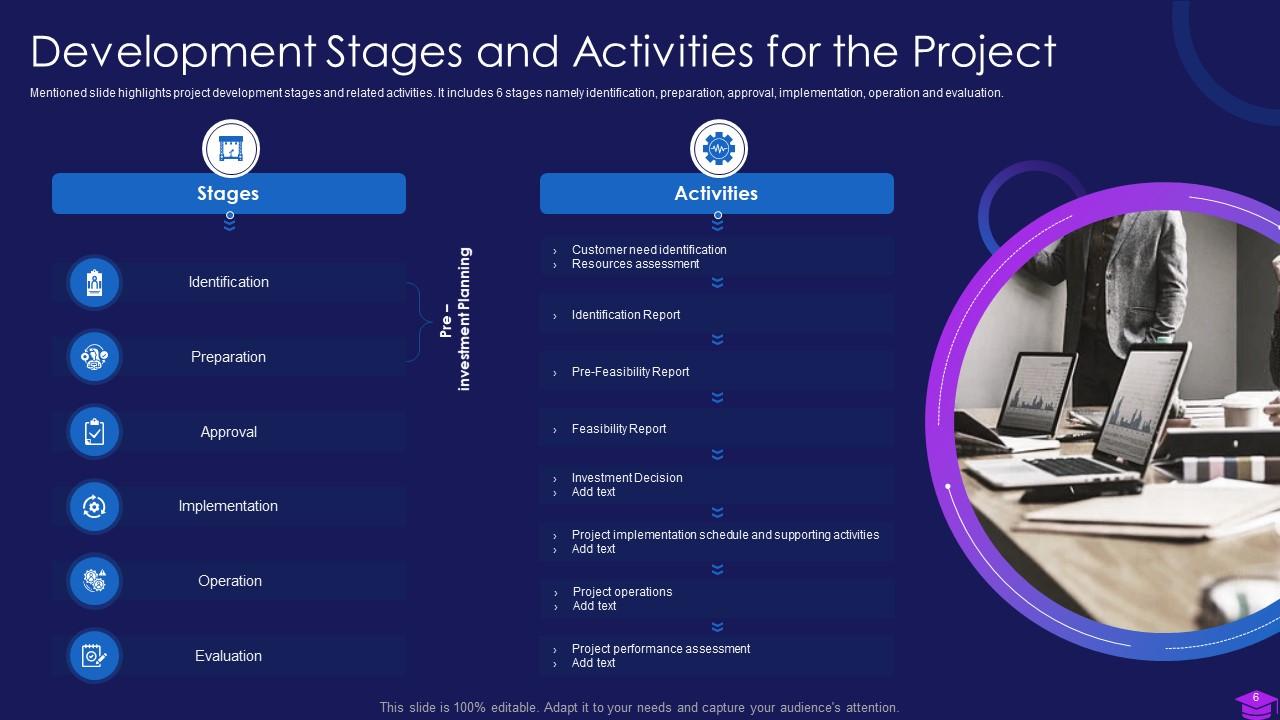
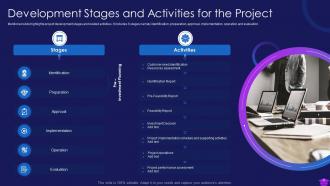
Folie 6 : Diese Folie zeigt Entwicklungsphasen und Aktivitäten für das Projekt.
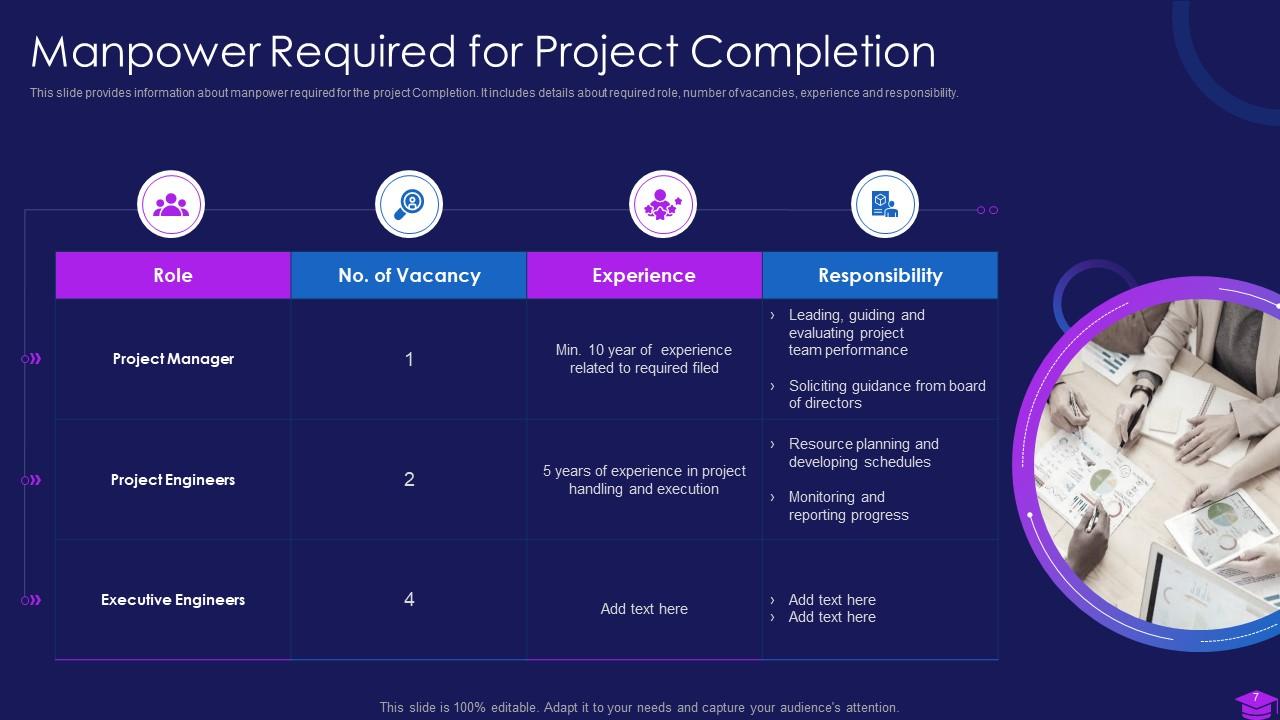
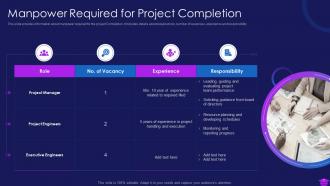
Folie 7 : Diese Folie stellt die für den Projektabschluss erforderliche Arbeitskraft dar.
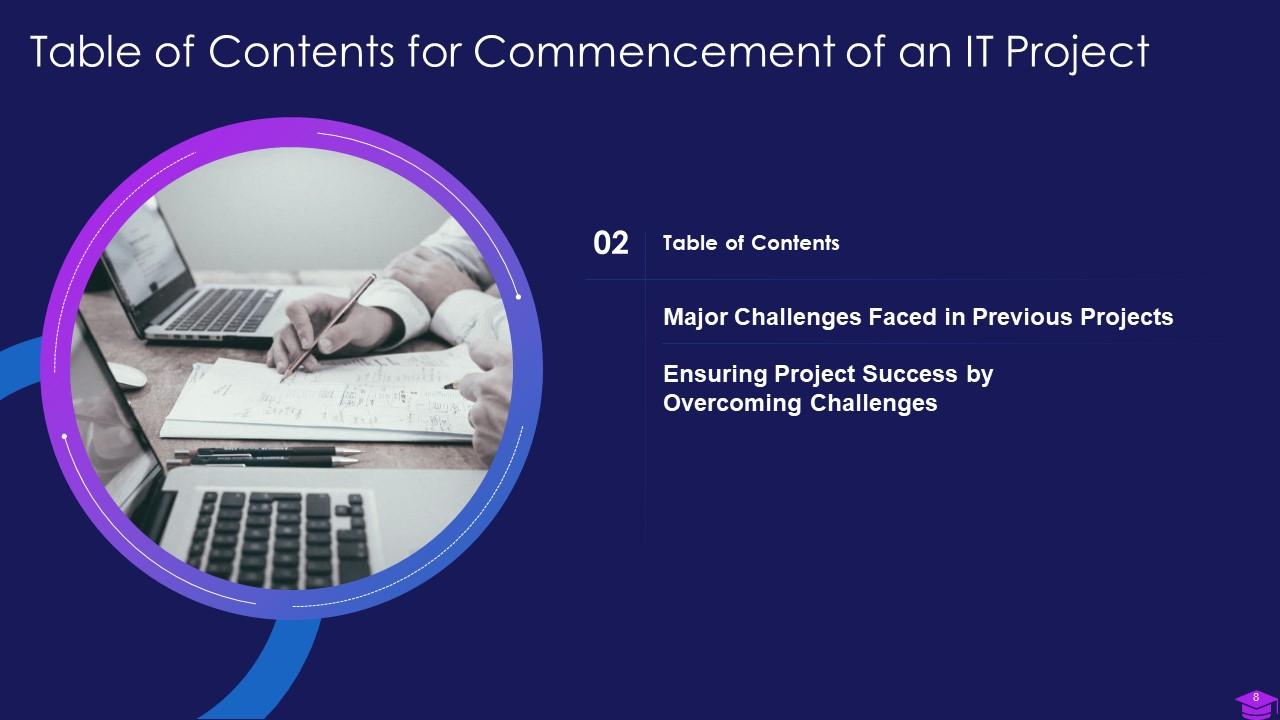
Folie 8 : Diese Folie zeigt Titel für Themen, die als nächstes in der Vorlage behandelt werden sollen.
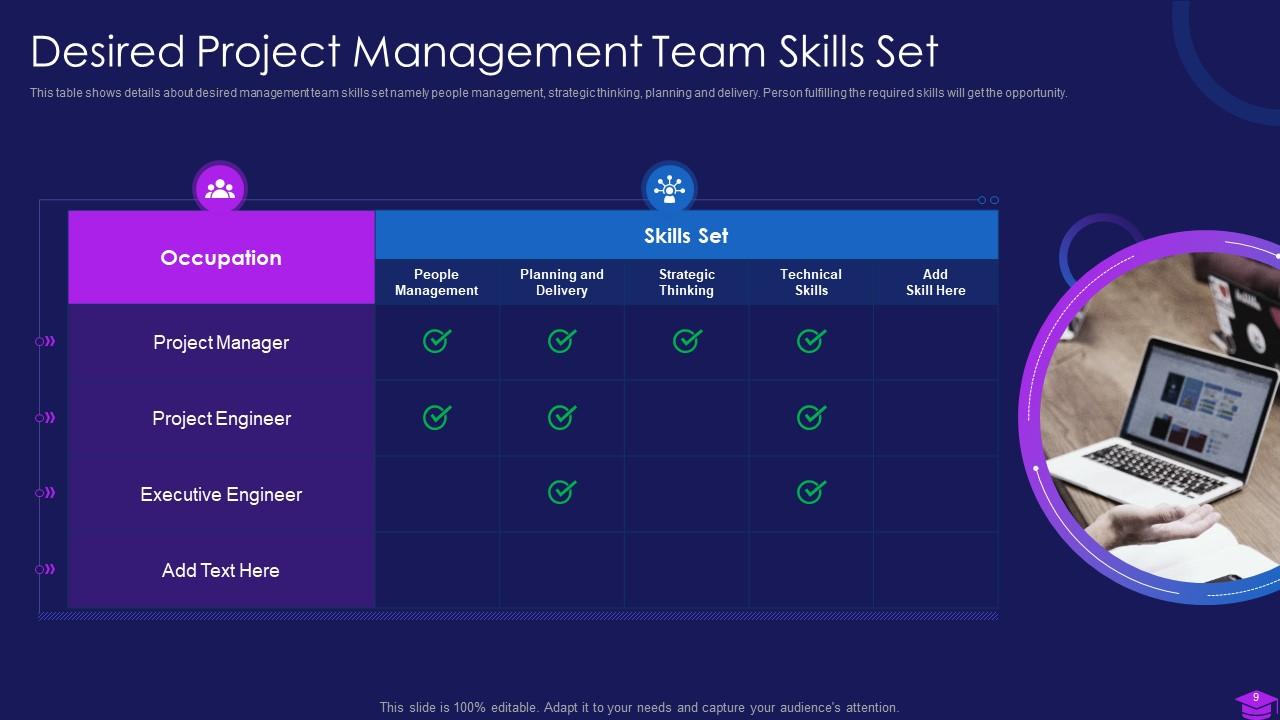
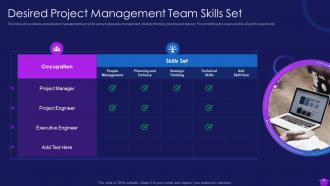
Folie 9 : Diese Folie zeigt die gewünschten Fähigkeiten des Projektmanagementteams.
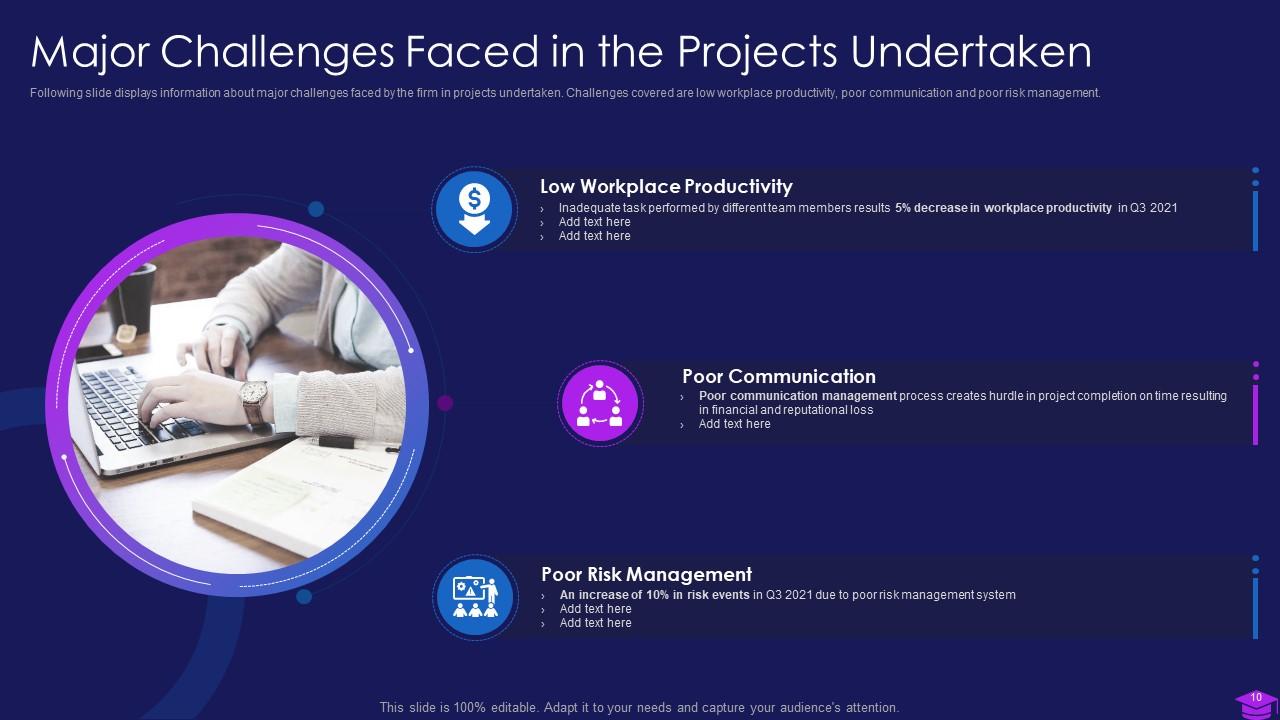
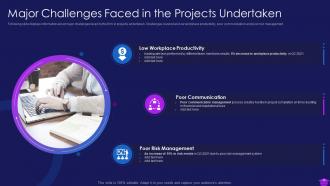
Folie 10 : Diese Folie stellt die wichtigsten Herausforderungen vor, denen sich das Unternehmen bei durchgeführten Projekten gegenübersieht.
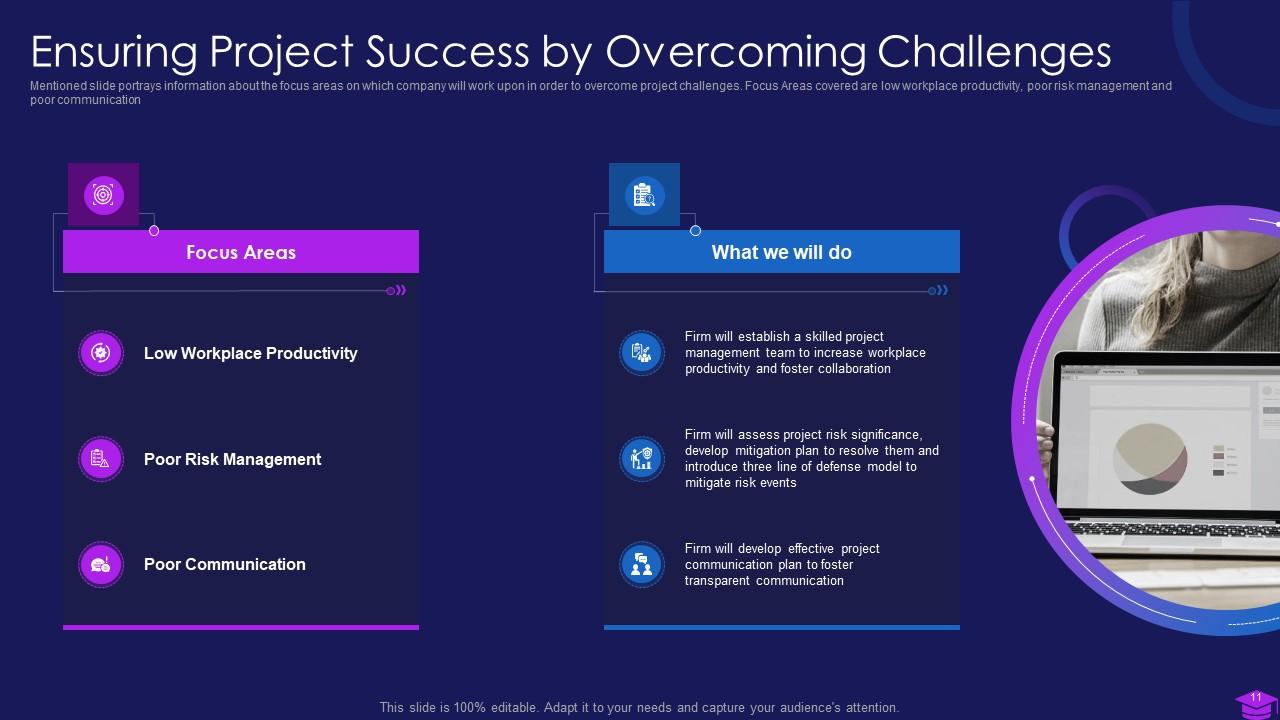
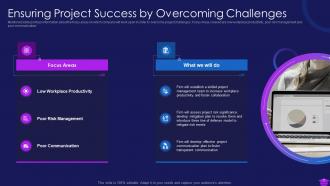
Folie 11 : Diese Folie zeigt die Gewährleistung des Projekterfolgs durch die Bewältigung von Herausforderungen.
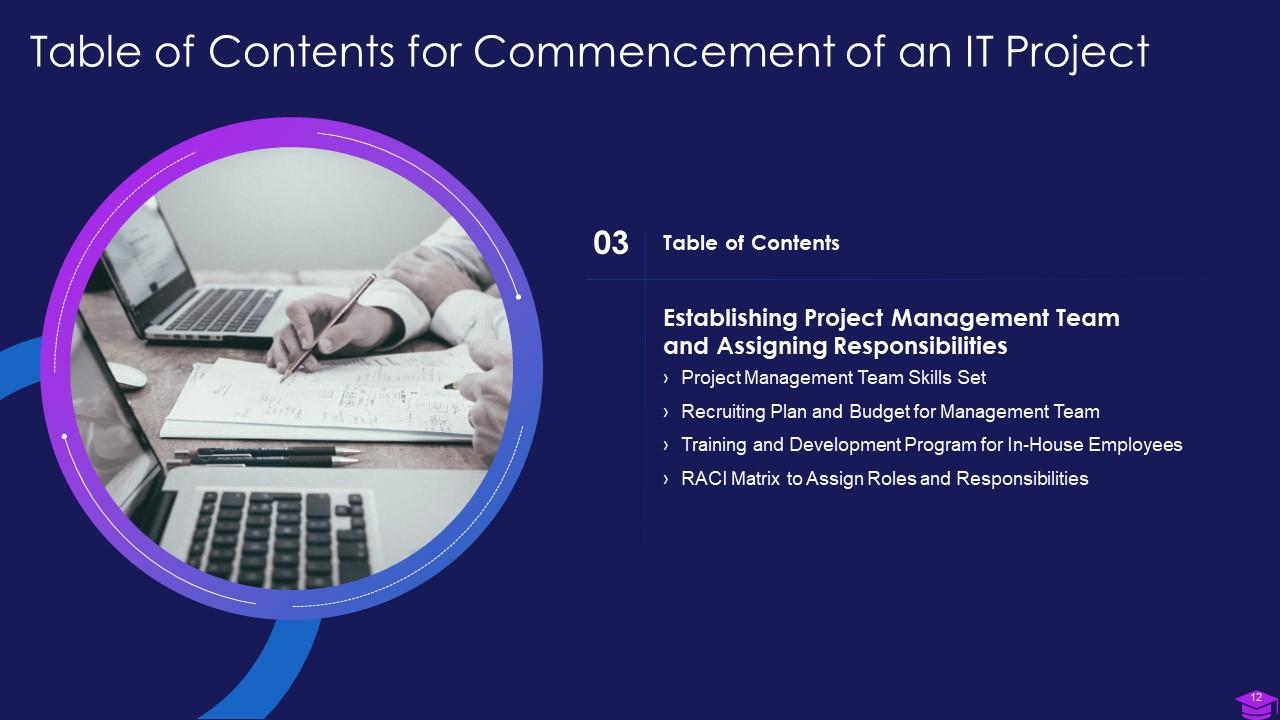
Folie 12 : Diese Folie zeigt Titel für Themen, die als nächstes in der Vorlage behandelt werden sollen.
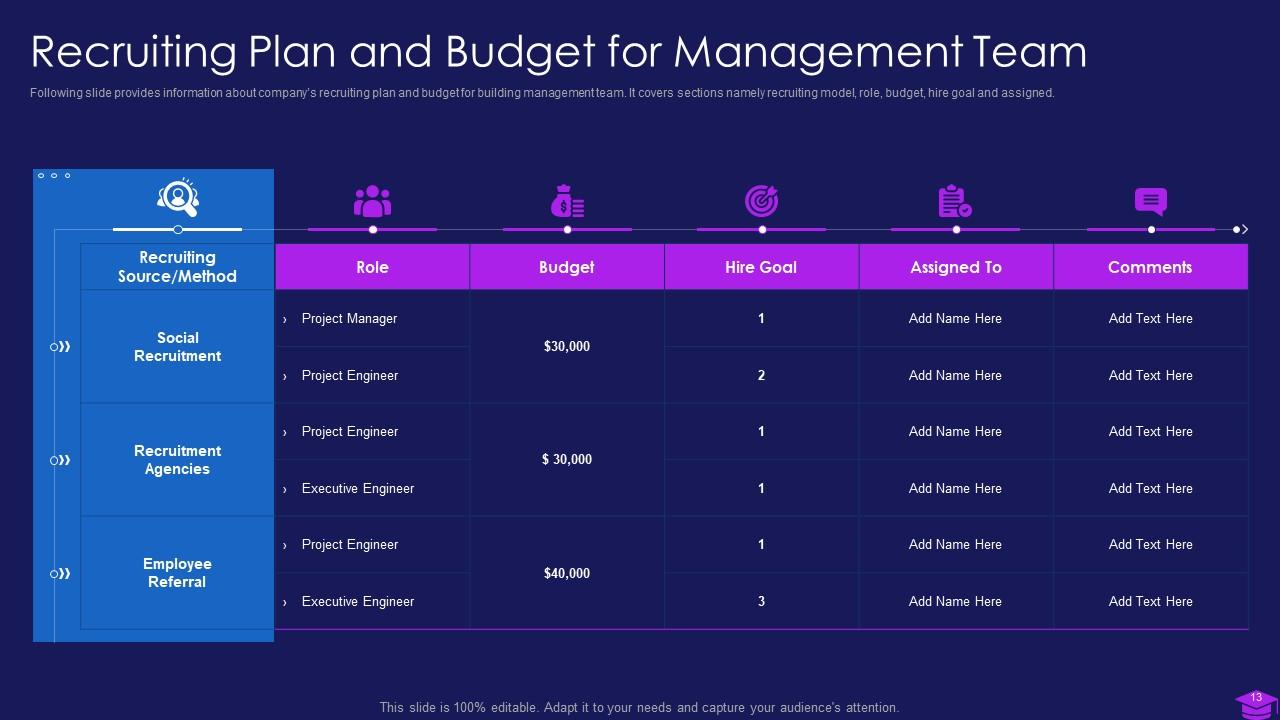
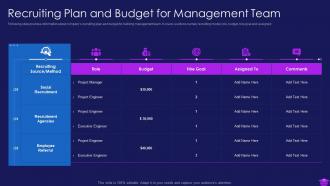
Folie 13 : Diese Folie zeigt den Rekrutierungsplan und das Budget für das Managementteam.
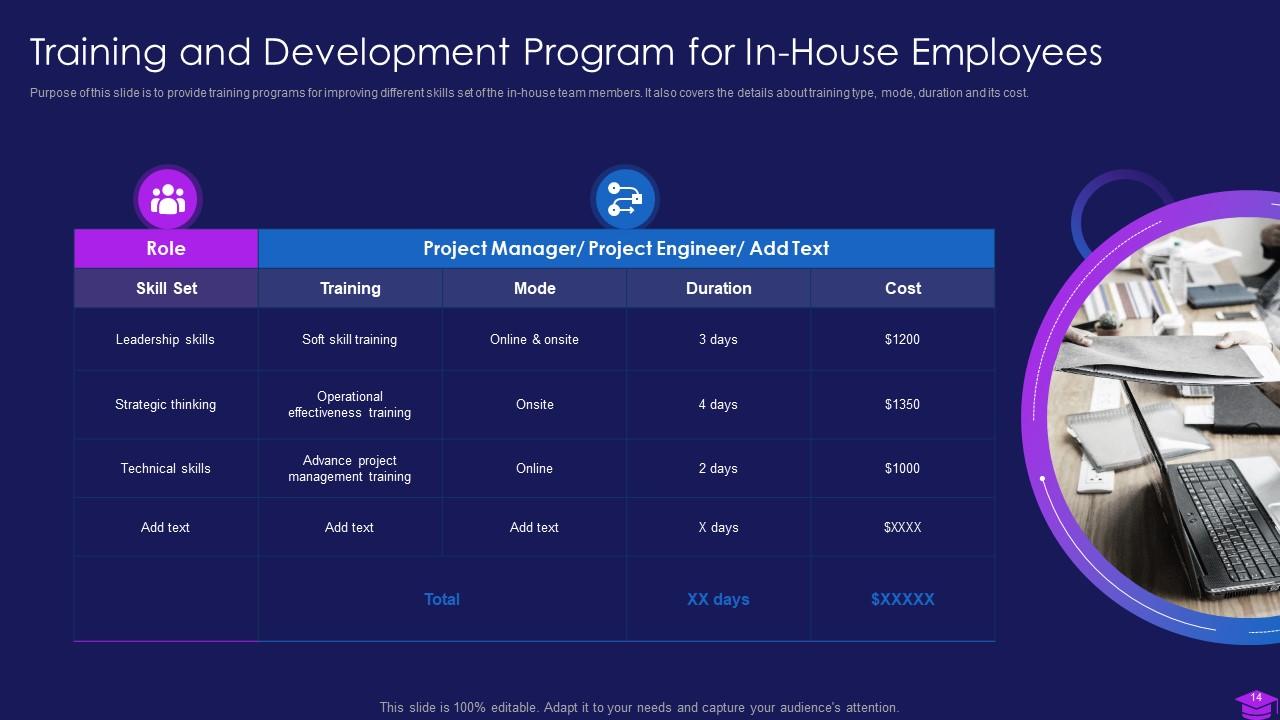
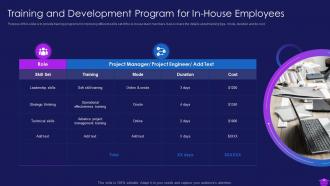
Folie 14 : Diese Folie zeigt das Schulungs- und Entwicklungsprogramm für interne Mitarbeiter.
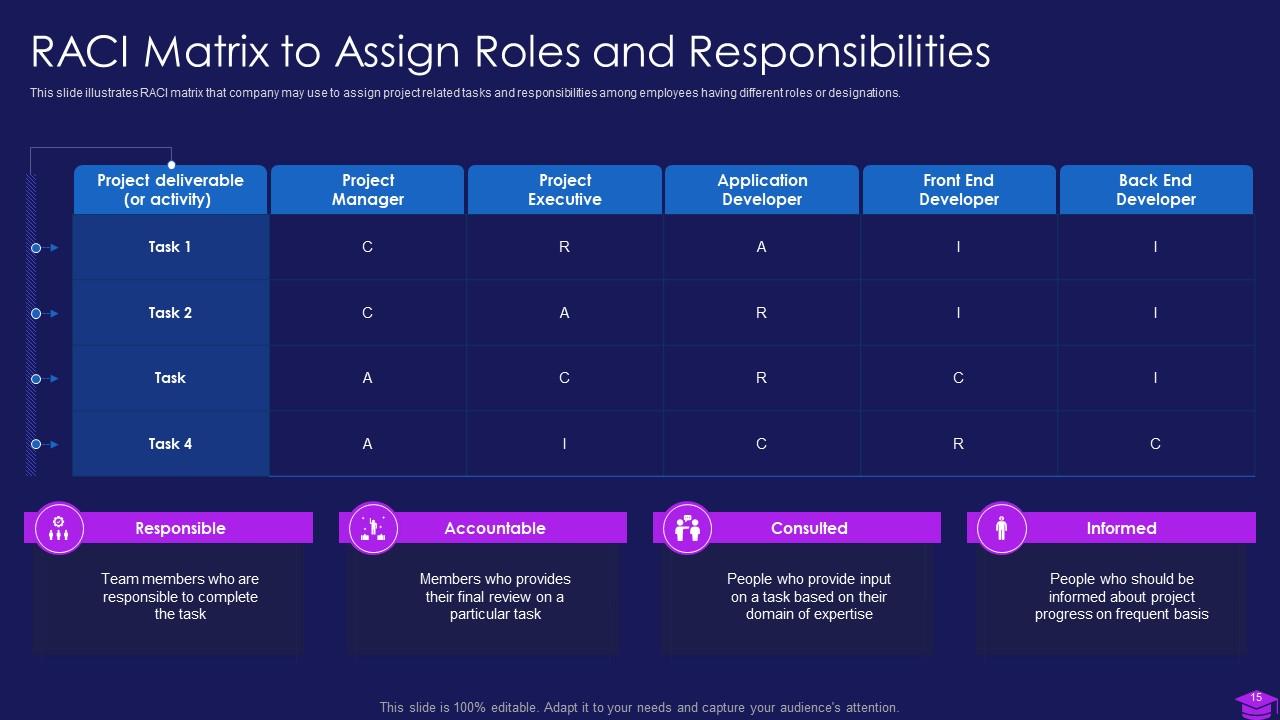
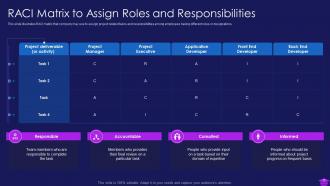
Folie 15 : Diese Folie stellt die RACI-Matrix dar, um Rollen und Verantwortlichkeiten zuzuweisen.
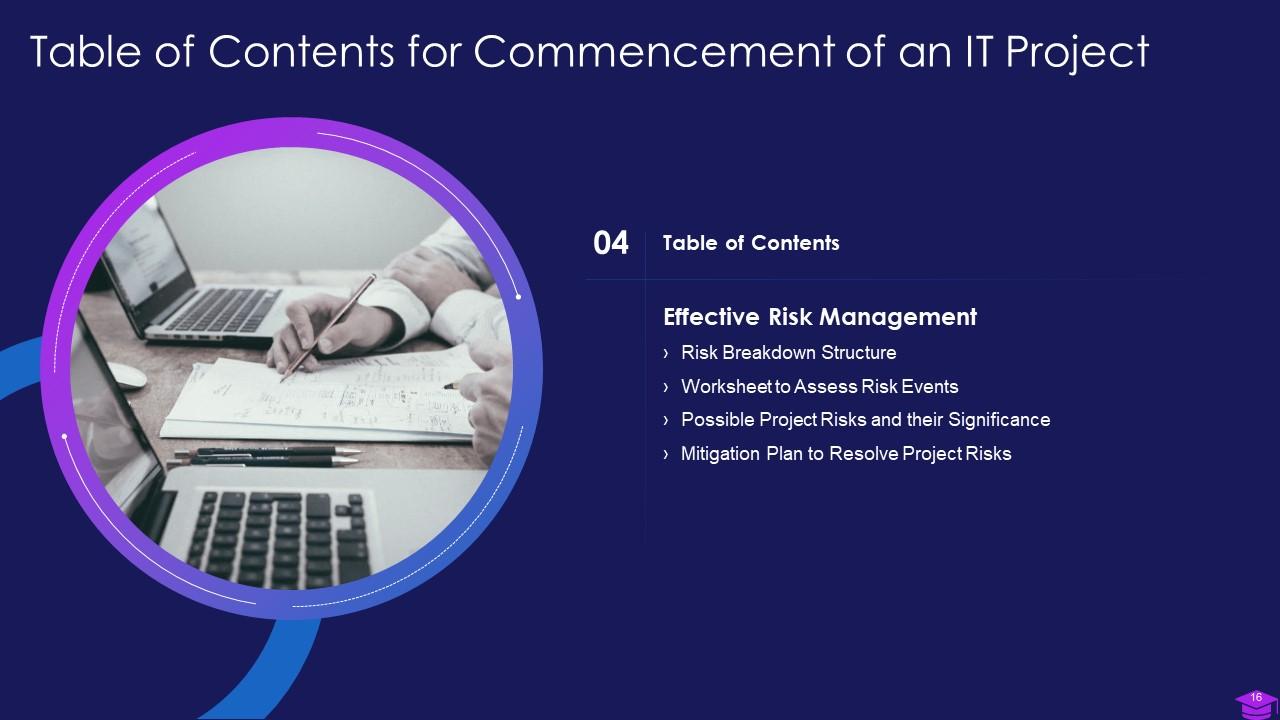
Folie 16 : Diese Folie zeigt Titel für Themen, die als nächstes in der Vorlage behandelt werden sollen.
Folie 17 : Die folgende Folie zeigt die Risikostruktur, die in vier Bereiche unterteilt ist.
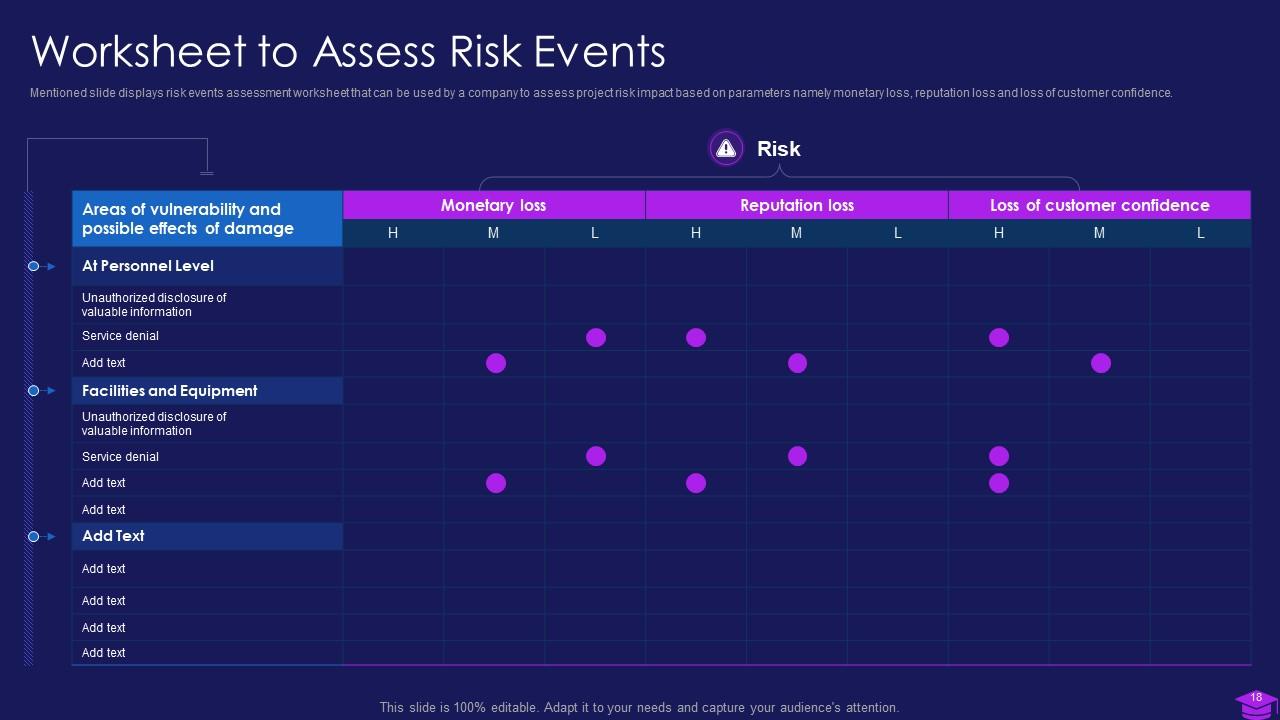
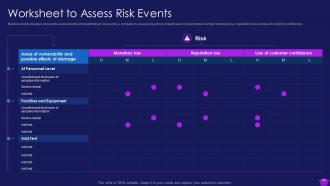
Folie 18 : Die erwähnte Folie zeigt ein Arbeitsblatt zur Bewertung von Risikoereignissen, das von einem Unternehmen verwendet werden kann.
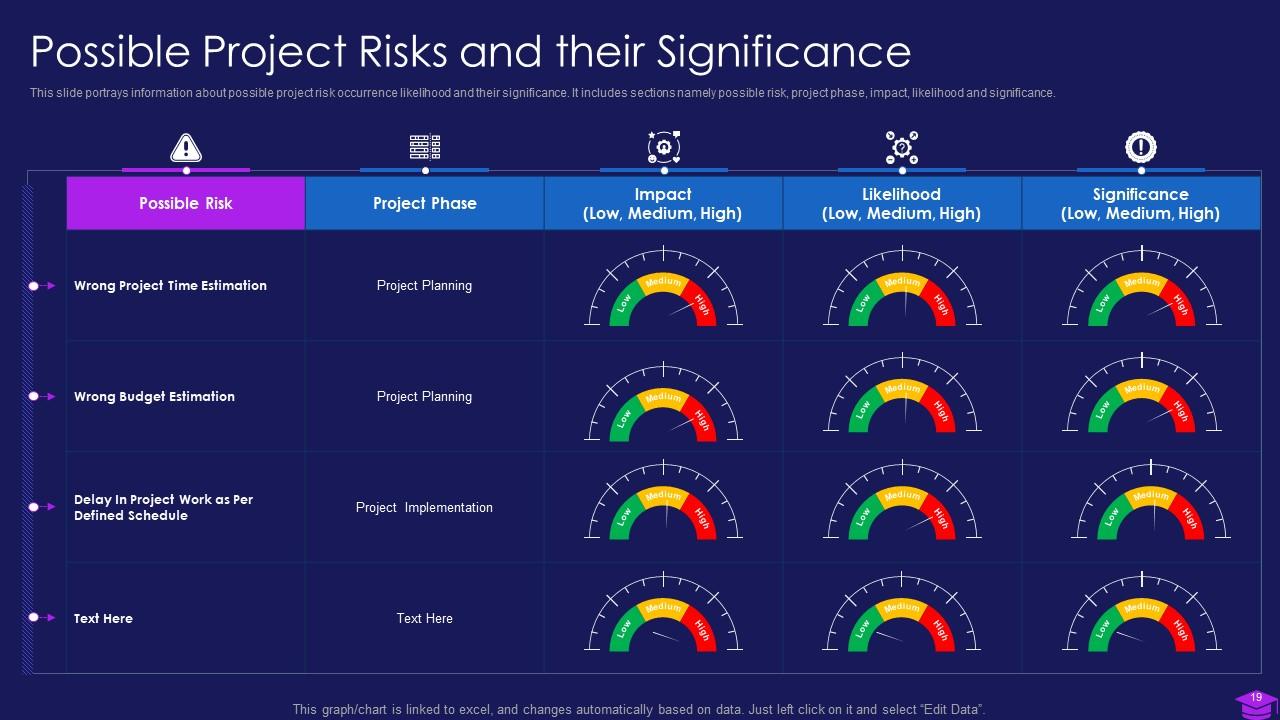
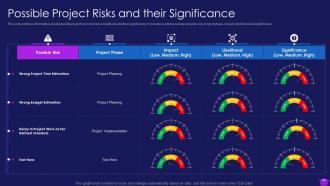
Folie 19 : Diese Folie zeigt Informationen über die Eintrittswahrscheinlichkeit möglicher Projektrisiken.
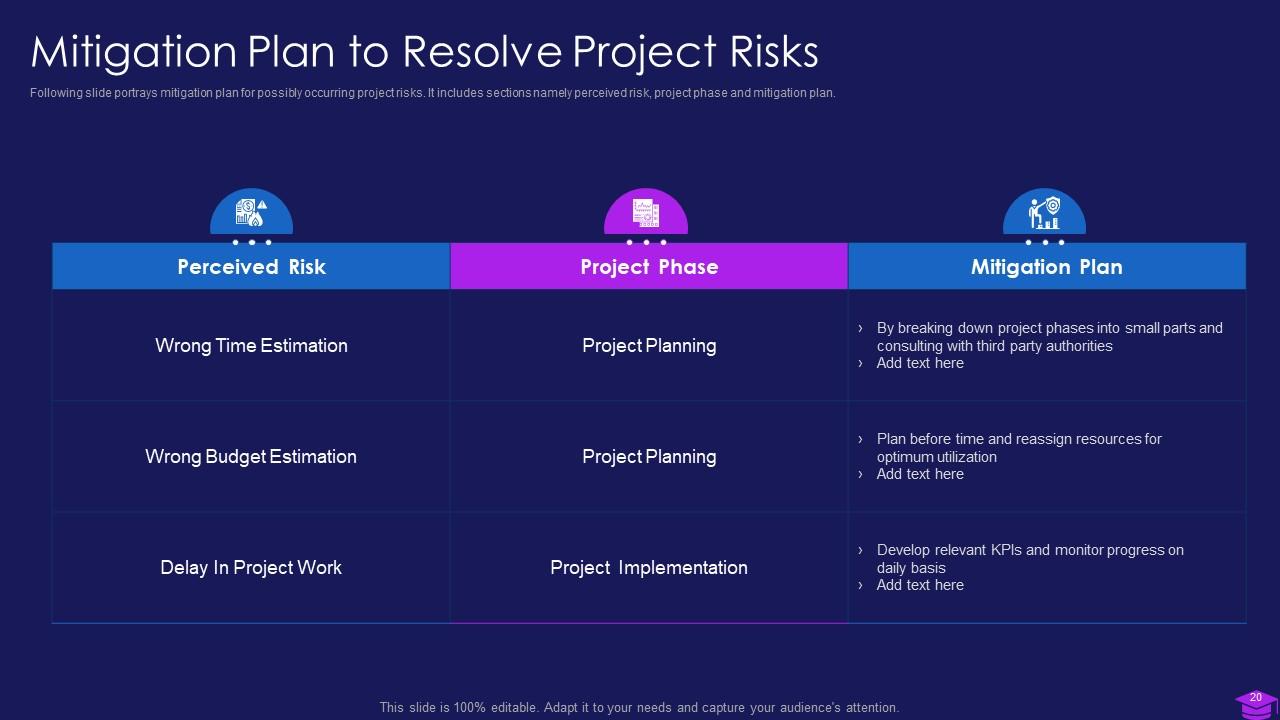
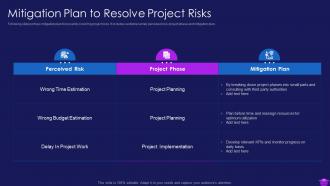
Folie 20 : Diese Folie zeigt Minderungsplan für möglicherweise auftretende Projektrisiken.
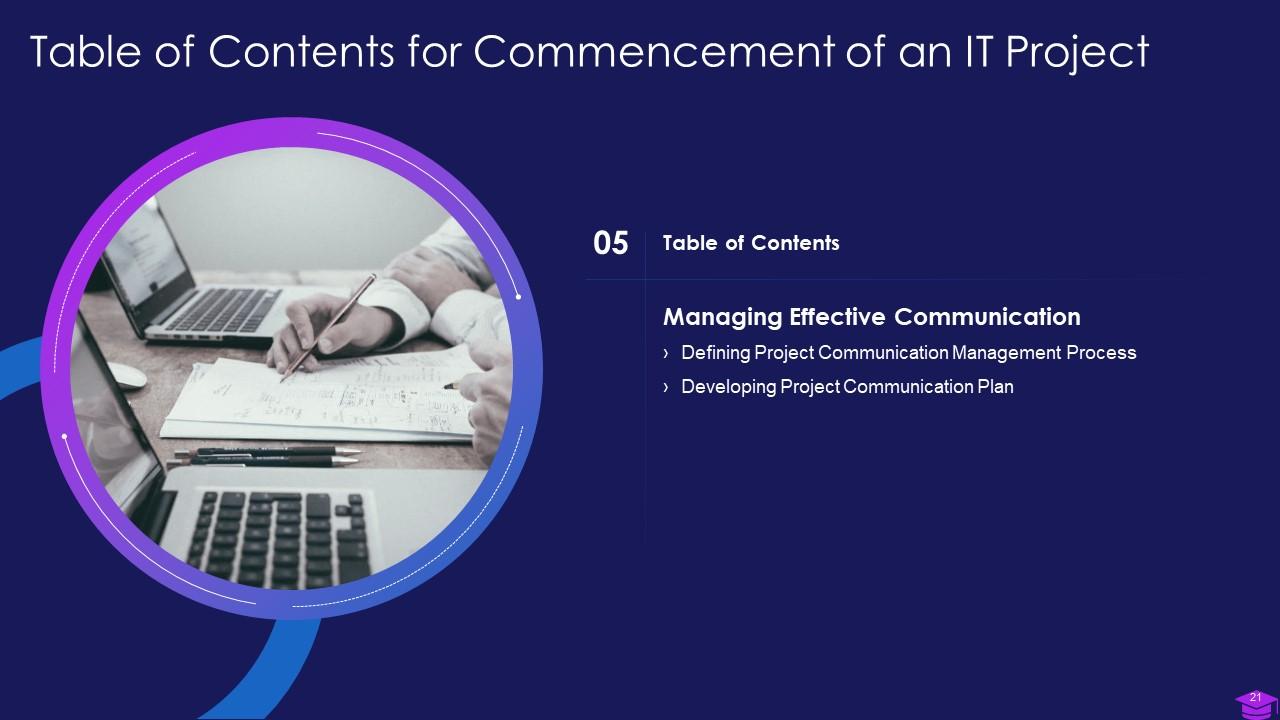
Folie 21 : Diese Folie zeigt Titel für Themen, die als nächstes in der Vorlage behandelt werden sollen.
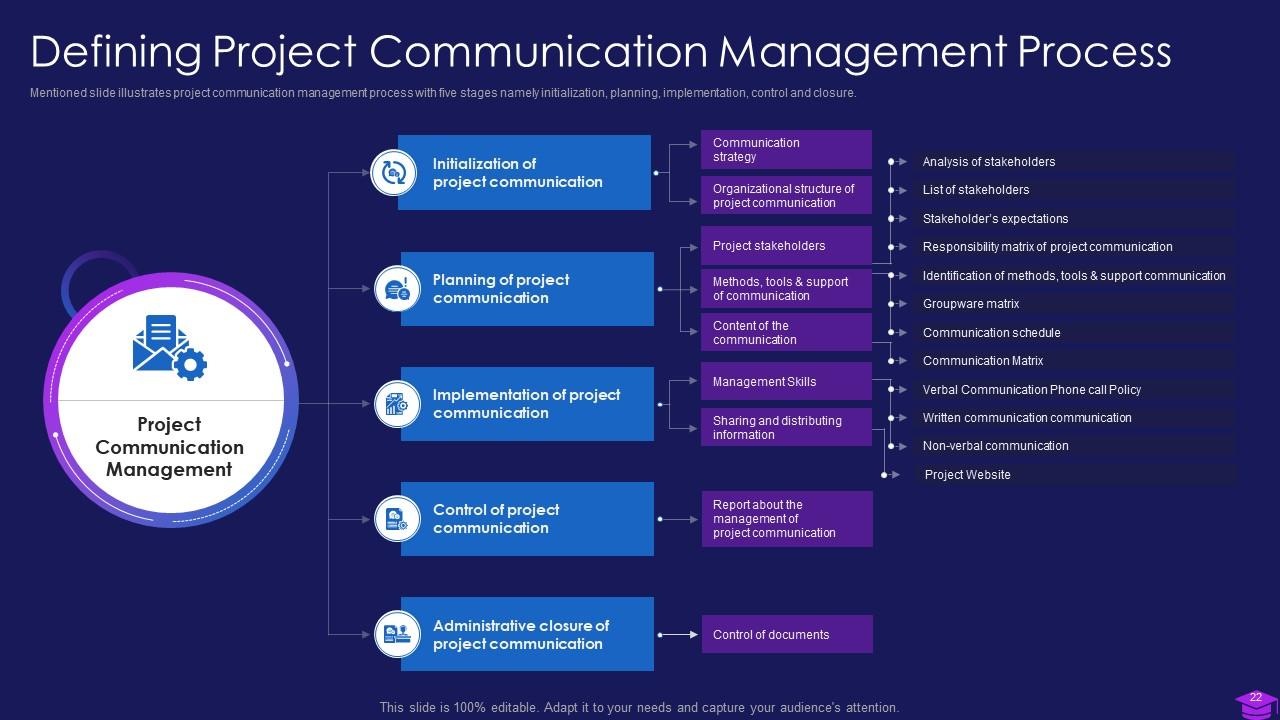
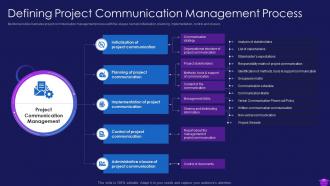
Folie 22 : Diese Folie zeigt den Prozess des Projektkommunikationsmanagements mit fünf Phasen, nämlich Initialisierung, Planung, Implementierung usw.
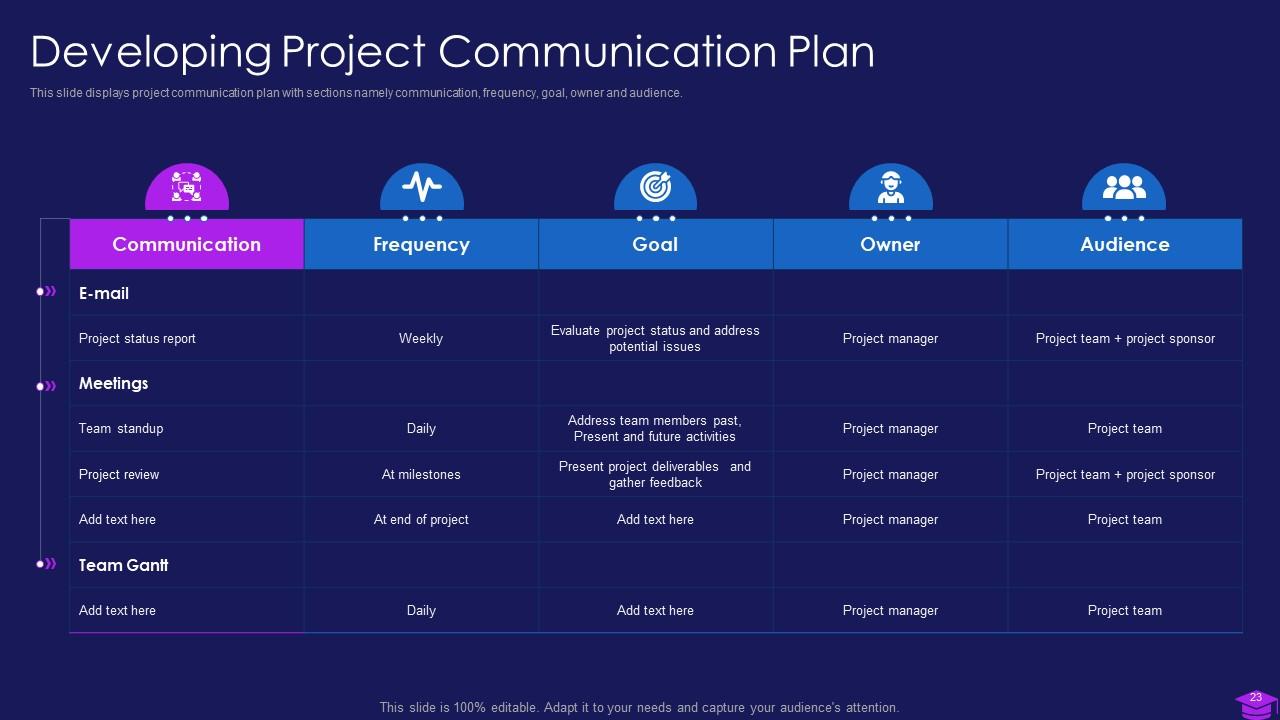
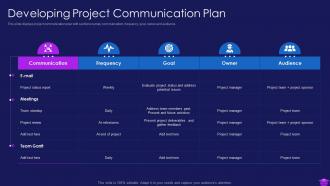
Folie 23 : Diese Folie zeigt den Projektkommunikationsplan mit den Abschnitten Kommunikation, Häufigkeit, Ziel usw.
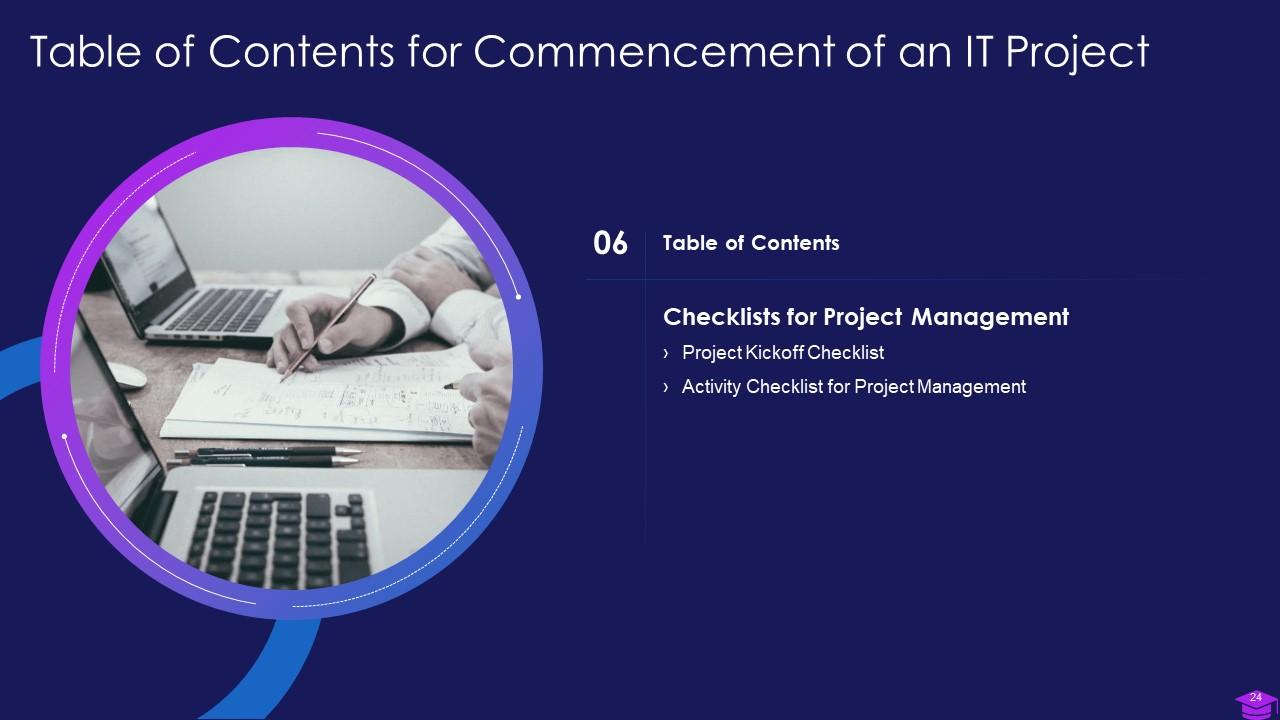
Folie 24 : Diese Folie zeigt Titel für Themen, die als nächstes in der Vorlage behandelt werden sollen.
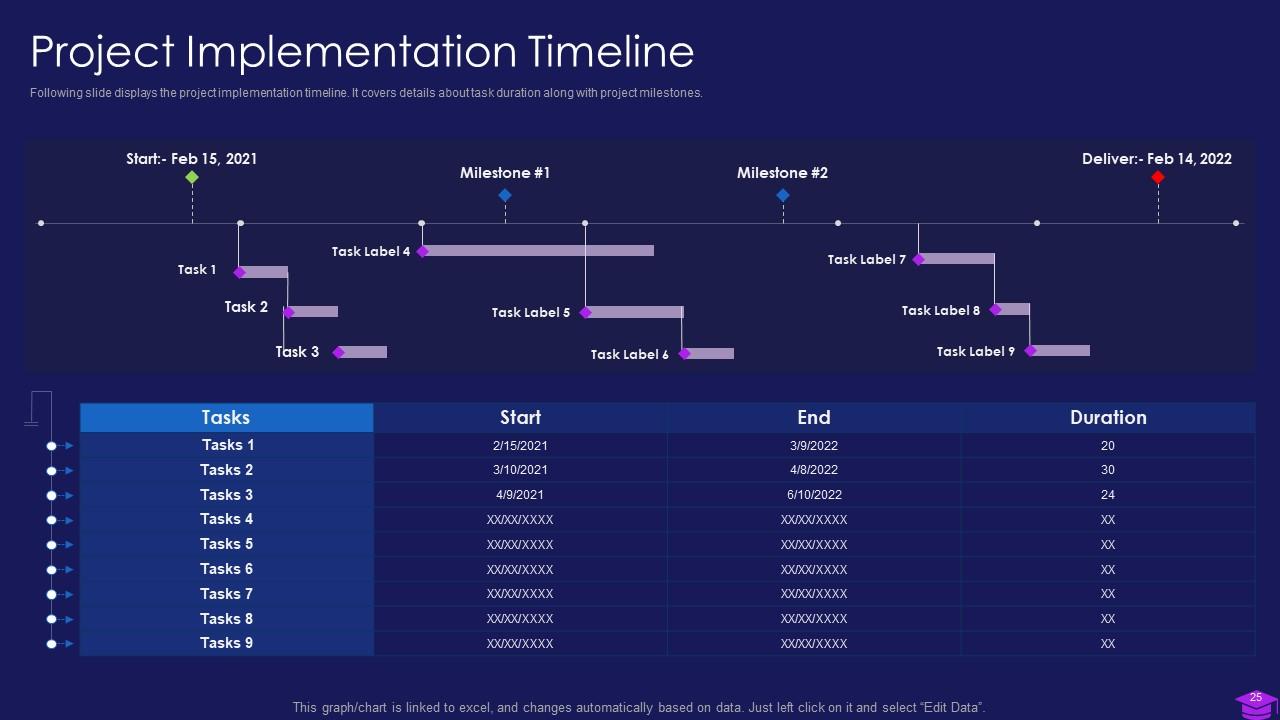
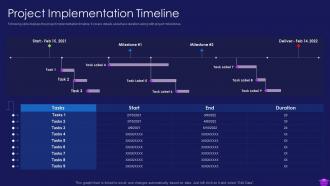
Folie 25 : Die folgende Folie zeigt den Zeitplan für die Projektimplementierung.
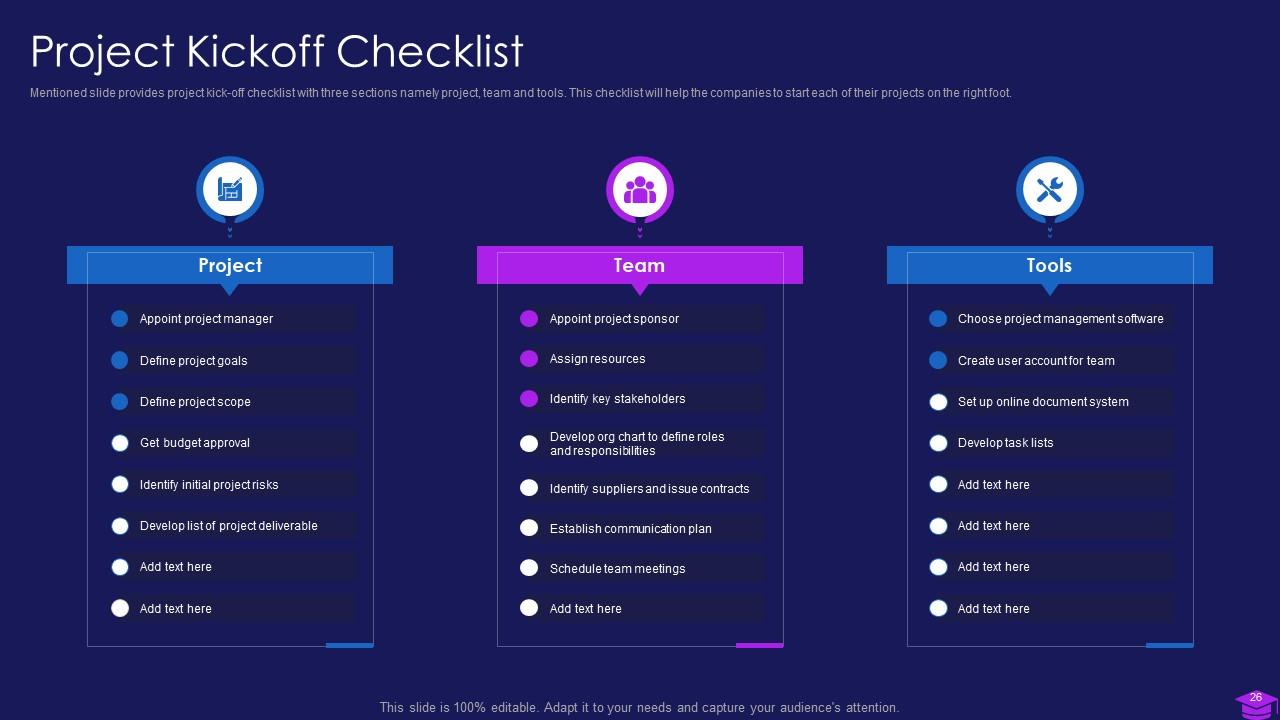
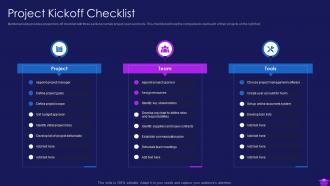
Folie 26 : Die erwähnte Folie enthält eine Projektstart-Checkliste mit drei Abschnitten, nämlich Projekt, Team und Tools.
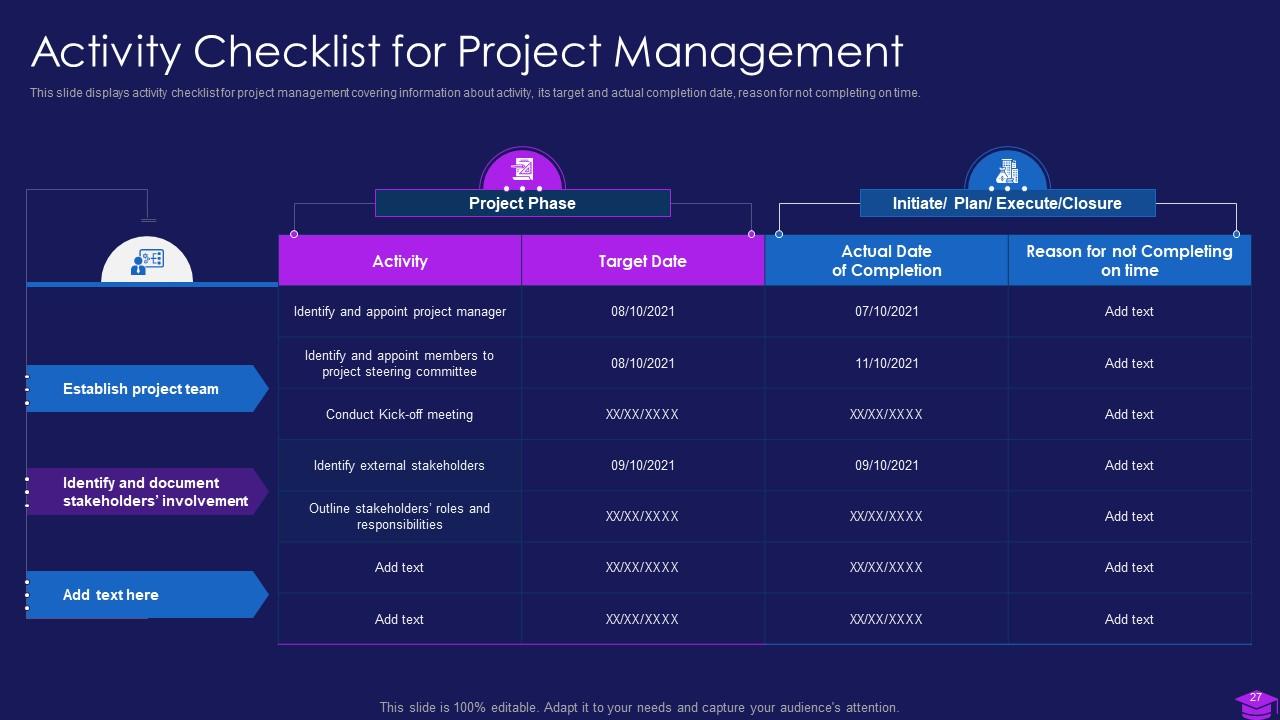
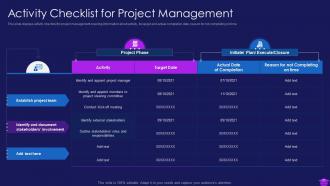
Folie 27 : Diese Folie zeigt die Aktivitäten-Checkliste für das Projektmanagement.
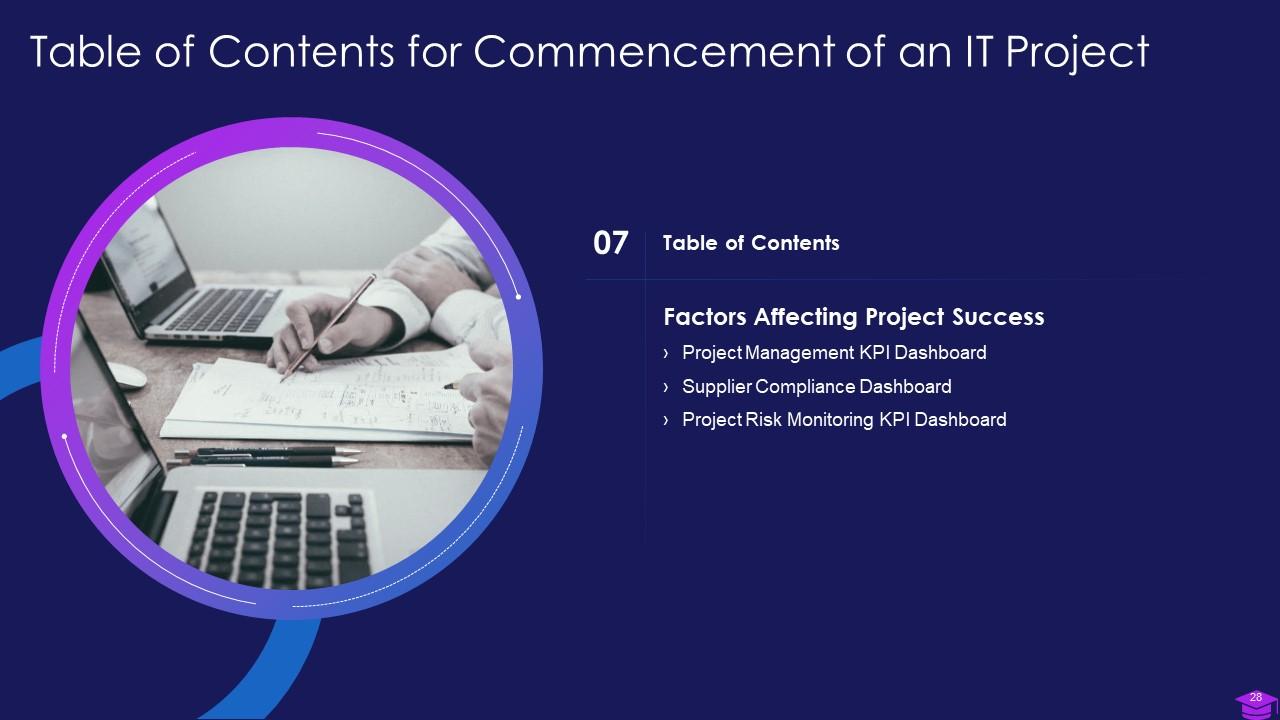
Folie 28 : Diese Folie zeigt Titel für Themen, die als nächstes in der Vorlage behandelt werden sollen.
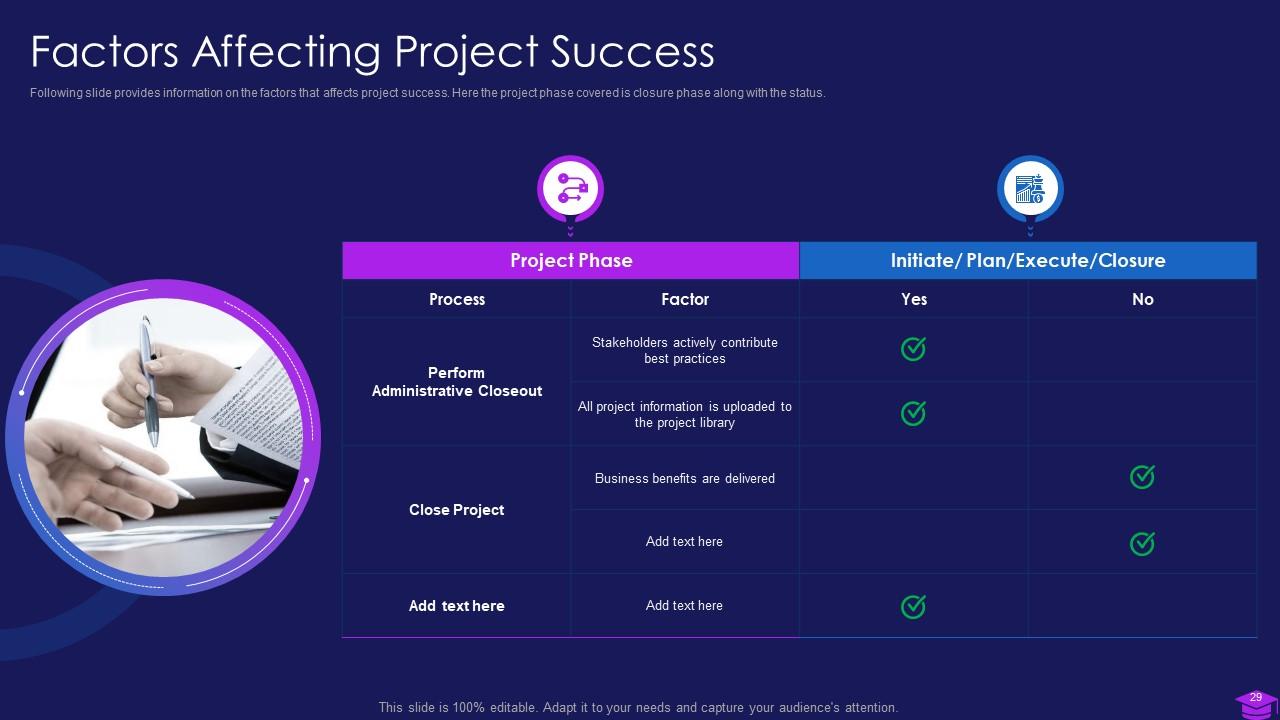
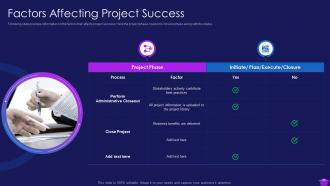
Folie 29 : Die folgende Folie enthält Informationen zu den Faktoren, die den Projekterfolg beeinflussen.
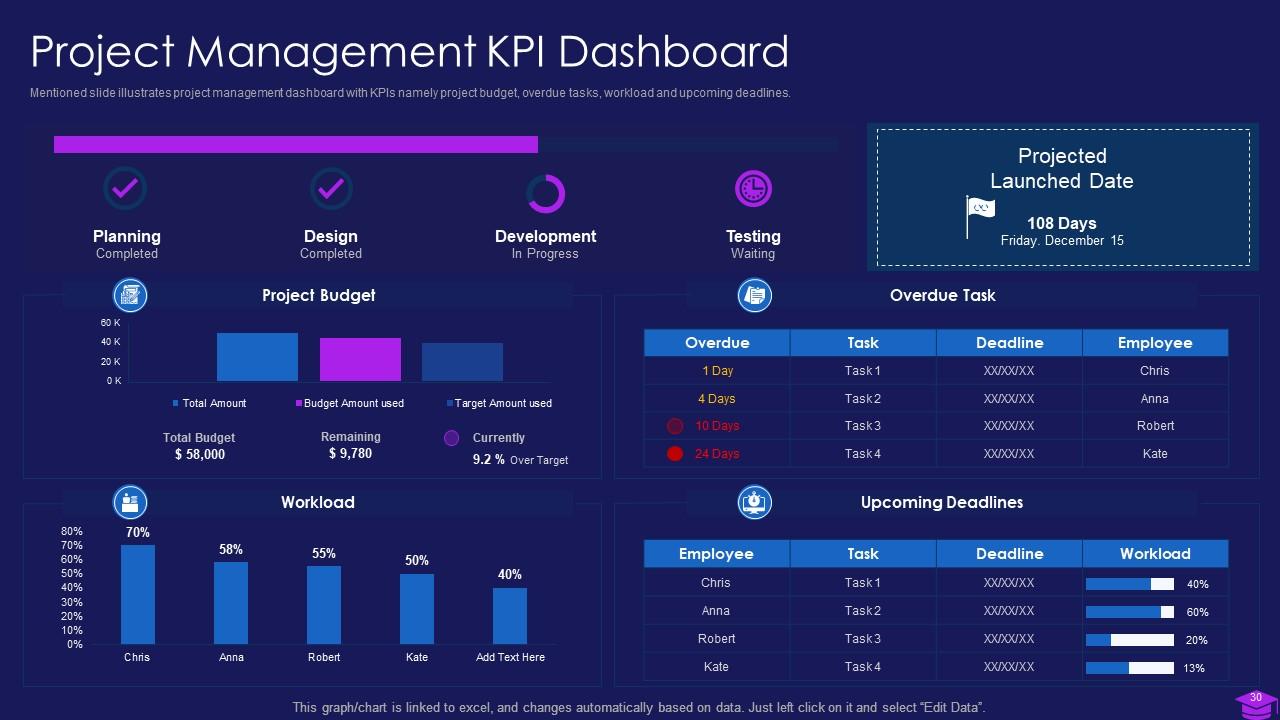
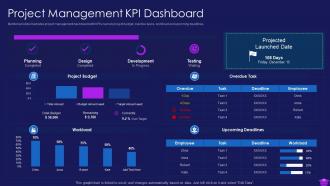
Folie 30 : Diese Folie zeigt das Projektmanagement-Dashboard mit KPIs, nämlich Projektbudget, überfällige Aufgaben usw.
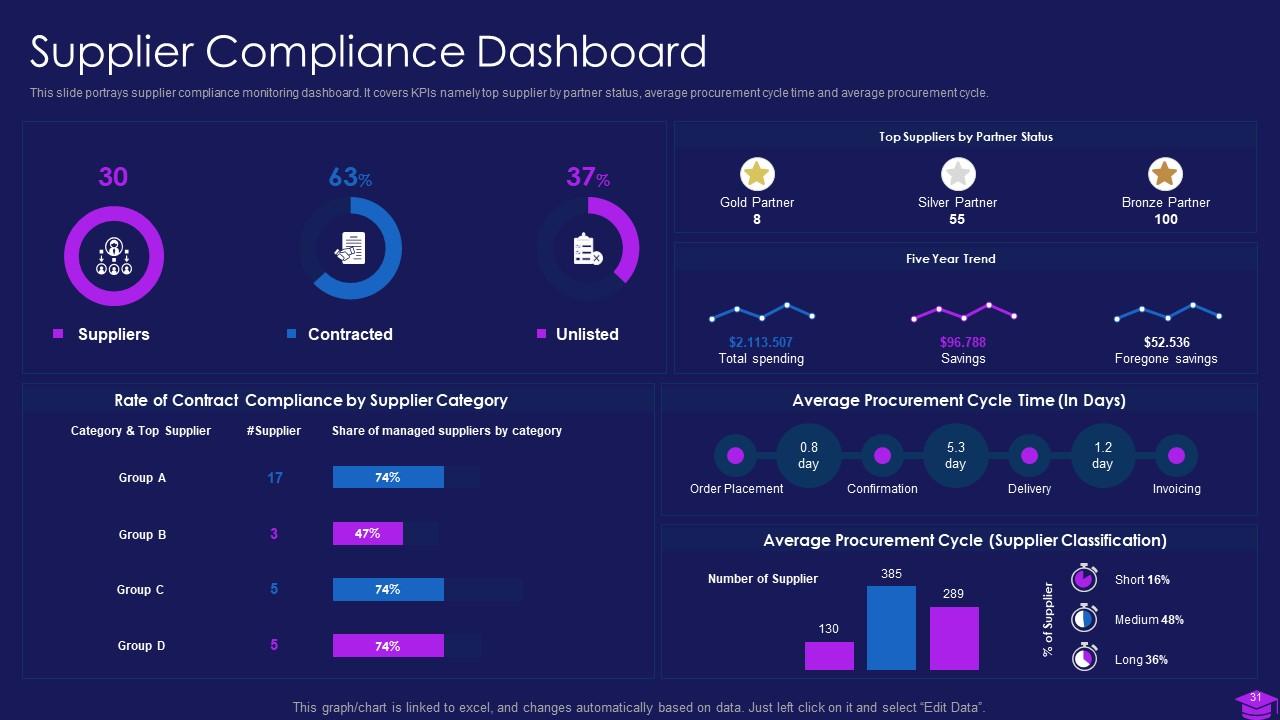
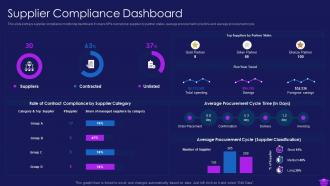
Folie 31 : Diese Folie zeigt das Dashboard zur Überwachung der Lieferantenkonformität.
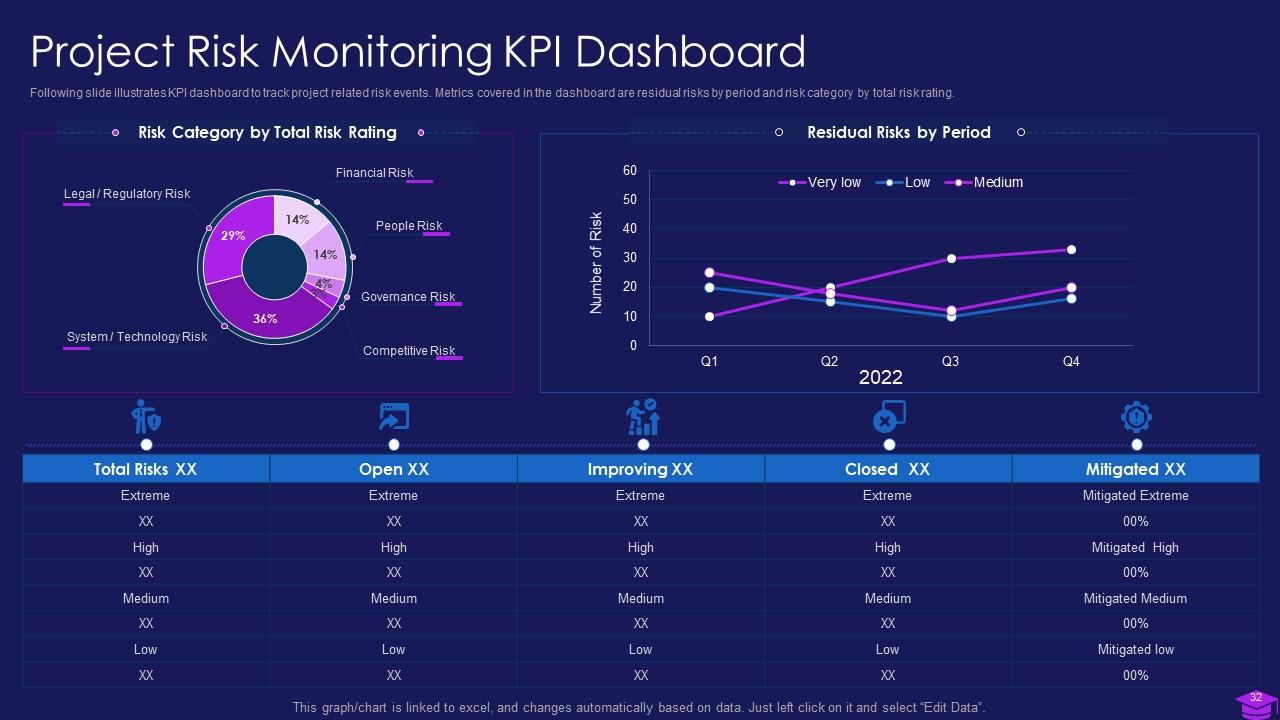
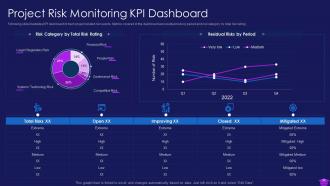
Folie 32 : Die folgende Folie zeigt das KPI-Dashboard zur Verfolgung projektbezogener Risikoereignisse.
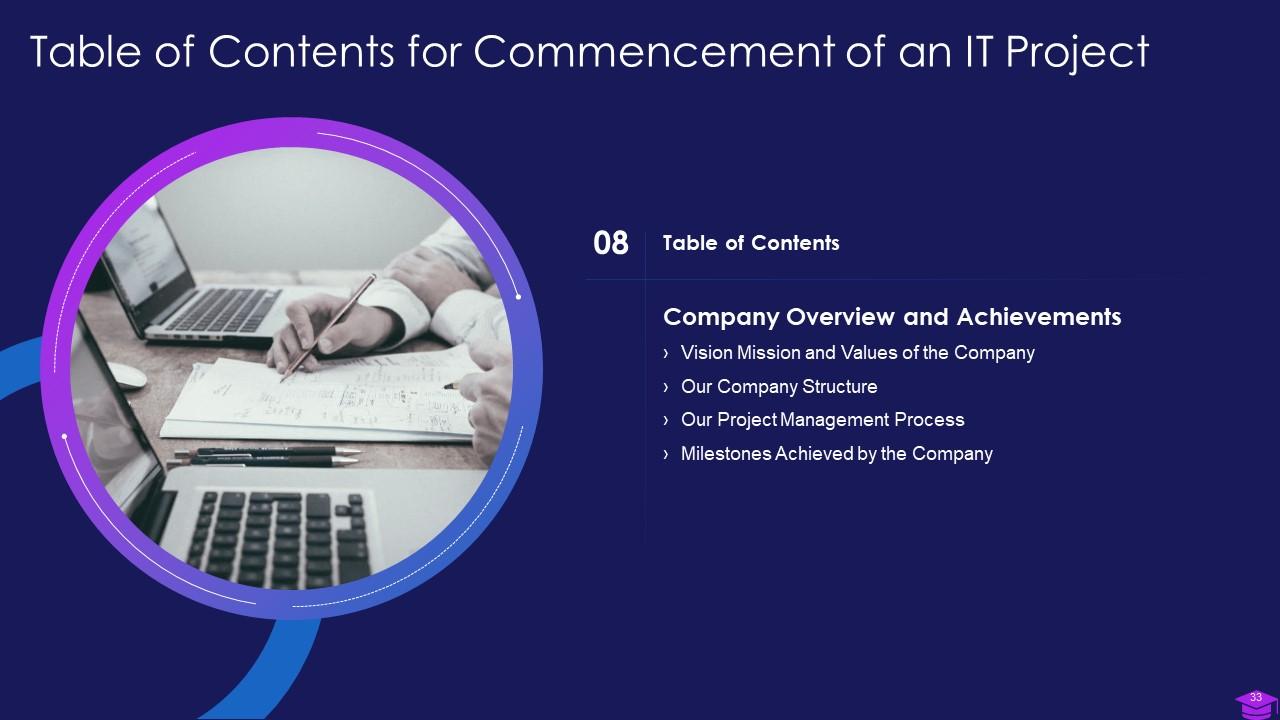
Folie 33 : Diese Folie zeigt Titel für Themen, die als nächstes in der Vorlage behandelt werden sollen.
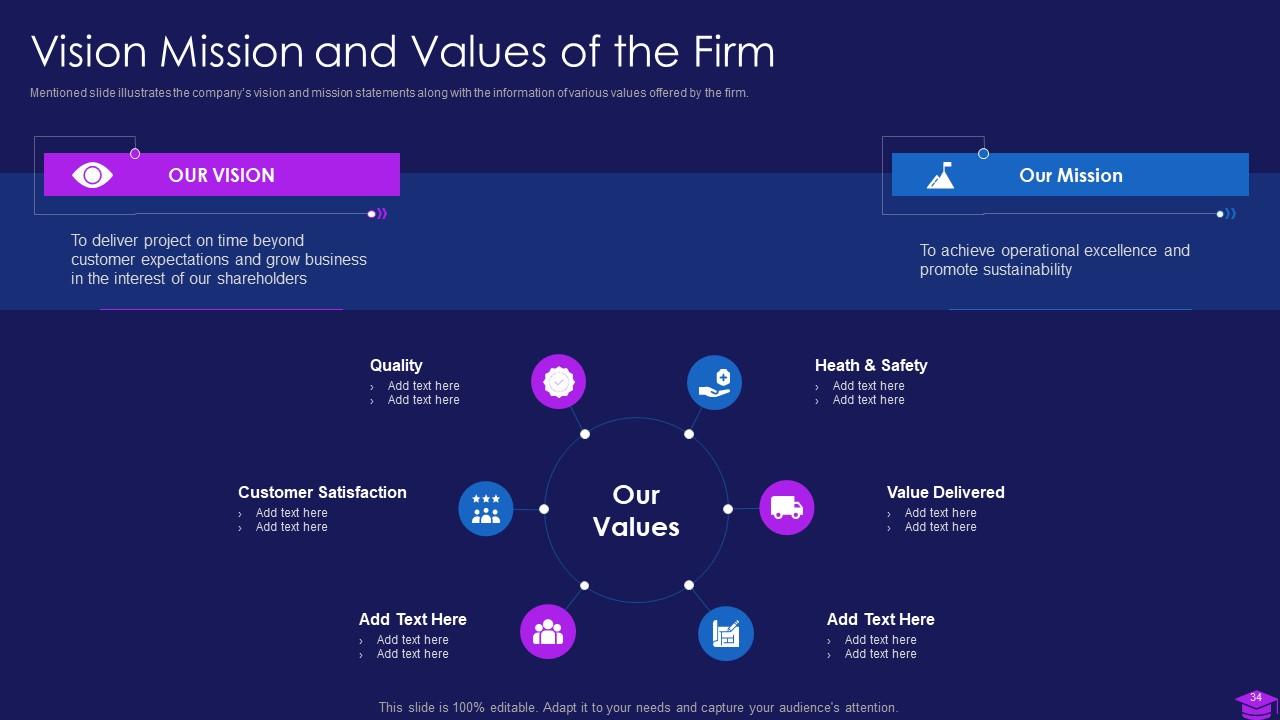
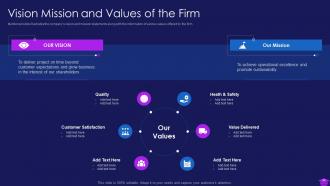
Folie 34 : Die erwähnte Folie veranschaulicht die Vision und die Leitbilder des Unternehmens.
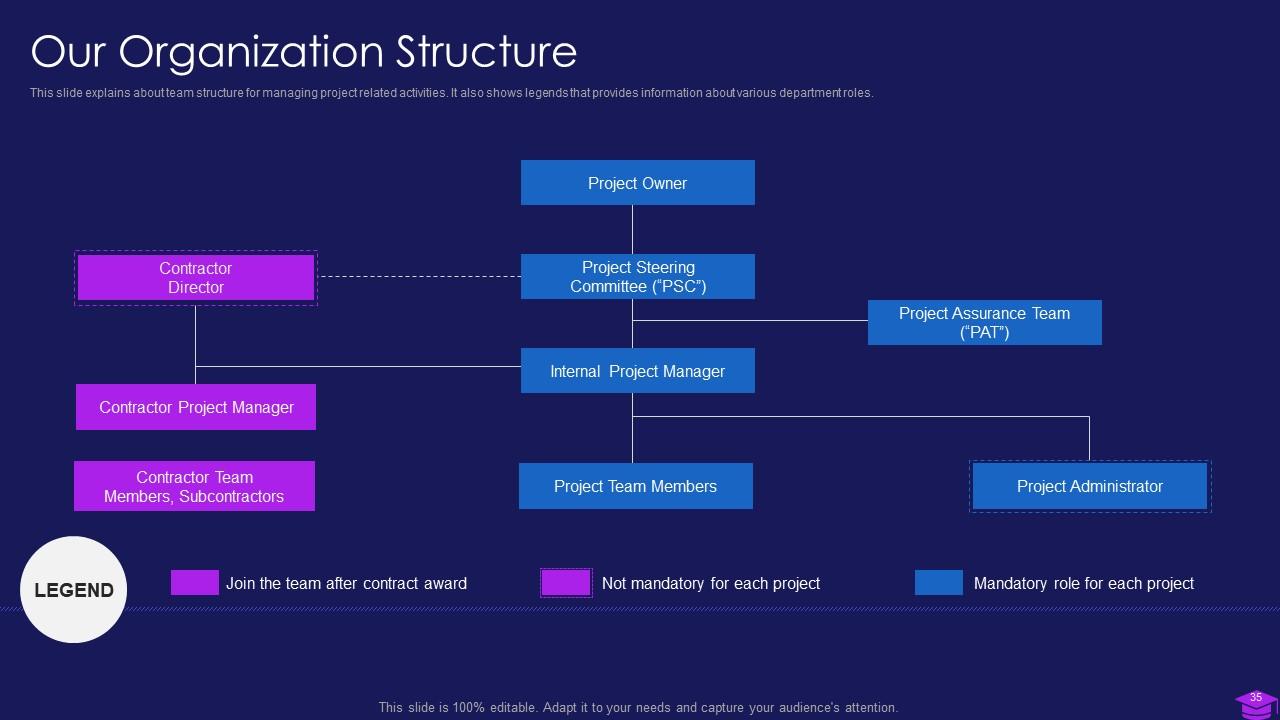
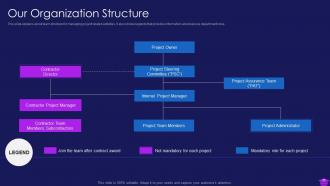
Folie 35 : Diese Folie erläutert die Teamstruktur für die Verwaltung projektbezogener Aktivitäten.
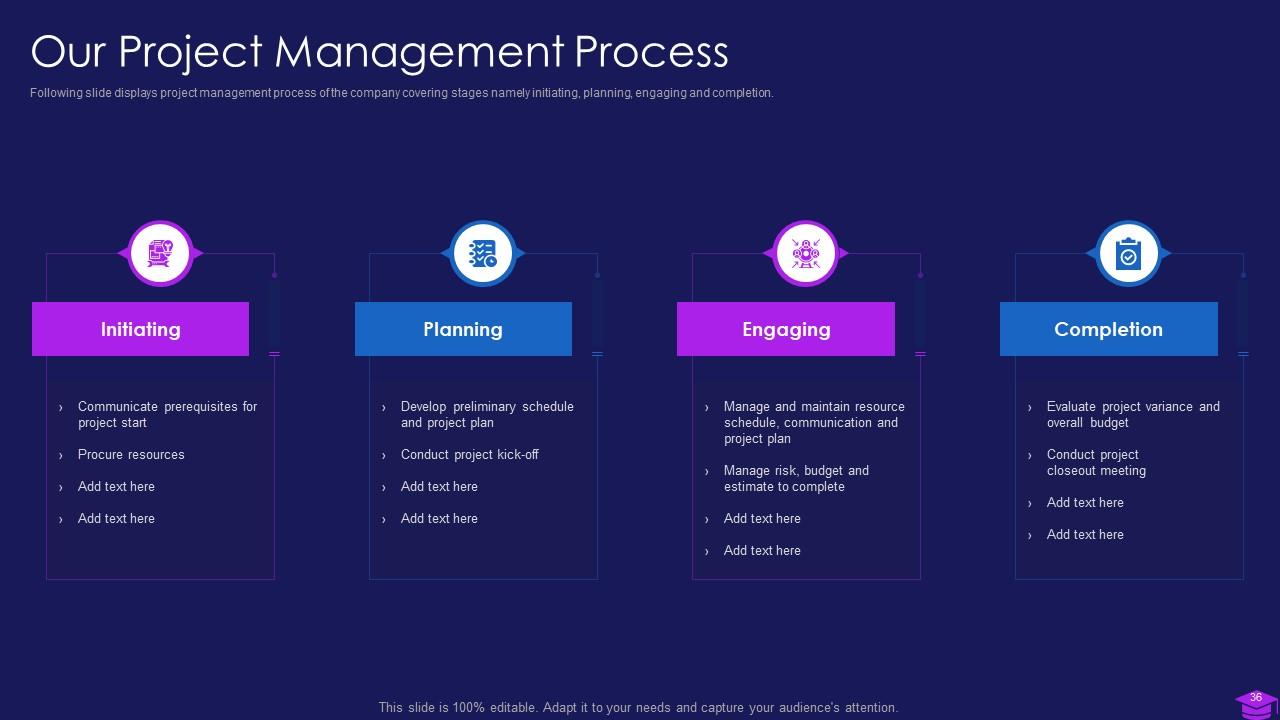
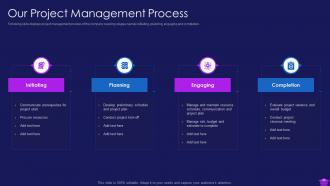
Folie 36 : Die folgende Folie zeigt den Projektmanagementprozess des Unternehmens.
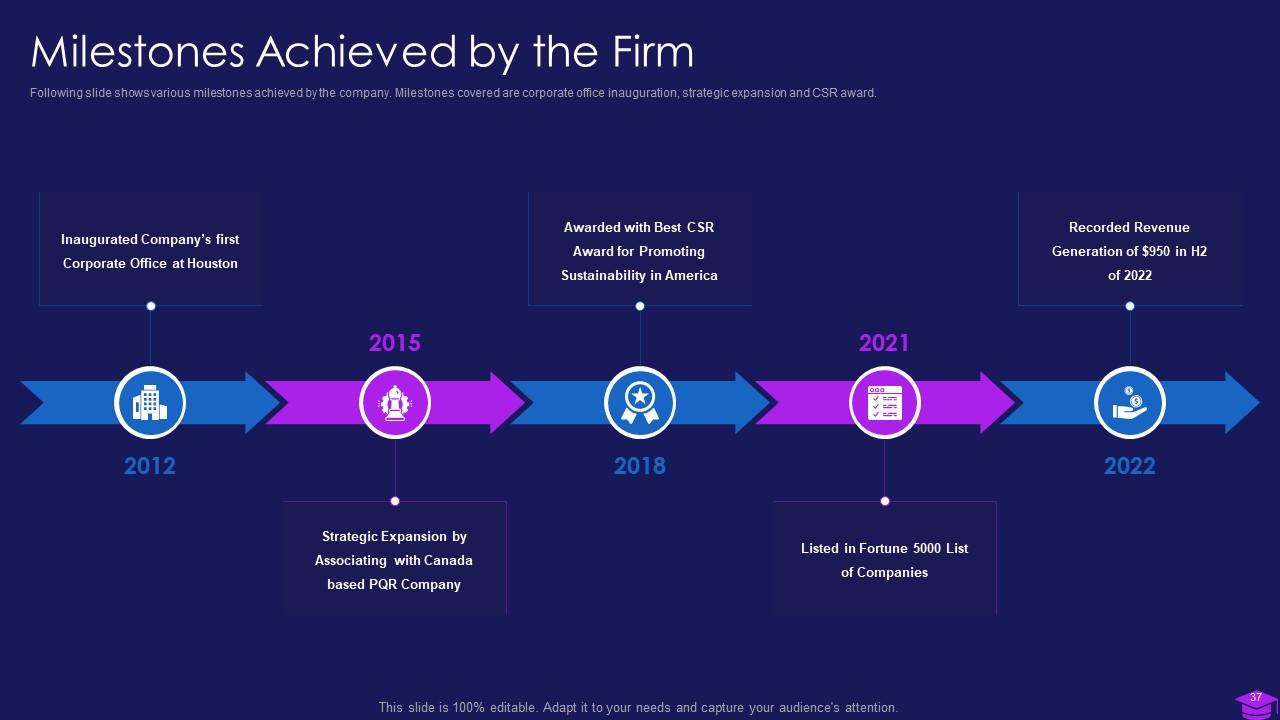
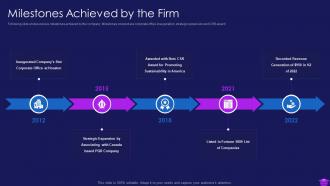
Folie 37 : Diese Folie stellt verschiedene Meilensteine dar, die das Unternehmen erreicht hat.
Folie 38 : Diese Folie trägt den Titel „Zusätzliche Folien“, um voranzukommen.
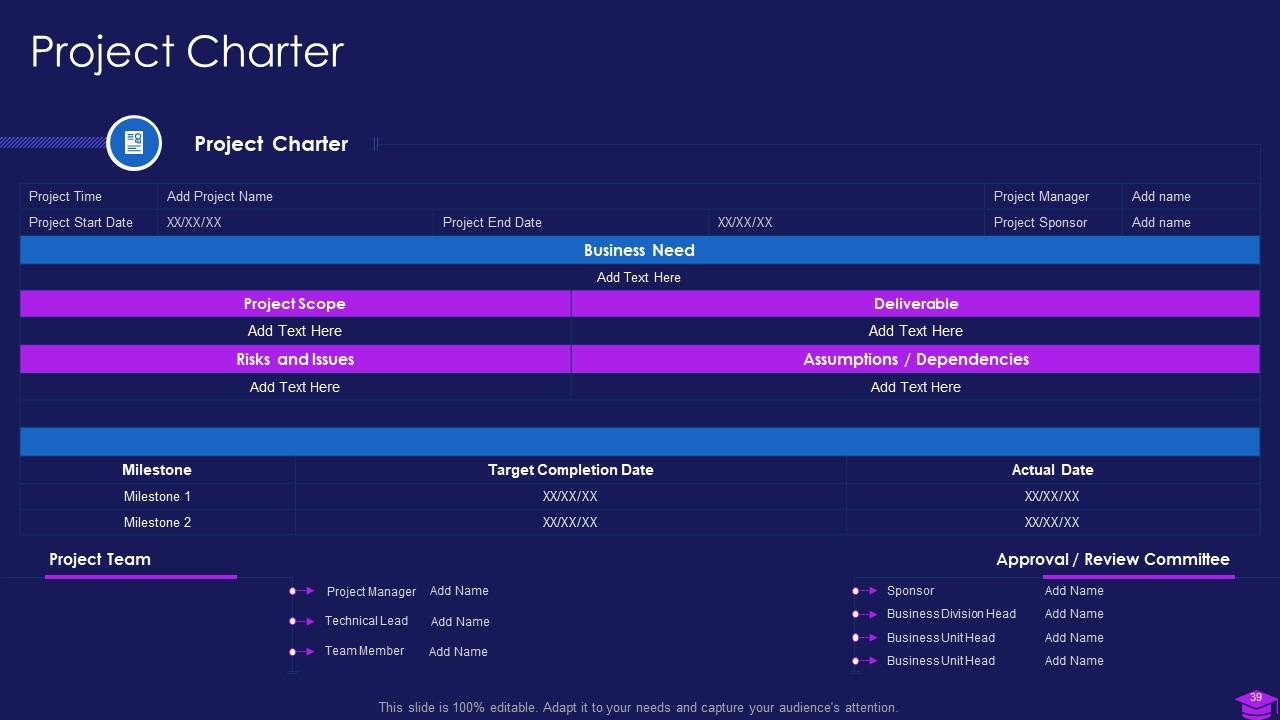
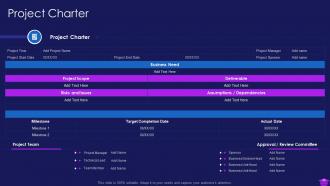
Folie 39 : Diese Folie zeigt die Projektcharta mit zugehörigen Symbolen und Text.
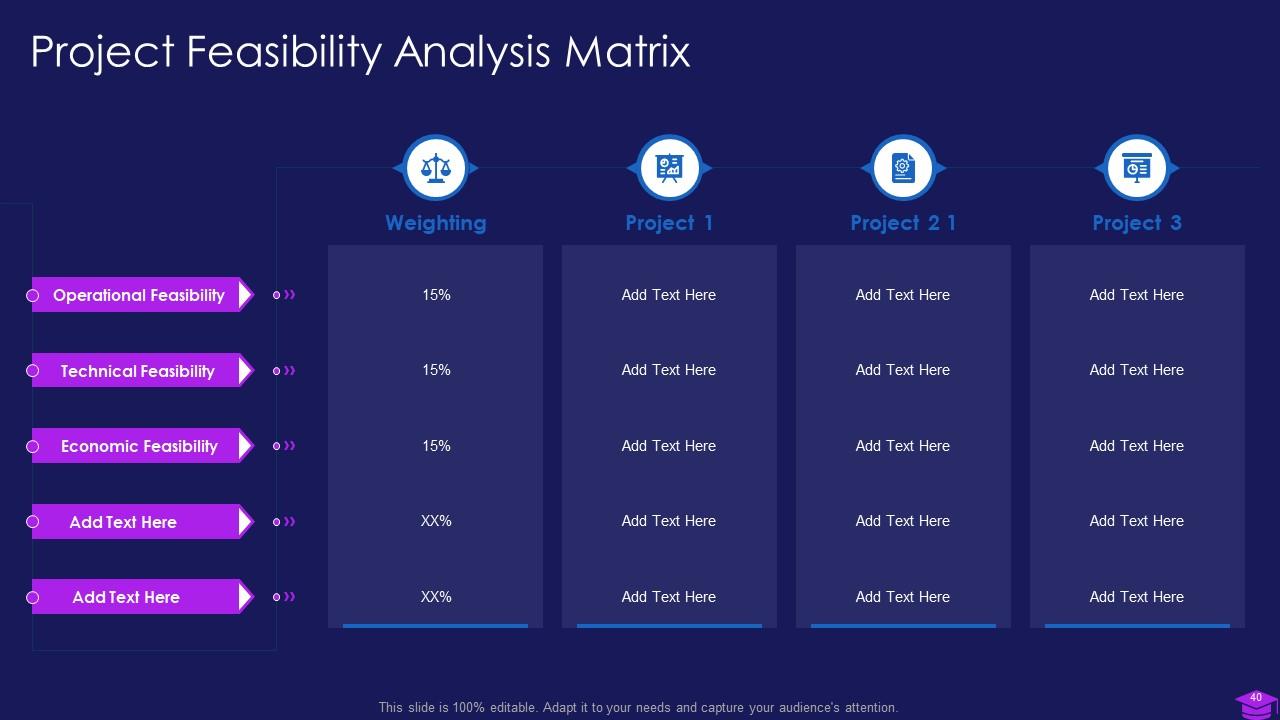
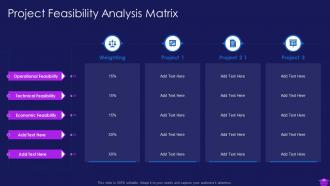
Folie 40 : Diese Folie zeigt die Matrix zur Projektdurchführbarkeitsanalyse.
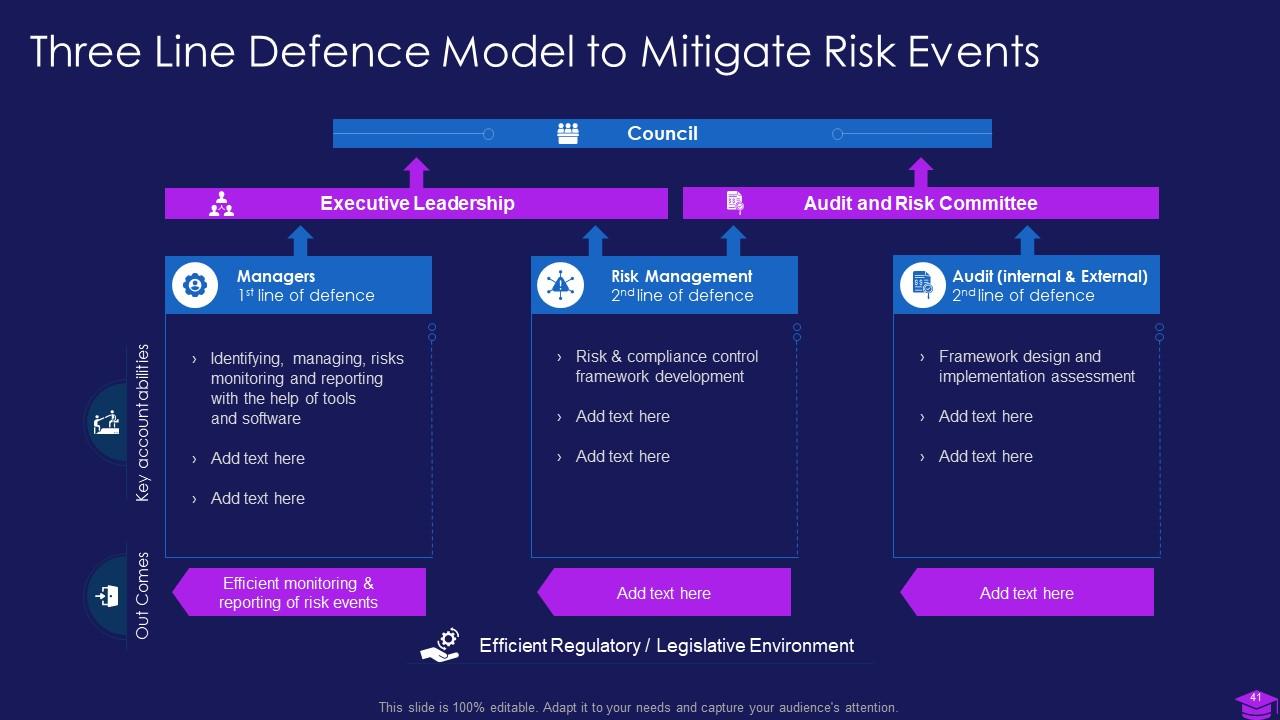
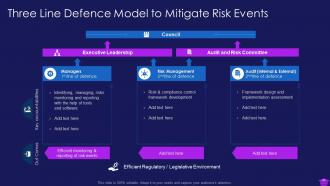
Folie 41 : Diese Folie zeigt das Drei-Linien-Verteidigungsmodell zur Minderung von Risikoereignissen.
Folie 42 : Diese Folie zeigt Symbole für den Beginn eines IT-Projekts.
Folie 43 : Dies ist die Folie „Über uns“, um Unternehmensspezifikationen usw. anzuzeigen.
Folie 44 : Diese Folie zeigt Haftnotizen. Posten Sie hier Ihre wichtigen Notizen.
Folie 45 : Dies ist unsere Missionsfolie mit zugehörigen Bildern und Texten.
Folie 46 : Diese Folie zeigt ein Venn-Diagramm mit Textfeldern.
Folie 47 : Dies ist unsere Zielfolie. Geben Sie hier die Ziele Ihres Unternehmens an.
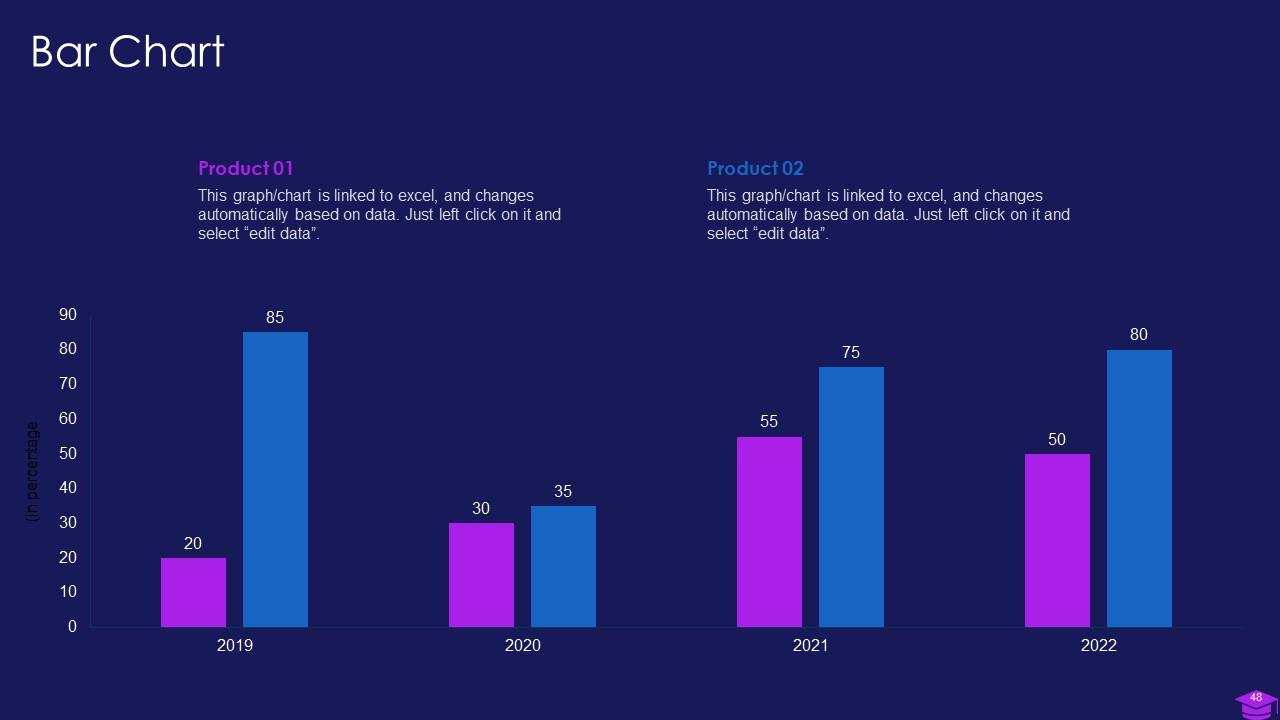
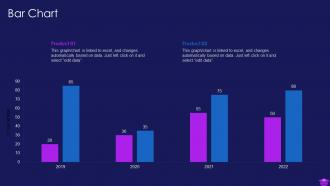
Folie 48 : Diese Folie zeigt ein Balkendiagramm mit zwei Produktvergleichen.
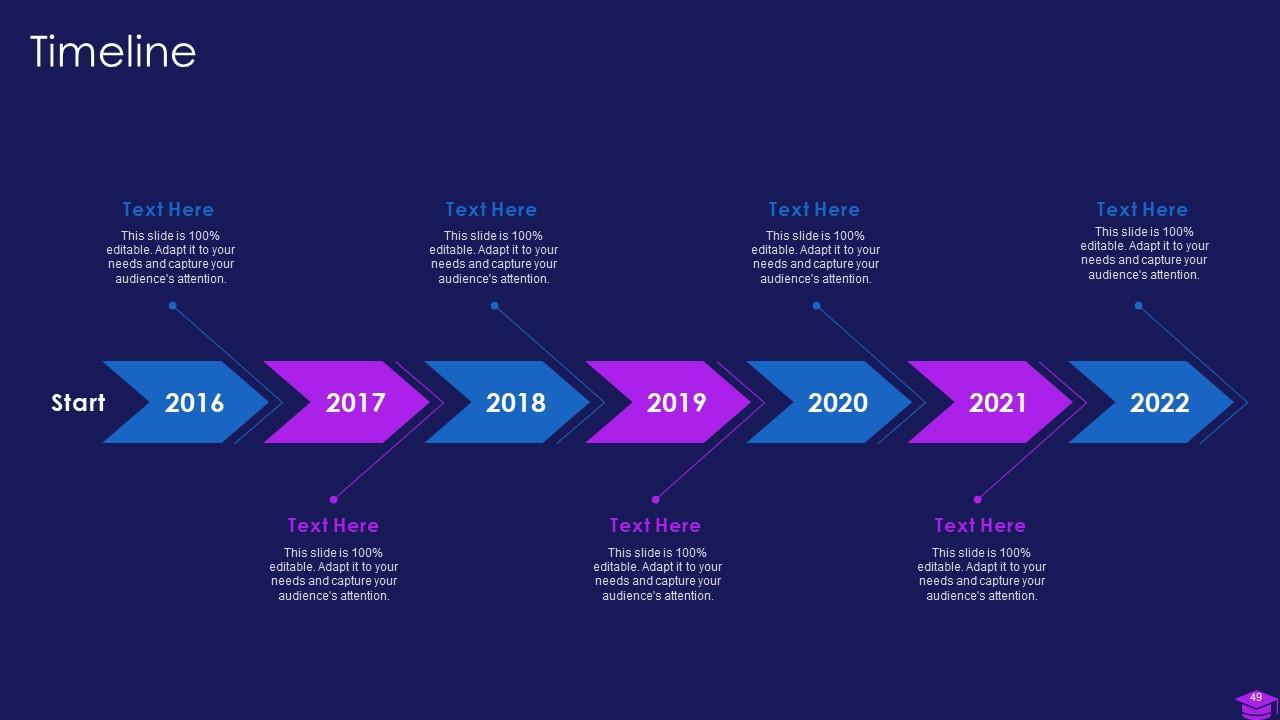
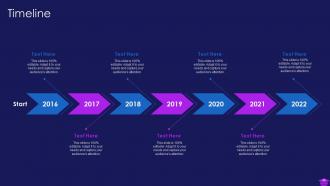
Folie 49 : Dies ist eine Timeline-Folie. Zeigen Sie hier Daten zu Zeitintervallen an.
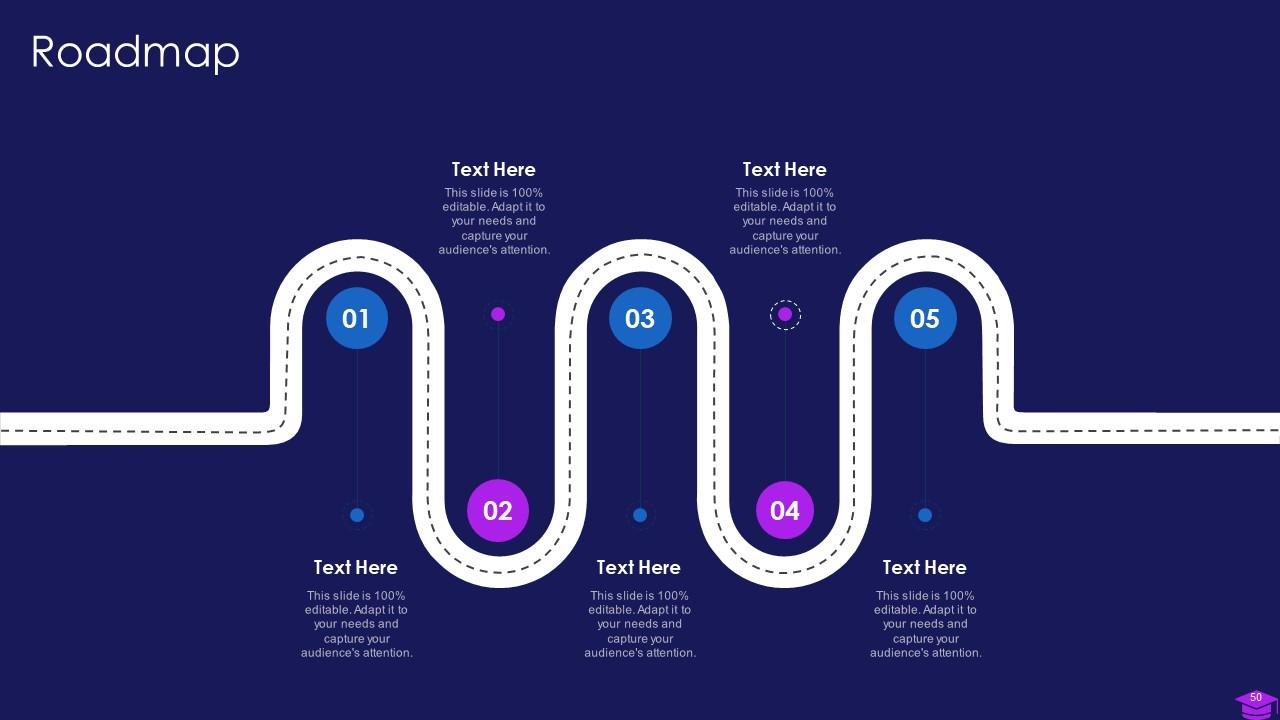
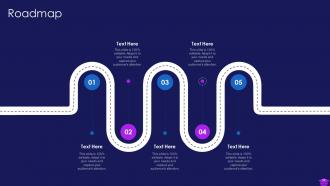
Folie 50 : Diese Folie präsentiert die Roadmap mit zusätzlichen Textfeldern.
Folie 51 : Dies ist eine Dankeschön-Folie mit Adresse, Kontaktnummern und E-Mail-Adresse.
Beginn eines IT-Projekts Powerpoint-Präsentationsfolien mit allen 56 Folien:
Verwenden Sie unsere Powerpoint-Präsentationsfolien zum Beginn eines IT-Projekts, um effektiv dabei zu helfen, wertvolle Zeit zu sparen. Sie sind gebrauchsfertig und passen in jede Präsentationsstruktur.
-
Understandable and informative presentation.
-
Professional and unique presentations.
-
Topic best represented with attractive design.
-
Helpful product design for delivering presentation.
-
Qualitative and comprehensive slides.
