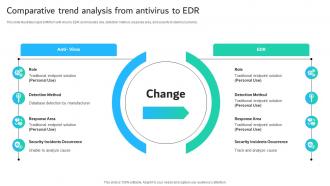
Comparative Trend Analysis From Antivirus To EDR
Try Before you Buy Download Free Sample Product
Audience
Editable
of Time
This slide illustrates rapid shift from anti-virus to EDR and includes role, detection method, response area, and security incident occurrence.
People who downloaded this PowerPoint presentation also viewed the following :
Comparative Trend Analysis From Antivirus To EDR with all 9 slides:
Use our Comparative Trend Analysis From Antivirus To EDR to effectively help you save your valuable time. They are readymade to fit into any presentation structure.
FAQs for Comparative Trend Analysis From
Zero-trust really hit mainstream around 2019-2020, which changed everything. AI threat detection blew up mid-decade too. Then COVID happened and honestly pushed us forward like 5 years overnight - suddenly everyone needed SASE solutions for remote work. XDR platforms started kicking traditional SIEM to the curb. Cloud-native security went from "nice bonus" to absolutely critical. Now we're scrambling with AI-generated attacks and prepping for quantum-resistant stuff. My advice? Stop juggling a million point solutions. Consolidate into integrated platforms before you lose your mind managing everything separately.
So cloud computing basically flipped cybersecurity on its head - now you're protecting data that's flowing everywhere instead of just guarding one physical location. Your cloud provider handles the infrastructure stuff, but you still gotta configure everything correctly. Seriously, the number of breaches from people not setting up basic MFA is insane. Multi-factor auth and zero-trust setups aren't optional anymore. The upside? Way better visibility and automated tools than before. I'd start by going through your current cloud settings and turning on whatever security features your provider has available.
So AI in cybersecurity is wild right now - it's like watching an arms race in real time. Hackers are using it to create crazy sophisticated attacks, deepfakes that'll fool anyone, stuff that slips past normal security. But the good guys have AI too, catching threats instantly and stopping attacks as they happen. It's pretty nuts how both sides got these tools at once. My buddy at work showed me their system last week and honestly? It was impressive. Short version: you can't really compete without AI anymore. Old-school security just doesn't cut it.
Dude, GDPR back in 2018 totally changed everything - companies couldn't just wing data protection anymore. Now you've got CCPA, updated HIPAA rules, all these sector-specific requirements forcing businesses to actually build proper security frameworks. It's been pretty expensive, not gonna lie. But here's the thing - these aren't just legal hoops to jump through anymore. They've basically become your security blueprint. Honestly, I'd just follow whatever compliance requirements apply to you. Saves you from having to figure out cybersecurity from scratch, and you'll be covered legally too.
Honestly? Threats move way faster than most companies can adapt. Budget's always tight, and finding decent cybersecurity people is brutal - they're expensive as hell. Legacy systems are the worst because they weren't designed for today's threats, but good luck convincing the boss to replace them. Remote work didn't help either, just gave hackers more ways in. Your biggest headache though is probably your own team clicking random links they shouldn't. I'd focus on training people first, then do regular security checkups. Oh, and maybe invest in some decent monitoring tools if you can swing it.
Big companies have entire security teams watching stuff 24/7 with fancy AI tools and automated responses. Small businesses? They've got basic antivirus and are basically crossing their fingers. Honestly, most small places only deal with problems after they've already happened - no budget for the proactive hunting that enterprises do. Here's what I'd tell any small business owner: get cloud-based managed detection services. You'll get enterprise-level monitoring without spending a fortune. Way better than just hoping nothing bad happens.
So zero-trust throws out the old "trust but verify" thing and just verifies everything, constantly. Remote work basically destroyed the whole network perimeter idea anyway - VPNs aren't the magic bullet we thought they were. Now you're checking users and devices continuously, giving people minimal access based on their actual job needs. Works against outside hackers AND that one intern who somehow got admin privileges (how does that even happen?). The scary part? It catches internal threats just as well as external ones. Honestly, start by looking at who can access what in your system right now. You might hate what you find.
Honestly, remote work flipped security on its head. Companies went from protecting one office to securing like 300 random home setups. VPNs crashed constantly those first few weeks - what a mess. Zero-trust went from buzzword to literally how you survive. MFA rolled out everywhere, endpoint detection got smarter, and suddenly cloud security matters more than anything since Bob's logging in from his couch. You've gotta assume every device is sketchy now. Your security perimeter? It's wherever your people are working from today.
Honestly, risk-based security is your best bet here. Start with single sign-on and passwordless stuff - way less annoying for everyone. Then set up smart policies that only get strict when something sketchy happens. Like, making people do 2FA every time they check Slack? Total overkill. But weird login locations or accessing sensitive files? Yeah, bump up those requirements. Oh, and definitely get people on board by explaining why you're doing this - they'll actually cooperate instead of finding workarounds. Map out what data you really can't afford to lose, then build security around that without destroying everyone's workflow.
Dude, ransomware's gotten way scarier - they're targeting specific companies now and threatening to dump all their data online, not just lock it up. Phishing isn't those laughable Nigerian prince emails anymore either. Now you've got hackers pretending to be CEOs in perfectly written emails, plus they're using AI deepfakes for video calls (which honestly blows my mind). Supply chain attacks are everywhere too - they'll hack one software company to hit dozens of clients at once. The worst part? They're mixing these tactics. Like they'll phish your credentials first, then come back weeks later with ransomware. Your security training better cover this new stuff, not just the basics.
Look, I hate to break it to you, but people are basically the biggest security risk out there. Doesn't matter if you've got the fanciest firewalls - someone's always gonna click that suspicious email or use "password123" because it's easy to remember. We're all guilty of it honestly. Your coworkers aren't trying to mess things up, they're just busy and distracted half the time. The trick is building security that works WITH how people actually act instead of against it. Make training that doesn't put everyone to sleep, and design systems where doing the right thing is also the simplest thing.
So basically, quantum computers are gonna completely wreck all our current encryption - RSA, ECC, all that stuff will be toast once these machines get powerful enough. It's kinda terrifying how fast everything could become vulnerable, honestly. The good news? Smart people are already working on quantum-resistant encryption methods. They call it post-quantum cryptography (yeah, I know, creative naming). You should probably start thinking about this transition now, even though we're still years out from widespread quantum computing. Better to get ahead of it than scramble later when everyone's panicking.
Ditch those awful annual slideshow trainings that everyone just clicks through without reading. What actually works? Real phishing simulations and hands-on stuff that matches the threats your team sees daily. Gamification is surprisingly effective - people get weirdly competitive about security leaderboards! Break training into short sessions throughout the year instead of one giant boring marathon. Oh, and definitely tailor it to specific job roles so it feels relevant. Start by figuring out where people mess up most, then build targeted scenarios around those exact problems. Role-playing exercises work great too.
So basically threat intelligence sharing is like having a heads up system between companies. When one gets attacked, they share details about how it happened so others can watch for the same stuff. It's honestly pretty smart - attackers love reusing methods, so if everyone knows what to look for, those tactics stop working as well. You get early warnings about new threats that might be heading your way. More participants makes it better for everyone since we're all dealing with the same bad guys anyway. I'd start with joining industry groups or check out CISA's platform - even small orgs can contribute useful info.
Yeah, hackers are definitely getting scarier. They're using AI now to automate attacks and create deepfakes that honestly freak me out - like you can't even tell if an email is real anymore. IoT devices are a mess security-wise, and attackers know it. Cloud infrastructure is getting hit hard too. What really gets me is how they're going after supply chains now - that's smart but terrifying. The whole attack surface just keeps growing with all our connected stuff. Zero-trust is probably your best bet, plus train your people regularly. Oh, and social engineering is getting way more sophisticated than those old Nigerian prince emails.
-
“Detailed and great to save your time.”
-
Great quality product.