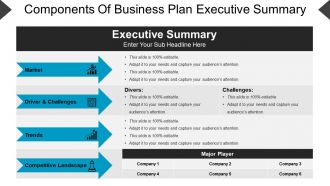
Guia de PowerPoint do resumo executivo dos componentes do plano de negócios

Rating:
80%
Slide 1 of 5
Favourites Favourites

Try Before you Buy Download Free Sample Product

Audience Impress Your
Audience
Editable 100%
Editable
Time Save Hours
of Time
The Biggest Sale is ending soon in
0
0
:
0
0
:
0
0
Rating:
80%

Recursos destes slides de apresentação do PowerPoint:

Apresentação dos componentes do slide PPT de resumo executivo do plano de negócios. É uma apresentação gráfica desenvolvida profissionalmente que é lucrativa para os gerentes de negócios. Todas as características como fonte, tamanho, cor, imagem PPT, etc. são completamente alteráveis de acordo com sua necessidade. Também é compatível com todos os slides do Google. Também possui um procedimento de download fácil e sem problemas. E também oferece a opção de adicionar o logotipo da sua empresa.

Conteúdo desta apresentação em PowerPoint

FAQs for Components of business plan executive

Okay so executive summaries need five main things: what problem you're fixing, how you'll fix it, what good stuff will happen, what you need (money, time, people), and what you're actually asking for. Start with whatever's most dramatic - usually the problem or what happens if they ignore it. I always think of it like writing the world's most important text message that has to fit on one screen. Keep each part super short, maybe two sentences tops. The whole point is that some VP can read just this part and still vote yes or no in the meeting.

You've gotta match your writing to whoever's reading it. Executives? Hit them with financial impact upfront - they don't have time for fluff. Technical people want the nitty-gritty details about how stuff actually works. Board members just need high-level risk vs reward stuff. And investors? They only care about ROI and market size, honestly. I always end up writing like 2-3 different versions for big projects because the audiences are so wildly different. Figure out what each group actually loses sleep over, then write straight to that. Oh, and identify your main audience first - that'll save you tons of time.

Keep it to 1-2 pages tops - like 300-500 words. Trust me, execs won't read past page two anyway. I learned this the hard way when my first exec summary was basically a novel. Your goal is getting busy people the key info fast: what's the problem, your solution, why it matters, and what you need from them. Make it scannable with bullets where you can. Think elevator pitch but on paper - you've got maybe 30 seconds of their attention before they move on to the next thing.

Think of your exec summary like a movie trailer - it hits the highlights of your full report without boring people with all the nitty-gritty details. Busy executives want conclusions and recommendations, not your methodology. Keep it short (1-2 pages) while your main report can be 20+ pages with all the charts and analysis. Honestly, most people won't read past the summary anyway, so make it count. Here's the thing - write it LAST. After you finish your full report, you'll know exactly which points matter most. That way you're not guessing what deserves the spotlight.

Start with your main point right up front, then back it up with maybe 2-3 solid reasons. Skip the corporate speak - executives actually prefer plain English (who knew?). Short sentences work better. When things get wordy, throw in some bullet points to break it up. Here's the weird part: write your summary last even though it goes first. You'll know what actually matters once you've finished the whole thing. Oh, and definitely read it out loud before hitting send. If you trip over the words, they will too.

Honestly, visuals are a game-changer for exec summaries. Those people are basically speed-reading everything anyway - probably spending like 30 seconds max on your doc. A clean chart shows trends way faster than cramming numbers into paragraphs. I've seen executives' eyes literally glaze over at walls of text, but throw in a simple graph? Suddenly they're engaged. Pick your 2-3 strongest data points first, then build visuals around those. Don't overcomplicate it though - cluttered charts just confuse people. Prominent metrics catch their attention and actually back up what you're saying with real evidence.

Don't write a novel! Seriously, I've seen exec summaries that are longer than some reports. Keep it under a page. Skip the technical stuff too - nobody wants methodology details upfront. The worst thing? Just copying your conclusion word-for-word. Super obvious and usually way too dense. Your summary needs to work solo, so don't reference charts that show up later. Focus on three things: the problem you tackled, what you discovered, and what they should actually do about it. Think of it like explaining to your boss in an elevator - hit the highlights, not every detail.

Honestly, just cut to the chase with the "so what" factor. Skip all the boring analysis details and jump straight to what actually matters for decisions. Lead with your main point, then back it up with like 2-3 key reasons why. The elevator pitch thing is overused but genuinely works - pretend you're talking to someone who's distracted. One page max. No fancy jargon that'll make people zone out or reach for Google. I usually do: situation, main findings, what to do next. Simple structure. Quick test: can a busy exec get your point in under a minute? If not, trim more fat.

Look, nobody wants to read a boring data dump, so turn your exec summary into an actual story. Start with the problem you're solving - that's your hook. Then walk them through what you found and what you're proposing to do about it. Think movie trailer vibes, you know? Just enough plot to get them hooked without spoiling everything. The trick is making your findings flow logically so they build momentum. I always think of it like: here's the mess we're in, here's what we figured out, and here's where we go next. Make them actually care about how it ends.

Three main things to check: does it clearly explain the problem and your solution, can someone get the gist without reading the whole thing, and would it actually make busy execs want to dive deeper? I always do this "elevator test" - could you pitch it out loud in under a minute? Get someone who wasn't involved to read it too. If they're asking basic questions after, that's your cue to fix it. Honestly, the best executives are brutal with their time, so if your summary doesn't help them decide something fast, it's probably not working.

Honestly, just use what you already know - Word or Google Docs both have decent templates. Canva's pretty cool if you want it to look more polished, and their business stuff doesn't scream "I made this in 5 minutes." PowerPoint works too, though that's more presentation-y. I've watched people waste hours picking the "perfect" tool when a basic Word doc would've been fine. Pick one and stick with it - that's way more important than having the fanciest setup. Get your content solid first, then make it look good. Oh, and don't overthink the formatting part.

Honestly? I'd say monthly is probably your sweet spot for most projects. Hit those major milestones, scope changes, budget shifts - that's when you definitely need to update it. Sprint-heavy stuff might call for every two weeks though. Don't be that person who drops bombshells at the quarterly meeting - nobody likes surprises when it comes to project changes. The whole point is keeping people in the loop without annoying them with constant updates. Pick whatever rhythm matches how fast your project moves and just be consistent about it. Works way better than trying to wing it.

Your tone in the exec summary is everything - seriously, it can tank your whole proposal if you get it wrong. You want confident without being cocky, clear without talking down to people. Picture explaining something important to a smart colleague over coffee, not presenting to robots. Keep it direct and ditch all jargon because these folks don't have time to translate corporate-speak. I always skip the fluff entirely. These are people making million-dollar calls daily, so respect their intelligence but make your point impossible to miss.

Dude, you've gotta match what each industry actually cares about. Tech bros want to hear about scaling fast and disrupting markets. Healthcare? They're obsessed with regulations and whether patients get better outcomes. Manufacturing execs only care if your operations run smooth and supply chains won't break. Finance people will flip straight to your risk section - honestly, they're paranoid about everything going wrong (can't blame them though). It's wild how different they all are! Research what successful companies in your space actually talk about in their reports. That'll show you which numbers and problems matter most to the people writing checks.

Check out Harvard Business Review and McKinsey's site - they've got tons of case studies with really solid exec summaries. Slidebean is another good spot since those pitch decks had to actually win over investors, so the summaries are usually pretty tight. Oh and annual reports from companies like Apple or Tesla work too, though honestly they can be kinda formal. I'd grab 3-4 examples from your industry and just study how they're structured. Then use that as your template when you write yours. Way easier than starting from scratch.

Ratings and Reviews

80% of 100
Review Form
Write a review
Most Relevant Reviews
  1. 80%

    by Joe Thomas

    Out of the box and creative design.
  2. 80%

    by Clifton Jenkins

    Best way of representation of the topic.

2 Item(s)

per page: