


Comprehensive Guide For AI Based Chatbots Powerpoint Presentation Slides AI CD V
AI chatbots facilitate human like conversations with users via chat, employing graphics, text, or speech. Introducing our Comprehensive guide for AI based chatbots PowerPoint Presentation. It covers market size, key statistics, trends and the evolution of AI chatbots. It outlines the steps for deploying AI based chatbots, including readiness assessment, development, testing and training. Additionally, the Chatbot market templates showcase diverse use cases of AI chatbots in industries like e commerce, retail, healthcare, supply chain management, insurance, and banking. It highlights their applicability in different business departments, such as sales, marketing, human resources and customer service. Moreover, future potential, impact and trends of AI chatbots are also explored, along with dashboard metrics, to assess their performance. Lastly, the Chatbot software presentation includes several case studies illustrating AI chatbot usage in various industries, providing comprehensive insights into their practical implementations and benefits. Take advantage of our 100percentage editable presentation, allowing you to tailor the content to your specific requirements. Benefit from our extensive research and skilfully designed product by downloading it now.
AI chatbots facilitate human like conversations with users via chat, employing graphics, text, or speech. Introducing our C..
























































-

- Google Slides is a new FREE Presentation software from Google.
- All our content is 100% compatible with Google Slides.
- Just download our designs, and upload them to Google Slides and they will work automatically.
- Amaze your audience with SlideTeam and Google Slides.
-

Want Changes to This PPT Slide? Check out our Presentation Design Services
-

- WideScreen Aspect ratio is becoming a very popular format. When you download this product, the downloaded ZIP will contain this product in both standard and widescreen format.
-

- Some older products that we have may only be in standard format, but they can easily be converted to widescreen.
- To do this, please open the SlideTeam product in Powerpoint, and go to
- Design ( On the top bar) -> Page Setup -> and select "On-screen Show (16:9)” in the drop down for "Slides Sized for".
- The slide or theme will change to widescreen, and all graphics will adjust automatically. You can similarly convert our content to any other desired screen aspect ratio.
Compatible With Google Slides

Get This In WideScreen
You must be logged in to download this presentation.


Do you want to remove this product from your favourites?
PowerPoint presentation slides
Deliver this complete deck to your team members and other collaborators. Encompassed with stylized slides presenting various concepts, this Comprehensive Guide For AI Based Chatbots Powerpoint Presentation Slides AI CD V is the best tool you can utilize. Personalize its content and graphics to make it unique and thought-provoking. All the ninety seven slides are editable and modifiable, so feel free to adjust them to your business setting. The font, color, and other components also come in an editable format making this PPT design the best choice for your next presentation. So, download now.

People who downloaded this PowerPoint presentation also viewed the following :
Content of this Powerpoint Presentation
Slide 1: This slide introduces Comprehensive guide for AI-based chatbots. State your company name and begin.
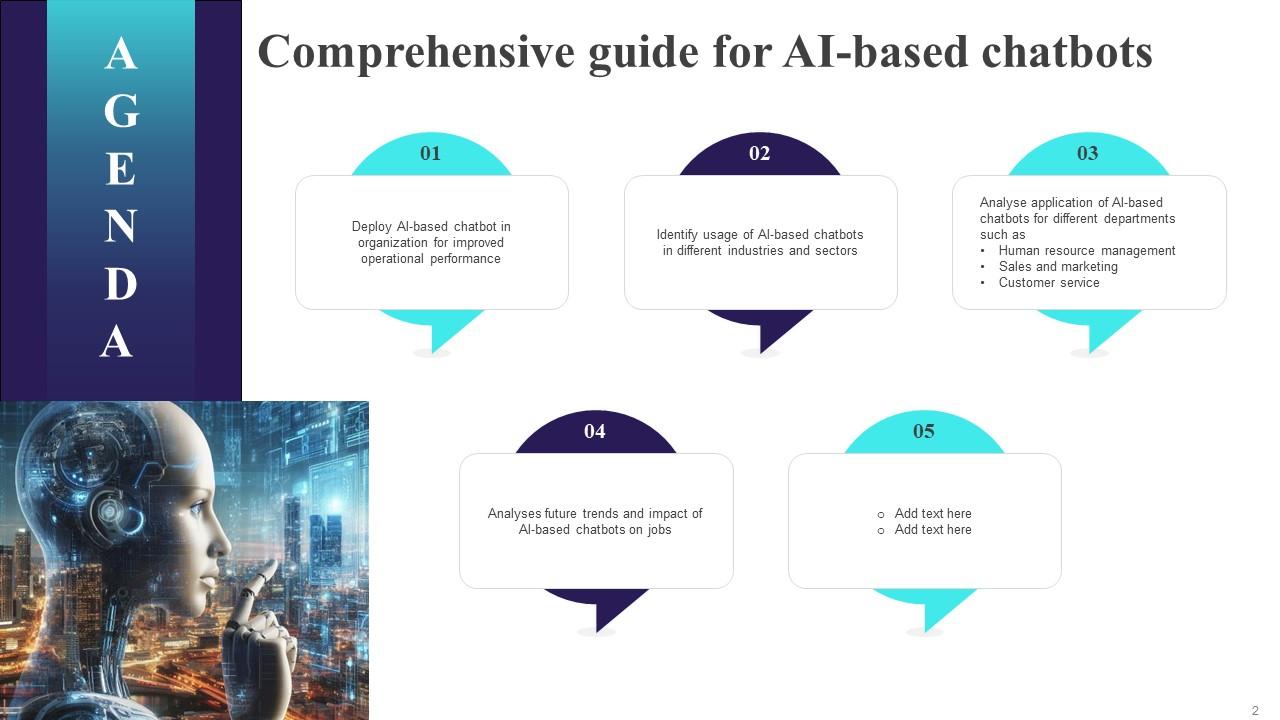
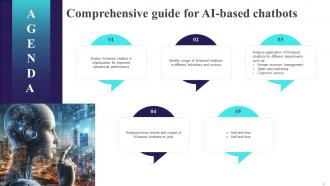
Slide 2: This is an Agenda slide. State your agendas here.
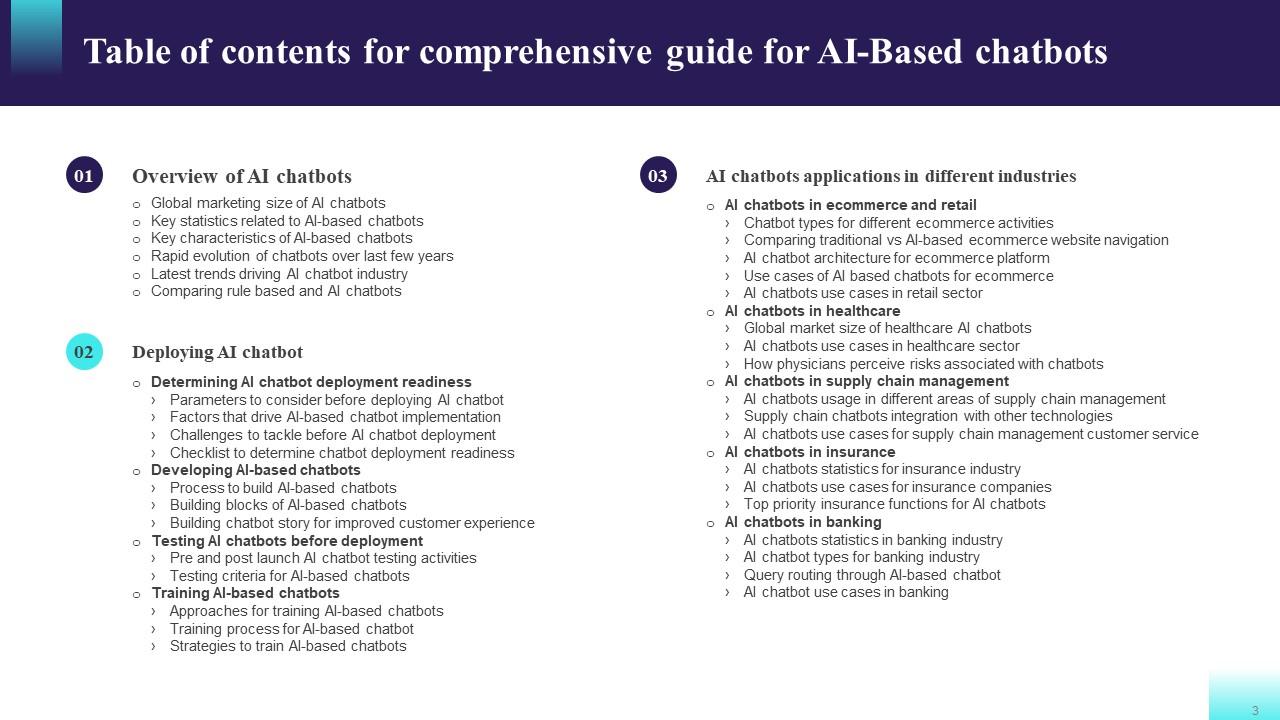
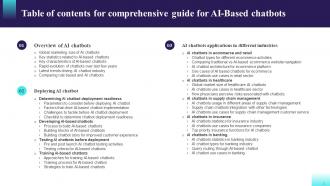
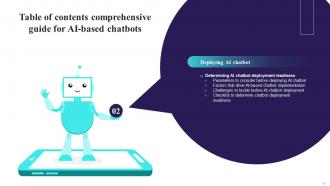
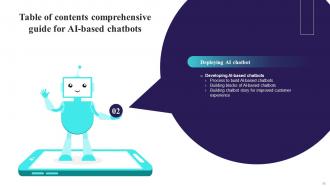
Slide 3: This slide shows Table of Content for the presentation.
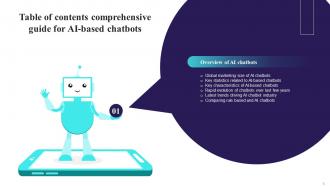
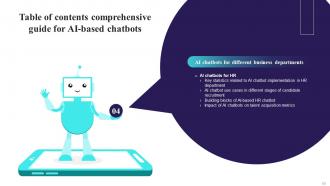
Slide 4: This slide continues showing Table of Content for the presentation.
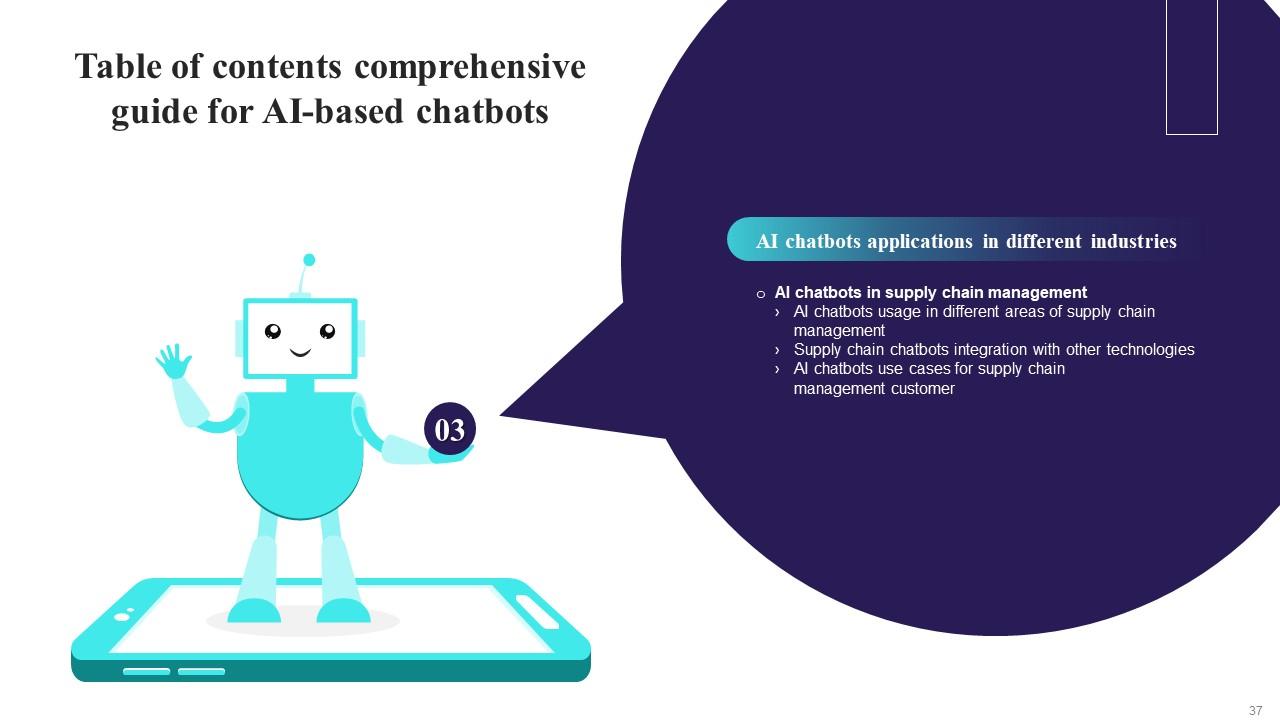
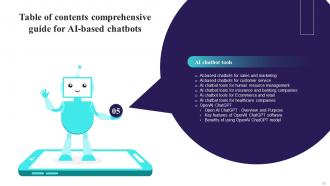
Slide 5: This slide shows title for topics that are to be covered next in the template.
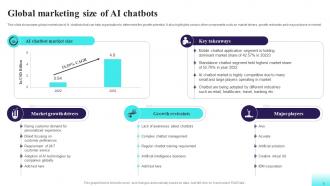
Slide 6: This slide showcases global market size of AI chatbots that can help organization to determine the growth potential.
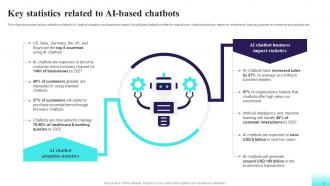
Slide 7: This slide presents various statistics related to AI chatbot adoption and business impact.
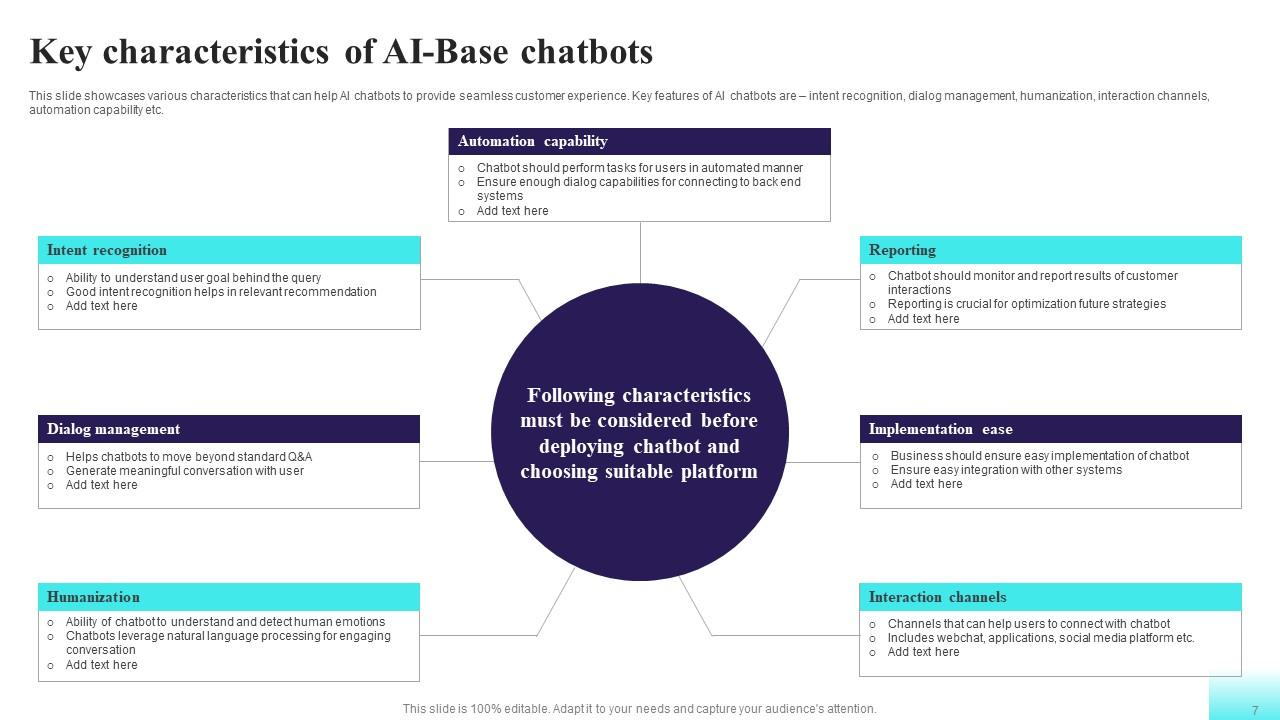
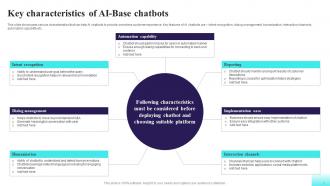
Slide 8: This slide describes various characteristics that can help AI chatbots to provide seamless customer experience.
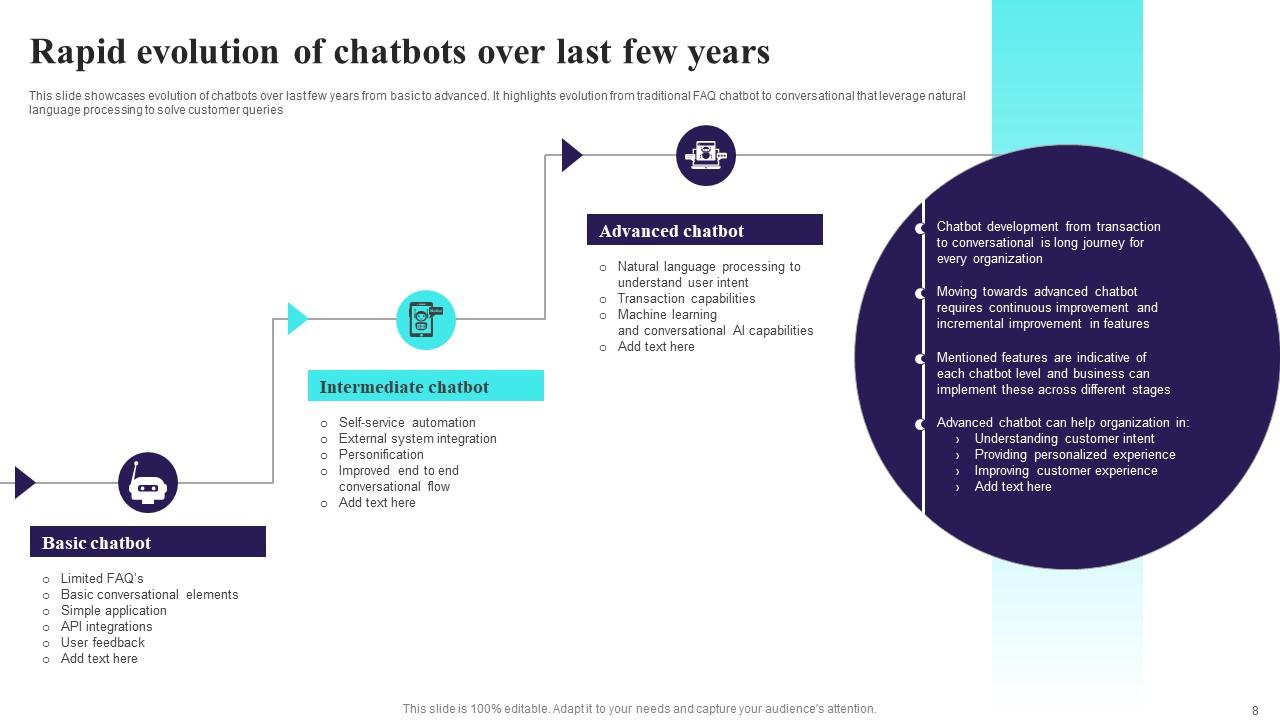
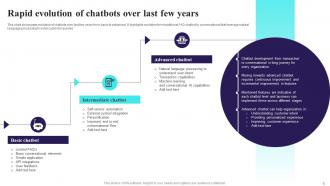
Slide 9: This slide showcases evolution of chatbots over last few years from basic to advanced.
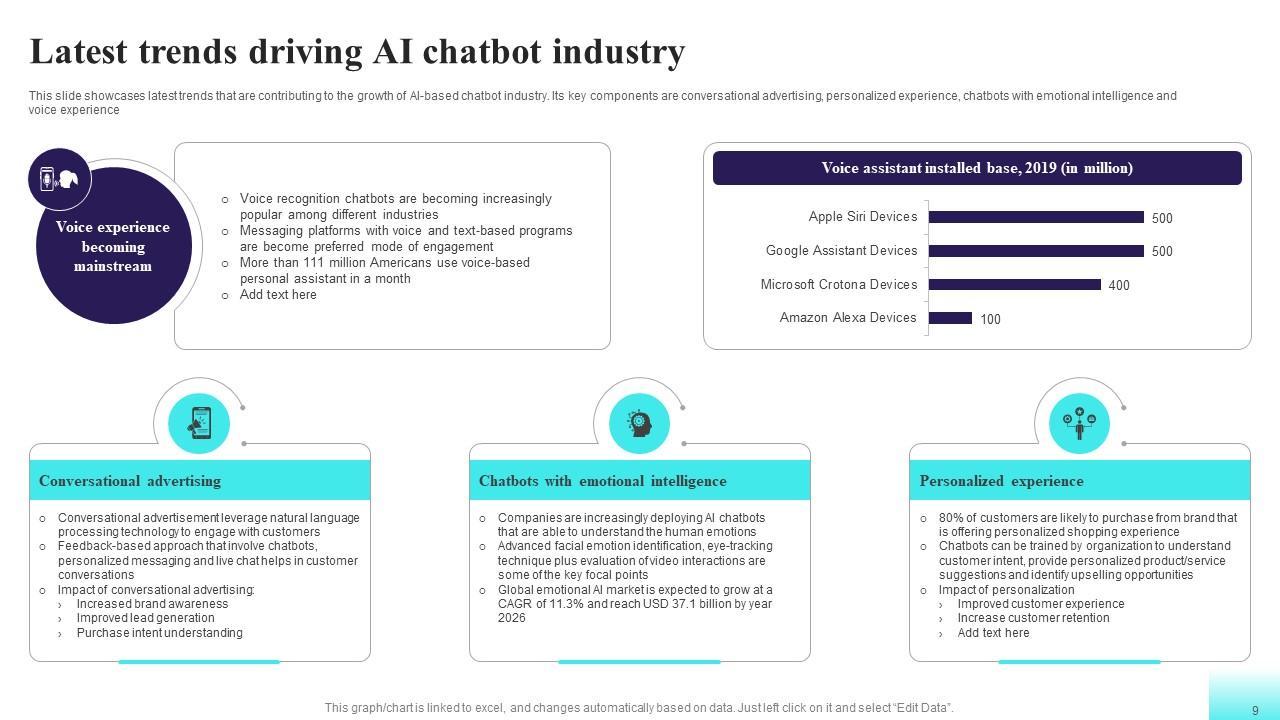
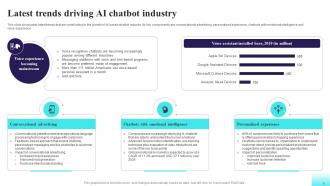
Slide 10: This slide displays latest trends that are contributing to the growth of AI-based chatbot industry.
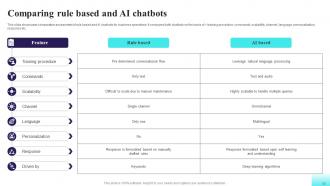
Slide 11: This slide showcases comparative assessment of rule based and AI chatbots for business operations.
Slide 12: This slide shows title for topics that are to be covered next in the template.
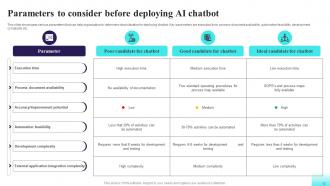
Slide 13: This slide showcases various parameters that can help organization to determine ideal situation for deploying chatbot.
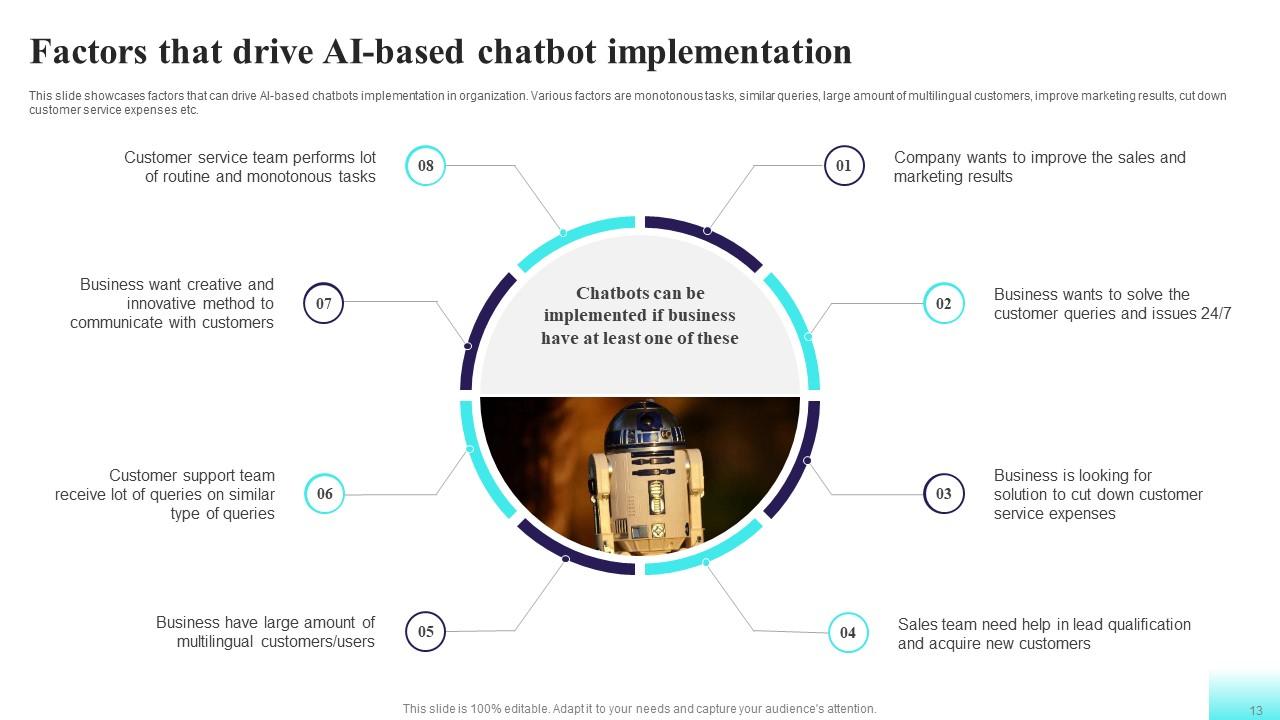
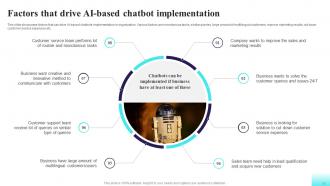
Slide 14: This slide presents factors that can drive AI-based chatbots implementation in organization.
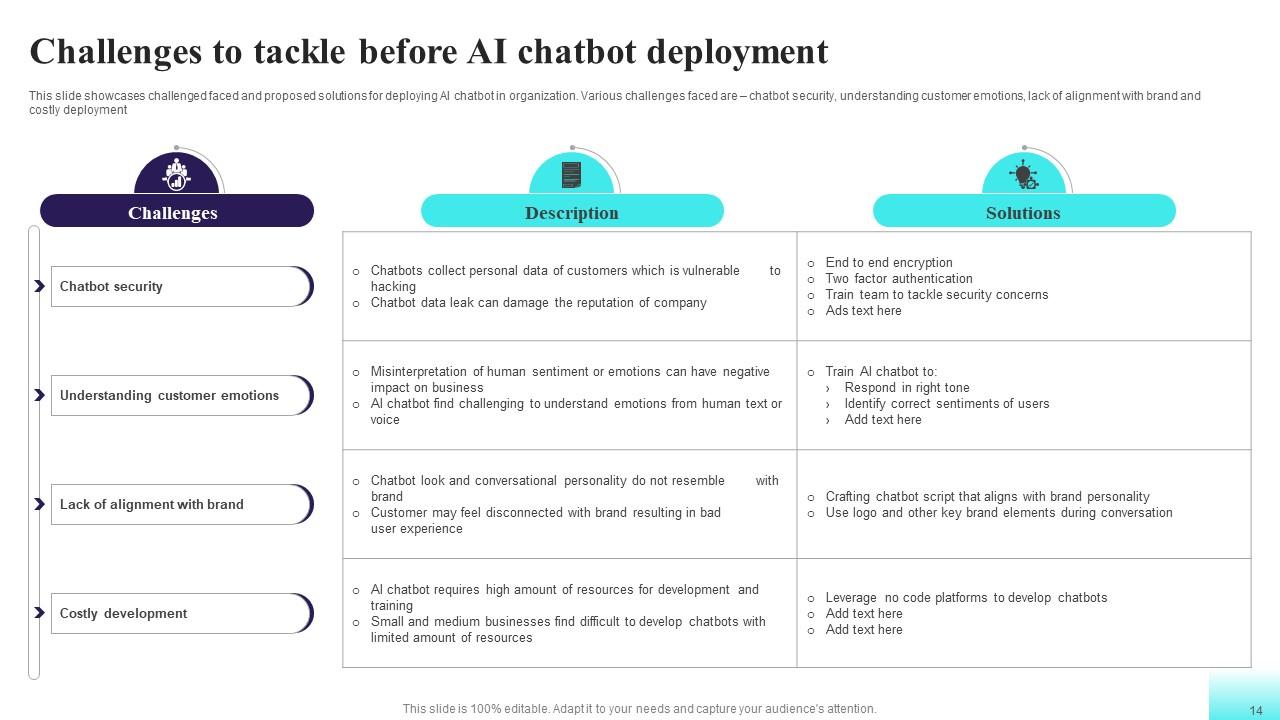
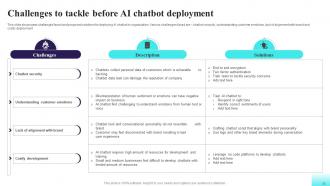
Slide 15: This slide displays challenged faced and proposed solutions for deploying AI chatbot in organization.
Slide 16: This slide showcases checklist that can help organization to determine the AI chatbot deployment readiness.
Slide 17: This slide shows title for topics that are to be covered next in the template.
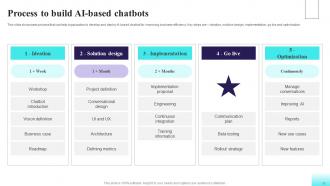
Slide 18: This slide describes a process that can help organization to develop and deploy AI-based chatbot for improving business efficiency.
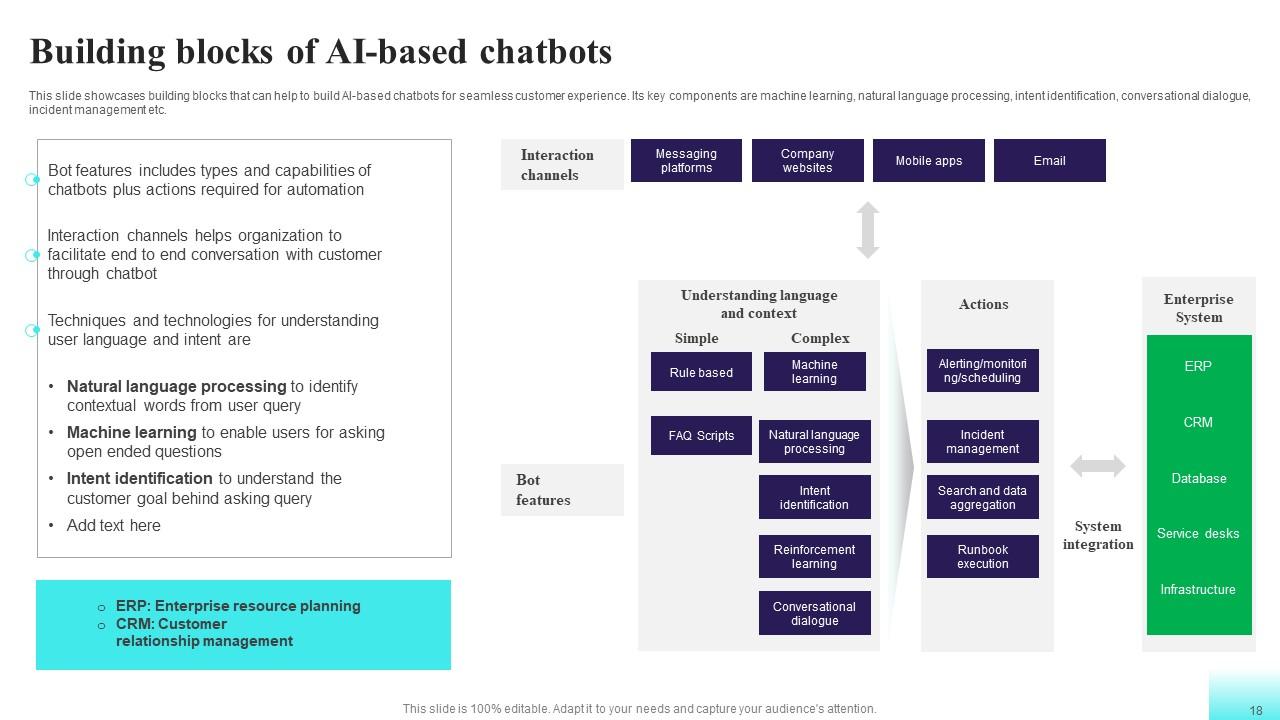
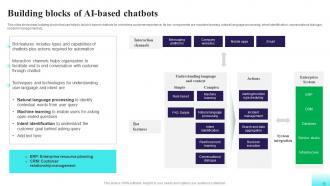
Slide 19: This slide showcases building blocks that can help to build AI-based chatbots for seamless customer experience.
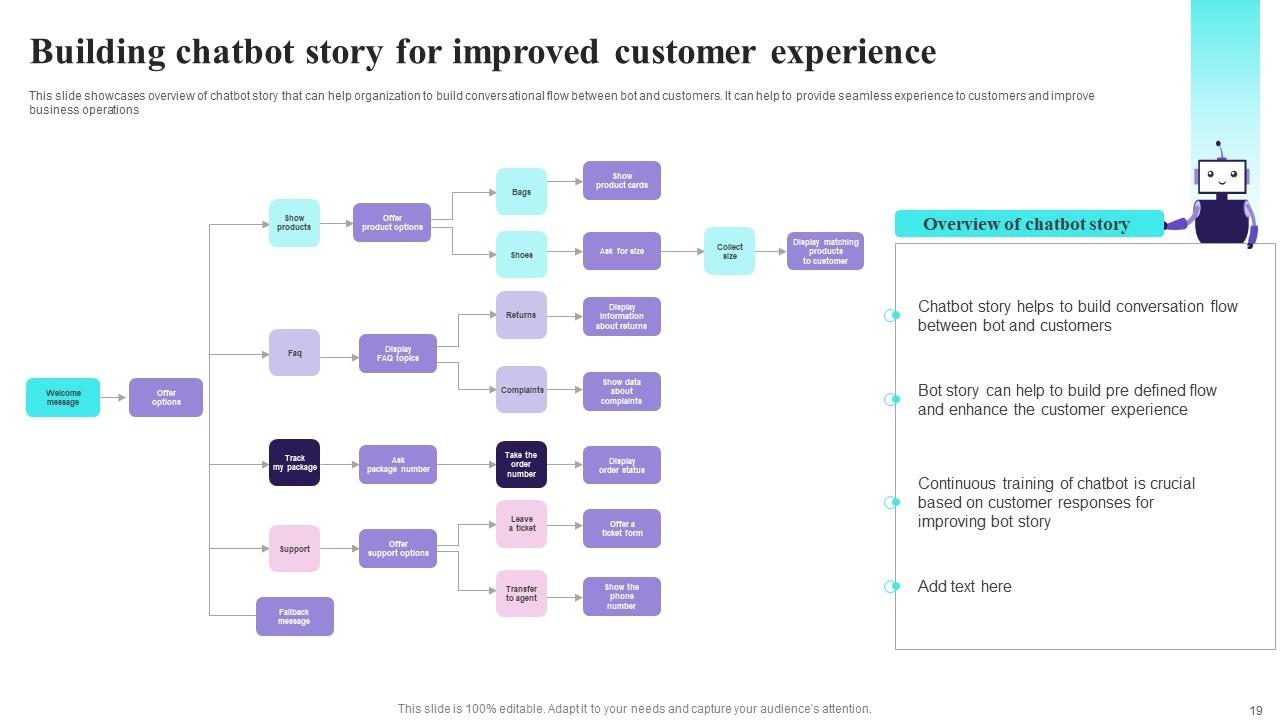
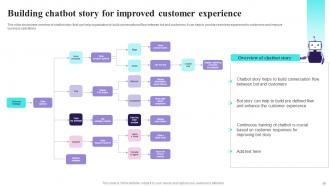
Slide 20: This slide presents an overview of chatbot story that can help organization to build conversational flow between bot and customers.
Slide 21: This slide shows title for topics that are to be covered next in the template.
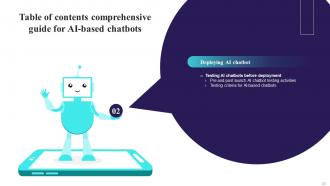
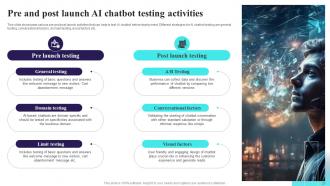
Slide 22: This slide showcases various pre and post launch activities that can help to test AI chatbot before deployment.
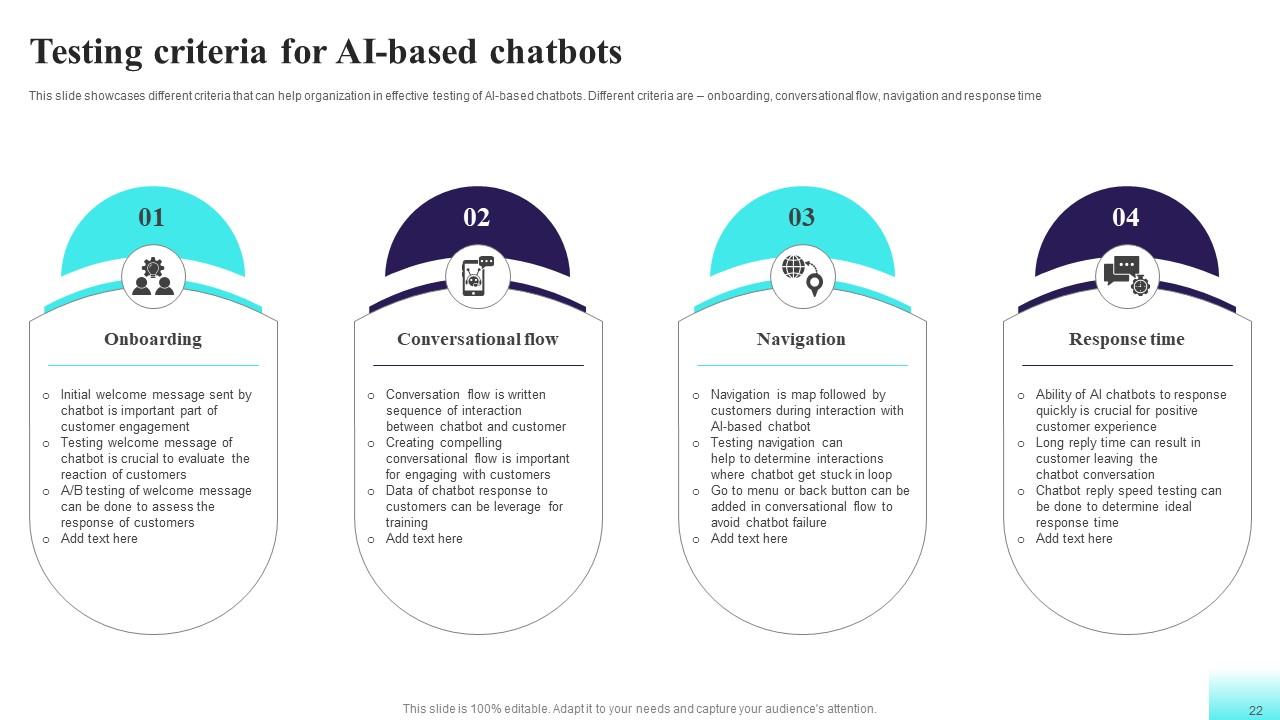
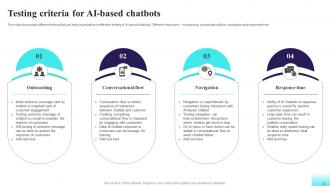
Slide 23: This slide presents different criteria that can help organization in effective testing of AI-based chatbots.
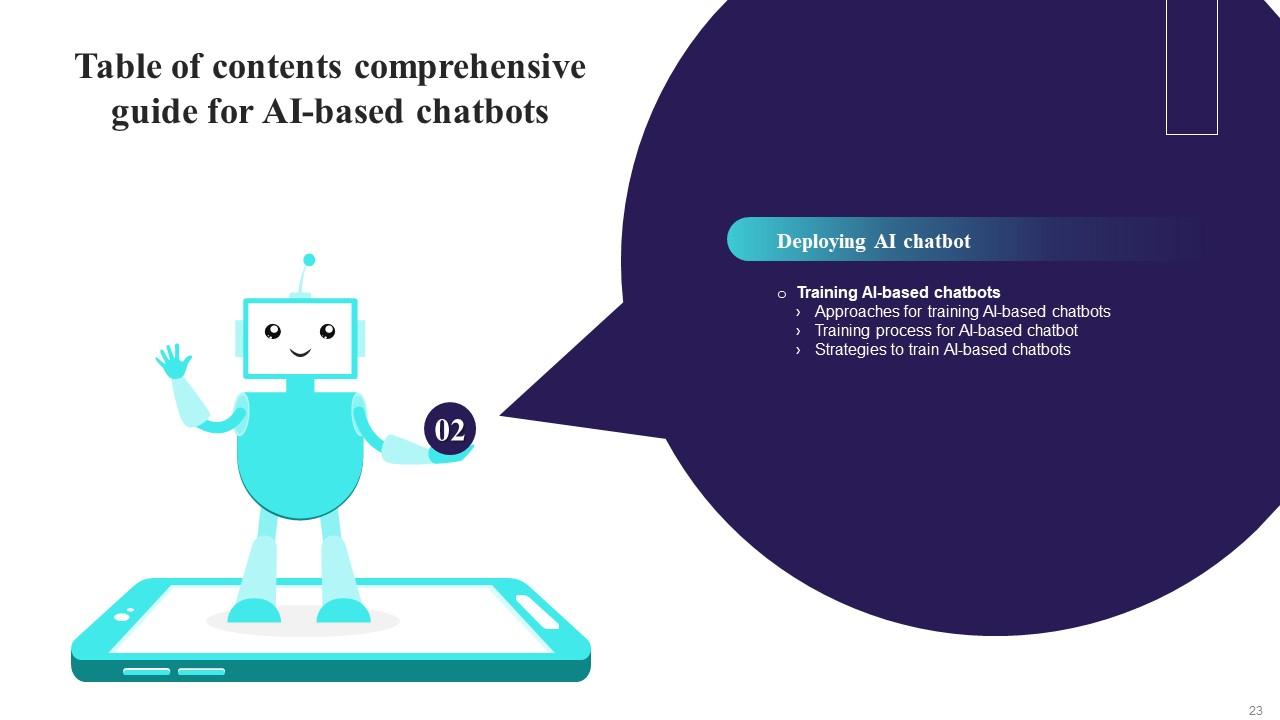
Slide 24: This slide shows title for topics that are to be covered next in the template.
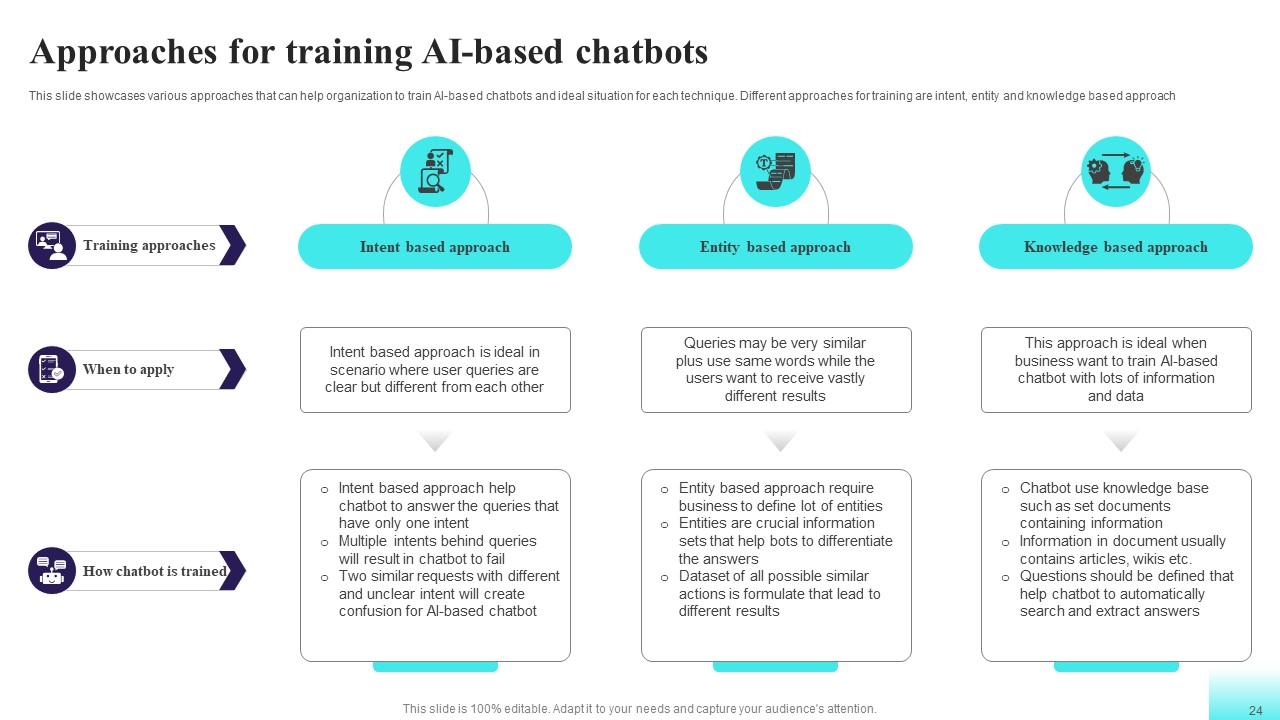
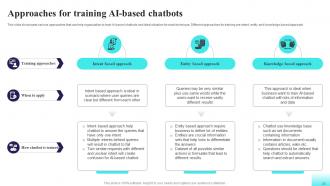
Slide 25: This slide showcases various approaches that can help organization to train AI-based chatbots and ideal situation for each technique.
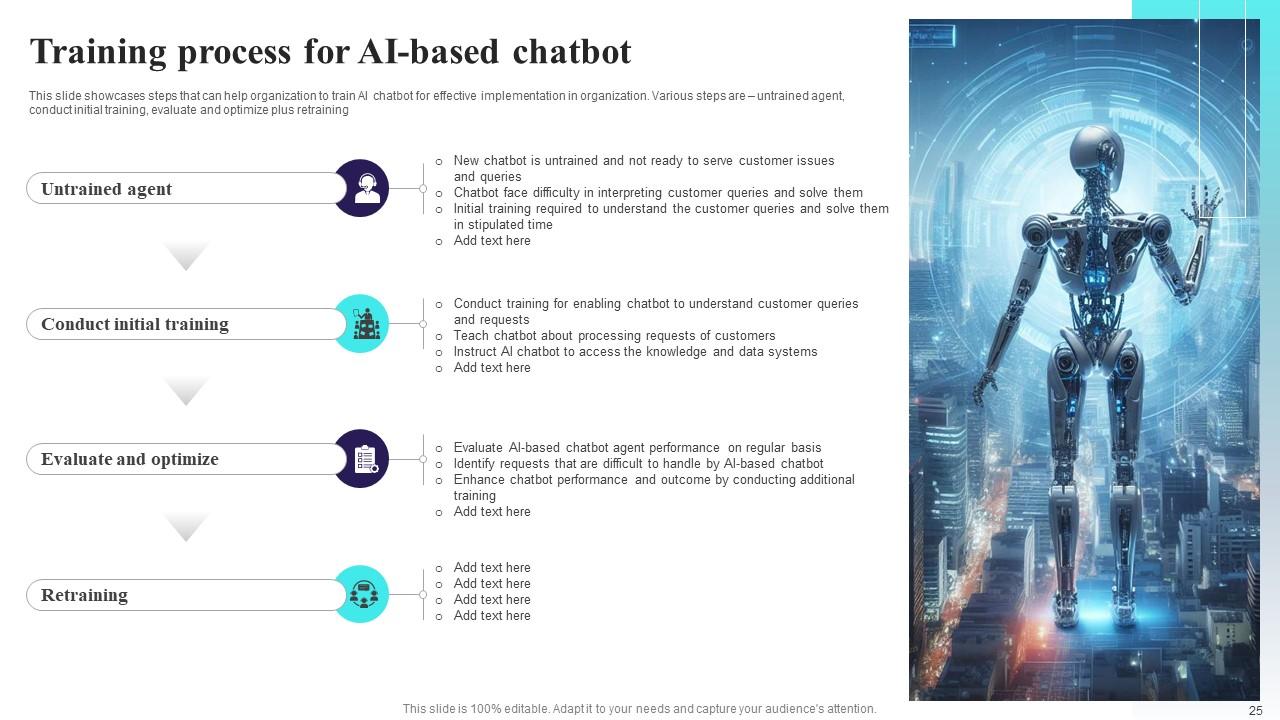
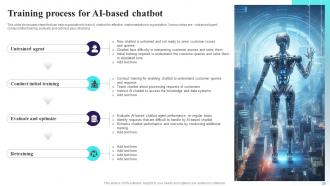
Slide 26: This slide presents steps that can help organization to train AI chatbot for effective implementation in organization.
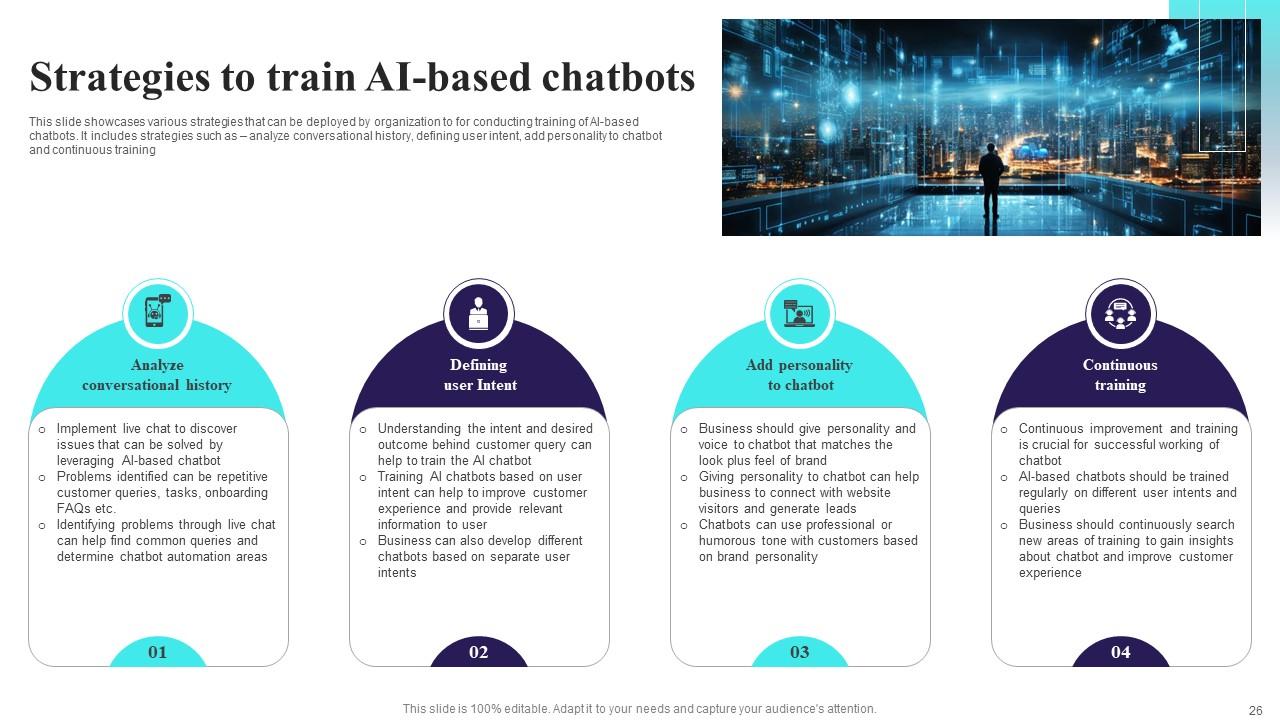
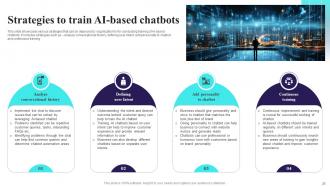
Slide 27: This slide showcases various strategies that can be deployed by organization to for conducting training of AI-based chatbots.
Slide 28: This slide shows title for topics that are to be covered next in the template.
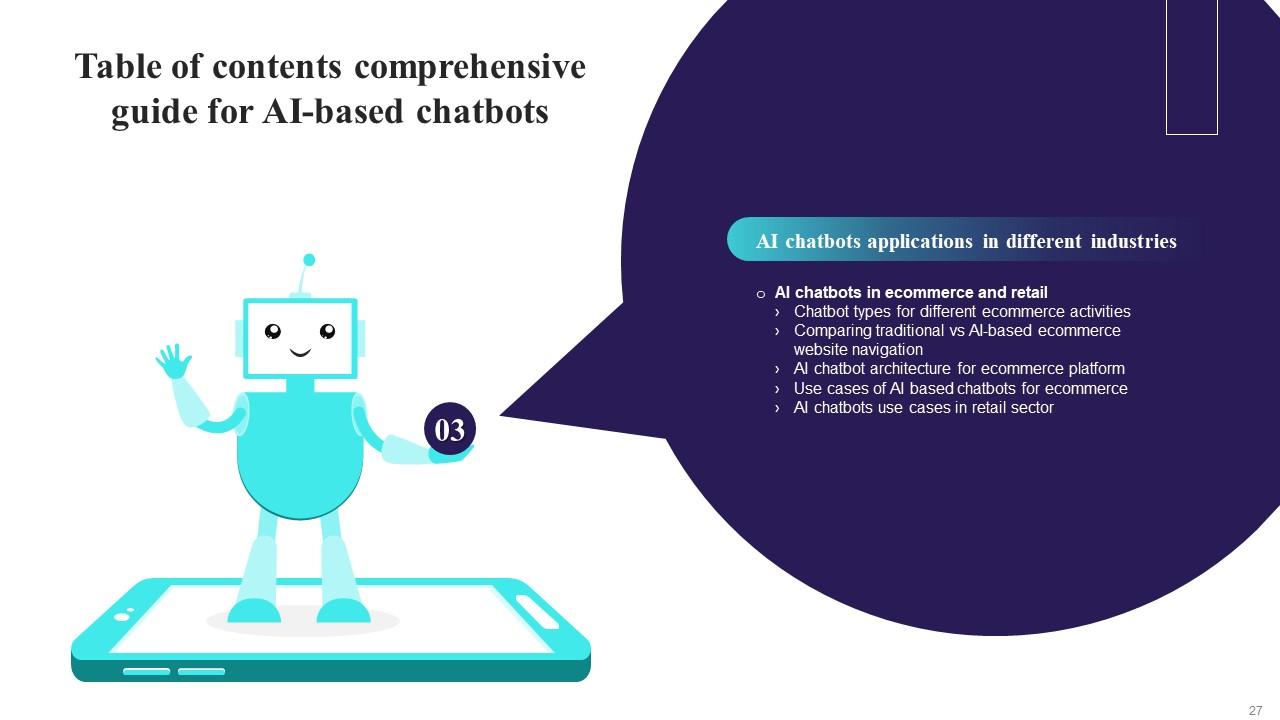
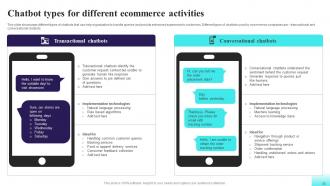
Slide 29: This slide showcases different types of chatbots that can help organization to handle queries and provide enhanced experience to customers.
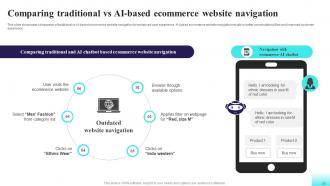
Slide 30: This slide displays comparison of traditional vs AI-based ecommerce website navigation for enhanced user experience.
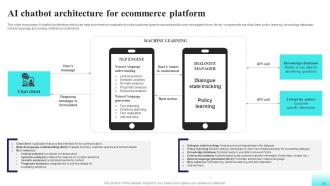
Slide 31: This slide showcases AI chatbot architecture which can help ecommerce companies to solve customer queries and respond to user messages in time.
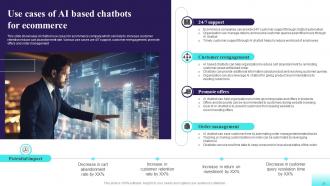
Slide 32: This slide presents AI chatbot use cases for ecommerce company which can help to increase customer retention reduce cart abandonment rate.
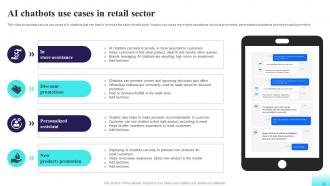
Slide 33: This slide showcases various use cases of AI chatbots that can help to increase the sales of retail store.
Slide 34: This slide shows title for topics that are to be covered next in the template.
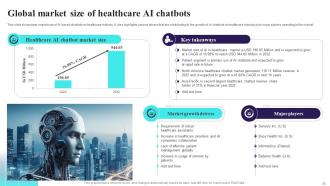
Slide 35: This slide displays global market size of AI chatbots that can help organization to determine the growth potential.
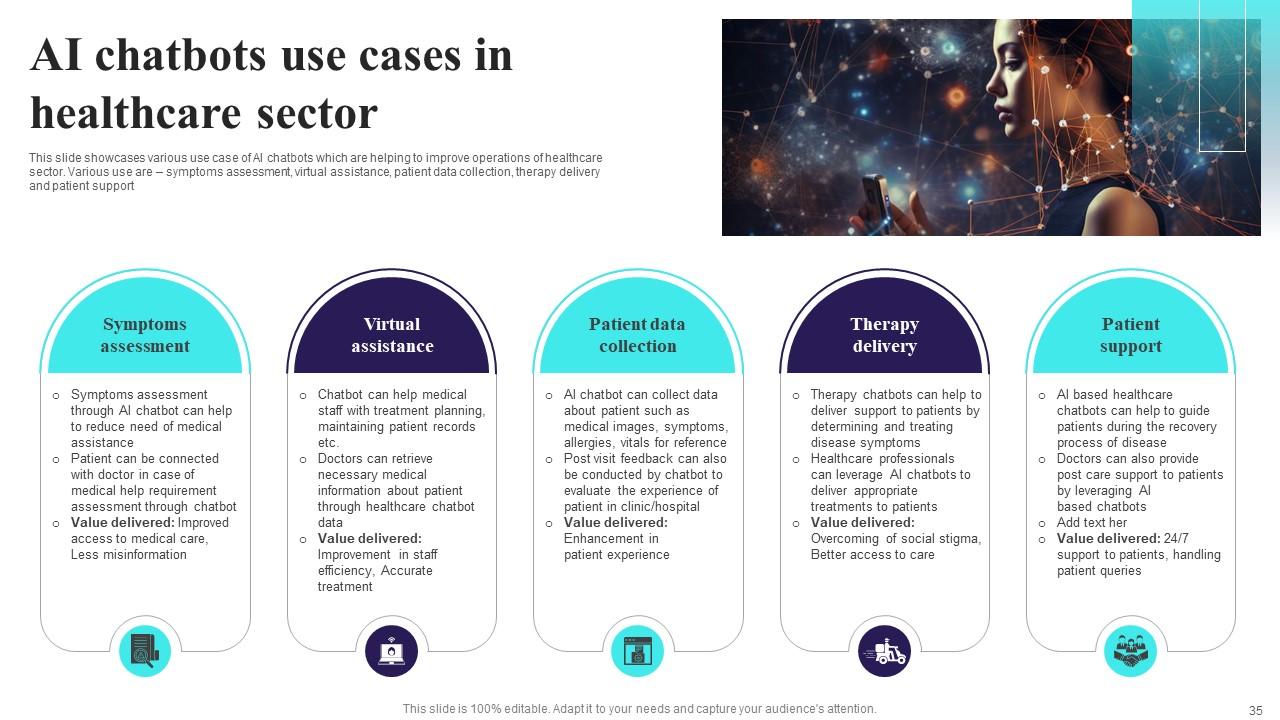
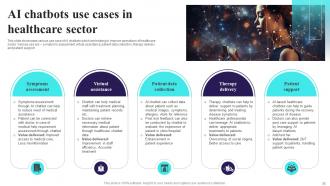
Slide 36: This slide showcases various use case of AI chatbots which are helping to improve operations of healthcare sector.
Slide 37: This slide displays graph which highlights various risks associated with AI based chatbots implementation in healthcare industry.
Slide 38: This slide shows title for topics that are to be covered next in the template.
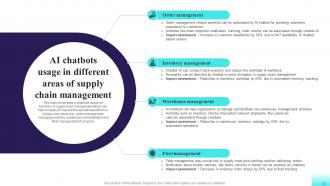
Slide 39: This slide showcases Ai chatbots usage for functions of supply chain management which can help company to improve the operational efficiency.
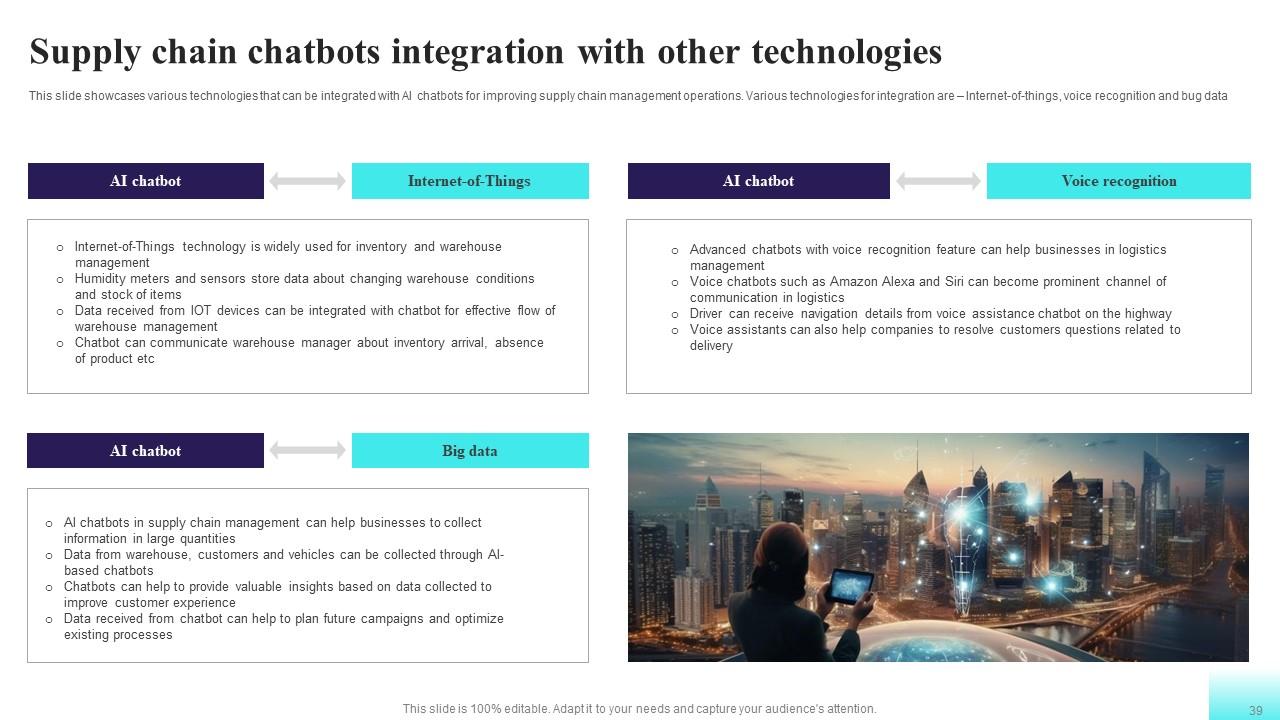
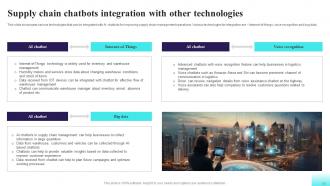
Slide 40: This slide presents various technologies that can be integrated with AI chatbots for improving supply chain management operations.
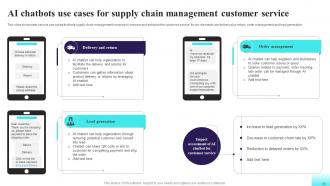
Slide 41: This slide showcases various use cases that help supply chain management company to improve and enhance the customer service.
Slide 42: This slide shows title for topics that are to be covered next in the template.
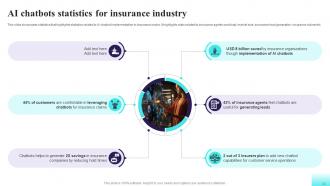
Slide 43: This slide displays statistics that highlights statistics related to AI chatbot implementation in insurance sector.
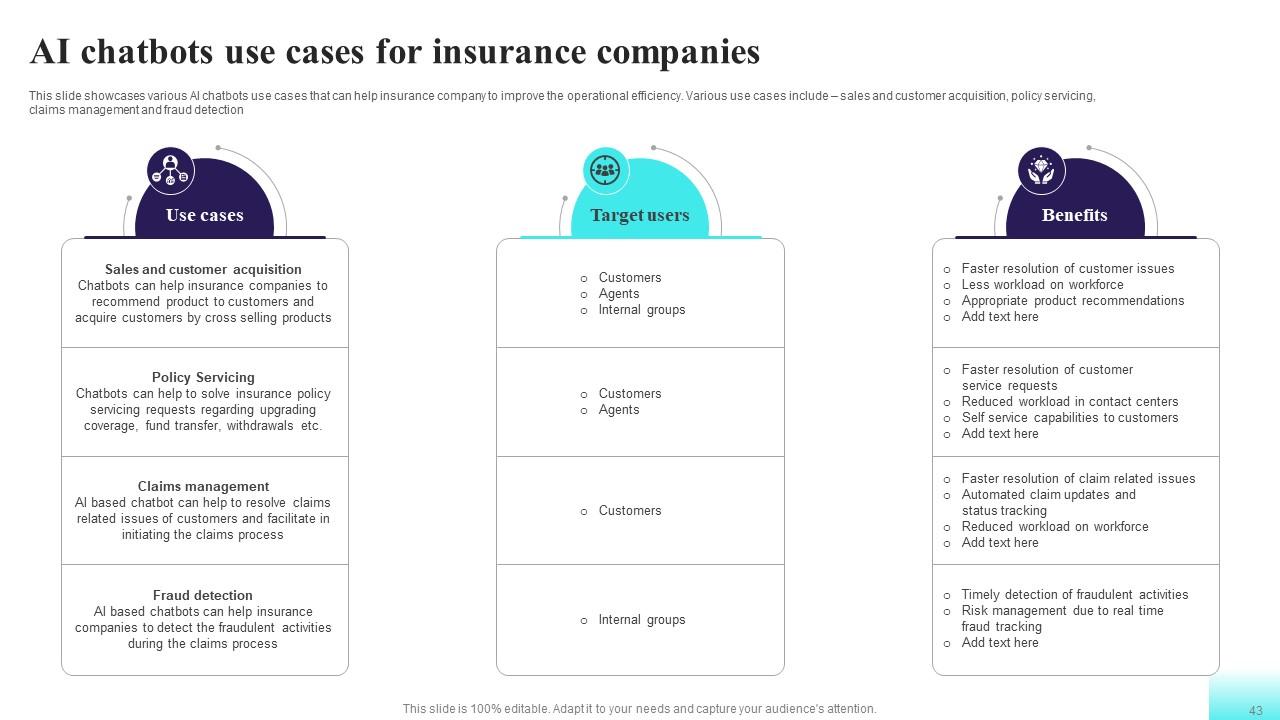
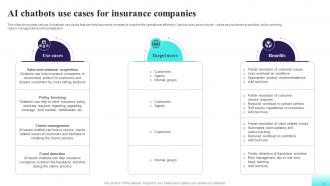
Slide 44: This slide showcases various AI chatbots use cases that can help insurance company to improve the operational efficiency.
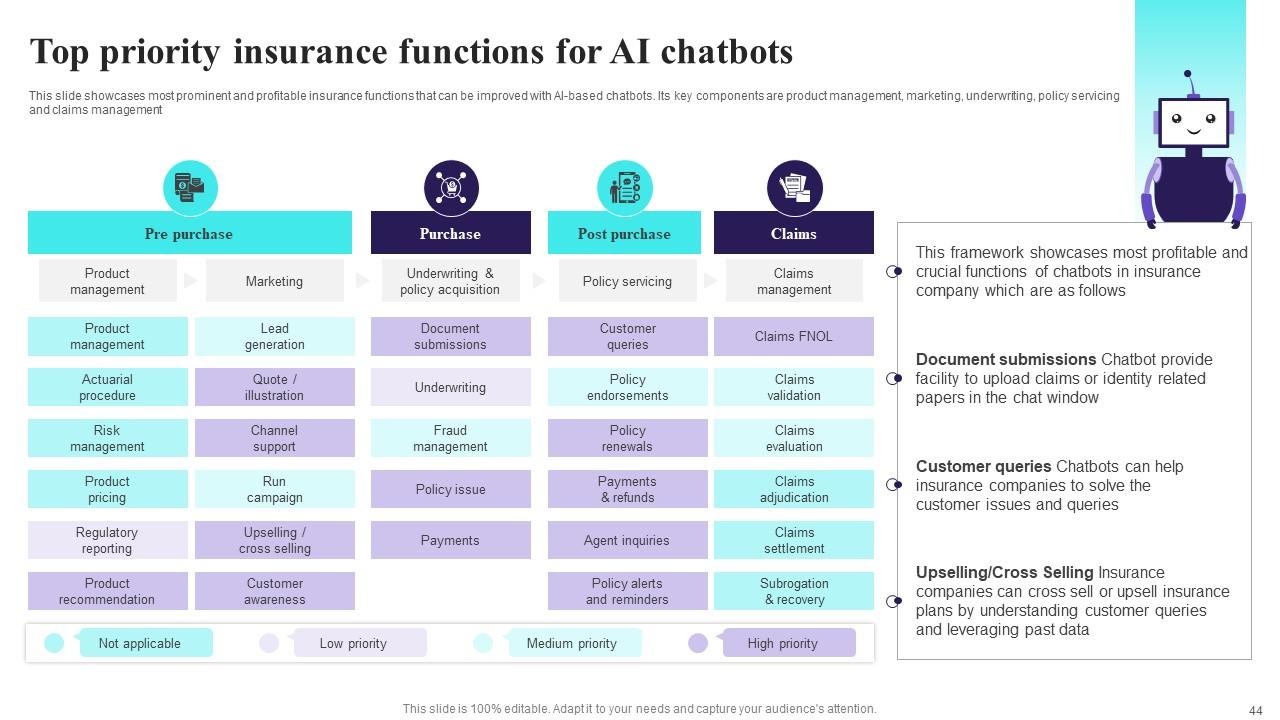
Slide 45: This slide presents most prominent and profitable insurance functions that can be improved with AI-based chatbots.
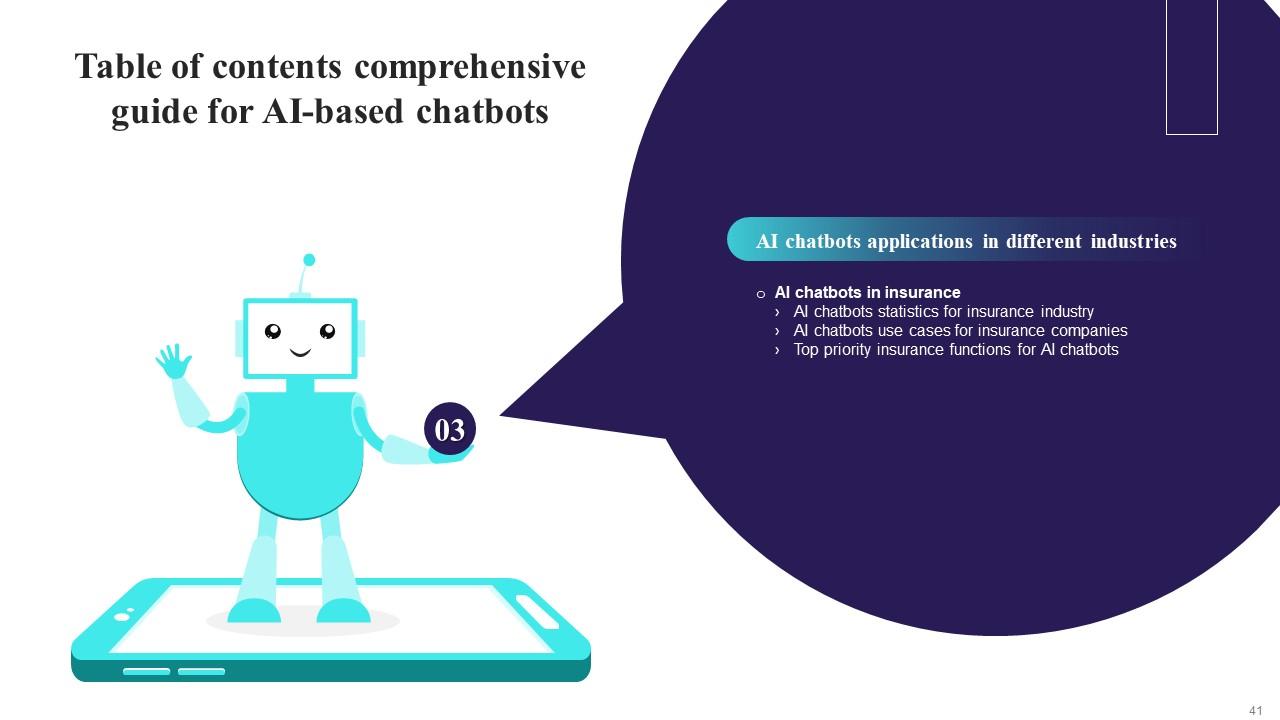
Slide 46: This slide shows title for topics that are to be covered next in the template.
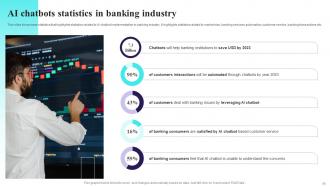
Slide 47: This slide showcases statistics that highlights statistics related to AI chatbot implementation in banking industry.
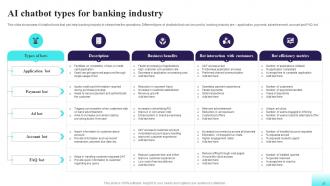
Slide 48: This slide presents AI chatbot tools that can help banking industry to streamline the operations.
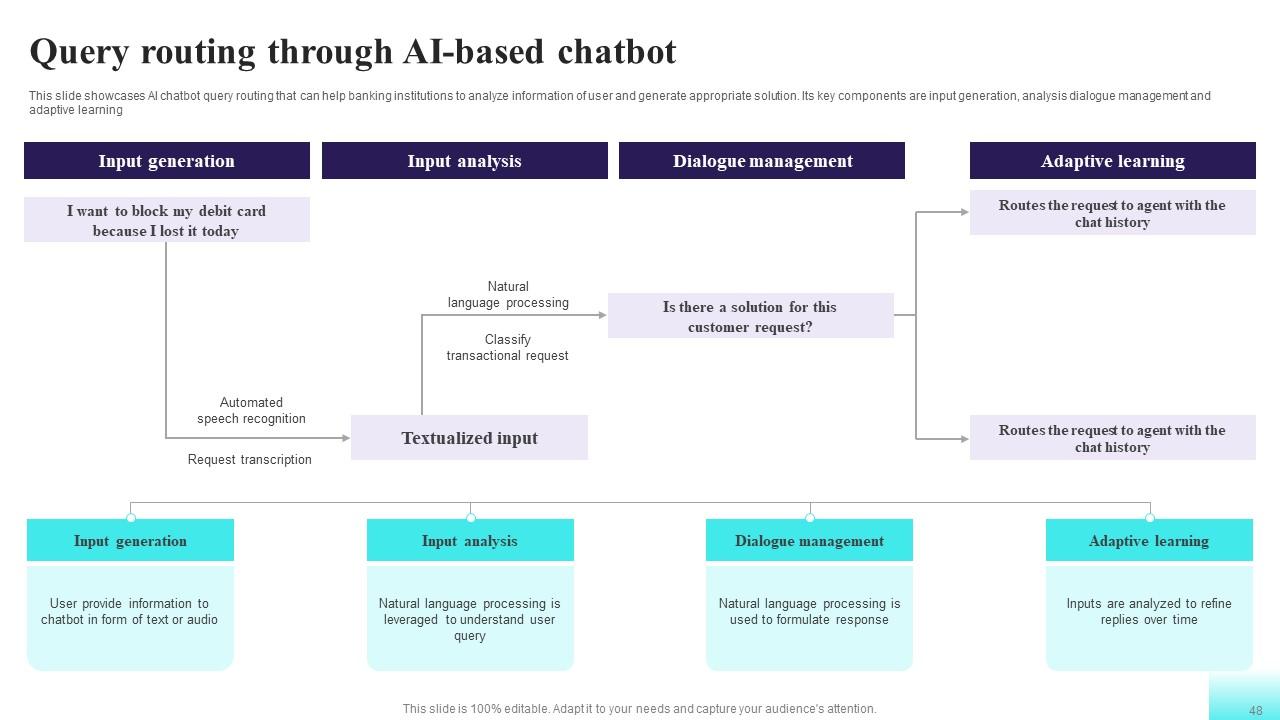
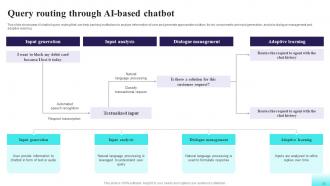
Slide 49: This slide showcases AI chatbot query routing that can help banking institutions to analyze information of user and generate appropriate solution.
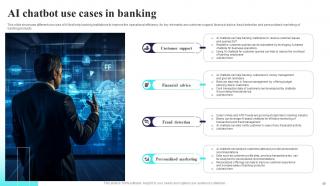
Slide 50: This slide presents different use case of AI that help banking institutions to improve the operational efficiency.
Slide 51: This slide shows title for topics that are to be covered next in the template.
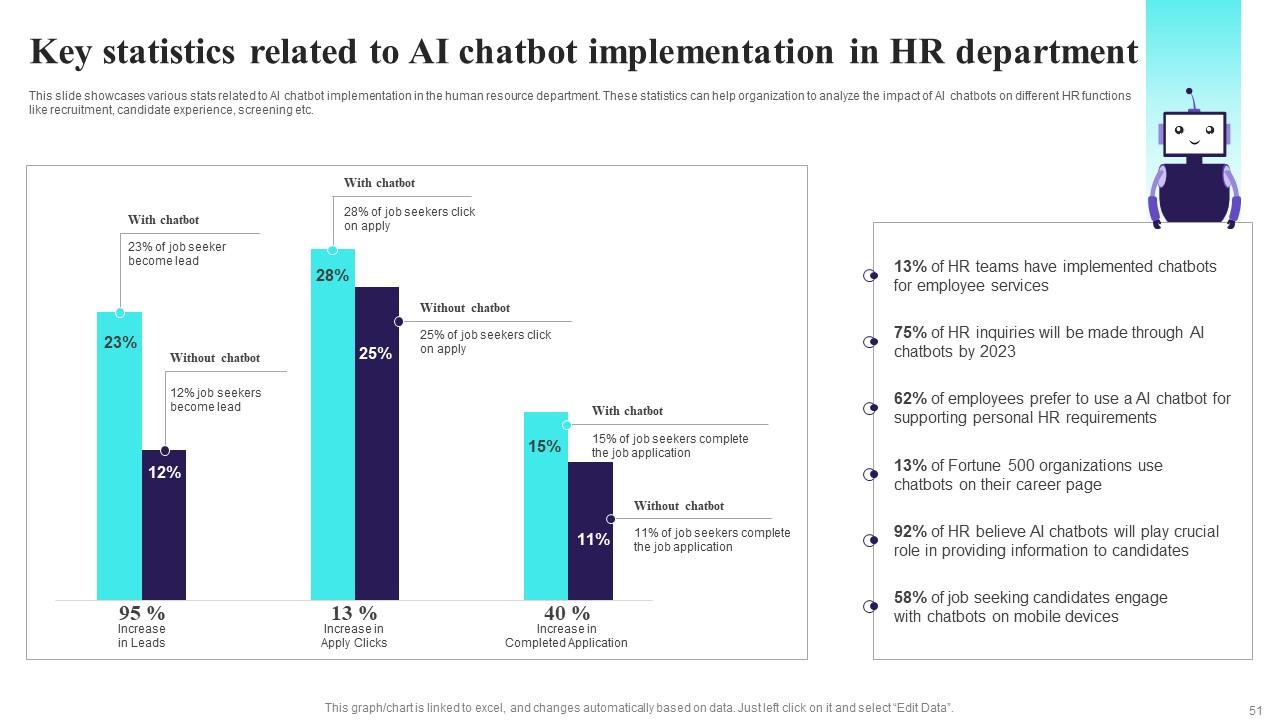
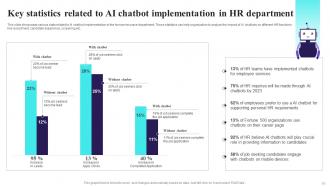
Slide 52: This slide showcases various stats related to AI chatbot implementation in the human resource department.
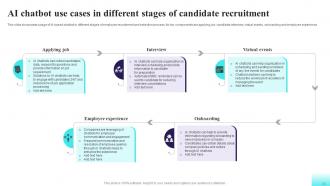
Slide 53: This slide presents usage of AI-based chatbot in different stages of employee recruitment and selection process.
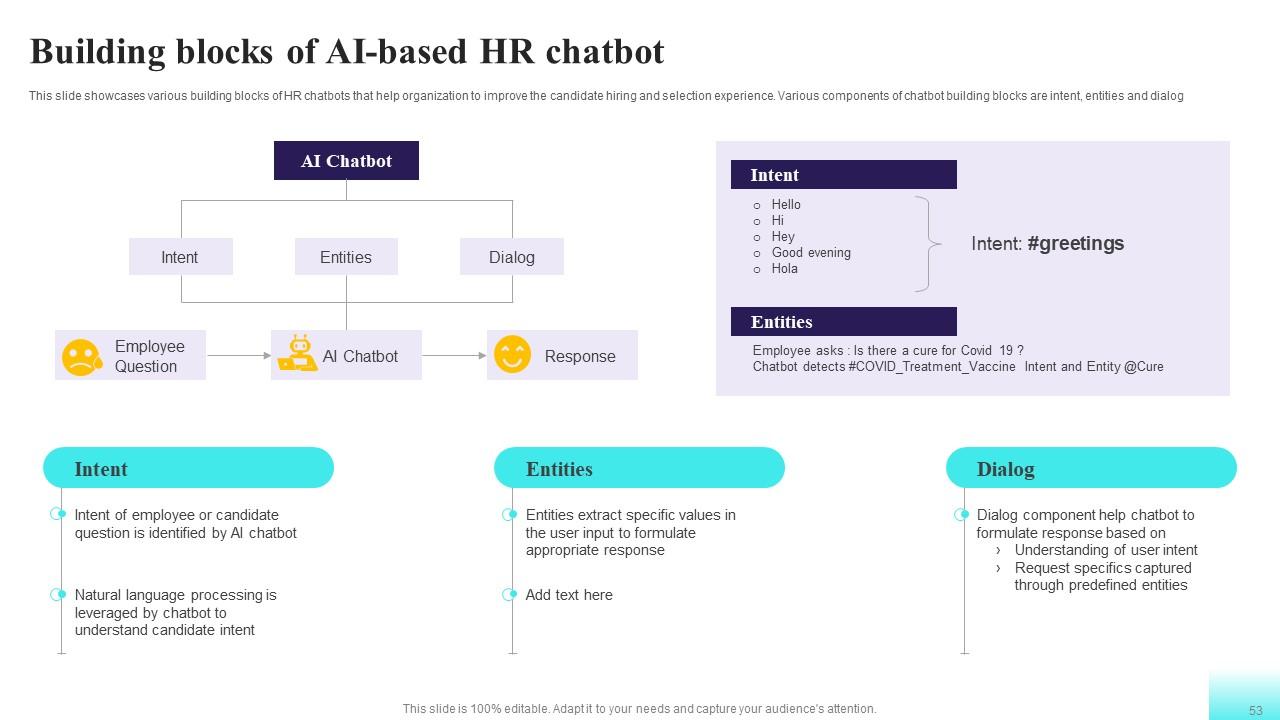
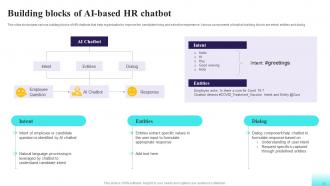
Slide 54: This slide showcases various building blocks of HR chatbots that help organization to improve the candidate hiring and selection experience.
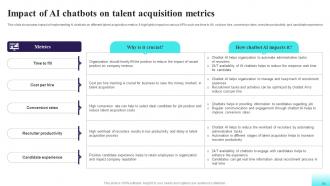
Slide 55: This slide displays impact of implementing AI chatbots on different talent acquisition metrics.
Slide 56: This slide shows title for topics that are to be covered next in the template.
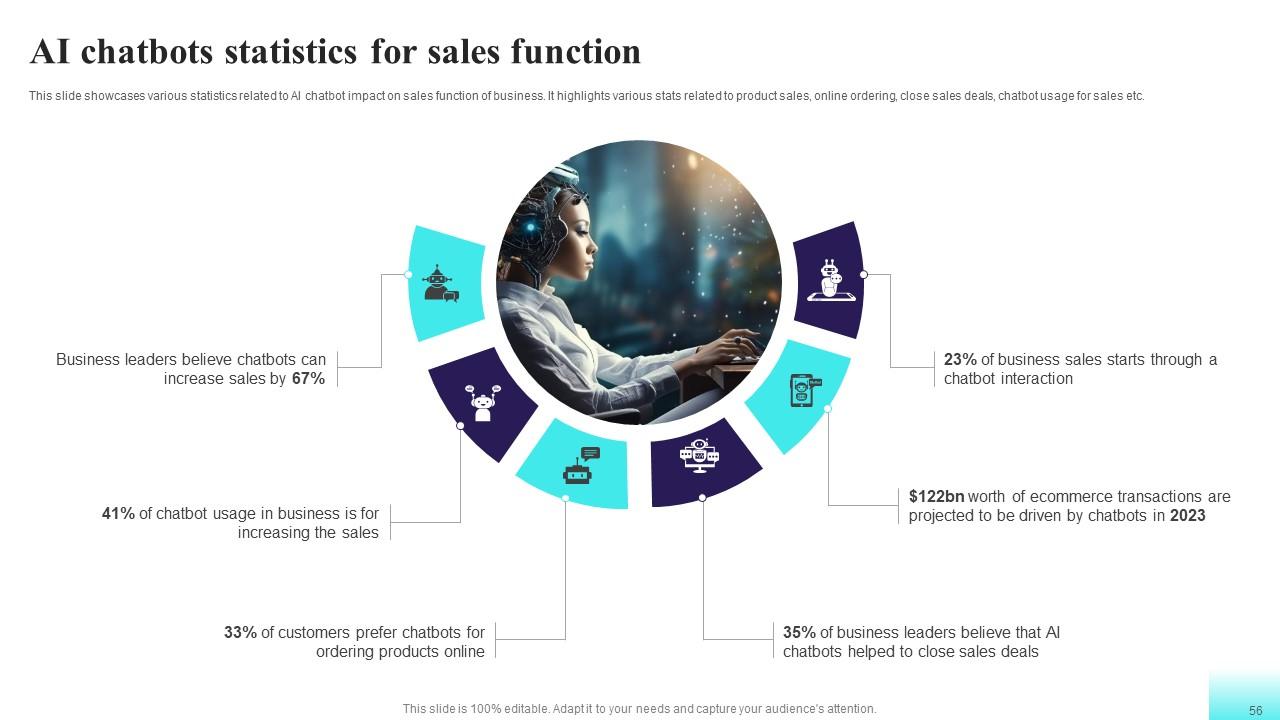
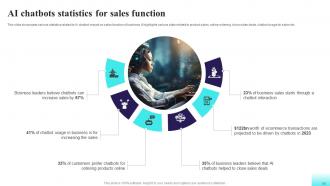
Slide 57: This slide showcases various statistics related to AI chatbot impact on sales function of business.
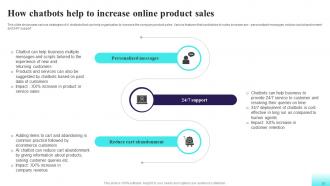
Slide 58: This slide presents various strategies of AI chatbots that can help organization to increase the company product sales.
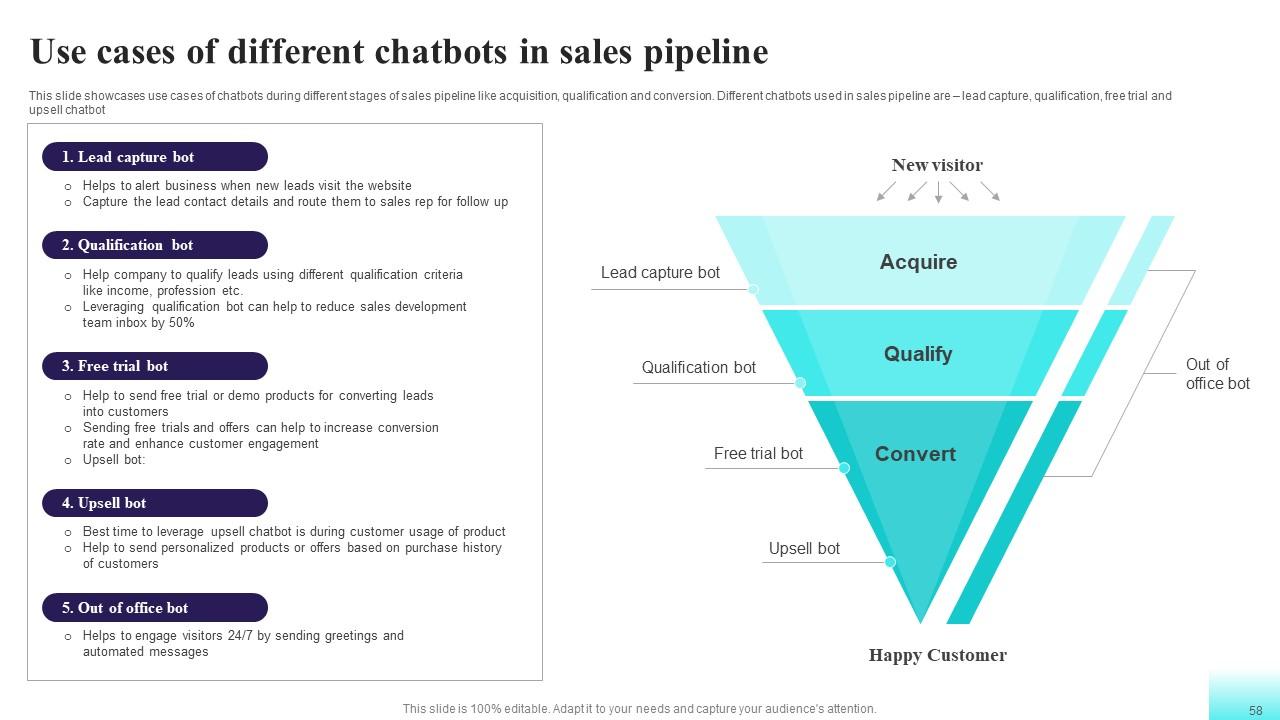
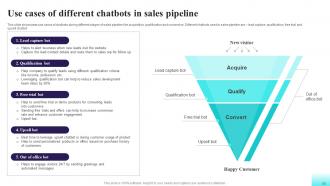
Slide 59: This slide showcases use cases of chatbots during different stages of sales pipeline like acquisition, qualification and conversion.
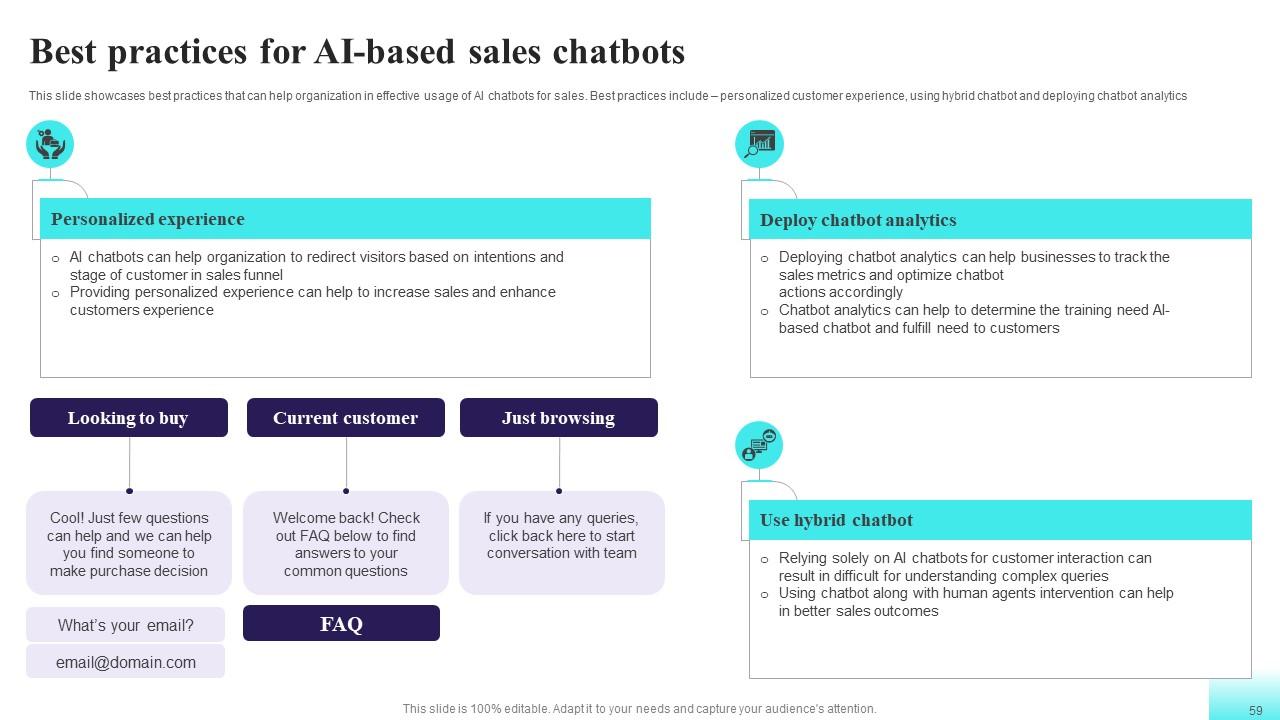
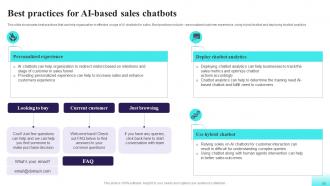
Slide 60: This slide presents best practices that can help organization in effective usage of AI chatbots for sales.
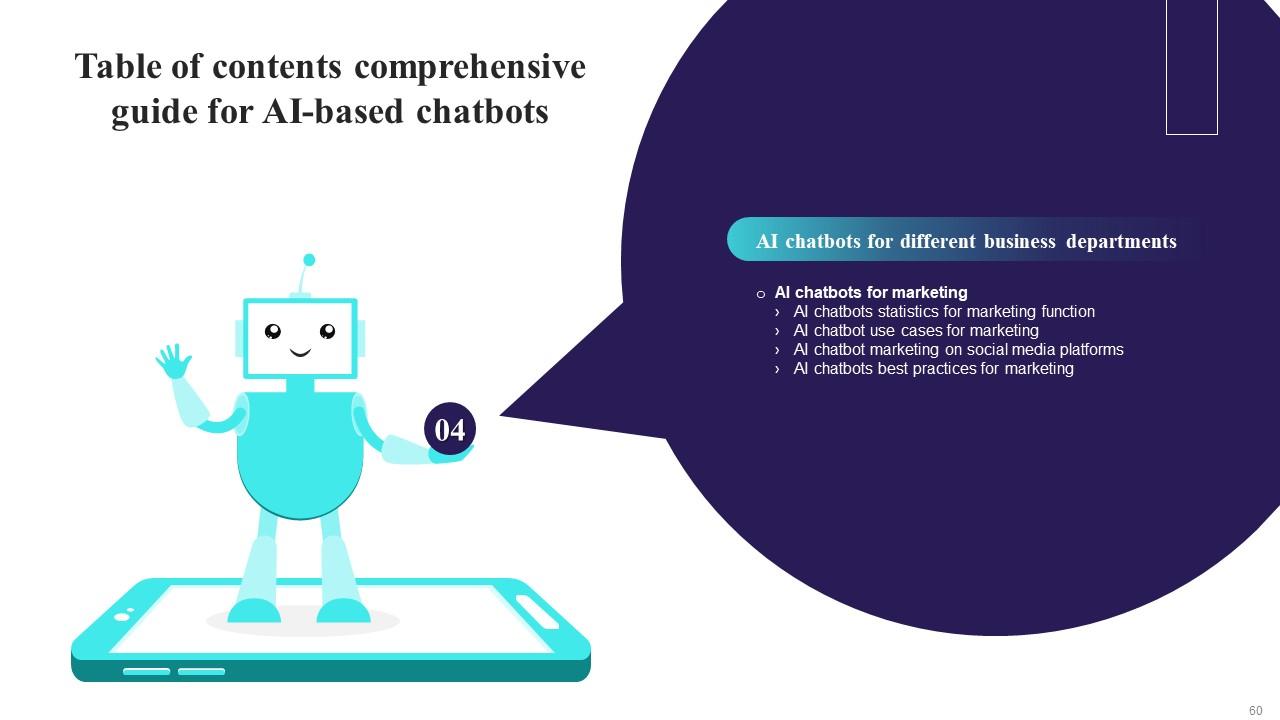
Slide 61: This slide shows title for topics that are to be covered next in the template.
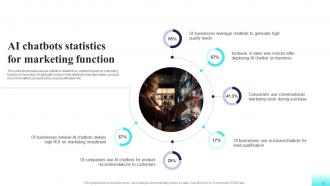
Slide 62: This slide showcases various statistics related to AI chatbot impact on marketing function of business.
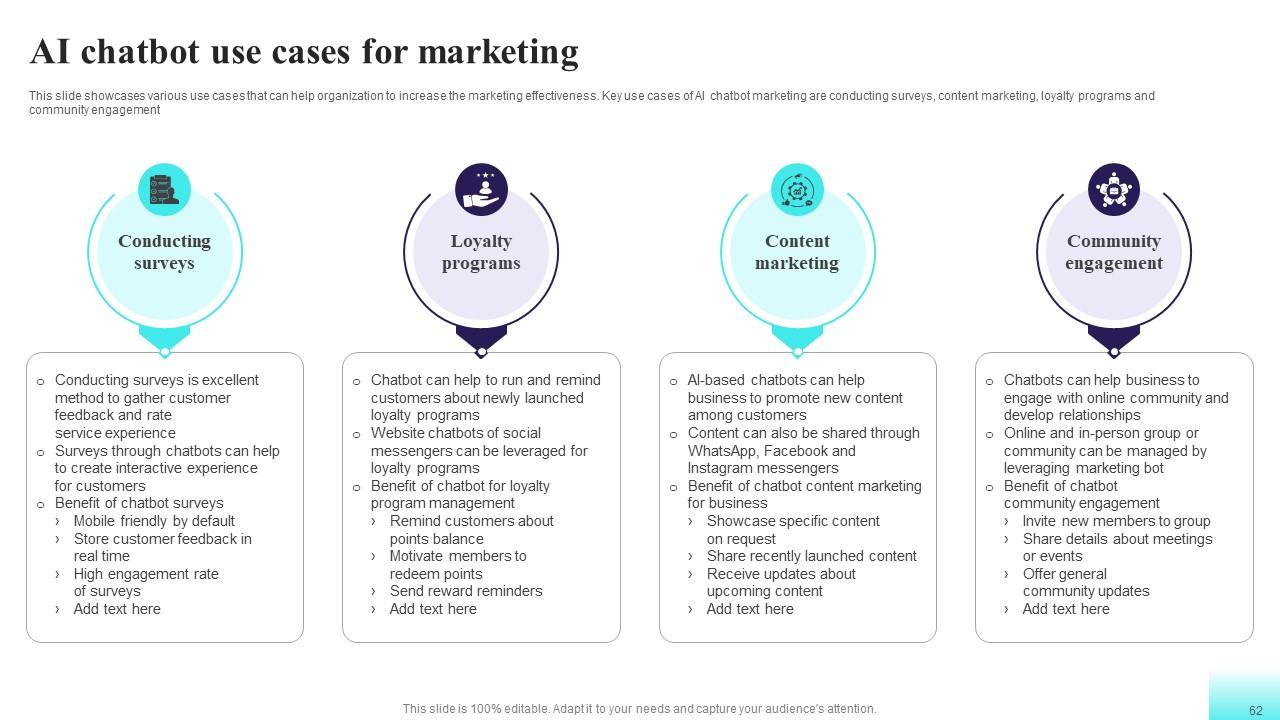
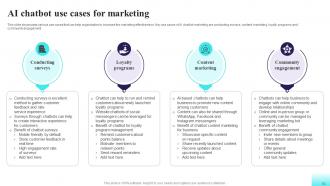
Slide 63: This slide presents various use cases that can help organization to increase the marketing effectiveness.
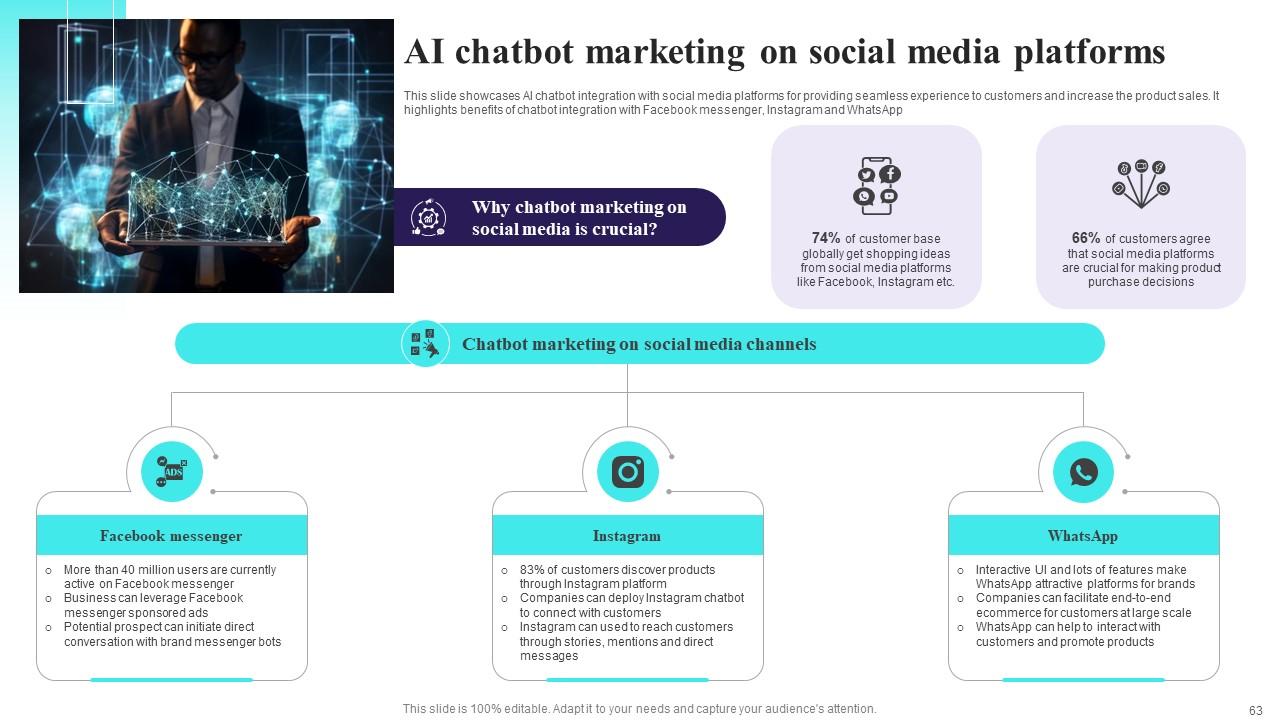
Slide 64: This slide showcases AI chatbot integration with social media platforms for providing seamless experience to customers and increase the product sales.
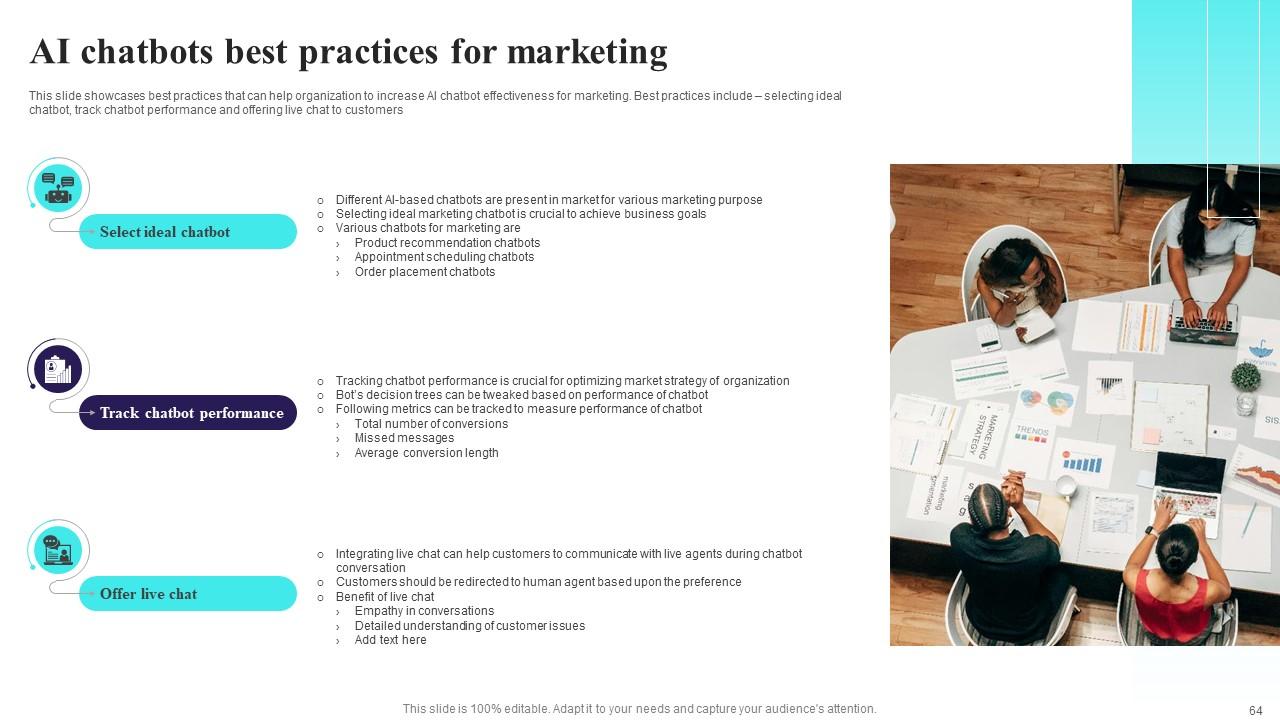
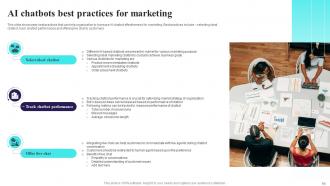
Slide 65: This slide describes best practices that can help organization to increase AI chatbot effectiveness for marketing.
Slide 66: This slide shows title for topics that are to be covered next in the template.
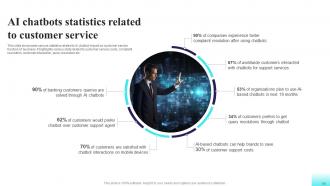
Slide 67: This slide showcases various statistics related to AI chatbot impact on customer service function of business.
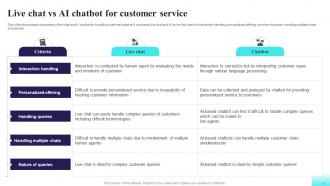
Slide 68: This slide presents comparison of live chat and AI chatbot for handling customer queries.
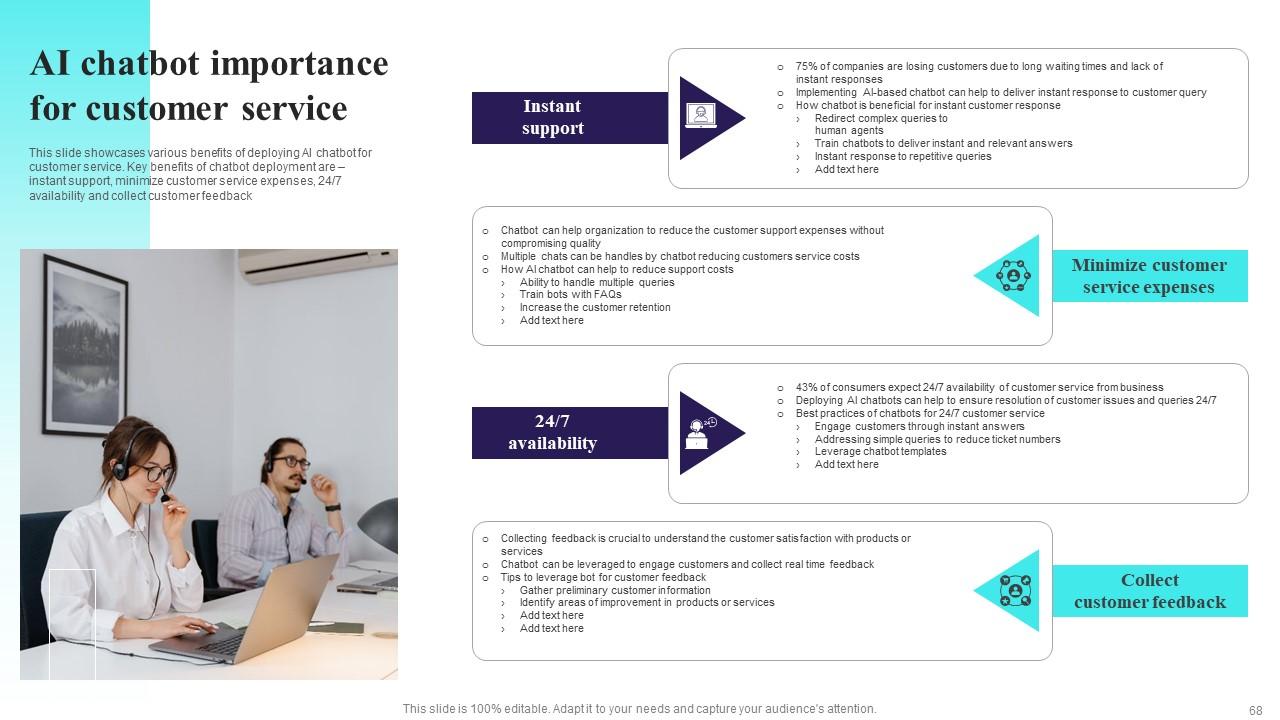
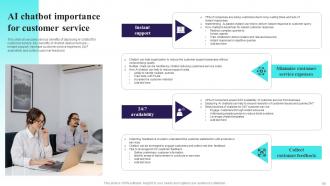
Slide 69: This slide showcases various benefits of deploying AI chatbot for customer service.
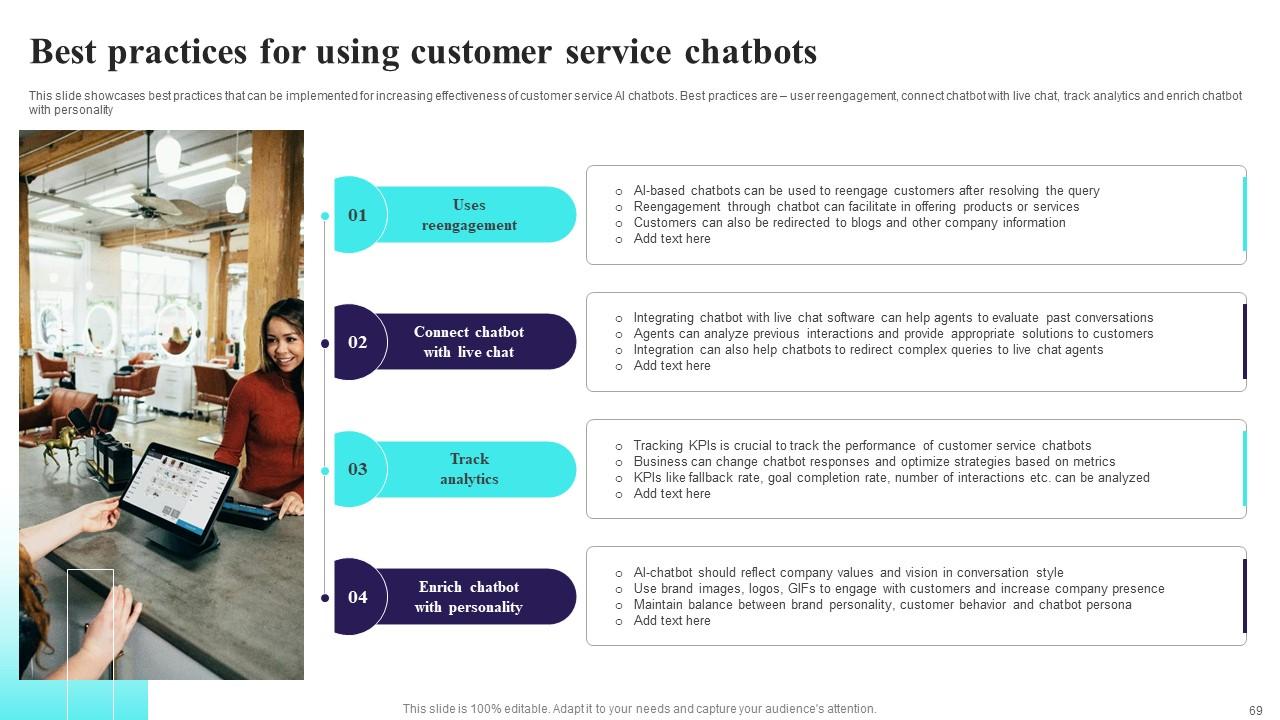
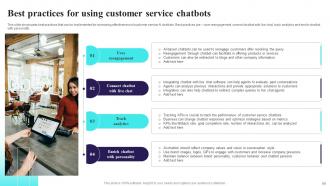
Slide 70: This slide presents best practices that can be implemented for increasing effectiveness of customer service AI chatbots.
Slide 71: This slide shows title for topics that are to be covered next in the template.
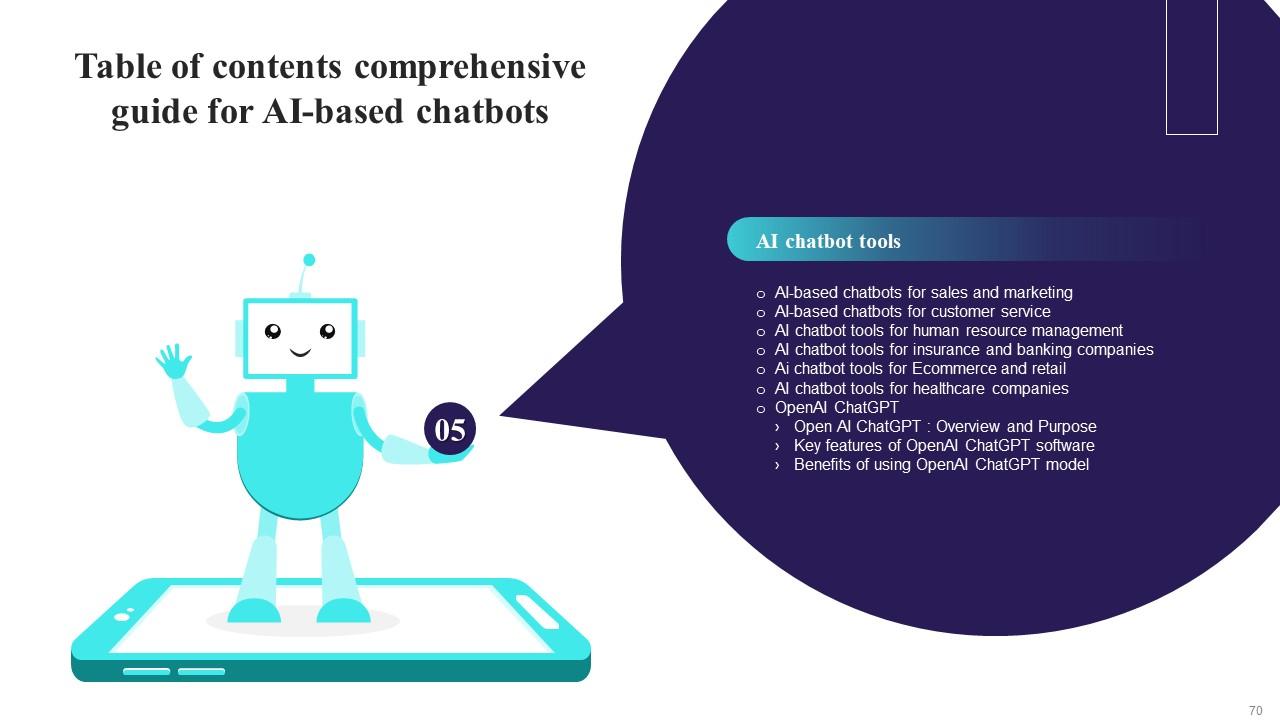
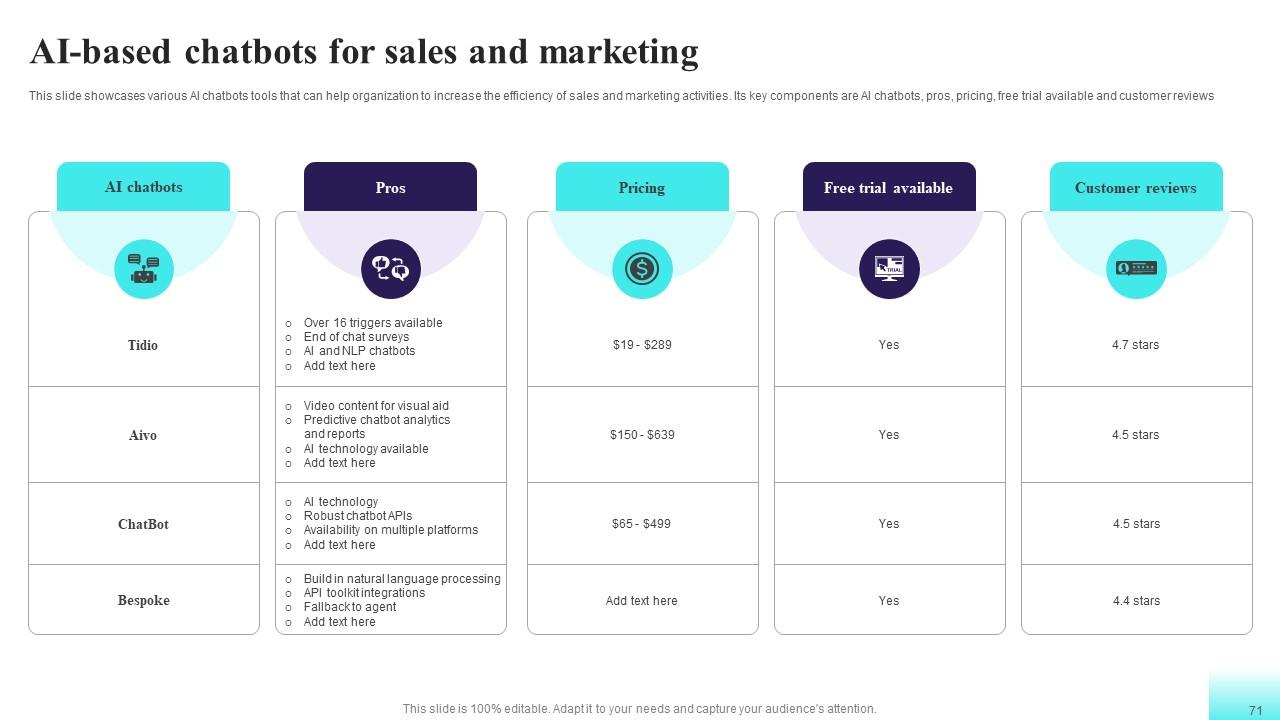
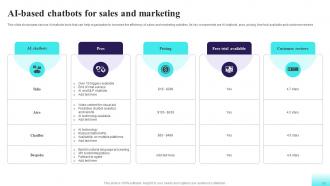
Slide 72: This slide showcases various AI chatbots tools that can help organization to increase the efficiency of sales and marketing activities.
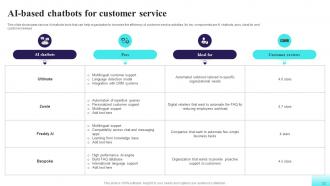
Slide 73: This slide describes various AI chatbots tools that can help organization to increase the efficiency of customer service activities.
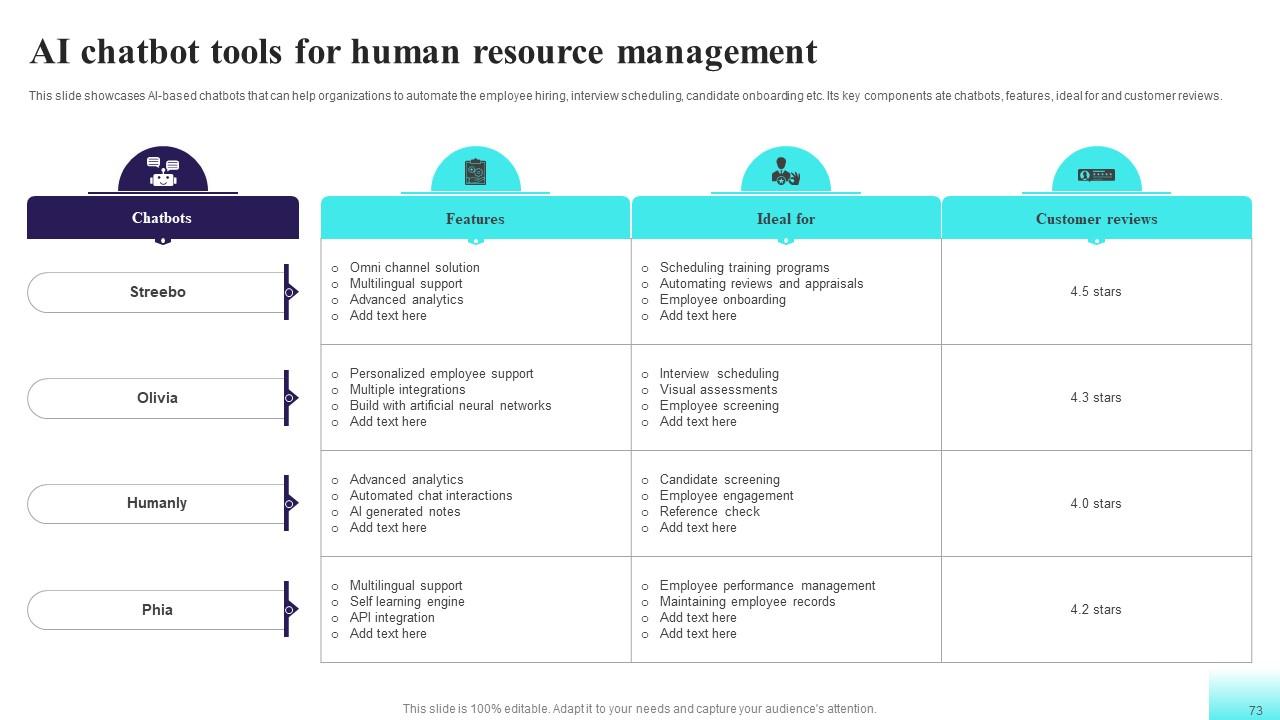
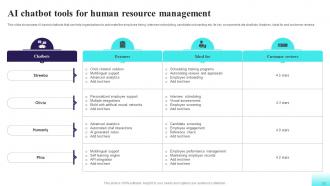
Slide 74: This slide showcases AI-based chatbots that can help organizations to automate the employee hiring, interview scheduling, candidate onboarding etc.
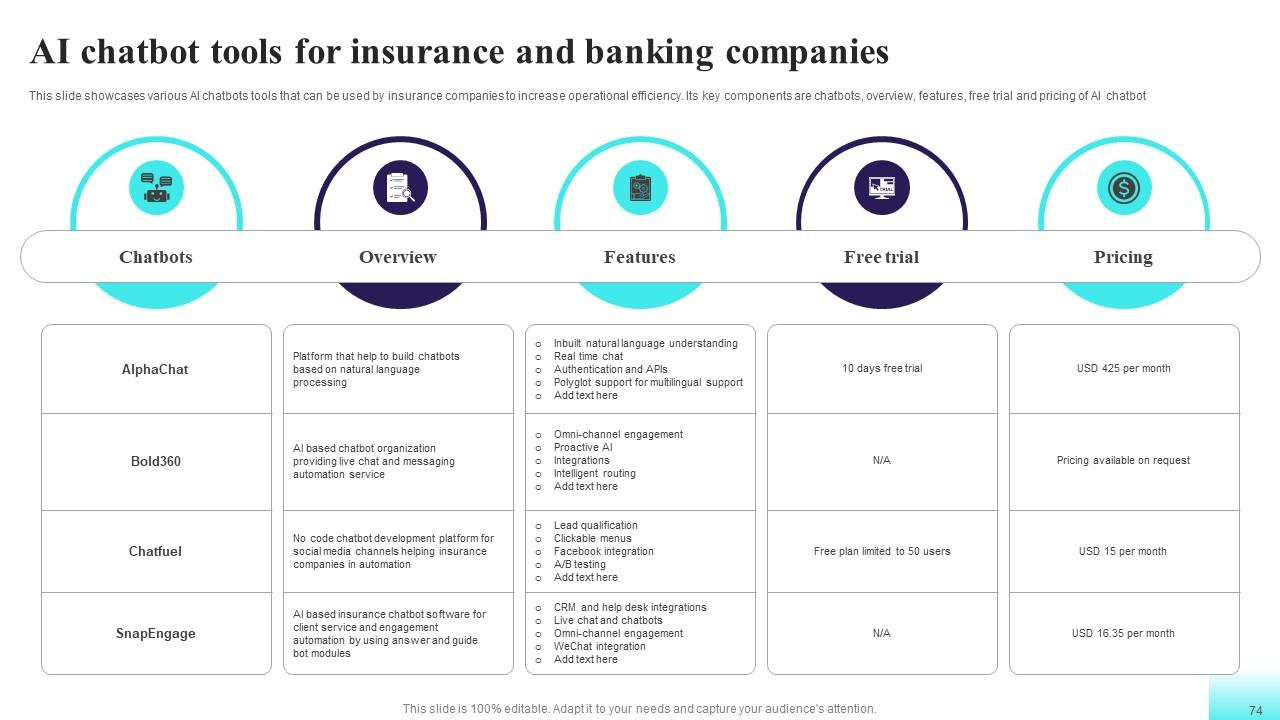
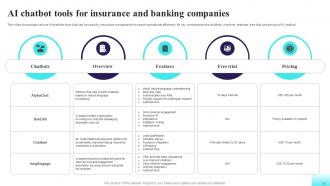
Slide 75: This slide presents various AI chatbots tools that can be used by insurance companies to increase operational efficiency.
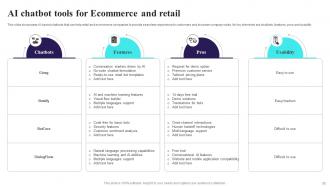
Slide 76: This slide showcases AI-based chatbots that can help retail and ecommerce companies to provide seamless experience to customers and increase company sales.
Slide 77: This slide presents various AI chatbots that can help healthcare companies to monitor the physical plus mental health plus assess the symptoms of patient.
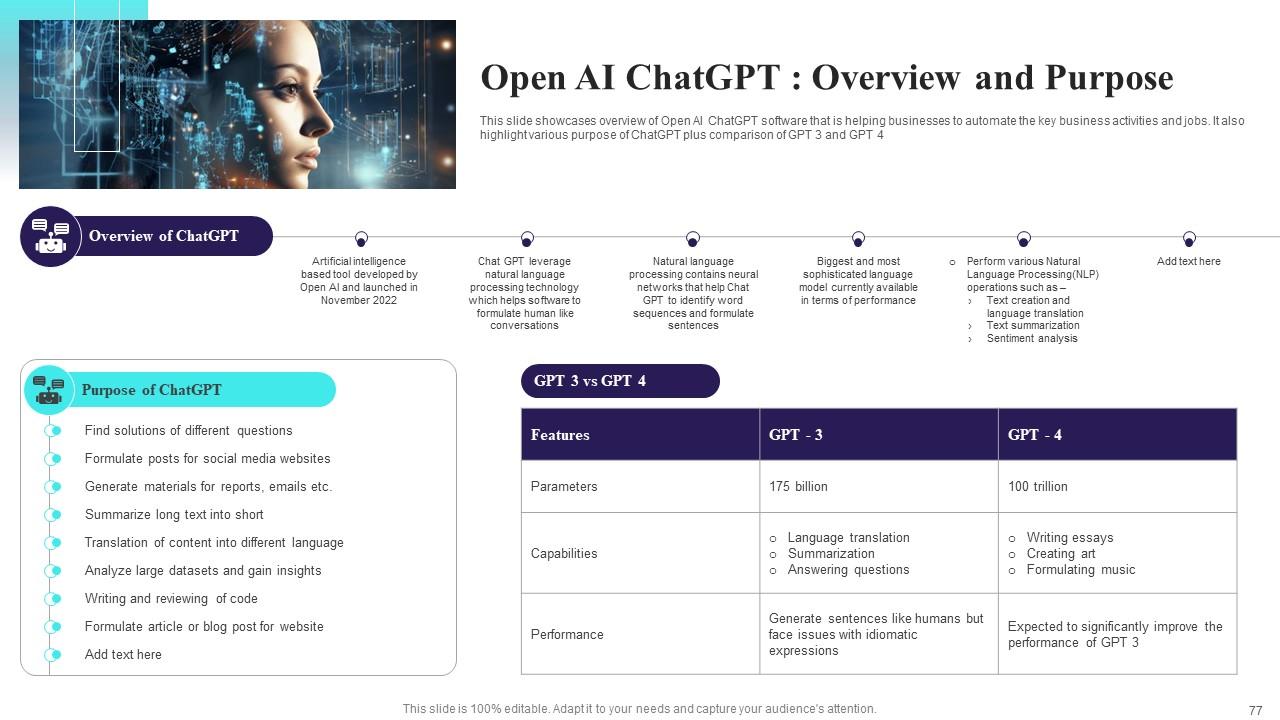
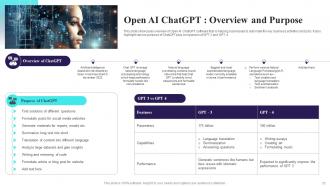
Slide 78: This slide showcases overview of Open AI ChatGPT software that is helping businesses to automate the key business activities and jobs.
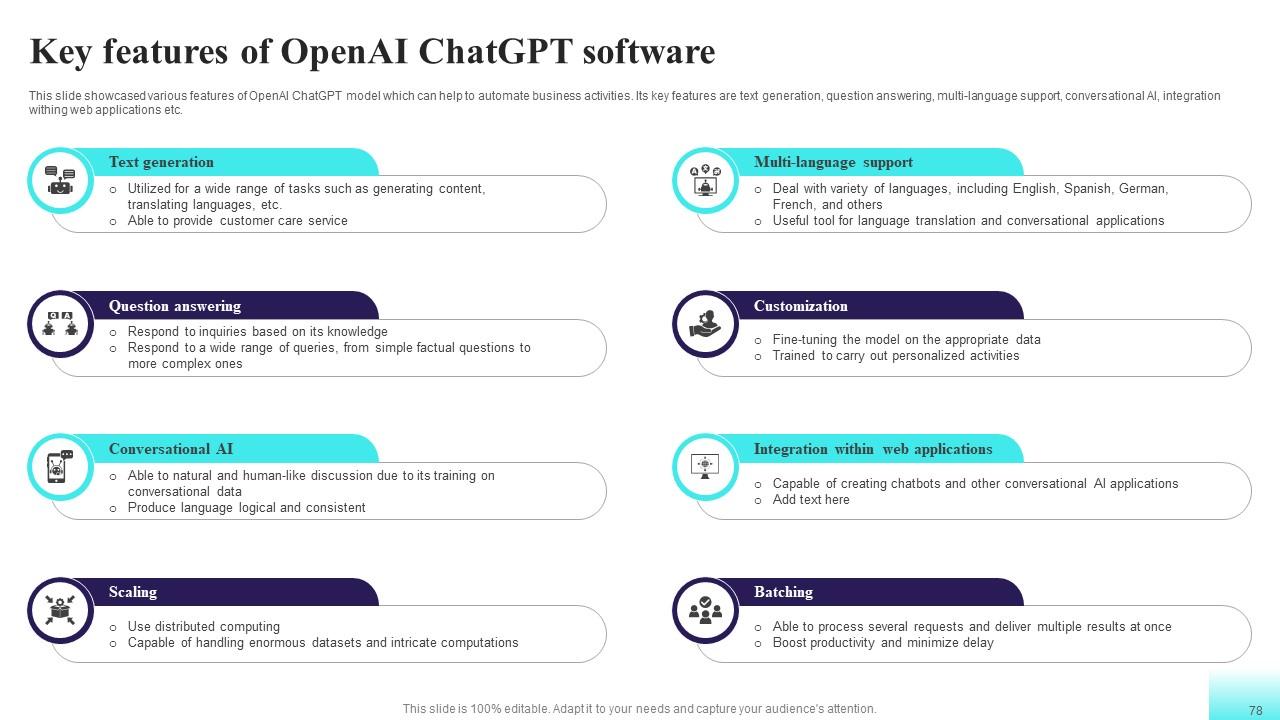
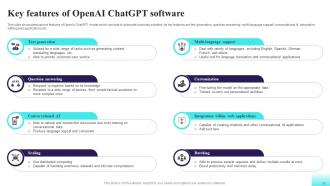
Slide 79: This slide displays various features of OpenAI ChatGPT model which can help to automate business activities.
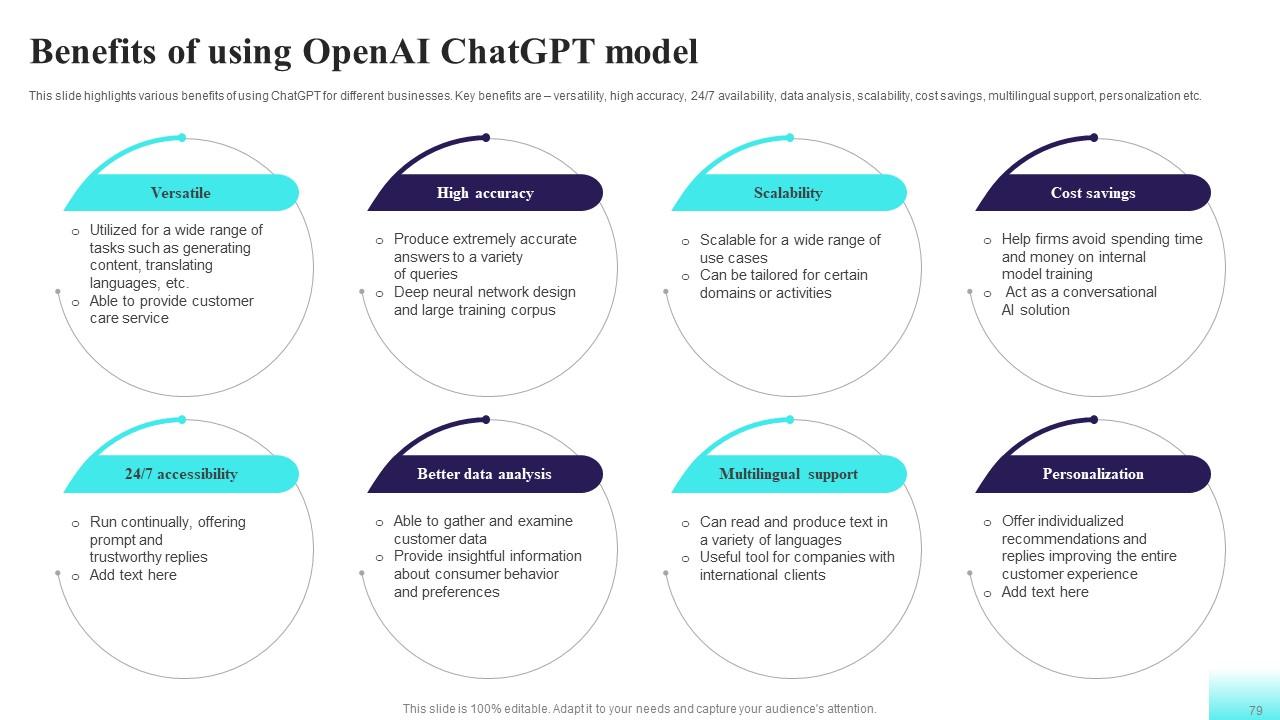
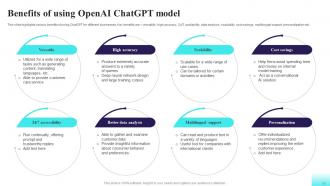
Slide 80: This slide highlights various benefits of using ChatGPT for different businesses.
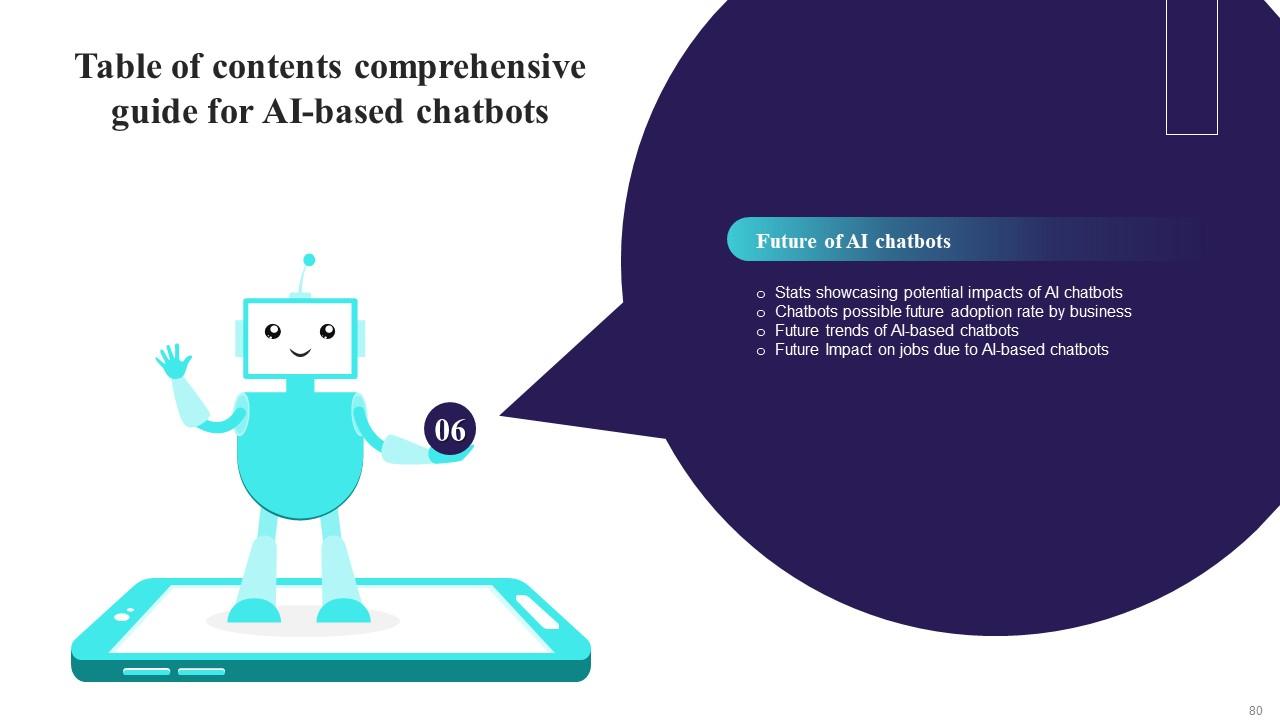
Slide 81: This slide shows title for topics that are to be covered next in the template.
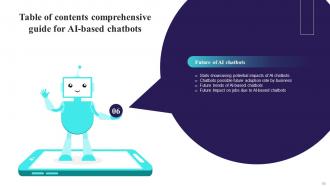
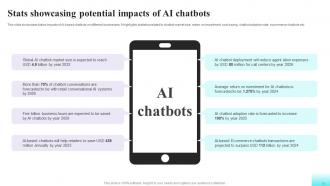
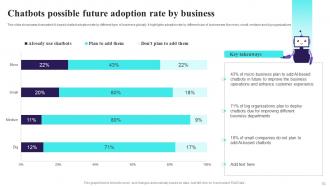
Slide 82: This slide showcases future impacts of AI-based chatbots on different businesses.
Slide 83: This slide displays a graph highlighting various risks associated with AI based chatbots implementation in healthcare industry.
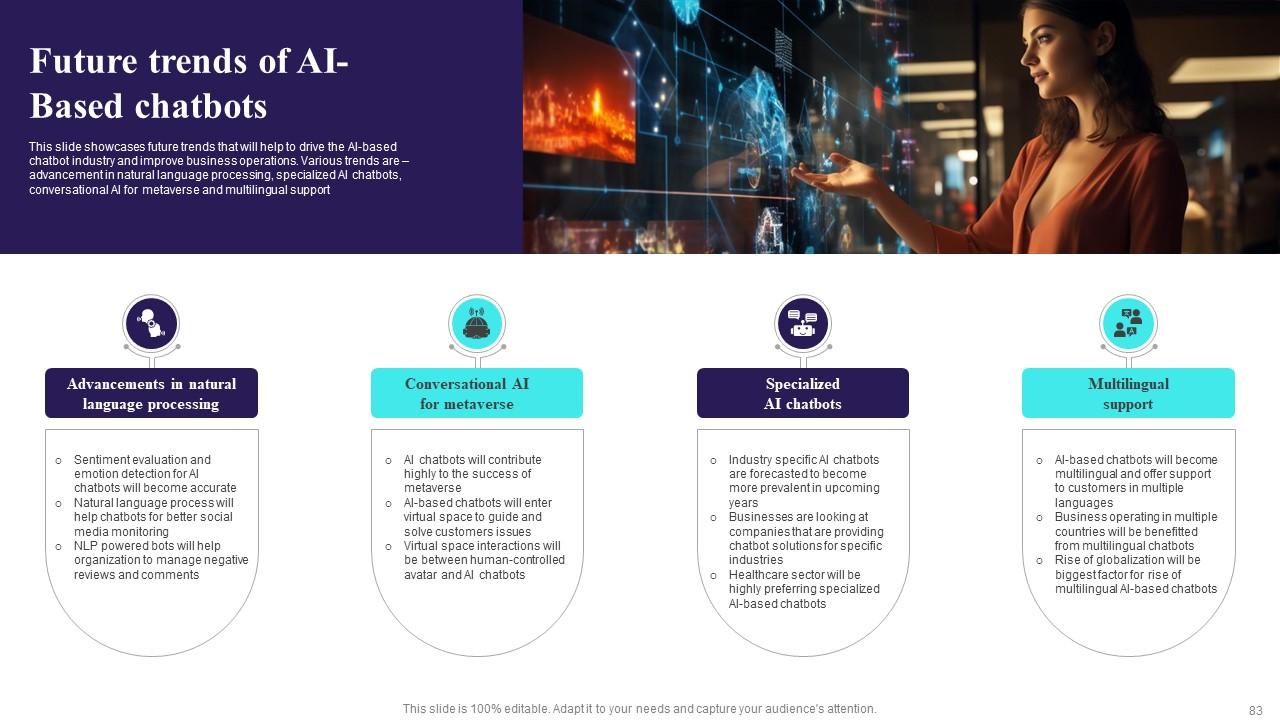
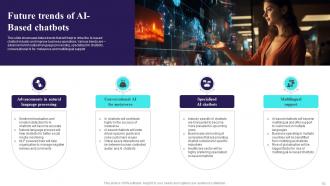
Slide 84: This slide showcases future trends that will help to drive the AI-based chatbot industry and improve business operations.
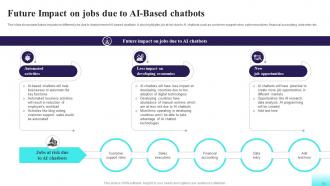
Slide 85: This slide presents future impacts on different jobs due to deployment of AI-based chatbots.
Slide 86: This slide shows title for topics that are to be covered next in the template.
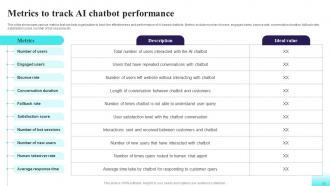
Slide 87: This slide showcases various metrics that can help organization to track the effectiveness and performance of AI-based chatbots.
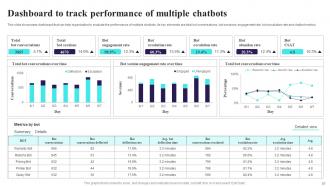
Slide 88: This slide presents a dashboard that can help organization to evaluate the performance of multiple chatbots.
Slide 89: This slide shows title for topics that are to be covered next in the template.
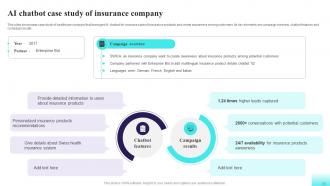
Slide 90: This slide showcases a case study of healthcare company that leveraged AI chatbot for increase sales of insurance products and create awareness among customers.
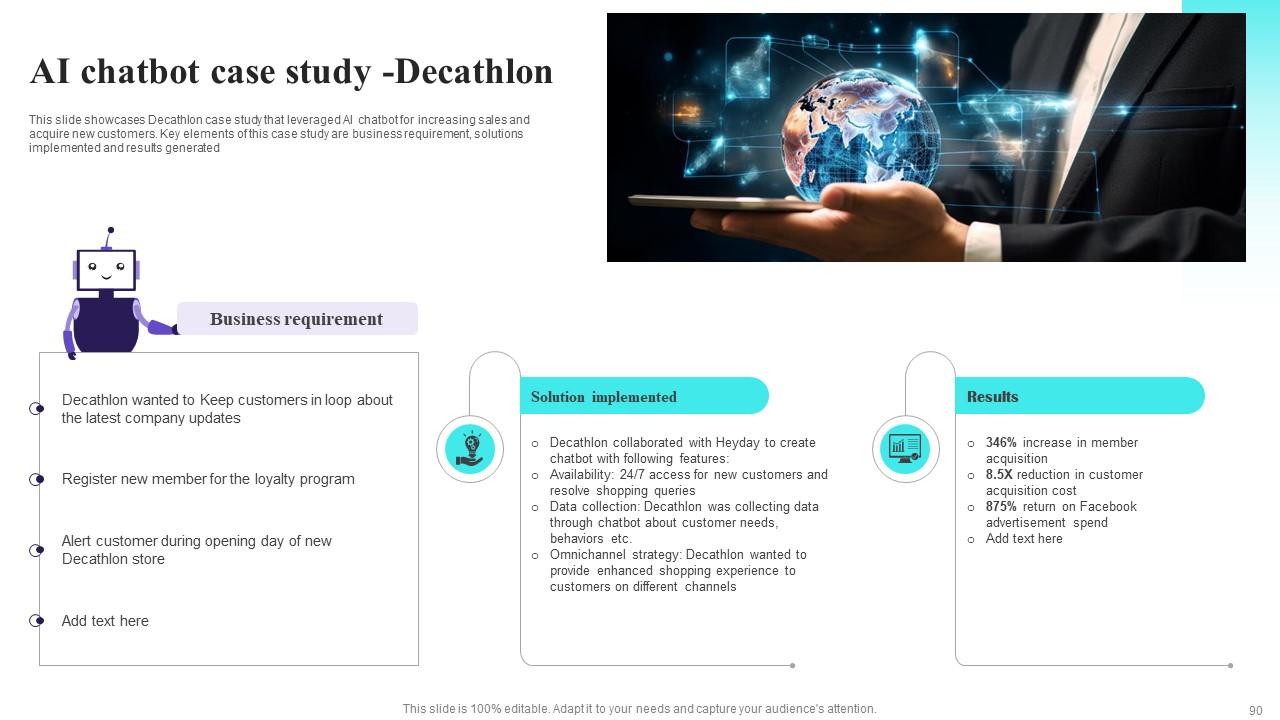
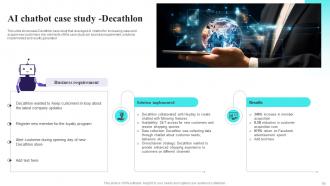
Slide 91: This slide presents Decathlon case study that leveraged AI chatbot for increasing sales and acquire new customers.
Slide 92: This slide shows all the icons included in the presentation.
Slide 93: This slide is titled as Additional Slides for moving forward.
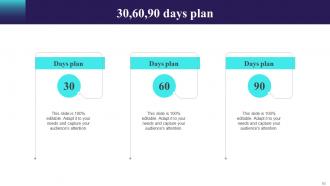
Slide 94: This slide provides 30 60 90 Days Plan with text boxes.
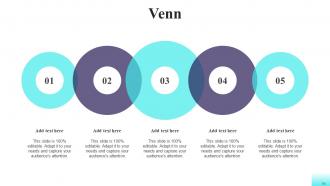
Slide 95: This slide depicts Venn diagram with text boxes.
Slide 96: This is an Idea Generation slide to state a new idea or highlight information, specifications etc.
Slide 97: This slide shows Post It Notes for reminders and deadlines. Post your important notes here.
Slide 98: This is a Thank You slide with address, contact numbers and email address.
Comprehensive Guide For AI Based Chatbots Powerpoint Presentation Slides AI CD V with all 106 slides:
Use our Comprehensive Guide For AI Based Chatbots Powerpoint Presentation Slides AI CD V to effectively help you save your valuable time. They are readymade to fit into any presentation structure.
-
Much better than the original! Thanks for the quick turnaround.
-
Designs have enough space to add content.
