


Comprehensive Guide For Successful Website Launch Strategy Powerpoint Presentation Slides





Try Before you Buy Download Free Sample Product
 Impress Your
 Audience
 100%
100% Editable
 Save Hours
 of Time


Website launch strategy is a method to bring transformation in business by adopting digital platforms for offering products and services to customers with the objective of global expansion. Grab our insightfully designed Comprehensive Guide for Successful Website Launch Strategy PowerPoint presentation including three different phases to develop and introduce a new website to market. Primarily, our Website Launch plan presentation provides information about planning phase strategies such as competitor research, setting SMART goals, and defining the target audience. Additionally, this marketing plan for the website launch covers the design and development phase that begins with setting the domain name, selecting of reliable content management system CMS, etc. This PowerPoint presentation also represents criteria to select various tools required for bug testing and security checking to assure customer satisfaction. Furthermore, our Website Promotions deck showcases promotion and announcement strategies through effective methods such as email marketing campaigns, social media platforms, etc. It represents the cost structure of website development, team structure, roles, and responsibility of the content development team. Lastly, it shows the estimated impact of implementing strategies on website performance and case studies of new website launches. Get access now.
People who downloaded this PowerPoint presentation also viewed the following :
Content of this Powerpoint Presentation
Slide 1: This slide introduces the Comprehensive Guide For Successful Website Launch Strategy. State Your Company Name and begin.
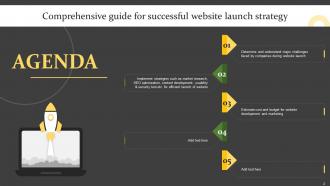
Slide 2: This slide is an Agenda slide. State your agendas here.
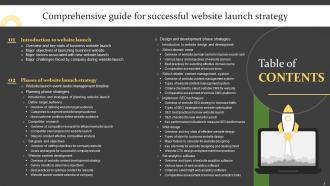
Slide 3: This slide outlines the table of contents.
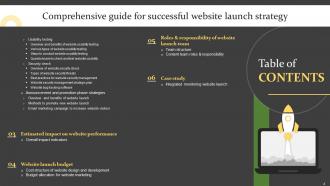
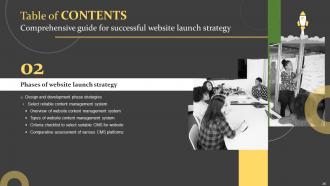
Slide 4: This slide is in continuation with the previous slide and shows a table of contents.
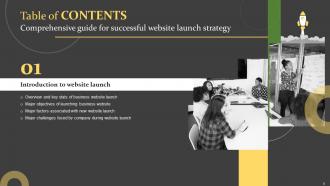
Slide 5: This slide introduces "Introduction to website launch" out of the table of contents.
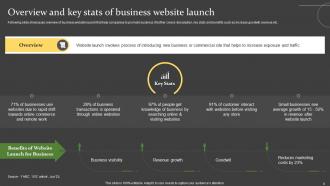
Slide 6: This slide showcases an overview of business website launches that help companies promote business.
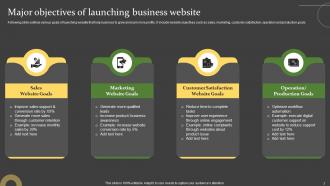
Slide 7: This slide outlines various goals for launching a website that helps businesses grow and earn more profits.
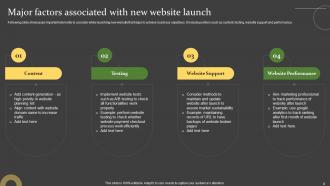
Slide 8: This slide showcases important elements to consider while launching a new website that helps to achieve business objectives.
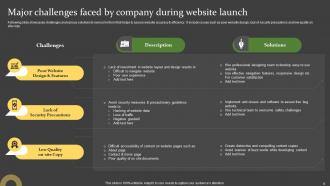
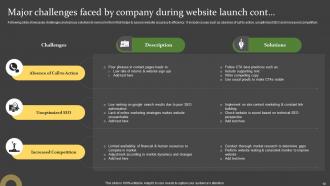
Slide 9: This slide describes the Major challenges faced by the company during the website launch.
Slide 10: This slide is in continuation with the previous slide.
Slide 11: This slide introduces Phases of the website launch strategy out of the table of contents.
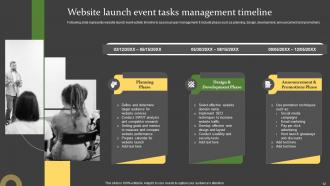
Slide 12: This slide represents the website launch event activity timeline to ensure proper management.
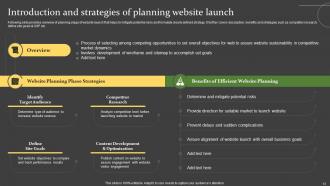
Slide 13: This slide provides an overview Introduction and strategies for planning the website launch.
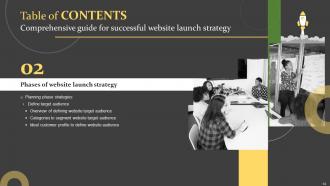
Slide 14: This slide introduces Phases of the website launch strategy out of the table of contents.
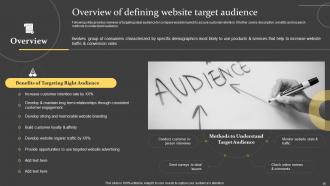
Slide 15: This slide overview of targeting the ideal audience for a company website launch to assure customer retention.
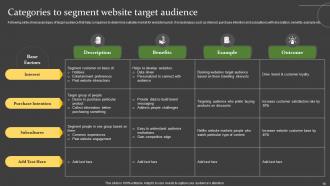
Slide 16: This slide showcases types of target audiences that help companies determine suitable markets for website launches.
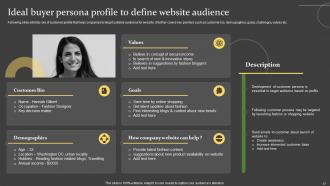
Slide 17: This slide exhibits the Ideal buyer persona profile to define the website audience.
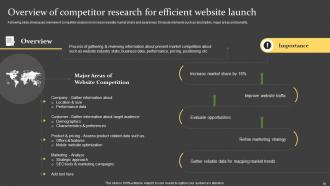
Slide 18: This slide illustrates an overview of competitor analysis to increase website market share and awareness.
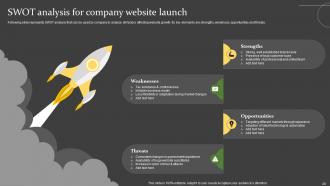
Slide 20: This slide shows SWOT describing- Strengths, Weakness, Opportunities, and Threats.
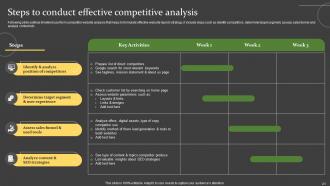
Slide 21: This slide shows Steps to conduct an effective competitive analysis.
Slide 22: This slide introduces Phases of the website launch strategy out of the table of contents and is in continuation.
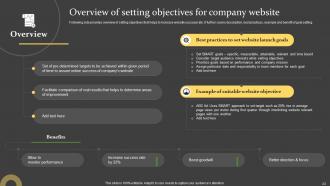
Slide 23: This site provides an overview of setting objectives that help to increase the website's success rate.
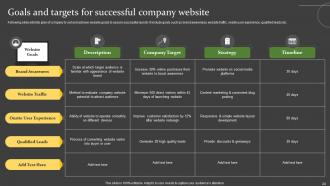
Slide 24: This exhibits the plan of the company to set and achieve website goals to ensure a successful launch.
Slide 25: This slide introduces Phases of the website launch strategy out of the table of contents and is in continuation.
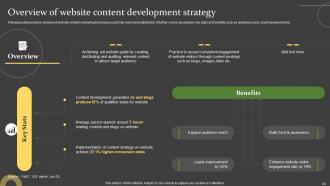
Slide 26: This slide illustrates an Overview of the website content development strategy.
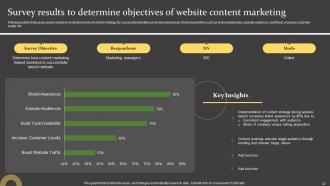
Slide 27: This slide showcases survey results to understand the role of content strategy for successful website launch and awareness.
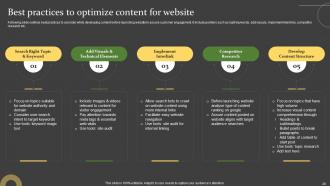
Slide 28: This slide outlines the Best practices to optimize content for a website.
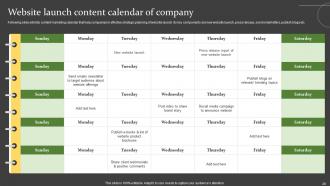
Slide 29: This slide exhibits the Website launch content calendar of the company.
Slide 30: This slide introduces Phases of the website launch strategy out of the table of contents and is in continuation.
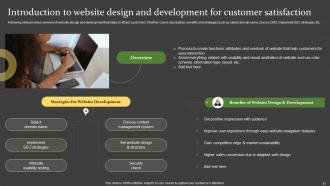
Slide 31: This slide shows an Introduction to website design and development for customer satisfaction.
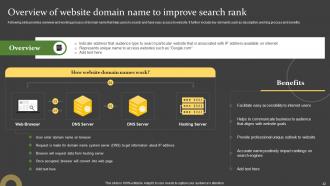
Slide 32: This slide illustrates an Overview of website domain names to improve search rank.
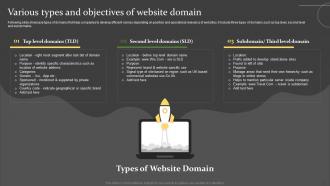
Slide 33: This slide showcases Various types and objectives of website domains.
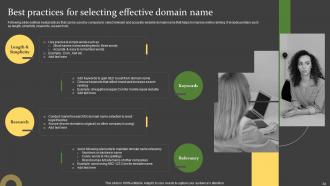
Slide 34: This slide describes the Best practices for selecting effective domain names.
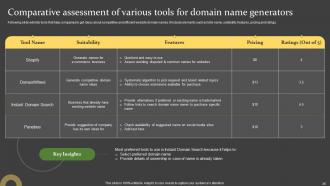
Slide 35: This slide details the Comparative assessment of various tools for domain name generators.
Slide 36: This slide introduces Phases of the website launch strategy out of the table of contents and is in continuation.
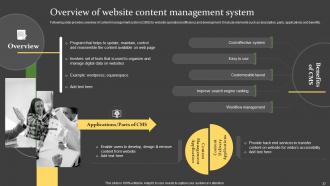
Slide 37: This slide provides an overview of the content management system (CMS) for website operational efficiency and development.
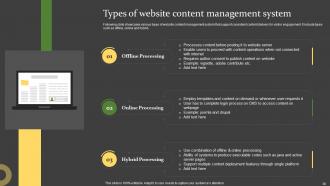
Slide 38: This slide showcases Types of website content management systems.
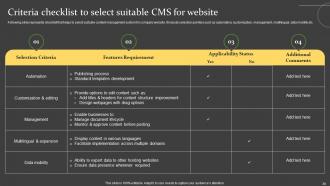
Slide 39: This slide represents a checklist that helps to select suitable content management systems for the company website.
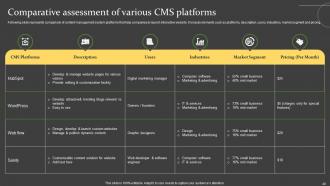
Slide 40: This slide showcases a Comparative assessment of various CMS platforms.
Slide 41: This slide introduces Phases of the website launch strategy out of the table of contents and is in continuation.
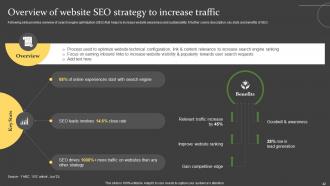
Slide 42: This slide provides an overview of search engine optimization (SEO).
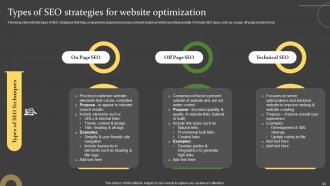
Slide 43: This slide illustrates the Types of SEO strategies for website optimization.
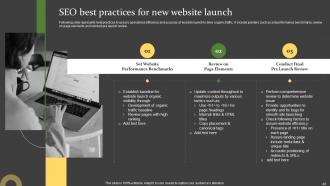
Slide 44: This slide shows SEO best practices for new website launches.
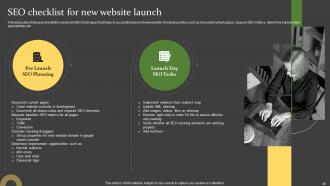
Slide 45: This slide portrays the SEO checklist for a new website launch.
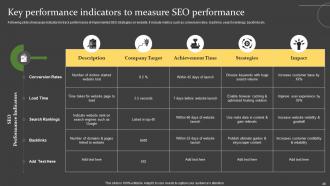
Slide 46: This slide showcases indicators to track the performance of implemented SEO strategies on the website.
Slide 47: This slide introduces Phases of the website launch strategy out of the table of contents and is in continuation.
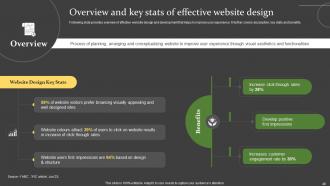
Slide 48: This slide provides an Overview and key stats of effective website design.
Slide 49: This slide shows the Types of styles for business website design.
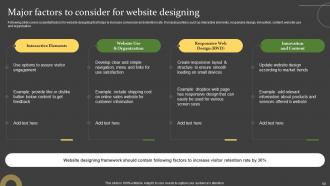
Slide 50: This slide covers essential factors for website designing that helps to increase conversion and retention rate.
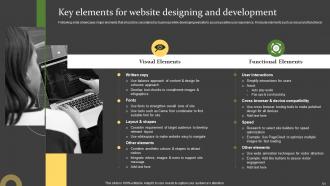
Slide 51: This slide illustrates Key elements for website designing and development.
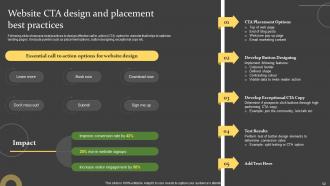
Slide 52: This slide displays Website CTA design and placement best practices.
Slide 53: This slide introduces Phases of the website launch strategy out of the table of contents and is in continuation.
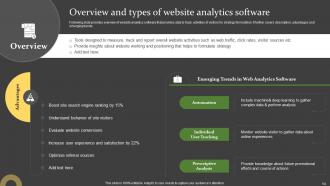
Slide 54: This slide provides an Overview and types of website analytics software.
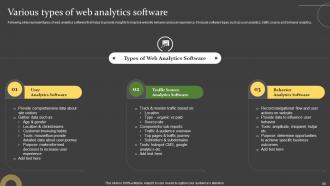
Slide 55: This slide portrays Various types of web analytics software.
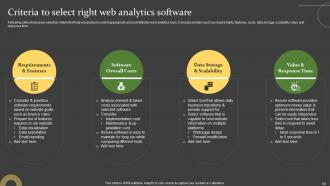
Slide 56: This slide talks about Criteria for selecting the right web analytics software.
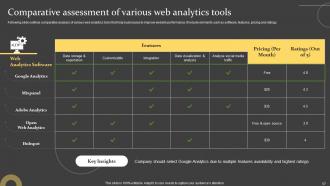
Slide 57: This slide contains a Comparative assessment of various web analytics tools.
Slide 58: This slide introduces Phases of the website launch strategy out of the table of contents and is in continuation.
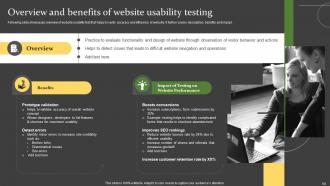
Slide 59: This slide illustrates the Overview and benefits of website usability testing.
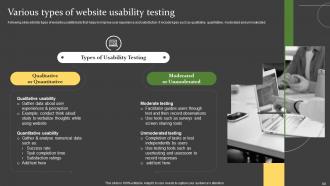
Slide 60: This slide shows Various types of website usability testing.
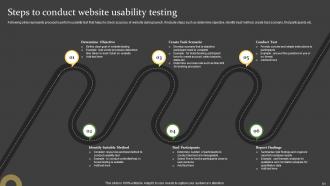
Slide 61: This slide centers on Steps to conduct website usability testing.
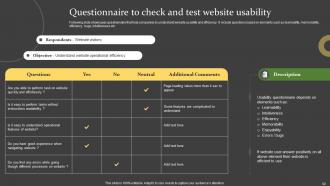
Slide 62: This slide represents a Questionnaire to check and test website usability.
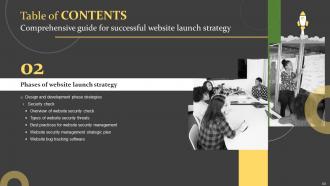
Slide 63: This slide introduces Phases of the website launch strategy out of the table of contents and is in continuation.
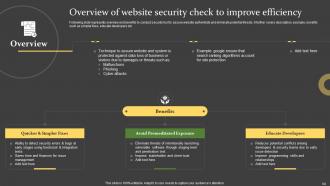
Slide 64: This slide showcases an Overview of website security checks to improve efficiency.
Slide 65: This slide exhibits Types of website security threats and vulnerabilities.
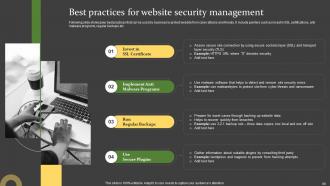
Slide 66: This slide showcases Best practices for website security management.
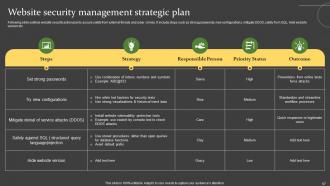
Slide 67: This slide outlines the Website security management strategic plan.
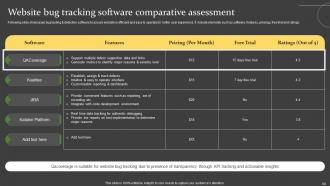
Slide 68: This slide contains the Website bug tracking software comparative assessment.
Slide 69: This slide introduces Phases of the website launch strategy out of the table of contents and is in continuation.
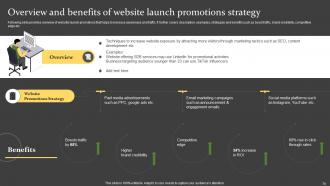
Slide 70: This slide outlines an Overview and benefits of the website launch promotions strategy.
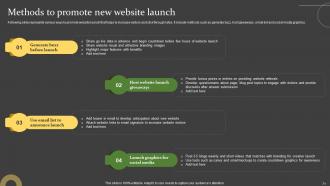
Slide 71: This slide shows Methods to promote the new website launch.
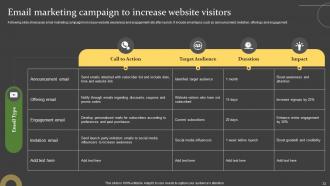
Slide 72: This slide portrays an Email marketing campaign to increase website visitors.
Slide 73: This slide introduces the Estimated impact on website performance out of the table of contents.
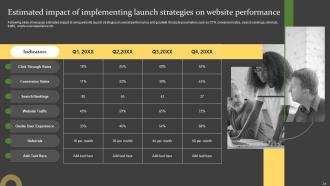
Slide 74: The following slide showcases the estimated impact of using website launch strategies on overall performance and goodwill.
Slide 75: This slide introduces the Website launch budget out of the table of contents.
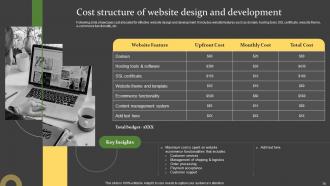
Slide 76: This slide describes the cost allocated for effective website design and development.
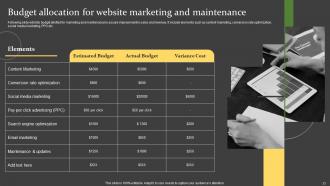
Slide 77: The following slide exhibits the budget allotted for marketing and maintenance to ensure improvement in sales and revenue.
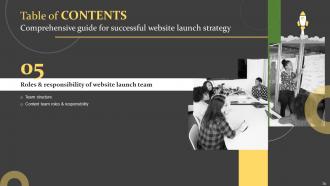
Slide 78: This slide introduces the Roles & and responsibilities of the website launch team out of the table of contents.
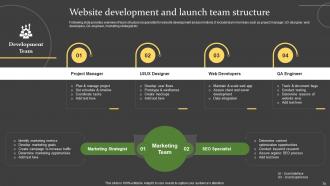
Slide 79: This slide provides an overview of the team structure responsible for website development and promotions.
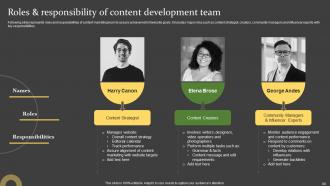
Slide 80: This slide represents the roles and responsibilities of the content marketing team to ensure the achievement of website goals.
Slide 81: This slide introduces the Case study out of the table of Contents.
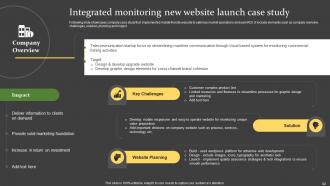
Slide 82: This slide showcases the Integrated monitoring new website launch case study.
Slide 83: This slide shows all the icons included in the presentation.
Slide 84: This slide is titled Additional Slides for moving forward.
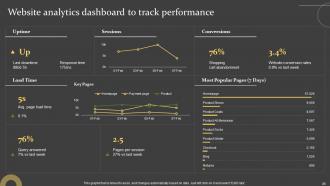
Slide 85: This slide portrays a website analytics dashboard to track performance with a graphical representation.
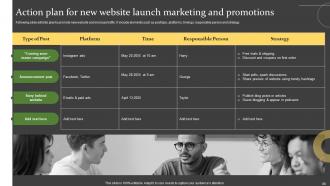
Slide 86: This slide illustrates the Action plan for new website launch marketing and promotions.
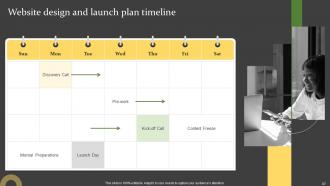
Slide 87: This slide provides a website design and launch plan timeline.
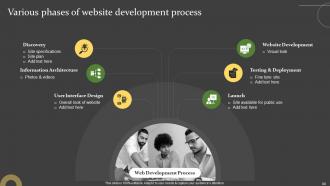
Slide 88: This slide shows Various phases of the website development process.
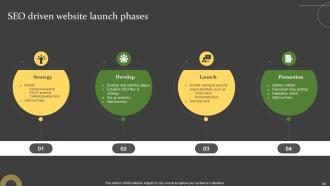
Slide 89: This slide contains SEO-driven website launch phases.
Slide 90: This slide shows Post-It Notes. Post your important notes here.
Slide 91: This slide provides a 30-60-90-day plan with text boxes.
Slide 92: This slide is a Timeline slide. Show data related to time intervals here.
Slide 93: This slide depicts a Venn diagram with text boxes.
Slide 94: This slide is a thank-you slide with address, contact numbers, and email address.
Comprehensive Guide For Successful Website Launch Strategy Powerpoint Presentation Slides with all 99 slides:
Use our Comprehensive Guide For Successful Website Launch Strategy Powerpoint Presentation Slides to effectively help you save your valuable time. They are readymade to fit into any presentation structure.











FAQs for Comprehensive Guide For Successful Website Launch Strategy
Key components include comprehensive pre-launch testing, SEO optimization, content strategy development, performance monitoring systems, and strategic marketing campaigns. These elements work together by ensuring technical functionality, maximizing search visibility, and driving targeted traffic, with many organizations finding that coordinated launches deliver significantly higher engagement rates and faster market penetration than ad-hoc approaches.
Pre-launch marketing builds anticipation through strategic social media teasers, email campaigns, influencer partnerships, beta user programs, and countdown campaigns. These approaches generate buzz by offering exclusive previews, early access opportunities, and behind-the-scenes content, with many companies finding that pre-launch engagement ultimately drives higher conversion rates and stronger initial user adoption upon official launch.
Presentation templates streamline website launch communication by standardizing stakeholder updates, progress reports, timeline overviews, and strategic messaging across teams. These templates enable organizations to maintain consistent branding, enhance project transparency, and accelerate decision-making processes, with many companies finding that standardized presentations reduce preparation time while improving stakeholder engagement.
User feedback can be integrated through beta testing with select audiences, usability testing sessions, survey collection during soft launches, A/B testing key elements, and real-time feedback widgets. These methods enable organizations to identify navigation issues, optimize conversion paths, and refine user experiences before full deployment, with many companies finding that early feedback integration reduces post-launch revisions and enhances customer satisfaction significantly.
Essential analytics include Google Analytics for traffic monitoring, conversion tracking for goal measurement, heatmap tools for user behavior analysis, search console for SEO performance, and social media tracking for referral sources. These systems enable businesses to measure user engagement, identify optimization opportunities, and track ROI from day one, with many organizations finding that comprehensive analytics setup ultimately delivers faster performance improvements and competitive advantage.
Website content should be updated regularly through weekly blog posts, monthly feature updates, quarterly campaign refreshes, and ongoing product or service additions to maintain search rankings and user interest. Strategic content scheduling enhances SEO performance, keeps visitors returning for fresh information, and demonstrates business growth, with many organizations finding that consistent updates deliver improved engagement metrics and competitive positioning in increasingly dynamic digital markets.
Website SEO optimization before launch includes keyword research, meta tag implementation, URL structure optimization, site speed enhancement, and mobile responsiveness testing. These practices streamline search engine indexing by ensuring clean code, strategic content placement, and technical compliance, with many businesses finding that pre-launch optimization delivers faster ranking improvements and stronger organic visibility.
Social media platforms enhance website launch visibility by creating pre-launch buzz through teasers, engaging audiences with behind-the-scenes content, and driving targeted traffic through strategic posting schedules. These channels amplify reach by encouraging user-generated content, facilitating influencer partnerships, and enabling real-time community engagement, ultimately delivering broader audience exposure and increased organic traffic.
Common website launch pitfalls include insufficient testing across devices and browsers, missing SEO optimization, broken internal links, slow loading speeds, and inadequate backup systems. These oversights significantly impact user experience and search rankings, with many businesses finding that thorough pre-launch audits, performance optimization, and contingency planning ultimately deliver smoother launches and better initial traffic conversion rates.
Different industries require tailored launch strategies because regulatory requirements, customer expectations, and competitive landscapes vary significantly across sectors like healthcare, finance, and retail. Financial services websites must prioritize security compliance and trust-building, while e-commerce platforms focus on conversion optimization and user experience, with many organizations finding that industry-specific approaches deliver higher engagement and faster market penetration.
Influencers and partnerships can significantly amplify website visibility through social media promotion, content collaboration, cross-promotional campaigns, and credibility endorsement from established audiences. These strategic alliances enable businesses to access new customer segments, leverage trusted relationships, and accelerate brand awareness, with many startups and e-commerce platforms finding that influencer partnerships deliver faster user acquisition and enhanced market penetration.
A/B testing can be incorporated by testing different landing pages, call-to-action buttons, headlines, user flows, and pricing strategies during pre-launch and initial rollout phases. Through systematic testing of these elements, businesses can optimize conversion rates, reduce bounce rates, and enhance user engagement, with many organizations finding that data-driven launch decisions significantly improve overall website performance and competitive positioning.
Responsive design ensures websites function seamlessly across all devices, from smartphones to desktops, delivering consistent user experiences and optimal performance regardless of screen size. With mobile traffic accounting for over half of web browsing, businesses implementing responsive approaches see improved search rankings, reduced bounce rates, and enhanced customer engagement, ultimately providing significant competitive advantages in today's mobile-first marketplace.
Website launch communications should differentiate messaging, with existing customers receiving early access notifications, loyalty rewards, and detailed feature explanations, while new audiences need compelling value propositions and brand introductions. Through targeted email campaigns for current users and broader social media outreach for prospects, businesses can maximize engagement across both segments, ultimately driving higher conversion rates and stronger customer relationships.
Post-launch metrics include traffic volume, conversion rates, bounce rates, page load speeds, and user engagement patterns. These analytics enable organizations to assess user experience effectiveness, identify optimization opportunities, and measure ROI, with many businesses finding that tracking both technical performance and user behavior metrics ultimately delivers actionable insights for strategic improvements.
-
I downloaded some of the presentations for work. They were simple to modify and saved me a lot of time and effort.
-
I joined SlideTeam last month and there’s no doubt that I tend to find our bond only strengthening over time. Best place to find world-class themes, templates, and icons.