


Connecting Ecosystems Introduction To Blockchain Interoperability BCT CD
Grab our insightfully designed Connecting Ecosystems Introduction to Blockchain Interoperability PowerPoint Presentation. Dive into various approaches such as Cross Chains, side chains, Atomic Swaps, Cross Chain Bridges, and Oracles, unraveling the intricate connections within these blockchain ecosystems. Moreover, the Blockchain PPT template explores the profound impact of blockchain interoperability on digital transactions, facilitating seamless value exchange across diverse networks. Examine the distinctive features of each interoperability approach, uncovering their strengths and use cases. From the inherent connectivity of cross-chains to the scalability of Sidechains and the decentralized assurance offered by Oracles, this presentation serves as your gateway to grasping the complexities of blockchain collaboration. Additionally, the Decentralization PPT templates present a future of interoperability and anticipate the emergence of new possibilities and innovations that will shape the decentralized landscape. Gain insights into the continuous evolution of these technologies and their potential to revolutionize various industries. Download now.















































You must be logged in to download this presentation.


Do you want to remove this product from your favourites?
 Impress your
 audience
 100%
100% Editable
 Save Hours
 of Time
PowerPoint presentation slides
Enthrall your audience with this Connecting Ecosystems Introduction To Blockchain Interoperability BCT CD. Increase your presentation threshold by deploying this well-crafted template. It acts as a great communication tool due to its well-researched content. It also contains stylized icons, graphics, visuals etc, which make it an immediate attention-grabber. Comprising seventy slides, this complete deck is all you need to get noticed. All the slides and their content can be altered to suit your unique business setting. Not only that, other components and graphics can also be modified to add personal touches to this prefabricated set.

People who downloaded this PowerPoint presentation also viewed the following :
Content of this Powerpoint Presentation
Slide 1: This slide introduces Connecting Ecosystems: Introduction to Blockchain Interoperability. State your company name and begin.
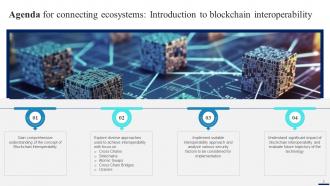
Slide 2: This is an Agenda slide. State your agendas here.
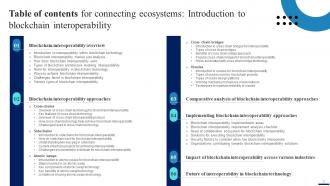
Slide 3: This slide shows Table of Content for the presentation.
Slide 4: This slide shows title for topics that are to be covered next in the template.
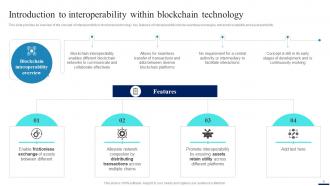
Slide 5: This slide provides an overview of the concept of interoperability in blockchain technology. Key features of interoperability include seamless exchanges etc.
Slide 6: This slide highlights market size of blockchain interoperability and its future potential. Key market drivers include increased demand, advancements in Apps etc.
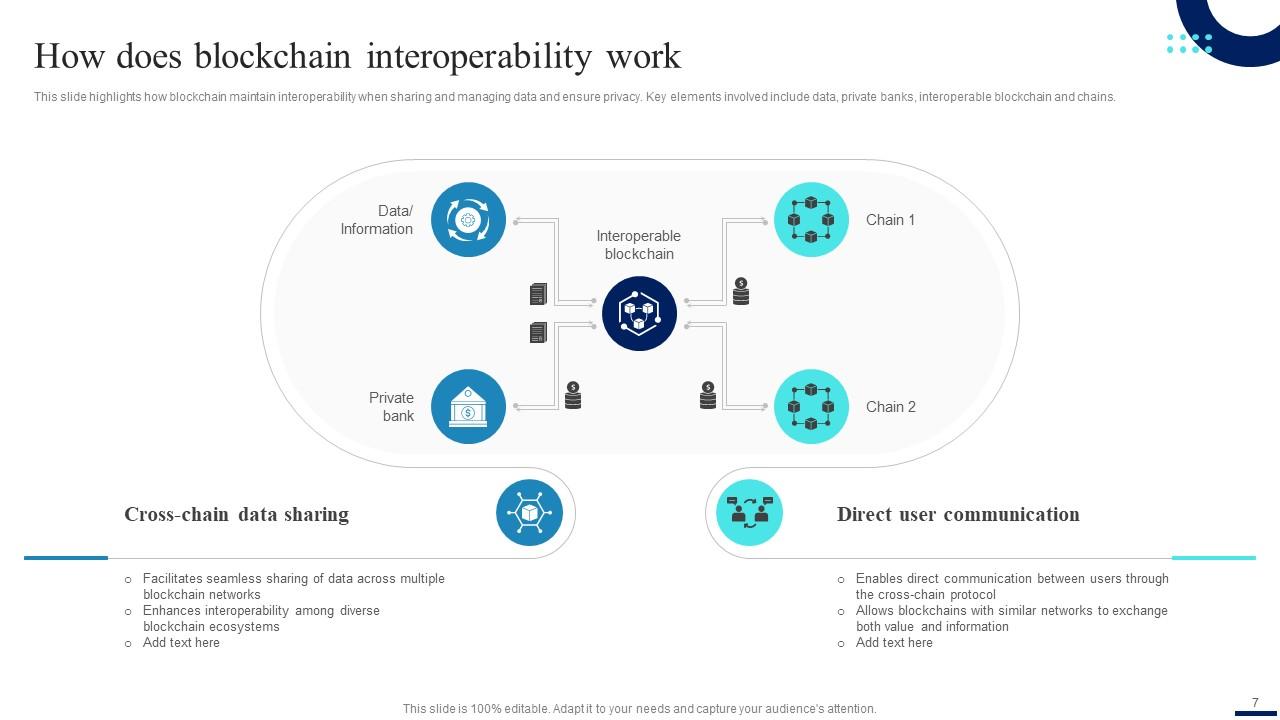
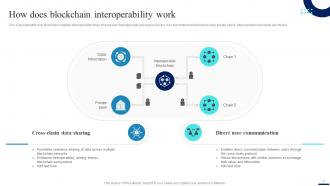
Slide 7: This slide displays how blockchain maintain interoperability when sharing and managing data and ensure privacy. Key elements involved include data, private banks etc.
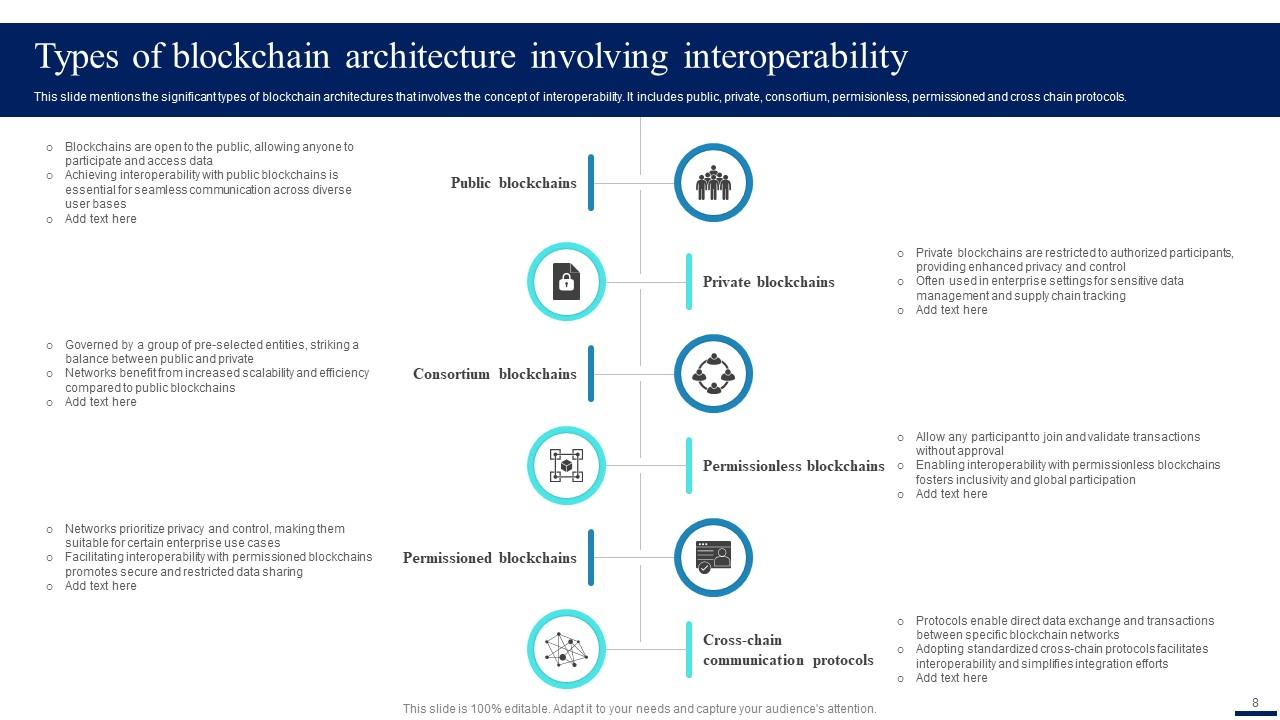
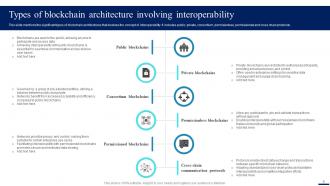
Slide 8: This slide mentions the significant types of blockchain architectures that involves the concept of interoperability. It includes public, private, consortium etc.
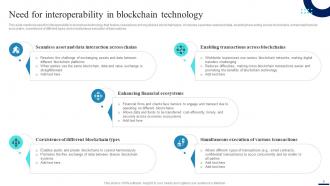
Slide 9: This slide displays need for interoperability in blockchain technology that fosters coexistence among diverse blockchain types.
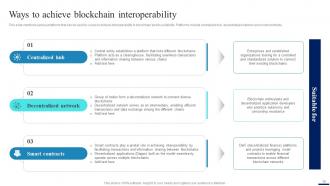
Slide 10: This slide mentions various platforms that can be used by users to achieve interoperability in blockchain and its suitability.
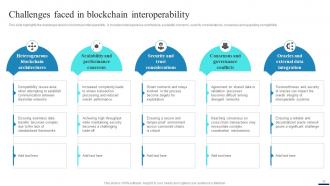
Slide 11: This slide highlights the challenges faced in blockchain interoperability . It includes heterogeneous architecture, scalability concerns, security considerations etc.
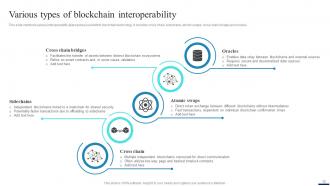
Slide 12: This slide mentions various interoperability approaches used within blockchain technology. It includes cross chain, sidechains, atomic swaps etc.
Slide 13: This slide shows title for topics that are to be covered next in the template.
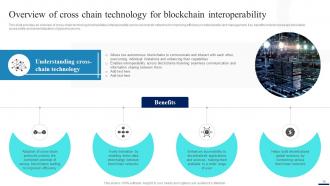
Slide 14: This slide provides an overview of cross chain technology that facilitates interoperability across blockchain networks for improving efficiency.
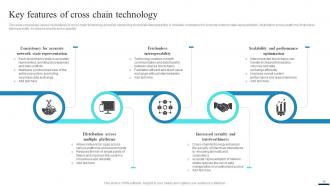
Slide 15: This slide showcases various key features of cross chain technology aimed for enhancing blockchain interoperability.
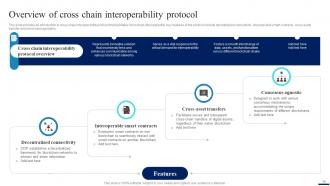
Slide 16: This slide provides an introduction to cross chain interoperability protocol that facilitates blockchain interoperability.
Slide 17: This slide explains how cross chain technology helps in achieving blockchain interoperability. It includes enabling communication, solving existing constraints etc.
Slide 18: This slide highlights various problems encountered by users in implementing cross chain technology for blockchain interoperability.
Slide 19: This slide shows title for topics that are to be covered next in the template.
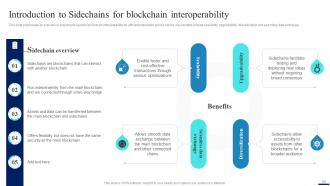
Slide 20: This slide showcases an overview of sidechains used for blockchain interoperability for efficient interaction across blocks.
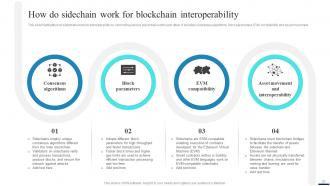
Slide 21: This slide highlights how sidechains work for interoperability by connecting various blockchains with each other.
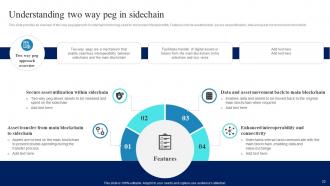
Slide 22: This slide provides an overview of two way peg approach in sidechain technology used for blockchain interoperability.
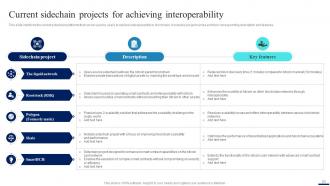
Slide 23: This slide mentions the current sidechain platforms that can be used by users to achieve interoperability in blockchain.
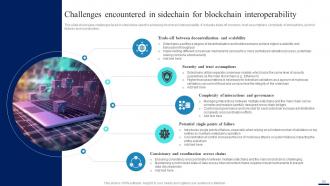
Slide 24: This slide showcases challenges faced in sidechains used for achieving blockchain interoperability. It includes trade off concerns, trust assumptions etc.
Slide 25: This slide shows title for topics that are to be covered next in the template.
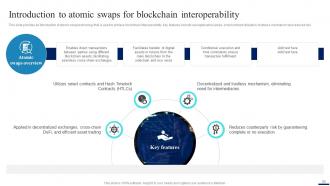
Slide 26: This slide provides an introduction of atomic swap technology that is used to achieve blockchain interoperability.
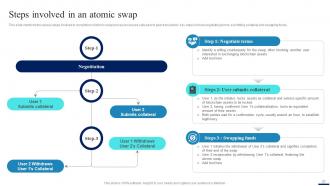
Slide 27: This slide mentions the various steps involved in completion of atomic swap process to ensure safe peer to peer transaction.
Slide 28: This slide displays the key components involved in atomic swap technology for attaining blockchain interoperability. It includes hashlock mechanism, timelock mechanism etc.
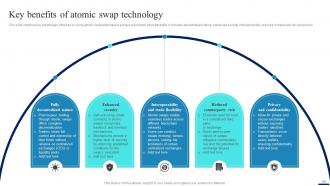
Slide 29: This slide mentions key advantages obtained by using atomic swap technique to achieve blockchain interoperability. It includes decentralized nature, enhanced security etc.
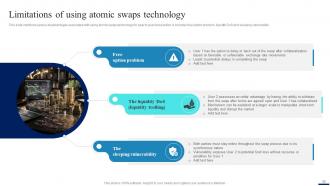
Slide 30: This slide presents various disadvantages associated with using atomic swaps technology for peer to peer transaction. It includes free option problem etc.
Slide 31: This slide shows title for topics that are to be covered next in the template.
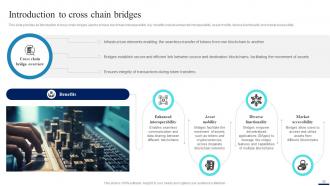
Slide 32: This slide provides an introduction of cross chain bridges used to achieve blockchain interoperability. Key benefits include enhanced interoperability, asset mobility etc.
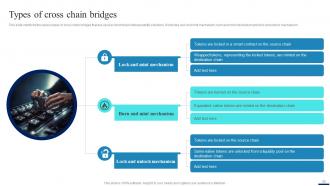
Slide 33: This slide mentions the various types of cross chain bridges that are used as blockchain interoperability solutions.
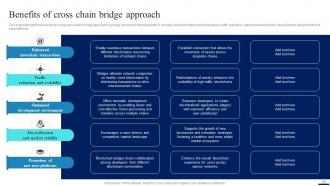
Slide 34: This slide highlights the reasons for using cross chain bridge approach to achieve blockchain interoperability. It includes enhanced interchain transactions etc.
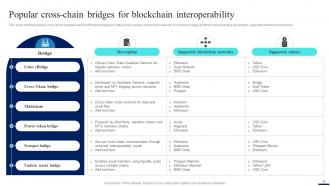
Slide 35: This slide mentions various cross chain bridges used for efficient exchange of data across various blockchain networks.
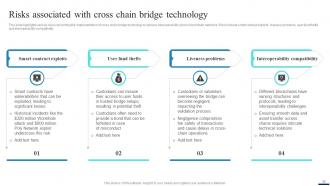
Slide 36: This slide highlights various risks concerning the implementation of cross chain bridge technology to achieve interoperability across blockchain networks.
Slide 37: This slide shows title for topics that are to be covered next in the template.
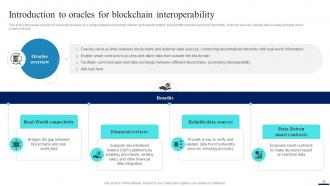
Slide 38: This slide showcases overview of oracles that serves as a bridge between blockchain network and outside entities. Key benefits include real world connectivity etc.
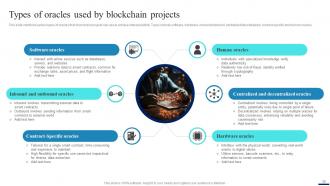
Slide 39: This slide mentions various types of oracles that blockchain projects can use to achieve interoperability. Types include software, hardware etc.
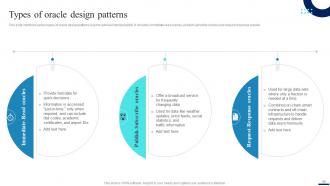
Slide 40: This slide displays various types of oracle design patterns used to acheive interoperability. It includes immediate read oracles, publish subscribe oracles etc.
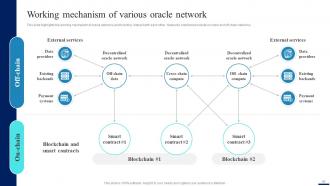
Slide 41: This slide highlights the working mechanism of oracle networks and how they interact with each other. Networks mentioned include on chain and off chain networks.
Slide 42: This slide mentions four techniques that oracles can use to maintain its reliability. It includes multiple data sources, oracles etc.
Slide 43: This slide shows title for topics that are to be covered next in the template.
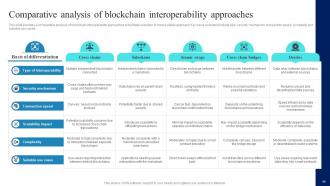
Slide 44: This slide provides a comparative analysis of blockchain interoperability approaches to facilitate selection of most suitable approach.
Slide 45: This slide shows title for topics that are to be covered next in the template.
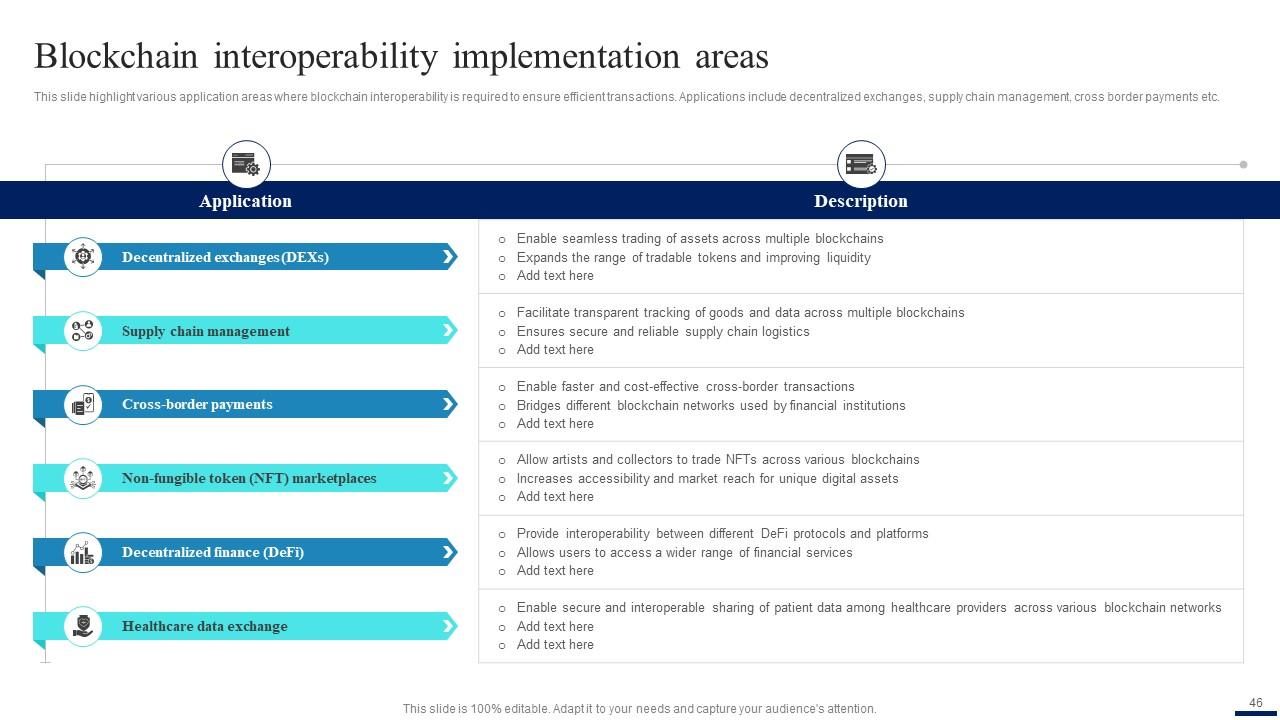
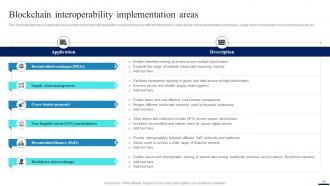
Slide 46: This slide highlight various application areas where blockchain interoperability is required to ensure efficient transactions.
Slide 47: This slide showcases checklist used for assisting organizations to structure their efforts in clarifying blockchain interoperability requirements.
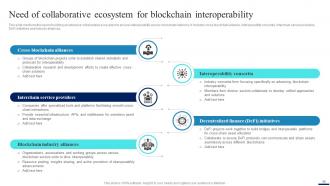
Slide 48: This slide mentions the need of building an extensive collaborative ecosystem to ensure interoperability across blockchain networks.
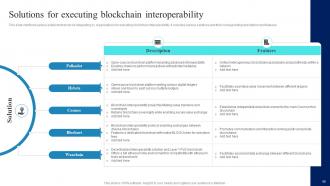
Slide 49: This slide presents various solutions that can be integrating by organizations for executing blockchain interoperability.
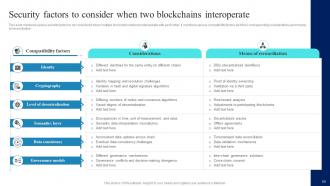
Slide 50: This slide mentions various security factors to be considered when multiple blockchain networks interoperate with each other.
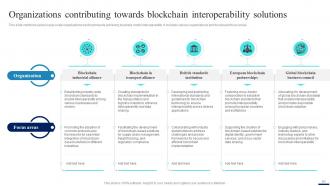
Slide 51: This slide displays various large scale organizations working towards achieving business model interoperability.
Slide 52: This slide shows title for topics that are to be covered next in the template.
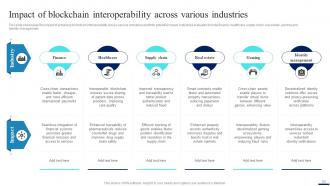
Slide 53: This slide showcases the impact of achieving blockchain interoperability across various industries and their potential impact.
Slide 54: This slide shows title for topics that are to be covered next in the template.
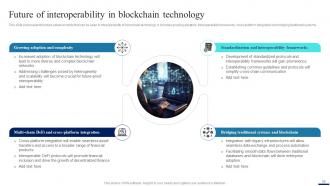
Slide 55: This slide showcases the future advancements that can be seen in interoperability of blockchain technology.
Slide 56: This slide shows all the icons included in the presentation.
Slide 57: This slide is titled as Additional Slides for moving forward.
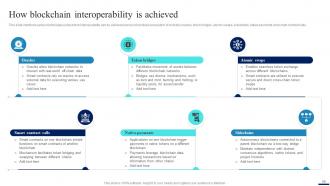
Slide 58: This slide mentions various techniques using which interoperability can be achieved across blockchain ecosystem.
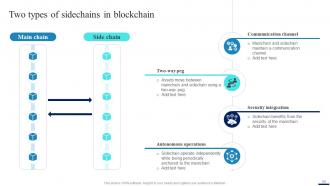
Slide 59: This slide presents two types of sidechains in blockchain with additional textboxes.
Slide 60: This slide explains How on chain transactions work.
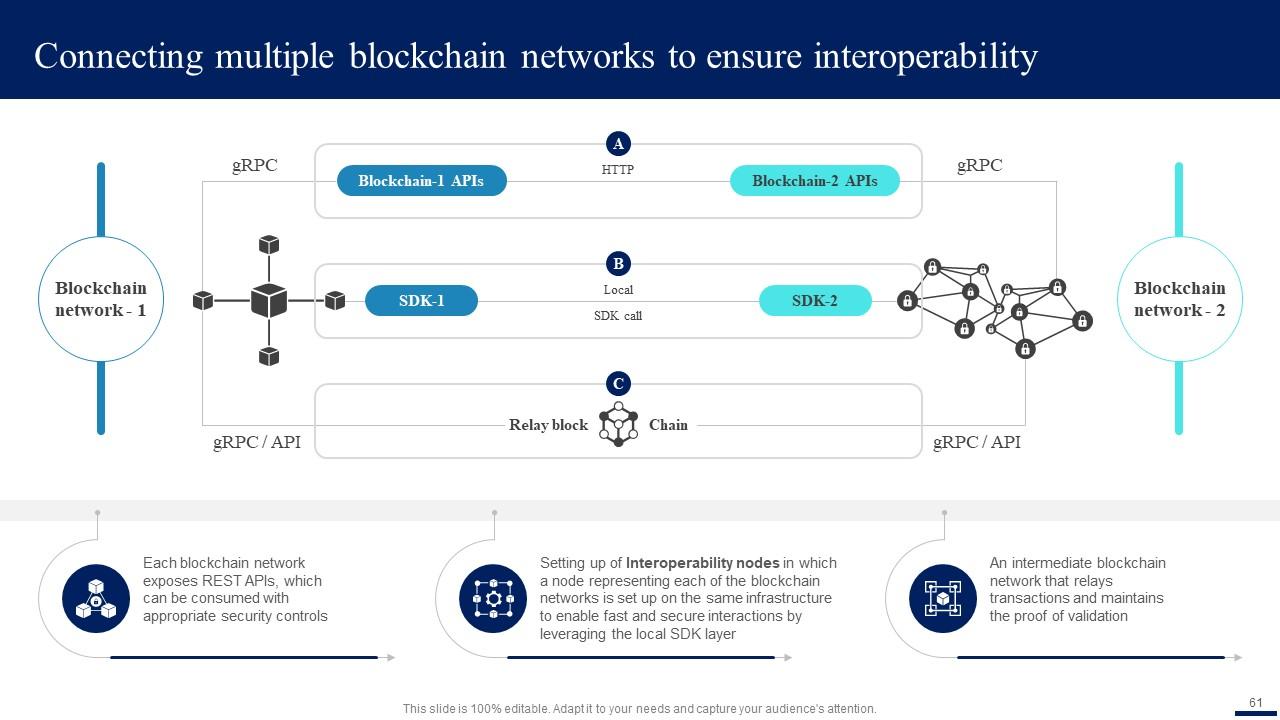
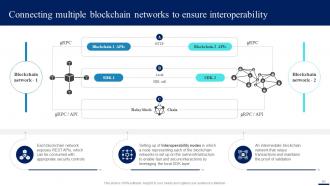
Slide 61: This slide presents Connecting multiple blockchain networks to ensure interoperability.
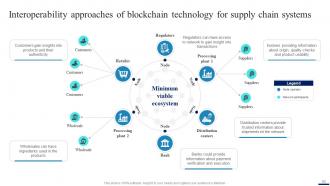
Slide 62: This slide displays Interoperability approaches of blockchain technology for supply chain systems.
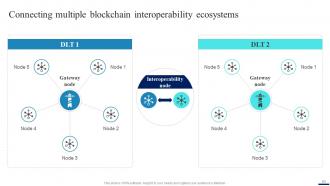
Slide 63: This slide presents Connecting multiple blockchain interoperability ecosystems.
Slide 64: This slide contains Puzzle with related icons and text.
Slide 65: This slide depicts Venn diagram with text boxes.
Slide 66: This is Our Target slide. State your targets here.
Slide 67: This is an Idea Generation slide to state a new idea or highlight information, specifications etc.
Slide 68: This slide presents Roadmap with additional textboxes. It can be used to present different series of events.
Slide 69: This slide shows Post It Notes for reminders and deadlines. Post your important notes here.
Slide 70: This is a Thank You slide with address, contact numbers and email address.
Connecting Ecosystems Introduction To Blockchain Interoperability BCT CD with all 79 slides:
Use our Connecting Ecosystems Introduction To Blockchain Interoperability BCT CD to effectively help you save your valuable time. They are readymade to fit into any presentation structure.
-
Great designs, really helpful.
-
Unique design & color.
