

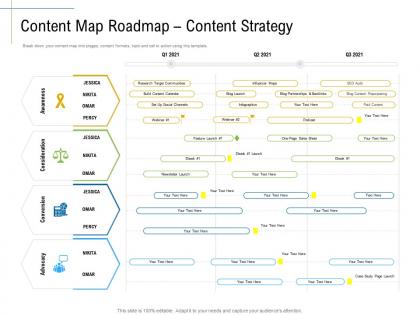
Content map roadmap content marketing roadmap and ideas for acquiring new customers




Try Before you Buy Download Free Sample Product
 Impress Your
 Audience
 100%
100% Editable
 Save Hours
 of Time


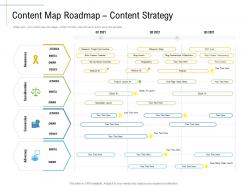
Break down your content map into stages, content formats, topic and call to action using this template.
People who downloaded this PowerPoint presentation also viewed the following :
Content map roadmap content marketing roadmap and ideas for acquiring new customers with all 2 slides:
Use our Content Map Roadmap Content Marketing Roadmap And Ideas For Acquiring New Customers to effectively help you save your valuable time. They are readymade to fit into any presentation structure.
FAQs for Content map roadmap content marketing roadmap and ideas for
Start by figuring out who you're actually talking to - like, really nail down those audience personas. Map out your content themes so they tie back to your business goals, and be realistic about how often you can actually publish (trust me on this one). Figure out where you'll distribute everything because creating great content that sits unshared is pointless. Decide on your formats - blogs, videos, social posts, whatever works. Set up metrics to track performance and break down who's doing what plus budget stuff. Leave room for when trending topics pop up or you need seasonal campaigns. Oh, and audit what content you already have first. Then fill the gaps.
Start with the customers you already have - check your analytics and actually talk to your sales people about who's buying. Look for patterns there first. Then build out 2-3 buyer personas, but skip the basic stuff like age (I mean, it's helpful but not crucial). Focus on their real problems instead. What's stressing them out? Where do they spend time online? I'd honestly just interview a few customers directly - way better than guessing. Support tickets are goldmines too for understanding what they're actually struggling with. Don't overthink it.
Honestly, I'd focus on engagement stuff first - time on page, comments, social shares. That tells you if people actually care. Traffic's obviously important too, like organic search growth and referrals. I know vanity metrics look nice, but conversions are what really matter: email signups, leads, moving people through your funnel. Also track return visitors - shows if your content's sticky. Oh, and don't try measuring everything at once, you'll go crazy. Pick maybe 3-5 metrics that match what you're actually trying to achieve. Way easier to focus that way.
First thing - grab a whiteboard and literally write your content goals next to your business goals. Sounds basic but it works. If you're pushing for 20% revenue growth, your content needs to drive real leads or upsell current customers. Every piece you create should have a clear purpose - awareness, leads, retention, whatever. Track stuff leadership actually cares about like conversion rates, not just follower counts (learned that one the hard way). Review quarterly and pivot when needed. Oh, and don't get caught up in vanity metrics - they look pretty but won't save your budget.
So SEO is basically your compass for content planning. First thing - do keyword research to see what people actually search for in your space. Trust me, creating content nobody can find is such a waste of time. Look at your current stuff and see what's working. Then build around keywords you can actually rank for (don't go after impossible ones). Map everything to different buyer journey stages - some posts for people just browsing, others for ready-to-buy folks. It's like having a roadmap instead of just throwing content at the wall.
Think of social media as your content playground - post your blog stuff and videos, but tweak the message for each platform. Instagram needs pretty visuals, LinkedIn wants that professional angle, Facebook does well with longer stories. Here's what I actually do though: I watch what people comment about and what gets reactions. That stuff becomes my next content ideas. Honestly, pick like 2-3 platforms max and stay consistent there. I learned the hard way that spreading yourself thin across every platform just burns you out. Focus on where your audience actually hangs out.
Look, don't try to be on every single platform - that's how you burn out fast. Pick 2-3 spots where your people actually spend time and stick with those. I'd start by checking out where your competitors are getting good engagement, then test those first. Use something like Buffer to schedule stuff ahead of time (saves your sanity). Each platform's different though, so you can't just copy-paste the same post everywhere. Instagram needs different vibes than LinkedIn, you know? Oh, and consistency beats perfection every time. Better to post regularly on fewer channels than sporadically everywhere.
Honestly, I'd do a big review every quarter and just quick check-ins monthly. Markets are insane right now - like, blink and everything's different. Those quarterly deep dives help you see what's actually moving the needle vs. what you thought would work (spoiler: they're usually different lol). Monthly stuff catches the smaller issues before they blow up. You don't want to pivot every five seconds, but you also can't be stubborn when something's clearly not working. Oh, and set those calendar reminders now because you'll totally forget otherwise.
So basically, early on you want educational stuff - blog posts, guides, videos that actually help with their problems. Don't pitch yet. Once they're considering solutions, comparison content and case studies work great. Then demos and testimonials for when they're ready to buy. Most people screw this up by going straight to "buy my thing!" way too early. Trust comes first, always. You gotta meet people where they are mentally, not drag them to where you want them. Honestly, I'd start by looking at what content you have now and see which stage it fits. Might surprise you how much you're missing in those early stages.
Honestly, visuals are huge because people process images like 60,000 times faster than text (crazy stat, I know). They grab attention instantly and make your content way more memorable. Plus they're perfect for breaking up those walls of text that make people's eyes glaze over. I'm talking infographics for data, videos for how-tos, even simple graphics to emphasize important stuff. The trick is planning them into your content calendar from day one - don't just throw them on later as decoration. Oh, and make sure your visual style actually matches your brand voice or it'll feel totally off.
WordPress or Webflow are solid for publishing your content. I'd also grab something like Notion for planning out your editorial calendar - way better than random sticky notes everywhere. Canva's honestly a lifesaver for graphics, even though I was skeptical at first. Google Docs works fine for writing and sharing drafts with people. Buffer or Hootsuite will handle your social posting so you're not glued to your phone all day. Just pick maybe 2-3 tools to start with though. Adding everything at once is a recipe for getting overwhelmed and using nothing.
Honestly, just bake it right into your content calendar from the start. Set monthly goals for how many customer stories or posts you want to collect, then actually create workflows to hunt them down. The legal stuff is such a pain but you've gotta get permission processes sorted early - learned that one the hard way! Time your big UGC pushes around launches or holidays when people are already hyped. Oh, and start by seeing what customers are already posting about you. Treat it like real content with deadlines and someone actually responsible for it.
Okay so here's what I do - grab one good blog post and chop it up into like 5 different things. Turn it into Instagram carousels, pull quotes for Twitter, maybe a podcast outline. Works backwards too - I've taken a bunch of smaller posts and made them into a proper guide. Most people don't realize how far one solid piece of content can stretch! Try flipping the angle while you're at it. Got a "how-to" post? Rewrite it as "don't make these mistakes." Turn your data into something visual. Start with whatever performed best for you already and think of 3-4 ways to package it differently. Way easier than starting from scratch every time.
Honestly, just write down your brand's personality and tone in a style guide - then actually stick to it. Most teams skip this part and can't figure out why their blog sounds totally different from their Instagram. Document specific examples for each format: blog posts vs captions vs emails all need different vibes. Make sure everyone creating content has access to it, and definitely have one person do a final check before anything goes live. Oh and review the guide every few months because your voice will probably evolve. Trust me, consistency makes such a huge difference in how people remember your brand.
Don't try to please everyone right off the bat - pick one audience and stick with them. Honestly, the timeline thing gets people every time. Be realistic about how often you can actually post or you'll just stress yourself out. Oh, and do your homework first! Figure out what people actually want before you start making stuff. I see so many people skip that step and wonder why nobody cares. The other trap? Spending forever planning the "perfect" strategy. Just start creating within a couple weeks max. You can always adjust as you go.
-
Illustrative design with editable content. Exceptional value for money. Highly pleased with the product.
-
Easy to edit slides with easy to understand instructions.
-
Awesome presentation, really professional and easy to edit.