


Governança Corporativa de Tecnologia da Informação CGIT Powerpoint Slides
Esta apresentação em PowerPoint dá uma breve idéia sobre os problemas de negócios e a necessidade de implementação da governança de TI na empresa. Neste PowerPoint CGIT de Governança Corporativa de Tecnologia da Informação, discutimos a visão geral da governança de TI, cobrindo seu ciclo de vida, gerenciamento de riscos e conformidade. Além disso, este PPT de Governança de Tecnologia da Informação e Comunicação ICT Governance contém diferentes estruturas de governança de TI, como COBIT, ITIL, COSO, CMMI, FAIR e modelos estratégicos de governança de TI. Além disso, este modelo CGIT de Governança Corporativa de Tecnologia da Informação inclui o processo de seleção da estrutura de governança de TI, seu domínio como uma estrutura para a governança de TI corporativa, gerenciamento estratégico, percepção de benefícios, otimização de riscos e otimização de recursos. Abrange também o treinamento, o orçamento e a matriz RACI para implementação da governança de TI. Além disso, este PPT de Governança Corporativa de Tecnologia da Informação e Comunicação atende a etapas de implementação efetiva para governança de TI na empresa e seu impacto pós-implementação. Por fim, este deck EGIT de Governança Corporativa de Tecnologia da Informação compreende o plano de 30-60-90 dias, um roteiro de implementação e um painel. Baixe nosso modelo 100% editável e personalizável, que também é compatível com o Apresentações Google.























-

- Google Slides is a new FREE Presentation software from Google.
- All our content is 100% compatible with Google Slides.
- Just download our designs, and upload them to Google Slides and they will work automatically.
- Amaze your audience with SlideTeam and Google Slides.
-

Want Changes to This PPT Slide? Check out our Presentation Design Services
-

- WideScreen Aspect ratio is becoming a very popular format. When you download this product, the downloaded ZIP will contain this product in both standard and widescreen format.
-

- Some older products that we have may only be in standard format, but they can easily be converted to widescreen.
- To do this, please open the SlideTeam product in Powerpoint, and go to
- Design ( On the top bar) -> Page Setup -> and select "On-screen Show (16:9)” in the drop down for "Slides Sized for".
- The slide or theme will change to widescreen, and all graphics will adjust automatically. You can similarly convert our content to any other desired screen aspect ratio.
Compatible With Google Slides

Get This In WideScreen
You must be logged in to download this presentation.


Do you want to remove this product from your favourites?
Recursos desses slides de apresentação do PowerPoint:

People who downloaded this PowerPoint presentation also viewed the following :
Conteúdo desta apresentação em Powerpoint
Slide 1 : Este slide apresenta a Governança Corporativa de Tecnologia da Informação (CGIT). Indique o nome da sua empresa e comece.
Slide 2 : Este slide apresenta a Agenda da apresentação.
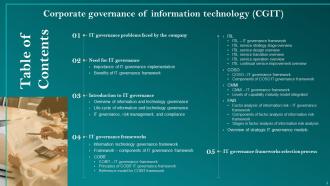
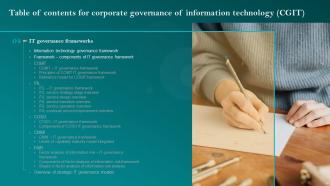
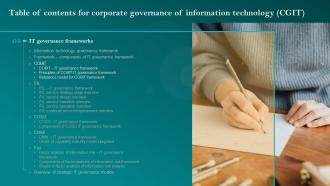
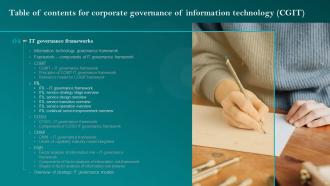
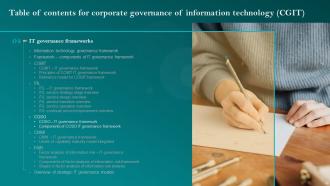
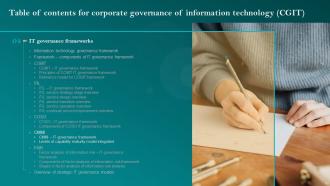
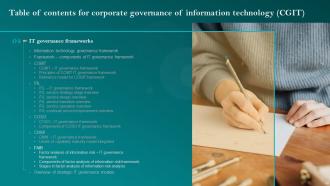
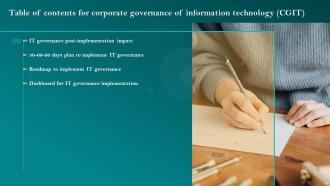
Slide 3 : Este slide apresenta o índice da apresentação.
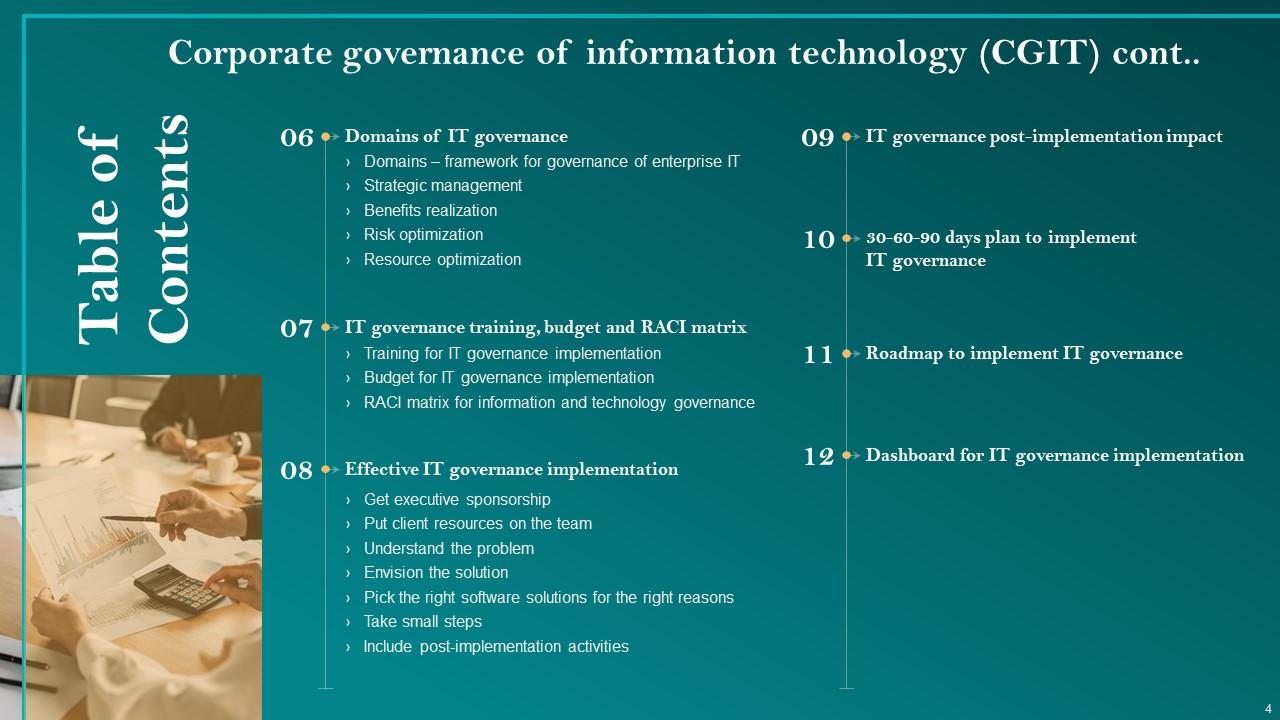
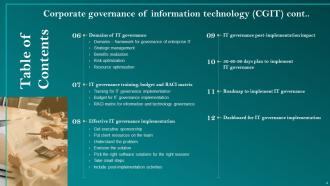
Slide 4 : Este é outro slide que continua o índice da apresentação.
Slide 5 : Este slide destaca o título dos tópicos que serão abordados a seguir no modelo.
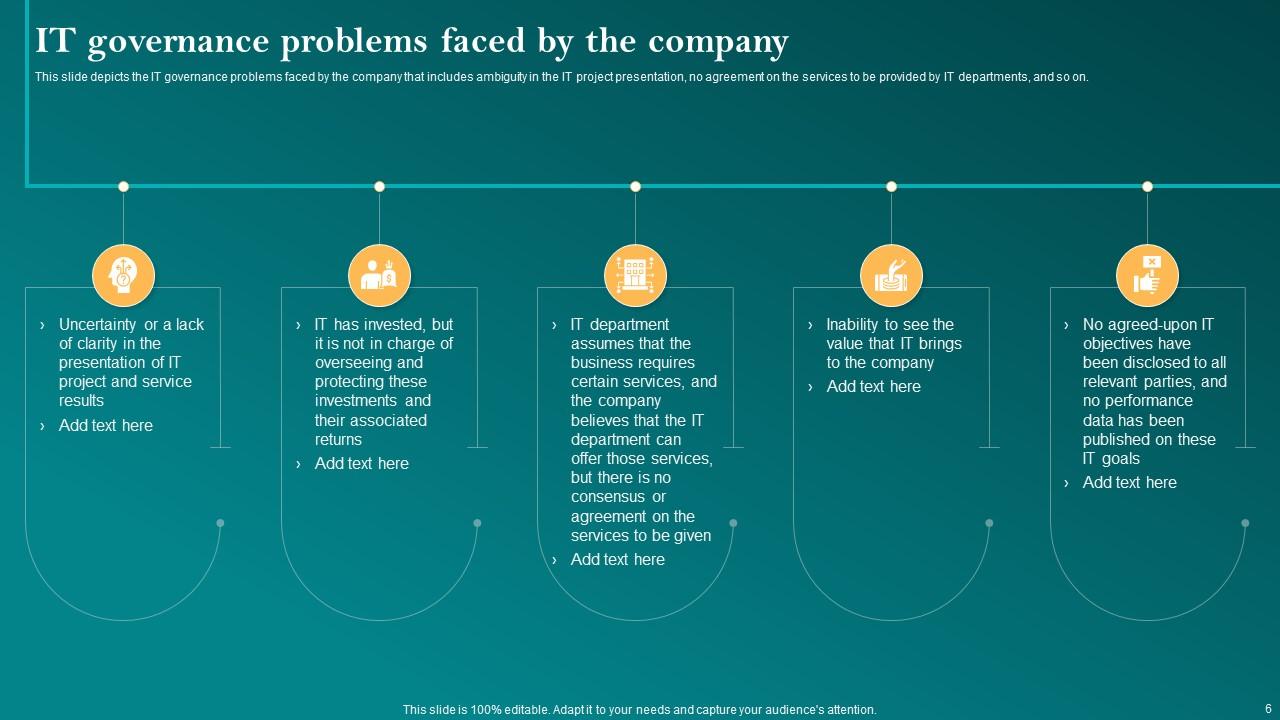
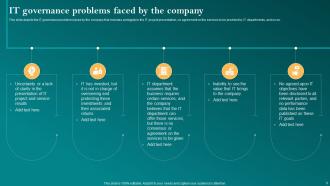
Slide 6 : Este slide mostra os problemas de governança de TI enfrentados pela empresa.
Slide 7 : Este slide destaca o título dos tópicos que serão abordados a seguir no modelo.
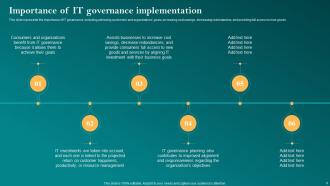
Slide 8 : Este slide apresenta a importância da implementação da governança de TI.
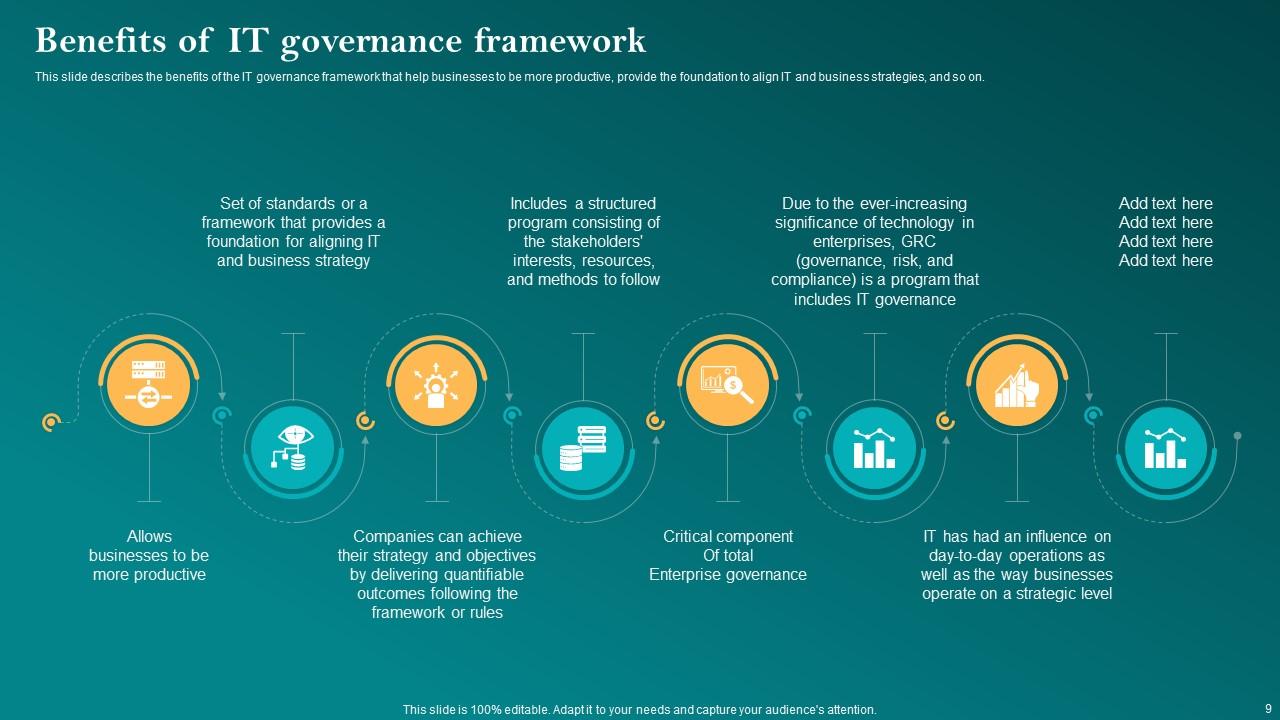
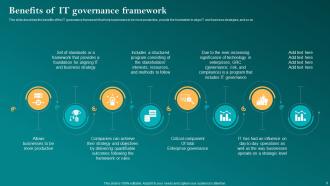
Slide 9 : Este slide descreve os benefícios da estrutura de governança de TI.
Slide 10 : Este slide destaca o título dos tópicos que serão abordados a seguir no modelo.
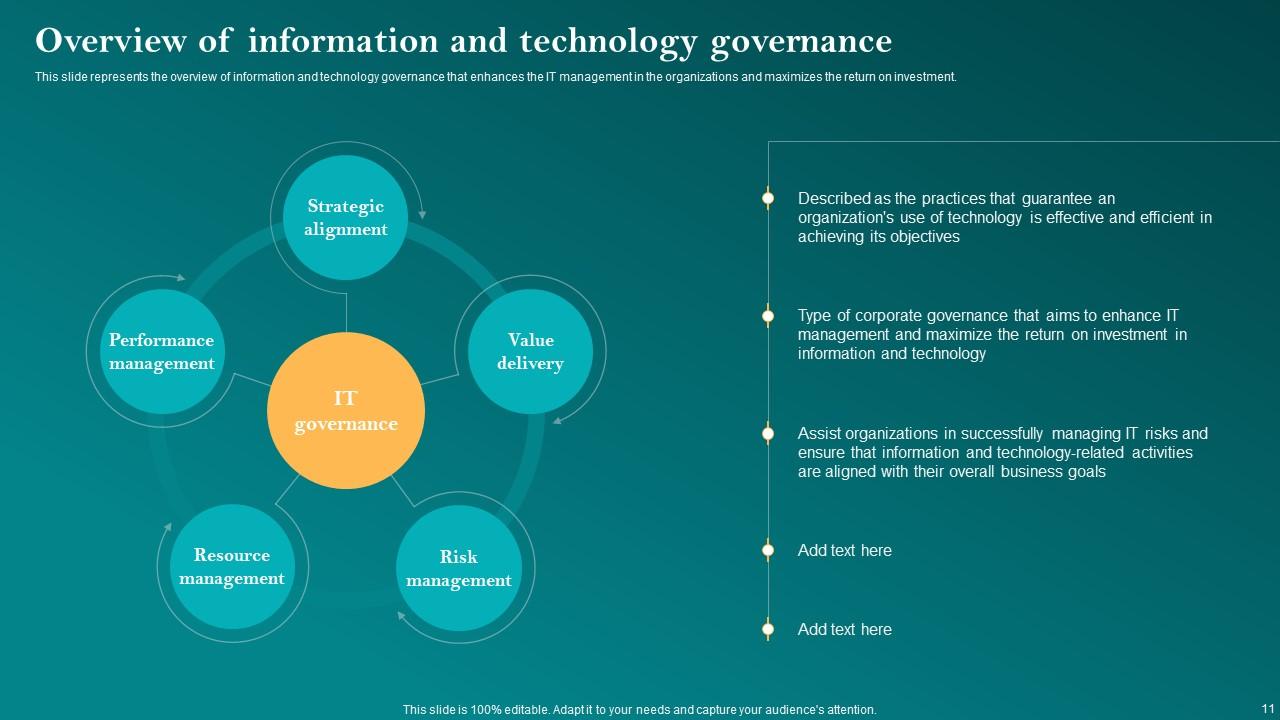
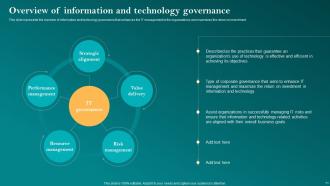
Slide 11 : Este slide apresenta Visão Geral da Governança de Tecnologia e Informação.
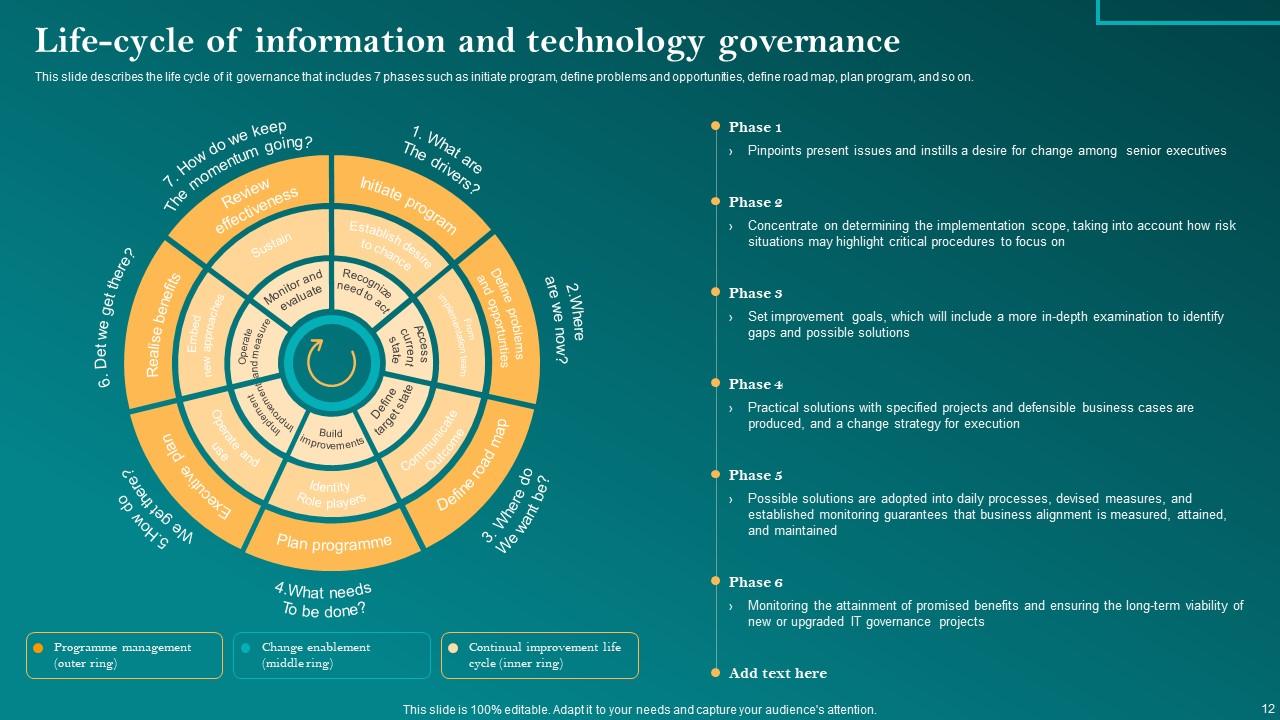
Slide 12 : Este slide representa o Ciclo de Vida da Governança de Tecnologia e Informação.
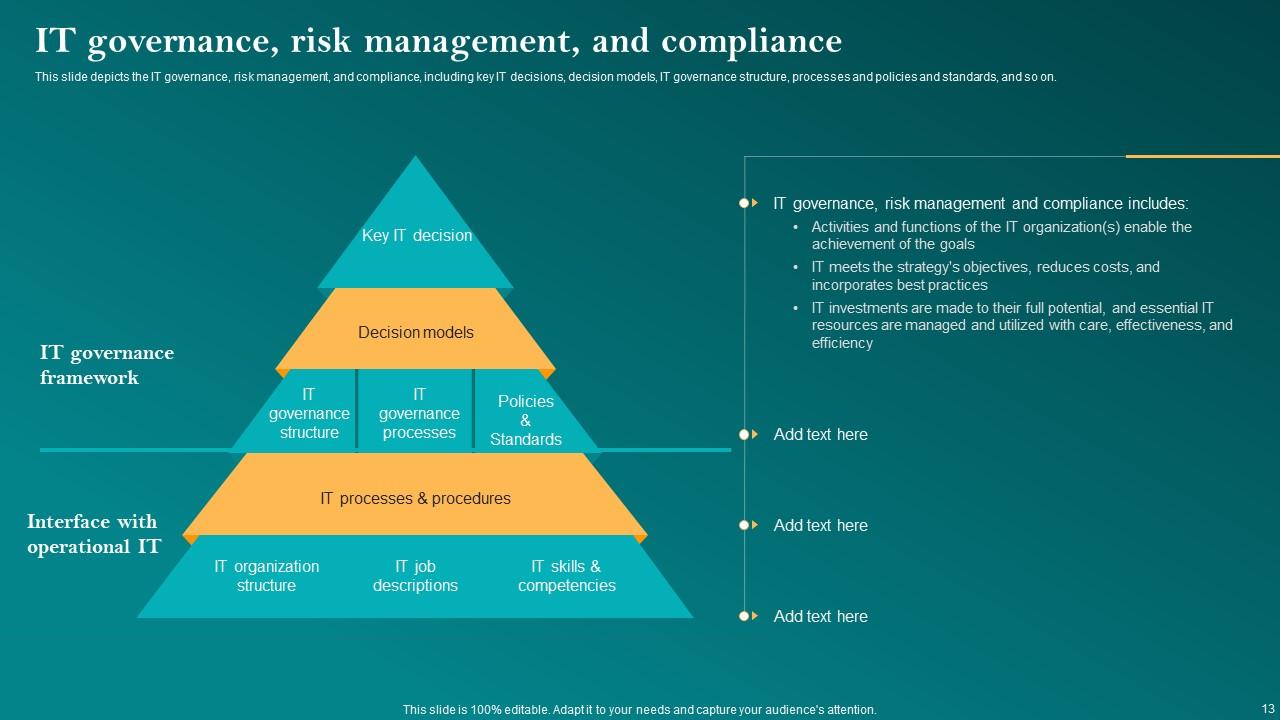
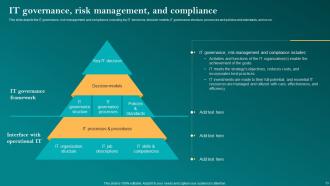
Slide 13 : Este slide mostra a Governança de TI, o Gerenciamento de Riscos e a Conformidade.
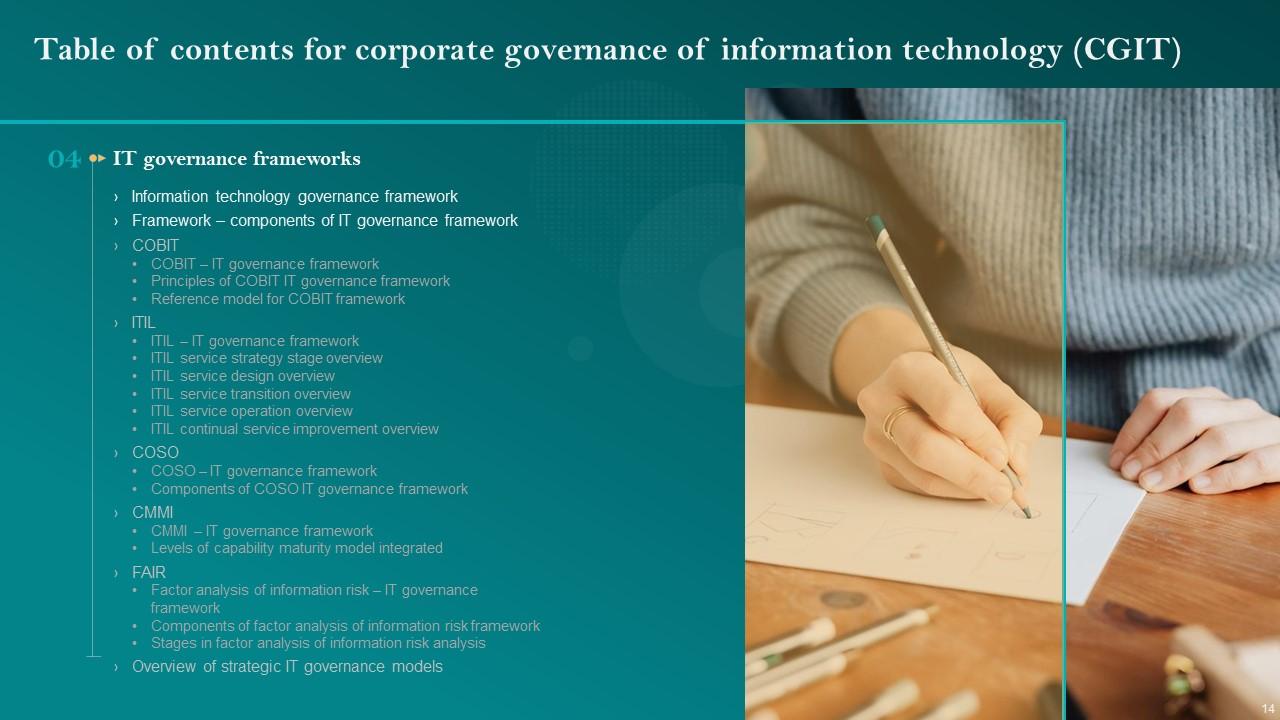
Slide 14 : Este slide destaca o título dos tópicos que serão abordados a seguir no modelo.
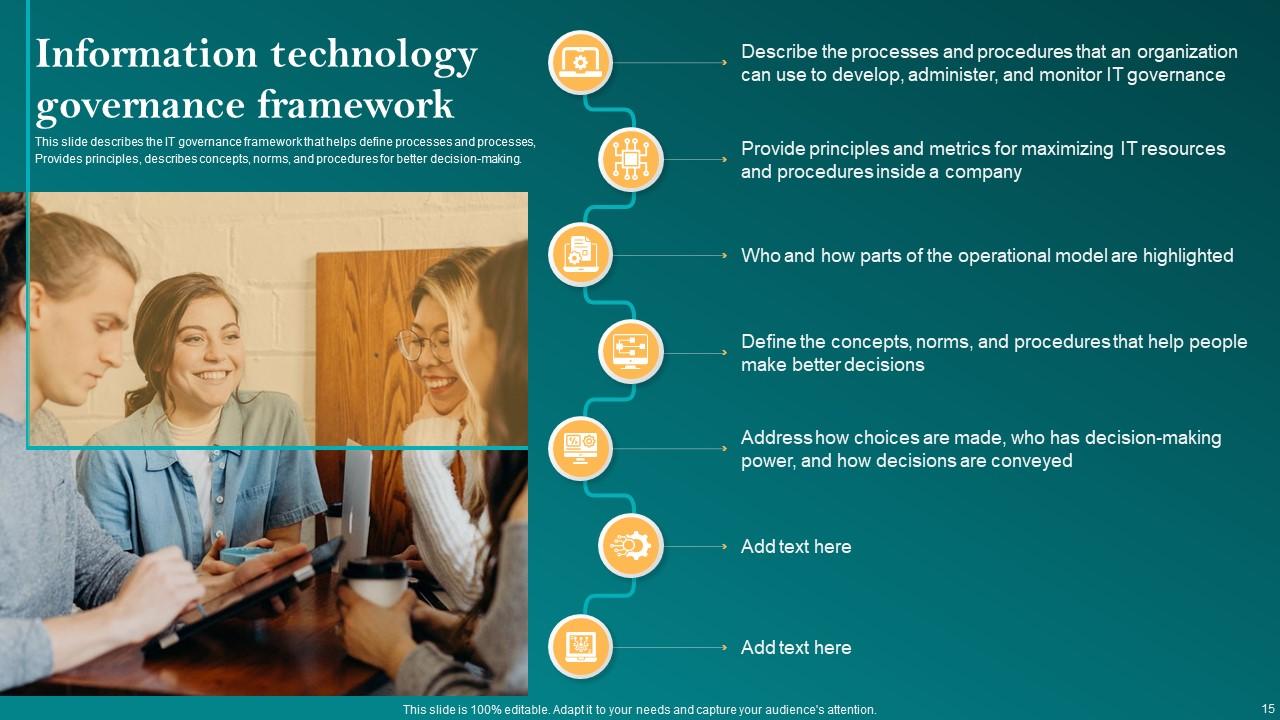
Slide 15 : Este slide descreve a estrutura de governança de TI que ajuda a definir os processos.
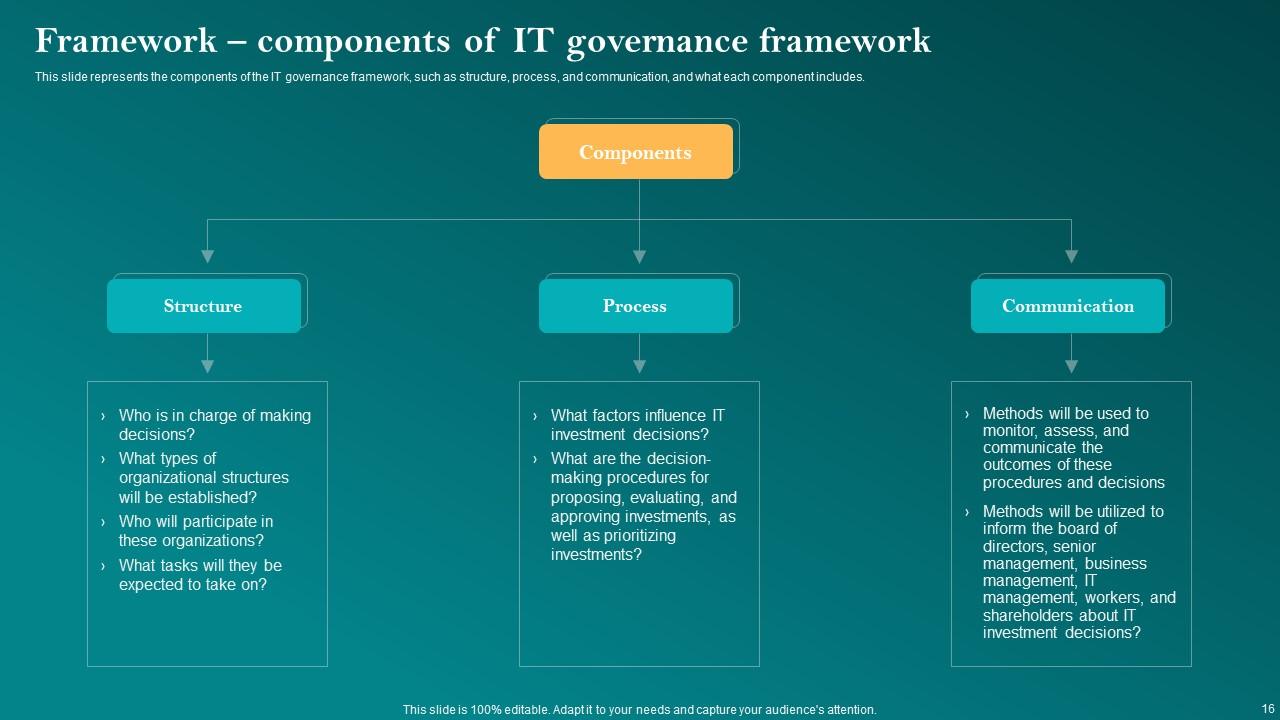
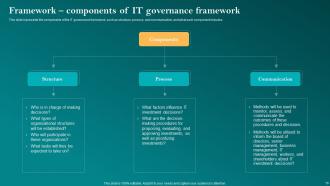
Slide 16 : Este slide representa os componentes da estrutura de governança de TI.
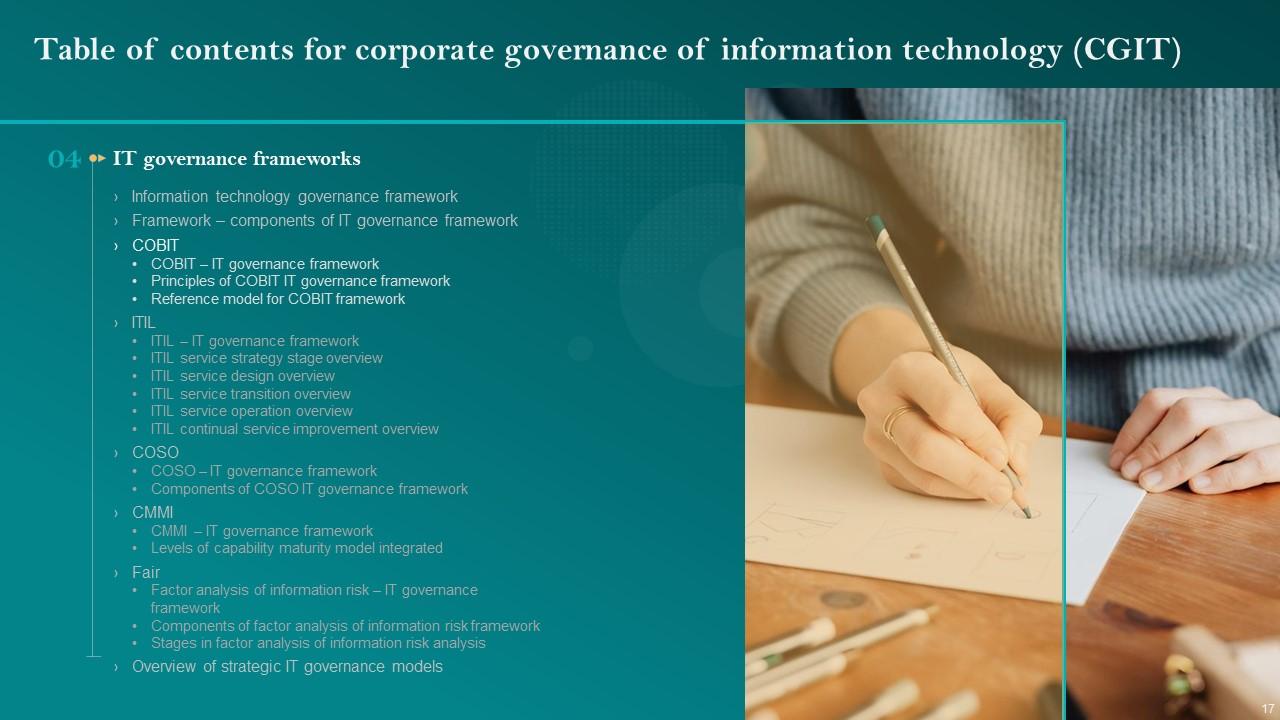
Slide 17 : Este slide destaca o título dos tópicos que serão abordados a seguir no modelo.
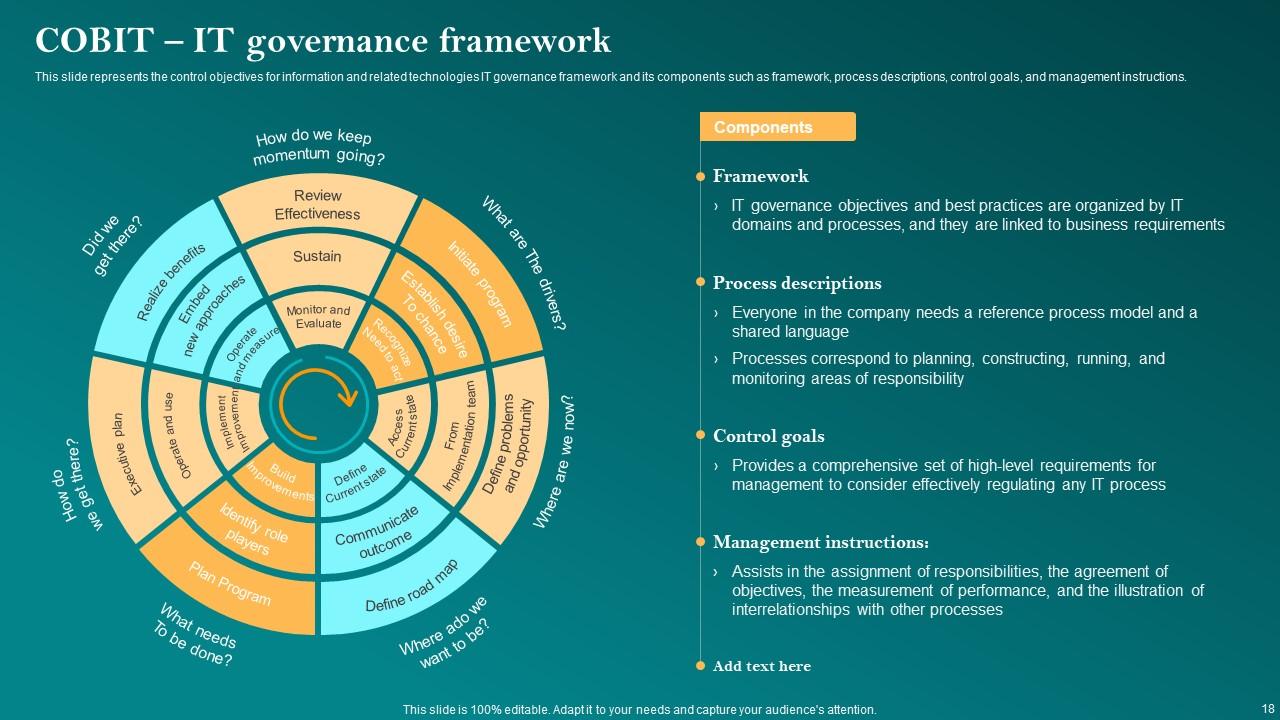
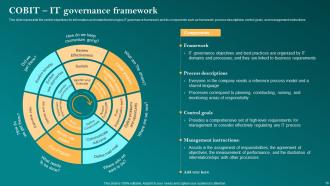
Slide 18 : Este slide representa os Objetivos de Controle para Tecnologias de Informação e Relacionadas.
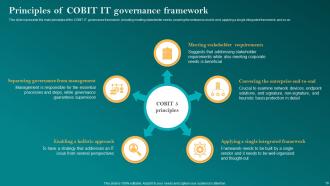
Slide 19 : Este slide apresenta os Princípios da Estrutura de Governança de TI do COBIT.
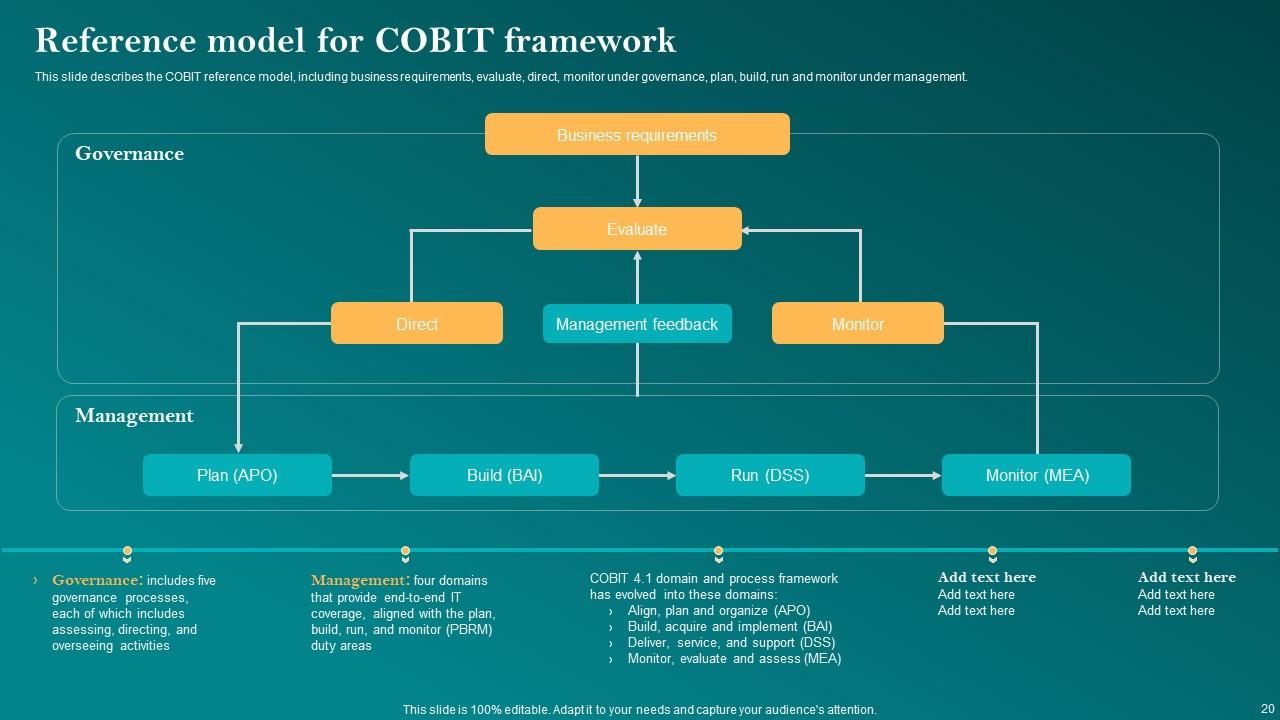
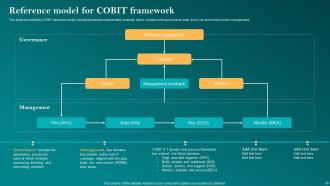
Slide 20 : Este slide exibe o Modelo de Referência para o COBIT Framework.
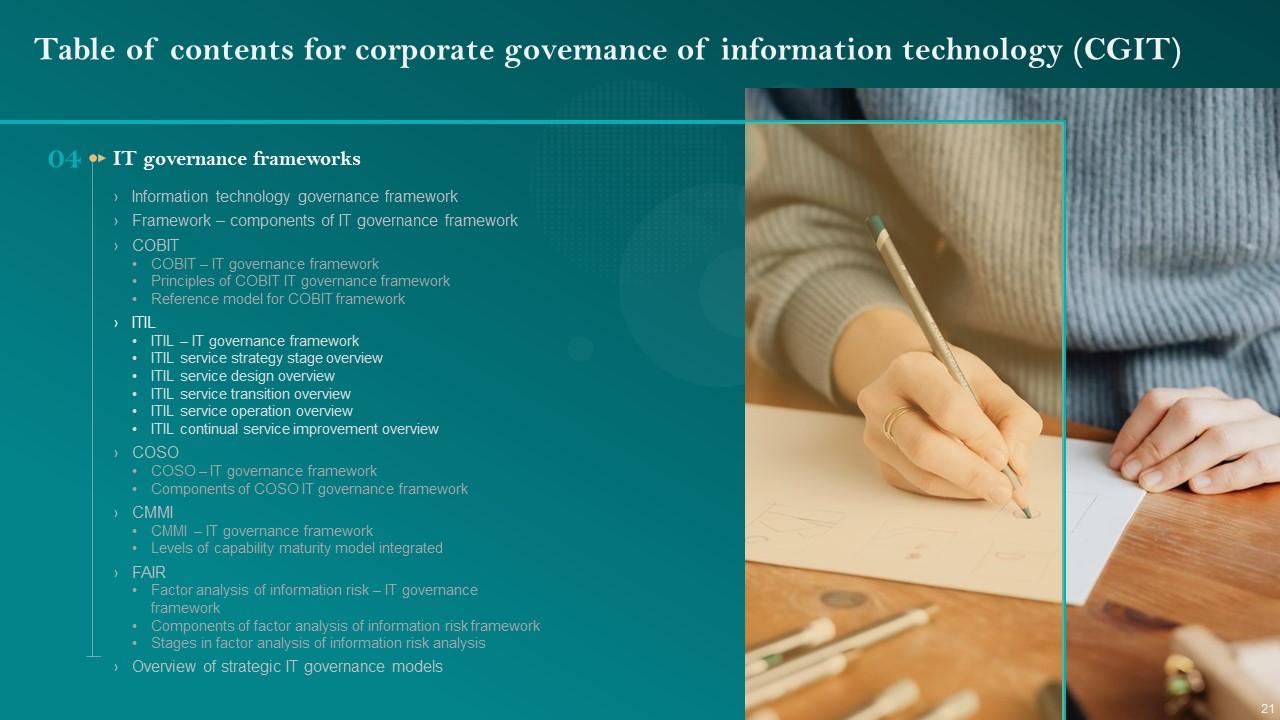
Slide 21 : Este slide destaca o título dos tópicos que serão abordados a seguir no modelo.
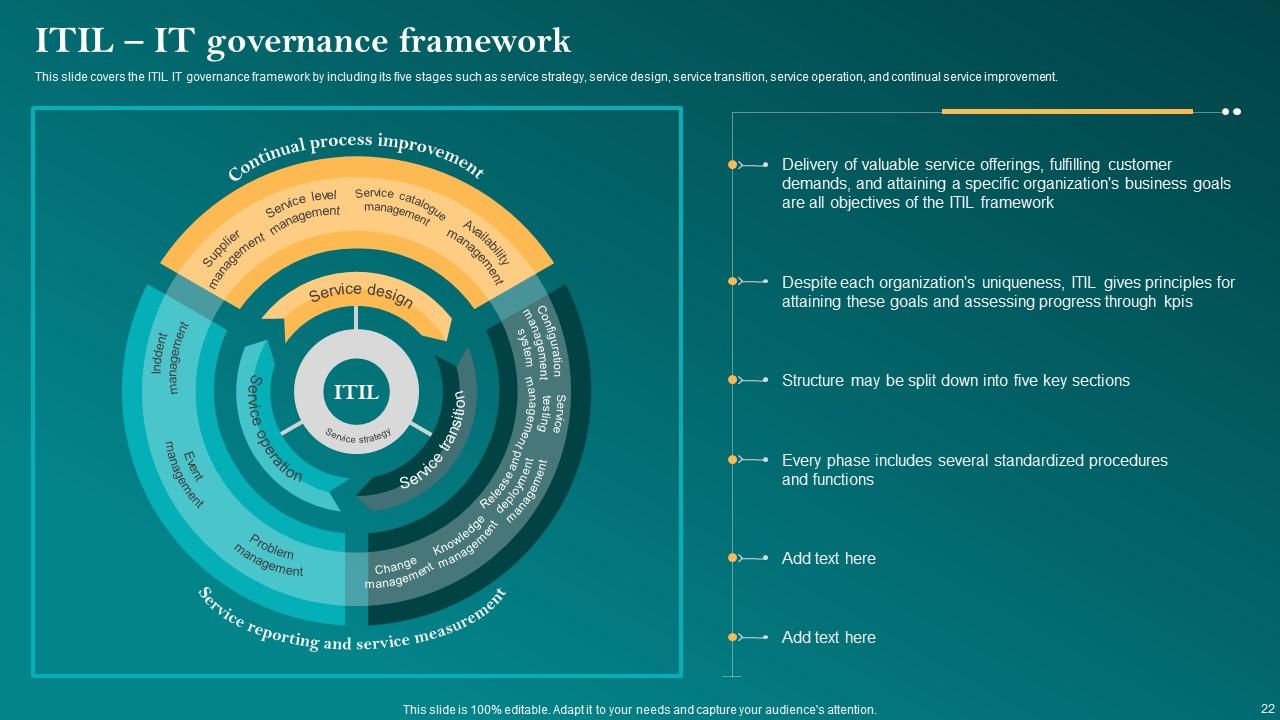
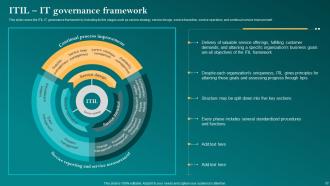
Slide 22 : Este slide cobre a estrutura de governança de TI ITIL incluindo seus cinco estágios.
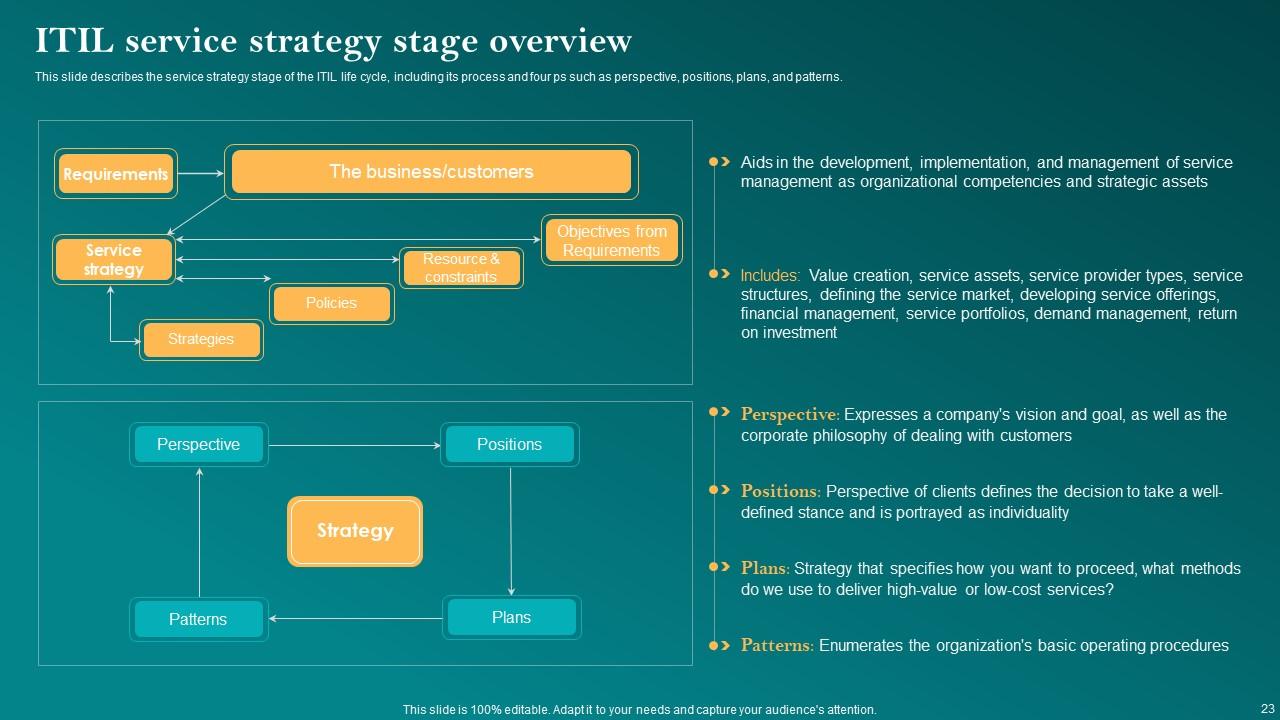
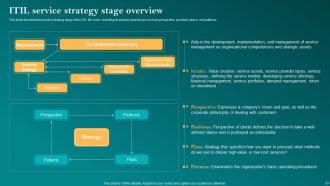
Slide 23 : Este slide descreve o estágio de estratégia de serviço do ciclo de vida do ITIL.
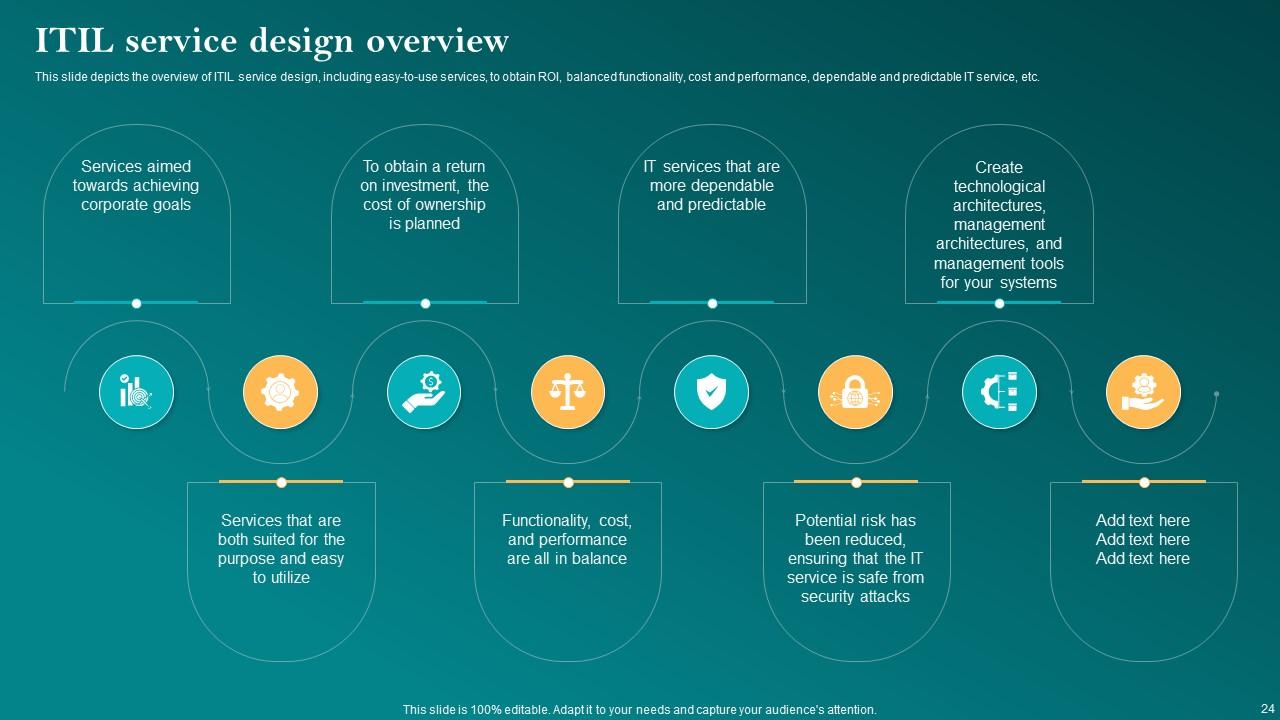
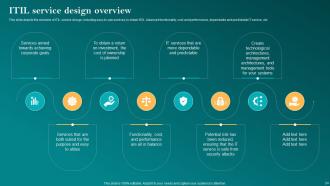
Slide 24 : Este slide descreve a visão geral do design de serviço ITIL.
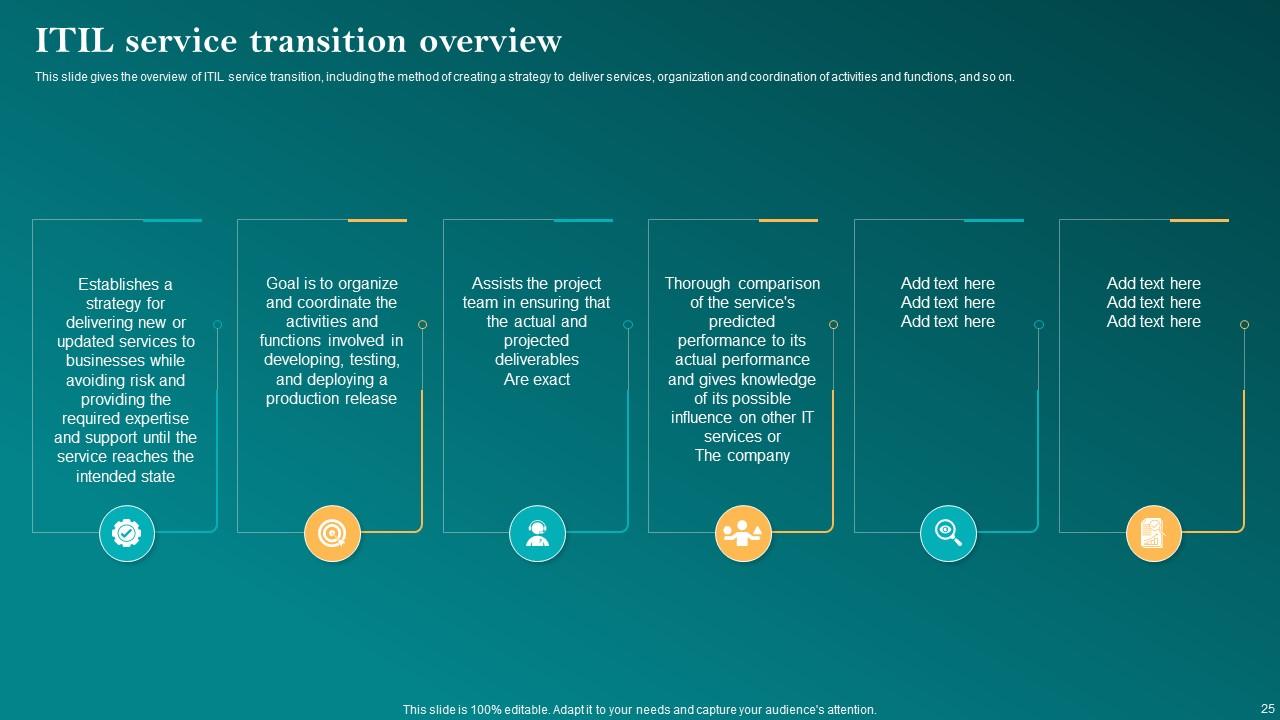
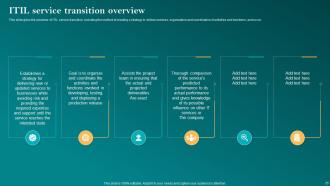
Slide 25 : Este slide fornece uma visão geral da transição de serviço ITIL.
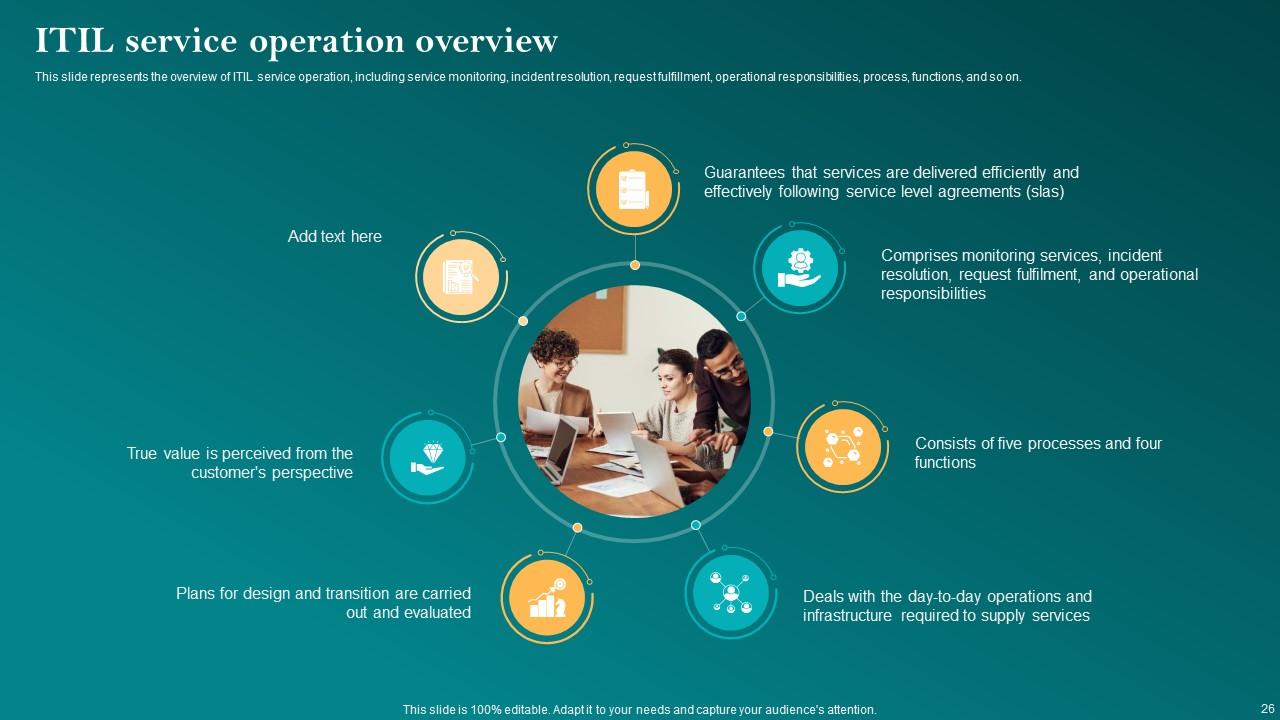
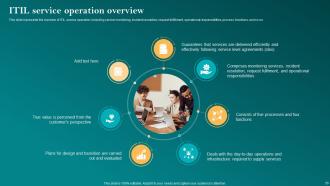
Slide 26 : Este slide representa a visão geral da operação do serviço ITIL.
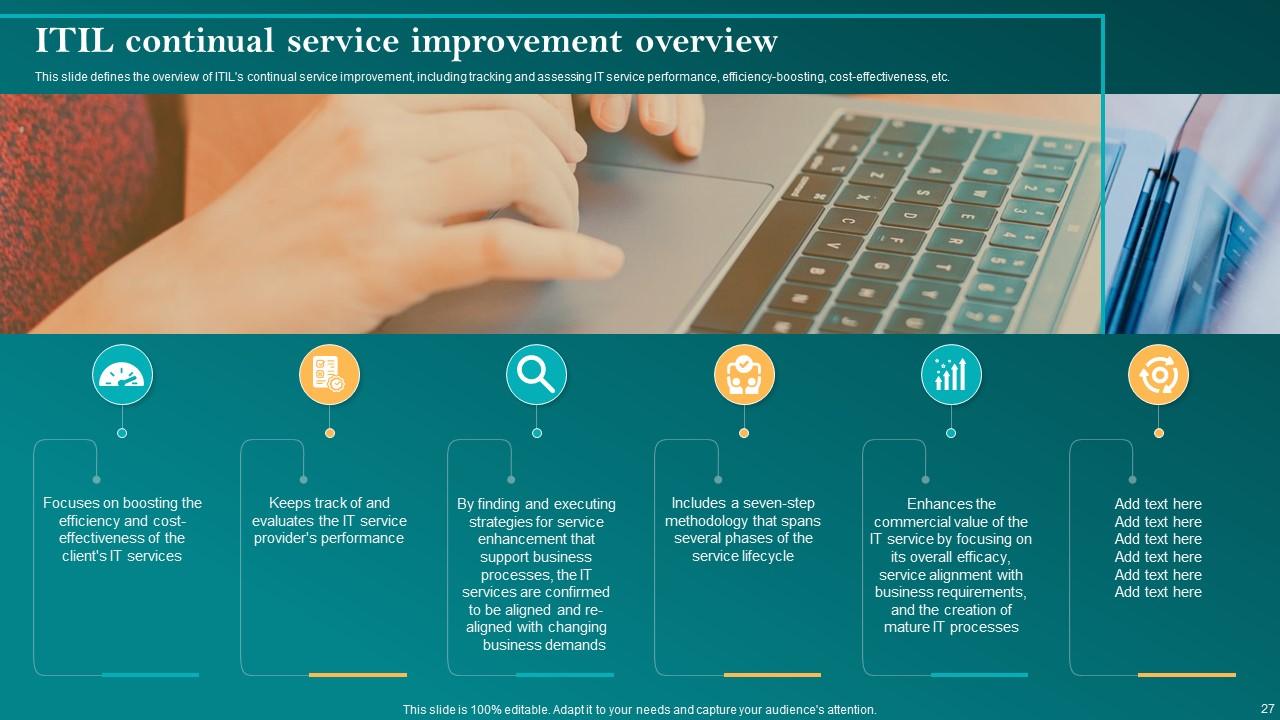
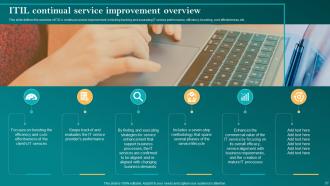
Slide 27 : Este slide mostra a Visão Geral da Melhoria de Serviço Contínua da ITIL.
Slide 28 : Este slide destaca o título dos tópicos que serão abordados a seguir no modelo.
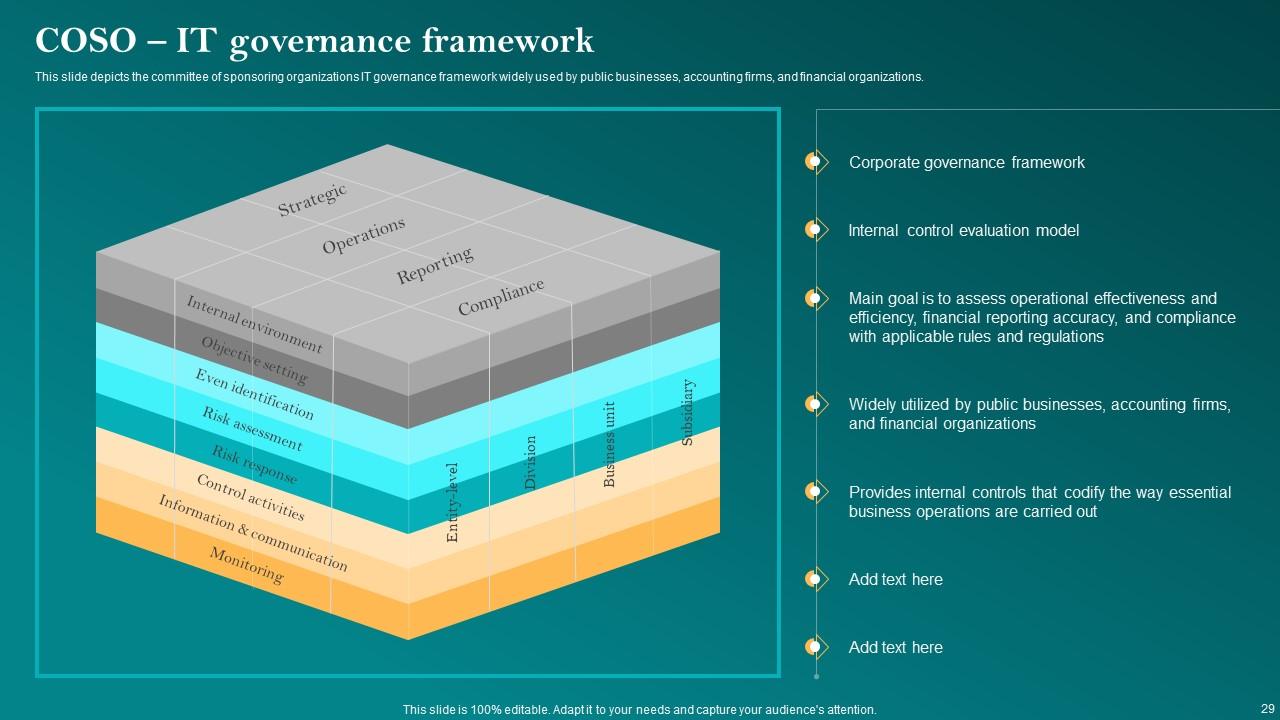
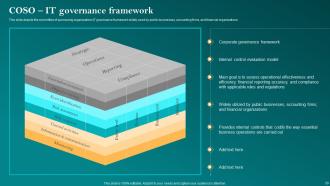
Slide 29 : Este slide descreve a estrutura de governança de TI do Comitê de Organizações Patrocinadoras.
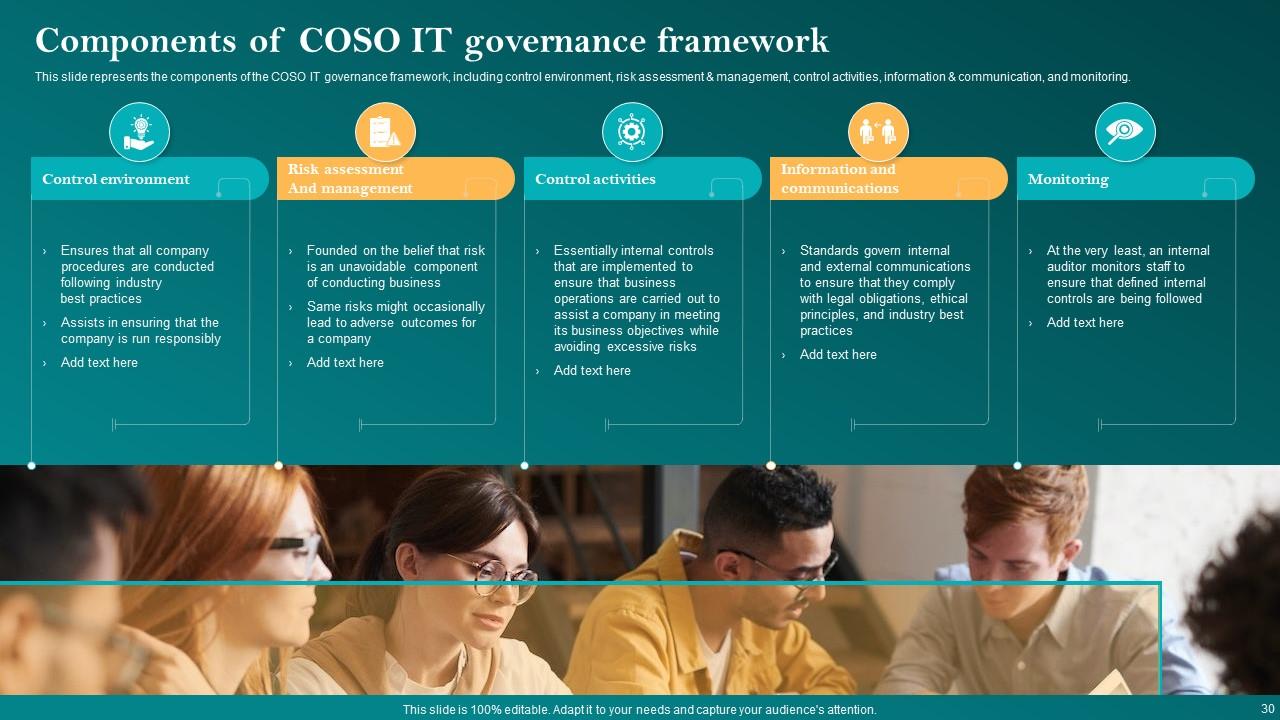
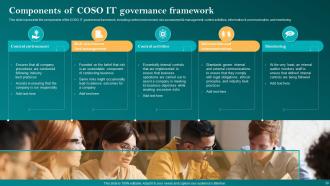
Slide 30 : Este slide representa os componentes do COSO IT Governance Framework.
Slide 31 : Este slide destaca o título dos tópicos que serão abordados a seguir no modelo.
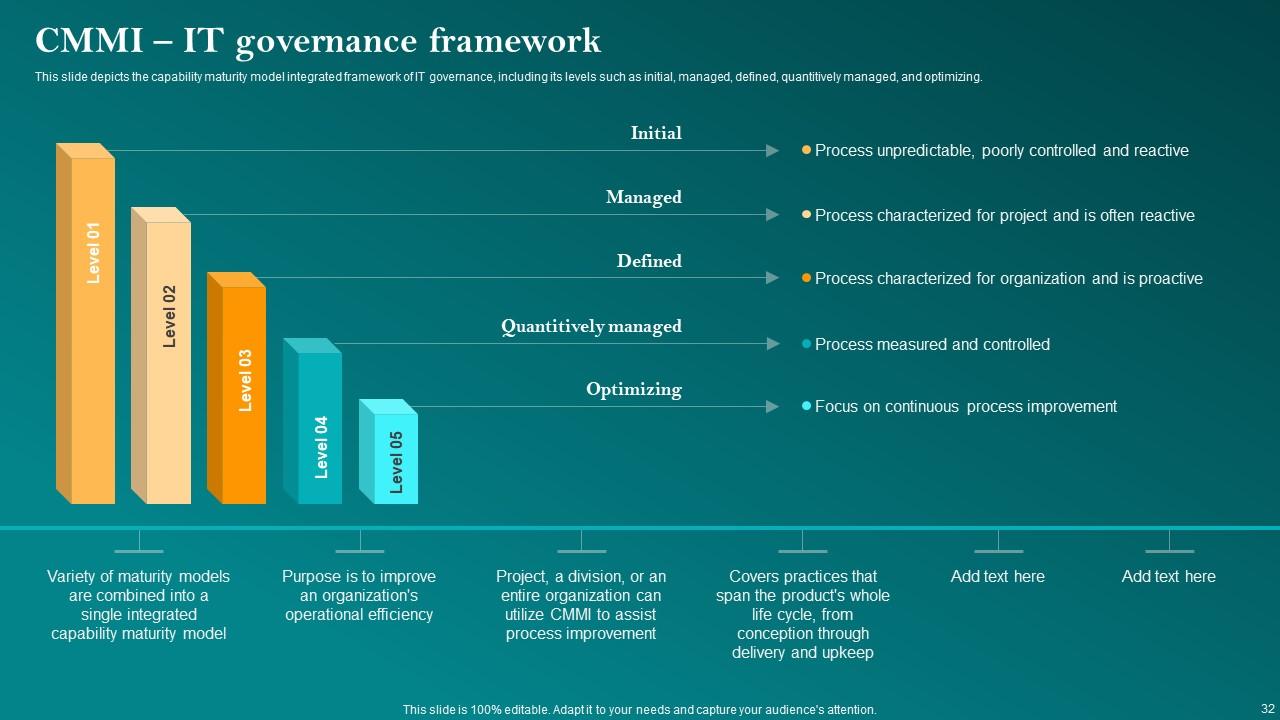
Slide 32 : Este slide descreve a estrutura integrada do Capability Maturity Model de governança de TI.
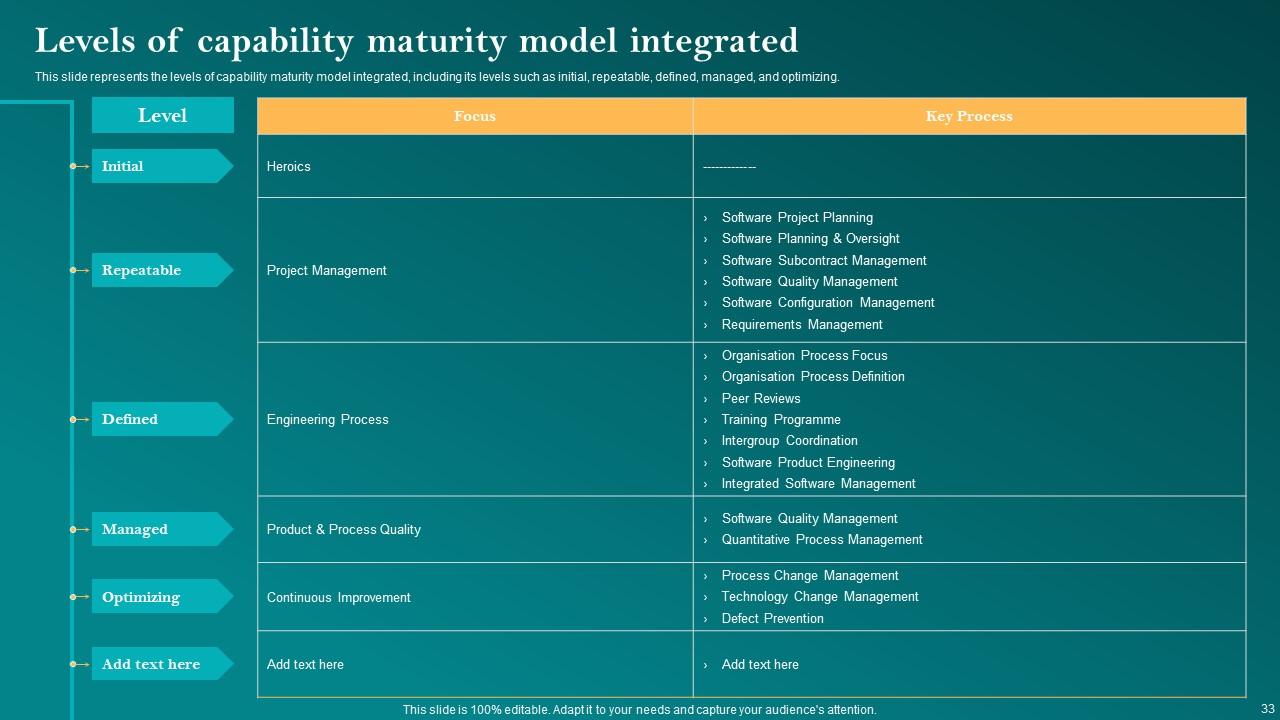
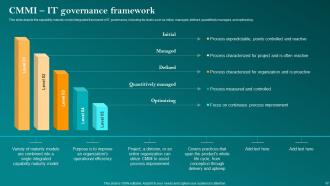
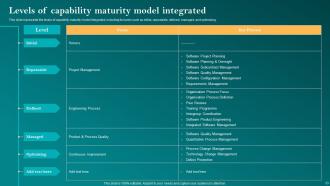
Slide 33 : Este slide mostra os Níveis de Capacidade de Maturidade do Modelo Integrado.
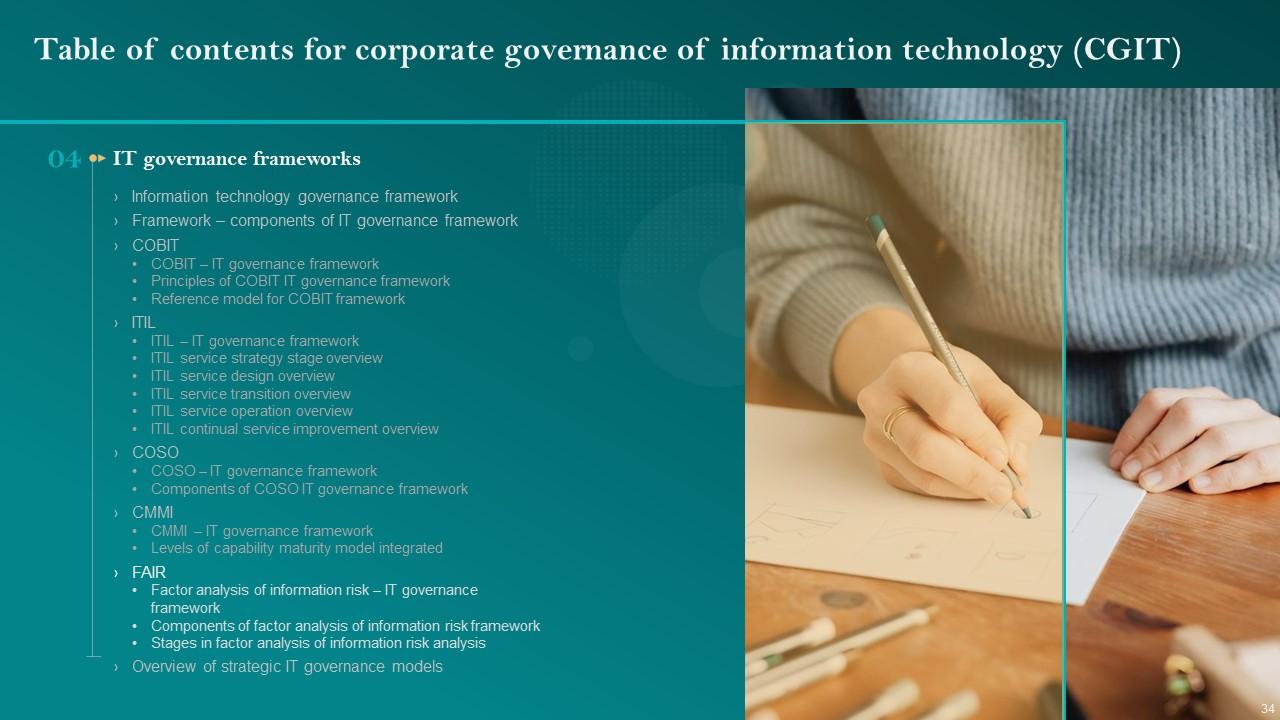
Slide 34 : Este slide destaca o título dos tópicos que serão abordados a seguir no modelo.
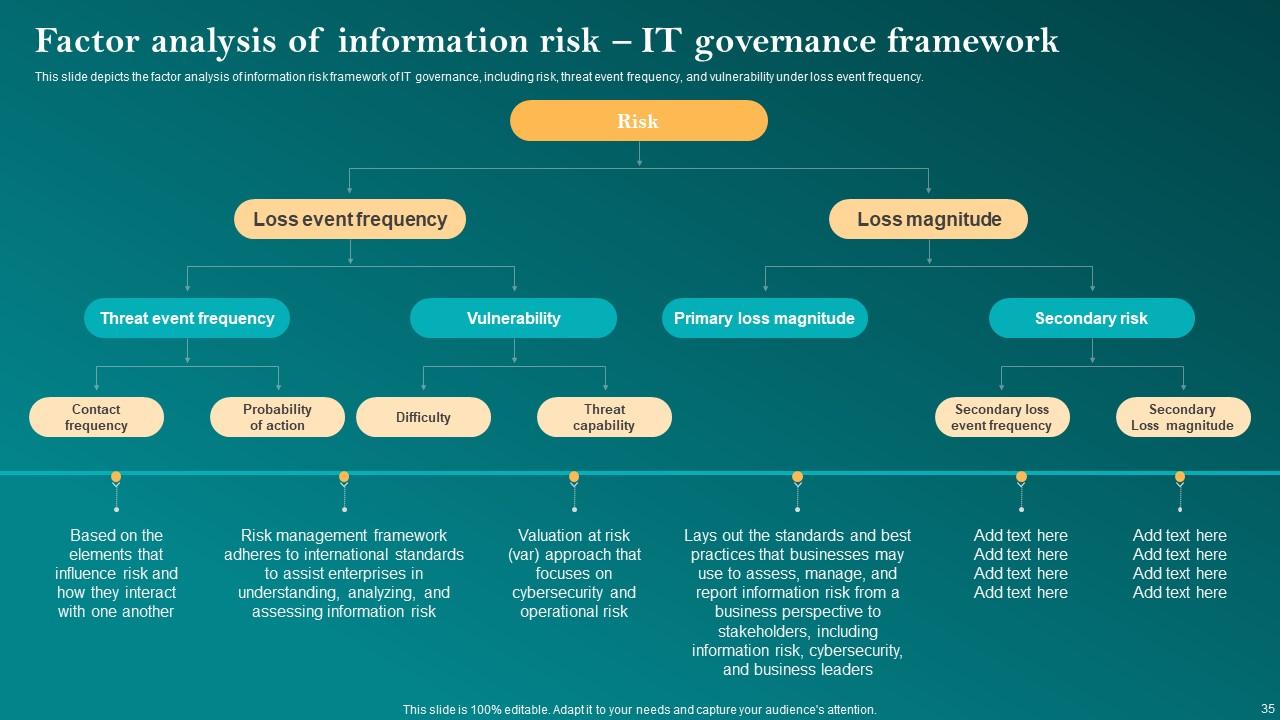
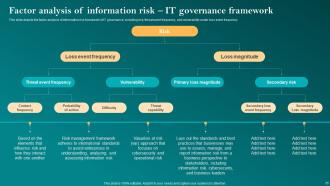
Slide 35 : Este slide descreve a estrutura de análise de fatores de risco da informação da governança de TI.
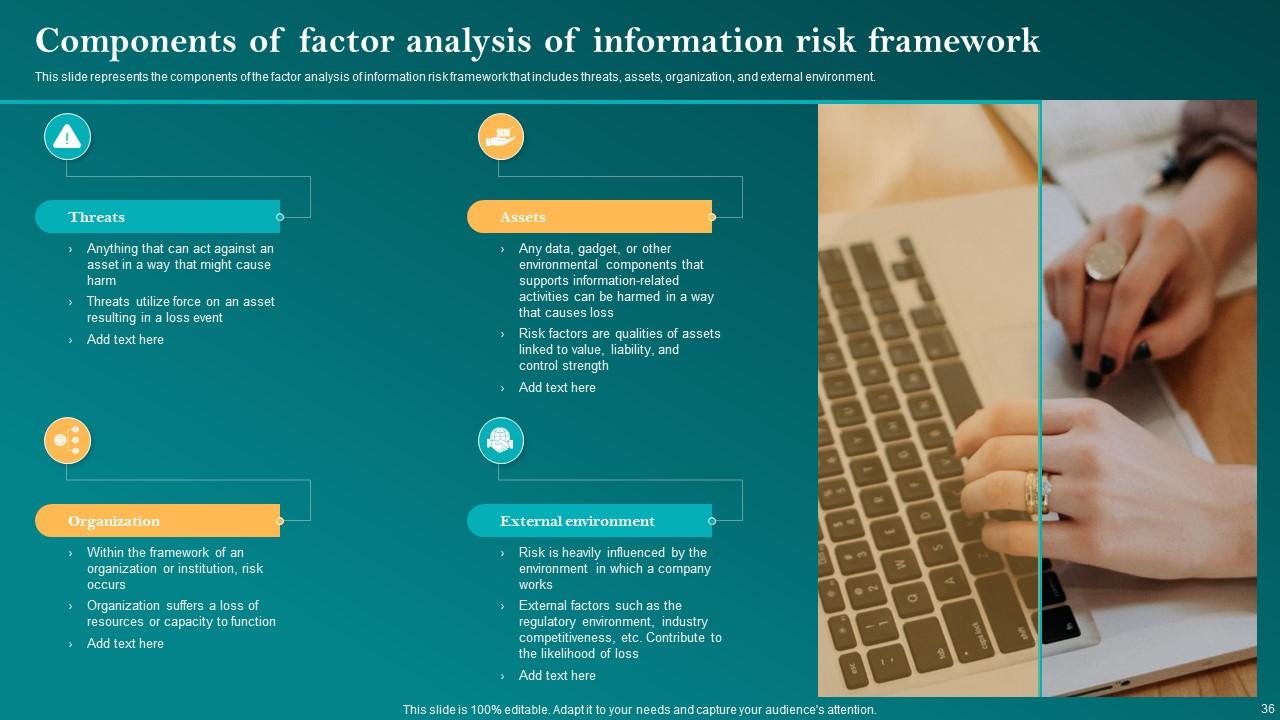
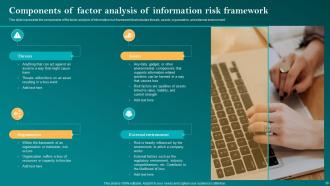
Slide 36 : Este slide mostra os Componentes da Análise de Fatores da Estrutura de Risco da Informação.
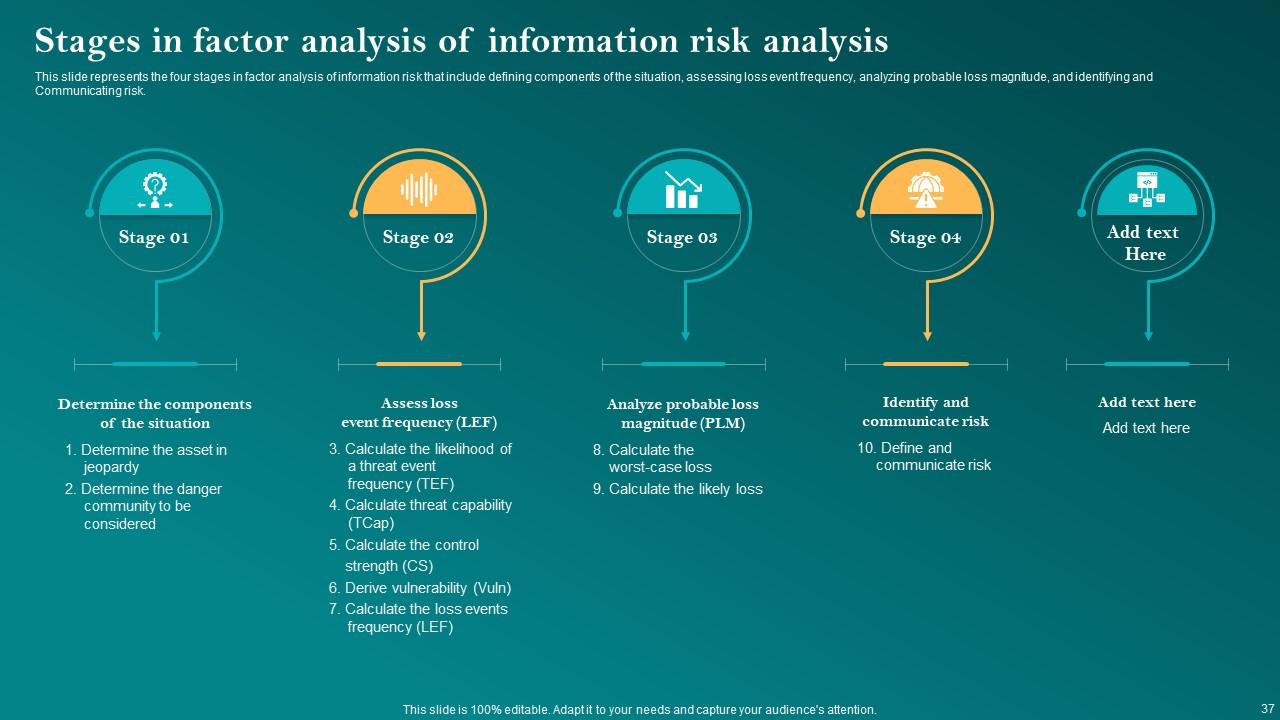
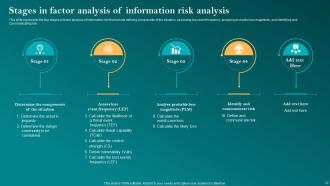
Slide 37 : Este slide apresenta as Etapas da Análise Fatorial da Análise de Risco da Informação.
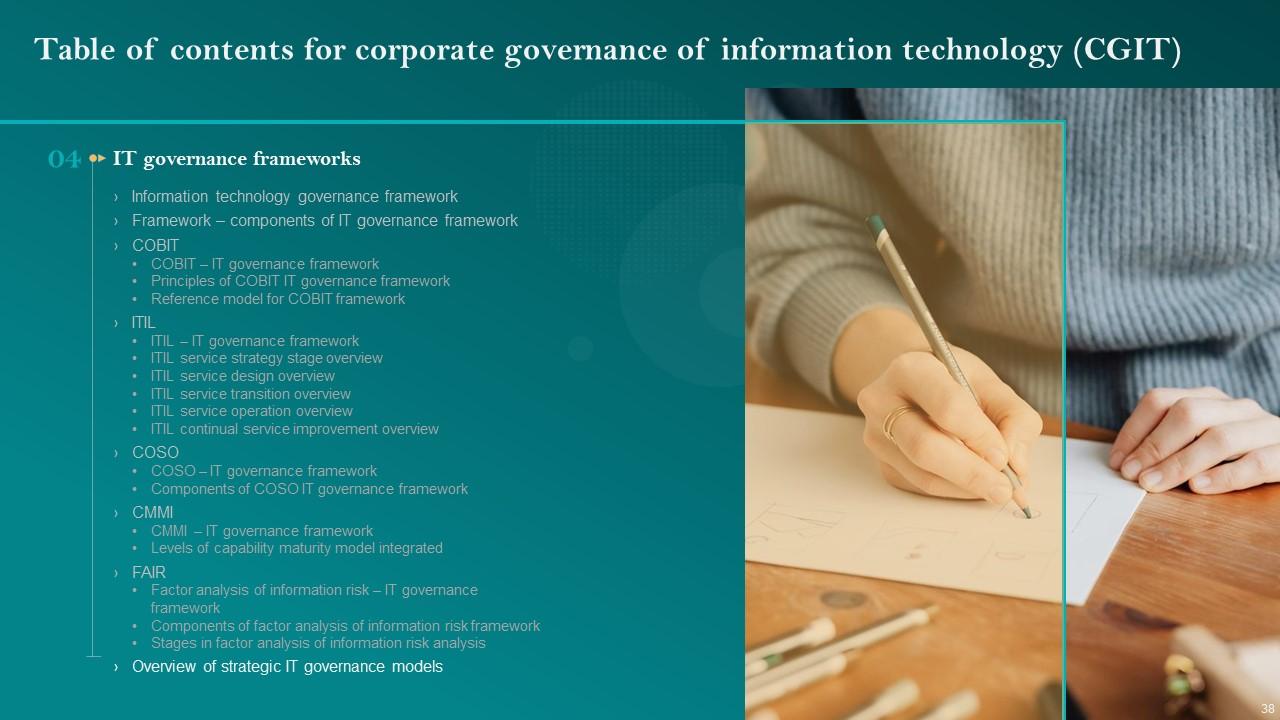
Slide 38 : Este slide destaca o título dos tópicos que serão abordados a seguir no modelo.
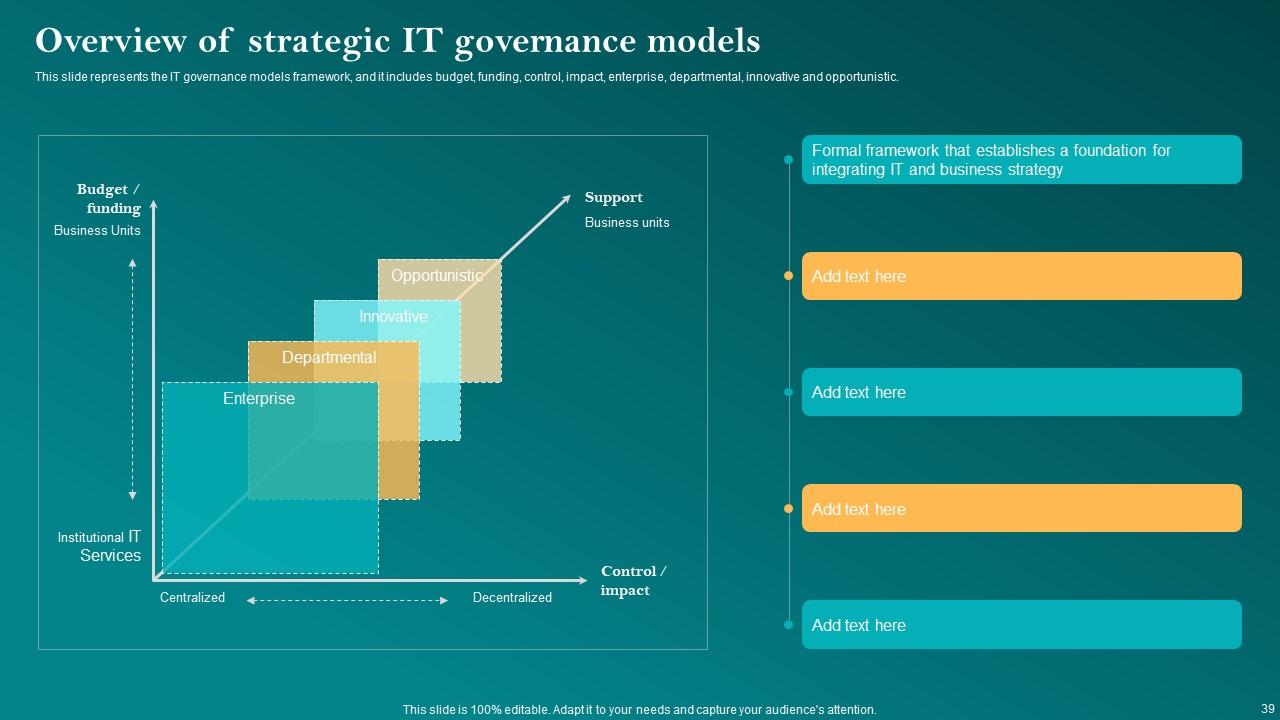
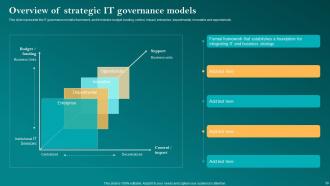
Slide 39 : Este slide representa a estrutura dos modelos de governança de TI.
Slide 40 : Este slide destaca o título dos tópicos que serão abordados a seguir no modelo.
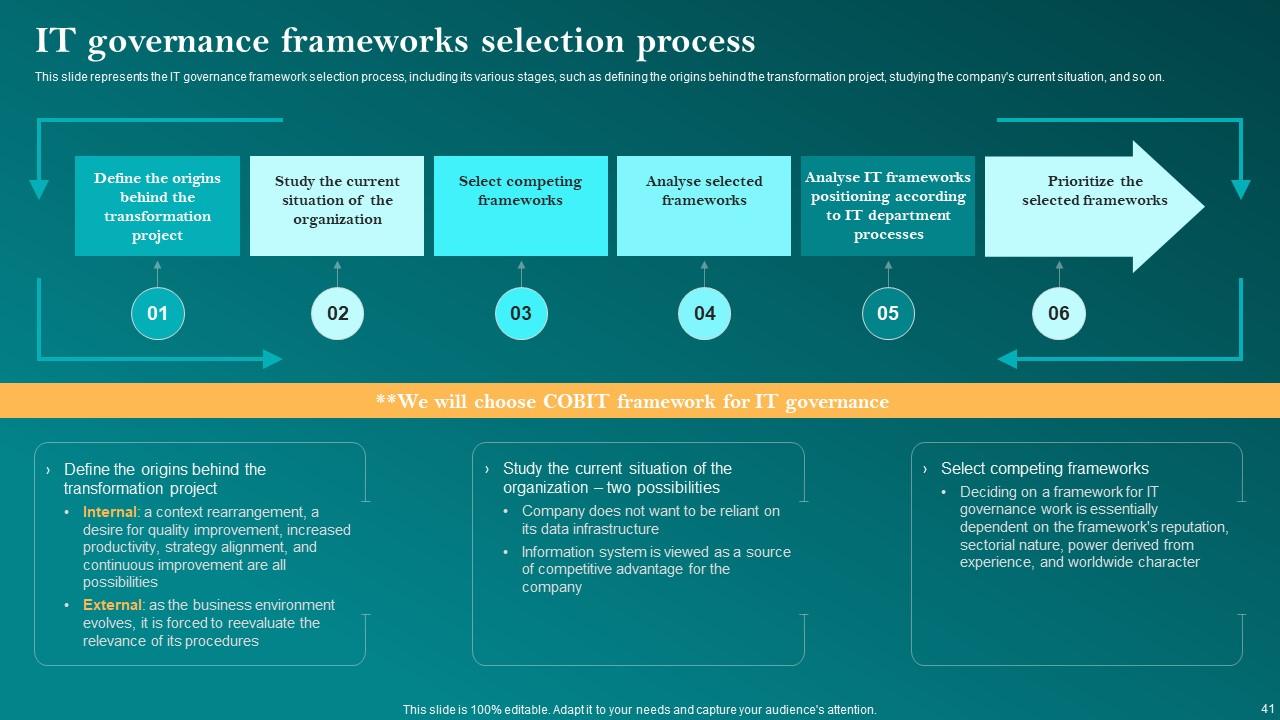
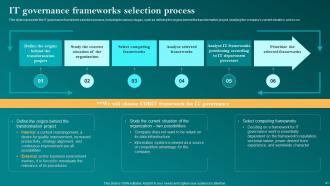
Slide 41 : Este slide mostra o Processo de Seleção de Estruturas de Governança de TI.
Slide 42 : Este slide destaca o título dos tópicos que serão abordados a seguir no modelo.
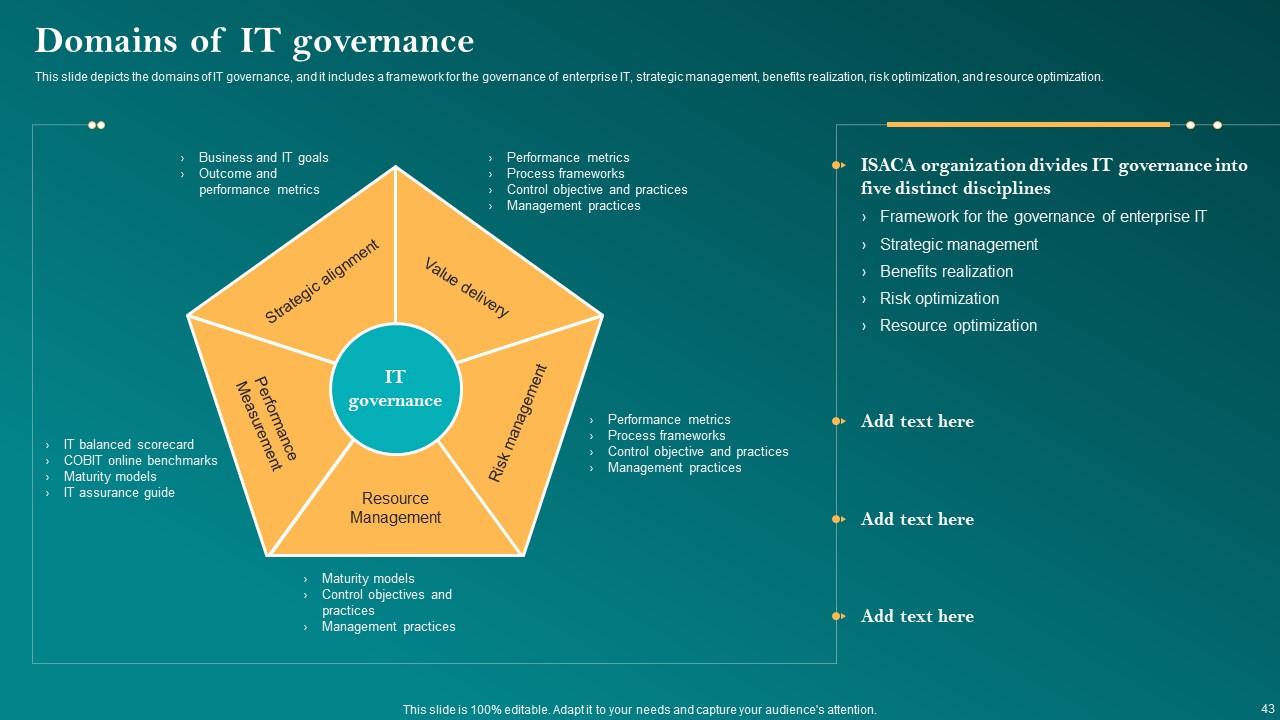
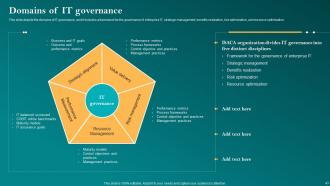
Slide 43 : Este slide descreve os domínios da governança de TI e inclui uma estrutura para a governança de TI corporativa.
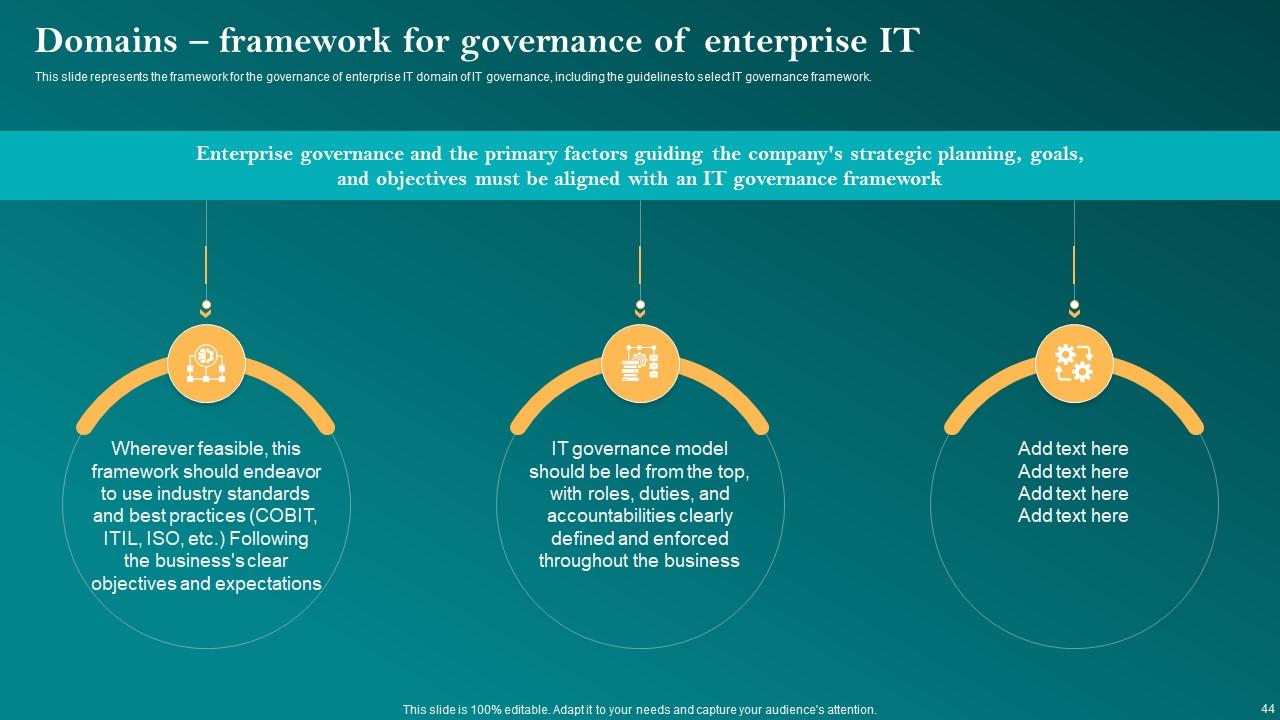
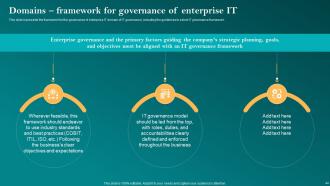
Slide 44 : Este slide representa a estrutura para a governança de TI corporativa.
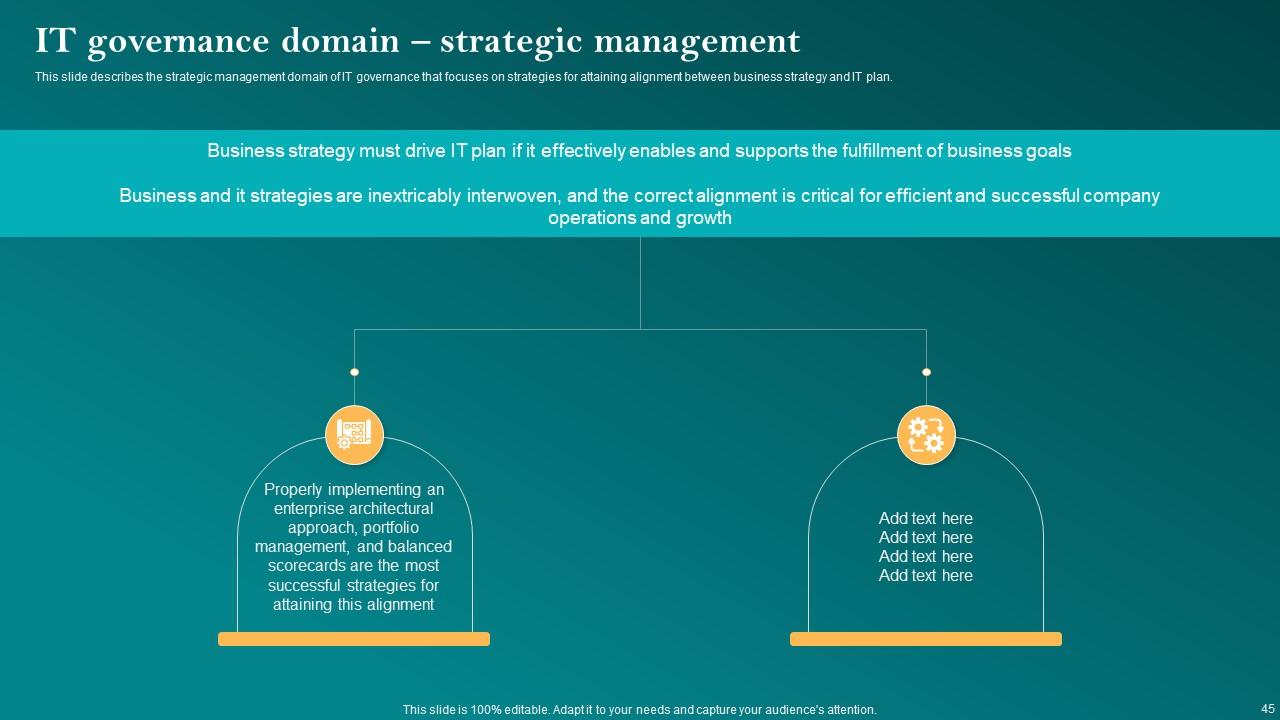
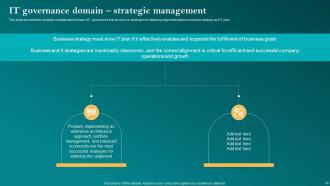
Slide 45 : Este slide descreve o domínio de gerenciamento estratégico da governança de TI.
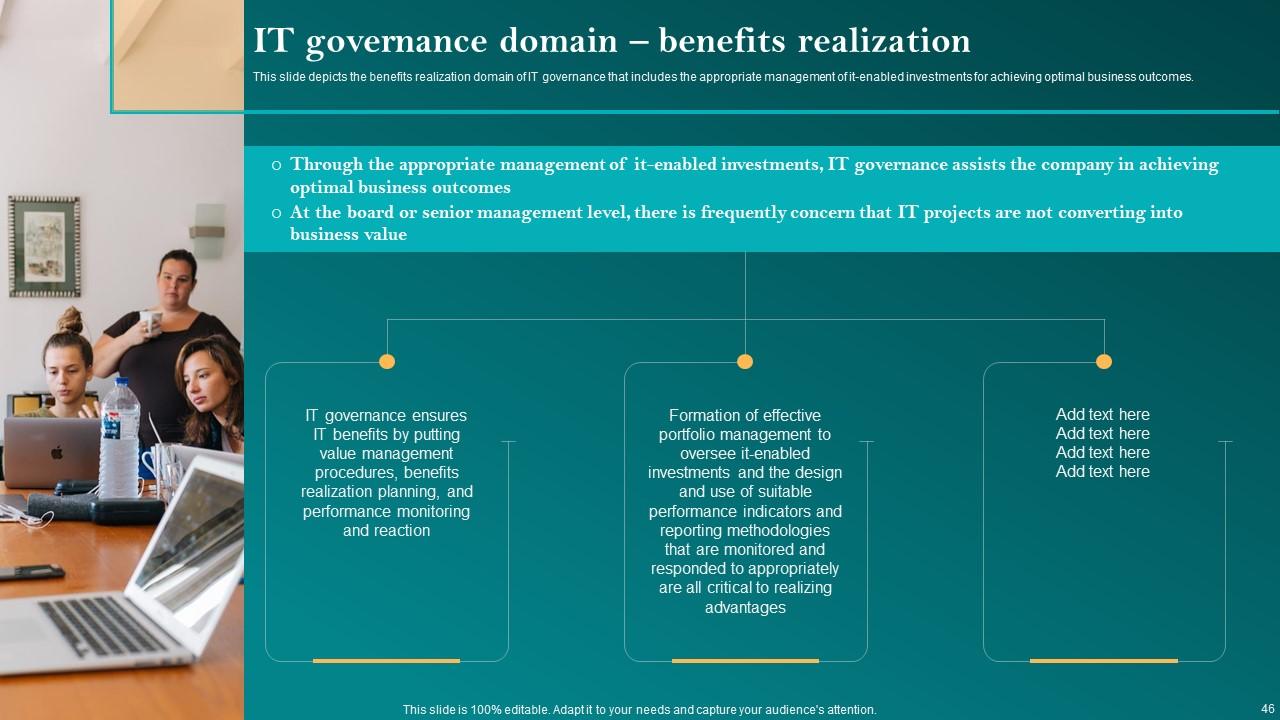
Slide 46 : Este slide descreve o domínio de realização de benefícios da governança de TI.
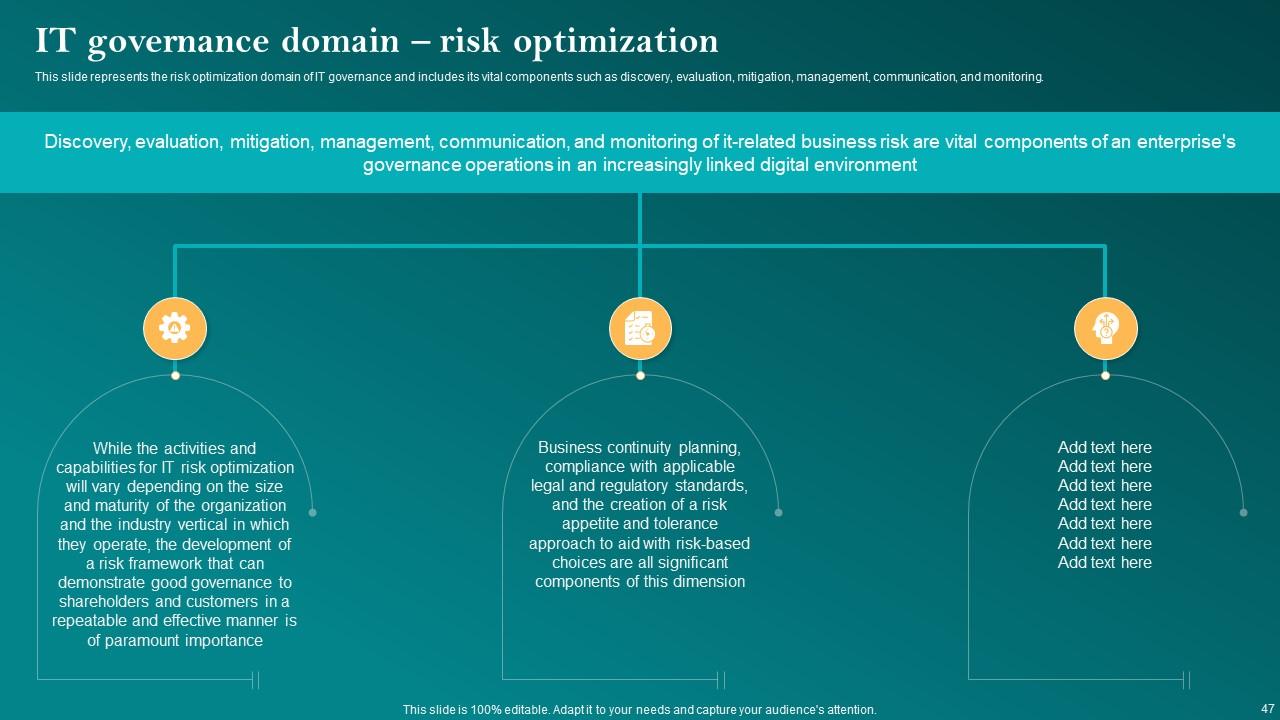
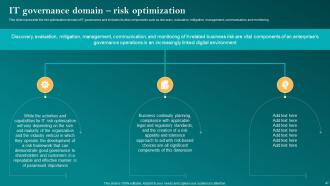
Slide 47 : Este slide representa o domínio de otimização de riscos da governança de TI.
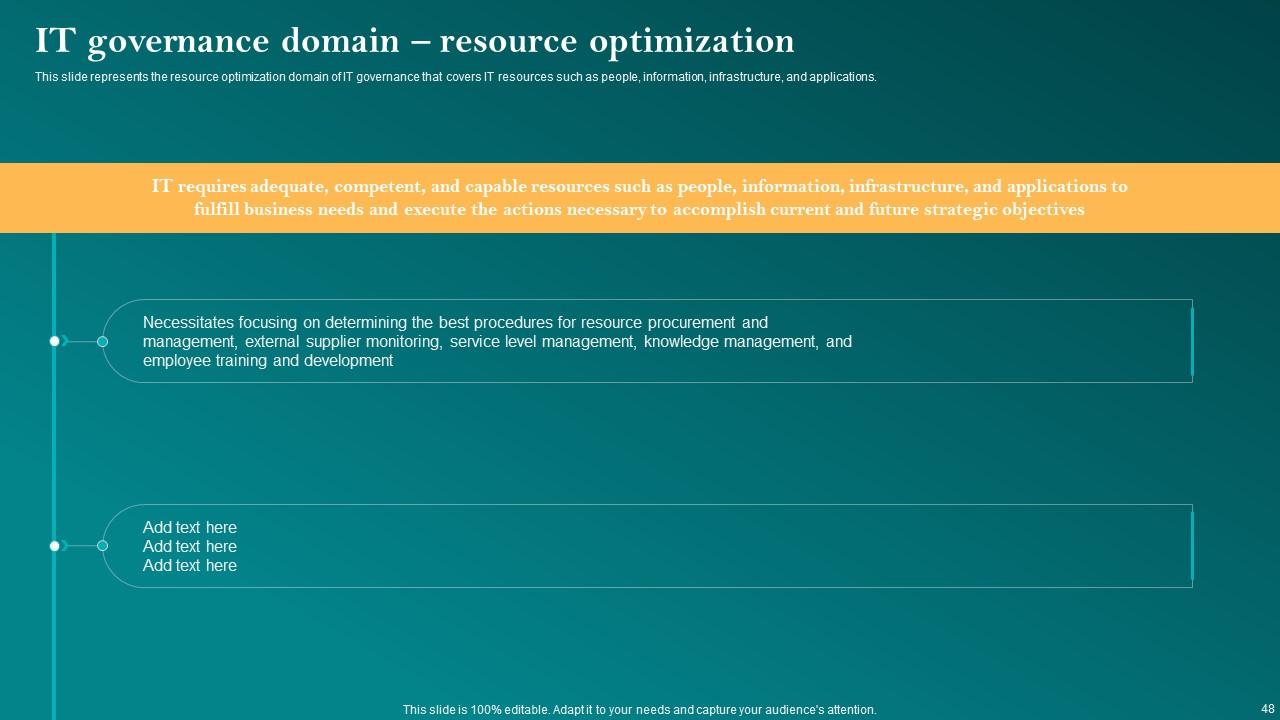
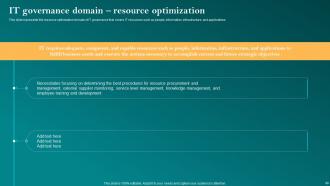
Slide 48 : Este slide mostra o domínio de otimização de recursos da governança de TI.
Slide 49 : Este slide destaca o título dos tópicos que serão abordados a seguir no modelo.
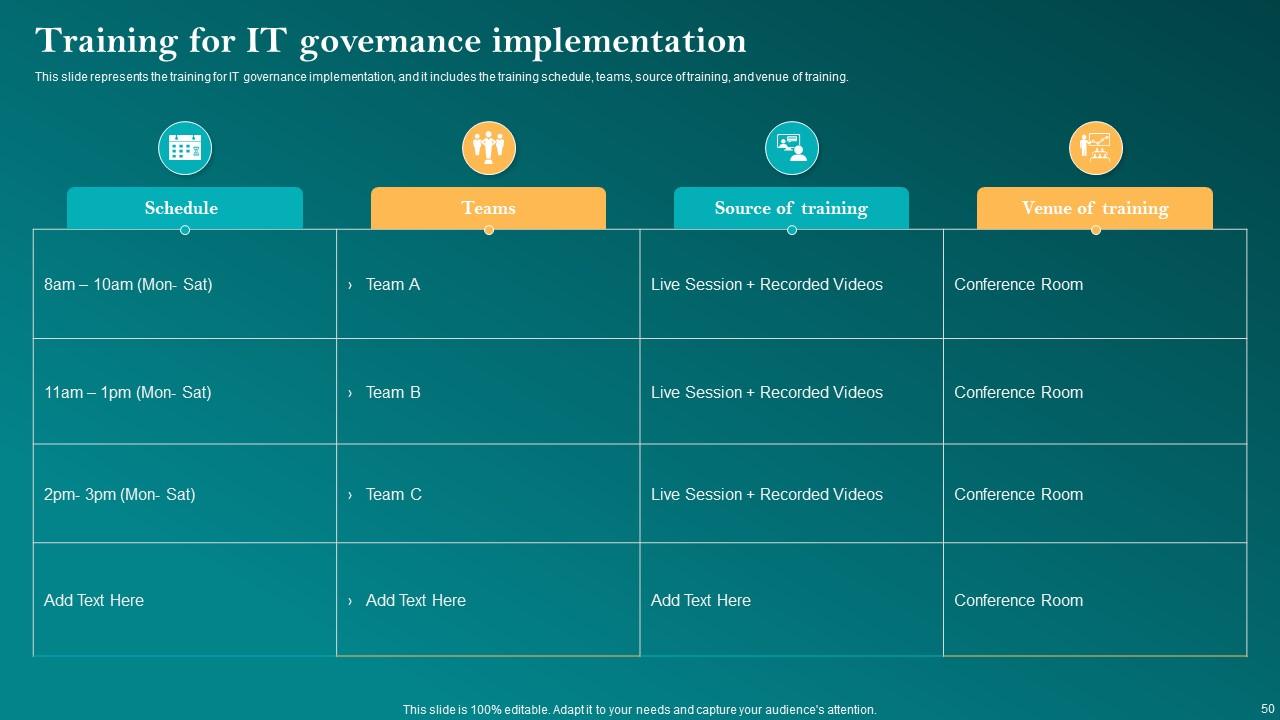
Slide 50 : Este slide mostra o Treinamento para Implementação da Governança de TI.
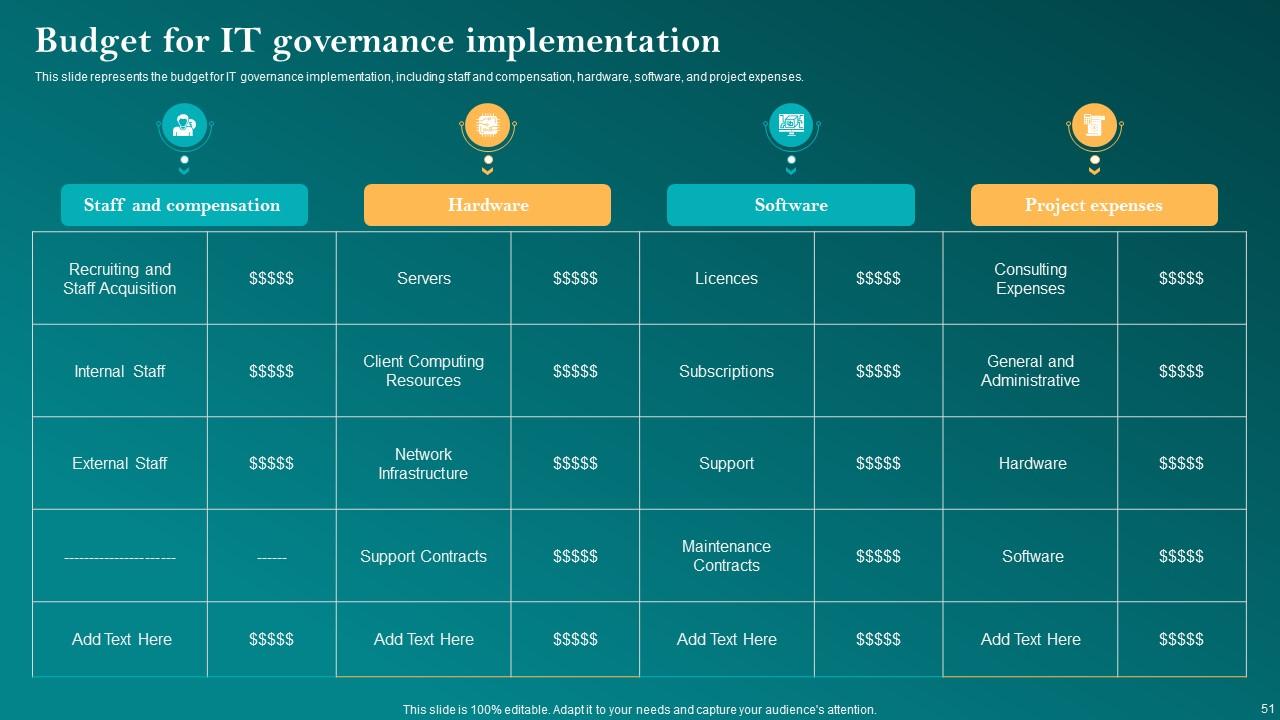
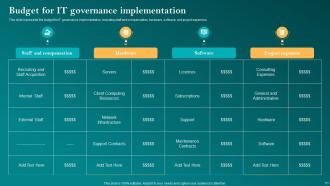
Slide 51 : Este slide apresenta o Orçamento para Implementação da Governança de TI.
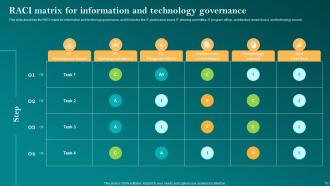
Slide 52 : Este slide mostra a Matriz RACI para Governança de Tecnologia e Informação.
Slide 53 : Este slide destaca o título dos tópicos que serão abordados a seguir no modelo.
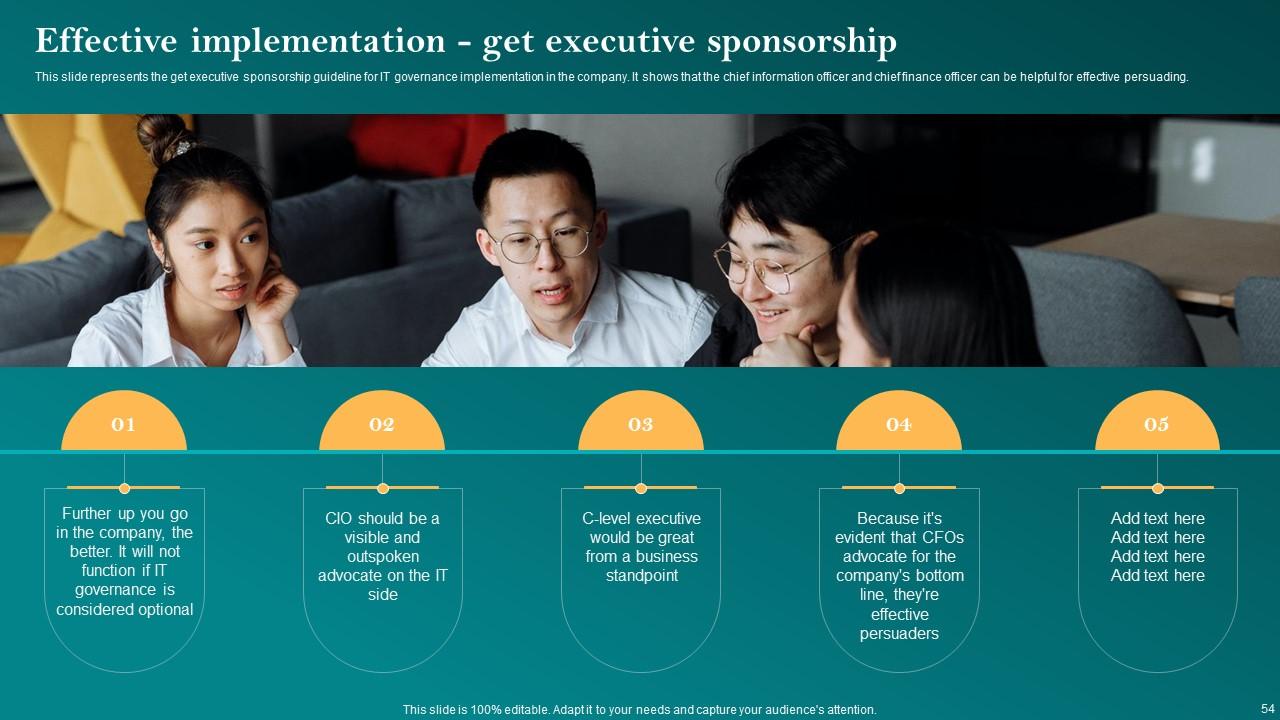
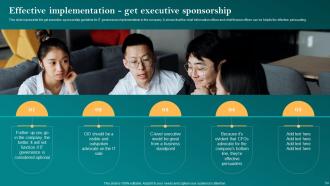
Slide 54 : Este slide representa a diretriz de obtenção de patrocínio executivo para a implementação da governança de TI.
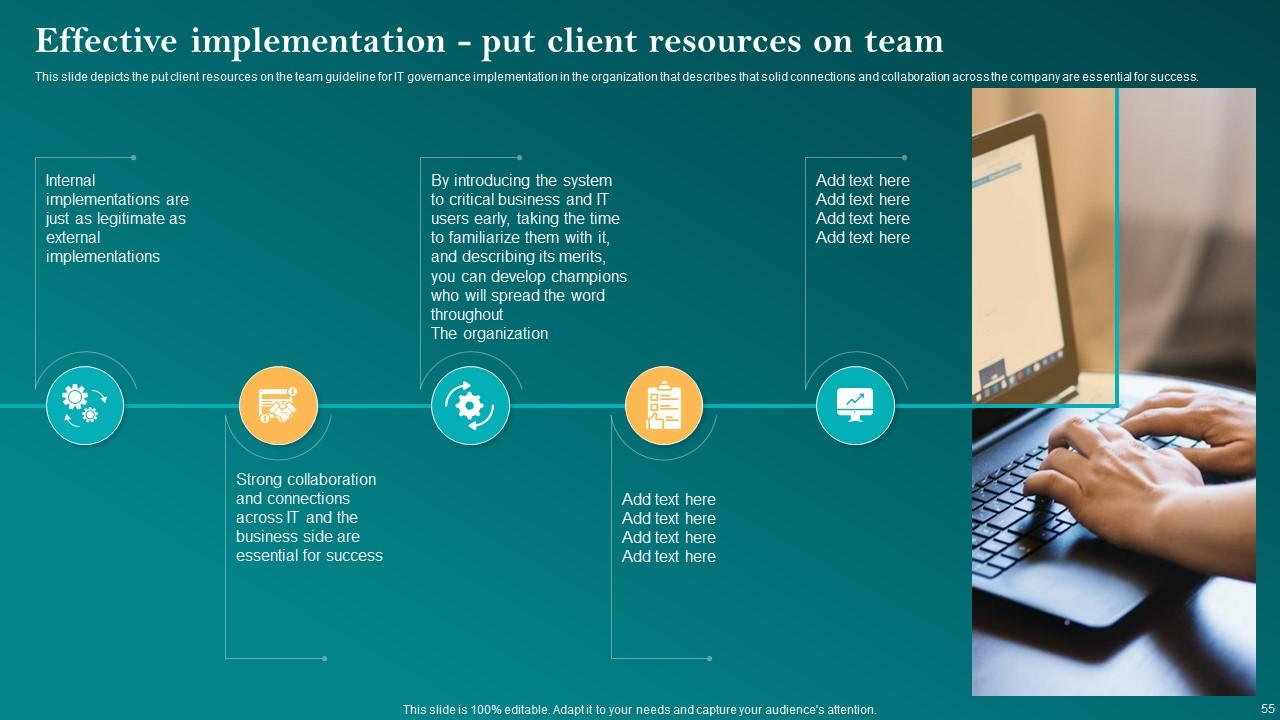
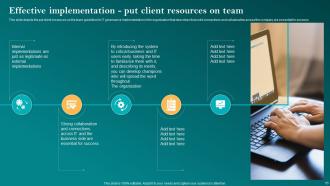
Slide 55 : Este slide descreve os recursos do cliente colocados na diretriz da equipe para a implementação da governança de TI.
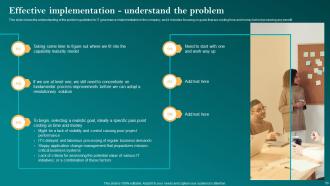
Slide 56 : Este slide mostra o entendimento da diretriz do problema para implementação da governança de TI.
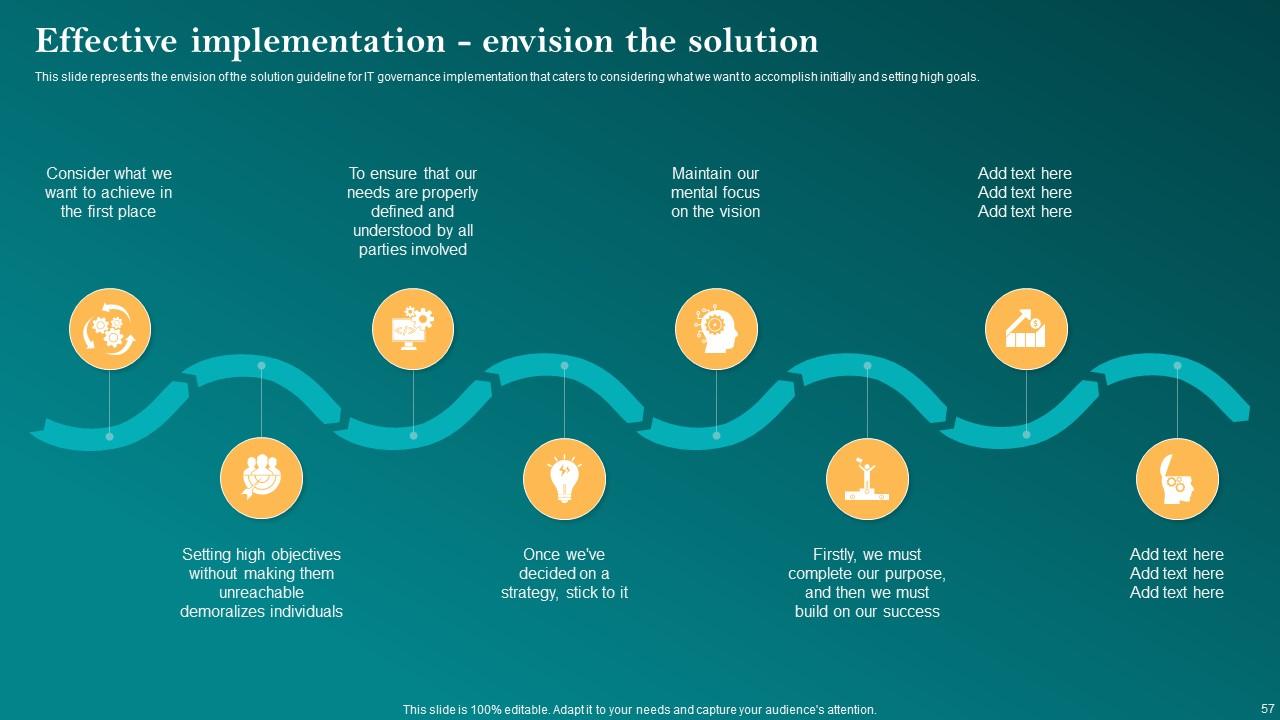
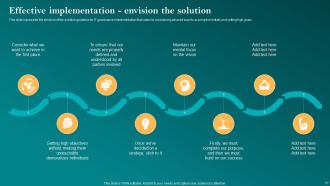
Slide 57 : Este slide representa a visão da diretriz de solução para governança de TI.
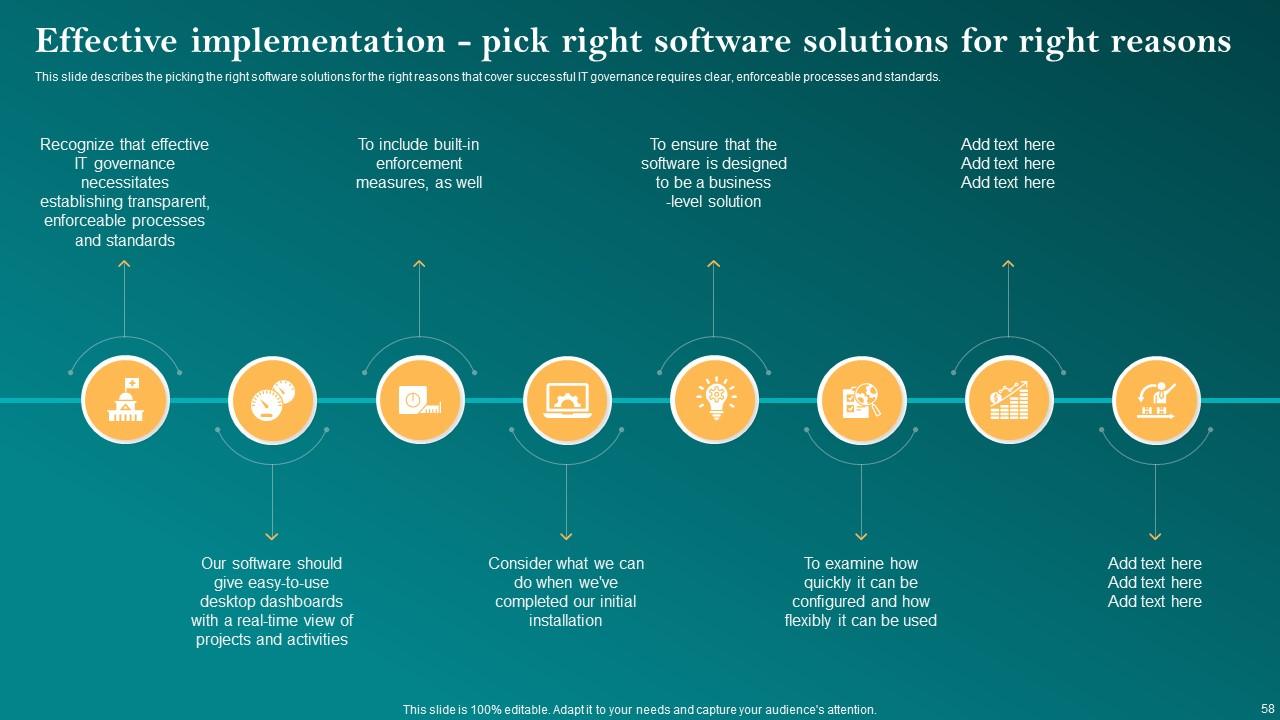
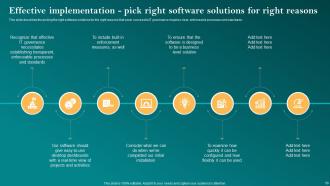
Slide 58 : Este slide descreve como escolher as soluções de software certas pelos motivos certos.
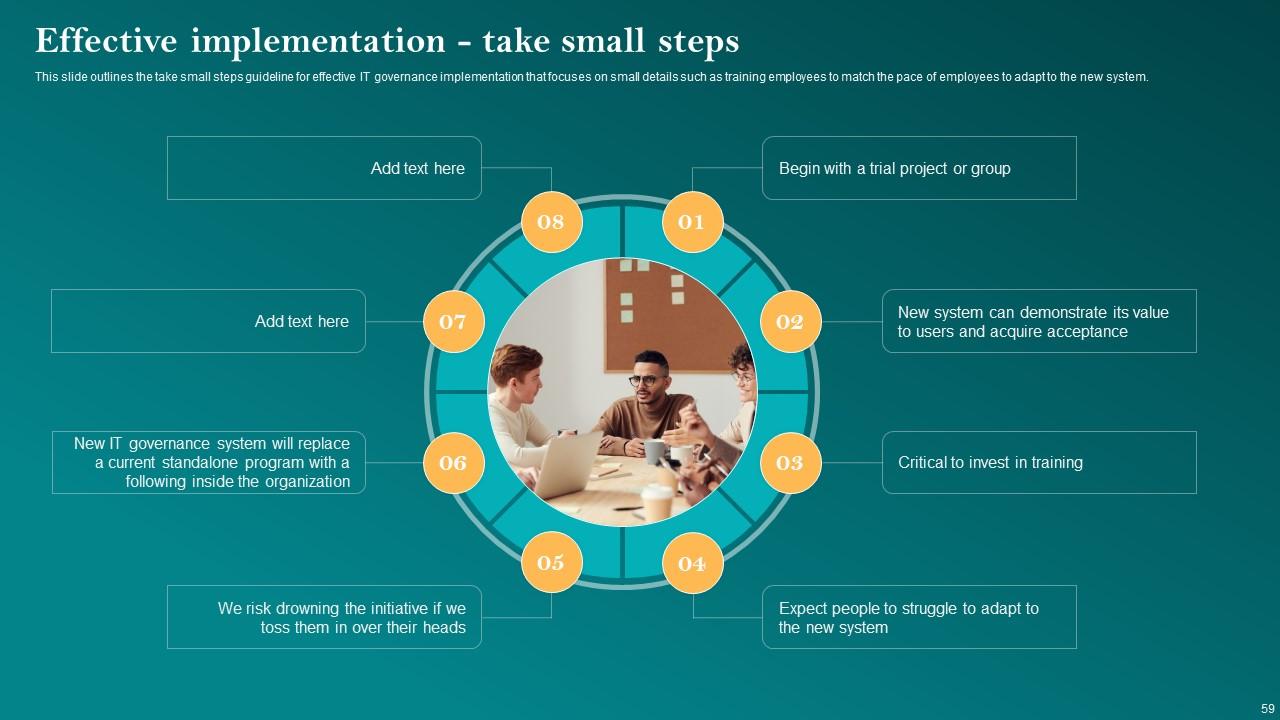
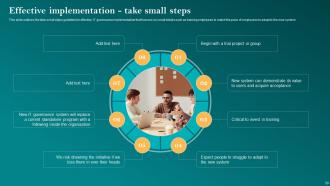
Slide 59 : Este slide descreve a diretriz de dar pequenos passos para uma implementação eficaz da governança de TI.
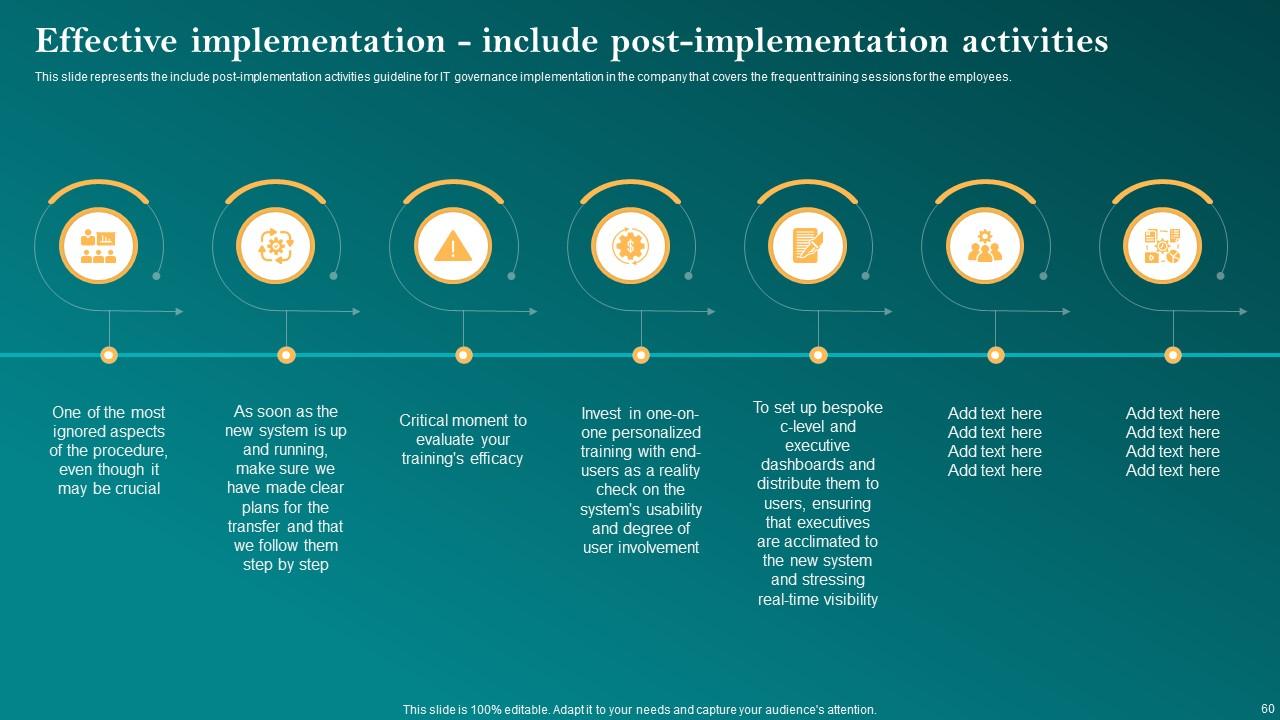
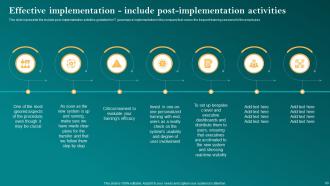
Slide 60 : Este slide representa a diretriz de incluir atividades pós-implementação para governança de TI.
Slide 61 : Este slide destaca o título dos tópicos que serão abordados a seguir no modelo.
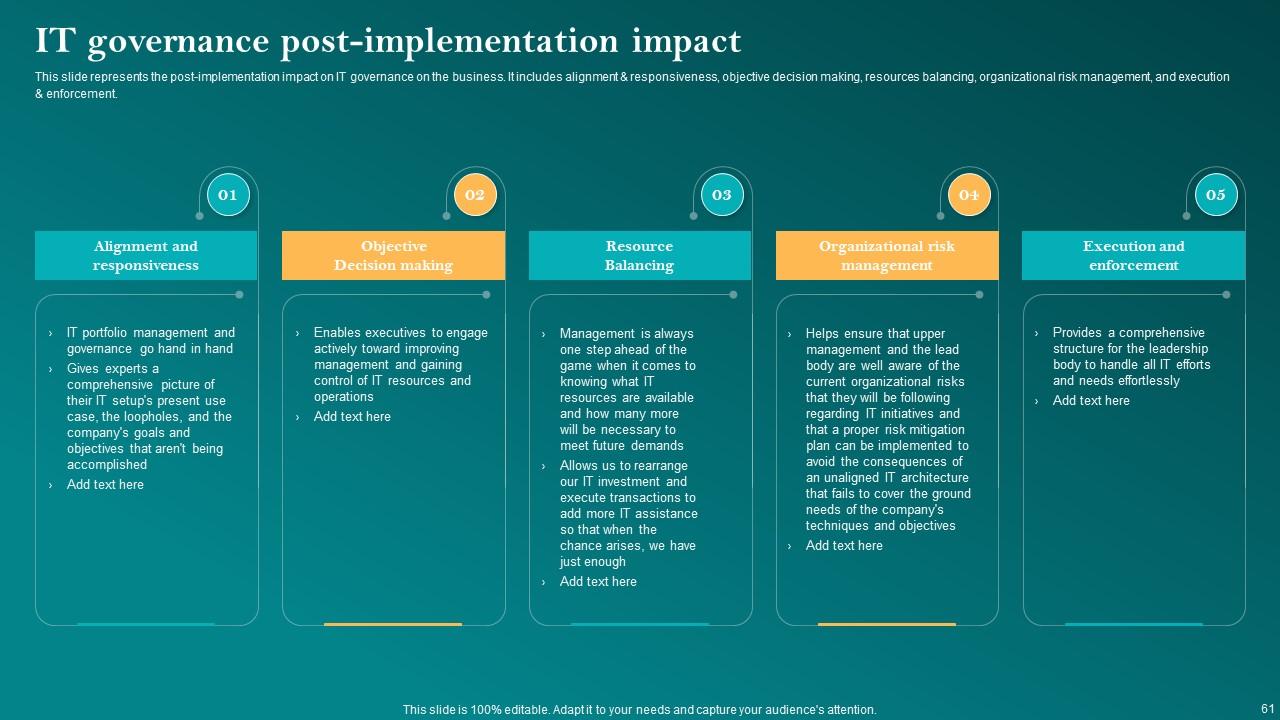
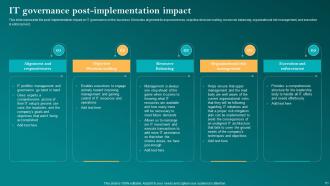
Slide 62 : Este slide mostra o impacto pós-implementação da governança de TI.
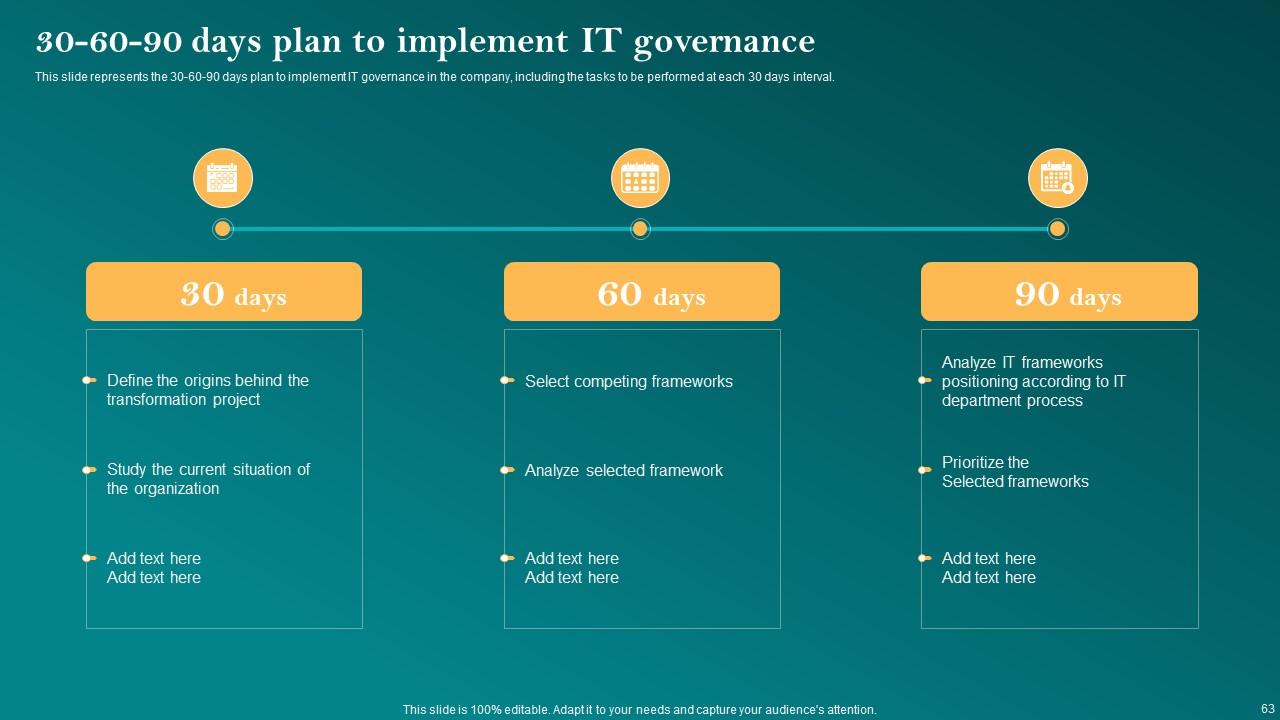
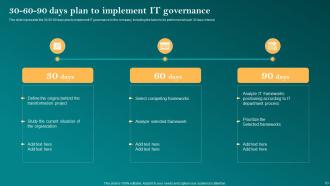
Slide 63 : Este slide mostra o plano de 30-60-90 dias para implementar a governança de TI.
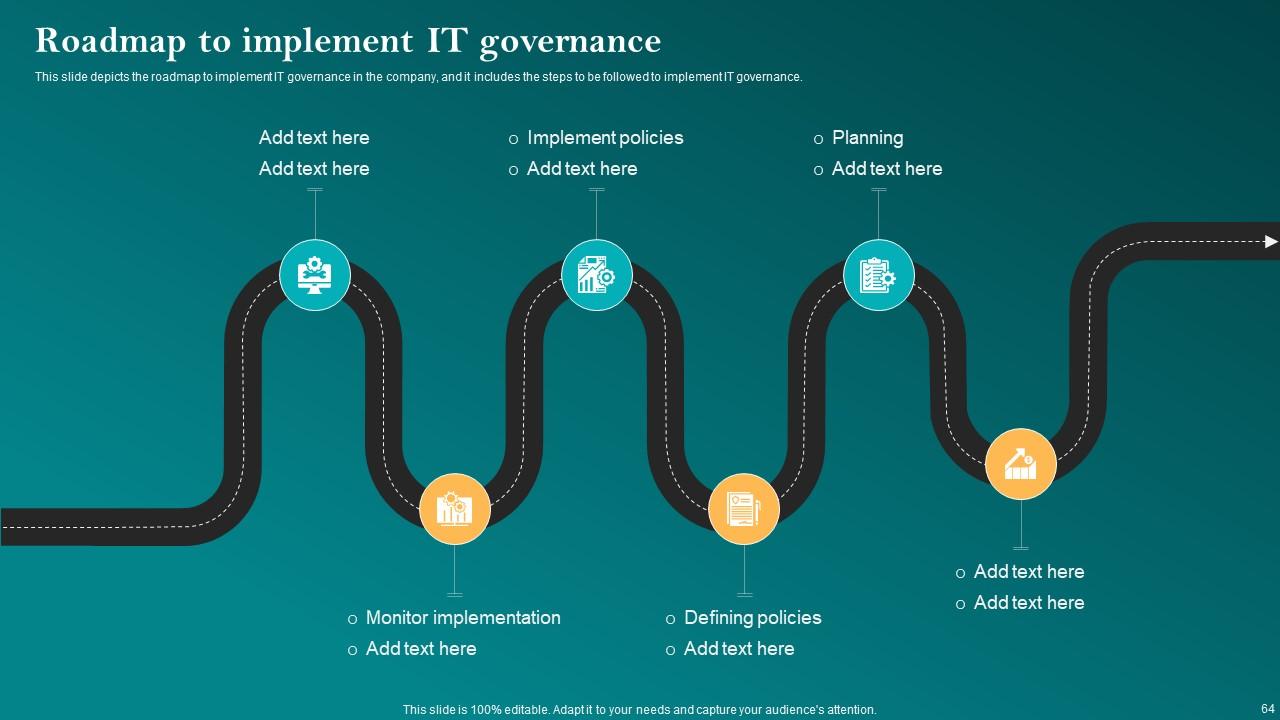
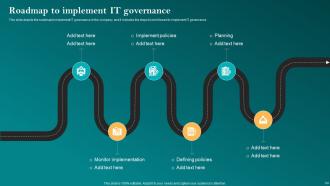
Slide 64 : Este slide mostra o roteiro para implementar a governança de TI.
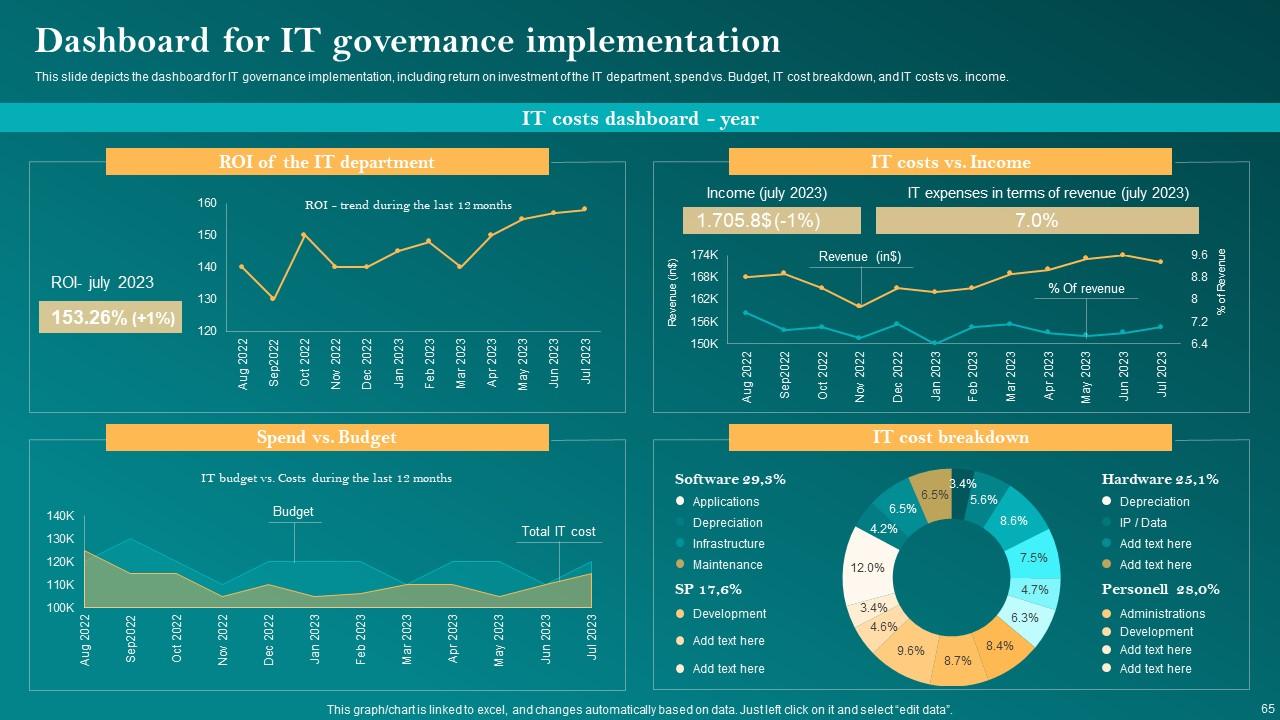
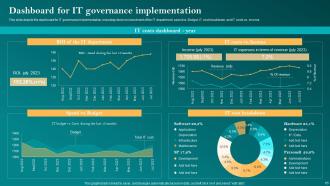
Slide 65 : Este slide apresenta o Dashboard para Implementação da Governança de TI.
Slide 66 : Este slide contém todos os ícones usados nesta apresentação.
Slide 67 : Este slide é intitulado como Slides adicionais para avançar.
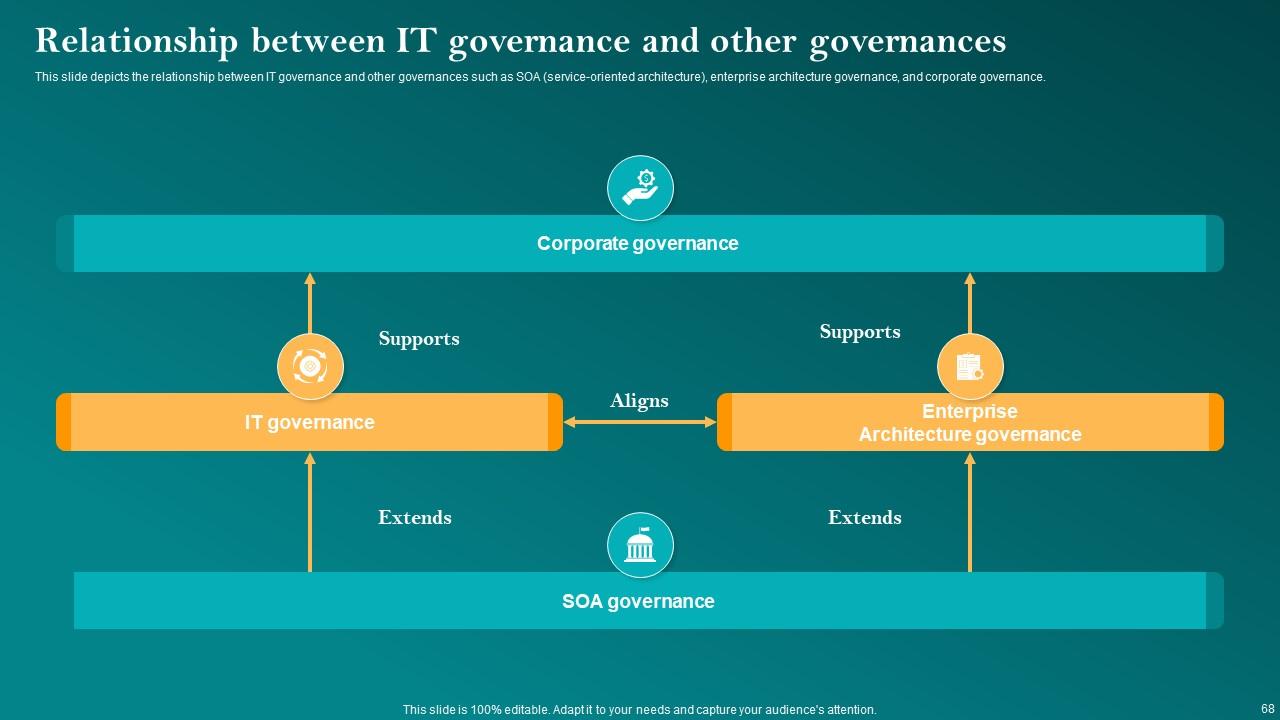
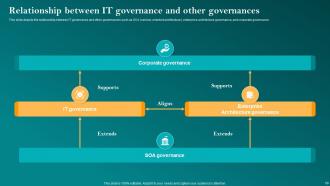
Slide 68 : Este slide mostra o relacionamento entre a governança de TI e outras governanças.
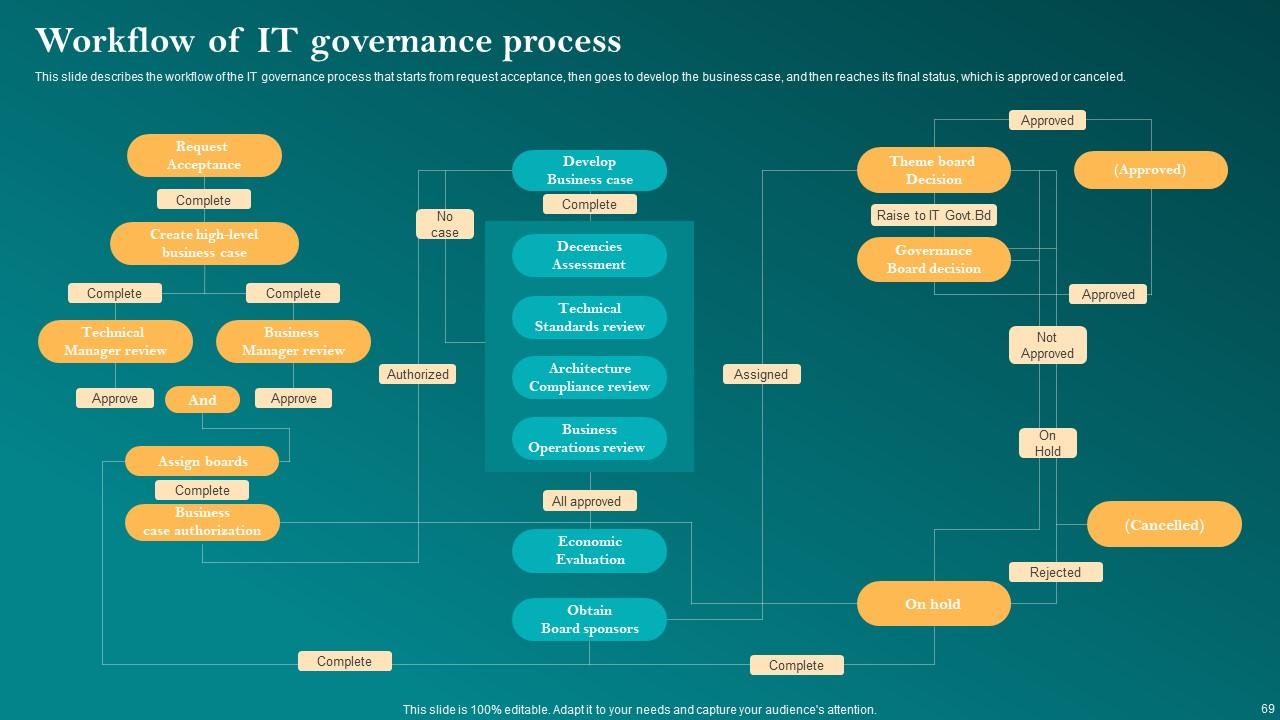
Slide 69 : Este slide mostra o fluxo de trabalho do processo de governança de TI.
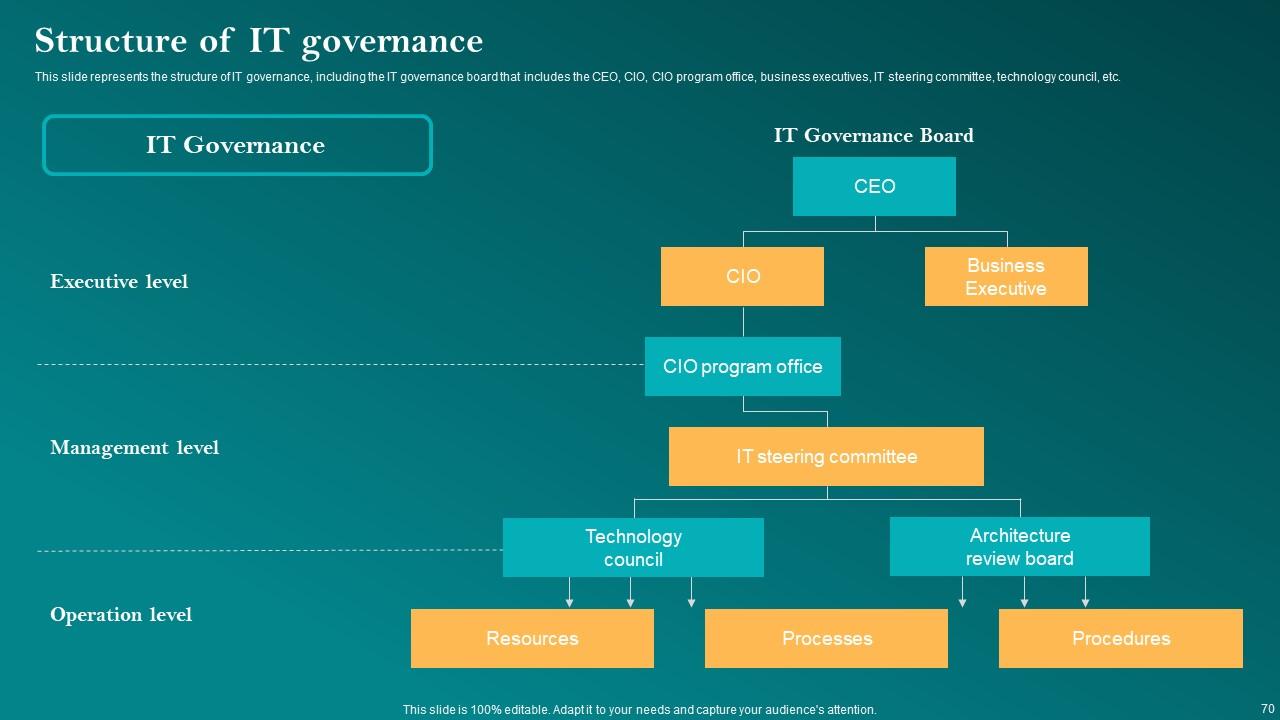
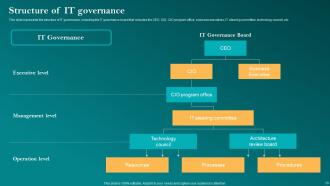
Slide 70 : Este slide representa a estrutura da governança de TI.
Slide 71 : Este slide mostra a lupa para destacar informações, especificações, etc.
Slide 72 : Este slide exibe o Mapa Mental com imagens relacionadas.
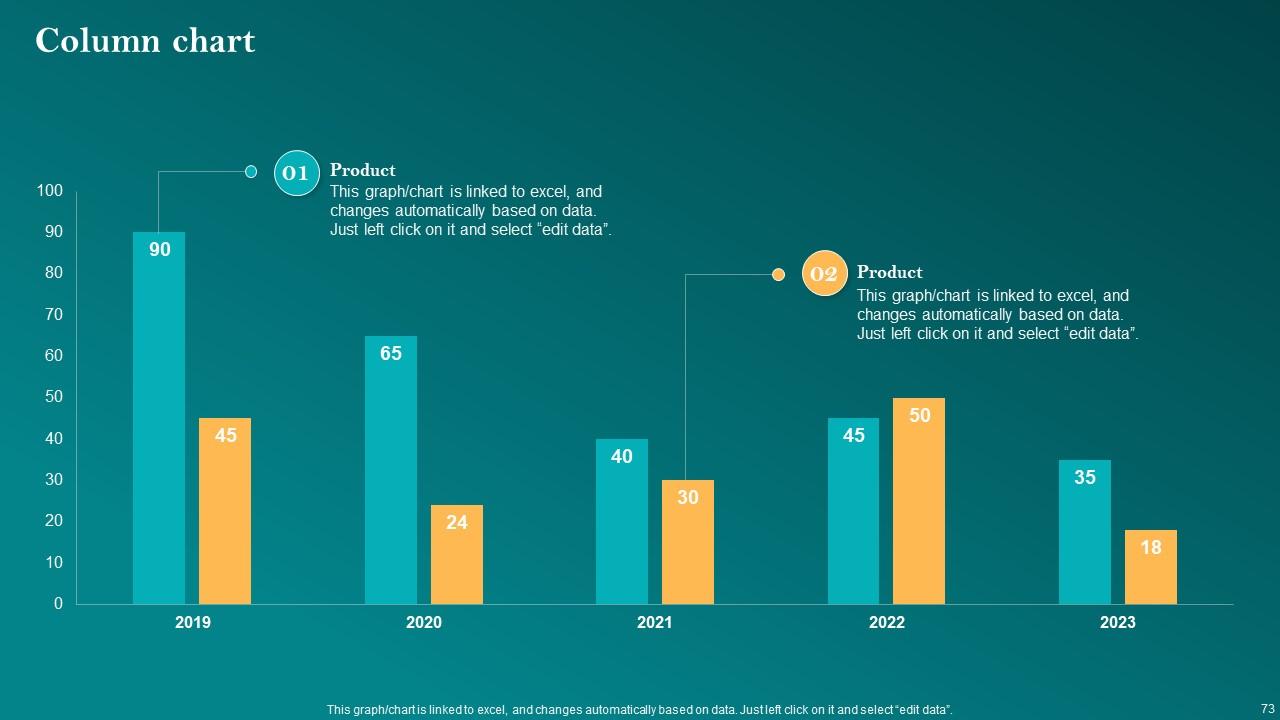
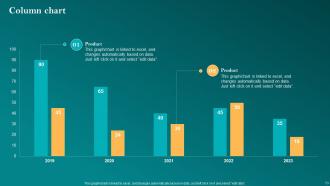
Slide 73 : Este slide exibe o gráfico de colunas com a comparação de dois produtos.
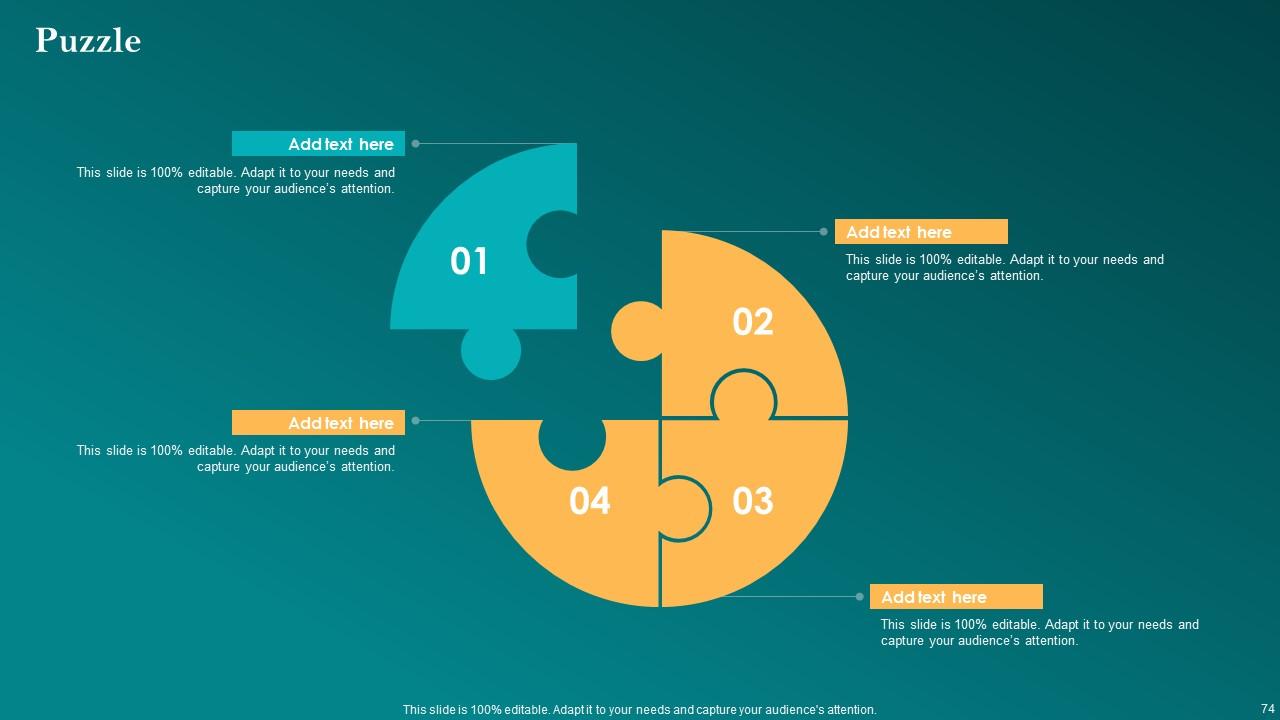
Slide 74 : Este slide contém um quebra-cabeça com ícones e texto relacionados.
Slide 75 : Este é o slide Nosso Alvo. Declare seus alvos aqui.
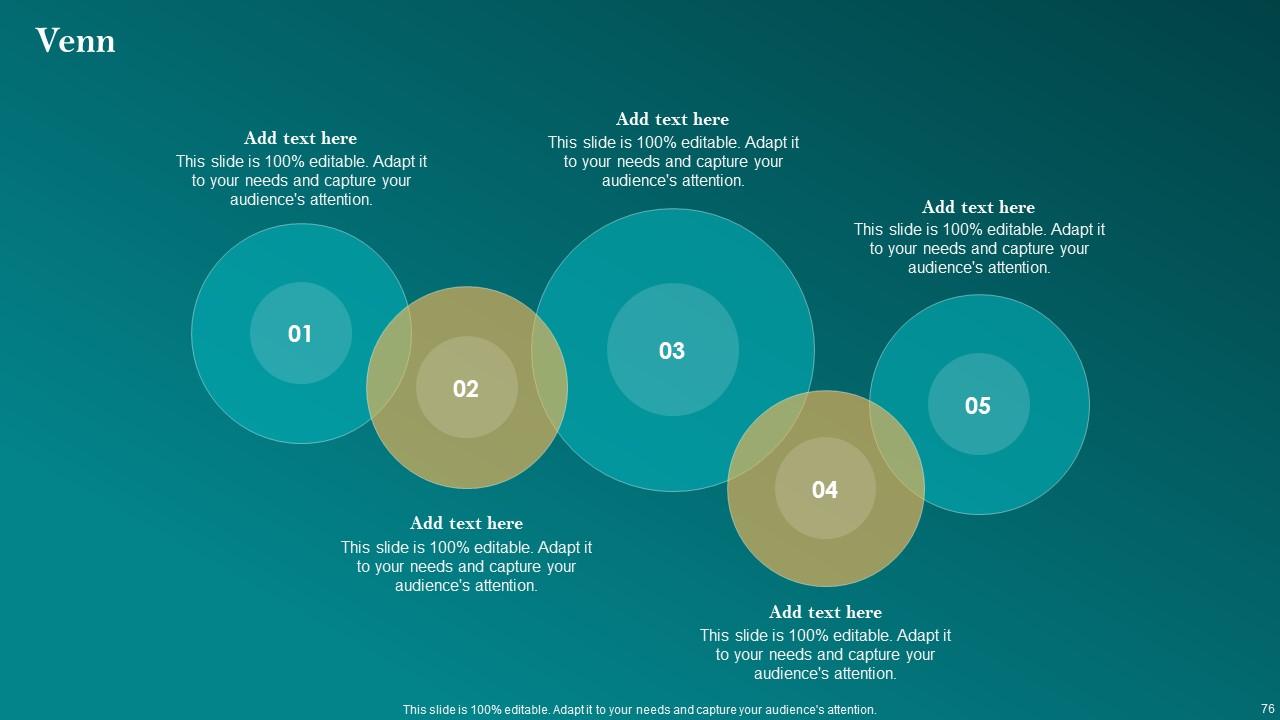
Slide 76 : Este slide mostra o diagrama de Venn com caixas de texto.
Slide 77 : Este slide mostra Post-Its. Poste suas notas importantes aqui.
Slide 78 : Este é um slide de agradecimento com endereço, números de contato e endereço de e-mail.
Governança Corporativa de Tecnologia da Informação CGIT Apresentação Powerpoint Slides com todos os 83 slides:
Use nossos slides de apresentação do Powerpoint de governança corporativa de tecnologia da informação CGIT para ajudá-lo a economizar seu valioso tempo. Eles estão prontos para caber em qualquer estrutura de apresentação.
FAQs
Corporate governance of information technology refers to the policies, procedures, and regulations that guide the management and use of technology within an organization. It ensures that the technology is aligned with the organization's goals and objectives and that it is used ethically and responsibly.
Corporate governance of information technology is important because it helps to ensure that technology is used in a way that aligns with an organization's goals and values. It also helps to mitigate risks such as cyber threats, data breaches, and other security concerns. By establishing policies and procedures for technology use, organizations can operate more efficiently and effectively.
The key components of corporate governance of information technology include risk management, performance management, resource management, and compliance management. Risk management involves identifying and mitigating risks associated with technology use. Performance management involves monitoring and measuring the effectiveness of technology use. Resource management involves managing the technology infrastructure and ensuring that it is used efficiently. Compliance management involves ensuring that technology use is in line with legal and regulatory requirements.
Effective corporate governance of information technology can lead to a variety of benefits, including improved risk management, increased efficiency and effectiveness of technology use, better alignment between technology and organizational goals, and improved compliance with legal and regulatory requirements. It can also help to enhance an organization's reputation and stakeholder trust.
Organizations can ensure effective corporate governance of information technology by establishing clear policies and procedures for technology use, assigning responsibilities for technology management, conducting regular risk assessments, monitoring and measuring the effectiveness of technology use, and ensuring compliance with legal and regulatory requirements. It is also important to provide ongoing training and education for employees on technology use and cybersecurity best practices.
-
The templates are easy to get, and the chat customer support is excellent.
-
I was really impressed with the presentation I created with their templates. I’ll be using their services moving forward.
