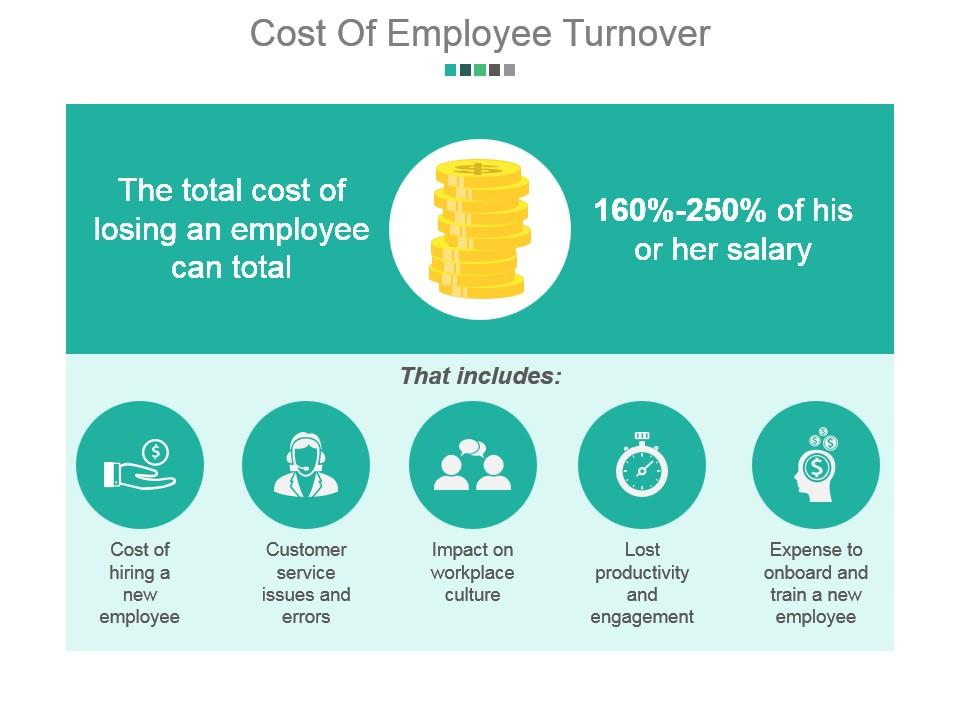
Cost of employee turnover powerpoint slide designs download
Try Before you Buy Download Free Sample Product
Audience
Editable
of Time
Get folks over the jilt with our Cost Of Employee Turnover Powerpoint Slide Designs Download. Bring them around to feeling appreciated again.
People who downloaded this PowerPoint presentation also viewed the following :
Cost of employee turnover powerpoint slide designs download with all 5 slides:
Create a basis for consensus to emerge with our Cost Of Employee Turnover Powerpoint Slide Designs Download. Be able to cut across differences.
FAQs for Cost of employee turnover powerpoint
Primary factors contributing to employee turnover include inadequate compensation, limited career development opportunities, poor management relationships, work-life balance issues, and lack of recognition or engagement. These factors often compound across organizations, with many companies finding that addressing compensation alone isn't sufficient, requiring comprehensive retention strategies that enhance workplace culture, streamline advancement pathways, and ultimately deliver improved employee satisfaction and reduced recruitment costs.
Employee turnover costs significantly impact financial health through direct expenses like recruitment, training, and onboarding, plus indirect costs including lost productivity, decreased morale, and knowledge gaps. These expenses can reach 50-200% of an employee's annual salary, with organizations in sectors like healthcare and financial services finding that high turnover ultimately reduces profitability and competitive advantage.
Businesses can calculate employee turnover costs through direct expenses like recruitment advertising, interviewing time, and training investments, plus indirect costs including lost productivity, knowledge transfer gaps, and temporary staffing. These comprehensive assessments help organizations quantify replacement costs ranging from 50-200% of annual salary, with many companies finding that detailed cost analysis drives strategic retention investments.
Employee turnover disrupts team dynamics through knowledge loss, increased workloads for remaining staff, and diminished morale, while creating communication gaps and workflow interruptions. These disruptions significantly reduce productivity as teams spend valuable time recruiting, training replacements, and rebuilding collaborative relationships, ultimately affecting project timelines and organizational efficiency across departments.
Employee engagement significantly reduces turnover rates by fostering emotional connection, job satisfaction, career development opportunities, and workplace recognition programs. Engaged employees demonstrate higher productivity, stronger loyalty, and increased retention, with many organizations finding that strategic engagement initiatives can reduce turnover costs by 40-60%, ultimately delivering competitive advantage through stable, motivated teams.
**INPUT**: Can the implementation of robust onboarding processes help in lowering turnover costs? **OUTPUT**: Robust onboarding processes significantly reduce turnover costs by enhancing employee engagement, accelerating productivity, and building stronger organizational connections from day one. Companies with comprehensive onboarding programs, particularly in retail, healthcare, and financial services, experience up to 50% lower turnover rates, ultimately delivering substantial cost savings and improved retention across their workforce.
Retail, hospitality, food service, healthcare support, and call centers experience the highest turnover rates due to demanding work conditions, irregular schedules, limited advancement opportunities, and competitive wage pressures. These industries face constant staffing challenges, with many organizations finding that investing in employee engagement, flexible scheduling, and career development pathways significantly reduces recruitment costs and enhances operational consistency.
Replacing entry-level employees typically costs 20-50% of annual salary, while executive replacements can cost 100-200% or more of annual compensation. Executive searches involve specialized recruitment firms, extensive interviewing processes, and longer onboarding periods, with many organizations finding that C-suite turnover also impacts strategic initiatives and stakeholder relationships.
Organizations can employ competitive compensation packages, flexible work arrangements, professional development opportunities, recognition programs, and strong mentorship initiatives to retain top talent. These strategies enhance employee satisfaction and career growth while reducing recruitment costs, with many companies finding that investing in retention delivers significant cost savings and maintains institutional knowledge, ultimately providing competitive advantage in increasingly tight labor markets.
External economic factors significantly influence employee turnover through labor market dynamics, with low unemployment rates creating more job opportunities and higher turnover, while economic downturns typically reduce voluntary departures. Organizations in competitive sectors like technology, healthcare, and finance find that monitoring economic indicators helps them adjust retention strategies, compensation packages, and workforce planning, ultimately enabling proactive talent management that minimizes costly turnover during market fluctuations.
Company culture directly impacts employee retention by creating environments where employees feel valued, engaged, and aligned with organizational values, significantly reducing turnover costs. Organizations with strong cultures, particularly in sectors like technology and healthcare, experience 40% lower turnover rates, ultimately delivering enhanced productivity, reduced recruitment expenses, and sustainable competitive advantage through workforce stability.
Exit interviews reveal critical turnover patterns by uncovering management issues, compensation concerns, career development gaps, work-life balance problems, and cultural mismatches. Through structured conversations with departing employees, organizations identify specific departmental trends, leadership blind spots, and systemic workplace issues, ultimately enabling targeted retention strategies and reducing future turnover costs.
HR innovations include AI-powered predictive analytics, employee engagement platforms, automated onboarding systems, real-time feedback tools, and personalized career development software. These technologies streamline retention strategies by identifying at-risk employees early, enhancing workplace satisfaction, and automating administrative processes, with many organizations finding that strategic HR tech investments ultimately deliver reduced recruitment costs and improved employee experiences.
Employee turnover disrupts customer relationships by creating service inconsistencies, longer response times, and knowledge gaps that impact service quality. New employees require extensive training periods during which customers may experience reduced service levels, while frequent staff changes in customer-facing roles can diminish trust and satisfaction, ultimately affecting customer retention and brand loyalty.
Remote work options significantly reduce employee turnover rates by enhancing work-life balance, expanding talent pools beyond geographic constraints, and increasing job satisfaction through flexible scheduling. Organizations offering remote flexibility find that employees demonstrate higher retention rates, reduced recruitment costs, and improved productivity, with many companies discovering that hybrid models ultimately deliver competitive advantage in attracting top talent while minimizing turnover expenses.
-
It saves your time and decrease your efforts in half.
-
Unique design & color.