

Creating business monopoly powerpoint presentation slides





Try Before you Buy Download Free Sample Product
 Impress Your
 Audience
 100%
100% Editable
 Save Hours
 of Time


Our Creating Business Monopoly Powerpoint Presentation Slides are topically designed to provide an attractive backdrop to any subject. Use them to look like a presentation pro.
People who downloaded this PowerPoint presentation also viewed the following :
Content of this Powerpoint Presentation
Slide 1: This is the cover slide for Creating Business Monopoly PowerPoint Presentation.
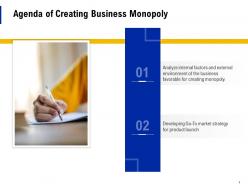
Slide 2: This is an Agenda slide of Creating Business Monopoly
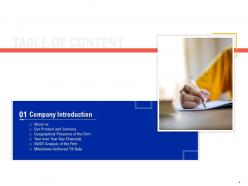
Slide 3: This is the Table of Contents slide that lists out all the essential elements covered in the deck.
Slide 4: This slide presents Company Introduction.
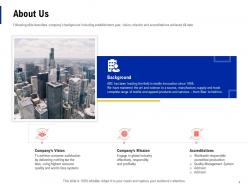
Slide 5: This slide describes company’s background including establishment year, vision, mission and accreditations achieved till date
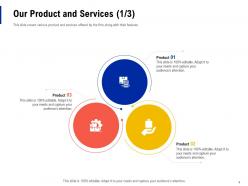
Slide 6: This slide covers various product and services offered by the firm along with their features.
Slide 7: This slide covers various product and services offered by the firm along with their features.
Slide 8: This slide covers various product and services offered by the firm along with their features
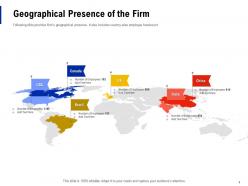
Slide 9: This slide provides firm’s geographical presence. It also includes country wise employee headcount
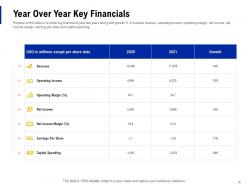
Slide 10: This slide is to show key financial of past two years along with growth %. It includes revenue, operating income, operating margin, net income, net income margin, earning per share and capital spending.
Slide 11: This slide shows SWOT analysis of the firm. It classifies the internal aspects of the company as strengths or weaknesses and the external situational factors as opportunities or threats.
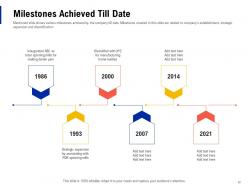
Slide 12: This slide shows various milestones achieved by the company till date. Milestones covered in this slide are related to company’s establishment, strategic expansion and diversification
Slide 13: This slide present Industry Overview.
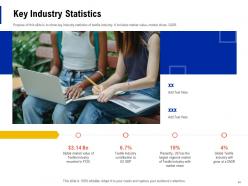
Slide 14: This slide is to show key industry statistics of textile industry. It includes market value, market share, CAGR.
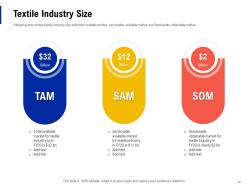
Slide 15: This slide shows textile industry size with total available market, serviceable available market and Serviceable obtainable market.
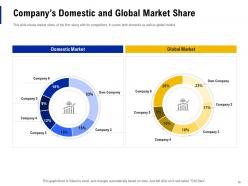
Slide 16: This slide shows market share of the firm along with its competitors. It covers both domestic as well as global market
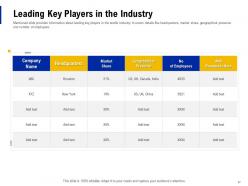
Slide 17: This slide provides information about leading key players in the textile industry. It covers details like headquarters, market share, geographical presence and number of employees.
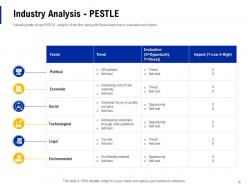
Slide 18: This table shows PESTLE analysis of the firm along with factor-based trend, evaluation and impact
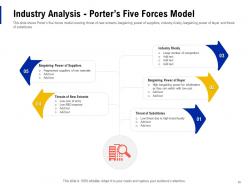
Slide 19: This slide shows Porter’s five forces model covering threat of new entrants, bargaining power of suppliers, industry rivalry, bargaining power of buyer and threat of substitutes
Slide 20: This slide presents Business Details.
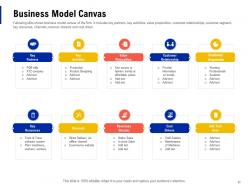
Slide 21: This slide shows business model canvas of the firm. It includes key partners, key activities, value proposition, customer relationships, customer segment, key resources, channels, revenue streams and cost driver
Slide 22: This slide shows company’s framework for generating revenues. It covers various revenues sources like retail sales, web sales, channel sales and affiliate
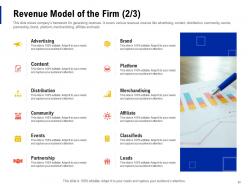
Slide 23: This slide shows company’s framework for generating revenues. It covers various revenues sources like advertising, content, distribution, community, events, partnership, brand, platform, merchandising, affiliate and leads
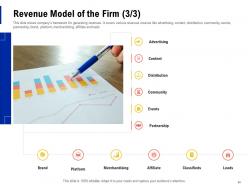
Slide 24: This slide shows company’s framework for generating revenues. It covers various revenues sources like advertising, content, distribution, community, events, partnership, brand, platform, merchandising, affiliate and leads
Slide 25: This slide presents the ways to create Monopoly in the Market.
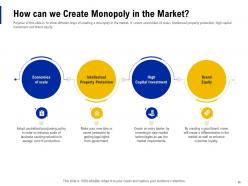
Slide 26: This slide is to show different ways of creating a monopoly in the market. It covers economies of scale, intellectual property protection, high capital investment and brand equity
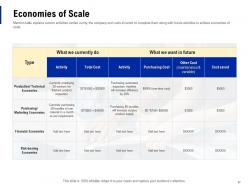
Slide 27: This table explains current activities carried out by the company and costs incurred to complete them along with future activities to achieve economies of scale.
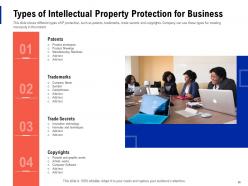
Slide 28: This slide shows different types of IP protection, such as patents, trademarks, trade secrets and copyrights. Company can use these types for creating monopoly in the market
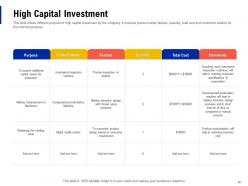
Slide 29: This slide shows different purpose of high capital investment by the company. It includes product name, feature, quantity, total cost and comments section for the intended purpose
Slide 30: This slide presents various factors like collaboration, emotional capital, awareness, value and reputation for building strong brand equity.
Slide 31: This slide presents Go To Market Strategy.
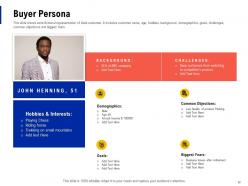
Slide 32: This slide shows semi-fictional representation of ideal customer. It includes customer name, age, hobbies, background, demographics, goals, challenges, common objections and biggest fears
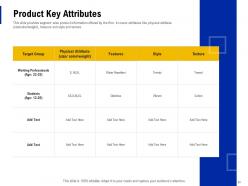
Slide 33: This slide provides segment wise product information offered by the firm. It covers attributes like physical attribute (size/color/weight), features and style and texture
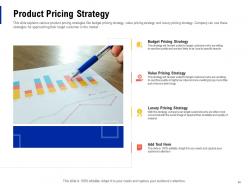
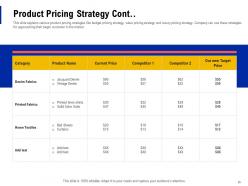
Slide 34: This slide explains various product pricing strategies like budget pricing strategy, value pricing strategy and luxury pricing strategy. Company can use these strategies for approaching their target customer in the market
Slide 35: This slide explains various product pricing strategies like budget pricing strategy, value pricing strategy and luxury pricing strategy. Company can use these strategies for approaching their target customer in the market
Slide 36: This slide shows continent wise price positioning of the new product. Product can be positioned with high price low quality, high price high quality, low price low quality or low-price high quality
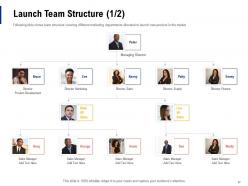
Slide 37: This slide shows team structure covering different marketing departments allocated to launch new product in the market
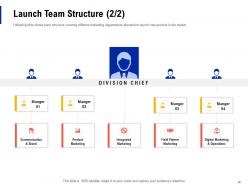
Slide 38: This slide shows team structure covering different marketing departments allocated to launch new product in the market
Slide 39: This slide presents New Product Launch Roadmap and Marketing Campaign.
Slide 40: This slide explains timeline of new product launch, starting from product development phase to launch phase.
Slide 41: This slide explains marketing campaign of the firm. It includes campaign focus, goal, budget, target market and marketing medium used by the firm
Slide 42: This slide presents projected sales by revenue and project market share.
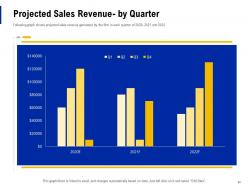
Slide 43: This graph shows projected sales revenue generated by the firm in each quarter of 2020, 2021 and 2022
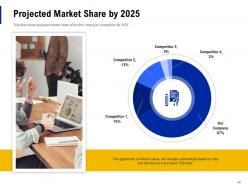
Slide 44: This slide shows projected market share of the firm among its competitors by 2025
Slide 45: This slide presents Future Expectations and Product Launch Tracking.
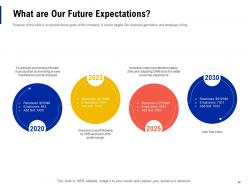
Slide 46: This slide provides future goals of the company. It covers targets like revenues generation and employee hiring
Slide 47: This slide presents Product Launch Tracking.
Slide 48: This is an Icon Slide. Use it as per your needs.
Slide 49: This is an Additional Slide.
Slide 50: This is Our Mission slide to state your mission and vision.
Slide 51: This is Our Team slide with name and designation to fill.
Slide 52: This is Our Location/Global Presence slide on a world map image.
Slide 53: This is Target image slide to present product/ entity, information etc.
Slide 54: This is a Mind Map slide to show behavioural segmentation, information or anything relative.
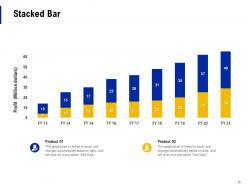
Slide 55: This is a Stacked Bar chart slide that can be used to compare different products.
Slide 56: This is a Column Chart slide that can be used to compare different elements.
Slide 57: This is a Post It Notes slide that can be used to keep important data at one place.
Slide 58: This is a Thank You slide for acknowledgment. You can share your contact details here.
Creating business monopoly powerpoint presentation slides with all 58 slides:
Use our Creating Business Monopoly Powerpoint Presentation Slides to effectively help you save your valuable time. They are readymade to fit into any presentation structure.



















FAQs for Creating business monopoly
Businesses can establish market dominance through innovation leadership, strategic acquisitions, exclusive partnerships, regulatory advantages, and building high switching costs for customers. Companies like Microsoft and Google have demonstrated these approaches by creating proprietary ecosystems, acquiring potential competitors, and leveraging network effects, ultimately delivering sustained competitive advantages and market control.
Innovation contributes to monopoly establishment by creating unique products, developing proprietary technologies, securing intellectual property rights, and building superior operational processes that competitors cannot easily replicate. Through breakthrough innovations, companies like pharmaceutical firms with patented drugs or tech giants with revolutionary platforms achieve market dominance, ultimately delivering sustained competitive advantages and barriers to entry.
Legal frameworks regulating monopolies include antitrust laws like the Sherman Act, Clayton Act, competition policies, merger regulations, and market dominance restrictions across jurisdictions. Businesses navigate these by conducting compliance audits, implementing competitive pricing strategies, ensuring fair market practices, and working with legal experts, with many organizations finding that proactive compliance ultimately delivers sustainable growth while maintaining competitive advantage.
Market research identifies monopoly opportunities by analyzing market gaps, competitor weaknesses, emerging consumer needs, regulatory changes, and technological disruption patterns. Through comprehensive data analysis, businesses can pinpoint underserved segments, anticipate industry shifts, and identify strategic acquisition targets, ultimately enabling them to establish dominant positions before competitors recognize these lucrative opportunities.
Pricing strategies enable monopoly establishment through predatory pricing to eliminate competitors, premium pricing once market dominance is achieved, and strategic price discrimination across customer segments. These approaches help businesses capture market share, deter new entrants, and maximize revenue streams, with many organizations finding that flexible pricing models ultimately deliver sustained competitive advantage and market control.
Mergers and acquisitions enable companies to consolidate market share by eliminating competitors, acquiring strategic assets, and creating barriers to entry through expanded resources and infrastructure. This strategic combination allows organizations to control pricing, streamline operations across multiple markets, and leverage economies of scale, ultimately delivering significant competitive advantages while reducing industry competition and enhancing market dominance.
Monopolies significantly reduce consumer choice by eliminating alternatives, while limiting market competition through barriers that prevent new entrants from challenging established dominance. This concentration enables price control and reduced innovation incentives, ultimately delivering fewer options and potentially higher costs for consumers, with many industries finding that competitive markets consistently produce better outcomes and enhanced customer experiences.
Technology and digital transformation facilitate monopoly creation by enabling network effects, data accumulation advantages, and platform scalability that create substantial barriers to entry. Through AI-driven personalization, cloud infrastructure, and integrated ecosystems, companies like Amazon and Google have achieved market dominance by delivering superior customer experiences, operational efficiency, and strategic data insights that competitors struggle to replicate.
Businesses pursuing market dominance should prioritize fair competition practices, transparent pricing, consumer welfare protection, and regulatory compliance while avoiding anti-competitive behaviors like predatory pricing or exclusive dealing arrangements. Ethical monopolies focus on innovation-driven leadership rather than market manipulation, with companies like Google and Amazon finding that sustainable dominance comes through delivering superior value and customer experiences.
Strong branding creates customer loyalty and market barriers by establishing premium positioning, emotional connections, and brand recognition that competitors struggle to replicate. Through consistent messaging, strategic partnerships, and customer experience optimization, monopolistic companies reinforce switching costs, control market narratives, and maintain pricing power, ultimately delivering sustained competitive advantage and market dominance.
Industries with high barriers to entry, significant infrastructure requirements, or network effects are most susceptible to monopolistic practices, including telecommunications, utilities, pharmaceuticals, technology platforms, and transportation. These sectors often require substantial capital investment, regulatory compliance, or specialized expertise, with many established companies leveraging economies of scale, patent protections, and market dominance to maintain competitive advantages and minimize new entrants.
Geographic advantages contribute to monopoly formation by creating natural barriers through resource control, strategic location benefits, and transportation cost advantages. Companies leveraging prime locations, exclusive access to raw materials, or proximity to key markets can dominate regional sectors, with many mining, utilities, and port operations finding that geographic positioning ultimately delivers sustainable competitive moats and market control.
Monopoly risks include regulatory scrutiny, antitrust litigation, consumer backlash, market complacency, and innovation stagnation that can ultimately threaten long-term sustainability. These challenges can be mitigated through proactive compliance programs, competitive pricing strategies, and continuous innovation investments, with many successful organizations finding that transparent practices and strategic diversification deliver sustained market leadership while minimizing regulatory exposure.
Businesses strengthen monopolistic positions through customer loyalty by implementing comprehensive retention strategies, exclusive membership programs, personalized experiences, superior customer service, and strategic reward systems. Through these approaches, companies in sectors like technology, retail, and financial services create switching barriers, increase customer lifetime value, and reduce competitive vulnerability, ultimately delivering sustained market dominance and predictable revenue streams.
Regulatory bodies assess monopolistic behaviors through market share analysis, pricing scrutiny, competitive impact evaluation, merger reviews, and consumer harm investigations. These assessments involve examining barriers to entry, predatory pricing practices, and anti-competitive acquisitions, with agencies like the FTC and DOJ ultimately determining whether interventions are necessary to preserve market competition and consumer choice.
-
Illustrative design with editable content. Exceptional value for money. Highly pleased with the product.
-
Very unique, user-friendly presentation interface.
-
Easily Understandable slides.
-
Professional and unique presentations.
-
Perfect template with attractive color combination.