


Credit Risk Analysis Powerpoint PPT Template Bundles




Try Before you Buy Download Free Sample Product
 Impress Your
 Audience
 100%
100% Editable
 Save Hours
 of Time


Our Credit Risk Analysis Powerpoint PPT Template Bundles are topically designed to provide an attractive backdrop to any subject. Use them to look like a presentation pro.
People who downloaded this PowerPoint presentation also viewed the following :
Credit Risk Analysis Powerpoint PPT Template Bundles with all 17 slides:
Use our Credit Risk Analysis Powerpoint PPT Template Bundles to effectively help you save your valuable time. They are readymade to fit into any presentation structure.
-
Credit Risk Analysis
-
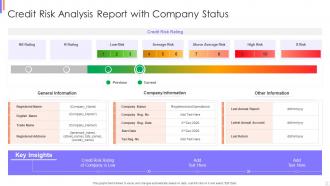
Credit Risk Analysis Report with Company Status
-
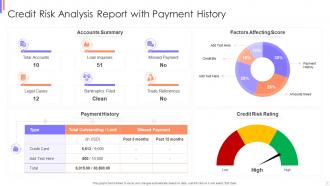
Credit Risk Analysis Report with Payment History
-
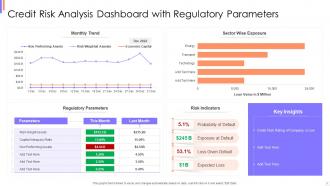
Credit Risk Analysis Dashboard with Regulatory Parameters
-
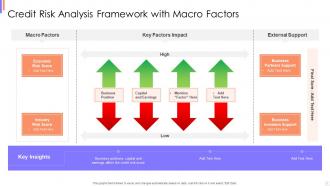
Credit Risk Analysis Framework with Macro Factors
-
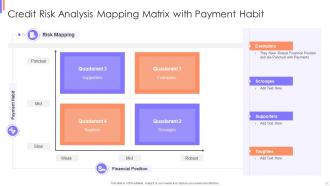
Credit Risk Analysis Mapping Matrix with Payment Habit
-
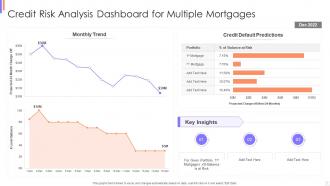
Credit Risk Analysis Dashboard for Multiple Mortgages
-
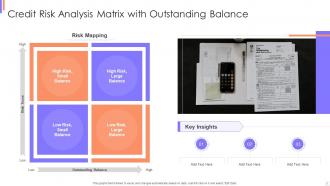
Credit Risk Analysis Matrix with Outstanding Balance
-
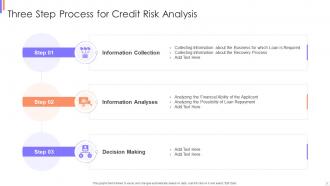
Three Step Process for Credit Risk Analysis
-
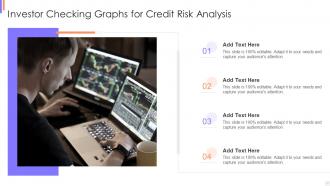
Investor Checking Graphs for Credit Risk Analysis
-
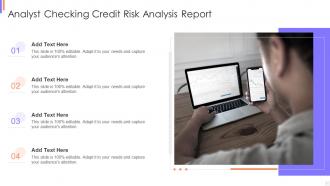
Analyst Checking Credit Risk Analysis Report
-

Thanks for Watching
-

-

-

-

-

FAQs for Credit Risk Analysis Powerpoint
Hey! So credit risk analysis basically boils down to five things. First, dig into their financial statements and cash flow - that's usually your best starting point. Then check their credit history and how they've paid bills before. Industry conditions matter too, though honestly that part can get pretty boring. Don't forget about collateral backing the loan, and the loan structure itself. You're trying to figure out: can they actually pay this back, will they bother to pay it back, and what's your backup plan if they don't? Start with the financials - they'll tell you most of what you need to know about whether they can handle the payments.
Dude, macro factors are critical for credit risk - they show how well your borrowers can actually pay you back. GDP drops, unemployment shoots up, interest rates go crazy? Default rates usually spike right after. Inflation messes with everyone's purchasing power too. Instead of just looking at individual borrower data, build those macro indicators into your risk models. I'm talking unemployment, GDP growth, maybe housing prices depending on your portfolio. Honestly feels like gambling if you ignore the bigger economic picture. Track 3-4 key ones and tweak your risk ratings when things start looking sketchy.
So credit rating agencies are basically doing the dirty work of figuring out who's likely to pay back their debts. They slap letter grades on everything - AAA for the really solid stuff, BB+ for the sketchy investments. Honestly saves you from having to dig through endless financial reports yourself. These agencies look at company finances, market trends, all that fun stuff to rate bonds and government debt. Their ratings are a decent starting point, but don't just trust them completely - remember the 2008 mess? Always double-check their work with your own research.
Honestly, you need both the numbers and gut check stuff to really nail this. Credit scoring models are your bread and butter - payment history, debt ratios, all that financial statement analysis gives you solid baseline odds. But here's where it gets interesting: throw in some stress testing to see how people hold up when the economy tanks. Industry factors matter way more than most people think too. Machine learning is pretty damn good at catching patterns we'd totally miss. Oh, and don't get lazy with updates - keep feeding fresh data and backtest against actual defaults or your models will drift.
So quantitative is basically the hard numbers - debt ratios, credit scores, cash flow, all that math stuff. Qualitative is more like... management seems sketchy, industry's getting disrupted, regulatory headwinds, you know? Honestly, I'm a spreadsheet nerd so I love the quant side for screening. But you'd be surprised how often the "soft" factors catch things numbers totally miss. Like when the CEO's about to bail or there's drama brewing. You really can't do one without the other though. Start with the numbers to build your foundation, then add the human judgment layer on top.
Basically you're running "what if" simulations on your credit portfolio to see how badly things could go. Like testing what happens if unemployment jumps to 15% or rates spike to 8%. Honestly, it's way more useful than it sounds - you can spot weak spots before they blow up and figure out how much capital you actually need. I'd start by throwing 2008 crisis conditions at your current book, then get creative with other scenarios. Don't just test the obvious stuff though. Run these regularly so you can tweak lending rules and have backup plans ready when things get messy.
Dude, credit history is literally your best predictor for who's gonna default. Payment patterns show you if someone's reliable or a mess. How they manage credit utilization and accounts? That's your window into their financial discipline. Debt-to-income is huge too - tells you if they can actually afford payments. Watch for sudden behavior changes because that stuff signals trouble way before other metrics catch it. Focus on trends, not just one-time snapshots. Oh, and definitely weight recent stuff heavier than old data when you're scoring risk.
Honestly, ML models are game-changers for credit risk stuff. Instead of just looking at basic credit history and income, you can analyze tons of variables - payment patterns, spending habits, even social media activity if that's your thing. Random forests work really well for this, I'd start there. The cool part? These algorithms actually learn and improve over time. They'll catch patterns you'd never notice yourself, which means better predictions and fewer people defaulting. Way more accurate than old-school scoring methods.
Start with clean data - seriously, bad data will screw everything up later. Get a decent sample size that covers different market conditions if you can. Split your data properly for training and testing, otherwise you'll just overfit. Document what you're doing because you'll forget, and regulators love paperwork anyway. Feature selection matters too - don't throw everything at the wall. Once it's live, keep watching how it performs since markets change. Oh, and get the business people involved early. They'll catch stuff you missed and actually need to use this thing.
So Basel III basically makes you hold way more capital against anything risky, which means your credit game has to get more conservative. Can't just go after high-yield stuff anymore without backing it up properly. The liquidity ratios are honestly annoying but you'll need more liquid assets sitting around. Risk-weighted calculations become huge since they directly hit your capital requirements - that part's actually pretty crucial. Oh and stress test regularly because your portfolio needs to work with the regulatory math, not just what looks good return-wise. It's a whole different ballgame now.
So basically collateral is your backup plan when someone can't pay you back. You grab their stuff and sell it to cover what they owe. Real estate works great for this, plus equipment or inventory - anything with real value. The trick is making sure whatever they put up is worth more than the loan amount. I'd definitely get everything appraised before you agree to anything. Quality matters too - some collateral is way easier to sell than others. Just keep an eye on values over time since markets change.
So basically, don't put all your money with one type of borrower or industry. Spread it around different sectors and regions. That way if tech crashes or one area tanks, you're not completely screwed. The whole point is finding stuff that won't all fail together when things get ugly. I learned this the hard way watching people get burned in 2008. Set limits on how much you'll lend to any single borrower or sector. It's boring but it works - losses from bad loans get balanced out by the good ones.
Honestly, you'll see SAS and R everywhere for the heavy statistical stuff. SQL's a must for data manipulation - can't get around that one. Excel's still huge for quick analyses and presentations, which surprised me at first. Python's really picking up steam with pandas and scikit-learn libraries. For specialized software, most places use Moody's Analytics, FICO, or IBM SPSS for risk scoring work. My advice? Start with SQL and pick either R or Python to get comfortable with. Those two will open most doors, and the other tools kinda follow similar logic once you've got the basics down.
Oh man, industry stuff totally makes or breaks your credit analysis. Like, you can't just look at numbers in a vacuum - regulatory changes, commodity swings, seasonal patterns, competition levels all matter tons. A tech startup faces completely different headaches than some boring utility company, right? Construction and those cyclical industries? Their cash flows are all over the place compared to healthcare (though healthcare has its own regulatory nightmare honestly). I always check how the borrower stacks up against their peers first. Pull some recent industry reports before you finalize anything - trust me on this one.
So AI models are crushing it right now - they're pulling from way more data than old credit scores ever could. Real-time risk checks are replacing those ancient quarterly reviews. Companies are getting weird with alternative data too... like your social media posts, utility bills, even how fast you type in forms. Open banking APIs let fintechs grab your transaction history directly, which is honestly pretty convenient. Embedded finance is everywhere now - you can get approved for credit inside random apps instantly. Oh, and regulators are being annoying about "black box" algorithms, so you'll want those ML explainability tools.
-
Great quality product.
-
Editable, diversified, compatible with MS PPT and Google Slides, and on top of that finest graphics!! I mean in the words of the famous Ross Geller, “What more do you want!”