

Crisis Communication Powerpoint Presentation Slides Strategy CD V





Try Before you Buy Download Free Sample Product
 Impress Your
Audience
 100%
Editable
 Save Hours
of Time


A well-crafted Crisis Communication template is essential for effective corporate communication, enabling organizations to communicate with stakeholders during challenging times. Our Stakeholder Communication PPT covers various techniques for public relations, stakeholder communication, and internal communication to build and maintain a positive image with investors, customers, suppliers, and other stakeholders. Crisis communication is highlighted as a crucial aspect to manage and mitigate negative impacts during a crisis. Additionally, our template emphasizes the significance of social media communication to enhance reach and engagement with the target audience, while event communication creates awareness about products, services, and initiatives. By utilizing this comprehensive deck, organizations can enhance their reputation, build stakeholder trust, and drive business success. Gain instant access to the valuable resource to improve communication strategies.
People who downloaded this PowerPoint presentation also viewed the following :
Content of this Powerpoint Presentation
Slide 1: This slide introduces Crisis communication. Commence by stating Your Company Name.
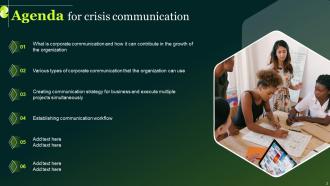
Slide 2: This slide depicts the Agenda of the presentation.
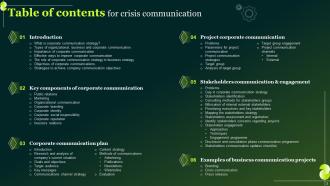
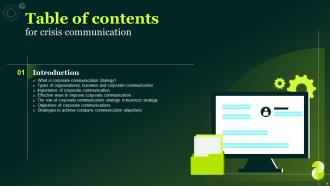
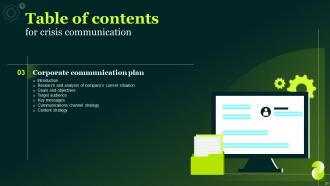
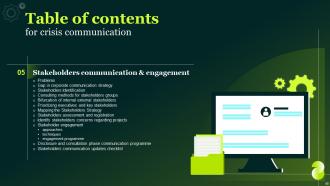
Slide 3: This slide incorporates the Table of contents.
Slide 4: This slide highlights the Title for the Topics to be covered further.
Slide 5: This template covers introduction of business communication strategy.
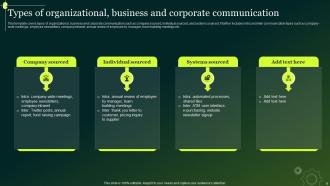
Slide 6: This slide states the types of organizational, business and corporate communication.
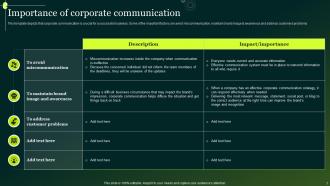
Slide 7: This slide depicts that corporate communication is crucial for a successful business.
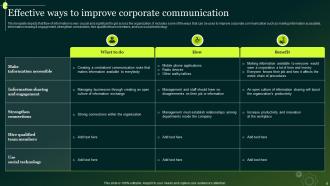
Slide 8: This template depicts the Effective ways to improve corporate communication.
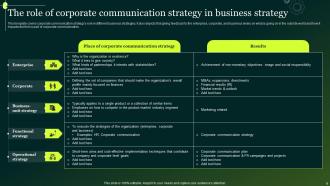
Slide 9: This slide exhibits the role of corporate communication strategy in business strategy.
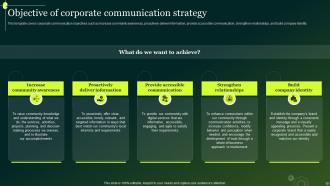
Slide 10: This slide displays the Objective of corporate communication strategy.
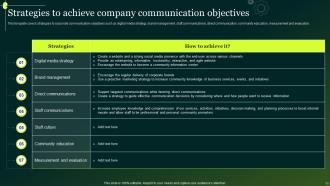
Slide 11: This slide showcases the Strategies to achieve company communication objectives.
Slide 12: This slide mentions the Heading for the Contents to be discussed next.
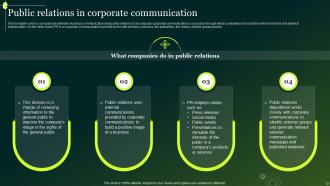
Slide 13: This template covers a comparison between business communication and public relations.
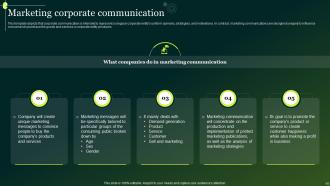
Slide 14: This slide illustrates the Marketing corporate communication.
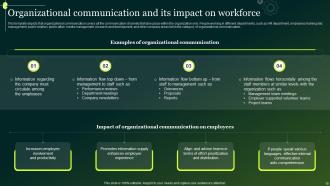
Slide 15: This slide portrays the Organizational communication and its impact on workforce.
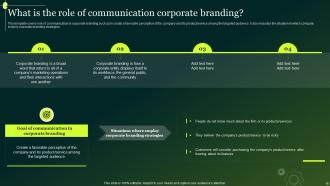
Slide 16: This template incorporates the role of communication in corporate branding.
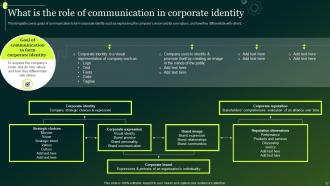
Slide 17: This slide states the goals of communication to form corporate identity.
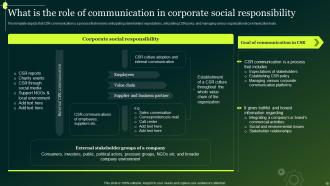
Slide 18: This slide depicts the role of communication in corporate social responsibility.
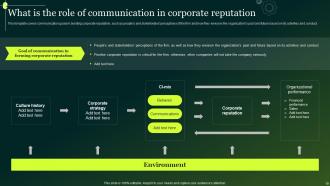
Slide 19: This template highlights the communication goals in building corporate reputation.
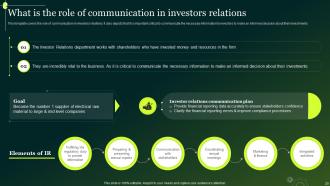
Slide 20: This template exhibits the role of communication in investors relations.
Slide 21: This slide showcases the Title for the Ideas to be discussed next.
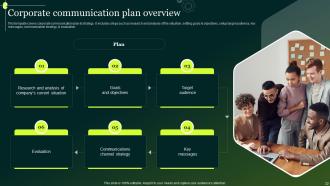
Slide 22: This slide presents the Corporate communication plan overview.
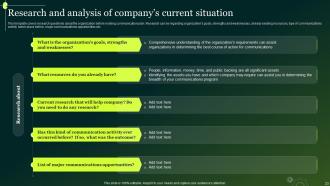
Slide 23: This slide shows the Research and analysis of company’s current situation.
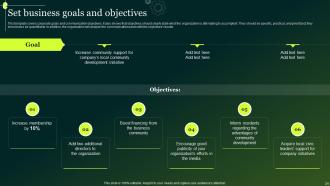
Slide 24: This template covers corporate goals and communication objectives.
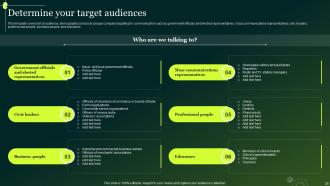
Slide 25: This slide talks about Determining your target audiences.
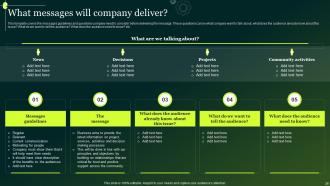
Slide 26: This template showcases the messages guidelines and questions company need to consider before delivering the message.
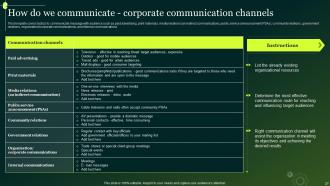
Slide 27: This template incorporates the tactics to communicate message with audience such as paid advertising, print materials, etc.
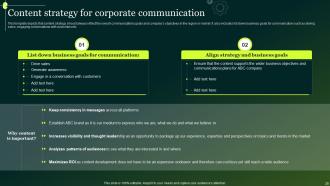
Slide 28: This slide displays the Content strategy for corporate communication.
Slide 29: This slide reveals the Heading for the Ideas to be covered next.
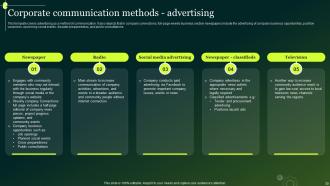
Slide 30: This template contains advertising as a method of communication.
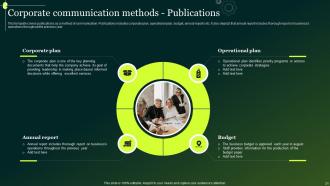
Slide 31: This slide elucidates publications as a method of communication.
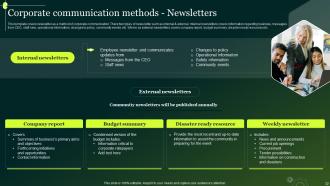
Slide 32: This template presents newsletter as a method of corporate communication.
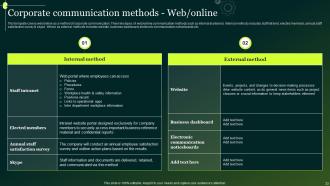
Slide 33: This template exhibits web/online as a method of corporate communication. T
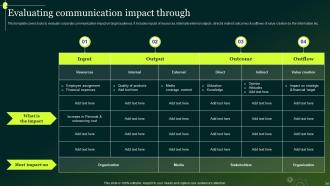
Slide 34: This slide deals with Evaluating communication impact.
Slide 35: This slide mentions the Title for the Components to be discussed next.
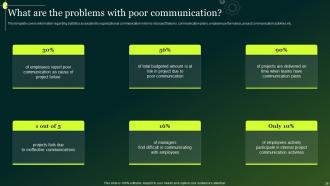
Slide 36: This template covers information regarding statistics associated to organizational communication in terms of project failures, communication plans, employee performance, etc.
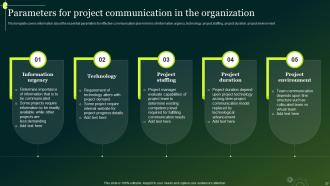
Slide 37: This slide lists the Parameters for project communication in the organization.
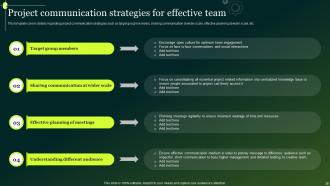
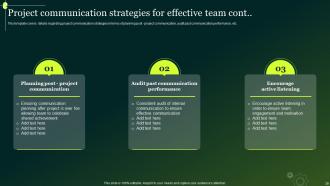
Slide 38: This slide focuses on Project communication strategies for effective team.
Slide 39: This slide continues the Project communication strategies for effective team.
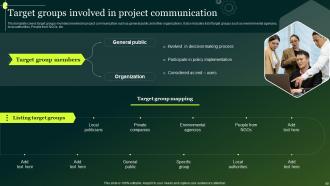
Slide 40: This template focuses on target groups members involved in project communication.
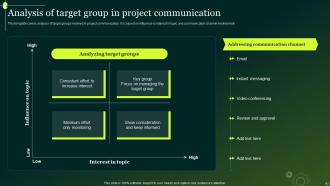
Slide 41: This slide exhibits the Analysis of target group in project communication.
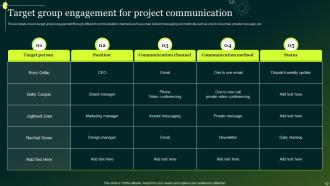
Slide 42: This slide incorporates the Target group engagement for project communication.
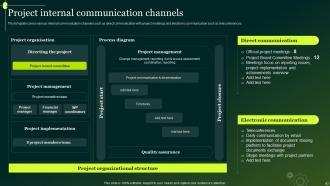
Slide 43: This slide deals with Project internal communication channels.
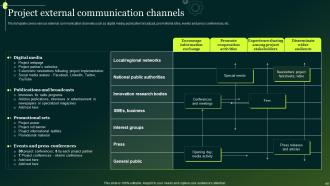
Slide 44: This slide talks about the Project external communication channels.
Slide 45: This slide presents the Heading for the Topics to be covered in the following template.
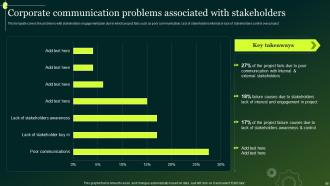
Slide 46: This template showcases the problems with stakeholders engagement plan due to which project fails.
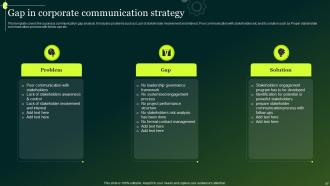
Slide 47: This slide template elucidates the Gap in corporate communication strategy.
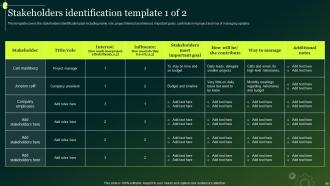
Slide 48: This template covers the stakeholders identification plan including name, role, project interest and interest, etc.
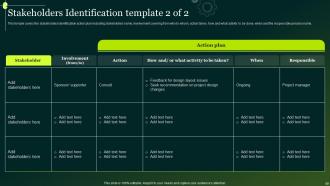
Slide 49: This temple covers the stakeholders identification action plan including stakeholders name, involvement covering from who to whom, action taken, etc.
Slide 50: This slide focuses on the Consulting methods that are considered for creating stakeholders group.
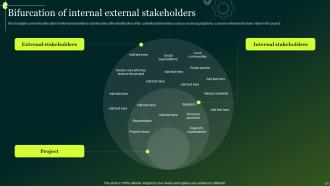
Slide 51: This slide reveals the Bifurcation of internal external stakeholders.
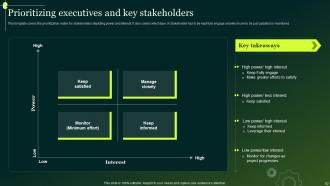
Slide 52: This template incorporates the prioritization matrix for stakeholders depicting power and interest.
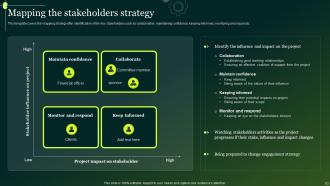
Slide 53: This slide talks about Mapping the Stakeholders Strategy.
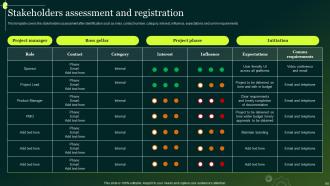
Slide 54: This slide exhibits Stakeholders assessment and registration.
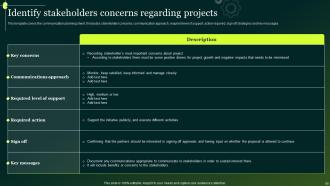
Slide 55: This template covers the communication planning sheet.
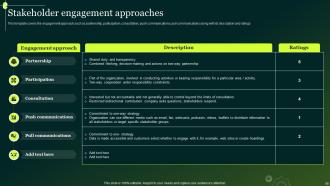
Slide 56: This template showcases the engagement approach such as partnership, participation, etc.
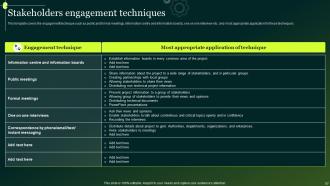
Slide 57: This slide deals with Stakeholders engagement techniques.
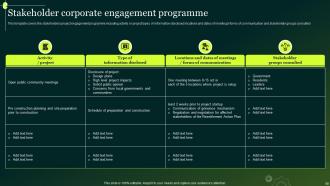
Slide 58: This slide represents the Stakeholder corporate engagement programme.
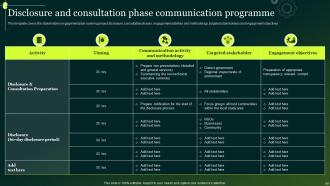
Slide 59: This slide provides information about the Disclosure and consultation phase communication programme.
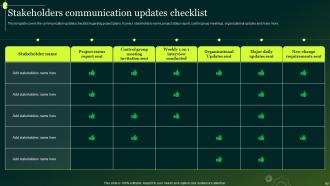
Slide 60: This slide elucidates the Stakeholders communication updates checklist.
Slide 61: This slide presents the Title for the Topics to be discussed further.
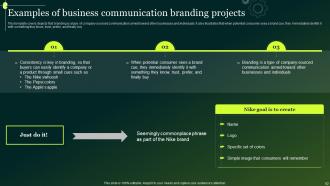
Slide 62: This slide portrays the Examples of business communication branding projects.
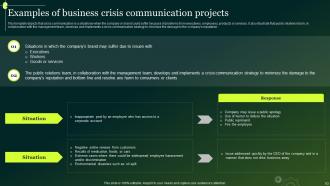
Slide 63: This slide depicts the Examples of business crisis communication projects.
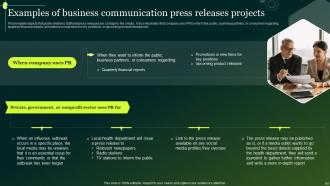
Slide 64: This slide reveals the Examples of business communication press releases projects.
Slide 65: This is the Icons slide containing all the Icons used in the plan.
Slide 66: This slide elucidates Additional information.
Slide 67: This slide is used for showcasing the organization's Vision & Mission.
Slide 68: This is the 30 60 90 Days Plan sldie for efficient planning.
Slide 69: This slide contains the Post it Notes for reminders and deadlines.
Slide 70: This is the Venn diagram slide.
Slide 71: This slide reveals the Company Timeline.
Slide 72: This slide is used for the purpose of Comparison.
Slide 73: This slide represents the Roadmap of the firm.
Slide 74: This is the Thank you slide for acknowledgement.
Crisis Communication Powerpoint Presentation Slides Strategy CD V with all 78 slides:
Use our Crisis Communication Powerpoint Presentation Slides Strategy CD V to effectively help you save your valuable time. They are readymade to fit into any presentation structure.













FAQs for Crisis Communication Powerpoint Presentation Slides
Effective crisis communication strategies include rapid response protocols, transparent messaging frameworks, stakeholder identification systems, multi-channel distribution networks, and continuous monitoring mechanisms. These elements work together by ensuring timely information flow, maintaining organizational credibility, and preserving stakeholder trust, with many companies finding that proactive communication planning significantly reduces reputational damage during critical incidents.
Organizations prepare for unexpected crises by developing comprehensive crisis communication plans, establishing clear response protocols, training designated spokespersons, and creating pre-approved message templates for various scenarios. These strategic preparations enable companies to respond swiftly and consistently during emergencies, with many organizations finding that proactive planning significantly reduces response time and protects brand reputation.
Social media serves as both a rapid response platform and reputation management tool in crisis communication, enabling real-time updates, direct stakeholder engagement, and immediate damage control. Through strategic social media deployment, organizations can counter misinformation, provide transparent updates, and maintain customer trust during critical situations, while monitoring public sentiment and adjusting messaging accordingly for optimal crisis resolution.
Companies should customize crisis messaging by addressing each stakeholder's specific concerns and information needs, with employees requiring operational details, customers needing service impact updates, investors seeking financial implications, and media demanding transparent facts. Through targeted communication channels and stakeholder-specific language, organizations streamline their response while maintaining consistency, ultimately preserving trust and minimizing reputational damage across all critical relationships.
Common crisis communication mistakes include delayed responses, inconsistent messaging across channels, lack of transparency, over-defensive language, and failure to designate clear spokespersons. These missteps often compound reputational damage by creating confusion, eroding stakeholder trust, and prolonging negative coverage, with many organizations finding that proactive, honest communication ultimately delivers faster recovery and stronger stakeholder relationships.
Transparency enhances trust during crises by providing accurate information consistently, acknowledging uncertainties honestly, and demonstrating accountability through clear decision-making processes. Organizations that communicate openly about challenges, timelines, and corrective actions enable stakeholders to make informed decisions, while ultimately building stronger relationships and competitive advantage through authentic leadership that delivers long-term credibility.
Crisis communication techniques include transparent messaging, proactive media engagement, stakeholder updates, social media monitoring, and coordinated response protocols. These approaches help organizations control narrative flow by addressing concerns quickly, providing consistent information across channels, and demonstrating leadership accountability, with many companies finding that early transparency and regular updates ultimately preserve trust and minimize reputational damage.
Data analytics informs crisis communication by tracking sentiment analysis, monitoring social media mentions, measuring message reach and engagement, analyzing audience demographics, and identifying emerging issues before they escalate. Through real-time dashboards and predictive modeling, organizations can tailor messaging strategies, optimize channel selection, and measure response effectiveness, ultimately enabling faster, more targeted crisis responses.
Crisis communication strategies should prioritize transparency and frequency for internal audiences while emphasizing reputation management and controlled messaging for external stakeholders. Internal teams require detailed operational updates, clear role definitions, and regular progress reports to maintain morale and coordination, while external communication focuses on brand protection, stakeholder confidence, and strategic narrative control, with many organizations finding that synchronized timing between both approaches ultimately delivers stronger crisis resolution and competitive recovery.
Timing significantly impacts crisis communication effectiveness by determining stakeholder trust, message credibility, and organizational reputation outcomes. Delayed responses often amplify negative perceptions and allow misinformation to spread, while prompt, transparent communication enables organizations to control narratives, demonstrate accountability, and maintain stakeholder confidence, ultimately delivering competitive advantage through enhanced crisis resilience.
Leadership visibility enhances crisis management by demonstrating accountability, providing clear direction, and maintaining stakeholder confidence through transparent communication. When executives actively engage with employees, customers, and media during crises, organizations experience faster recovery times, stronger team cohesion, and preserved brand reputation, ultimately delivering competitive resilience in challenging situations.
Best practices for spokesperson training include message consistency workshops, media interview simulations, stress management techniques, stakeholder mapping exercises, and real-time response protocols. Through intensive scenario-based training, organizations develop spokespersons who deliver clear, credible communications while maintaining composure, ultimately protecting brand reputation and stakeholder trust during challenging situations.
Post-crisis evaluation should inform future strategies by analyzing response effectiveness, stakeholder feedback, communication timing, and message clarity across all channels. Organizations can strengthen their crisis preparedness by identifying communication gaps, updating response protocols, and refining stakeholder engagement approaches, ultimately building more resilient communication frameworks that deliver faster responses and better stakeholder trust during future challenges.
Crisis communication ethics include transparency, accuracy, accountability, stakeholder prioritization, and cultural sensitivity when delivering messaging. Organizations must balance honest disclosure with legal obligations while ensuring timely, consistent information reaches affected communities, employees, and customers, ultimately maintaining trust and credibility during challenging situations.
Storytelling in crisis messaging integrates human narratives, relatable scenarios, clear progression from challenge to resolution, authentic testimonials, and empathetic language that acknowledges stakeholder concerns. These techniques help organizations transform defensive communications into compelling narratives, with many companies finding that story-driven messages increase trust, enhance emotional connection, and ultimately deliver more effective crisis recovery outcomes.
-
Their products can save your time, effort and money. What else you need. All in one package for presentation needs!
-
Slideteam offers pocket-friendly products. As a college student this is a really necessary thing to look at while paying for something.