Cultural Exchange In Powerpoint And Google Slides Cpb

Rating:
80%
Cultural Exchange In Powerpoint And Google Slides Cpb Cultural Exchange In Powerpoint And Google Slides Cpb
Slide 1 of 9
Favourites Favourites

Try Before you Buy Download Free Sample Product

Audience Impress Your
Audience
Editable 100%
Editable
Time Save Hours
of Time
The Biggest Sale is ending soon in
0
0
:
0
0
:
0
0
AI-Ready
Upload this template to AI and ask it to make any changes to content or color
100% editable Powerpoint Template for AI-assisted presentations. Finish your work in less time. Download Prompt Kit ​
Works with
Microsoft PowerPoint
Microsoft 365
Claude for PowerPoint
ChatGPT
Google Slides
Microsoft Copilot
Rating:
80%
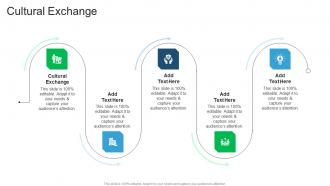
Presenting Cultural Exchange In Powerpoint And Google Slides Cpb slide which is completely adaptable. The graphics in this PowerPoint slide showcase five stages that will help you succinctly convey the information. In addition, you can alternate the color, font size, font type, and shapes of this PPT layout according to your content. This PPT presentation can be accessed with Google Slides and is available in both standard screen and widescreen aspect ratios. It is also a useful set to elucidate topics like Cultural Exchange. This well structured design can be downloaded in different formats like PDF, JPG, and PNG. So, without any delay, click on the download button now.

FAQs for Cultural Exchange In Powerpoint And

Honestly, the language immersion alone is worth it - nothing beats actually living somewhere to get fluent. Students develop crazy independence and adaptability skills you just can't get in a classroom. They come back so much more confident and globally-minded, it's wild. Cultural awareness shoots through the roof too. Plus they build these international networks that often turn into job opportunities later. Oh, and communication skills get a huge boost. If you're gonna recommend programs though, definitely pick ones with solid support systems because that's what makes or breaks the whole experience. Trust me on that one.

Honestly, just getting to know people from different cultures changes everything. You stop thinking in terms of "us vs them" and start seeing actual individuals. Share a meal with someone, learn about their traditions - those weird preconceptions you had just melt away. It's crazy how fast it happens too. Turns out most people want the same basic stuff: good family relationships, decent opportunities, maybe some respect. Once you've had those real conversations, you're way more open-minded when you encounter cultural differences later. Start small though - hit up a cultural festival or something.

Dude, social media is literally how we experience other cultures now. My TikTok is probably 60% videos from random countries at this point lol. You're getting real glimpses into people's lives - not the sanitized tourist stuff. Instagram, YouTube, whatever platform - they're all connecting us instantly with traditions, food, music from everywhere. It's wild how much more cross-cultural understanding happens now compared to before. But here's the thing: you gotta actually follow diverse creators and engage with them. Don't just scroll mindlessly through the same content. Mix up your feeds intentionally and you'll discover so much cool stuff.

Honestly, the best thing you can do is actually swap people between offices for real stretches of time - not just quick business trips. Send your home team members to live and work in those international locations for months. Bring overseas staff back to headquarters too. It's way more effective than any cultural training workshop, trust me. People build genuine relationships this way, and suddenly your products actually make sense to local customers. Communication gets so much better when everyone's walked in each other's shoes. Start with just one or two key markets though - don't go crazy trying to do everything at once.

Look, cultural exchange is honestly a win-win for local communities. Tourism revenue goes up, obviously. But it also creates jobs in hospitality and gives local artisans a chance to actually make money from their work. The cool thing is it saves traditional crafts from dying out - stuff that would disappear otherwise. Communities get exposed to new skills and ideas too, which sparks innovation. Oh and if you're thinking about supporting these programs, make sure locals are actually involved as partners, not just there for show. Otherwise it's kind of pointless.

Dude, you'll literally start questioning everything you thought was "normal" once you're immersed in a different culture. The way people solve problems, their values, social stuff - it's wild how much you realize was just conditioning. Made me way more adaptable and empathetic, honestly. You figure out what parts of yourself are actually YOU versus what's just how you were raised. Short bursts work too, but longer stays really mess with your head in the best way. Your worldview gets so much more complex - less black and white thinking. Seriously though, do it if you can. Even my friend's two-week thing changed her perspective permanently.

Honestly, the biggest thing is getting everyone on the same page about goals upfront - otherwise you'll be spinning your wheels. Skip the surface-level stuff (food festivals are nice but kinda predictable). Brief people beforehand about cultural expectations so nobody's caught off guard. Build in reflection time because people need to actually process what's happening, not just rush through activities. But here's what really matters - ditch the big group presentations. The real connections happen when people can have honest one-on-one conversations and share personal stories. That's where the magic is.

Honestly, universities need to get real about what students actually want. Short programs work better - like 2-4 weeks instead of full semesters since most people can't just disappear for months. Social media is where students find this stuff, not those sad brochures nobody reads. Financial aid packages need to be way better too. Partner with specific departments so it's not just generic "study abroad" nonsense. And please, actual student testimonials instead of stock photos of people pointing at monuments. The best move? Just survey current students about what's stopping them and build programs around those answers. Seems obvious but apparently it's not.

So the big ones are language barriers, culture shock, and homesickness - sounds obvious but even super prepared people get hit hard by these. Simple stuff becomes frustrating when you can't communicate properly. Different social norms leave you feeling totally lost sometimes. And homesickness? Way worse than you think it'll be. Best fixes I've seen: cultural training before they leave, pairing people with local mentors or alumni, and regular check-ins (like actually regular, not just when things go wrong). Language apps help obviously. But honestly the most important thing is just telling people upfront that feeling overwhelmed is completely normal - makes such a difference when they're struggling.

Honestly, cultural exchange actually helps preserve stuff rather than killing it. People get excited about traditions when there's outside interest - creates demand, you know? I've noticed travelers will document things locals barely think about anymore. Plus sharing culture gives communities real economic reasons to keep traditions going. There's this whole network effect too where more people become invested in preservation. If you're doing any cultural programs, definitely push for that two-way sharing thing. It's probably the most natural way traditions stay alive instead of just... fading away.

Watch out for power imbalances and make sure it's not just cultural tourism—that's the big one. Economic differences between participants can get weird fast. You don't want one side extracting all the value while the other gets some surface-level experience, you know? Cultural appropriation is obviously a risk too. Build in real reciprocity from the start, not just feel-good stuff. Sensitivity training helps, but honestly, ongoing reflection sessions are where people actually process what they're learning. Oh, and check that you're not accidentally reinforcing stereotypes—defeats the whole point.

So governments can fund exchange programs and make visas easier for artists and students. Look at Fulbright or the British Council - those actually work. Cultural institutes abroad are huge too. Festivals, artist residencies, educational swaps with other countries... all solid moves. The trick is opening it up beyond fancy universities to smaller orgs that can't usually afford this stuff. Germany and South Korea absolutely crush it at this - they've figured out how to do soft diplomacy without it feeling fake or forced. Honestly, accessibility makes all the difference in whether these programs actually create lasting connections.

Track the obvious stuff first - satisfaction scores, language improvements, retention rates. But honestly, the real magic happens in how confident people feel afterward navigating different cultures or if they're still friends with their host families months later. Survey everyone involved, not just participants. Career aspiration changes are huge too. Set up your tracking system right away though - trust me, you don't want to be hunting down data after everything's over. The soft metrics matter just as much as the hard numbers, maybe more.

So it really depends on where you're looking - each region has totally different priorities. Erasmus in Europe is all about academics and language stuff. Asian programs? They're way more focused on tech skills and professional training. The US does this weird mix of everything, but god their paperwork is insane. Latin America usually throws in community service with the learning part, which is actually pretty cool. Honestly, I'd just look up whatever country you're considering and see what their education system values right now. Politics plays a bigger role than you'd think in shaping these programs.

Definitely check out the Fulbright Program first - it's been around since 1946 and has produced 59 Nobel winners, which is honestly insane. Sister Cities International connects over 2,600 communities globally for cultural exchanges. Japan's JET Programme is cool too, they bring English teachers to rural areas and it's really helped US-Japan relations. Oh, and Erasmus lets European students study anywhere in the EU super easily. I think Fulbright's your best bet for solid data though. Their websites should have tons of specific examples you can use.

Ratings and Reviews

80% of 100
Review Form
Write a review
Most Relevant Reviews
  1. 80%

    by Columbus Vasquez

    Best Representation of topics, really appreciable.
  2. 80%

    by James Lee

    Their professional templates are very impressive, even my manager was curious about the source. I am very grateful.

2 Item(s)

per page: