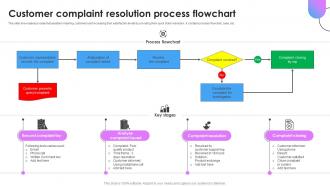
Customer Complaint Resolution Process Flowchart
Try Before you Buy Download Free Sample Product
Audience
Editable
of Time
This slide showcases process that assists in retaining customers and increasing their satisfaction levels by providing them quick ticket resolution. It contains process flowchart, case, etc.
People who downloaded this PowerPoint presentation also viewed the following :
Customer Complaint Resolution Process Flowchart with all 9 slides:
Use our Customer Complaint Resolution Process Flowchart to effectively help you save your valuable time. They are readymade to fit into any presentation structure.
FAQs for Customer Complaint
Honestly, most complaints boil down to the same stuff everywhere - crappy customer service, broken products, billing mess-ups, waiting forever for help. Retail deals with return drama nonstop. Tech companies? Buggy software and confused users. Healthcare is scheduling chaos plus doctors who can't communicate to save their lives. Food places get destroyed by delivery complaints and quality issues (been there, it sucks). Banks deal with fee fights and people locked out of accounts. Here's the thing though - customers just want fast answers and someone who actually listens. Track complaint patterns each month so you catch problems early.
Just use a simple CRM or spreadsheet to start - don't overthink it. Log each complaint with basic categories like product issues, billing stuff, service problems, whatever makes sense for your business. I learned this the hard way but tracking resolution time and follow-up satisfaction scores is clutch. Monthly reviews are where you'll actually spot the patterns that matter. My friend's startup tried getting fancy with analytics right away and it was a mess. Build simple first, then upgrade when you're drowning in complaints (hopefully the good kind of drowning). The categories can evolve as you go.
Ugh, social media makes every little complaint blow up fast. Customers don't bother calling support anymore - they just post their drama on Twitter or TikTok for everyone to see. The worst part? People eat up negative stuff way more than good reviews. Your complaint gets shared, then other customers pile on with their own terrible experiences. It's like watching a trainwreck honestly. You've gotta keep an eye on what people are saying about you online and jump in quick before some random rant turns into a full PR nightmare.
Safety issues first, obviously. Then billing screwups and outages hitting lots of people. High-value customers get bumped up too, especially if they're threatening to bail. Here's the thing though - those super angry repeat callers? They're usually not going anywhere. It's the quiet ones who just disappear that'll actually hurt you. Response time matters big time. Even if you can't fix it right away, just hitting them back within 24 hours makes a difference. Set up some basic scoring system so your team doesn't waste time debating what's urgent. Makes everything way smoother.
Honestly, speed matters most - get back to them within 24 hours if you can. Listen to what they're actually saying and acknowledge they're pissed off right away. I get that it's hard not to get defensive (especially when the complaint seems bogus), but resist that urge. Own the problem, give a real apology, then tell them exactly what you'll do to fix it. Document everything too - you'll start seeing patterns. Always circle back to make sure they're happy with how you handled things. Sounds cheesy, but each complaint really is a chance to create a superfan.
Honestly, complaints can be your secret weapon. Most upset customers actually care about your business - otherwise they'd just bounce without saying anything. Listen to them, fix their problem fast, and suddenly they're singing your praises to everyone. I've seen it happen so many times - people who had bad experiences but got great follow-up service become your biggest fans. Makes no sense but it works! Just make sure they feel heard during the whole thing. Don't stress about complaints too much, they're basically free chances to show you actually care.
Ugh, customer complaints can totally wreck your reputation if you mess up the response. Social media makes it worse - one bad review and everyone sees it. People love sharing drama, you know? But honestly, your response matters way more than the original complaint. Handle it fast and professionally? You'll probably turn that angry customer into someone who actually recommends you. I've seen it happen. Bad news spreads like crazy, but good recovery stories do too. Don't hide from complaints - they're actually perfect chances to show how much you care about fixing things.
Dude, complaints are basically free market research handed to you on a silver platter. Group them by theme - like if tons of people are getting stuck at the same checkout step or whatever. Mad customers actually give you the realest feedback, no sugarcoating. I'd track what keeps coming up and fix the stuff that affects the most people first. Maybe set up a weekly thing where you jot down the main complaint patterns? Then loop in your product team. Those angry rants are literally showing you what to build next. It's kinda genius when you think about it.
Okay so start with active listening training - it's literally a game changer. Your team needs to acknowledge feelings, ask the right questions, and not get all defensive when people are pissed. Role-playing helps tons too. Make sure everyone knows your refund policies and escalation stuff so they're not panicking mid-call. Honestly, half the time customers just want someone to listen while they vent (learned that the hard way lol). Train them to stay calm even when things get heated. I'd start with mock scenarios next week using real examples from your system.
Dude, unresolved complaints are budget killers. Direct costs hit first - refunds, comp, staff time putting out fires. The sneaky part? Lost customers and brutal reviews that tank your rep. One pissed-off person influences tons of potential buyers through social media (honestly, people love drama more than success stories). Word spreads crazy fast now. Here's the kicker - you'll blow way more cash on marketing to replace those customers than fixing the original mess would've cost. Catch complaints early before they turn into expensive disasters.
Honestly, get a ticketing system first - Zendesk or Freshdesk work great. They'll route complaints automatically and keep everything organized. Chatbots handle the basic stuff 24/7, though some people still hate them lol. Set up workflows that send updates so customers aren't texting you every hour asking "what's happening??" Analytics dashboards are clutch for catching problems early. Don't go crazy though - pick one tool, let your team figure it out, then add more later. Trust me, trying to do everything at once just creates chaos.
Honestly, empathy and active listening are huge - like actually hearing what they're saying, not just waiting for your turn to talk. Self-regulation too because people get SO heated over stuff and you can't take it personally. I swear, some days you'll hear the same complaint five times and want to scream lol. But if you can stay calm and respond to their feelings first before jumping into fix-it mode, you're golden. Social awareness helps you pick up on what they're not saying directly. Just focus on one conversation at a time - put your phone down, make eye contact if you're face to face, and really listen.
Here's the thing - complaints can actually be gold mines if you flip your approach. Instead of waiting for angry customers, hunt down issues early by checking social media mentions and following up on meh survey responses. People lose their minds when companies reach out first because honestly, who does that anymore? You'll catch problems before they blow up online or send customers running. The bonus? You're basically getting free intel on what's busted in your system while competitors are still scrambling to put out fires. Fix the root causes and your whole operation gets smoother.
So I'd definitely track response times first - nobody wants to sit around wondering if their complaint even got seen. Resolution rate matters too, plus how long it actually takes to fix things. Customer satisfaction scores after you've handled their issue are pretty telling. Oh, and watch for patterns in complaint volume or the same people complaining repeatedly - that's usually your canary in the coal mine. If escalations keep climbing, your front desk probably needs more power to actually solve stuff instead of just passing it up the chain. Those metrics will tell you everything.
Honestly, just own it completely and move fast - no excuses or trying to shift blame. Listen to what they're saying, give a real apology, then go overboard fixing it. I've actually watched businesses flip their angriest customers into superfans this way! Throw in some extra compensation, check back later to see if they're happy, and use what they told you to avoid the same mess next time. Think about it - complainers are basically giving you free advice on what's broken. So treat them well.
-
The slides come with appealing color schemes and relevant content that helped me deliver a stunning presentation without any hassle!
-
“I've always gotten excellent slides from them and the customer service is up to the mark.”