Customer engagement graph with lifecycle stages
Try Before you Buy Download Free Sample Product
Audience
Editable
of Time
Acquire determined focus with our Customer Engagement Graph With Lifecycle Stages. Don't allow anything to divert attention.
People who downloaded this PowerPoint presentation also viewed the following :
Content of this Powerpoint Presentation
Description:
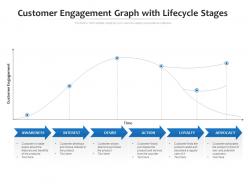
The image depicts a Customer Engagement Graph with Lifecycle Stages. It is a visual representation of how customer engagement changes over time across different stages of the customer lifecycle. The X-axis signifies the progression of time, and the Y-axis indicates the level of customer engagement. There are six key stages highlighted: Awareness, Interest, Desire, Action, Loyalty, and Advocacy.
1. Awareness Stage:Â
In this stage, the customer becomes informed about the features and benefits of the products.
2. Interest Stage:Â
This indicates a development of curiosity, where the customer shows an interest in the product.
3. Desire Stage:Â
Moving to the Desire stage, the customer begins to exhibit a want to purchase the product.
4. Action Stage:Â
This is when the customer decides to purchase the product or service from the provider.
5. Loyalty Stage:Â
The Loyalty stage describes a scenario where the customer repeatedly uses the product and finds it useful.
6. Advocacy Stage:Â
Finally, the Advocacy stage represents the highest level of engagement, where the customer not only remains loyal but also recommends the product to new and potential customers, effectively advocating for the brand.
Use Cases:
This type of slide can be used across various industries to explain the process of consumer engagement and to strategize on improving customer relationships. Here are seven sectors that could use this graph:
1. Retail:
Use: To strategize the customer journey from initial awareness to post-purchase advocacy.
Presenter: Marketing Manager.
Audience: Sales and Marketing Teams.
2. E-commerce:
Use: To optimize the online shopping experience and increase customer retention.
Presenter: E-commerce Strategist.
Audience: Web Developers and Digital Marketing Team.
3. Software-as-a-Service (SaaS):
Use: To engage users at each stage of the software adoption process.
Presenter: Customer Success Manager.
Audience: Product Development and Customer Support Teams.
4. Automotive:
Use: To maintain customer relationships from vehicle interest to ownership and beyond.
Presenter: Brand Manager.
Audience: Dealership Owners and Sales Representatives.
5. Banking and Finance:
Use: To build loyalty and advocacy in financial services.
Presenter: Client Relationship Manager.
Audience: Bank Branch Managers and Financial Advisors.
6. Telecommunications:
Use: To manage customer lifecycle and reduce churn in a competitive market.
Presenter: CRM Specialist.
Audience: Customer Service Representatives and Management.
7. Â Healthcare:
Use: To guide patient engagement and satisfaction throughout their healthcare journey.
Presenter: Healthcare Administrator.
Audience: Physicians and Patient Care Teams.
Customer engagement graph with lifecycle stages with all 2 slides:
Avoid falling for distractions with our Customer Engagement Graph With Lifecycle Stages. They ensure determined focus.
FAQs for Customer engagement graph
So there are five main stages: Awareness, Consideration, Purchase, Onboarding, and Advocacy. First you get people to notice your brand, then guide them through deciding and buying. Onboarding comes next - and wow, this is where most companies totally mess up. It's crazy how they spend all that money acquiring customers then basically ignore them right after purchase. Anyway, after that you focus on keeping customers happy and turning them into advocates who'll refer others. The trick is mapping your content to each stage so you're hitting them with the right message at the right time. I'd start by figuring out where your current customers are getting stuck.
Different stages need totally different metrics, which is obvious but somehow everyone forgets this. Track reach and brand mentions for awareness stuff. Email opens and content downloads work great during consideration - plus how long people actually stay on your site. Conversion rates matter most at purchase (duh), but don't ignore cart abandonment either. Post-purchase gets fun though - support tickets, repeat buys, NPS scores. I'd honestly just pick 2-3 metrics per stage that connect to actual money. Start with whatever tools you already have since learning new dashboards is the worst.
Honestly, personalization is what makes customers actually give a damn instead of just deleting your emails. You're basically having real conversations instead of screaming at everyone with the same boring message. When you customize stuff based on what they actually do - like their usage patterns or whatever they signed up for - it hits different. Way more meaningful than generic blasts. Oh, and start with behavior data to segment people first. Then you can craft messaging that actually speaks to each group. Short emails referencing their specific situation will always beat those long-winded newsletters nobody reads. Trust me on this one.
Honestly, automation is a game-changer for customer stuff. AI can track how people behave on your site and automatically send them targeted messages - like hitting cart abandoners with a discount or following up after they buy something. Chatbots are great for basic questions around the clock, though you'll still need humans for the tricky stuff obviously. Marketing automation does the lead nurturing while you sleep, which is pretty sweet. Best part? You get to focus on actual relationship building instead of doing the same repetitive tasks over and over.
Track your email opens, social media likes/comments, how long people stay on your content, and repeat purchases. Customer lifetime value is honestly where it's at - that tells you everything about long-term success. Net Promoter Score matters too since happy customers become your unpaid marketing team. The trick is tying all this engagement stuff back to actual money coming in. Oh, and don't go crazy with metrics - pick 3 or 4 that match your goals and build simple dashboards. You'll drown otherwise.
Honestly, just pick one spot in your customer journey and start there - don't overthink it. Maybe throw a quick survey after someone buys something, or check in during onboarding when they're actually engaged. I'd probably avoid bombarding people though, nobody wants to feel like they're doing homework for you. Set up some automatic triggers based on what customers do - like if someone upgrades, hit them with an NPS survey a month later. The key thing is actually doing something with the feedback and telling people "hey, we changed X because you said Y." Start small and build from there.
Don't go for the hard sell right away - that's where most people screw up. Share stuff that actually helps them solve problems. Think how-to guides, industry tips, whatever matches their headaches. I'd personally do personalized emails and maybe invite them to webinars (if they're into that sort of thing). Also engage with their social posts to build real connections. Track how they respond so you know when they're warming up to actual sales talks. Stay consistent but don't spam them. Let trust build naturally - it takes time but it's worth it.
Here's the thing - social media touches every part of your customer journey, not just the top. Yeah, it gets people's attention with posts and ads. But then prospects dig through your comments and user content to see if you're legit (honestly way more than they'll read fancy testimonials). Once they buy, that's where you can build real community and handle support questions. The cool part? Happy customers will post about you without being asked. Oh and don't just use it to broadcast stuff - actually think about how it fits each stage of someone's experience with your brand.
Ugh, the classic mistakes are either treating everyone exactly the same or ghosting customers right after they purchase. Companies spend tons on getting new customers but then completely forget about the ones they already have - drives me crazy. Plus they get obsessed with meaningless stuff like social media likes instead of actual sales data. Oh, and failing to customize messages based on where someone is in the buying process. Honestly? Just map out where you're currently touching base with customers and you'll probably spot obvious gaps where people are slipping away.
Honestly, segmentation is a game changer - way better than just sending the same stuff to everyone. Your VIP customers want exclusive sneak peeks and early access. New signups? They need help figuring out how your product even works. I'd start with maybe 3-4 main customer types and build different strategies for each. When you actually match what people care about with what you're sending them, engagement goes through the roof. It's kinda obvious when you think about it, but most people still blast generic messages and wonder why nobody opens their emails.
So content marketing is like the engine that powers your whole customer journey. Blog posts and social stuff help people find you initially. Then case studies and demos build trust during the consideration phase - though honestly, most companies screw this up by being way too pushy. When they're ready to buy, testimonials and detailed guides seal the deal. After purchase, educational content keeps them happy and coming back. The trick? Match your content type to wherever someone's head is at in their journey with you. Makes all the difference.
Honestly, it all comes down to making customers feel like you actually give a shit about them. Map out their journey first - see where you're being boring or generic. Then get personal with your emails based on what they've bought before. Quick responses to support questions are huge too. Oh, and loyalty programs that aren't just "spend $500 get $5 off" garbage - people see right through that. I swear half these brands just shout into the void without listening. Actually engage on social media beyond pushing products. Track what's working and ditch what isn't. Small personal touches make all the difference.
Honestly, just start simple. Google Analytics for your website stuff, then grab a CRM like HubSpot - their free version is actually pretty decent. If you need deeper tracking (which you probably will), Mixpanel beats Amplitude hands down. Way cleaner interface. Oh, and if you're doing social media, throw in Hootsuite for listening to what people say about you. But seriously, don't go crazy with tools. I've seen teams drowning in dashboards they never check. Pick 2-3 max that talk to each other nicely. Build your foundation first, then add more when you actually know what's missing.
Okay so basically when your teams actually share info, customers don't have to explain their whole situation to like 5 different people. Support can see what marketing emails they clicked before calling in mad (which honestly saves everyone's sanity). Your sales, marketing, and product people need to compare notes regularly - maybe weekly meetings where they swap customer stories and complaints? That way when someone gets passed between departments, it's actually smooth instead of starting from scratch every time. Plus you'll spot patterns faster and fix problems before they blow up.
Amazon's recommendations alone bring in 35% of their revenue - crazy, right? Starbucks built this whole loyalty thing through their app that hooks people daily. Netflix's algorithm is scary good at predicting what you'll binge next. Honestly, these companies don't just throw tech at problems. They pick specific moments in the customer journey and make them genuinely better. My advice? Don't try fixing everything at once. Choose one part of your customer experience and make it absolutely incredible first. That's where you'll see real results.
-
thanks
-
thanks