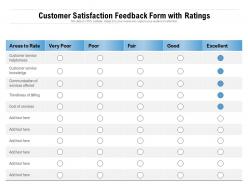
Customer satisfaction feedback form with ratings
Try Before you Buy Download Free Sample Product
Audience
Editable
of Time
Our Customer Satisfaction Feedback Form With Ratings are explicit and effective. They combine clarity and concise expression.
People who downloaded this PowerPoint presentation also viewed the following :
Customer satisfaction feedback form with ratings with all 2 slides:
Give your audience a fulfilling experience. They will find our Customer Satisfaction Feedback Form With Ratings elevating.
FAQs for Customer satisfaction feedback
Skip basic surveys - they're pretty limiting anyway. Real-time feedback works way better, like pop-ups right after someone buys something or quick SMS check-ins. Social listening tools are amazing for catching what people actually say about your brand when they think you're not listening. Companies are getting smart about measuring satisfaction indirectly too - repeat purchases, support tickets, that kind of stuff. Journey mapping helps you figure out where to ask for feedback. Honestly though? Don't try everything at once. Pick one new method this quarter and build from there. You'll get so much better data than surveys alone.
Honestly, feedback loops are a game changer for templates. Get users to test them early and tell you what sucks - way better than finding out later when everyone's frustrated. Don't just ask if they "like" it though, that's useless. Ask where they got confused or what slowed them down. I've seen too many pretty templates that are nightmare to actually use. You want specific feedback like "I couldn't find the export button" or "this section made no sense." Set up regular check-ins with users and actually fix what they mention. It's basically having free beta testers who care about the outcome.
Look, UX is huge for customer satisfaction with templates. Customers bail fast if they can't figure out how to customize stuff or if things are buggy. Clear instructions matter. So does intuitive design. When people can jump in, tweak what they need, and actually get decent results without pulling their hair out, they're happy customers. I've seen templates with amazing designs that nobody uses because they're impossible to work with. Make the whole thing smooth from the moment they download to final export. That's really what keeps people coming back.
Honestly, your support team can totally make or break this whole thing. People get stuck all the time - downloads fail, templates won't open in their version of PowerPoint, whatever. Quick, helpful responses turn angry customers into fans. I've watched businesses tank over stupid tech problems that a decent chat agent could've fixed in two minutes. When templates don't work, users don't blame the software - they blame you. Great support makes mediocre products feel premium. Bad support? Even your best templates feel like a waste of money, and those customers definitely aren't coming back.
Honestly, customization is a game changer for customer satisfaction. People want to feel seen, not like they're just another number in your system. Small touches make a huge difference - I'm talking about using their company colors, mentioning their specific industry, stuff like that. You don't need to go overboard either. Industry-specific language works great, or throw in examples that actually relate to their business. The trick is making it feel real, not like some automated mail merge situation (customers can smell that from a mile away). Start simple and build up based on what gets responses.
Honestly, I'd hit them with a quick survey right after they use your template - while it's all fresh in their mind. Skip the boring "rate your satisfaction" stuff. Ask real questions like "how easy was customizing this thing?" and "did it actually do what you needed?" Follow up again at 30 and 90 days because people's feelings totally change once they've lived with it for a while. The best feedback comes from asking what they'd tweak or add next time. Oh, and keep it short - like 3-4 questions max or nobody'll bother responding.
Track repeat purchases first - that's your easiest win to measure. Also watch completion rates (do people actually USE what they buy?) and how fast customers implement stuff after purchasing. Low refunds are obviously good. But honestly? Customer reviews mentioning specific results are way more valuable than generic "nice template" comments. Support tickets tell you a lot too. If one template generates tons of questions, something's probably wrong with it. Time-to-value matters - the quicker people see results, the happier they'll be. Oh, and don't just look at sales numbers. Those can be misleading if people aren't actually getting value from what you're selling.
Oh for sure, quick responses are huge for keeping customers happy. People just feel way better when you get back to them fast - like you actually care about their problem. I've literally seen customers give higher ratings just because support replied quickly, even when the actual fix took forever to sort out. Weird but true. The trick is jumping on inquiries within a few hours, even if it's just "hey, got your message, digging into this now." Once you set that expectation, they'll chill while you figure things out. Response time basically becomes part of how they judge your whole product.
Honestly, the worst thing you can do is oversell how customizable your templates are when they're actually pretty locked down. Customers get pissed real quick. Also - and I learned this the hard way - be upfront about pricing from day one. Hidden fees are relationship killers. Make sure your previews actually match what people download too, because that's just basic stuff. Documentation is huge but boring to write, I get it. Still gotta do it though or you'll get blamed for everything. My take? Just be brutally honest about what your templates can't do right from the start.
Dude, stories are like magic for presentations. People connect emotionally instead of just sitting there glazing over at bullet points. I mean, nobody remembers features and specs, right? But they'll remember how that one customer story made them feel. Complex stuff becomes way easier to digest when it's wrapped in a narrative. Your audience starts picturing themselves in those scenarios, which honestly builds way more trust than rattling off benefits. Oh and they actually retain the info better too. Next time, skip the boring opener and jump straight into a customer journey. Trust me on this one.
Dude, building a community around your templates is honestly a game changer. Users help each other out with problems instead of always hitting you up - which is amazing because some of these questions get pretty repetitive, not gonna lie. People share wins, troubleshoot together, and actually stick around longer when they feel connected to other users. Your experienced customers basically become free customer service reps. Plus you get instant feedback on what's broken or what people actually want. Just throw up a Discord or Facebook group to start. Nothing fancy - let them share screenshots and ask questions. Trust me, it's worth the effort.
Honestly, people just trust other customers way more than your sales pitch - it's basic human nature. Testimonials on your homepage and checkout pages work really well. Case studies with actual numbers are gold too. Reviews are obvious, but user photos and social posts hit different. The trick is making everything feel real, not like you handpicked only the perfect ones. Oh, and reach out to your best customers this week for testimonials. Short sentences work. Longer ones that flow naturally work too, just mix it up so it doesn't sound robotic.
Mix surveys with actual phone calls - that's where the good stuff is. Both happy and pissed off customers will tell you what's really going on. Exit interviews are brutal but honestly worth it when people leave. Oh, and social listening catches the complaints they don't send directly to you. Keep asking "why" like an annoying toddler until you get past the surface answers. Tag everything so you can spot patterns later - sounds boring but it actually helps a ton when you're drowning in feedback.
So basically, customers get annoyed when stuff feels stale or broken, right? Updates fix those annoying issues and add features people actually want. Plus it shows you haven't just ditched them after they bought in - which honestly happens way too often with digital products. Fresh designs matter too since nobody wants to look outdated. The real trick is telling people what you changed and why. Updates also give you perfect excuses to check in and see what else they need. It's like... maintenance for relationships, I guess?
Here's what I'd do - stay in touch after they buy and keep giving them useful stuff. Like send follow-ups with extra templates that match what they already got, or throw in some design tips. Maybe start a loyalty thing where members get early access to new stuff? People eat that up honestly. Also definitely ask for feedback and actually use it (crazy concept, right?). Set up emails that share design tricks and show how other customers are using the templates. The whole point is being helpful instead of just trying to sell them more crap. You want them thinking of you as the go-to person, not just another business bugging them.
No Reviews