Processo cíclico para amostra de Ppt de terceirização de processos de negócios

Rating:
90%
Cyclical process for business processes outsourcing ppt sample
Slide 1 of 5
Favourites Favourites

Try Before you Buy Download Free Sample Product

Audience Impress Your
Audience
Editable 100%
Editable
Time Save Hours
of Time
The Biggest Sale is ending soon in
0
0
:
0
0
:
0
0
Rating:
90%

Recursos desses slides de apresentação do PowerPoint:

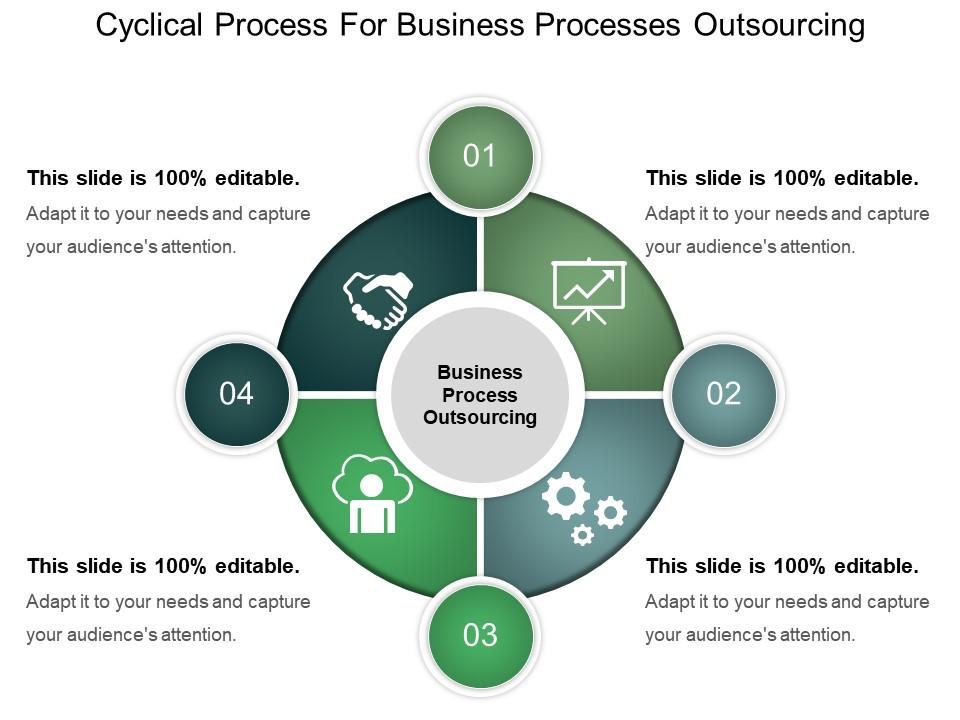
Apresentação do processo cíclico para amostra de ppt de terceirização de processos de negócios. Este é um processo cíclico para amostra de ppt de terceirização de processos de negócios. Este é um processo de quatro estágios. As etapas neste processo são diagrama de ciclo, processo cíclico, processo circular.

FAQs for Cyclical process for business processes

You only pay for what you actually use, which is huge compared to those rigid contracts where you're stuck paying the same amount whether you need them or not. During your slow months, you won't be bleeding cash on services just sitting there. Plus you can scale up fast when things get crazy busy - like holiday seasons or whatever. Way more flexible than the old-school approach where you're locked in year-round. Though honestly, I'd map out your busy vs. slow periods first to see if the math actually works out for your business.

So cyclical BPO basically lets you treat labor costs like a dial you can turn up or down - pretty brilliant actually. You're not stuck paying salaries all year for work that's only busy certain months. Peak season hits? Scale up fast without hiring permanent staff. Things slow down? Scale back. Your budget becomes way more predictable, which honestly saves so much stress. The trick is finding good BPO partners ahead of time though - you don't want to be hunting for help when you're already swamped. It completely changes how you think about staffing costs.

Retail businesses go crazy with this, especially around holidays when they're drowning in customer calls. Tax firms are huge users too - they literally need triple the staff every spring. Insurance companies jump on it when disasters hit and claims pile up. Oh, and hotels/travel stuff during busy seasons. Basically any business with predictable rushes uses it. Makes total sense honestly - why keep a massive team year-round when you only need them for a few months? Way cheaper than having people sitting around with nothing to do half the time.

Honestly, timing is gonna be your biggest headache - plus finding partners who can actually flex up and down when you need them. Most vendors hate the feast-or-famine thing (which I totally get). They want steady contracts, not this rollercoaster stuff. Knowledge transfer gets messy too since you might have completely different people each cycle. Quality control becomes a nightmare when everyone's scrambling during crunch time. My advice? Start building those vendor relationships way before you actually need to scale, and yeah - definitely nail down your handoff processes early.

Okay so you want to track the obvious stuff first - cost savings, how fast things get done, quality during busy times vs normal. But here's what most people miss: measure how quickly your vendor can actually ramp up when things get crazy. That flexibility piece is huge. Also keep an eye on customer satisfaction during those peak periods since that's what really counts at the end of the day. Oh and definitely set up some kind of monthly dashboard - sounds boring but trust me, you'll catch problems way earlier. Makes the whole thing way less stressful when you can see trends coming.

Honestly, automation is a lifesaver for cyclical BPO work. During busy seasons, you won't be frantically hiring and training a bunch of temp workers because AI and robotic process automation handle the routine stuff automatically. Real-time data helps you see those demand spikes coming too. I'd start with your most repetitive tasks - that's where you'll get the biggest bang for your buck. The whole thing just scales way smoother without all the usual headaches. My old manager used to stress about peak season for weeks, but now it's almost boring how well everything runs itself.

Honestly, cyclical BPO is rough on team morale. Your people never know if they'll have jobs during slow periods. Stress goes through the roof when outsourcing ramps up - everyone's worried about getting cut or having their work stripped away. It's like watching a department slowly give up, you know? They stop caring because why invest in something that might disappear next quarter. The uncertainty just kills motivation. But here's the thing - if you're upfront about the cycles and actually include your team in planning transitions, you can keep things from falling apart. Communication is everything. Tell them what's coming before it hits.

Look for partners who can scale up and down fast without tanking quality - that's the big thing. Their track record matters too; you don't want someone learning how to handle your busy season while you're paying for it. Decent workforce management systems are a must, plus real-time reporting when things get crazy. Honestly, I'd negotiate pricing that actually makes sense for your cycles - why pay peak rates when it's slow? Oh, and definitely start with a pilot first. Saves headaches later.

Look, BPO demand basically rides the economic rollercoaster. Companies expand? They need more support services but can't hire fast enough - that's when you see demand spike. Recession hits and it gets ugly quick. Clients slash budgets immediately because they view BPO as the first thing to cut. Currency swings make offshore pricing a nightmare too. Honestly, the whole industry learned this the hard way in 2008. Your best bet? Build solid relationships during good times. Those clients will remember you when things bounce back, and they always do eventually.

So cyclical BPO is perfect when your business has those crazy busy periods followed by dead zones. Tax firms during tax season, retailers at Christmas - you know the drill. Instead of hiring a bunch of people you'll have to let go later, you just scale up your outsourcing when you need it. Then dial it back down. Honestly saves so much drama with HR stuff. Your cash flow stays way more predictable too since you're not stuck paying salaries year-round for work that isn't there. I'd map out your busiest months first - that'll show you exactly where you need the extra help.

Most people think cyclical BPO is just regular outsourcing with busy seasons - totally wrong. You can't just dump more people during peak times and expect it to work. It needs real workforce planning, proper training, and tech that actually scales fast. And it's not just retail or tax prep either. Insurance gets slammed after hurricanes, payroll companies go crazy at year-end, HR departments during hiring sprees - the patterns are everywhere if you look. Honestly, half the companies I've seen don't even map their demand cycles first. Find a provider who gets cyclical ops, not someone just doing temp staffing.

Dude, you gotta check their security certs and compliance stuff before signing anything - GDPR, HIPAA, whatever applies to your industry. The tricky part with cyclical work? You're constantly bringing people on and kicking them off, which is honestly a pain for security. I'd build rock-solid contracts covering data access and deletion timelines. Regular audits are non-negotiable. Oh, and create some kind of standard checklist - encryption, access controls, incident response - that everyone has to follow from day one. Makes the whole process way smoother.

Track your cycle times, accuracy rates, and cost per cycle first - that's your bread and butter. SLA compliance becomes critical when things get hectic during peak season. I'd also watch volume throughput and error rates closely. The scaling part is tricky but super important - you need to see how well they ramp up and down with your business. Here's the thing though: establish your baseline metrics before you outsource anything, otherwise you're flying blind. Monthly reviews work fine normally, but honestly? Bump those up during busy periods or you'll regret it.

Okay so customer feedback is your lifeline here - without it you're just stumbling around making the same screwups over and over. The cool thing about cyclical BPO is you get tons of chances to fix stuff since everything repeats. Each round gives you fresh data on what's bugging people, timing issues, service gaps, whatever. It's kinda like tweaking a recipe until you get it right. But here's the thing - you can't just collect feedback and then ignore it (I see this happen way too often). Build actual feedback touchpoints into every cycle and then DO something with what people tell you.

Dude, the whole outsourcing game is changing fast right now. AI and predictive stuff lets companies actually predict when they'll need extra help instead of just guessing. Cloud platforms are game-changers too - you can scale up almost overnight when things get crazy busy. What's really cool is how contracts are shifting from just paying for warm bodies to paying for actual results. Makes way more sense, honestly. Oh and seriously - if you're looking at vendors, focus on the tech-savvy ones. The gap between old-school providers and the AI-enhanced ones is getting pretty ridiculous. You don't want to get stuck with outdated processes when everything's moving this quick.

Ratings and Reviews

90% of 100
Review Form
Write a review
Most Relevant Reviews
  1. 100%

    by Diego Gardner

    Design layout is very impressive.
  2. 80%

    by Reece Taylor

    Informative presentations that are easily editable.

2 Item(s)

per page: