DACI Framework Adoption Timeline For Improved Decision Making

Rating:
90%
DACI Framework Adoption Timeline For Improved Decision Making DACI Framework Adoption Timeline For Improved Decision Making
Slide 1 of 6

or

Favourites Favourites

Try Before you Buy Download Free Sample Product

Audience Impress Your
Audience
Editable 100%
Editable
Time Save Hours
of Time
The Biggest Sale is ending soon in
0
0
:
0
0
:
0
0
Rating:
90%
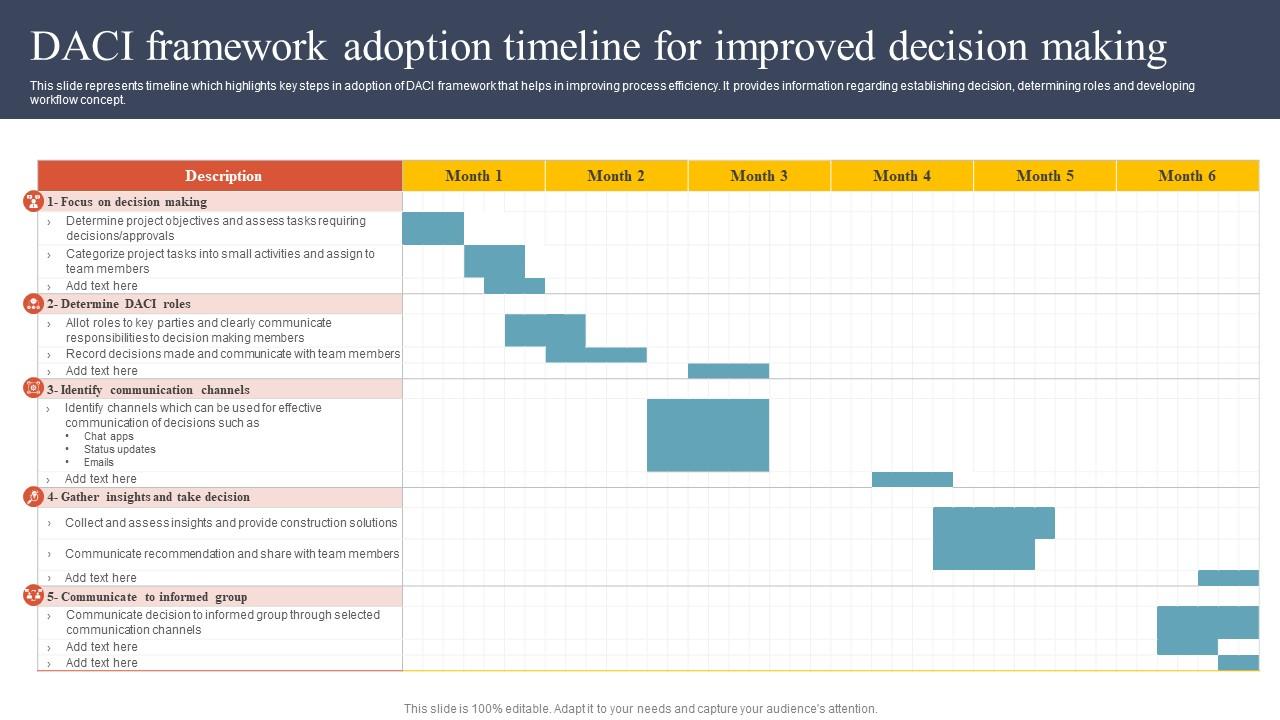
This slide represents timeline which highlights key steps in adoption of DACI framework that helps in improving process efficiency. It provides information regarding establishing decision, determining roles and developing workflow concept. Presenting our well structured DACI Framework Adoption Timeline For Improved Decision Making. The topics discussed in this slide are Decision Making, Communicate To Informed, Improved Decision Making. This is an instantly available PowerPoint presentation that can be edited conveniently. Download it right away and captivate your audience.

FAQs for DACI Framework Adoption Timeline For

The DACI Framework consists of four key roles: Driver (leads the decision process), Approver (makes the final decision), Contributors (provide input and expertise), and Informed (receive updates on outcomes). These components interact systematically, with the Driver coordinating Contributors' insights, presenting recommendations to the Approver, and ensuring all Informed stakeholders understand decisions, ultimately streamlining organizational decision-making and accountability.

Organizations implement DACI effectively by clearly defining roles upfront, establishing structured communication protocols, and integrating the framework into existing project management workflows. Through systematic role assignment and regular checkpoint meetings, companies across sectors like technology and healthcare streamline decision velocity, reduce bottlenecks, and enhance accountability, ultimately delivering faster project outcomes and improved organizational alignment.

Common challenges when adopting the DACI model include unclear role boundaries, resistance to structured decision-making, over-consultation leading to delays, and difficulty identifying the right stakeholders for each category. These obstacles can be overcome by providing comprehensive training on role definitions, starting with smaller decisions to build confidence, setting clear consultation timelines, and regularly reviewing stakeholder assignments, with many organizations finding that consistent application ultimately delivers faster decisions and enhanced accountability.

The DACI Framework proves most beneficial in complex projects involving multiple stakeholders, cross-functional teams, and high-stakes decisions, such as product launches, strategic initiatives, organizational restructures, and technology implementations. These scenarios often present both coordination challenges and accountability gaps, with many organizations finding that DACI streamlines decision-making processes, reduces confusion, and accelerates project timelines while ensuring clear ownership and faster execution.

DACI Framework differs from RACI and RAPID by emphasizing single-point accountability, with one Driver owning the entire decision process, while RACI focuses on task responsibilities and RAPID centers on recommendation workflows. Unlike RACI's multiple responsible parties or RAPID's consensus-building approach, DACI streamlines decision velocity through clear Driver accountability, defined Approver authority, and structured Contributor input, ultimately delivering faster organizational decisions and reduced decision-making bottlenecks.

Yes, the DACI Framework adapts effectively to remote teams through clear digital role assignments, structured virtual decision processes, and enhanced documentation practices. Remote teams leverage collaboration platforms, asynchronous communication tools, and detailed tracking systems to maintain accountability and transparency, with many distributed organizations finding that DACI actually streamlines remote decision-making by eliminating ambiguity.

**INPUT**: What tools or software can assist teams in applying the DACI Framework effectively? **OUTPUT**: Tools supporting DACI implementation include project management platforms like Asana and Monday.com, collaboration software such as Slack and Microsoft Teams, and specialized decision-making tools like Lucidchart and Miro. These technologies streamline role assignment, track decision progress, and enhance accountability, with many organizations finding that integrated platforms ultimately deliver faster consensus-building and clearer operational efficiency. *Word count: 58 words*

The DACI Framework enhances accountability by assigning specific roles: Driver owns the process, Approver makes final decisions, Contributors provide input, and Informed parties receive updates. This clear role delineation eliminates confusion about responsibilities, ensures stakeholders understand their commitments, and creates transparent ownership structures, with many organizations finding that decisions move faster while maintaining quality and team alignment.

Companies like Airbnb use DACI for product feature decisions, with product managers as Drivers, engineering teams as Accountable parties, and stakeholders as Contributors and Informed parties. Organizations across tech, finance, and healthcare find that DACI streamlines complex decisions by eliminating confusion over roles, accelerating approval processes, and ensuring stakeholder alignment, ultimately delivering faster project completion and clearer accountability structures.

Teams balance stakeholder input within DACI by clearly defining roles upfront, ensuring the Driver actively solicits feedback from Approvers and Contributors during designated phases, while maintaining decision authority boundaries. This structured approach enables comprehensive stakeholder engagement through formal input sessions, regular updates, and transparent communication channels, ultimately delivering faster decisions and stronger buy-in across organizations.

Metrics for evaluating DACI Framework effectiveness include decision implementation speed, stakeholder satisfaction scores, outcome achievement rates, resource utilization efficiency, and post-decision conflict levels. Organizations in sectors like consulting, technology, and financial services track these indicators alongside business outcomes such as revenue impact and cost reduction, ultimately measuring improved decision quality and organizational alignment.

The DACI Framework facilitates communication by clearly defining roles and responsibilities, establishing structured decision-making processes, and creating transparent accountability channels across departments. Through designated Driver, Approver, Contributors, and Informed roles, cross-functional teams streamline collaboration, minimize confusion, and accelerate project timelines, with many organizations finding that this clarity ultimately enhances operational efficiency and delivers faster strategic outcomes.

The Driver serves as the project's central coordinator in the DACI Framework, responsible for gathering input, facilitating decisions, managing timelines, and ensuring clear communication across all stakeholders. Through strategic planning and proactive stakeholder management, Drivers streamline decision-making processes, minimize bottlenecks, and maintain project momentum, with many organizations finding that effective Drivers ultimately deliver faster project completion and stronger cross-functional alignment.

Teams can ensure clear DACI role understanding through comprehensive role definition sessions, visual documentation, and regular communication touchpoints that outline specific responsibilities for each Driver, Approver, Contributor, and Informed member. These practices enhance accountability by establishing transparent expectations, minimizing role confusion, and creating structured decision-making processes, with many organizations finding that clear DACI implementation significantly accelerates project timelines and reduces costly miscommunication.

Teams can access DACI Framework training through online courses, workshops, certification programs, internal training modules, and comprehensive guides from management consulting firms. Many organizations find that combining formal training with hands-on practice sessions, mentoring from experienced facilitators, and integration with existing project management tools delivers faster adoption and better decision-making outcomes across departments.

Ratings and Reviews

90% of 100
Review Form
Write a review
Most Relevant Reviews
  1. 100%

    by Charlie Jackson

    Wonderful ideas and visuals. I'm really pleased with the templates, which are unique and up to date.
  2. 80%

    by Chuck James

    I was able to find the right choice of PPT template for my thesis with SlideTeam. Thank you for existing.

2 Item(s)

per page: