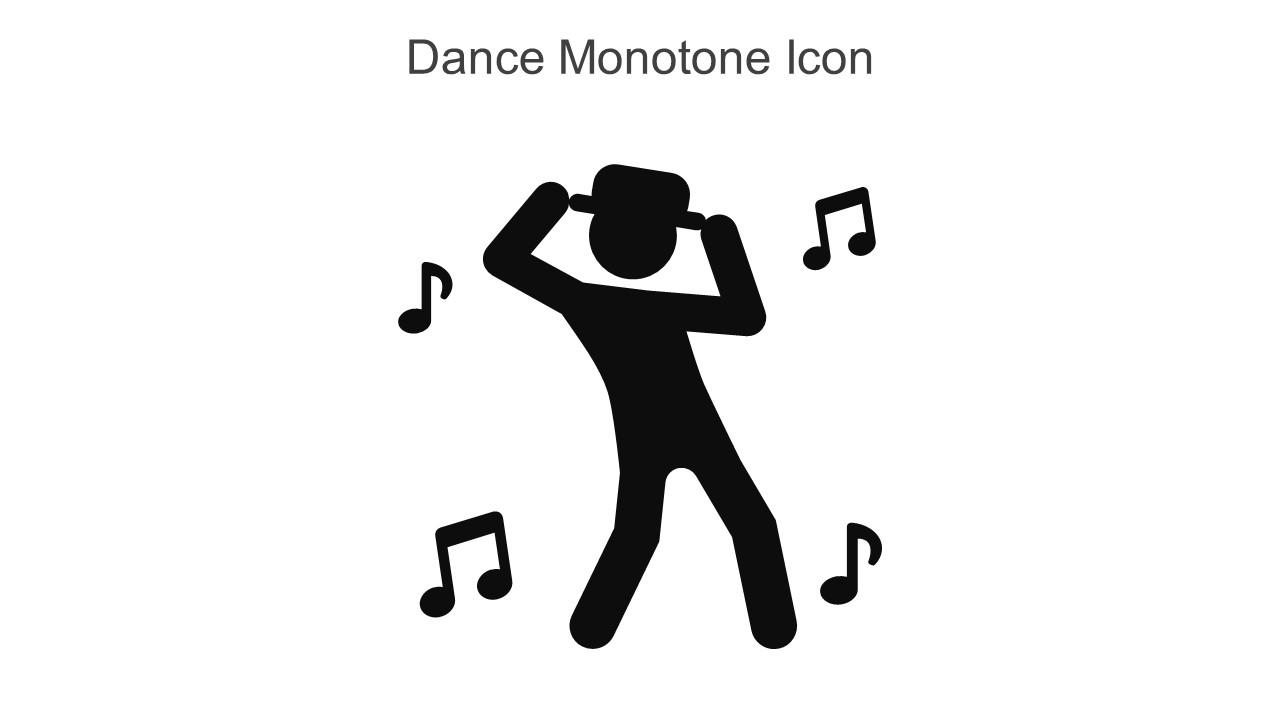
Dance Monotone Icon In Powerpoint Pptx Png And Editable Eps Format
Try Before you Buy Download Free Sample Product
Audience
Editable
of Time
This Dance monotone icon in powerpoint pptx png and editable eps format is a 100 percent editable icon. The downloaded file will have this icon in EPS, PNG and Powerpoint pptx format and is perfect for your next project. It has a simple yet stylish design.
People who downloaded this PowerPoint presentation also viewed the following :
Dance Monotone Icon In Powerpoint Pptx Png And Editable Eps Format with all 6 slides:
Use our Dance Monotone Icon In Powerpoint Pptx Png And Editable Eps Format to effectively help you save your valuable time. They are readymade to fit into any presentation structure.
FAQs for Dance Monotone Icon In Powerpoint Pptx Png And
Key elements include simplicity with clean lines, recognizable dance poses or movements, consistent stroke weight, appropriate scale for visibility, and cultural sensitivity in pose selection. These design principles work together by ensuring clarity at various sizes, maintaining visual coherence with other presentation elements, and effectively communicating dance concepts, ultimately delivering professional aesthetics that enhance audience engagement and comprehension.
Color theory significantly influences monotone dance icon effectiveness by determining visual hierarchy, emotional response, contrast levels, and brand alignment within design systems. Through strategic hue selection and tonal variations, designers create icons that enhance readability, convey specific moods, and maintain consistency across platforms, with many digital interfaces finding that carefully chosen monotone palettes ultimately deliver stronger user recognition and improved accessibility standards.
Contemporary, ballet, hip-hop, ballroom, and folk dance styles are most commonly represented through monotone icons due to their distinctive, recognizable silhouettes and movements. These dance forms translate effectively into simplified visual formats because their characteristic poses and gestures remain identifiable without color, with many designers finding that classic positions like ballet's arabesque or hip-hop's breaking moves deliver immediate recognition and universal appeal.
Simplifying dance movements into monotone icons enhances universal recognition by distilling complex choreography into essential gestures, eliminating cultural and stylistic barriers that might confuse interpretation. This streamlined approach enables clearer communication across diverse audiences, with many performance venues, educational institutions, and digital platforms finding that simplified iconography delivers faster comprehension and broader accessibility, ultimately creating more inclusive dance experiences.
Adobe Illustrator, Figma, and Sketch are top choices for creating dance monotone icons, offering precise vector control, symbol libraries, and scalable design capabilities. These professional tools enable designers to craft clean, minimalist dance imagery through advanced path manipulation and typography integration, with many creative agencies finding that vector-based workflows deliver consistent, high-quality icons suitable for diverse branding applications.
Dance monotone icons prove particularly effective in fitness and wellness presentations, entertainment industry pitches, cultural event proposals, educational materials about performing arts, and corporate team-building presentations. These versatile icons enhance visual storytelling by providing clear, distraction-free symbolism that resonates across diverse audiences, while their minimalist design ensures seamless integration with various presentation themes, ultimately delivering professional aesthetics and improved audience engagement.
Incorporating cultural elements in monotone dance icons significantly enhances their relevance and appeal by creating deeper connections with diverse audiences, improving cultural representation, and broadening market accessibility. These culturally-informed designs enable organizations, educational institutions, and entertainment companies to deliver more inclusive visual communications while maintaining design simplicity, ultimately fostering stronger audience engagement and competitive advantage in increasingly diverse markets.
Designers can ensure dance monotone icon versatility by using simple geometric shapes, maintaining consistent line weights, choosing neutral color palettes, and avoiding overly detailed elements that might clash with diverse themes. These design principles enable seamless integration across corporate presentations, educational materials, and creative portfolios, with many graphic designers finding that minimalist approaches ultimately deliver greater adaptability and professional appeal.
Monotone designs create visual cohesion and emotional focus by eliminating color distractions, allowing audiences to concentrate on movement, rhythm, and storytelling elements. This strategic design choice enhances dramatic intensity and thematic consistency, with many dance companies finding that monochromatic palettes amplify artistic expression, streamline production costs, and deliver more impactful, memorable performances.
Geometry in monotone dance icons conveys movement through strategic angles, curved lines, dynamic positioning, asymmetrical balance, and directional flow patterns. These geometric elements create visual rhythm by suggesting motion sequences, energy transitions, and choreographic timing, with many designers finding that angular limb positioning and curved body arcs effectively communicate dance dynamics without color distractions.
Common pitfalls when designing dance monotone icons include overly complex poses that lose clarity at small sizes, insufficient contrast between figure and background, unclear body proportions that confuse movement interpretation, and static positioning that fails to convey motion. These design challenges can significantly impact user recognition and engagement, with many digital platforms finding that simplified, high-contrast designs with exaggerated movement lines ultimately deliver better visual communication and user experience.
Blending traditional dance elements with modern monotone design involves simplifying cultural movements into clean geometric shapes, emphasizing essential postures through minimalist linework, and using negative space strategically. Contemporary designers achieve this by abstracting classical poses like ballet positions or folk dance stances into scalable vector formats, ultimately delivering culturally respectful icons that maintain authenticity while meeting modern digital interface standards.
Dance monotone icons promote inclusivity by providing universal, culturally-neutral visual representations that transcend specific ethnic, stylistic, or physical characteristics of dancers. These simplified icons enable dance organizations, studios, and educational platforms to represent movement without reinforcing cultural stereotypes or excluding particular demographics, with many dance academies and fitness centers finding that monotone visuals create more welcoming environments for diverse participants seeking dance instruction.
Feedback from dancers and choreographers enhances dance monotone icons by ensuring accurate movement representation, culturally appropriate symbolism, and intuitive visual communication that resonates with both dance professionals and general audiences. These insights help designers create icons that effectively convey choreographic concepts, emotional expressions, and dance styles across presentations, ultimately delivering clearer visual storytelling and enhanced audience engagement in dance education and performance contexts.
Dance monotone icons have successfully enhanced presentations in fitness industry pitches, wellness program proposals, corporate team-building initiatives, and cultural event planning. These minimalist design elements streamline visual communication by maintaining professional aesthetics while conveying movement and energy, with many presenters finding that monotone icons eliminate color distractions, ensure brand consistency, and create memorable visual narratives that resonate across diverse audiences.
-
“I always have a wonderful experience with SlideTeam. It's my ""go to"" when I need a template.”
-
I'm happy to discover your PowerPoint presentations and templates. They met my expectations precisely. Very innovative!