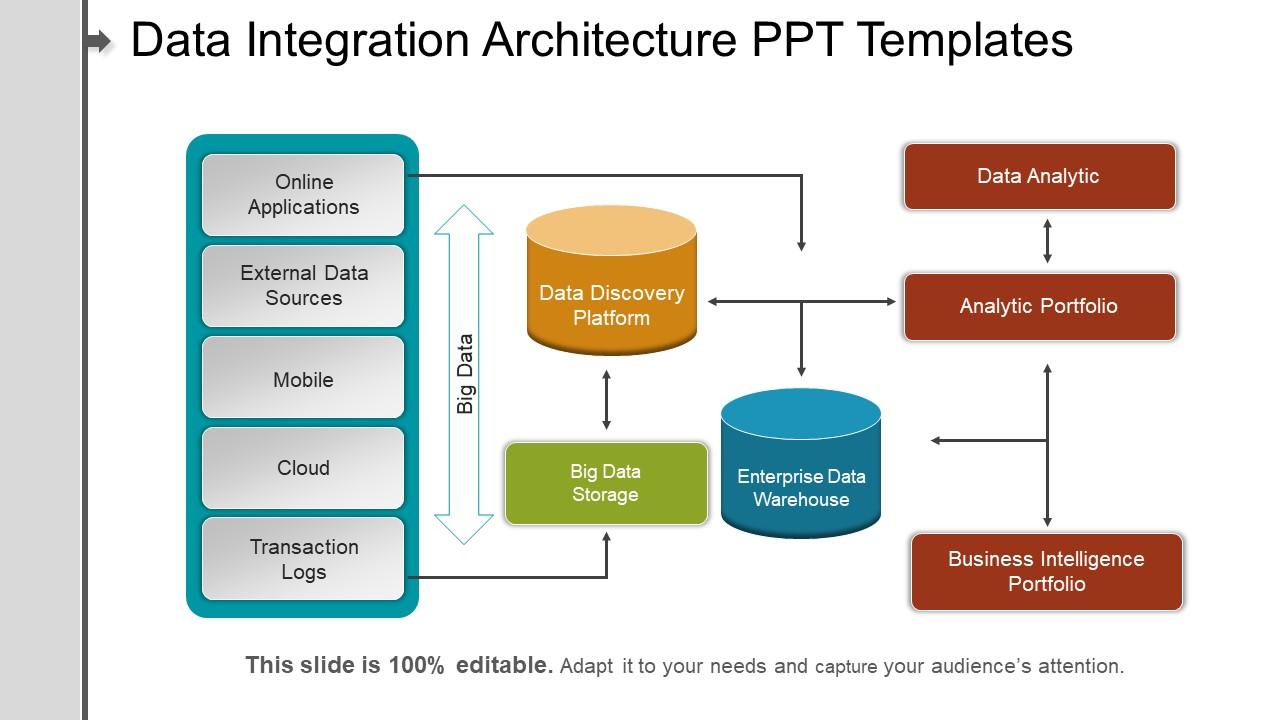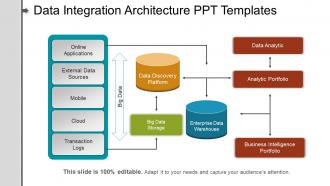
Plantillas PPT de Arquitectura de Integración de Datos

Rating:
90%
Slide 1 of 5
Favourites Favourites

Try Before you Buy Download Free Sample Product

Audience Impress Your
Audience
Editable 100%
Editable
Time Save Hours
of Time
The Biggest Sale is ending soon in
0
0
:
0
0
:
0
0
Rating:
90%

Características de estas diapositivas de presentación de PowerPoint:

SlideTeam le presenta esta plantilla PPT de arquitectura de integración de datos. Esta presentación de diapositivas es 100% editable, por lo que puede realizar muchos cambios relacionados con la fuente, la orientación, el color, el tamaño, la forma, etc. de varias características e imágenes de diagrama utilizadas en la presentación. Este PPT se puede ver en una relación de visualización de tamaño estándar de 4: 3 o una relación de visualización de pantalla ancha de 16: 9. Esta plantilla es compatible con las diapositivas de Google. La plantilla de PowerPoint se puede guardar en formato JPG o PDF.

FAQs for Data integration

So basically you'll have all your data in one place instead of jumping between like 5 different systems trying to find customer info. No more awkward meetings where sales says one thing and marketing has totally different numbers - been there! Real-time insights become actually possible, decisions get made faster, and your customers get better service since everyone's looking at the same accurate stuff. Your teams stop wasting hours on manual data fixes, and you can finally trust your reports. Honestly, just pick your messiest data silos first and work from there.

Set up your validation rules first - learned this one the hard way when bad data screwed up everything downstream. Define what's acceptable quality and what isn't before moving anything around. Run automated checks during the actual integration at each step. Exception handling is key for records that don't pass. Data lineage tracking will save your butt when you need to trace problems back to where they started. Monitoring dashboards are honestly a lifesaver - catch issues as they happen instead of finding out weeks later. Way better than discovering everything's been broken during some random quarterly review.

Honestly, automation saves you so much time with data stuff. Set up pipelines that extract, transform, and move data automatically - no more babysitting transfers or dealing with manual errors. The cool thing is these systems run constantly, even at 3am when you're sleeping. I'd start with just one simple workflow first (don't go crazy right away). Once you see how much faster everything runs and how it handles huge datasets without breaking a sweat, you'll wonder why you waited. Plus you can actually focus on analyzing instead of moving data around all day.

So ETL cleans your data first, then loads it into the warehouse - classic "tidy up before storing" method. ELT does the opposite though. Raw data gets dumped in first, then your warehouse does the heavy lifting (honestly way faster with today's cloud setups). Real-time integration? That's streaming data as it happens - perfect for dashboards that need instant updates. Pick ETL for complicated transformations. ELT crushes big data workloads. Go real-time when you can't wait around for batch jobs to finish. Really depends on how fast you need answers and how messy your data is.

So first things first - encrypt everything, both when it's moving around and when it's just sitting there. Strong authentication is huge too, don't let just anyone waltz in. APIs need proper authorization tokens, and honestly? I've watched way too many teams skip this stuff and then panic later. Validate all your inputs so nobody can slip in injection attacks. Oh, and set up some actual monitoring - you'll want to see what's happening with your data. VPNs help for the really sensitive stuff. Start with encryption and access controls though, that'll handle most of the big scary risks.

Look, when you pull all your scattered data into one spot, you can actually see what's happening across your whole business. Right now you're probably making decisions with like half the info - just CRM stuff or maybe sales numbers, but not both together. It's honestly frustrating when you realize how much you've been missing. Once everything's connected, patterns jump out at you way faster. Problems become obvious before they blow up. I'd start by figuring out which disconnected systems are screwing you over the most and tackle those first.

Ugh, data quality is gonna be your worst nightmare - duplicates everywhere, missing info, formats that make zero sense. Different systems hate talking to each other too. Performance gets sluggish with big data moves, and don't even think about skipping the security compliance stuff (learned that the hard way). API limits will randomly screw you over when you least expect it. Honestly? Do a tiny pilot first so you can spot the disasters early. Also, whatever time you think data cleaning will take... triple it. Trust me on this one.

So cloud integration basically means someone else handles all the server stuff - no hardware headaches for you. You get instant scaling when your data explodes, which is pretty sweet. Plus most cloud platforms already connect to popular apps right out of the box. On-premise means you're stuck managing everything yourself - updates, maintenance, all of it. Honestly, cloud costs can creep up over time though. And you're giving up some control over security settings. If you want something running fast without dealing with IT drama, I'd go cloud first.

Think of APIs like bridges between your different software - they automatically move data around so you don't have to. Your CRM talks to your email platform, which connects to your database, all without you manually exporting/importing stuff constantly. Honestly, it's kind of magical when it works right. Start small though - pick your most painful manual data tasks first. Find systems with decent documentation (trust me on this one) and build simple connections before getting fancy. Once you nail a few basic integrations, you'll wonder how you ever lived without them.

Honestly, data integration is a game changer for customer experience. Your systems need to actually talk to each other - otherwise you're flying blind. Once they do, you'll see the complete picture of each customer instead of random fragments. That means no more making people repeat their sob story every time they call support (seriously, nothing's more annoying). You can actually anticipate what they need and customize everything. Plus recommendations become way more relevant. I'd start small though - just connect your CRM with marketing and support tools first. That alone will blow your mind.

Honestly, you need both sides - technical stuff and business impact. Track data quality, how fast integrations work, system uptime (the boring essentials basically). Business-wise, see if teams actually get data faster and make better decisions. ROI matters too obviously. But here's the thing - user adoption is massive. Doesn't matter how good your integration is if nobody uses it, right? I'd start with maybe 3-4 metrics that match what you originally wanted to achieve. Don't go crazy tracking everything at once.

Dude, consent is huge here - people might've agreed to share data with one company but not to have it mashed together with stuff from elsewhere. That's where it gets tricky. You've gotta be super transparent about what you're combining and why. Only grab what you actually need too, don't go overboard just because you can access it. Different systems have totally different privacy rules, which honestly makes this a nightmare sometimes. Always think about whether mixing these sources creates brand new privacy risks that didn't exist before. Document everything so you can explain your thinking later if someone asks.

Dude, regulations totally flip your whole data integration approach on its head. GDPR? You're tracking consent for every EU person's data moving through your system - plus you need that data lineage mapped out. HIPAA's all about encryption everywhere and audit logs for healthcare stuff. Honestly, such a headache but way better than getting slammed later. Your integration pipelines need data classification and access controls built in from the start. Oh, and retention policies too - almost forgot that fun part. First step is figuring out what regulated data you're actually shuffling around between systems.

Snowflake, Databricks, and Azure Data Factory are crushing it for big data stuff right now. Apache Kafka's basically everywhere for streaming - can't escape it honestly. Talend and Informatica handle complex transformations really well, though they're kinda heavy. If you want something simple, Fivetran or Stitch are pretty nice for lighter loads. I always tell people to try their cloud provider's built-in tools first - saves you headaches later. Really depends on how messy your data is and what your team can actually handle. Don't overthink it initially.

Right after integration, get those automated quality checks running - they're lifesavers. I can't stress this enough: stuff breaks constantly, way more than anyone admits. Watch for duplicates, weird formatting, inconsistencies. Data lineage tracking is clutch so you can actually find where problems started. Someone has to own this mess when it goes wrong, so nail down clear governance policies upfront. Oh, and focus on your most critical datasets first. You'll burn out trying to monitor everything at once. Regular audits aren't optional either.

Ratings and Reviews

90% of 100
Review Form
Write a review
Most Relevant Reviews
  1. 80%

    by Garcia Ortiz

    Enough space for editing and adding your own content.
  2. 100%

    by Cristopher Cole

    Very well designed and informative templates.

2 Item(s)

per page: