Lieferstrategie-Informationsproduktionsbewertung Geschäftsrestaurants

Rating:
84%
Delivery Strategy Information Production Assessment Business Restaurants
Slide 1 of 12
Favourites Favourites

Try Before you Buy Download Free Sample Product

Audience Impress Your
Audience
Editable 100%
Editable
Time Save Hours
of Time
The Biggest Sale is ending soon in
0
0
:
0
0
:
0
0
Rating:
84%

Merkmale dieser PowerPoint-Präsentationsfolien:

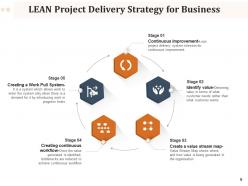
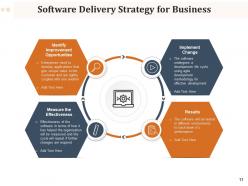
Stellen Sie eine klare Präsentation ab, indem Sie diese Bereitstellungsstrategie Informationsproduktionsbewertung Geschäftsrestaurants verwenden. Verwenden Sie es, um einen Überblick über das Thema mit den richtigen Bildern, Themen, Formen und Grafiken zu präsentieren. Dies ist ein fachmännisch gestaltetes komplettes Deck, das positive Gedanken und Handlungen verstärkt. Verwenden Sie es, um Ihrem Publikum visuelle Hinweise zu geben und ihm zu helfen, fundierte Entscheidungen zu treffen. Mit diesem kreativen Bundle können verschiedenste Diskussionsthemen abgedeckt werden, wie zum Beispiel Delivery Strategy, Information, Production, Assessment, Business. Alle zwölf Folien stehen zum sofortigen Download und zur Nutzung zur Verfügung. Sie können bearbeitet und modifiziert werden, um der Präsentation eine persönliche Note zu verleihen. Dies hilft bei der Erstellung einer einzigartigen Präsentation jedes Mal. Darüber hinaus kann diese Präsentation mit einer Vielzahl von bearbeitbaren Funktionen von jeder Branche oder Branche verwendet werden, je nach ihren Bedürfnissen und Anforderungen. Die Kompatibilität mit Google Slides ist ein weiteres Merkmal, auf das Sie in der PPT-Diashow achten sollten.

FAQs for Delivery Strategy Information Production

Key components of an effective delivery strategy include resource allocation, timeline management, quality assurance protocols, stakeholder communication frameworks, and risk mitigation plans. These elements work together by streamlining project execution, enhancing team coordination, and ensuring consistent deliverable standards, with many organizations finding that strategic delivery approaches ultimately reduce costs and accelerate time-to-market significantly.

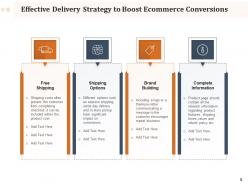
Businesses can tailor their delivery strategy by analyzing customer preferences, offering multiple delivery options, implementing real-time tracking, and providing flexible scheduling based on demographics and purchase patterns. Companies like Amazon and retail giants enhance customer satisfaction through same-day delivery, contactless options, and personalized delivery windows, ultimately building loyalty while reducing cart abandonment rates.

Technology revolutionizes delivery strategies by enabling route optimization, real-time tracking, automated scheduling, predictive analytics, and dynamic resource allocation. Through AI-powered logistics platforms, companies streamline operations, reduce fuel costs, and enhance customer experiences, while IoT sensors and mobile applications provide transparency throughout the delivery process, ultimately delivering competitive advantage in an increasingly demanding marketplace.

Companies measure delivery strategy success through key performance indicators including on-time delivery rates, customer satisfaction scores, cost per delivery, order accuracy rates, and delivery speed metrics. These measurements enable organizations to optimize operational efficiency, reduce logistics costs, and enhance customer experiences, with many retail and e-commerce businesses finding that comprehensive tracking ultimately delivers competitive advantage and improved profitability.

Common delivery strategy pitfalls include inadequate stakeholder alignment, unrealistic timelines, insufficient resource allocation, poor communication protocols, and lack of risk mitigation planning. These challenges often emerge in organizations scaling rapidly, with many companies finding that addressing communication gaps and timeline expectations early significantly reduces project delays, cost overruns, and ultimately delivers more predictable outcomes.

Businesses integrate sustainability into delivery practices through electric vehicle fleets, route optimization software, carbon-neutral shipping options, sustainable packaging materials, and local distribution centers. These approaches streamline operations by reducing fuel costs, minimizing environmental impact, and meeting consumer demand for eco-friendly services, with many retailers finding that sustainable delivery enhances brand reputation while delivering operational efficiency.

A multi-channel delivery approach significantly enhances customer satisfaction by offering flexible options, faster fulfillment, and convenient pickup locations that meet diverse preferences. Through strategic combination of online, in-store, and third-party delivery services, retailers streamline customer experiences, reduce wait times, and increase accessibility, with many organizations finding that this comprehensive approach ultimately delivers higher retention rates and competitive advantage.

Businesses should adapt delivery strategies through flexible capacity planning, diversified carrier partnerships, dynamic pricing models, and seasonal workforce scaling. Many retail and e-commerce companies enhance operations by implementing surge pricing, partnering with multiple logistics providers, and utilizing temporary distribution centers during peak seasons, ultimately maintaining customer satisfaction while optimizing costs and delivery performance.

Key trends include autonomous delivery vehicles, drone technology, micro-fulfillment centers, predictive analytics, and sustainable packaging solutions. These innovations streamline operations by reducing delivery times, minimizing costs, and enhancing customer experiences, with many retailers finding that strategic combinations of these technologies deliver competitive advantages in an increasingly demanding marketplace.

Companies use data analytics to improve delivery processes by analyzing route optimization, demand forecasting, inventory management, and customer behavior patterns. Through predictive analytics and real-time tracking, logistics firms enhance delivery speed, reduce operational costs, and minimize failed deliveries, while retailers increasingly find that data-driven insights enable better resource allocation and ultimately deliver superior customer experiences.

When choosing delivery partners or carriers, consider reliability, geographic coverage, pricing structures, technology integration capabilities, and customer service quality. These factors enable businesses to streamline operations, reduce costs, and enhance customer experiences, with many companies finding that strategic carrier partnerships ultimately deliver competitive advantage and scalability in increasingly complex logistics environments.

Businesses can manage delivery costs through route optimization software, strategic warehouse placement, partnering with third-party logistics providers, implementing dynamic pricing models, and leveraging technology for inventory management. Companies like Amazon and Walmart enhance operational efficiency by combining automated sorting systems with regional distribution centers, ultimately delivering faster services while reducing overhead expenses and maintaining competitive advantage.

Feedback plays a crucial role in refining delivery strategies by identifying bottlenecks, measuring customer satisfaction, tracking performance metrics, and revealing operational inefficiencies. Through customer surveys, delivery analytics, and driver insights, organizations can optimize routes, adjust timing, enhance service quality, and reduce costs, with many logistics companies finding that continuous feedback loops ultimately deliver faster deliveries and improved customer experiences.

Small businesses compete through strategic partnerships with third-party logistics providers, hyperlocal focus, personalized customer experiences, and flexible delivery options like same-day or scheduled services. While larger corporations have extensive infrastructure, smaller businesses can leverage technology platforms, collaborate with local delivery services, and emphasize customer intimacy, ultimately delivering faster response times and more customized solutions in their specific markets.

International delivery best practices include partnering with reliable global carriers, implementing real-time tracking systems, understanding customs regulations, offering multiple shipping options, and providing clear delivery timeframes. These strategies streamline cross-border logistics by minimizing delays, reducing compliance issues, and enhancing customer transparency, with many e-commerce businesses finding that strategic carrier partnerships and automated customs documentation ultimately deliver faster international services and improved customer satisfaction.

Ratings and Reviews

84% of 100
Review Form
Write a review
Most Relevant Reviews
  1. 80%

    by Thomas Hill

    Graphics are very appealing to eyes.
  2. 80%

    by Oscar Davis

    Enough space for editing and adding your own content.
  3. 100%

    by Deon Warren

    Illustrative design with editable content. Exceptional value for money. Highly pleased with the product.
  4. 80%

    by Wilson Campbell

    Great product with highly impressive and engaging designs.
  5. 80%

    by Devon Ferguson

    Visually stunning presentation, love the content.
  6. 80%

    by Devon Ferguson

    Thanks for all your great templates they have saved me lots of time and accelerate my presentations. Great product, keep them up!
  7. 80%

    by Charlie Jones

    Very unique, user-friendly presentation interface.
  8. 80%

    by Edgardo Chapman

    Best way of representation of the topic.
  9. 100%

    by Delmar Wagner

    Enough space for editing and adding your own content.

9 Item(s)

per page: