Démystifier Bitcoin Un Ppt de formation populaire sur les crypto-monnaies

Rating:
90%
Demystifying Bitcoin A Popular Cryptocurrency Training Ppt
Slide 1 of 25
Favourites Favourites

Try Before you Buy Download Free Sample Product

Audience Impress Your
Audience
Editable 100%
Editable
Time Save Hours
of Time
The Biggest Sale is ending soon in
0
0
:
0
0
:
0
0
Rating:
90%

Caractéristiques de ces diapositives de présentation PowerPoint :

Présentation de la démystification du Bitcoin, une crypto-monnaie populaire. Cette diapositive est bien conçue et conçue par nos spécialistes PowerPoint. Cette présentation PPT fait l'objet de recherches approfondies par les experts et chaque diapositive contient un contenu approprié. Vous pouvez ajouter ou supprimer du contenu selon vos besoins.

Contenu de cette présentation Powerpoint

Diapositive 1

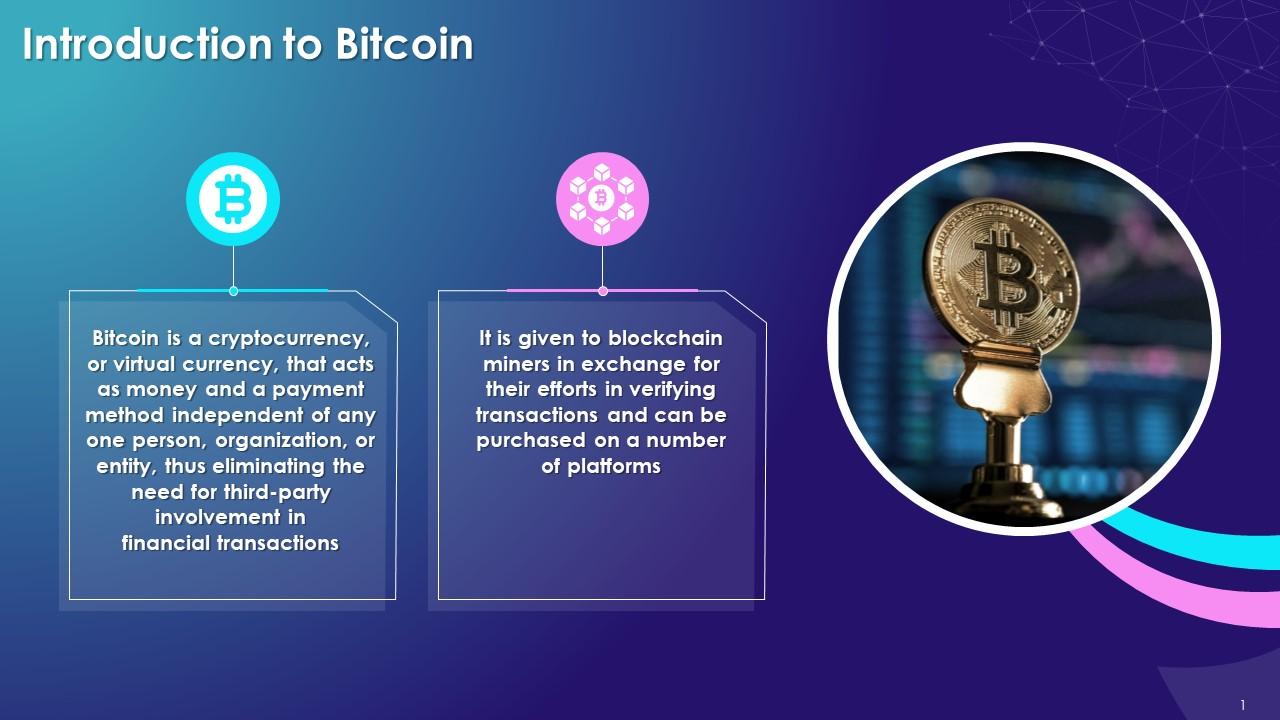
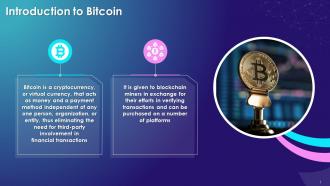
Cette diapositive indique que Bitcoin est une crypto-monnaie, ou monnaie virtuelle, qui agit comme de l'argent et un mode de paiement indépendant de toute personne, organisation ou entité, éliminant ainsi la nécessité d'une implication de tiers dans les transactions financières.

Diapositive 2

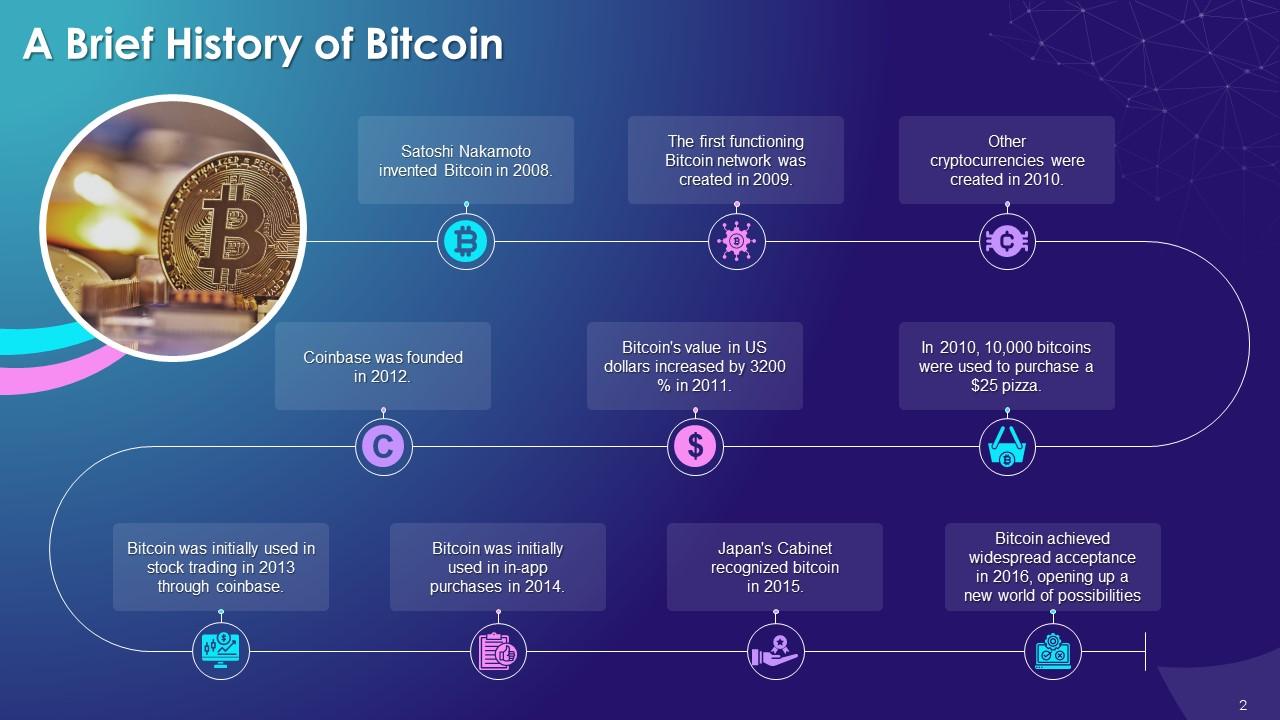
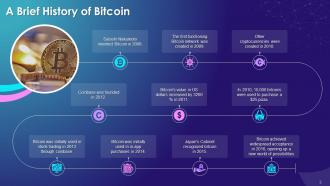
Cette diapositive est une introduction à l'histoire du bitcoin, une crypto-monnaie mondiale aujourd'hui. Nous le remontons à Satoshi Nakamoto qui l'a inventé en 2008 jusqu'à son ascension en tant que principal sujet de discussion sur le marché des services financiers. Au fil du temps, son utilisation a gagné en popularité.

Diapositive 3

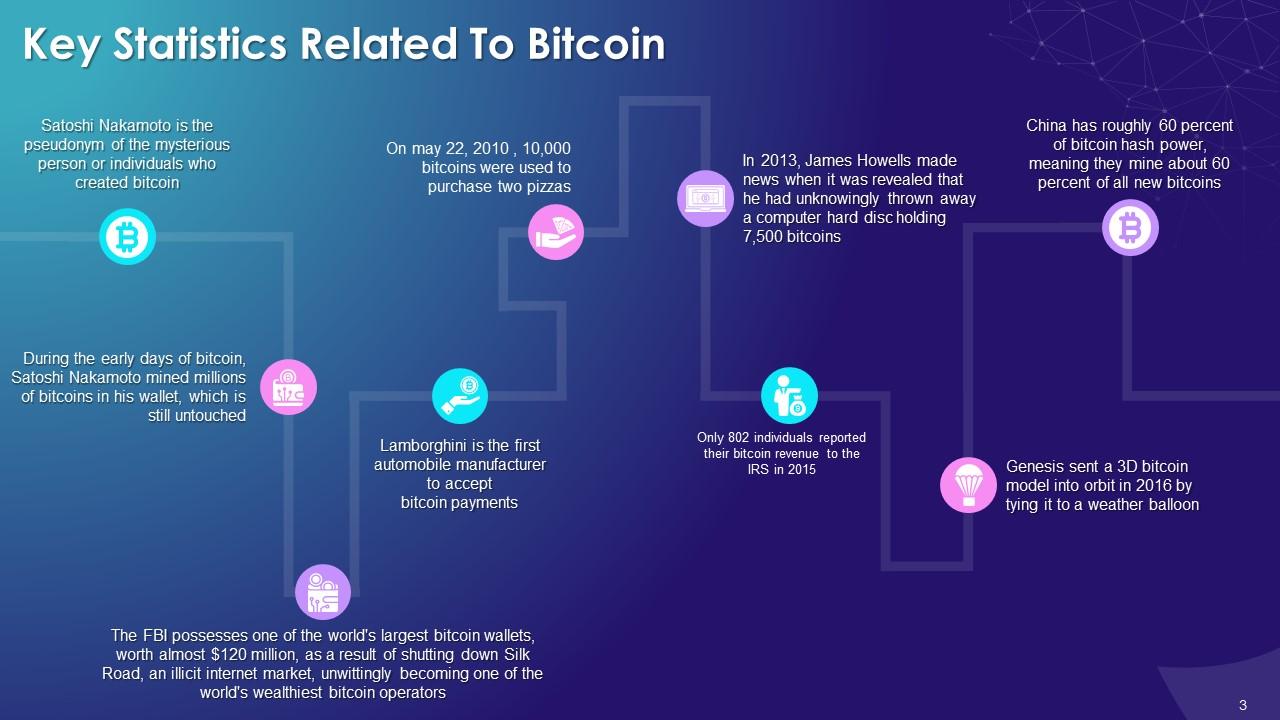
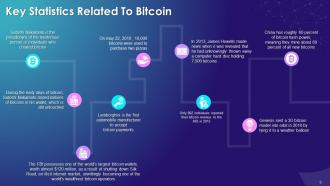
Cette diapositive présente des statistiques liées au bitcoin . Satoshi Nakamoto est le pseudonyme de la ou des personnes mystérieuses qui ont inventé le bitcoin.
Diapositive 4

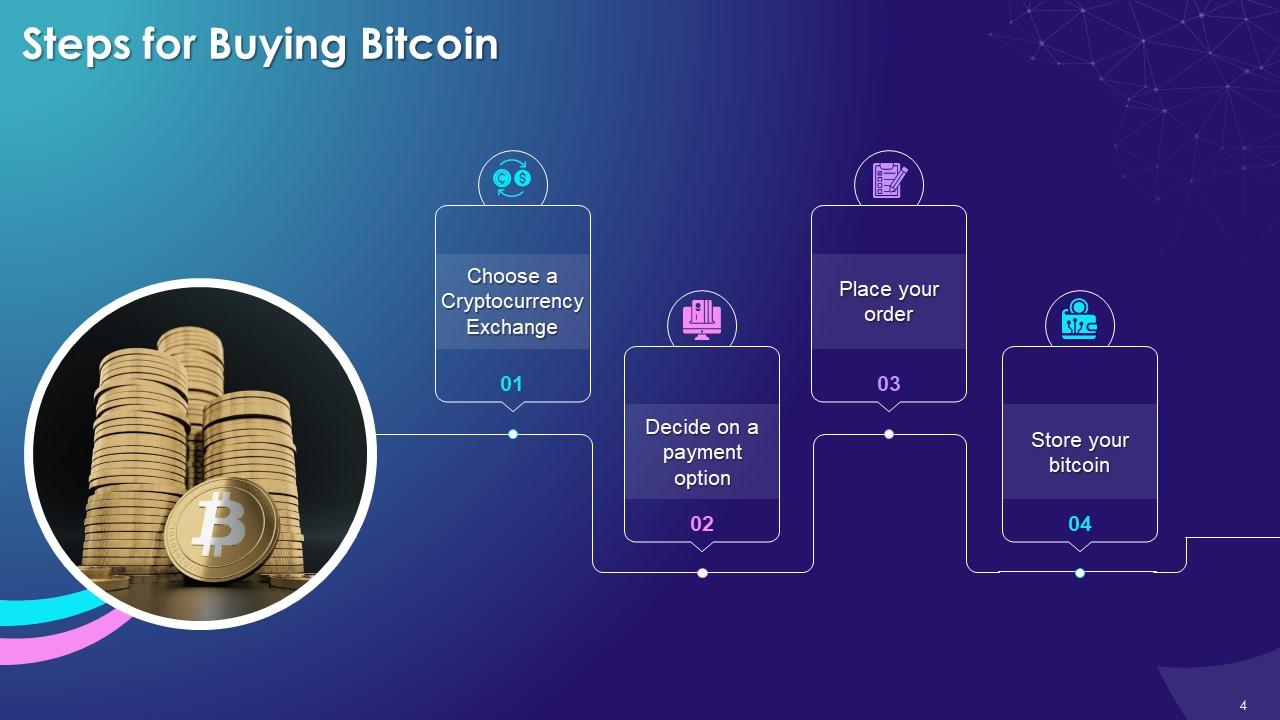
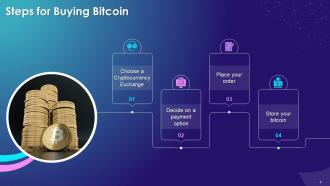
Cette diapositive répertorie quatre étapes importantes pour acheter du bitcoin. Cela commence par le choix d'un échange de crypto-monnaie ; décider d'une option de paiement. Ensuite, vous passez votre commande, et enfin vous stockez vos bitcoins achetés.
Diapositive 5

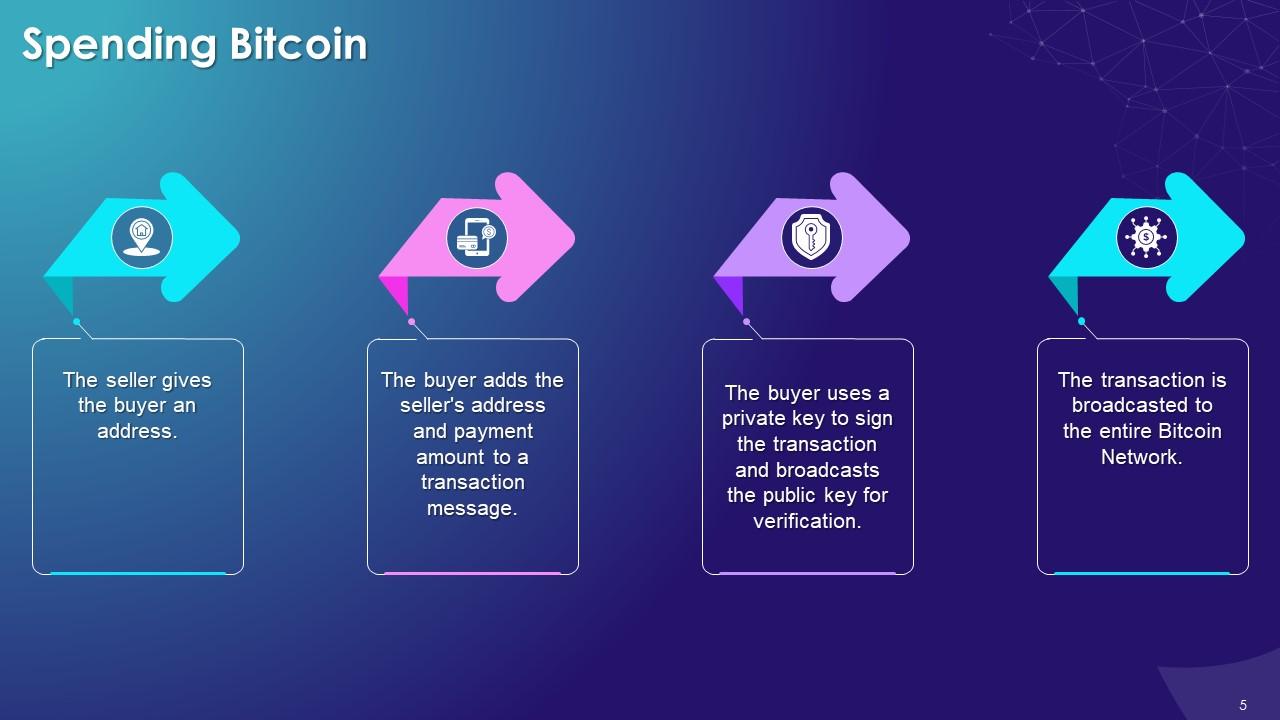
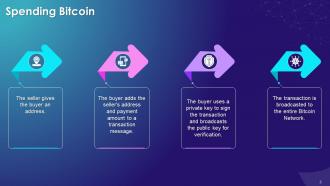
Cette diapositive répertorie plusieurs étapes impliquées dans la vente de bitcoins. A partir du vendeur donnant à l'acheteur une adresse à la transaction diffusée sur l'ensemble du réseau bitcoin.

Diapositive 6

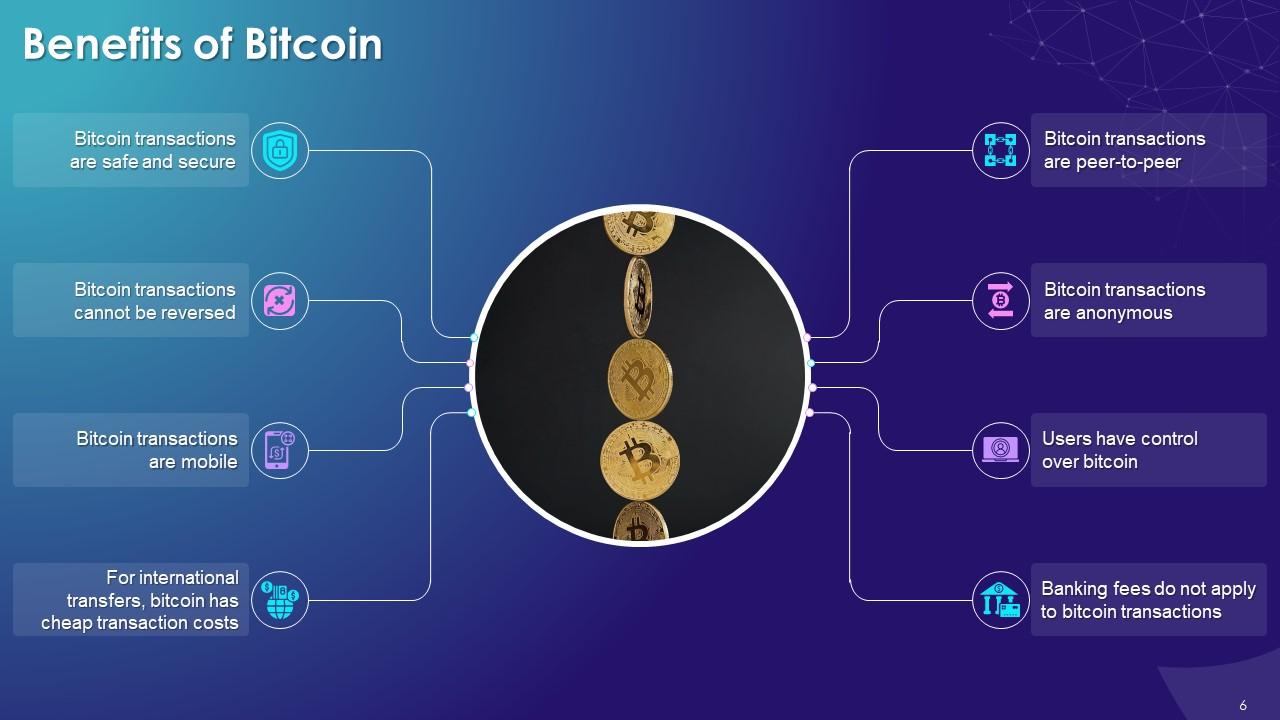
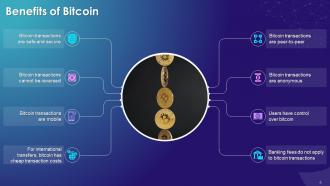
Cette diapositive présente les avantages de l'utilisation du bitcoin : les transactions Bitcoin sont peer-to-peer, anonymes, irréversibles, sûres et sécurisées, et bien plus encore.

Diapositive 7

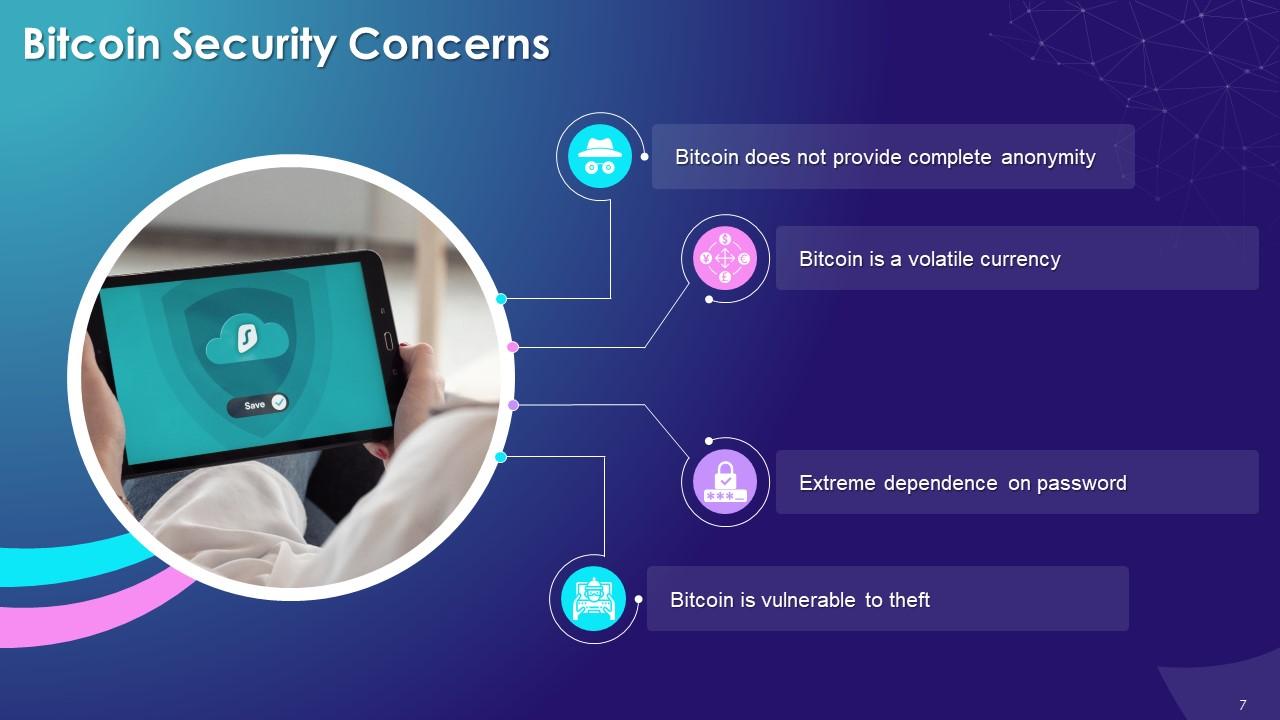
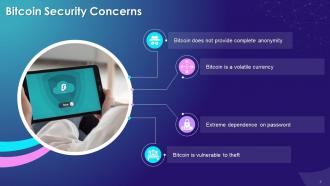
Cette diapositive décrit que bien que la technologie bitcoin soit principalement sûre, il y a des préoccupations qu'il faut connaître avant d'investir. Bitcoin n'est pas anonyme, ses prix peuvent être volatils, sa dépendance extrême au mot de passe est gênante et les portefeuilles de crypto-monnaie sont vulnérables au vol.

Diapositive 8

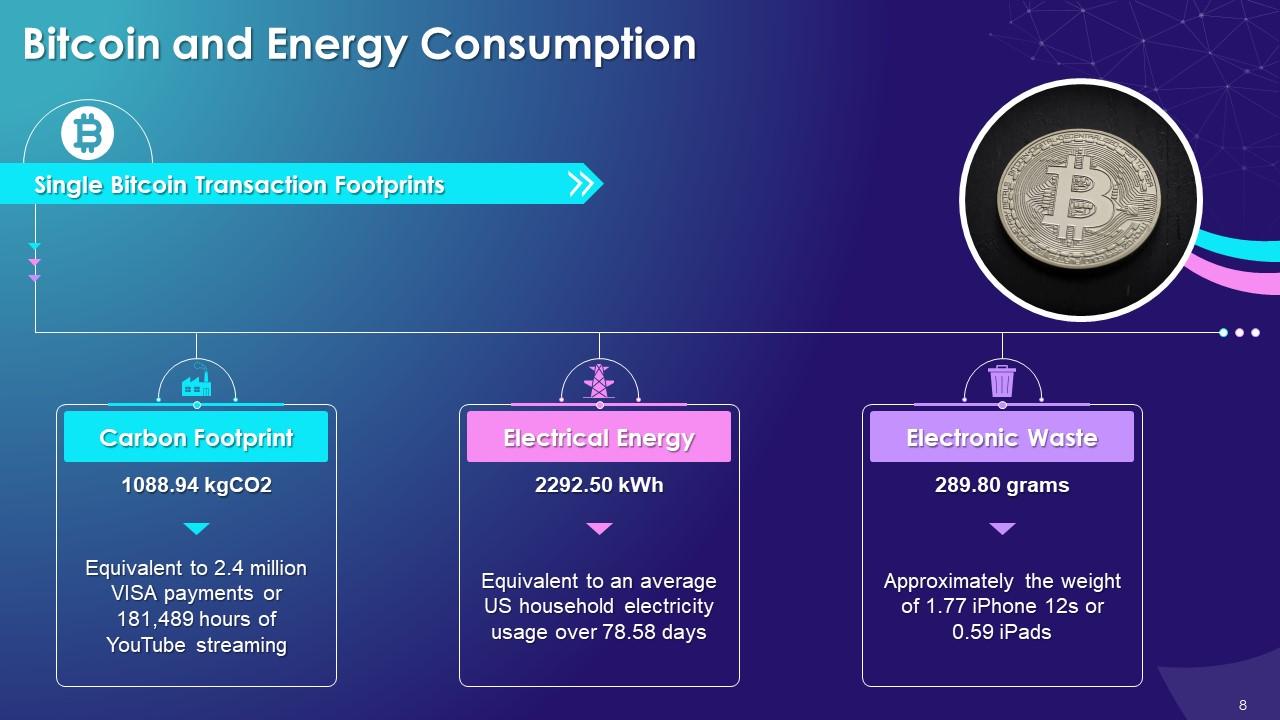
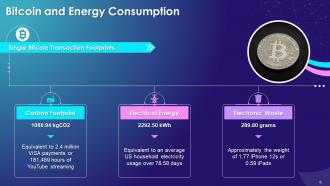
Cette diapositive indique que l'empreinte carbone résultant des centrales électriques produisant l'électricité nécessaire pour extraire un seul bitcoin est en train de devenir une préoccupation environnementale majeure. Une seule transaction bitcoin consomme 2 292,5 kilowattheures d'électricité ; cela peut faire fonctionner un ménage américain moyen pendant plus de 78 jours.

Diapositive 9

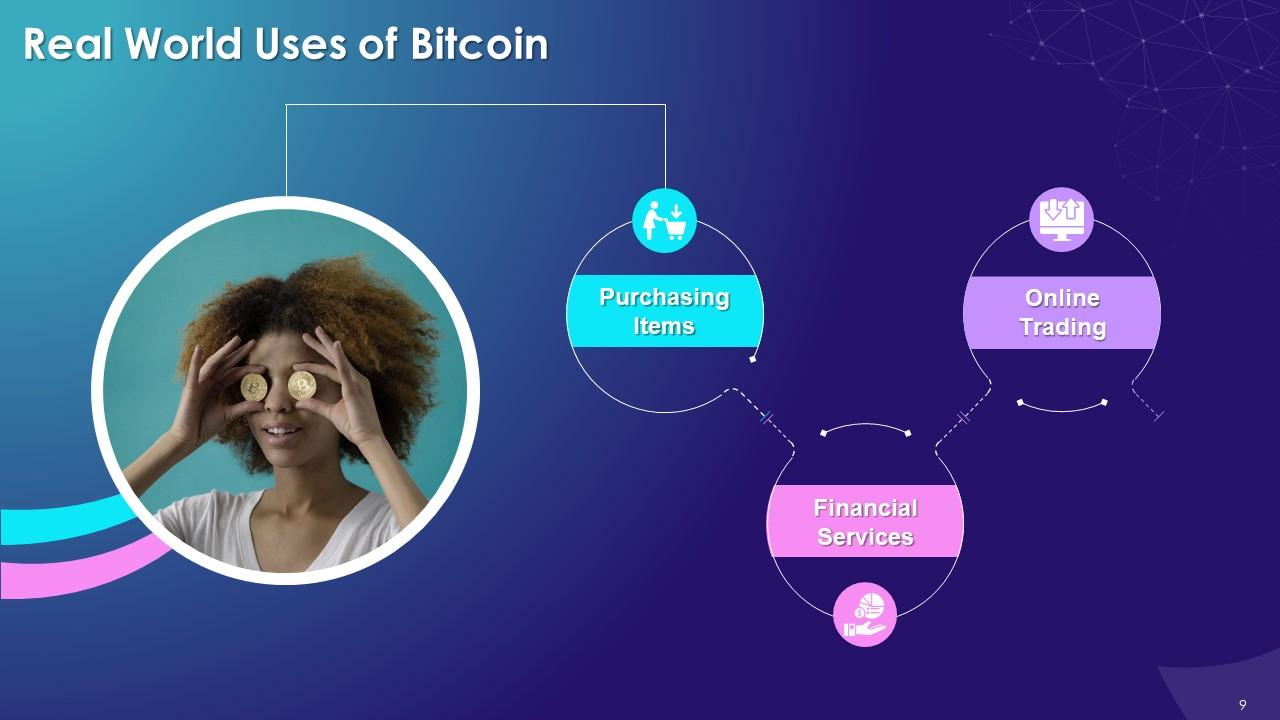
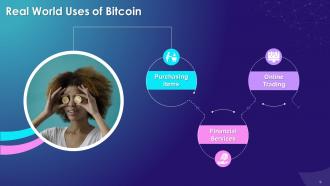
Cette diapositive répertorie les cas d'utilisation réels du bitcoin, tels que l'achat d'articles, les services financiers, le commerce en ligne et le moyen d'échange.

Remarques de l'instructeur :

  • Achat d'articles : les bitcoins peuvent être utilisés pour acheter pratiquement tout et n'importe quoi (produits ou services) dans le monde réel, de l'immobilier à la restauration rapide. Plusieurs entreprises, comme Subway, Microsoft et Starbucks, acceptent les bitcoins
  • Services financiers : les crypto-monnaies peuvent également être utilisées comme portefeuilles pour stocker et suivre l'argent dans de nombreuses devises. En plus de garder de l'argent, le bitcoin peut être utilisé pour suivre les activités financières, assurer la conformité et réduire le risque de fraude ou de vol.
  • Commerce en ligne : Les plateformes de commerce en ligne vous permettent d'acheter ou de vendre des bitcoins, de les échanger contre n'importe quelle dénomination et de les échanger contre d'autres crypto-monnaies. Investir dans le bitcoin peut être considéré comme une excellente occasion d'augmenter les rendements de l'investisseur ou de l'entreprise

FAQs for Demystifying Bitcoin A Popular

Bitcoin's price volatility stems from market sentiment, regulatory announcements, institutional adoption rates, macroeconomic factors, and trading volume fluctuations. These dynamics create both opportunities and challenges for investors, with many financial institutions finding that Bitcoin's volatility, while presenting risks, also enables significant portfolio diversification and hedging opportunities in an increasingly digital financial landscape.

Bitcoin mining significantly impacts the environment through high energy consumption from computational processes, contributing to carbon emissions when powered by fossil fuels. However, sustainable alternatives like proof-of-stake consensus mechanisms, renewable energy mining operations, and carbon offset programs are increasingly being adopted, with many mining companies transitioning to solar and wind power, ultimately delivering reduced environmental footprints while maintaining blockchain security.

Bitcoin operates on a decentralized blockchain network without central authority control, while fiat currencies are government-issued and regulated by central banks. These fundamental differences enable Bitcoin to offer global accessibility, limited supply constraints, and peer-to-peer transactions, while fiat currencies provide stability, widespread merchant acceptance, and established regulatory frameworks for traditional financial institutions.

Bitcoin wallets store private keys that enable cryptocurrency transactions, functioning through cryptographic signatures that verify ownership without revealing sensitive information. Best practices include using hardware wallets for large amounts, enabling two-factor authentication, creating secure backups of recovery phrases, and keeping software updated, with many financial institutions finding that cold storage significantly reduces security risks.

Bitcoin faces varying regulatory frameworks globally, from complete bans in China and India to progressive acceptance in El Salvador and Switzerland, with most countries developing classification systems for taxation and anti-money laundering compliance. These diverse approaches create operational complexity for businesses and investors, while countries increasingly recognize that balanced regulation can attract blockchain innovation and investment, ultimately delivering competitive advantage in the digital economy landscape.

Bitcoin adoption has influenced global finance by accelerating digital payment innovations, prompting central bank digital currency development, and creating new asset classes for institutional investors. While traditional banks initially resisted, many financial institutions now offer cryptocurrency services, with countries like El Salvador integrating Bitcoin nationally, ultimately driving financial inclusion and cross-border transaction efficiency.

Bitcoin exchanges serve as essential marketplaces where users buy, sell, and trade cryptocurrencies, providing liquidity, price discovery, and secure storage solutions. These platforms streamline market access by connecting buyers with sellers, facilitating institutional adoption, and offering advanced trading tools, with many financial institutions finding that exchanges enable seamless cryptocurrency integration into traditional portfolios.

Individuals use Bitcoin for everyday transactions through digital wallets, payment apps like BitPay, prepaid debit cards, and peer-to-peer transfers. Major retailers including Microsoft, Overstock, AT&T, and numerous restaurants, travel services, and e-commerce platforms accept Bitcoin payments, with many businesses finding that cryptocurrency options attract tech-savvy customers while reducing traditional payment processing fees.

CBDCs present both challenges and opportunities for Bitcoin, potentially creating regulatory pressure, transaction competition, and increased government monetary control while simultaneously validating digital currency concepts. While CBDCs offer centralized stability and regulatory compliance, Bitcoin's decentralized nature, limited supply, and censorship resistance continue attracting investors seeking alternative stores of value, ultimately positioning both currencies for different market segments.

Bitcoin's perception has evolved from skeptical curiosity about a niche digital experiment to mainstream recognition as a legitimate asset class and store of value. While early adopters faced regulatory uncertainty and volatility concerns, major corporations, financial institutions, and even governments now increasingly embrace Bitcoin for portfolio diversification, inflation hedging, and payment innovation, ultimately delivering broader market acceptance.

Common Bitcoin misconceptions include believing it's completely anonymous, environmentally unsustainable, primarily used for illegal activities, too volatile for legitimate business use, and technically too complex for mainstream adoption. While Bitcoin presents both challenges and opportunities, many financial institutions, payment processors, and investment firms are finding that proper implementation delivers enhanced transaction transparency, reduced intermediary costs, and strategic portfolio diversification in an increasingly digital economy.

Investors can assess Bitcoin's long-term viability by analyzing institutional adoption rates, regulatory developments, network security metrics, correlation with traditional assets, and macroeconomic factors like inflation. Through evaluating adoption by major corporations and financial institutions, monitoring hash rate stability, and tracking regulatory clarity across jurisdictions, investors gain comprehensive insights into Bitcoin's evolving role as digital gold in diversified portfolios.

**INPUT**: What are the technological advancements that could enhance Bitcoin's scalability? **OUTPUT**: Bitcoin scalability enhancements include Lightning Network, Segregated Witness, sidechains, sharding protocols, and layer-two solutions. These technologies streamline transaction processing by enabling off-chain settlements, reducing network congestion, and facilitating micropayments, with many financial institutions finding that strategic implementation delivers faster processing speeds and significantly lower transaction costs. --- **Word count: 52 words**

Bitcoin forks occur when developers modify the blockchain's protocol rules, creating either soft forks (backward-compatible updates) or hard forks (incompatible changes requiring network consensus). These modifications can enhance security, scalability, and functionality, with major forks like Bitcoin Cash demonstrating how network disagreements ultimately create new cryptocurrencies, enabling innovation while sometimes fragmenting the community and market value.

Bitcoin users can protect themselves through secure wallet storage, two-factor authentication, avoiding suspicious links, verifying exchange legitimacy, and never sharing private keys or seed phrases. Through hardware wallets and reputable platforms, investors significantly reduce risks while maintaining portfolio security, with many financial institutions finding that comprehensive security protocols ultimately deliver greater confidence and long-term investment protection.

Ratings and Reviews

90% of 100
Review Form
Write a review
Most Relevant Reviews
  1. 100%

    by Damion Ford

    The templates are easy to get, and the chat customer support is excellent. 
  2. 80%

    by Cristopher Cole

    I discovered this website through a google search, the services matched my needs perfectly and the pricing was very reasonable. I was thrilled with the product and the customer service. I will definitely use their slides again for my presentations and recommend them to other colleagues.

2 Item(s)

per page: