


Developing Anti Money Laundering And Transaction Monitoring System Powerpoint Presentation Slides
Transaction monitoring refers to the observation of customer transactions, including analyzing historical and present details, behaviors, and patterns. It assists financial institutions to know their customer and take lawful against any money laundering or financial crime risk by rapidly assessing risk levels. The PPT Developing Anti Money Laundering and Transaction Monitoring System slides provide information about the importance, benefits, process flow, and industrial statistics of transaction monitoring along with its implementation timeline. It also provides a comparative analysis of traditional and automated transaction monitoring approaches. This PowerPoint presentation offers strategies to enhance transaction monitoring systems which can help financial institutions and companies to reduce financial crimes, frauds, risks, and money laundering activities. These are namely customer segmentation, suspicious activity reporting SAR, anti-money laundering strategies, threshold management, behavioral analytics, alerts management, know your customer KYC, MIS reporting, transaction monitoring tools, etc. The complete deck provides details about the roles, responsibilities, training plan, communication plan, etc. of the financial security department. Lastly, this presentation showcases KPI dashboards, metrics, impact analysis, costs, etc. related to transaction monitoring. Download this deck now.

















































You must be logged in to download this presentation.


Do you want to remove this product from your favourites?
PowerPoint presentation slides
Deliver an informational PPT on various topics by using this Developing Anti Money Laundering And Transaction Monitoring System Powerpoint Presentation Slides. This deck focuses and implements best industry practices, thus providing a birds-eye view of the topic. Encompassed with sixty seven slides, designed using high-quality visuals and graphics, this deck is a complete package to use and download. All the slides offered in this deck are subjective to innumerable alterations, thus making you a pro at delivering and educating. You can modify the color of the graphics, background, or anything else as per your needs and requirements. It suits every business vertical because of its adaptable layout.

People who downloaded this PowerPoint presentation also viewed the following :
Content of this Powerpoint Presentation
Slide 1: This slide presents title Developing Anti Money Laundering and Transaction Monitoring System.
Slide 2: This slide presents title Agenda.
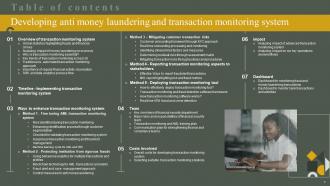
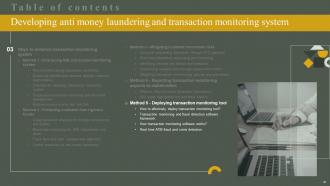
Slide 3: Table of contents This slide exhibit table of content.
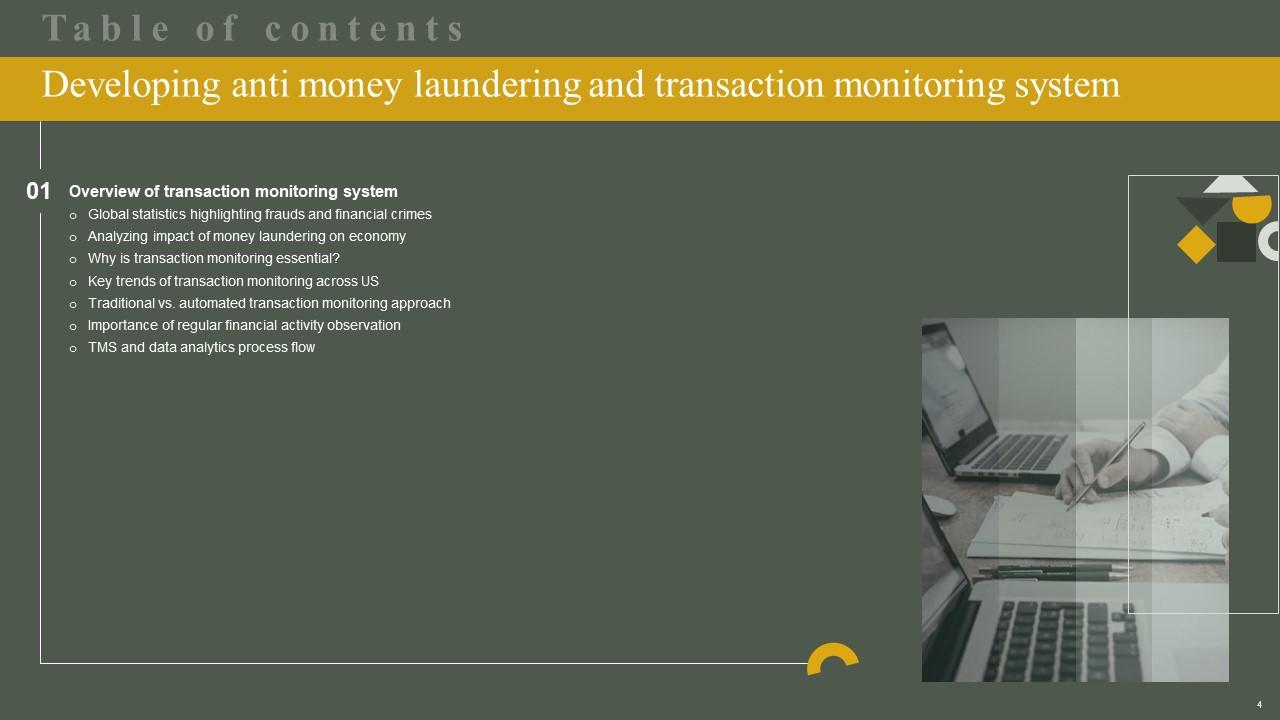
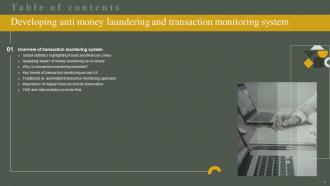
Slide 4: Table of contents This slide exhibit table of content- Overview of transaction monitoring system.
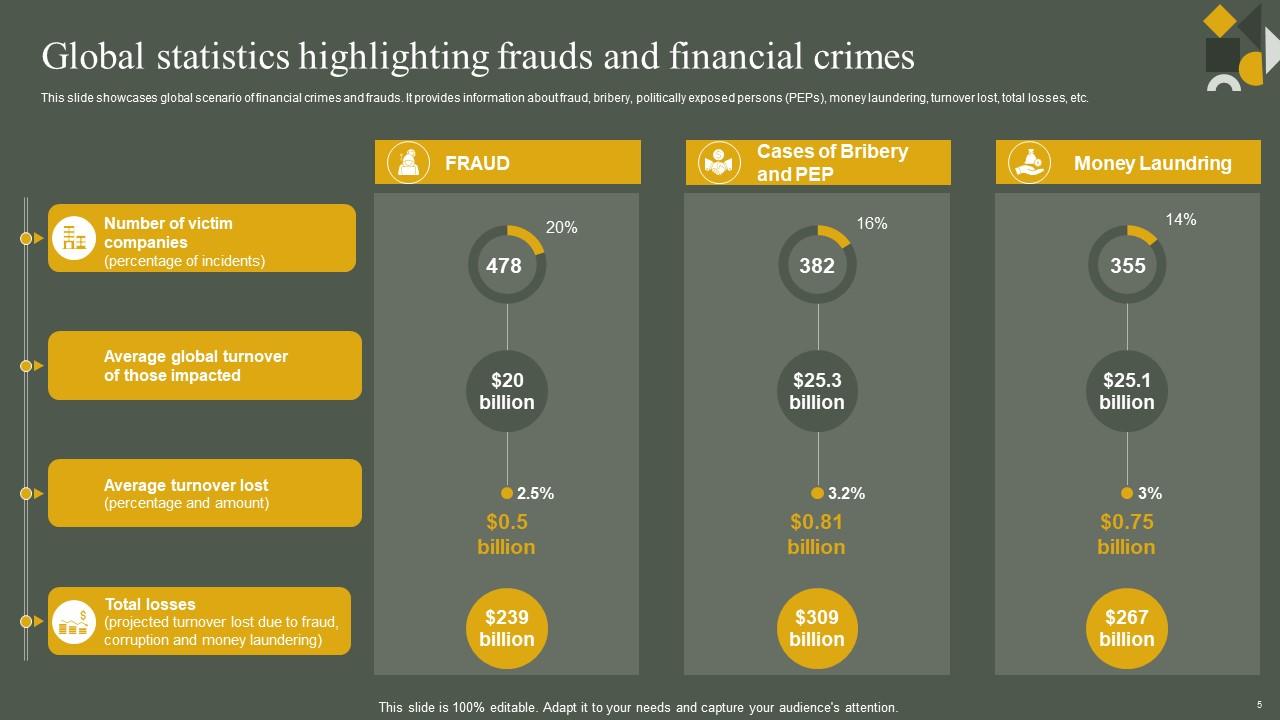
Slide 5: This slide showcases global scenario of financial crimes and frauds.
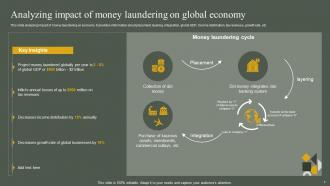
Slide 6: This slide analyzing impact of money laundering on economy.
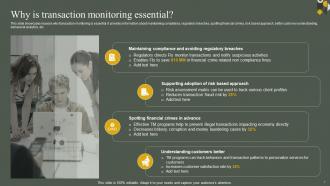
Slide 7: This slide showcases reasons why transaction monitoring is essential.
Slide 8: This slide showcases transaction monitoring landscape of united states (US).
Slide 9: This slide showcases difference between traditional and automated transaction monitoring method.
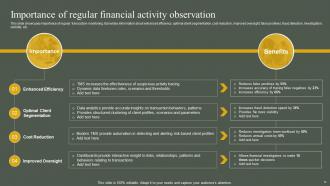
Slide 10: This slide showcases importance of regular transaction monitoring.
Slide 11: This slide represents transaction monitoring system process flow.
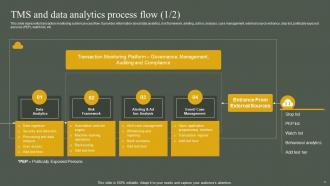
Slide 12: This slide showcases transaction monitoring system (TMS) and data analytics process flow.
Slide 13: This slide exhibit table of content: Timeline - Implementing transaction monitoring system.
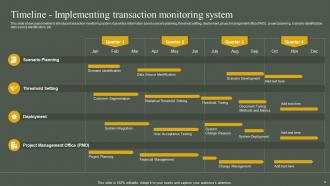
Slide 14: This slide showcases timeline to introduce transaction monitoring system.
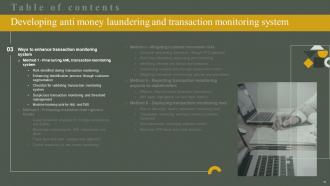
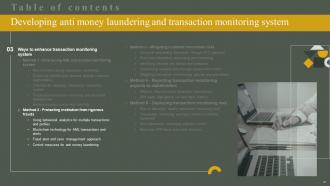
Slide 15: Table of contents This slide exhibit table of content- Ways to enhance transaction monitoring system.
Slide 16: This slide showcases risks identified during transaction monitoring.
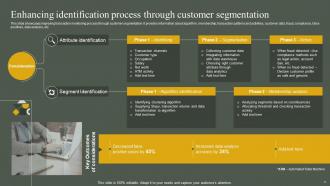
Slide 17: This slide showcases improving transaction monitoring process through customer segmentation.
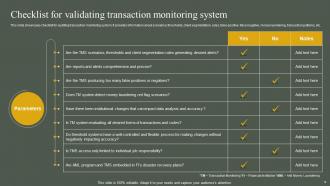
Slide 18: This slide showcases checklist for auditing transaction monitoring system.
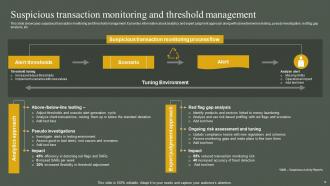
Slide 19: This slide showcases suspicious transaction monitoring and threshold management.
Slide 20: This slide shows machine learning cycle for checking financial transactions.
Slide 21: This slide exhibit table of content: Method 2 - Protecting institution from rigorous frauds.
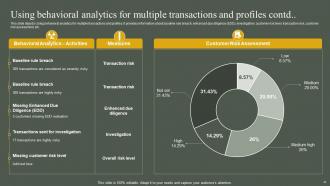
Slide 22: The following slide illustrates usage of behavioral analytics for multiple transactions and profiles.
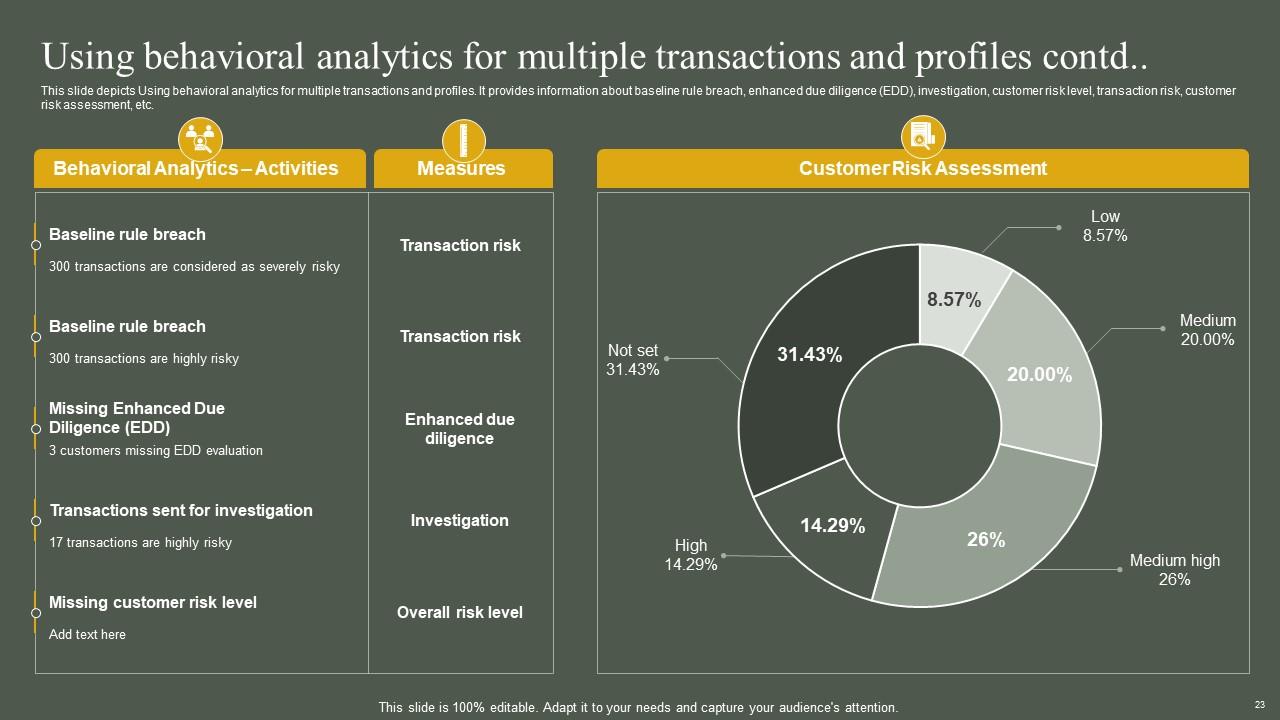
Slide 23: This slide depicts Using behavioral analytics for multiple transactions and profiles.
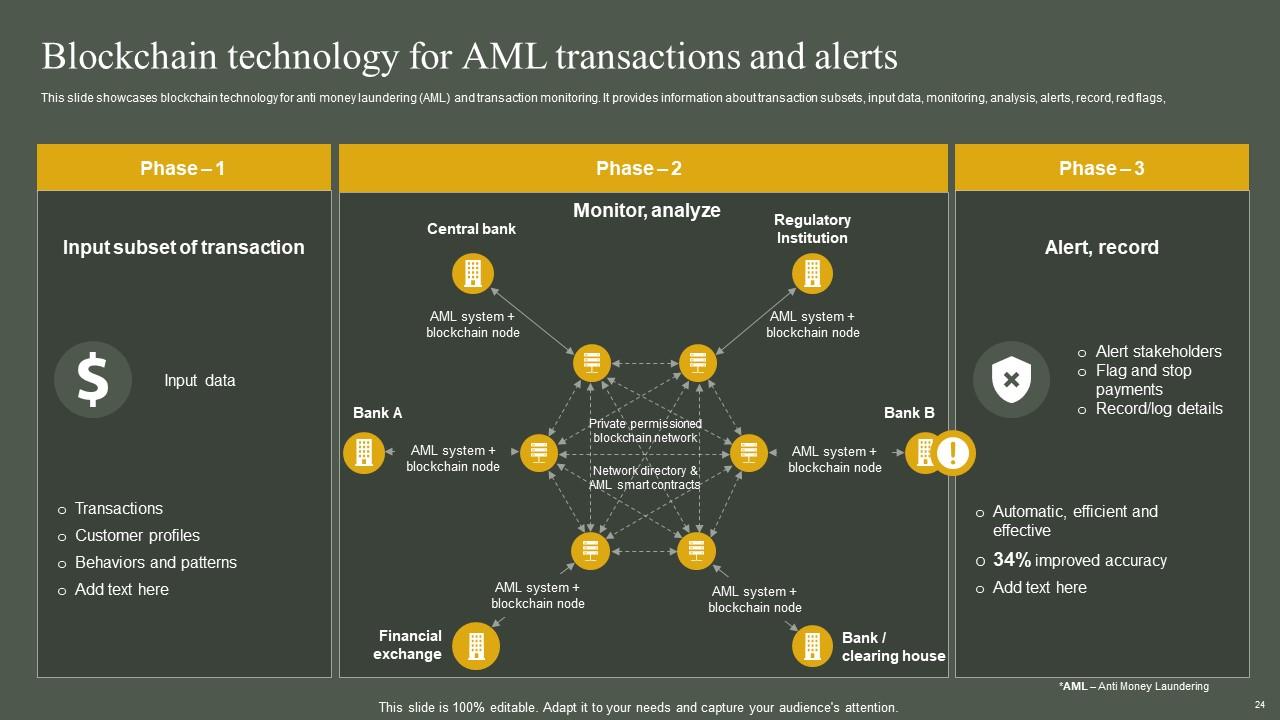
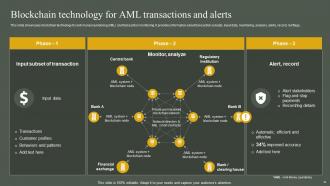
Slide 24: This slide showcases blockchain technology for anti money laundering (AML) and transaction monitoring.
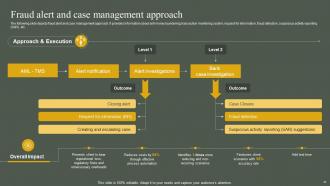
Slide 25: The following slide depicts fraud alert and case management approach.
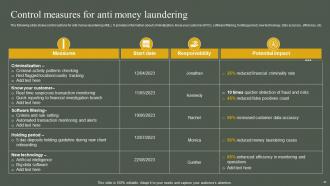
Slide 26: The following slide shows control actions for anti money laundering (AML).
Slide 27: This slide exhibit table of content: Method 3 – Mitigating customer transaction risks.
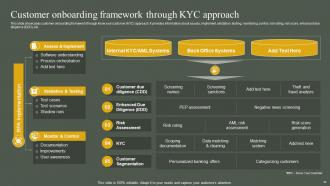
Slide 28: This slide showcases customer onboarding framework through know your customer (KYC) approach.
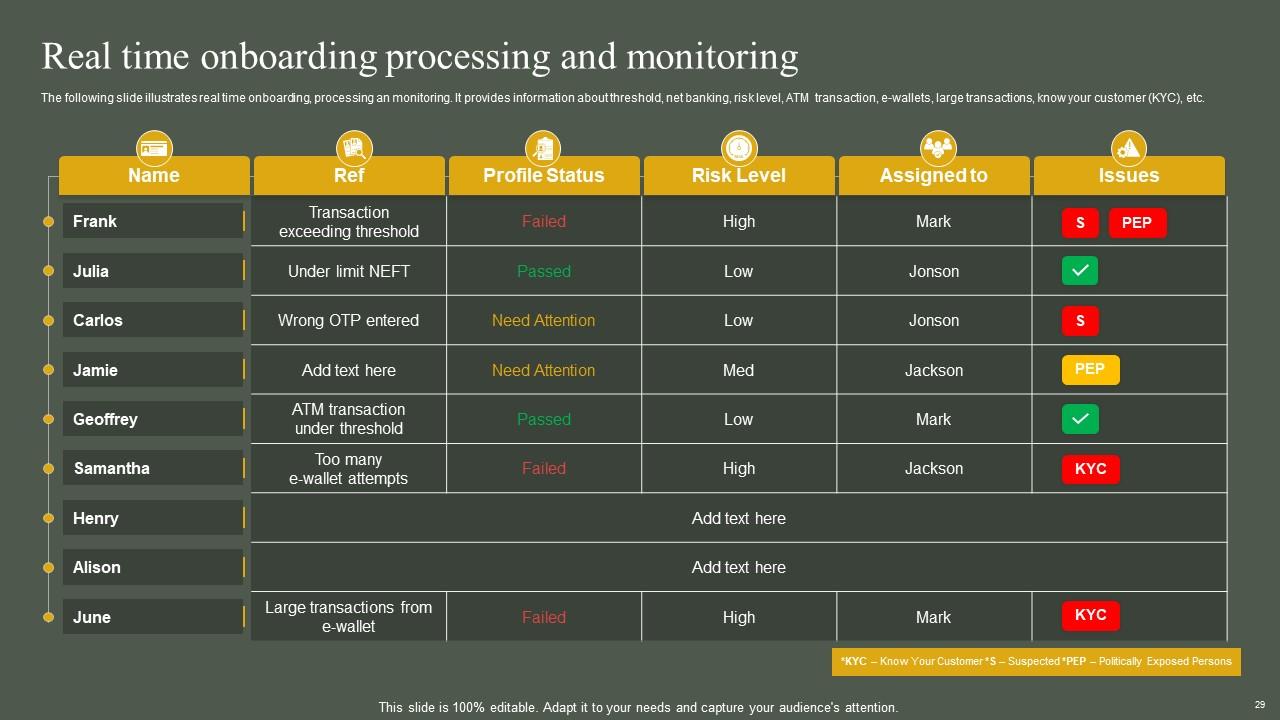
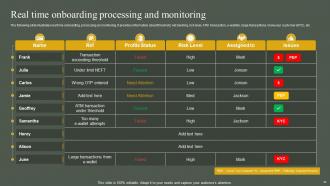
Slide 29: The following slide illustrates real time onboarding, processing an monitoring.
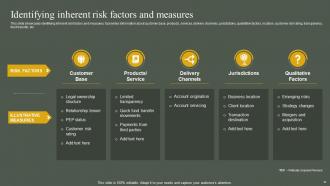
Slide 30: This slide showcases identifying inherent risk factors and measures.
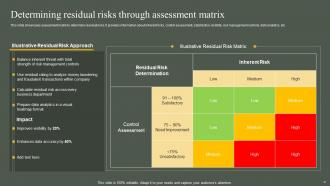
Slide 31: This slide showcases assessment matrix to determine residual risks.
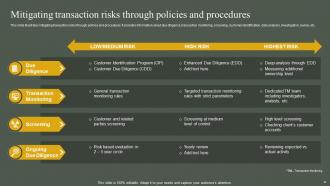
Slide 32: This slide illustrates mitigating transaction risks through policies and procedures.
Slide 33: This slide exhibit table of content: Method 4 - Reporting transaction monitoring aspects to stakeholders.
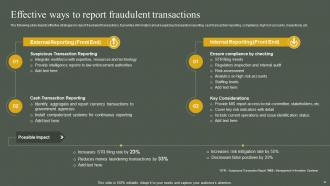
Slide 34: The following slide depicts effective strategies to report fraudulent transactions.
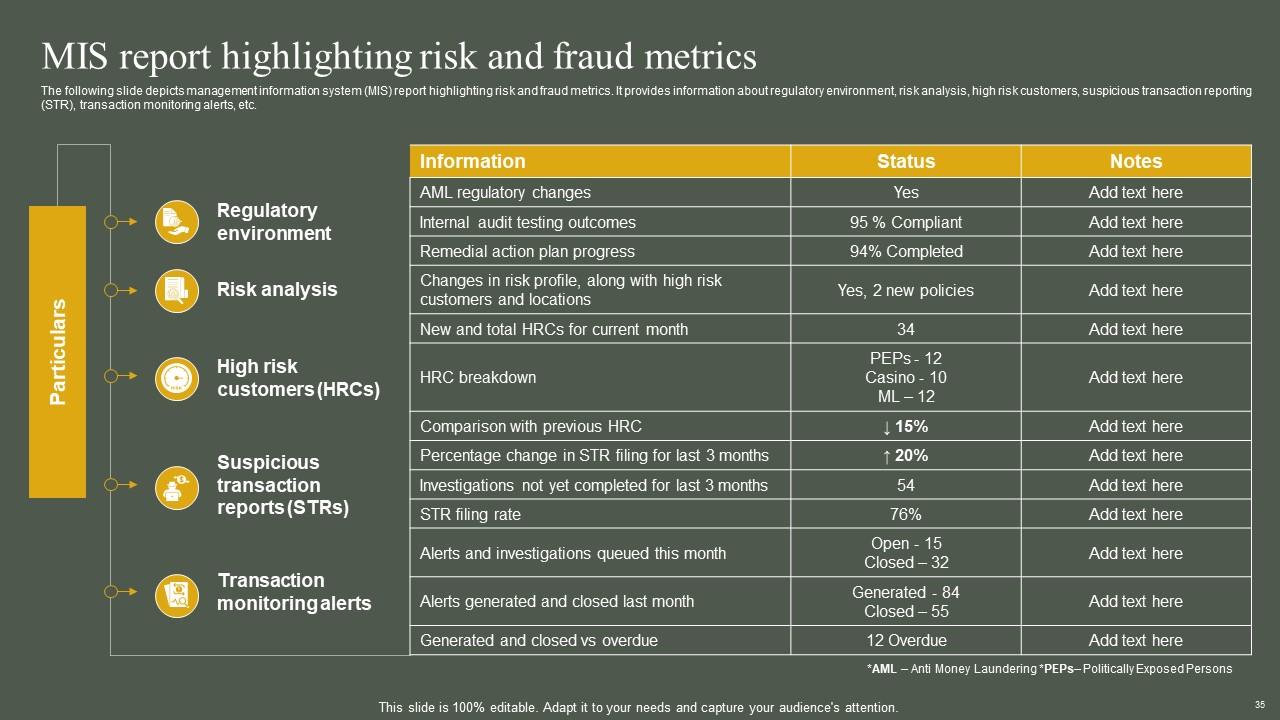
Slide 35: The following slide depicts management information system (MIS) report highlighting risk and fraud metrics.
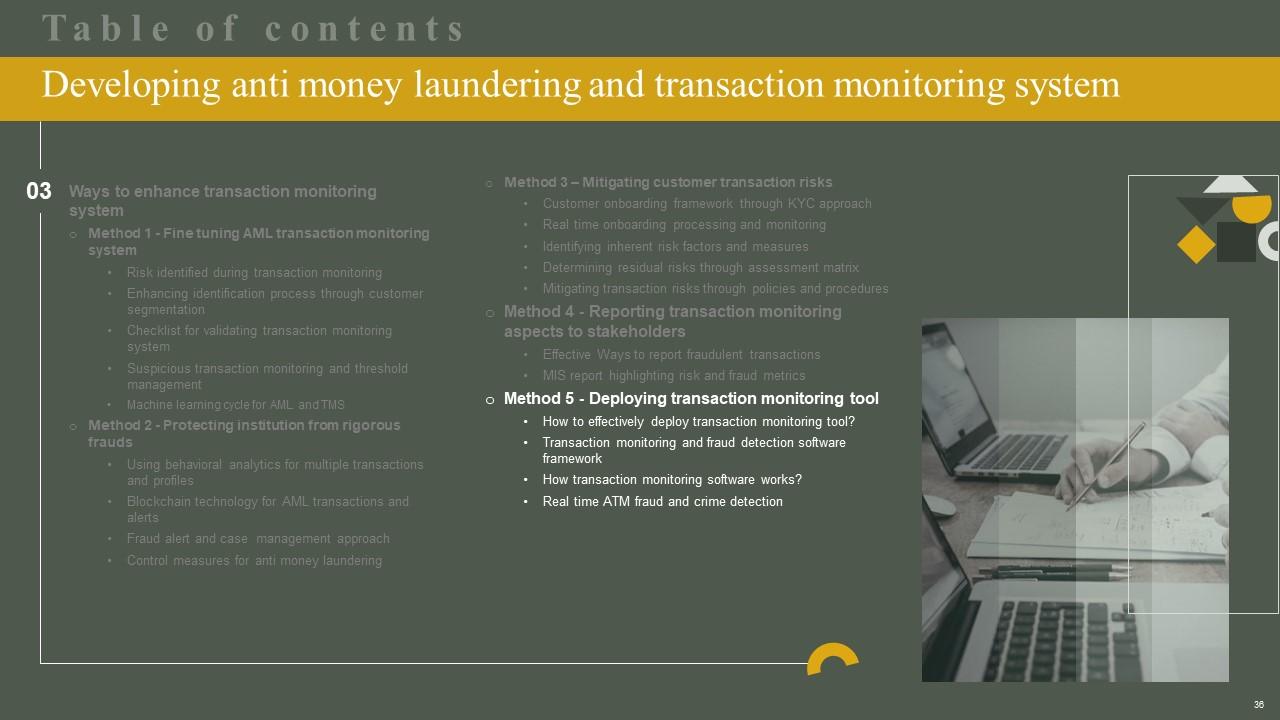
Slide 36: This slide exhibit table of content: Method 5 - Deploying transaction monitoring tool.
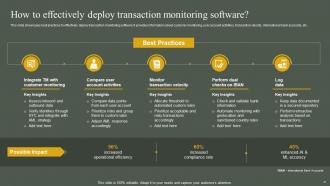
Slide 37: This slide showcases best practices to effectively deploy transaction monitoring software.
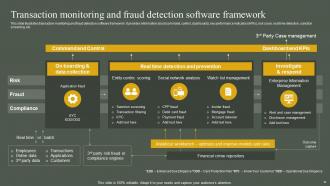
Slide 38: This slide illustrates transaction monitoring and fraud detection software framework.
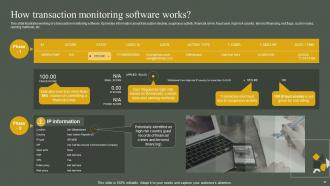
Slide 39: This slide illustrates working of a transaction monitoring software.
Slide 40: This slide illustrates working of a transaction monitoring software.
Slide 41: This slide illustrates real time crime and fraud detection process flow for ATMS.
Slide 42: This slide exhibit table of content- Team.
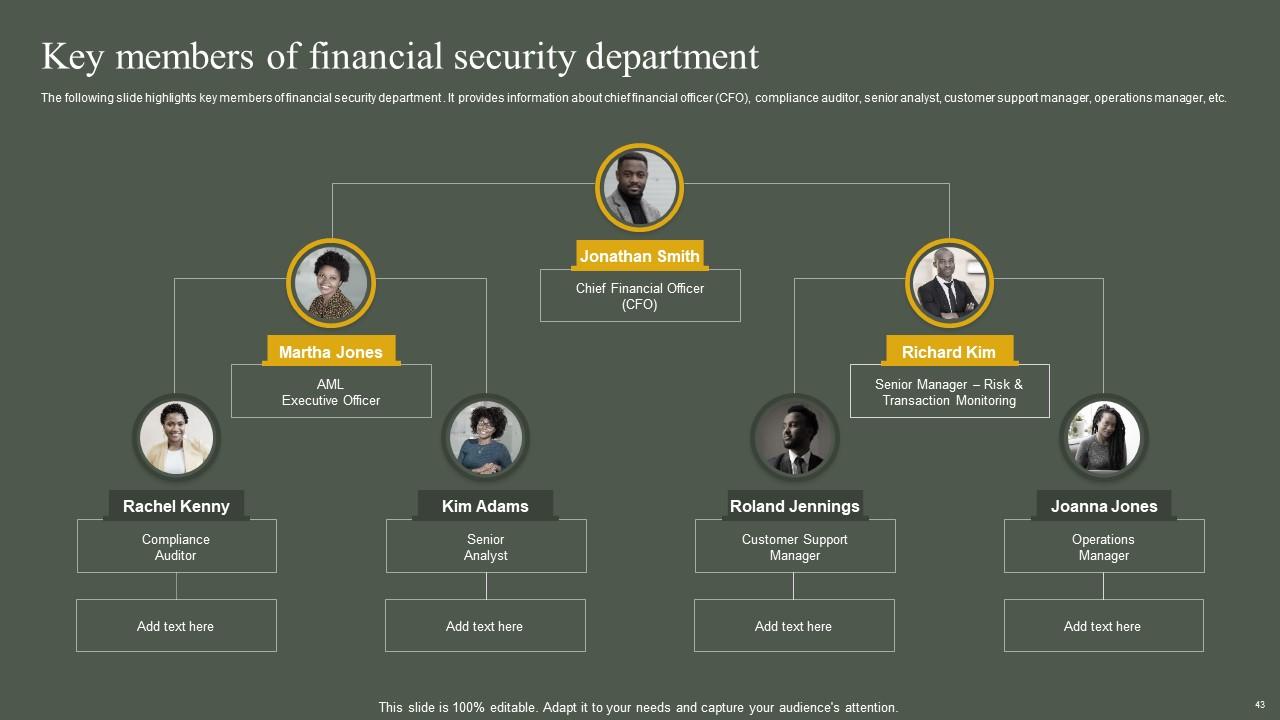
Slide 43: The following slide highlights key members of financial security department .
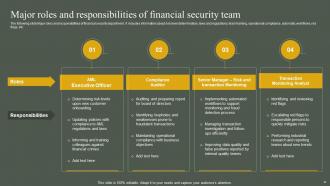
Slide 44: The following slide Major roles and responsibilities of financial security department.
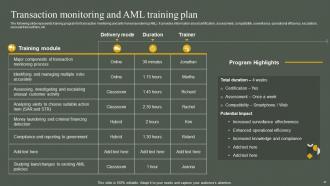
Slide 45: The following slide represents training program for transaction monitoring and anti money laundering (AML).
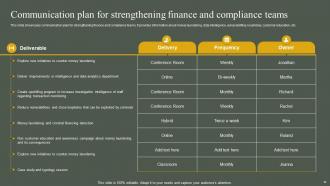
Slide 46: This slide showcases communication plan for strengthening finance and compliance teams.
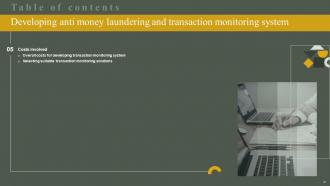
Slide 47: This slide exhibit table of content- Costs involved.
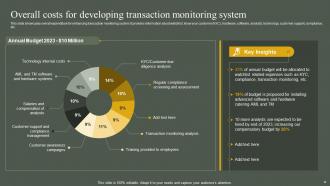
Slide 48: This slide showcases overall expenditure for enhancing transaction monitoring system.
Slide 49: This slide showcases selection of suitable software for effective transaction monitoring.
Slide 50: This slide exhibit table of content- Impact
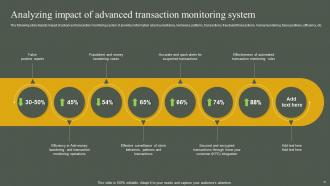
Slide 51: The following slide depicts impact of advanced transaction monitoring system.
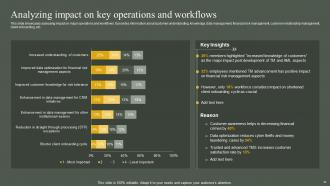
Slide 52: This slide showcases assessing impact on major operations and workflows.
Slide 53: This slide exhibit table of content- Dashboard.
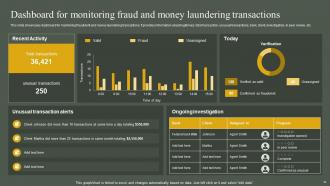
Slide 54: This slide showcases dashboard for monitoring fraudulent and money laundering transactions.
Slide 55: This slide showcases dashboard to review bank transactions and activities.
Slide 56: This is the icons slide.
Slide 57: This slide presents title for additional slides.
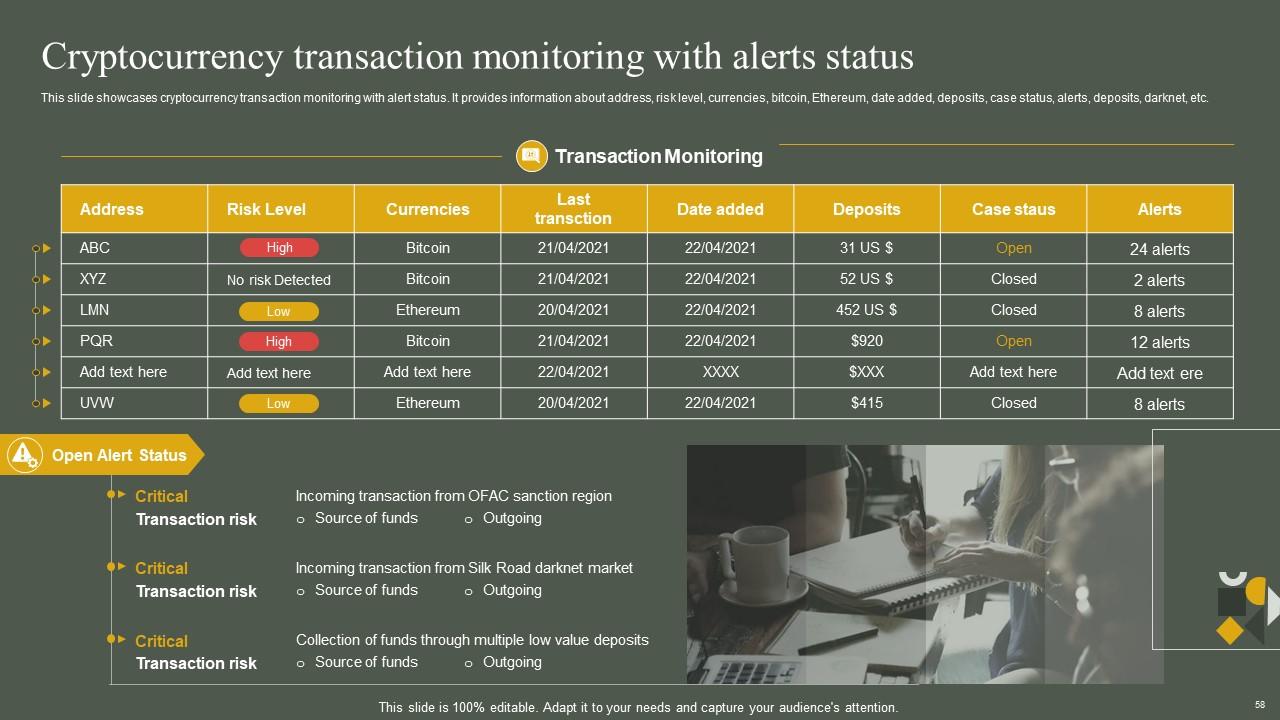
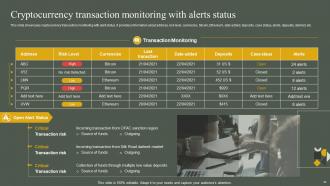
Slide 58: This slide showcases cryptocurrency transaction monitoring with alert status.
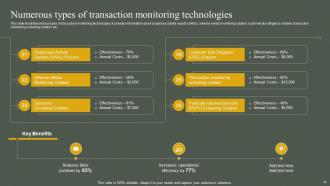
Slide 59: This slide illustrates various types of transaction monitoring technologies.
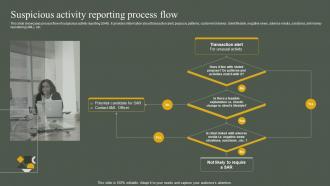
Slide 60: This slide showcases process flow of suspicious activity reporting (SAR).
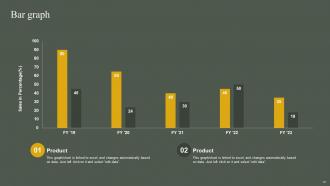
Slide 61: This slide displays yearly bar graph for different products.
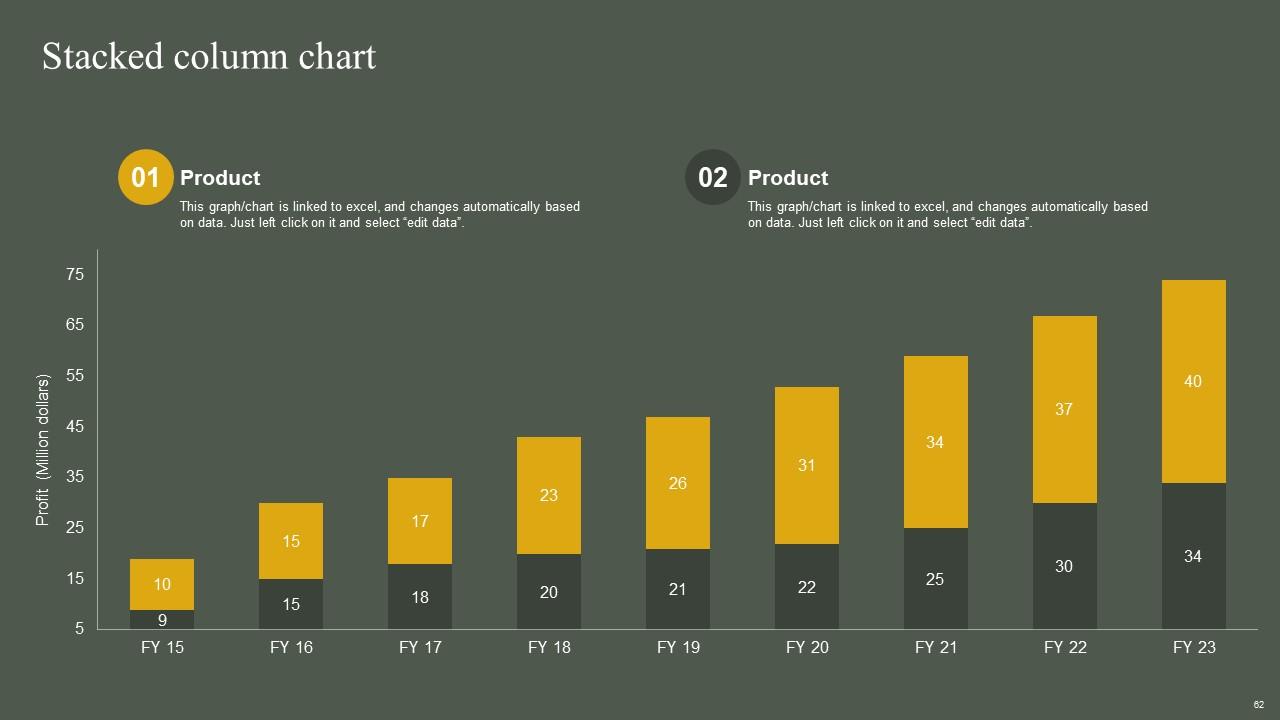
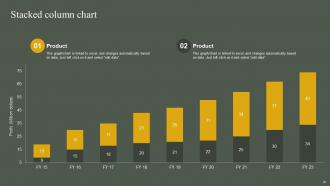
Slide 62: This slide display Stacked column chart to showcase profit for two products.
Slide 63: This slide shows details of team members like name, designation, etc.
Slide 64: This slide shows about your company, target audience and its client's values.
Slide 65: This slide depicts posts for past experiences of clients.
Slide 66: This slide depicts 30-60-90 days plan for projects.
Slide 67: This is thank you slide & contains contact details of company like office address, phone no., etc.
Developing Anti Money Laundering And Transaction Monitoring System Powerpoint Presentation Slides with all 72 slides:
Use our Developing Anti Money Laundering And Transaction Monitoring System Powerpoint Presentation Slides to effectively help you save your valuable time. They are readymade to fit into any presentation structure.
-
Their templates are super easy to edit and use even for the one like me who is not familiar with PowerPoint. Great customer support.
-
Great templates that you can use in your next keynote or conference. They are perfect for quick and visually-engaging delivery.
