


Desenvolvendo o pipeline de liderança por meio do planejamento de sucessão Slides de apresentação em Powerpoint
Toda organização deseja o plano de sucessão certo para orientar, treinar e preparar seu banco de talentos existente para funções futuras. O planejamento de sucessão é um processo de desenvolvimento de futuros líderes para funções críticas dentro da organização. Nossa apresentação Desenvolvendo Pipeline de Liderança por meio do Planejamento de Sucessão ajudará as organizações que desejam atingir seu objetivo de ter o talento certo no lugar certo e na hora certa por meio de um programa de planejamento de sucessão. A princípio, as empresas podem usar a seção de como agimos para entender seu desempenho passado e os slides, ou seja, as tendências da força de trabalho e por que precisamos investir no planejamento de sucessão para garantir a melhoria no desempenho dos negócios. As organizações podem apresentar, implementar e acompanhar planos de sucessão usando slides como estabelecer metas de negócios futuras, introduzir programas de planejamento de sucessão, identificar posições-chave e planos de desenvolvimento de funcionários, preparar a equipe para funções futuras e monitorar programas de planejamento de sucessão. Por fim, a seção do painel ajudará as organizações a avaliar o desempenho de seus negócios. Baixe este modelo agora.




























-

- Google Slides is a new FREE Presentation software from Google.
- All our content is 100% compatible with Google Slides.
- Just download our designs, and upload them to Google Slides and they will work automatically.
- Amaze your audience with SlideTeam and Google Slides.
-

Want Changes to This PPT Slide? Check out our Presentation Design Services
-

- WideScreen Aspect ratio is becoming a very popular format. When you download this product, the downloaded ZIP will contain this product in both standard and widescreen format.
-

- Some older products that we have may only be in standard format, but they can easily be converted to widescreen.
- To do this, please open the SlideTeam product in Powerpoint, and go to
- Design ( On the top bar) -> Page Setup -> and select "On-screen Show (16:9)” in the drop down for "Slides Sized for".
- The slide or theme will change to widescreen, and all graphics will adjust automatically. You can similarly convert our content to any other desired screen aspect ratio.
Compatible With Google Slides

Get This In WideScreen
You must be logged in to download this presentation.


Do you want to remove this product from your favourites?
Características destes slides de apresentação do PowerPoint:
Esta apresentação completa tem slides PPT em uma ampla gama de tópicos, destacando as principais áreas de suas necessidades de negócios. Possui modelos projetados profissionalmente com recursos visuais relevantes e conteúdo direcionado ao assunto. Este deck de apresentação tem um total de cinquenta e dois slides. Obtenha acesso aos modelos personalizáveis. Nossos designers criaram modelos editáveis para sua conveniência. Você pode editar a cor, o texto e o tamanho da fonte conforme sua necessidade. Você pode adicionar ou excluir o conteúdo, se necessário. Você está a apenas um clique de distância para ter esta apresentação pronta. Clique no botão de download agora.

People who downloaded this PowerPoint presentation also viewed the following :
Conteúdo desta apresentação em Powerpoint
Slide 1 : Este slide exibe o título Desenvolvimento do pipeline de liderança por meio do planejamento de sucessão.
Slide 2 : Este slide exibe o título AGENDA.
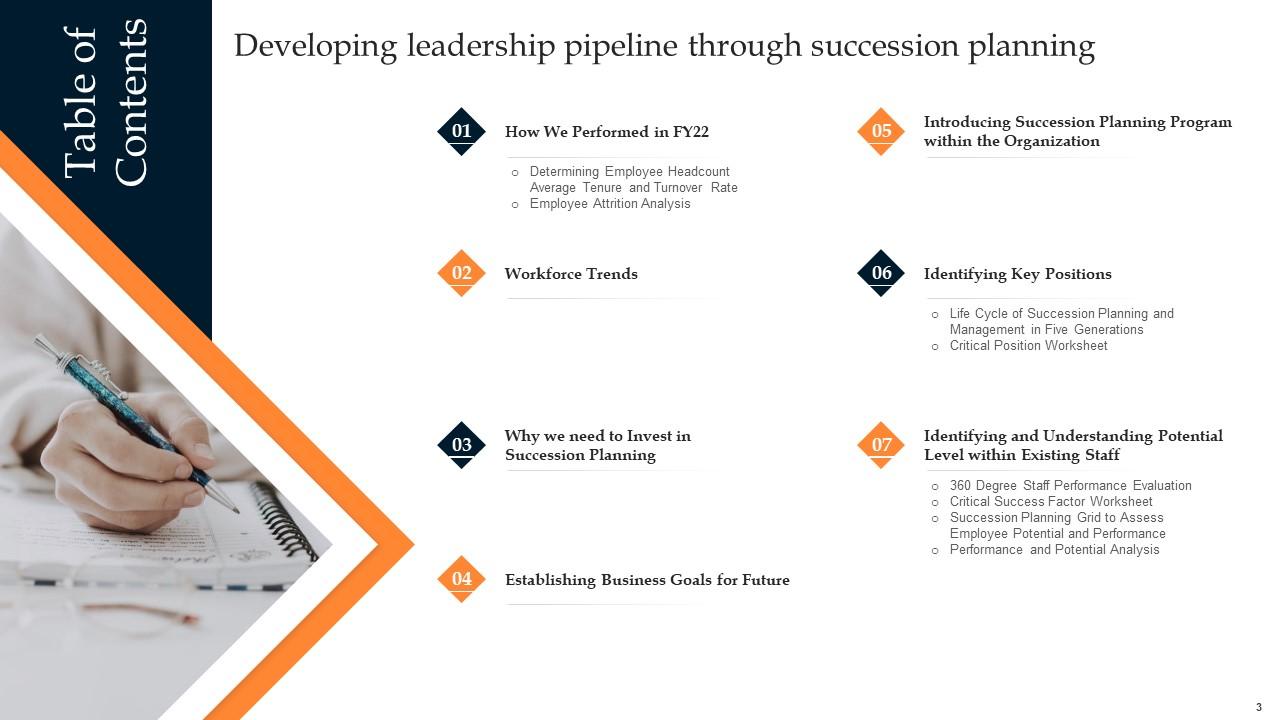
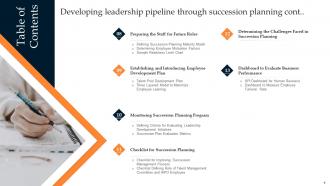
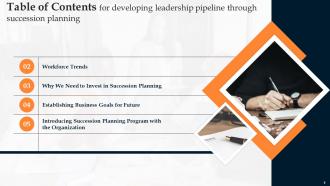
Slide 3 : Este slide exibe o sumário.
Slide 4 : Este slide exibe o sumário.
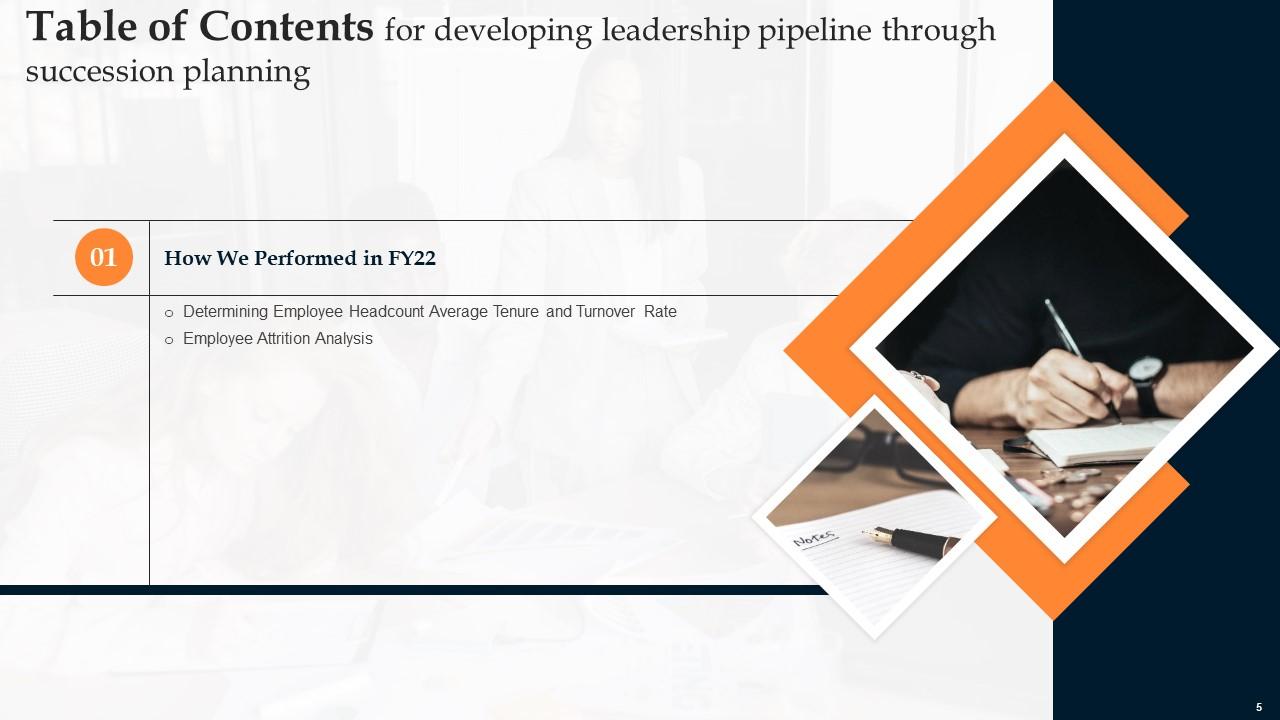
Slide 5 : Este slide exibe o índice - Como nos saímos no FY22.
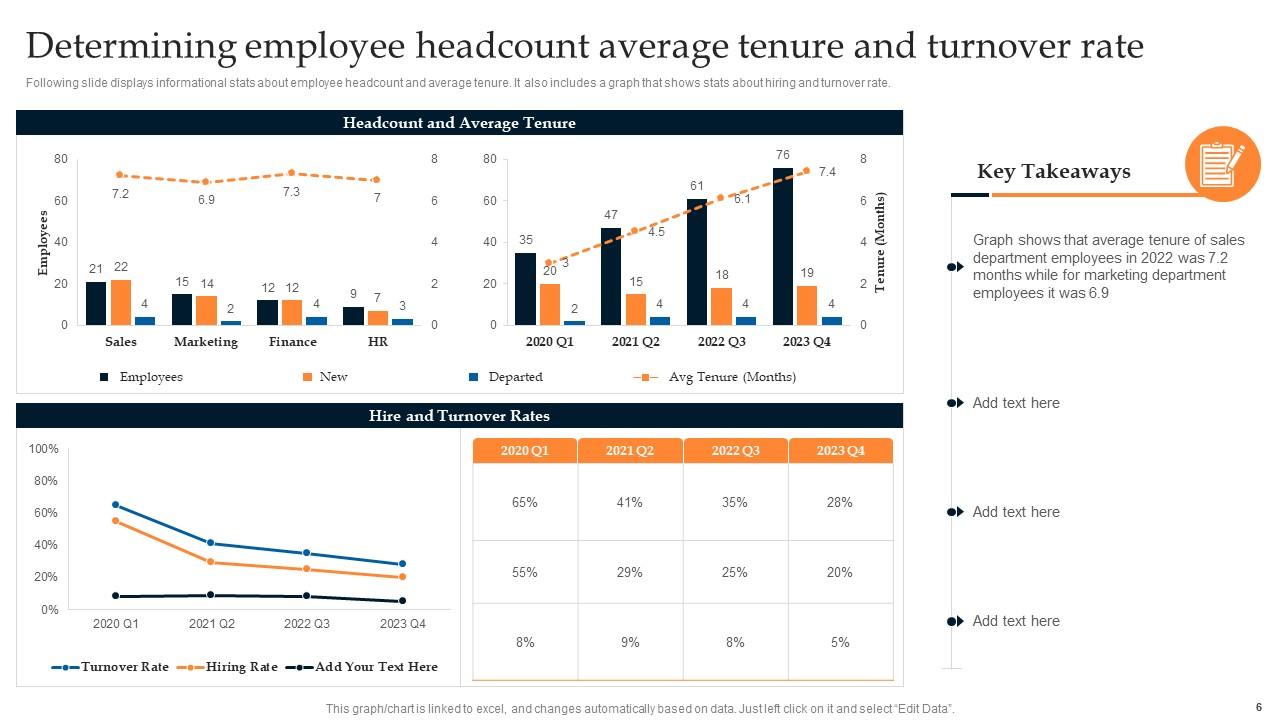
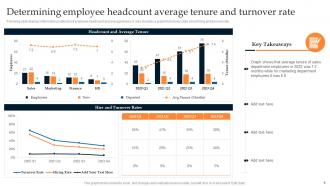
Slide 6 : O slide a seguir exibe estatísticas informativas sobre número de funcionários e tempo médio de permanência.
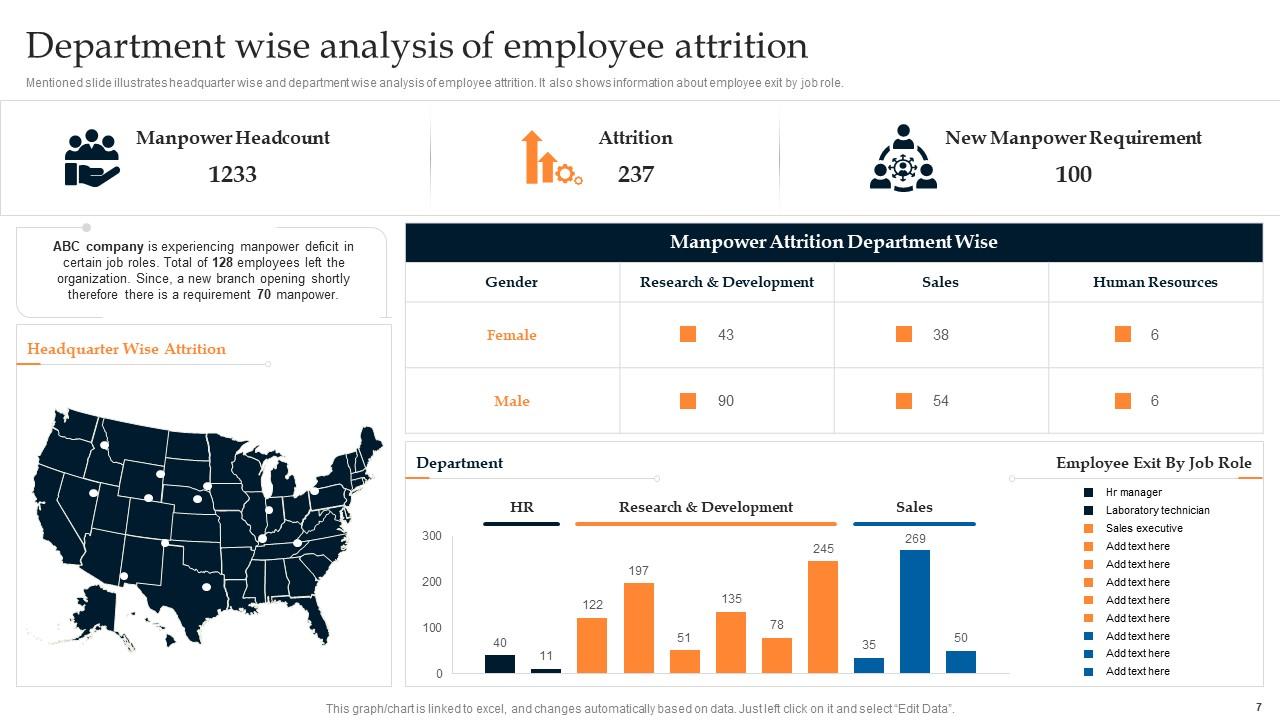
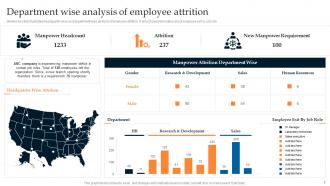
Slide 7 : O slide mencionado ilustra a análise da sede e do departamento sobre a perda de funcionários.
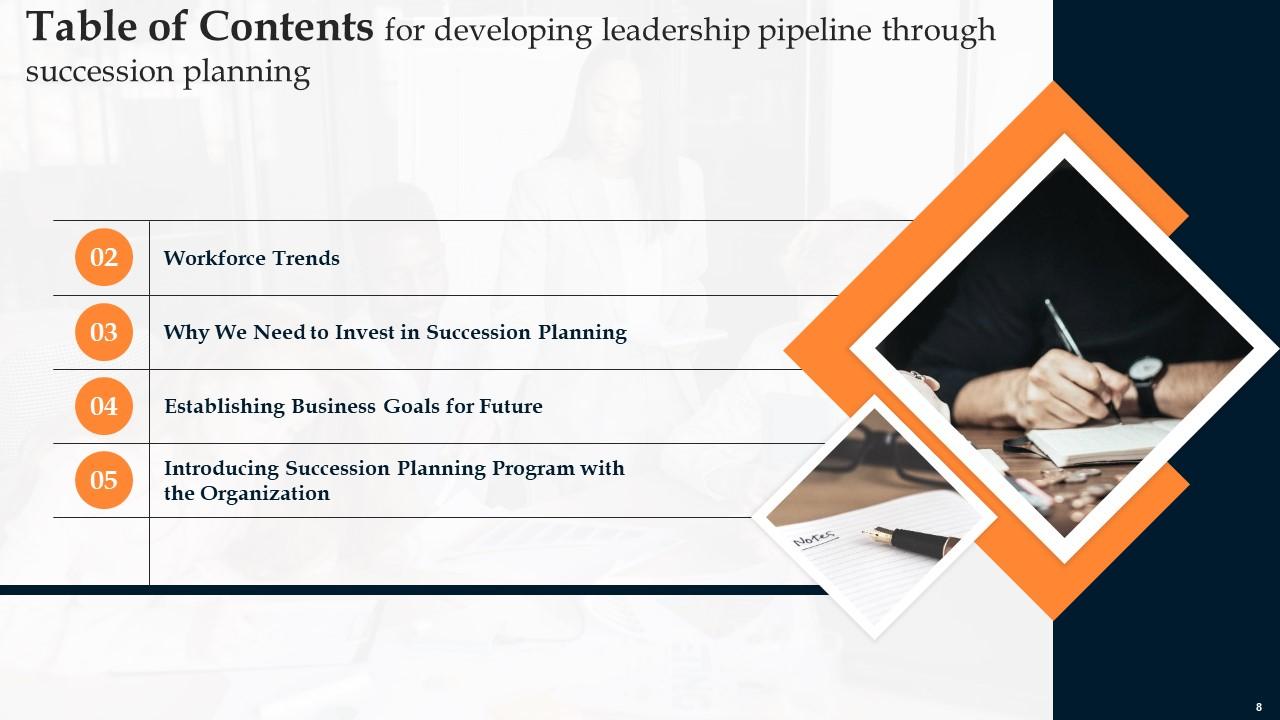
Slide 8 : Este slide mostra o índice seguinte.
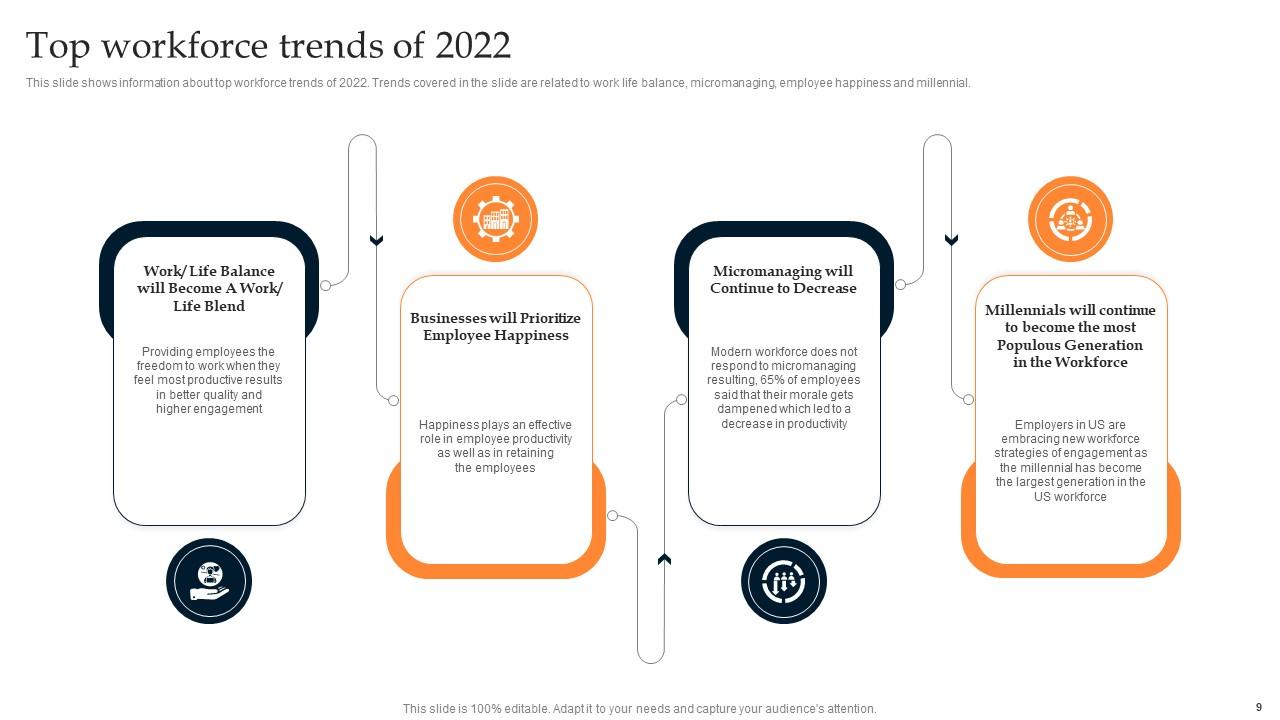
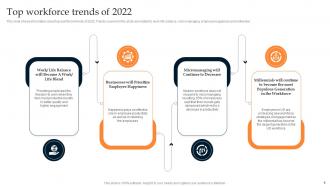
Slide 9 : Este slide mostra informações sobre as principais tendências da força de trabalho para 2022.
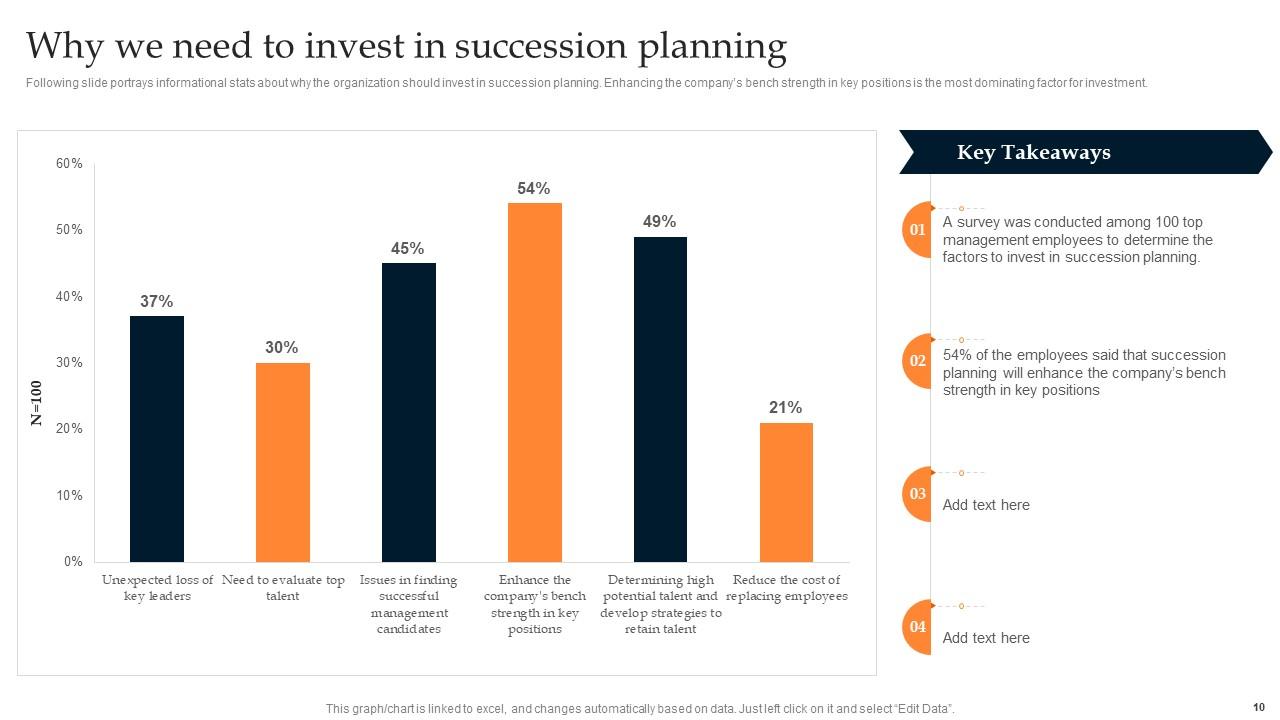
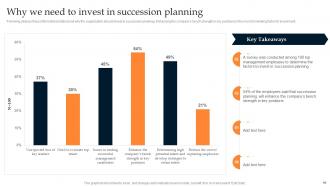
Slide 10 : O slide a seguir apresenta estatísticas informativas sobre por que a organização deve investir em planejamento sucessório.
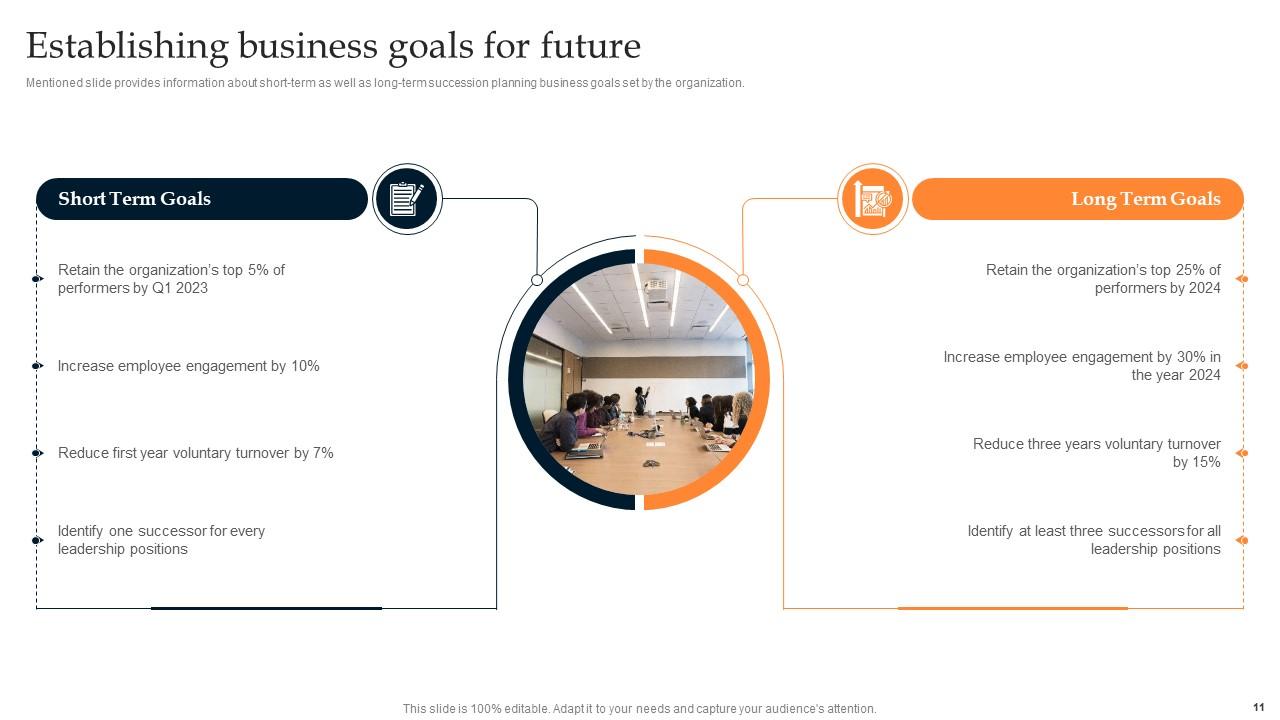
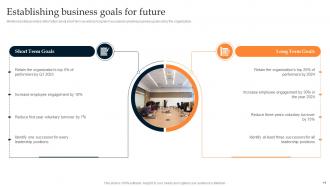
Slide 11 : O slide mencionado fornece informações sobre as metas de negócios de planejamento de sucessão de curto e longo prazo definidas pela organização.
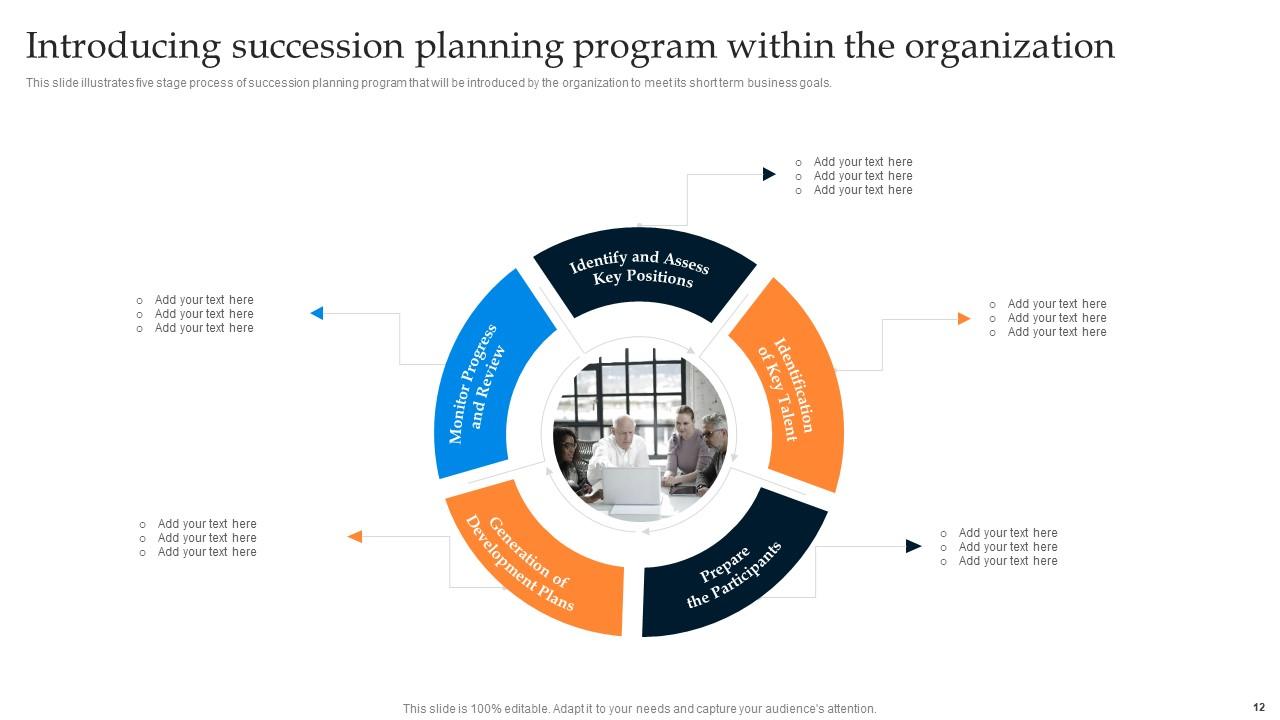
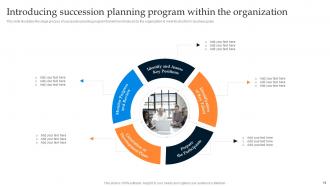
Slide 12 : Este slide ilustra o processo de cinco estágios do programa de planejamento de sucessão que será introduzido pela organização para atingir suas metas de negócios de curto prazo.
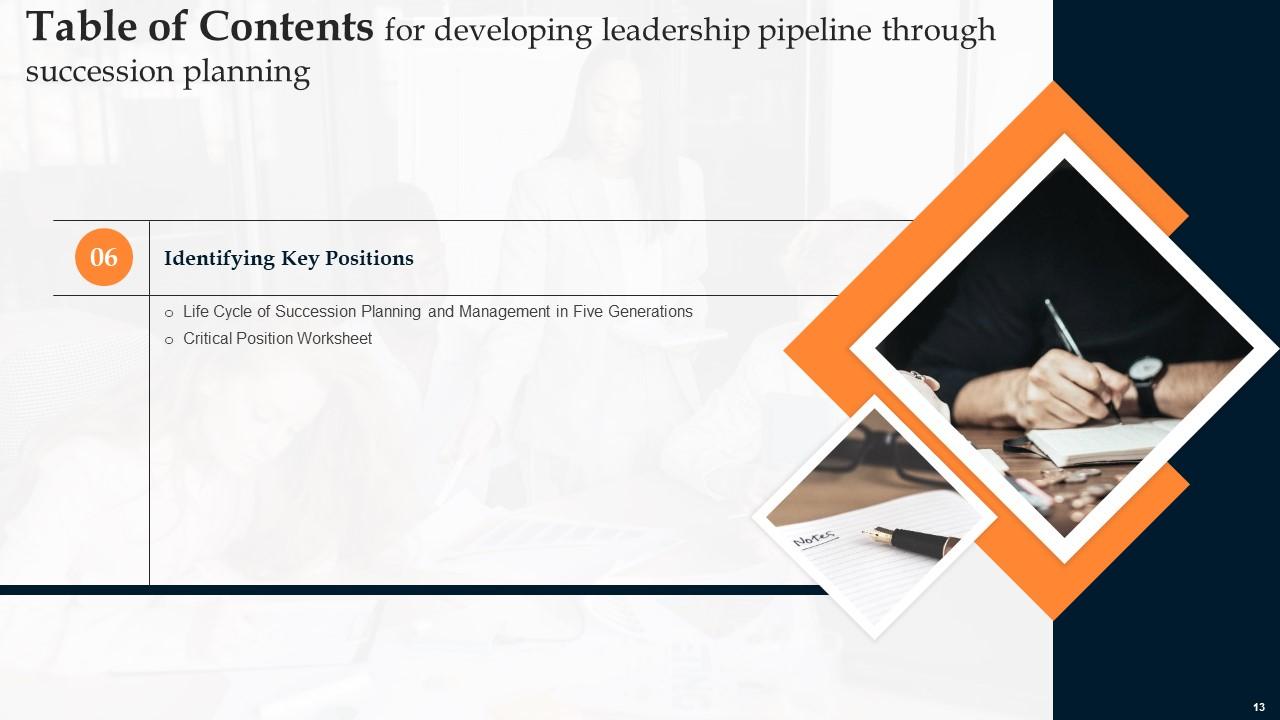
Slide 13 : Este slide exibe o índice de identificação de posições-chave.
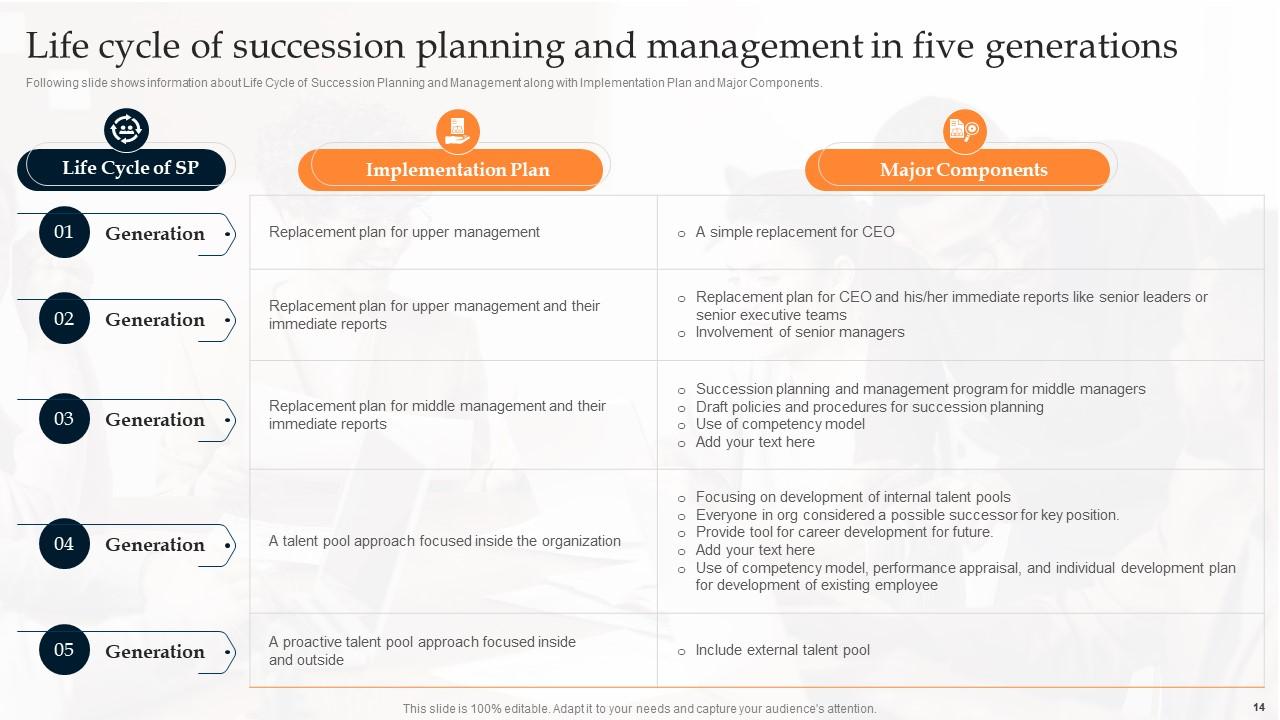
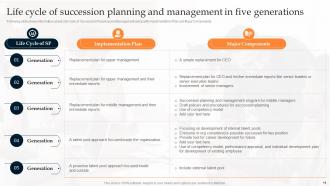
Slide 14 : O slide a seguir mostra informações sobre o ciclo de vida do planejamento e gerenciamento da sucessão, juntamente com o plano de implementação e os principais componentes.
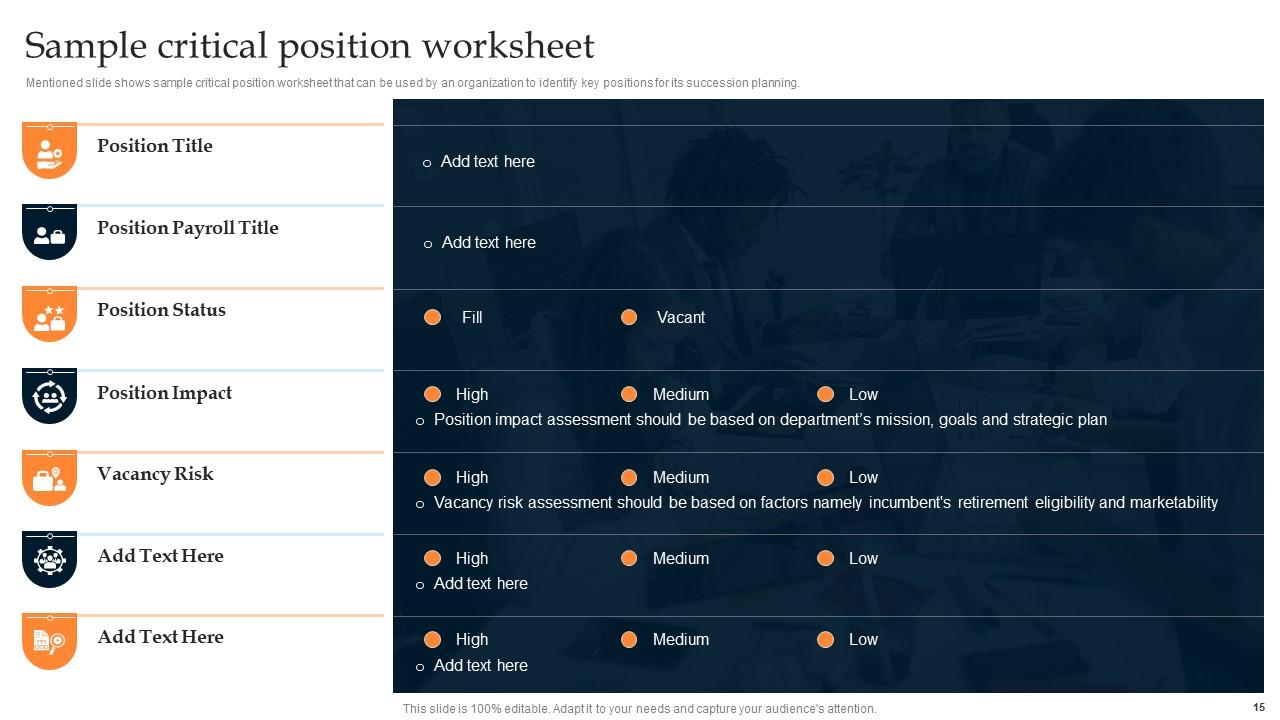
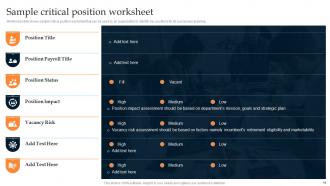
Slide 15 : O slide mencionado mostra um exemplo de planilha de posição crítica que pode ser usada por uma organização para identificar posições-chave para seu planejamento de sucessão.
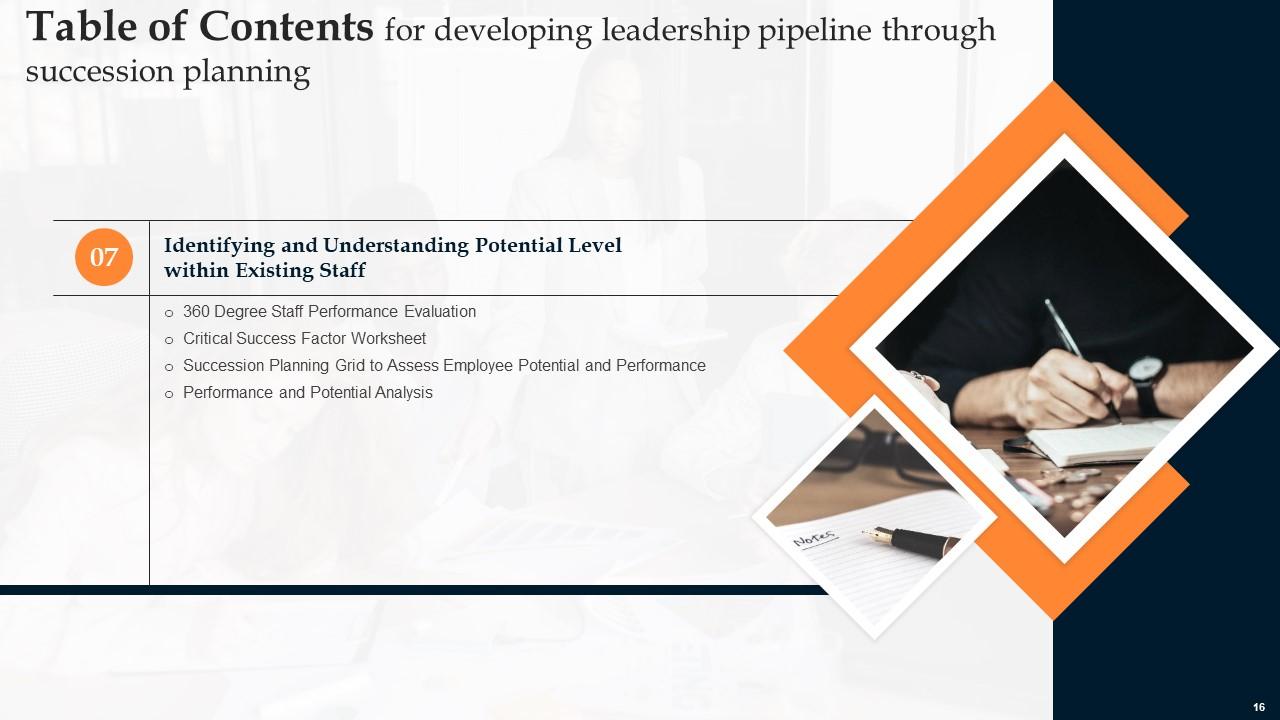
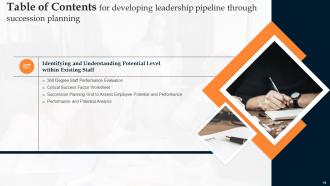
Slide 16 : Este slide exibe a tabela de conteúdo - Identificando e Compreendendo o Nível de Potencial dentro da Equipe Existente.
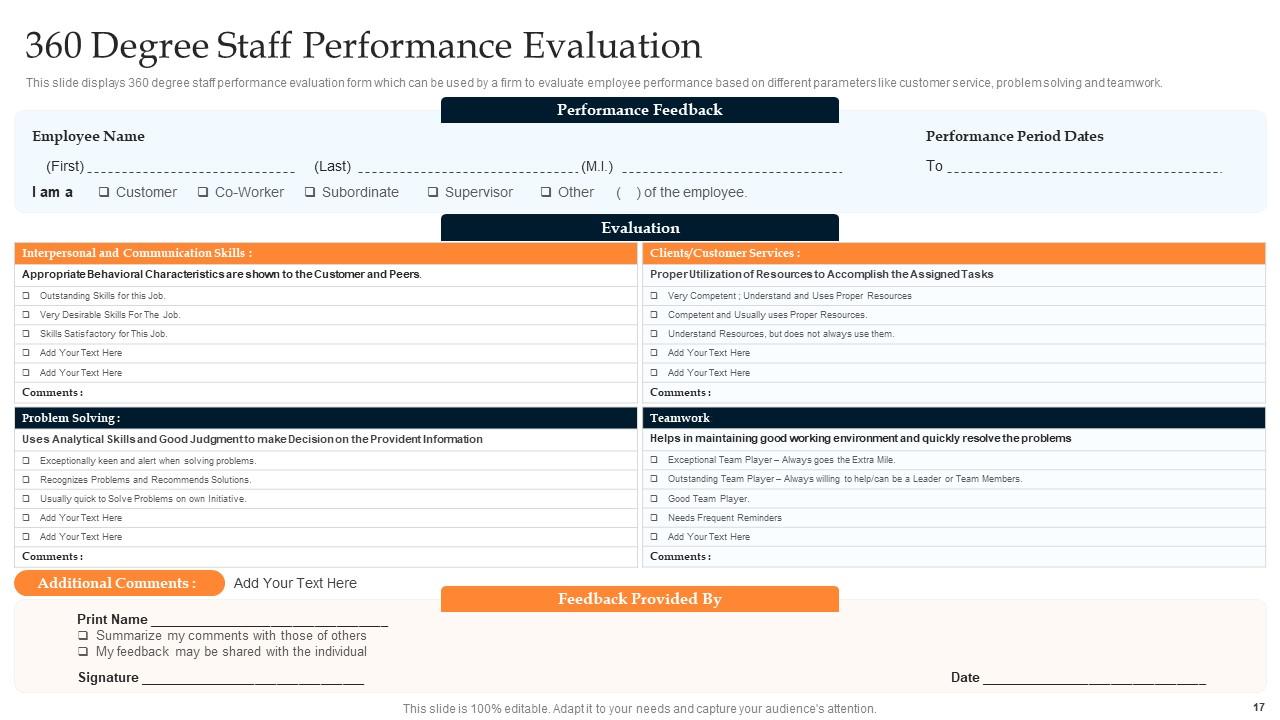
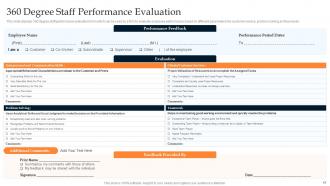
Slide 17 : Este slide exibe o formulário de avaliação de desempenho da equipe em 360 graus.
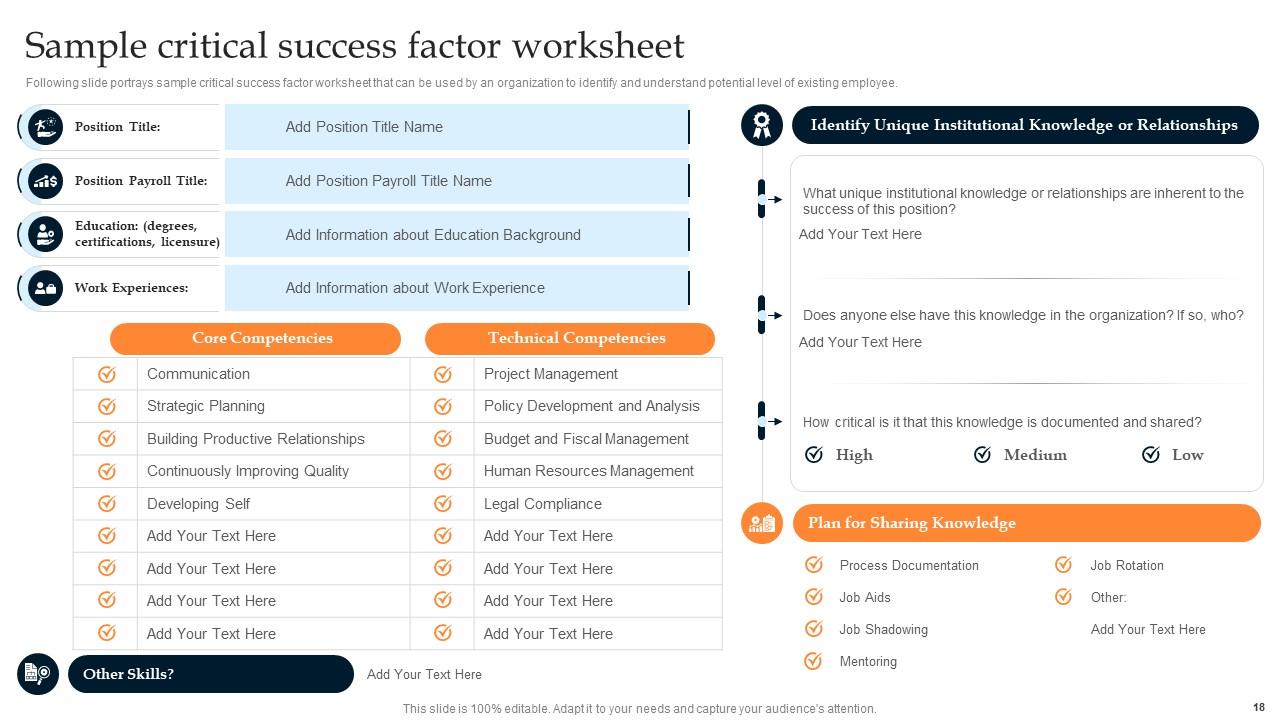
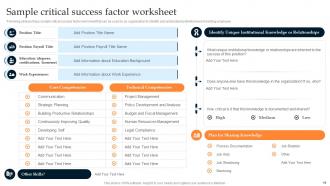
Slide 18 : O slide a seguir mostra um exemplo de planilha de fator crítico de sucesso que pode ser usada por uma organização para identificar e entender o nível potencial do funcionário existente.
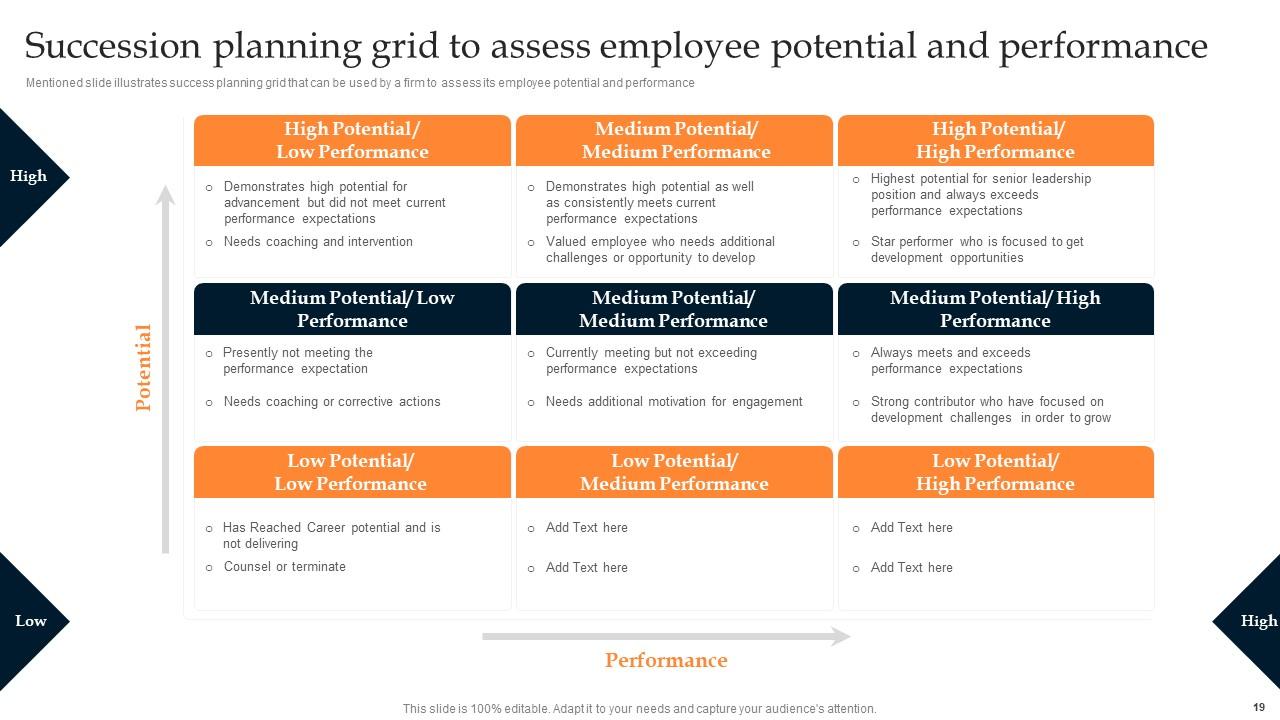
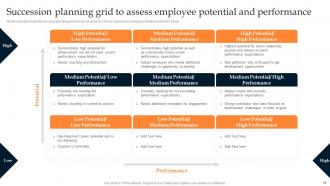
Slide 19 : O slide mencionado ilustra a grade de planejamento de sucesso que pode ser usada por uma empresa para avaliar o potencial e o desempenho de seus funcionários
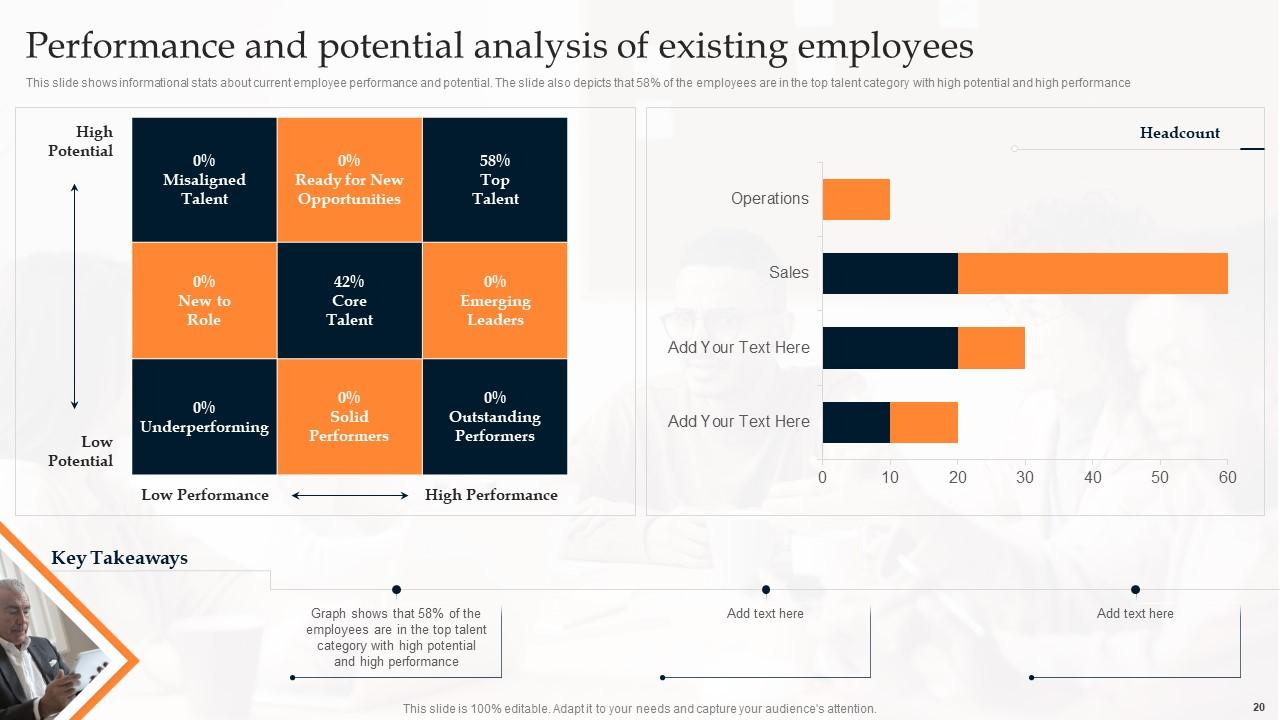
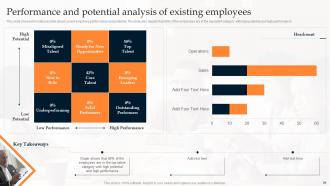
Slide 20 : Este slide mostra estatísticas informativas sobre o desempenho e o potencial do funcionário atual.
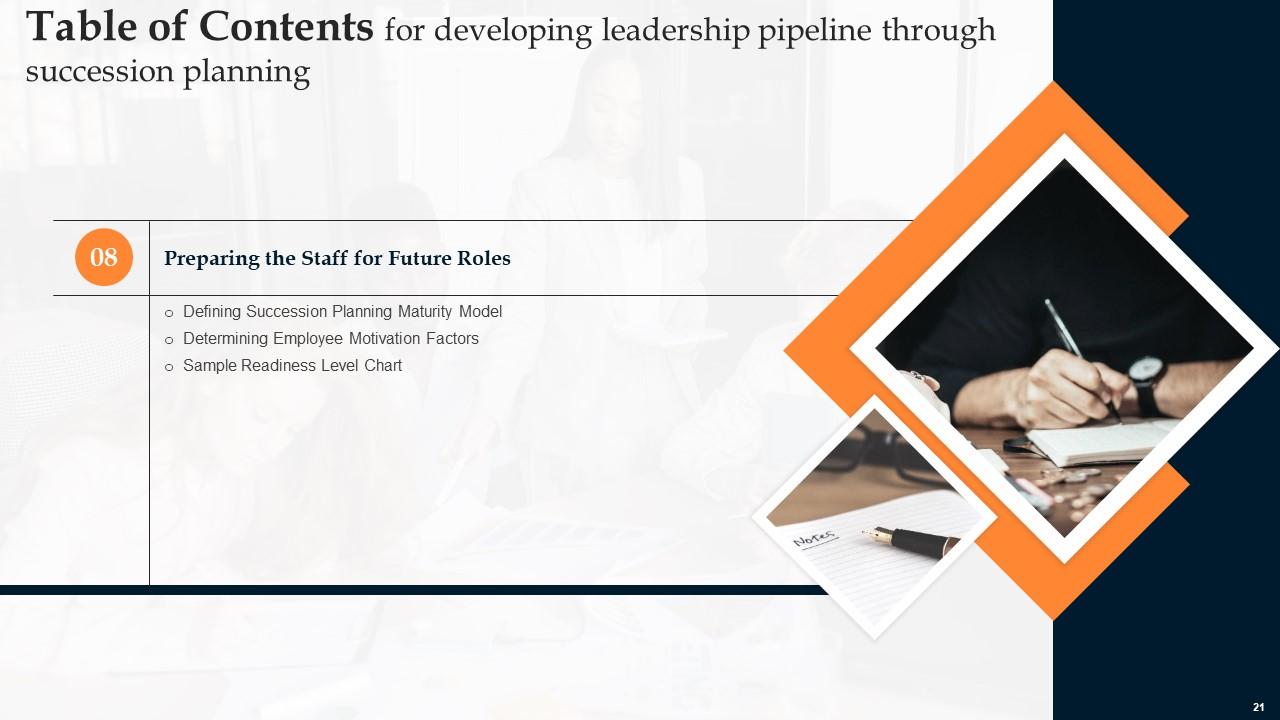
Slide 21 : Este slide exibe o índice - Preparando a equipe para funções futuras.
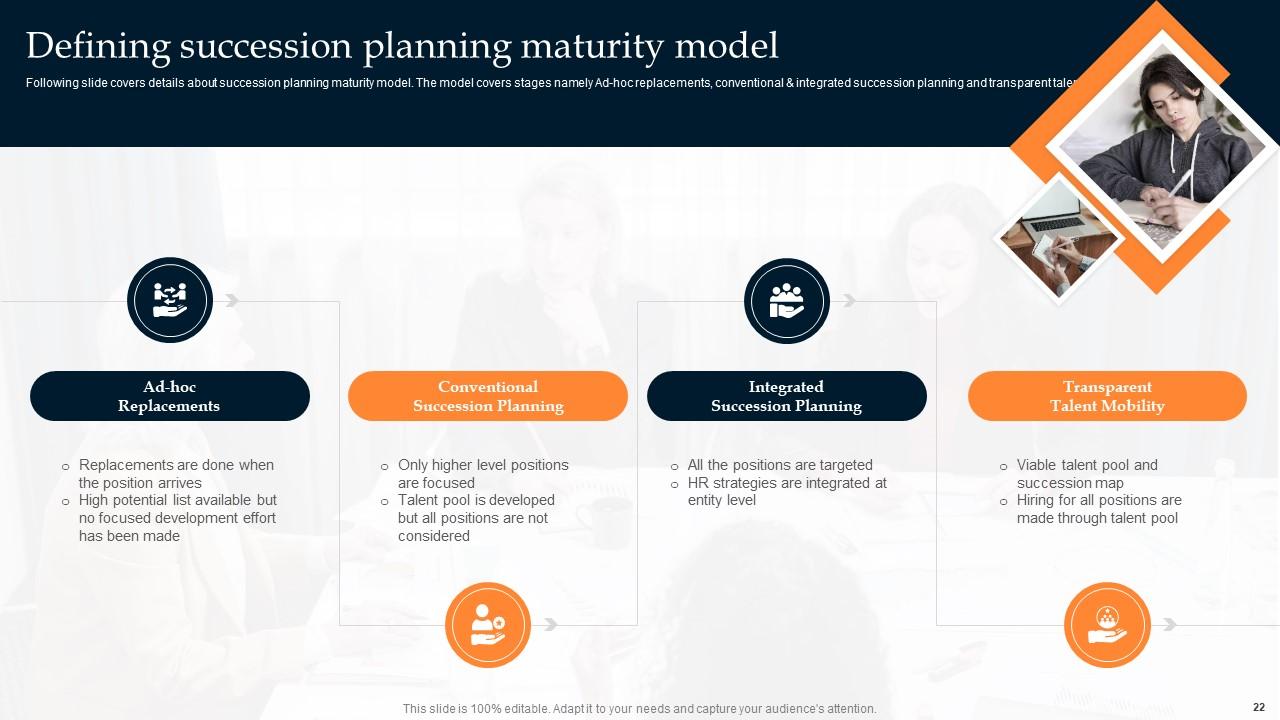
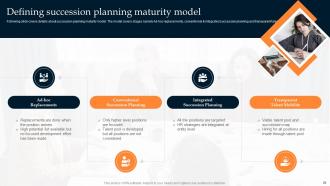
Slide 22 : O slide a seguir cobre detalhes sobre o modelo de maturidade do planejamento sucessório.
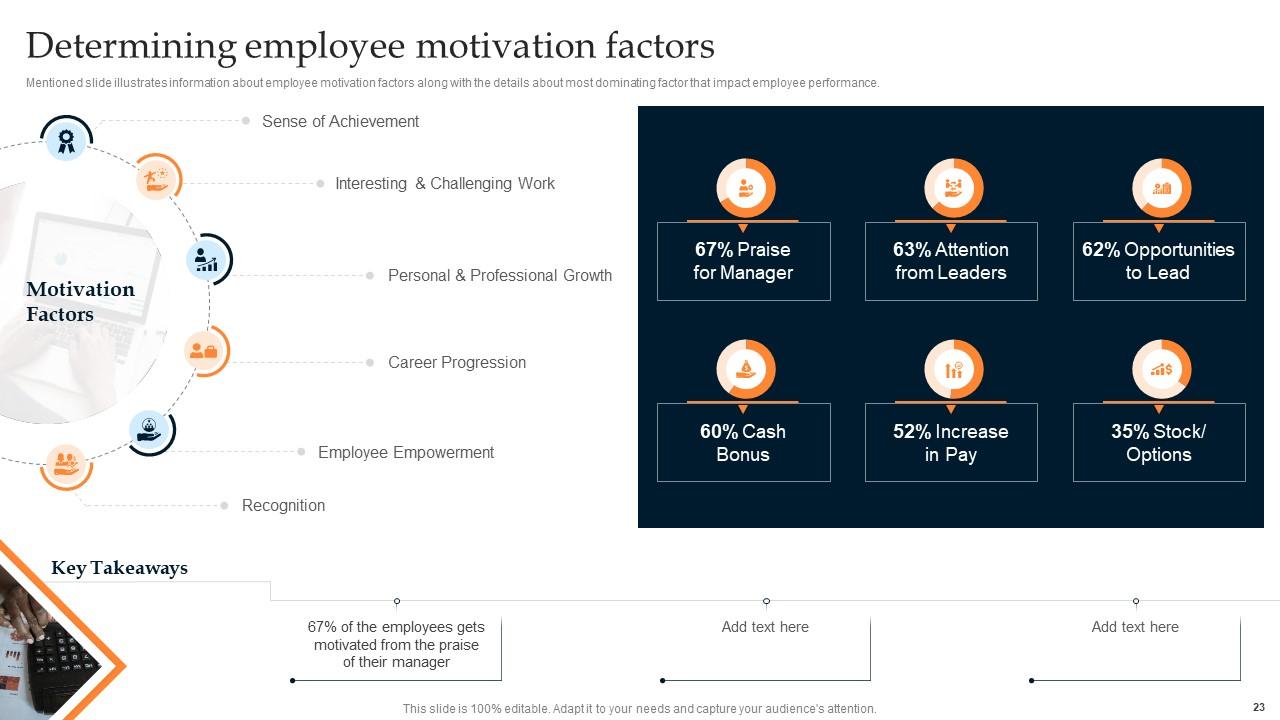
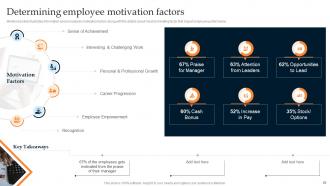
Slide 23 : O slide mencionado ilustra informações sobre os fatores de motivação do funcionário, juntamente com os detalhes sobre o fator mais dominante que afeta o desempenho do funcionário.
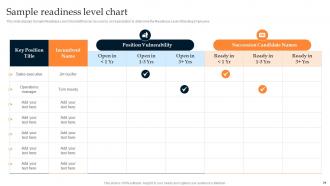
Slide 24 : Este slide exibe uma amostra da lista de verificação do nível de prontidão que pode ser usada por uma organização para determinar o nível de prontidão dos funcionários existentes
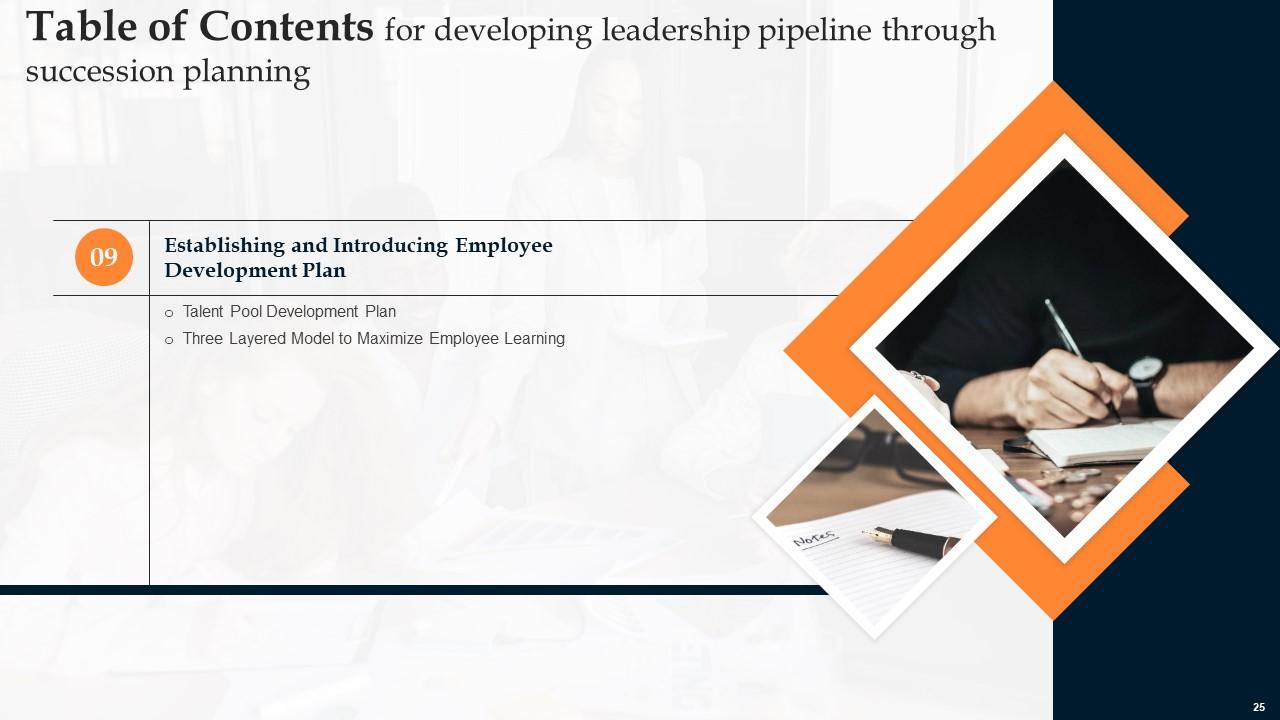
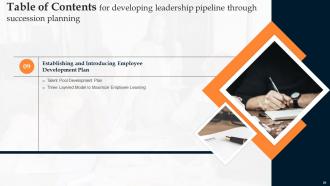
Slide 25 : Este slide exibe a tabela de conteúdo - Estabelecendo e Apresentando o Plano de Desenvolvimento do Funcionário.
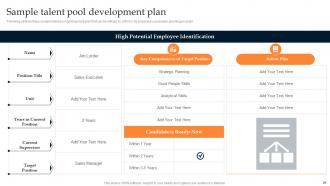
Slide 26 : O slide a seguir mostra um exemplo de plano de desenvolvimento de pool de talentos que pode ser utilizado por uma empresa em seu programa de planejamento de sucessão de funcionários.
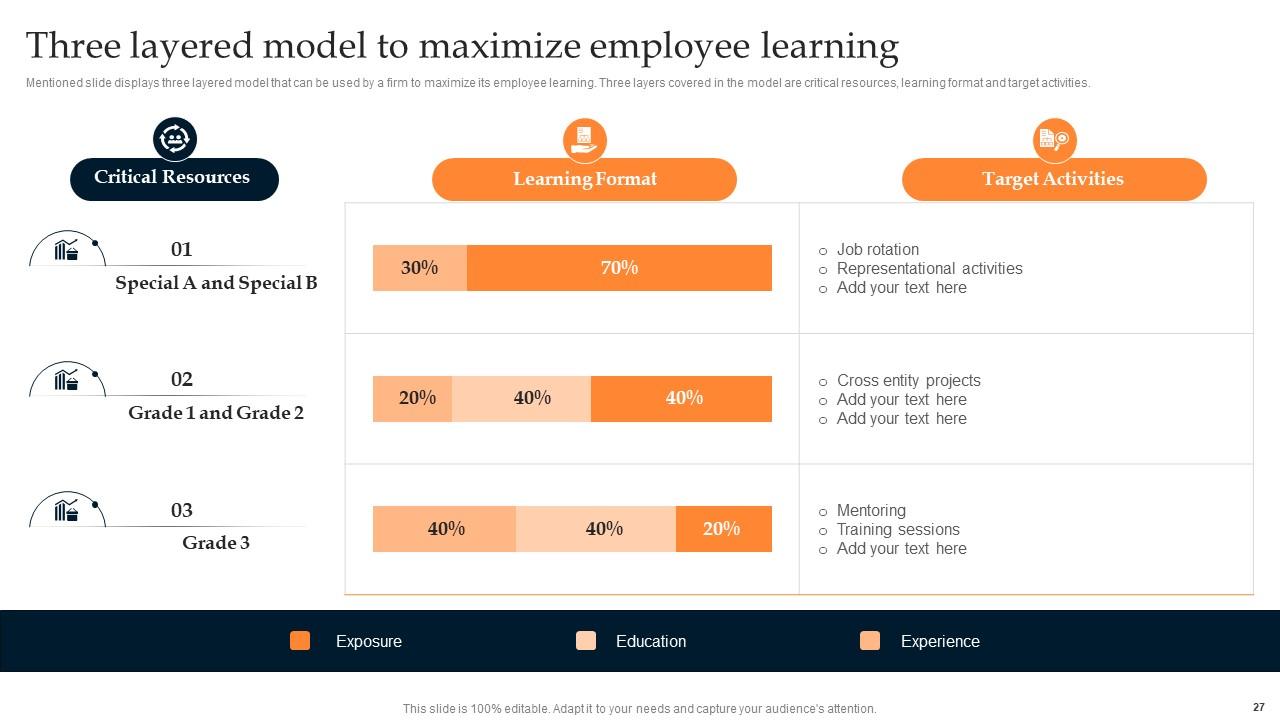
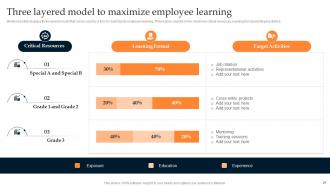
Slide 27 : O slide mencionado exibe um modelo de três camadas que pode ser usado por uma empresa para maximizar o aprendizado de seus funcionários.
Slide 28 : Este slide exibe o índice - Monitoramento do Programa de Planejamento Sucessório.
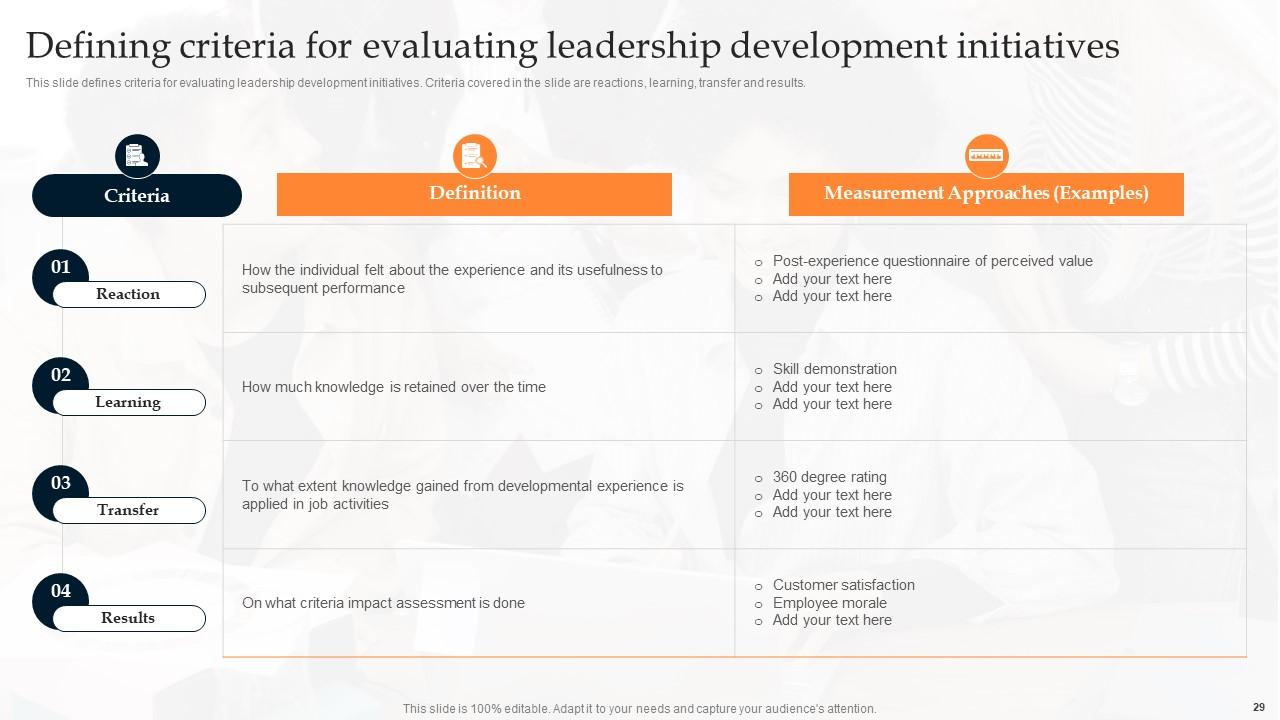
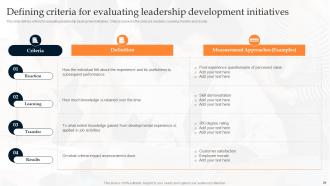
Slide 29 : Este slide define os critérios para avaliar as iniciativas de desenvolvimento de liderança.
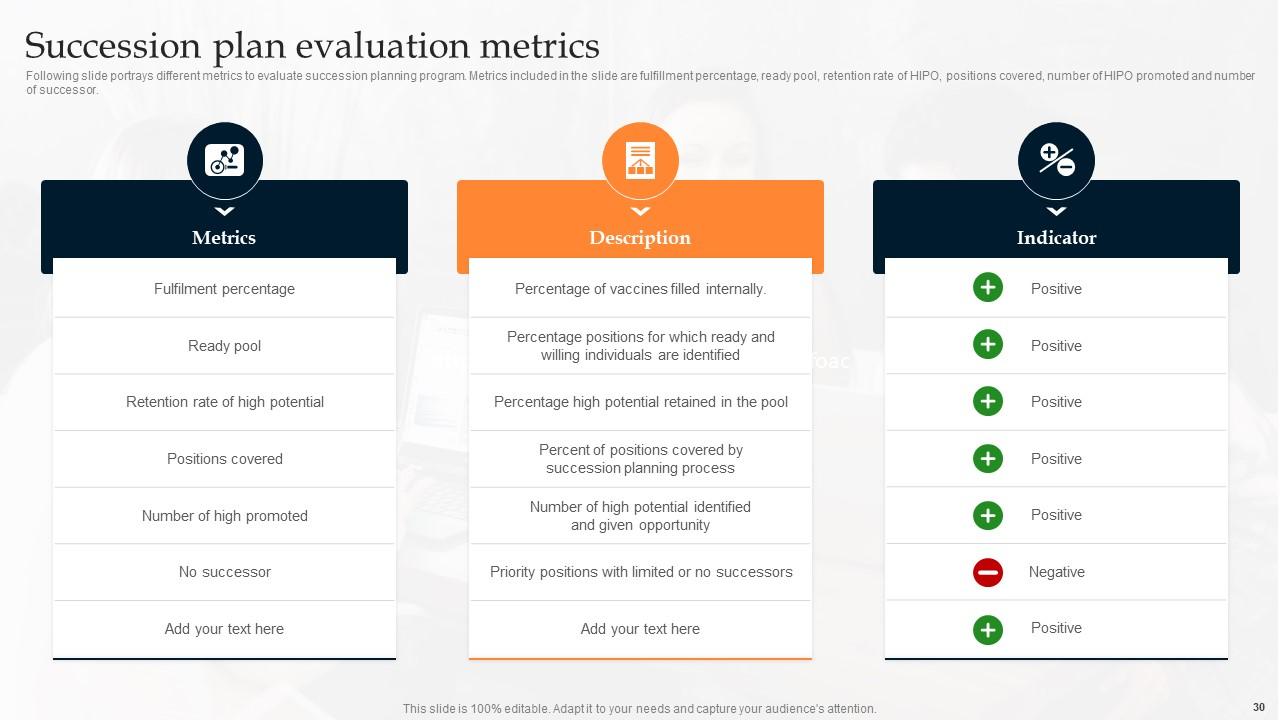
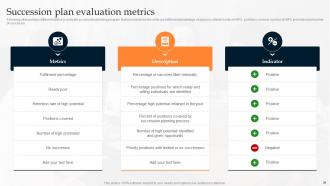
Slide 30 : O slide a seguir retrata diferentes métricas para avaliar o programa de planejamento sucessório.
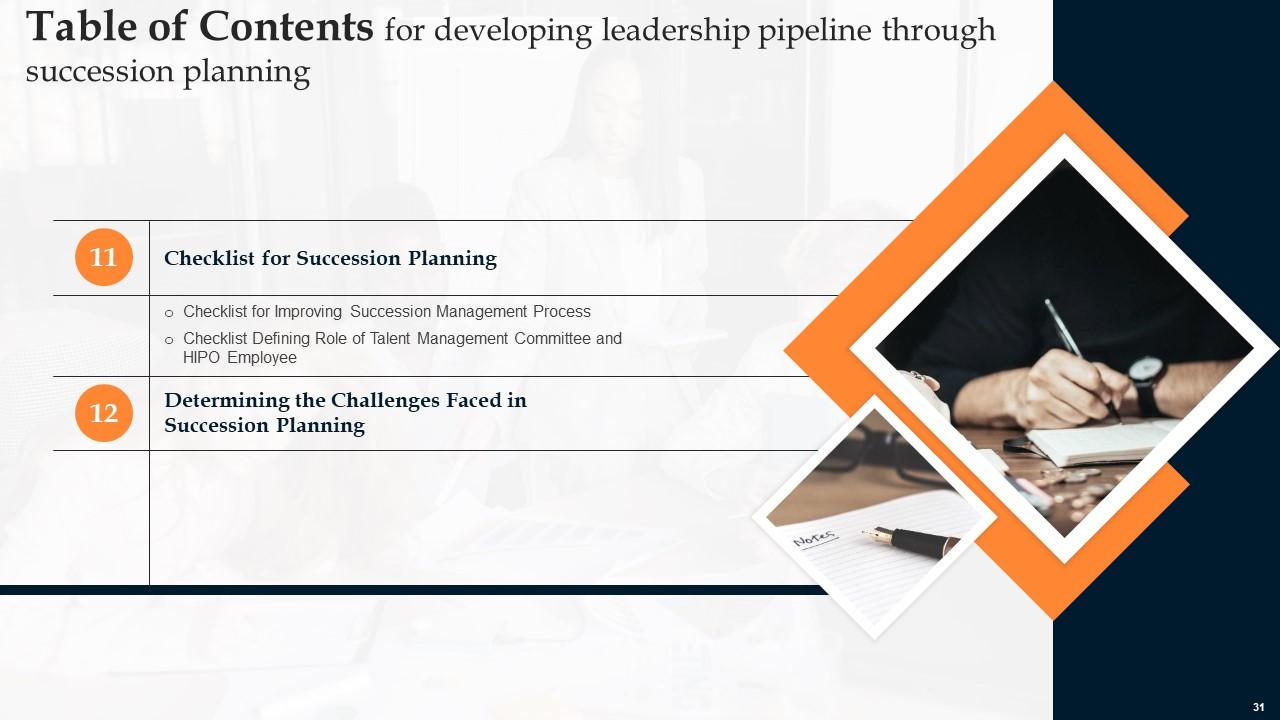
Slide 31 : Este slide mostra mais um índice.
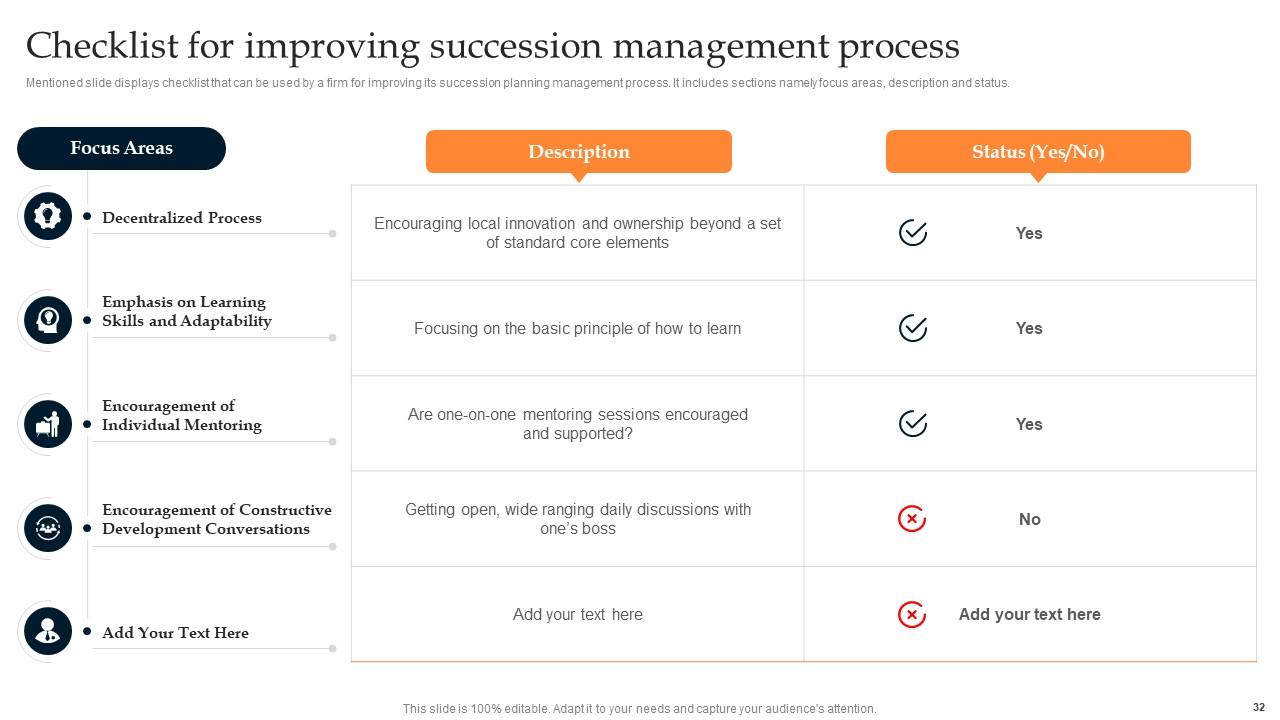
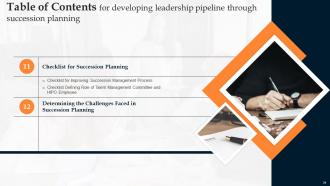
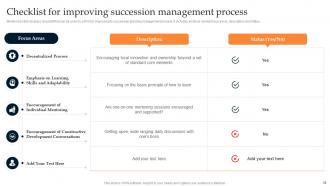
Slide 32 : O slide mencionado apresenta uma lista de verificação que pode ser usada por uma empresa para melhorar seu processo de gerenciamento de planejamento sucessório.
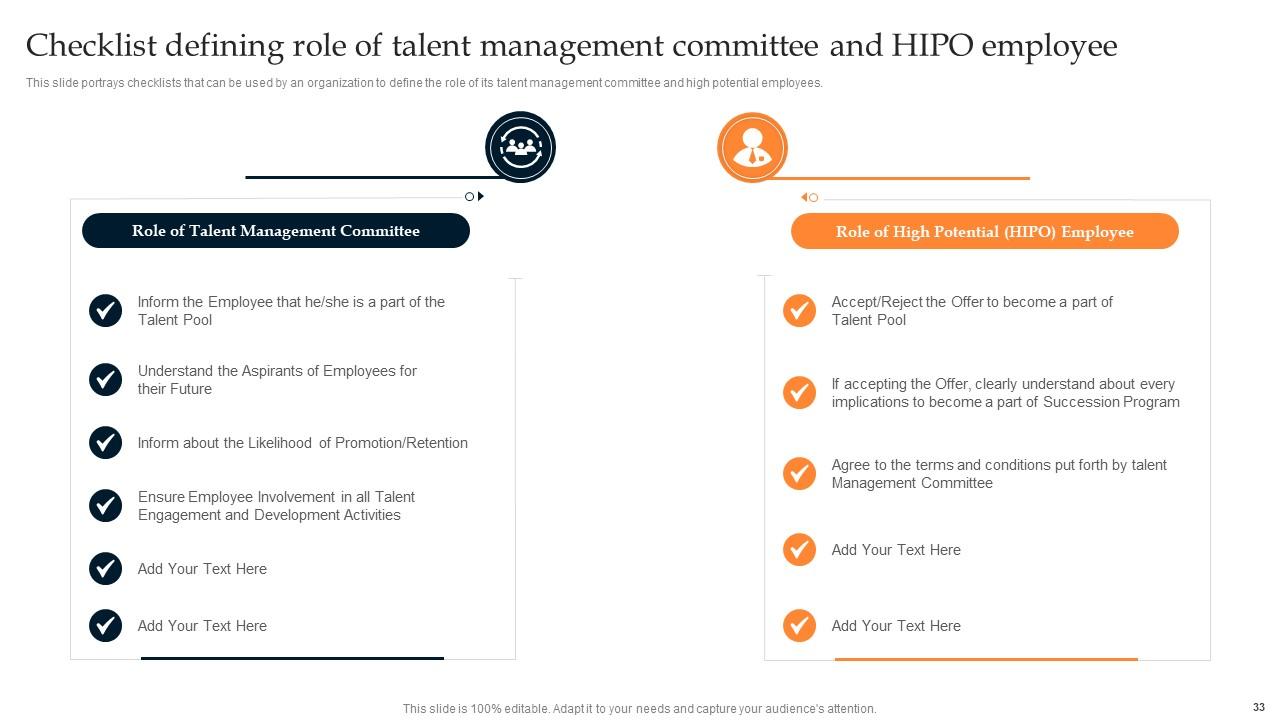
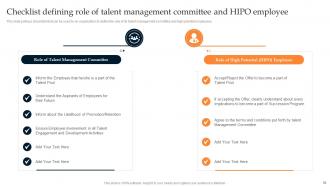
Slide 33 : Este slide retrata listas de verificação que podem ser usadas por uma organização para definir o papel de seu comitê de gestão de talentos e funcionários de alto potencial.
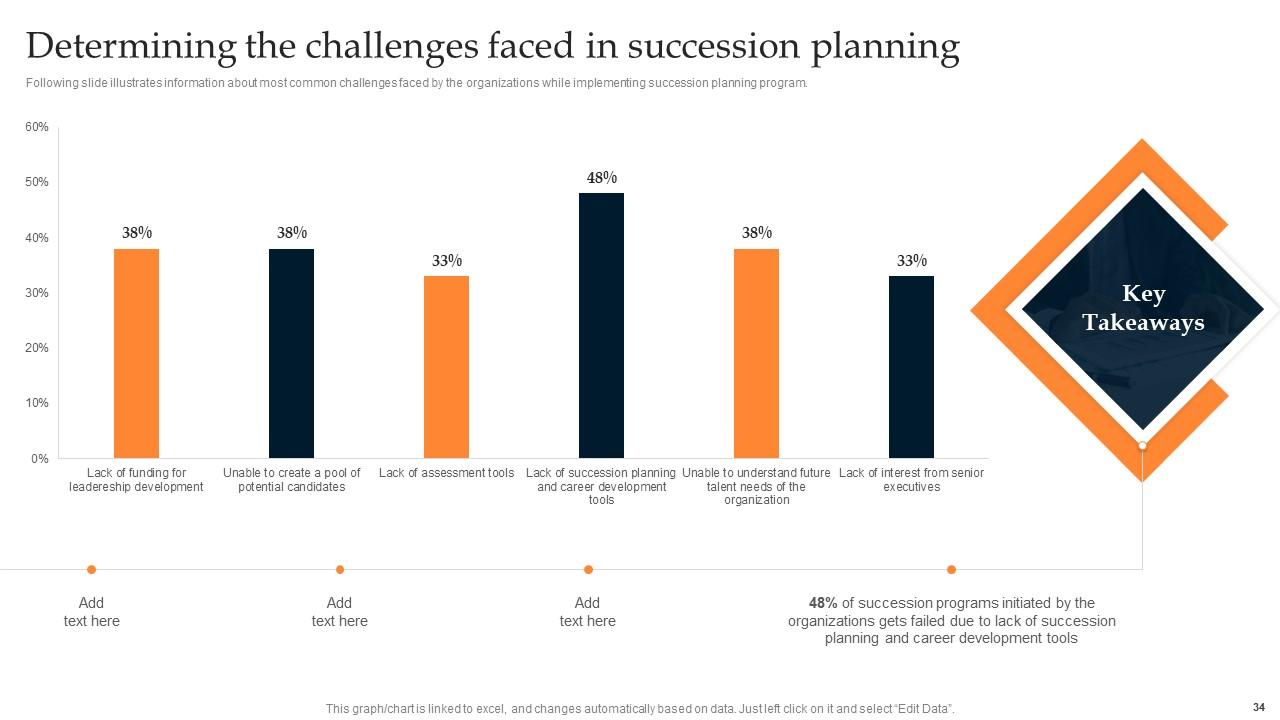
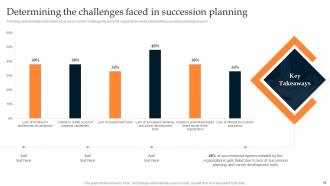
Slide 34 : O slide a seguir ilustra informações sobre os desafios mais comuns enfrentados pelas organizações durante a implementação do programa de planejamento de sucessão.
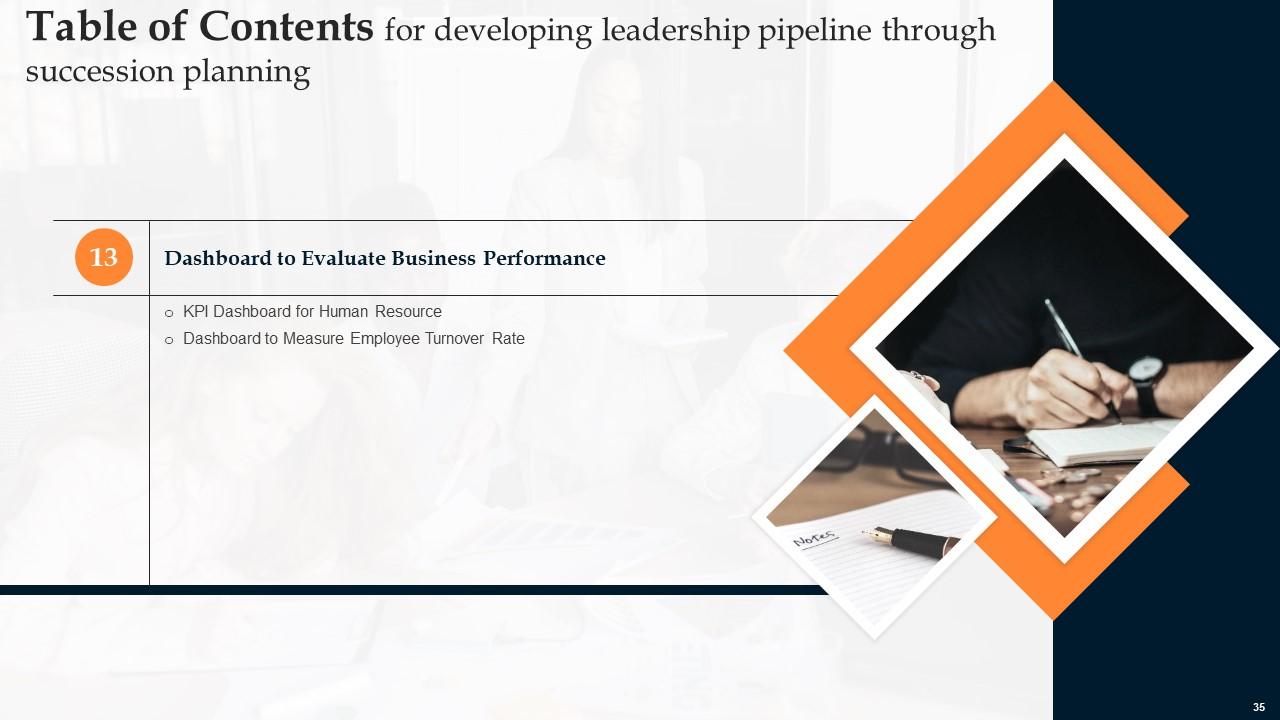
Slide 35 : Este slide exibe o índice - Painel para avaliar o desempenho dos negócios.
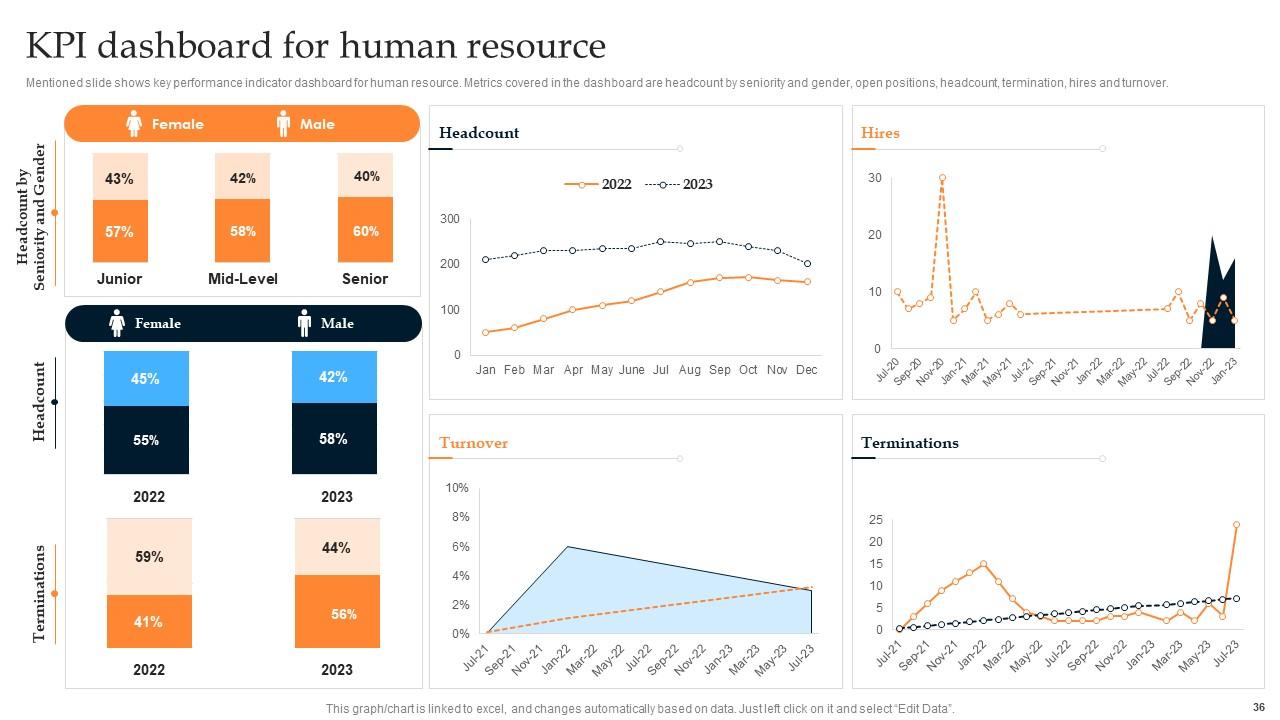
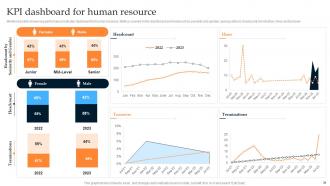
Slide 36 : O slide mencionado mostra o painel de indicadores chave de desempenho para recursos humanos.
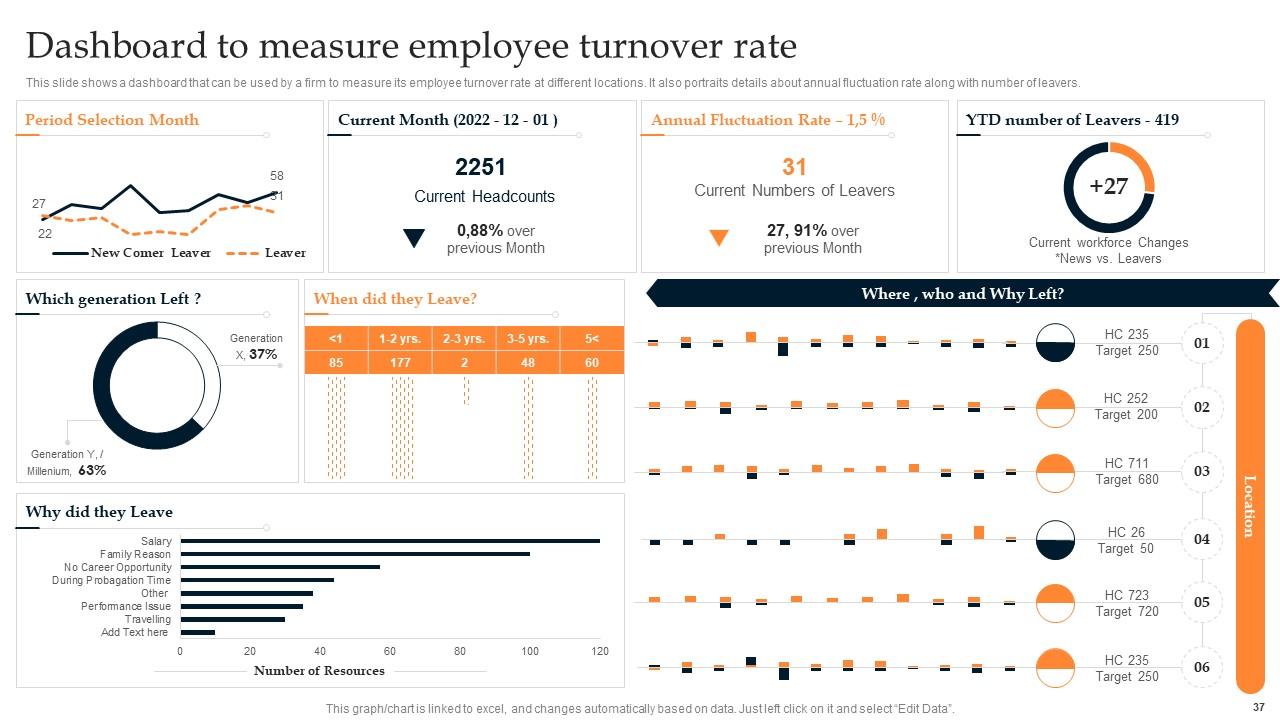
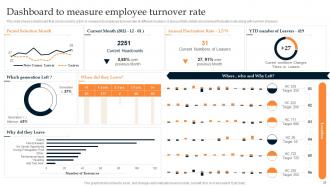
Slide 37 : Este slide mostra um painel que pode ser usado por uma empresa para medir sua taxa de rotatividade de funcionários em diferentes locais.
Slide 38 : Este é o slide dos ícones.
Slide 39 : Este slide apresenta o título para slides adicionais.
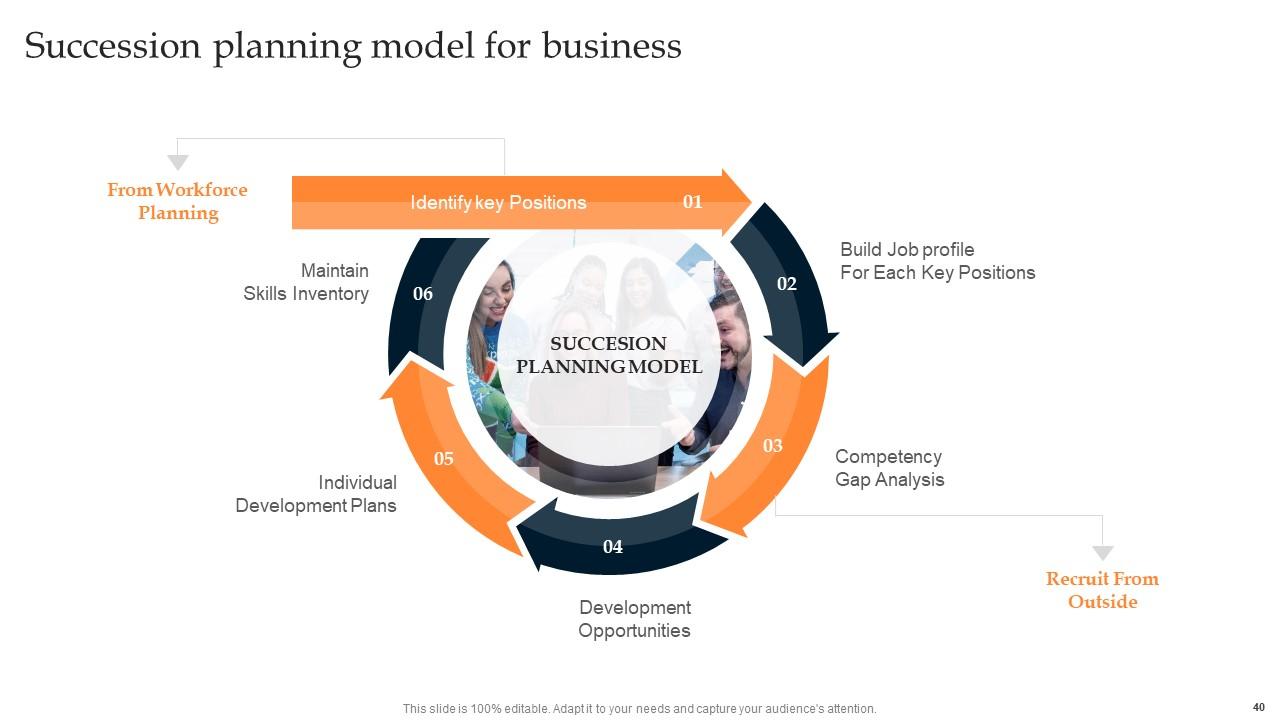
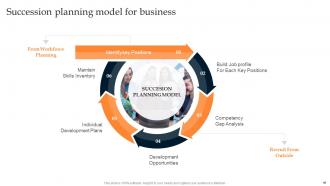
Slide 40 : Este slide mostra o modelo de planejamento de sucessão para negócios.
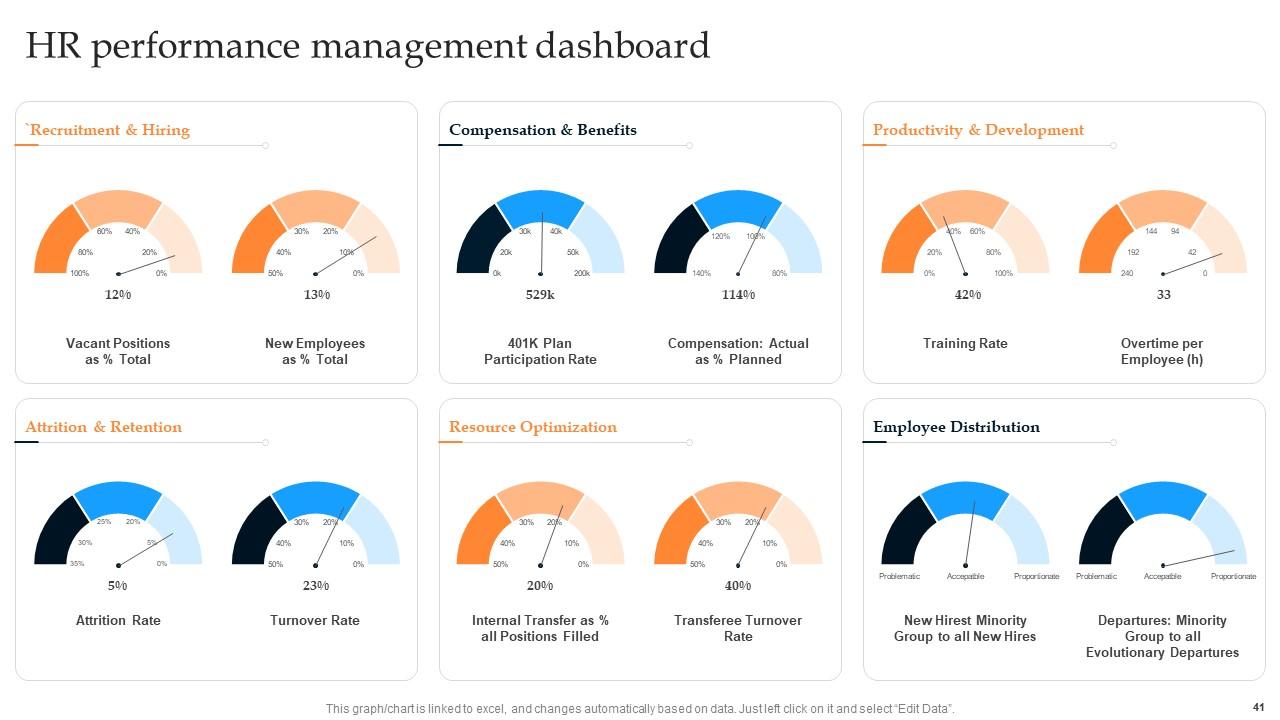
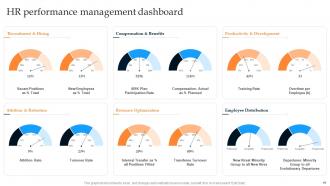
Slide 41 : Este slide mostra o painel de gerenciamento de desempenho de RH.
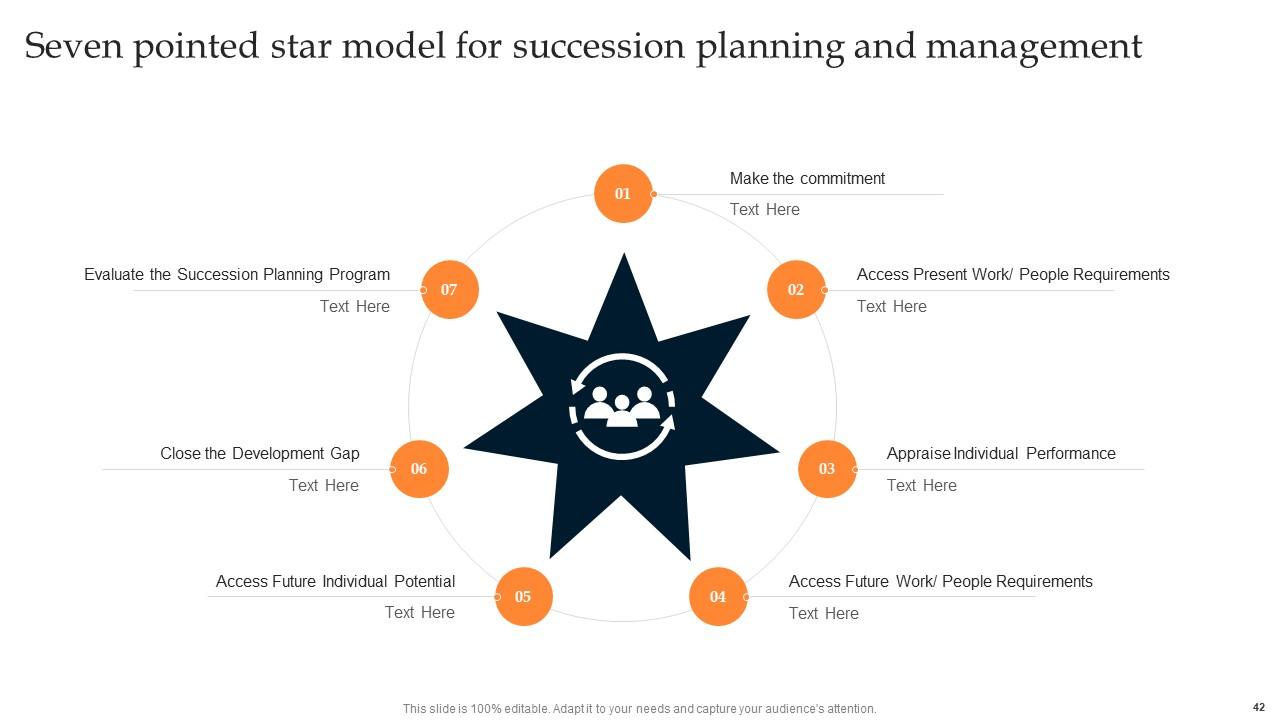
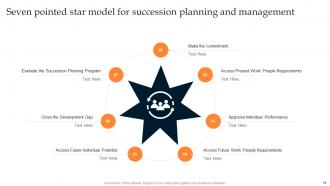
Slide 42 : Este slide mostra o modelo de estrela de sete pontas para planejamento e gerenciamento de sucessão.
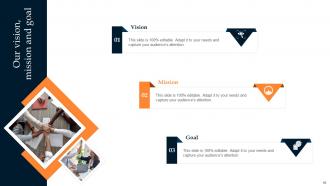
Slide 43 : Este slide apresenta a visão, missão e objetivos da sua empresa.
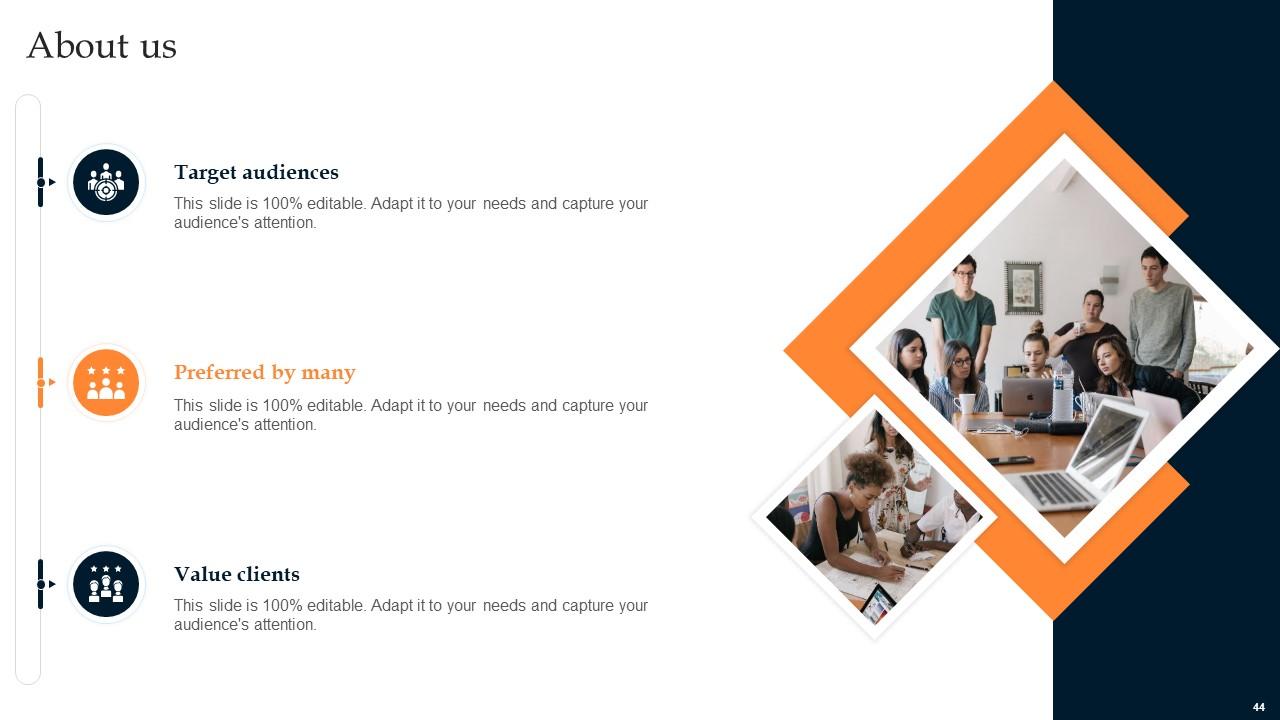
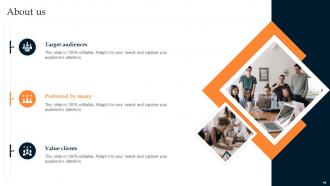
Slide 44 : Este slide mostra sobre sua empresa, público-alvo e os valores de seus clientes.
Slide 45 : Este slide descreve o plano de 30-60-90 dias para projetos.
Slide 46 : Este slide mostra o roteiro da empresa.
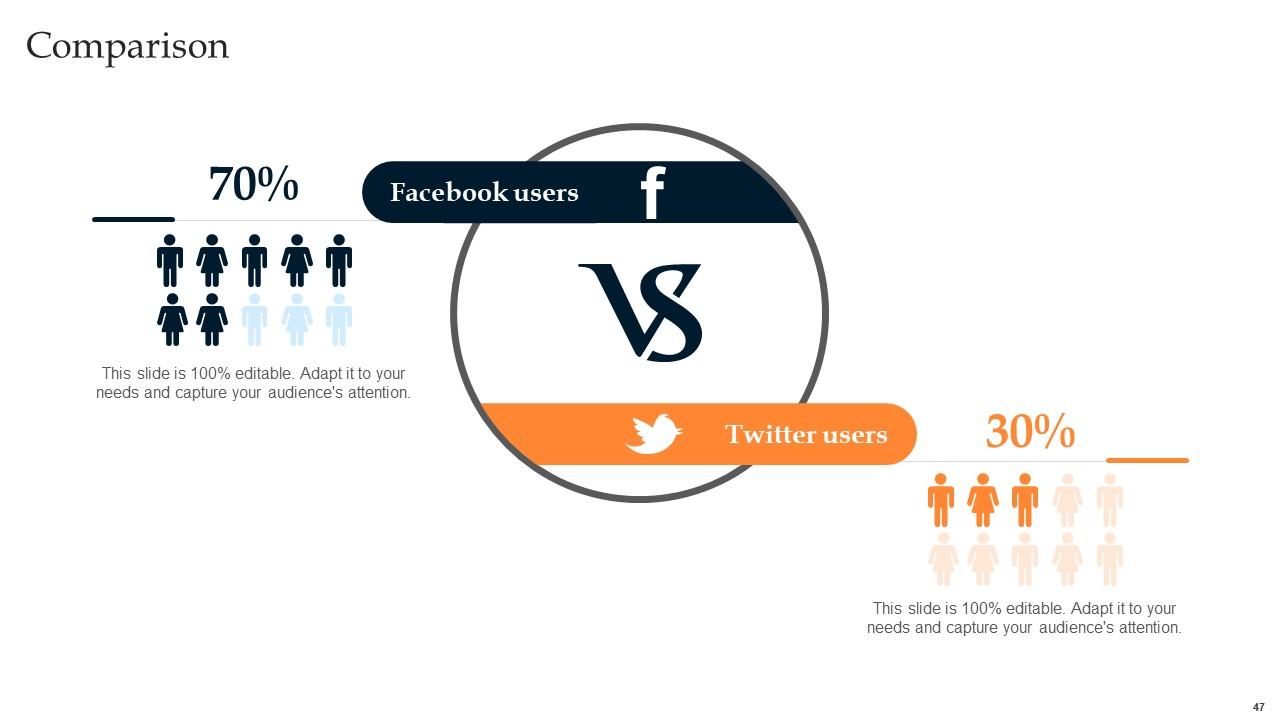
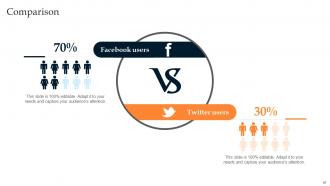
Slide 47 : Este slide mostra a Comparação.
Slide 48 : Este slide mostra postagens de experiências passadas de clientes.
Slide 49 : Este slide mostra o quebra-cabeça para exibir os elementos da empresa.
Slide 50 : Este slide mostra o mapa mental.
Slide 51 : Este slide mostra nosso objetivo.
Slide 52 : Este é o slide de agradecimento e contém detalhes de contato da empresa, como endereço do escritório, número de telefone, etc.
Desenvolvendo o pipeline de liderança por meio do planejamento de sucessão Slides de apresentação em Powerpoint com todos os 57 slides:
Use nosso pipeline de desenvolvimento de liderança por meio de slides de apresentação do Powerpoint de planejamento de sucessão para ajudá-lo a economizar seu valioso tempo. Eles estão prontos para caber em qualquer estrutura de apresentação.
-
Easily Editable.
-
The pricing page of this website is very sorted. I felt no pain while buying the PPTs.
