


DevOps Implementation And Transformation Services Consultancy Proposal Powerpoint Presentation Slides
Grab our insightfully designed DevOps implementation and transformation services consultancy proposal template. It details the issues that the clients companies issues and the offered DevOps consulting services. Our DevOps services deck can help certified DevOps professionals handle a particular problem or teach staff members how to use DevOps tools and operate by the DevOps principles. It further incorporates information on DevOps, a service delivery model for a collection of tools that makes it easier for the operations and software development teams to work together. Our DevOps implementation PPT guarantees that every action taken during the software delivery process can be monitored. The solutions in this plan will help bring Operational Efficiency to the organization. Edit this template based on your unique company requirements by scheduling a free demonstration with our research team. Access it right away.
Grab our insightfully designed DevOps implementation and transformation services consultancy proposal template. It details ..












-

- Google Slides is a new FREE Presentation software from Google.
- All our content is 100% compatible with Google Slides.
- Just download our designs, and upload them to Google Slides and they will work automatically.
- Amaze your audience with SlideTeam and Google Slides.
-

Want Changes to This PPT Slide? Check out our Presentation Design Services
-

- WideScreen Aspect ratio is becoming a very popular format. When you download this product, the downloaded ZIP will contain this product in both standard and widescreen format.
-

- Some older products that we have may only be in standard format, but they can easily be converted to widescreen.
- To do this, please open the SlideTeam product in Powerpoint, and go to
- Design ( On the top bar) -> Page Setup -> and select "On-screen Show (16:9)” in the drop down for "Slides Sized for".
- The slide or theme will change to widescreen, and all graphics will adjust automatically. You can similarly convert our content to any other desired screen aspect ratio.
Compatible With Google Slides

Get This In WideScreen
You must be logged in to download this presentation.


Do you want to remove this product from your favourites?
PowerPoint presentation slides
This complete presentation has PPT slides on wide range of topics highlighting the core areas of your business needs. It has professionally designed templates with relevant visuals and subject driven content. This presentation deck has total of fourty slides. Get access to the customizable templates. Our designers have created editable templates for your convenience. You can edit the color, text and font size as per your need. You can add or delete the content if required. You are just a click to away to have this ready-made presentation. Click the download button now.

People who downloaded this PowerPoint presentation also viewed the following :
Content of this Powerpoint Presentation
Slide 1: This slide introduces DevOps Implementation & Transformation Services Consultancy Proposal. Commence by stating Your Company Name.
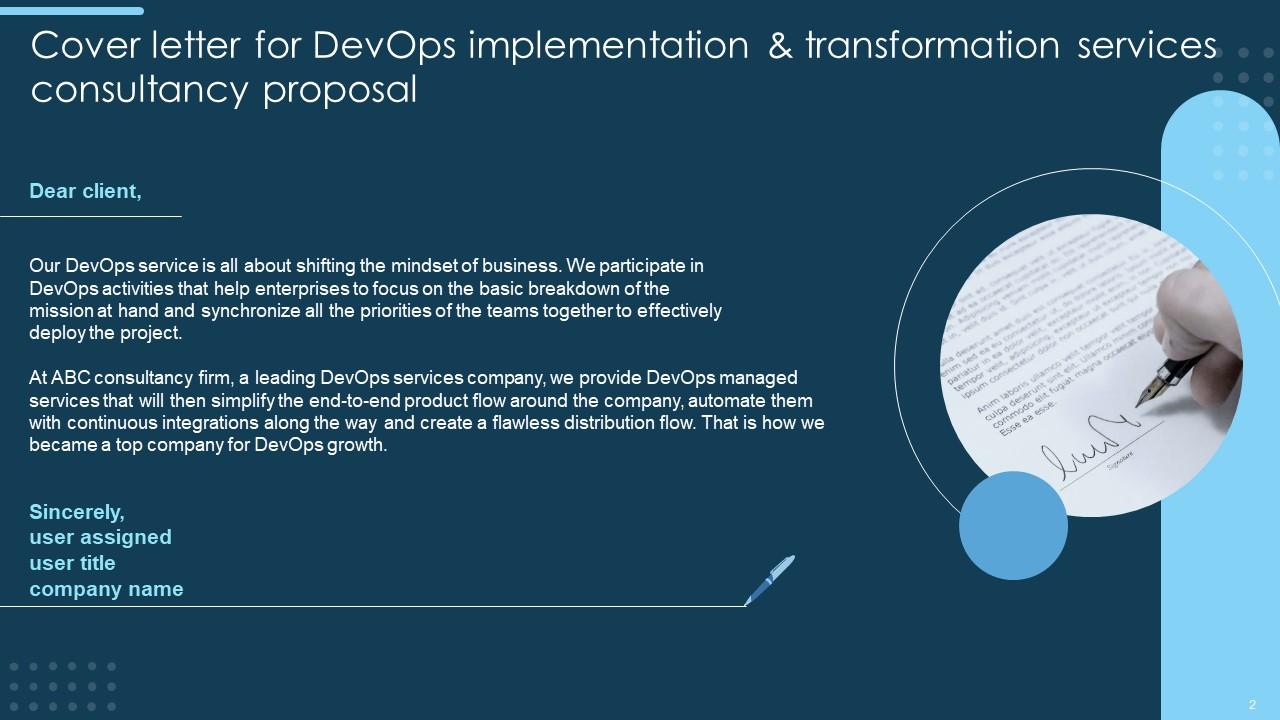
Slide 2: This slide reveals the Cover letter for the presentation.
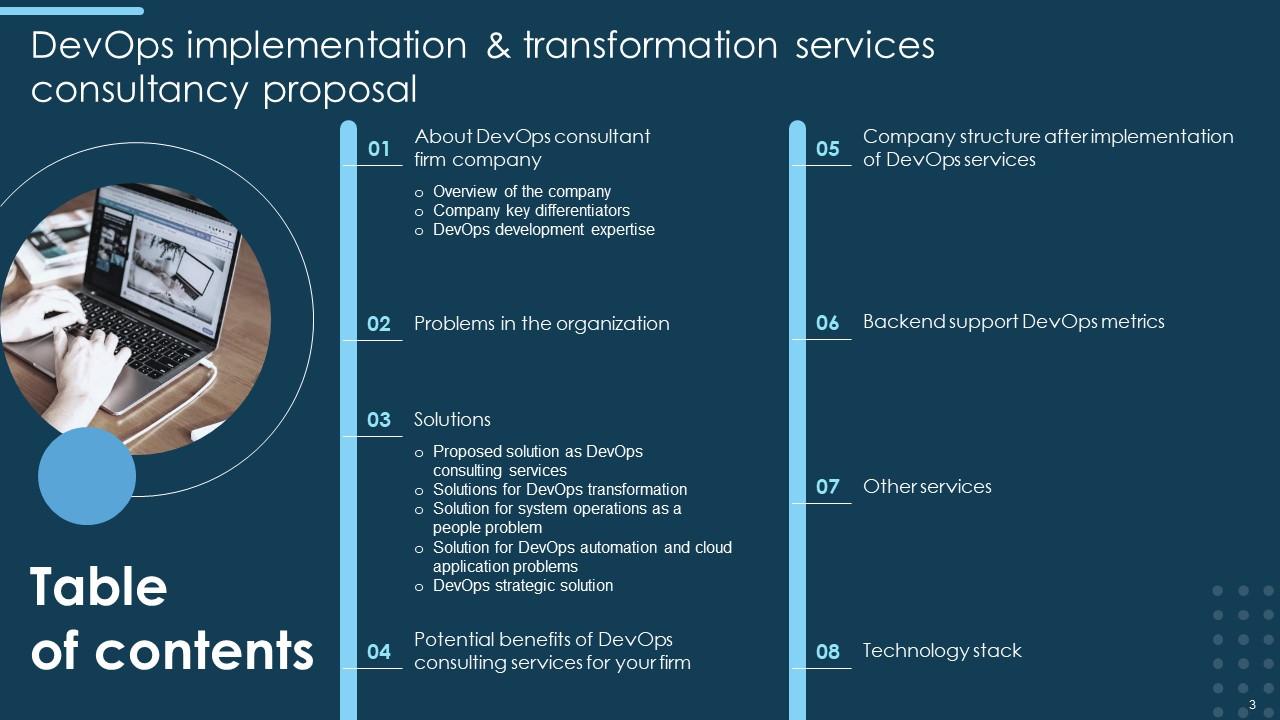
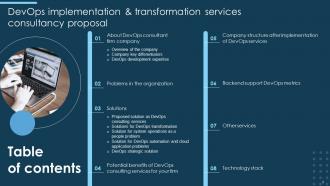
Slide 3: This slide incorporates the Table of contents.
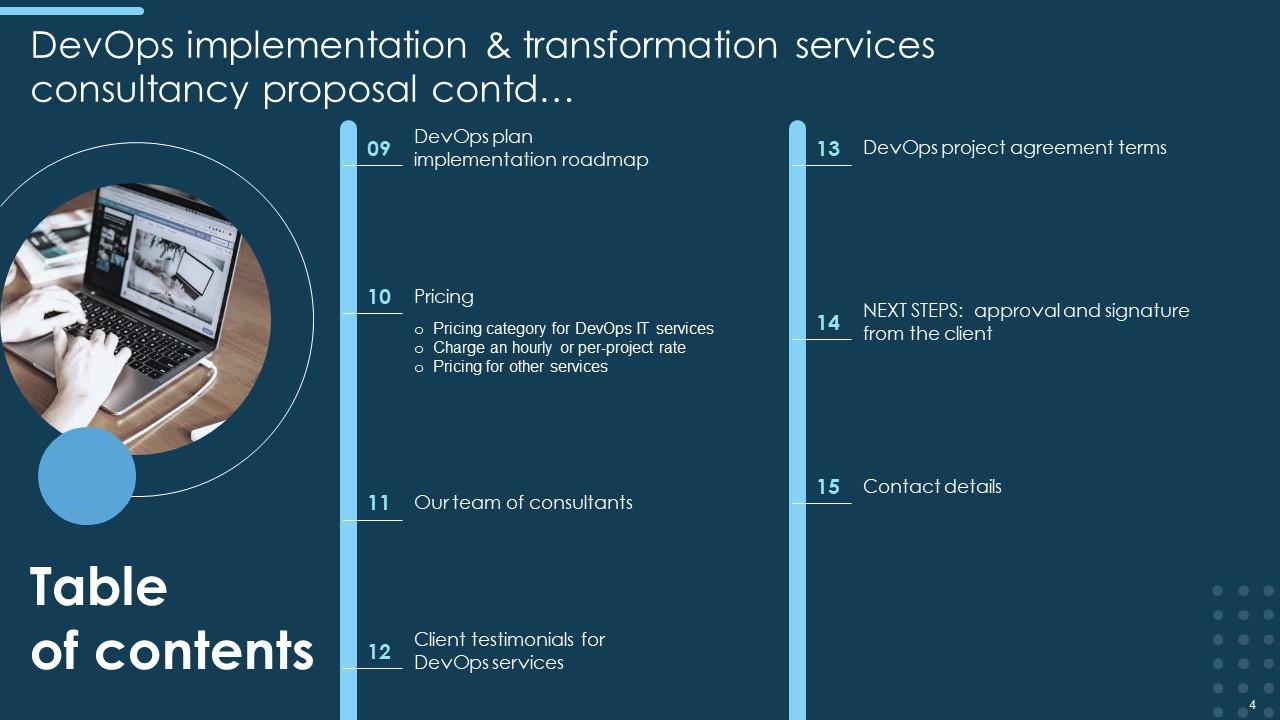
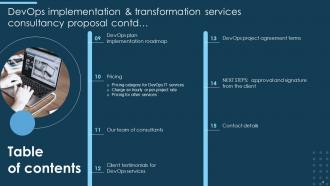
Slide 4: This is yet another slide continuing the Table Of Contents.
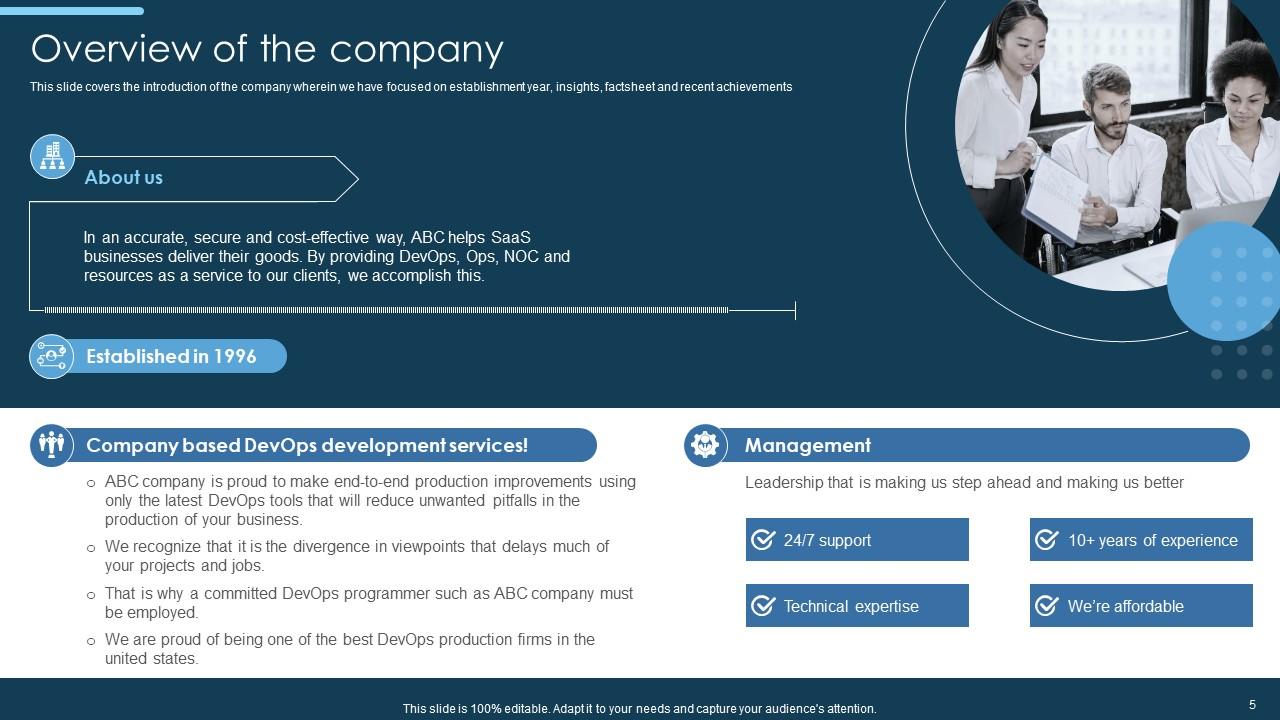
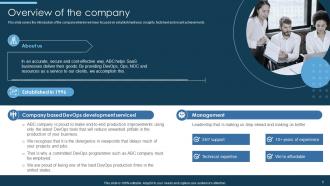
Slide 5: This slide presents the Overview of the company.
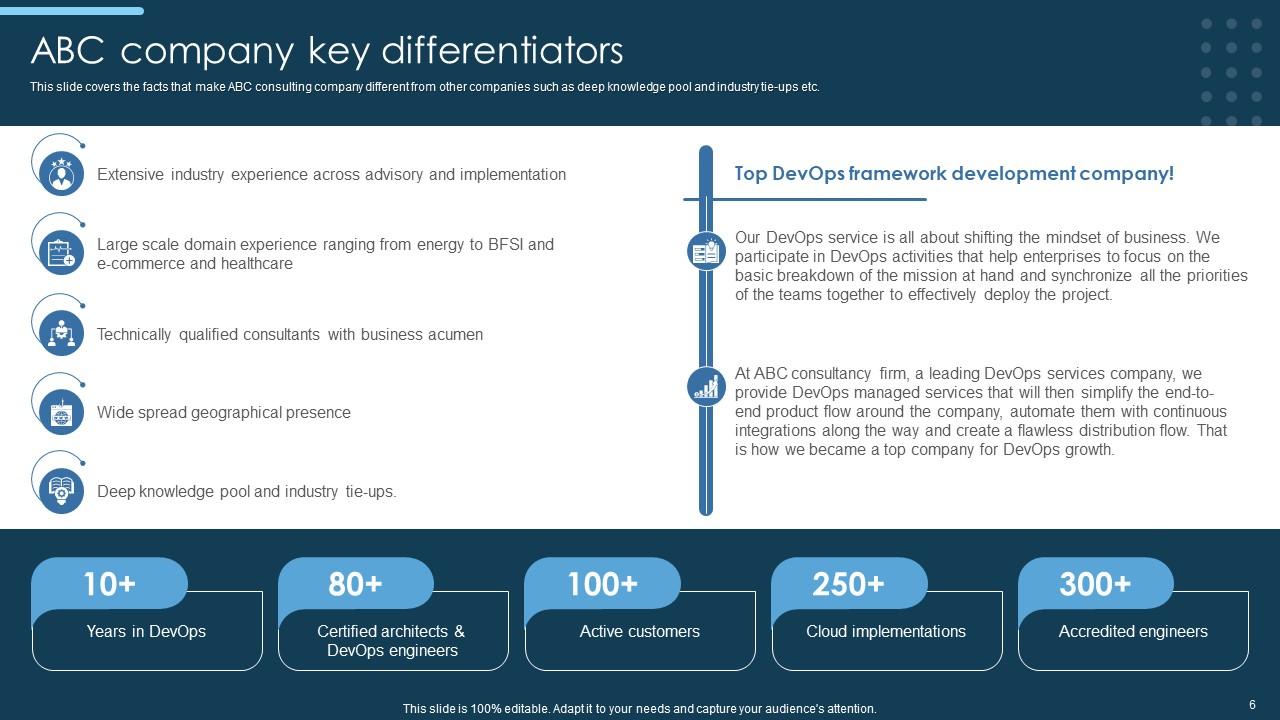
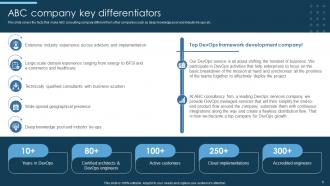
Slide 6: This slide covers the facts that make ABC consulting company different from other companies.
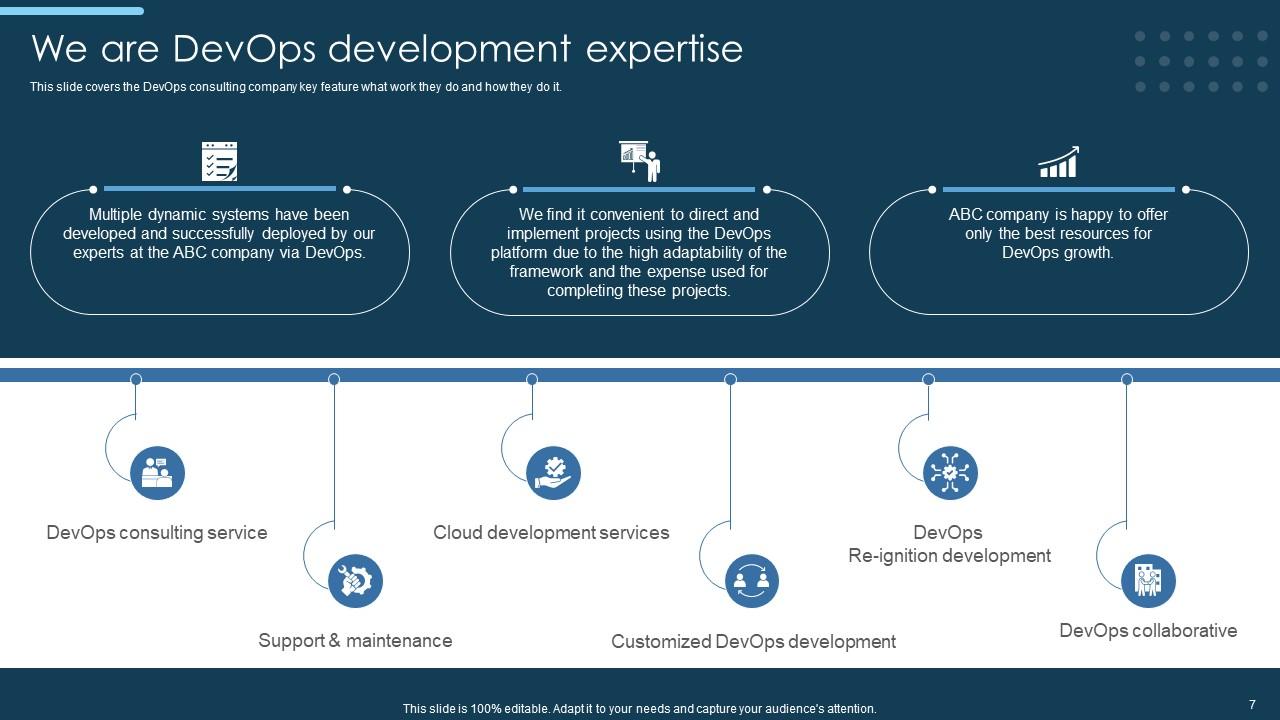
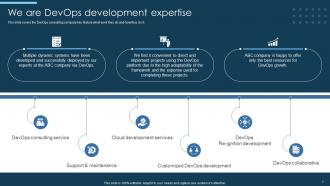
Slide 7: This slide showcases the key feature of the comapny like what work they do and how they do it.
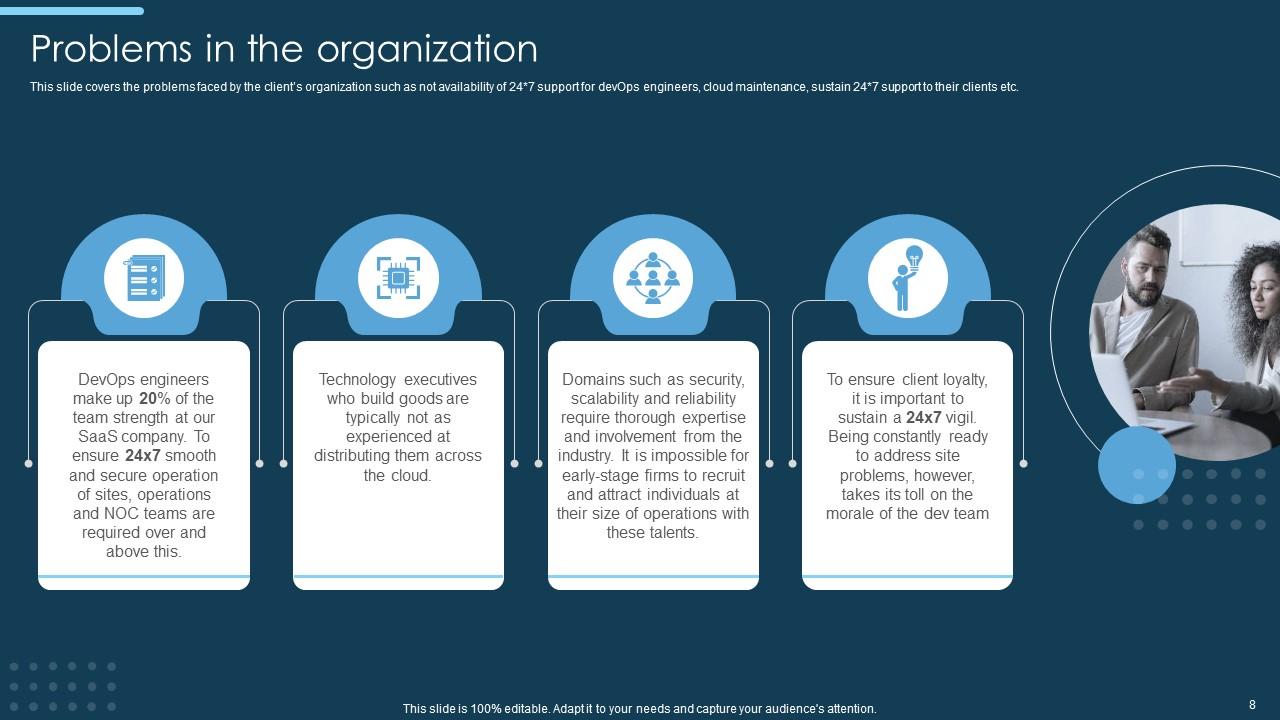
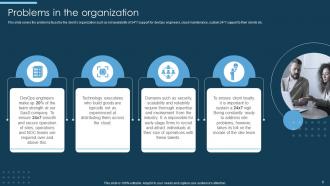
Slide 8: This slide includes the problems faced by the client’s organization.
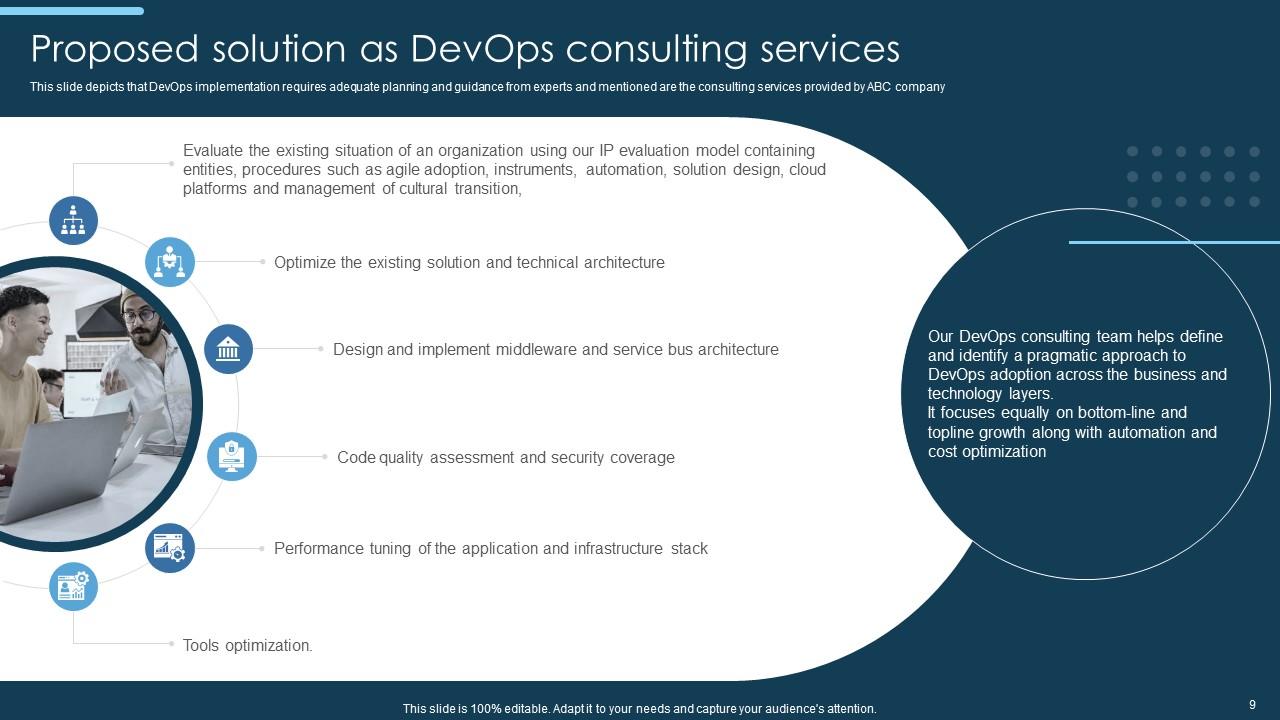
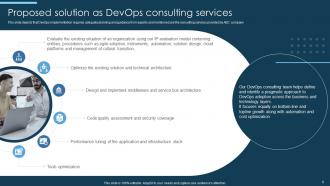
Slide 9: This slide depicts that DevOps implementation requires adequate planning and guidance from experts.
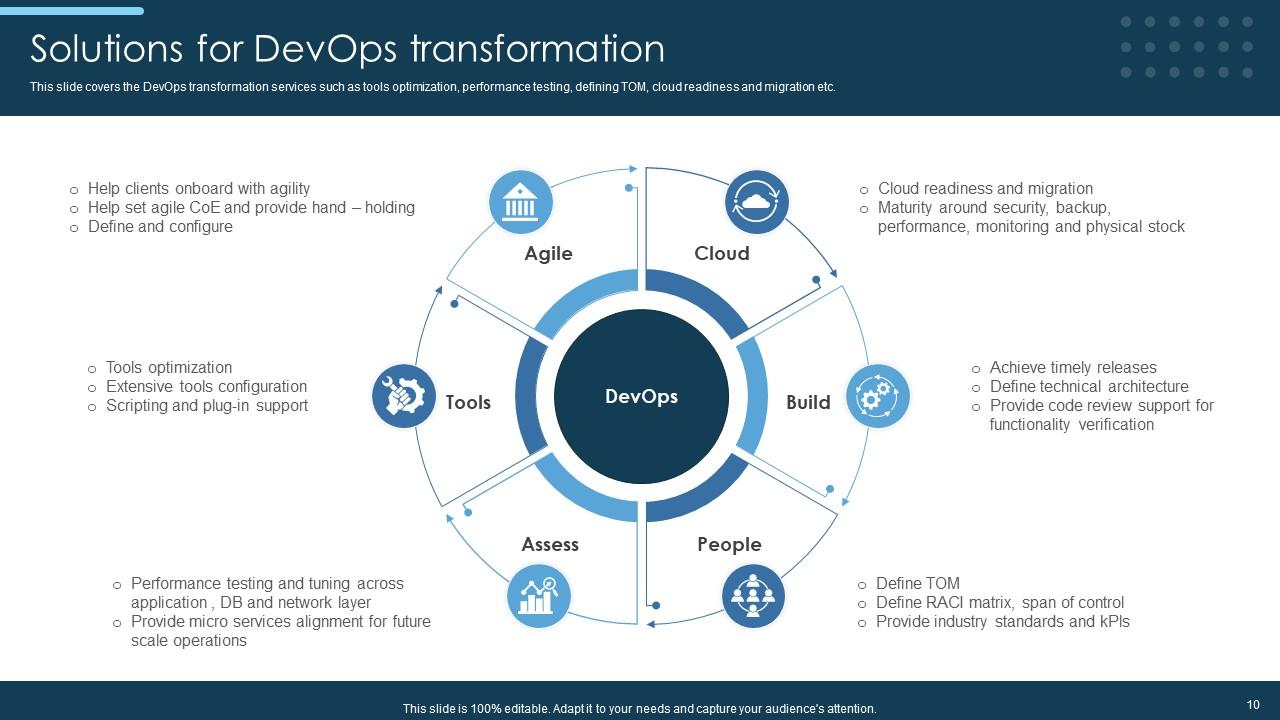
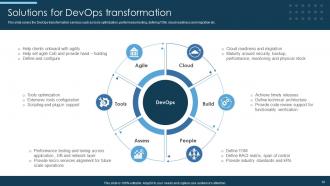
Slide 10: This slide exhibits the Solutions for DevOps transformation.
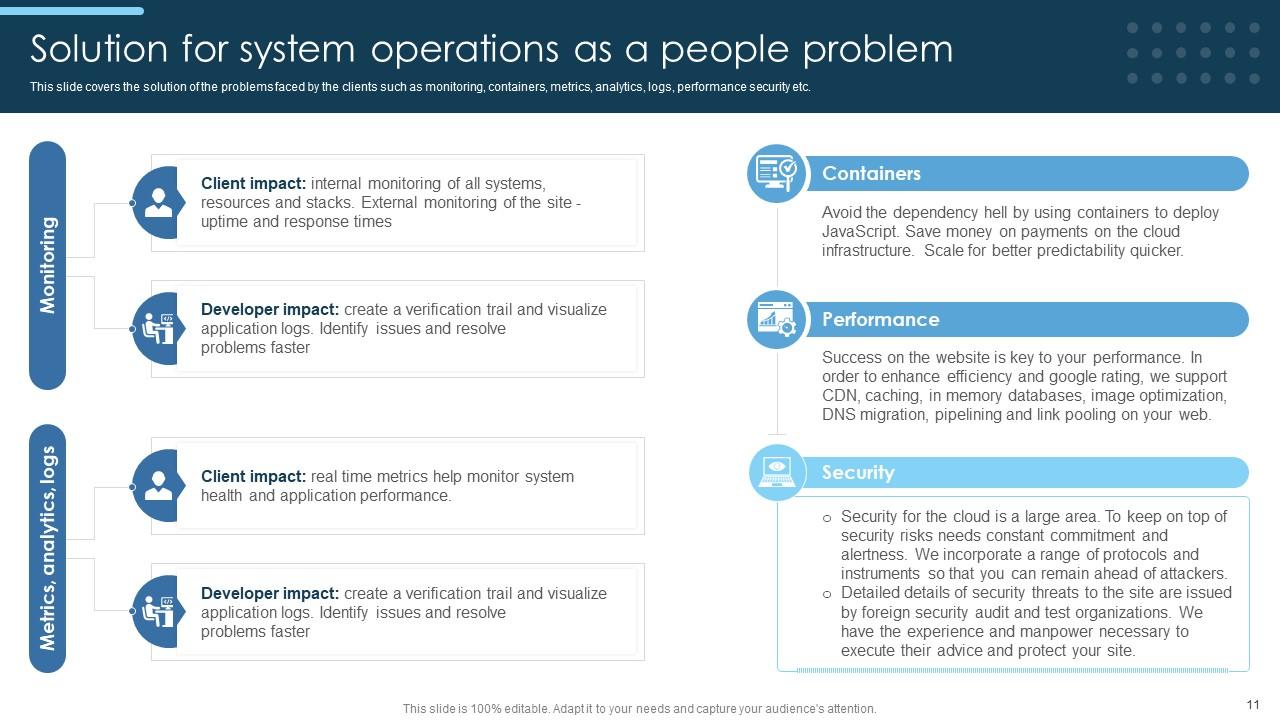
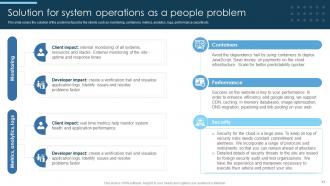
Slide 11: This slide covers the solution of the problems faced by the clients.
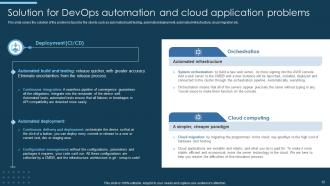
Slide 12: This slide mentions the solution of the problems faced by the clients like automated build testing, automated deployment, etc.
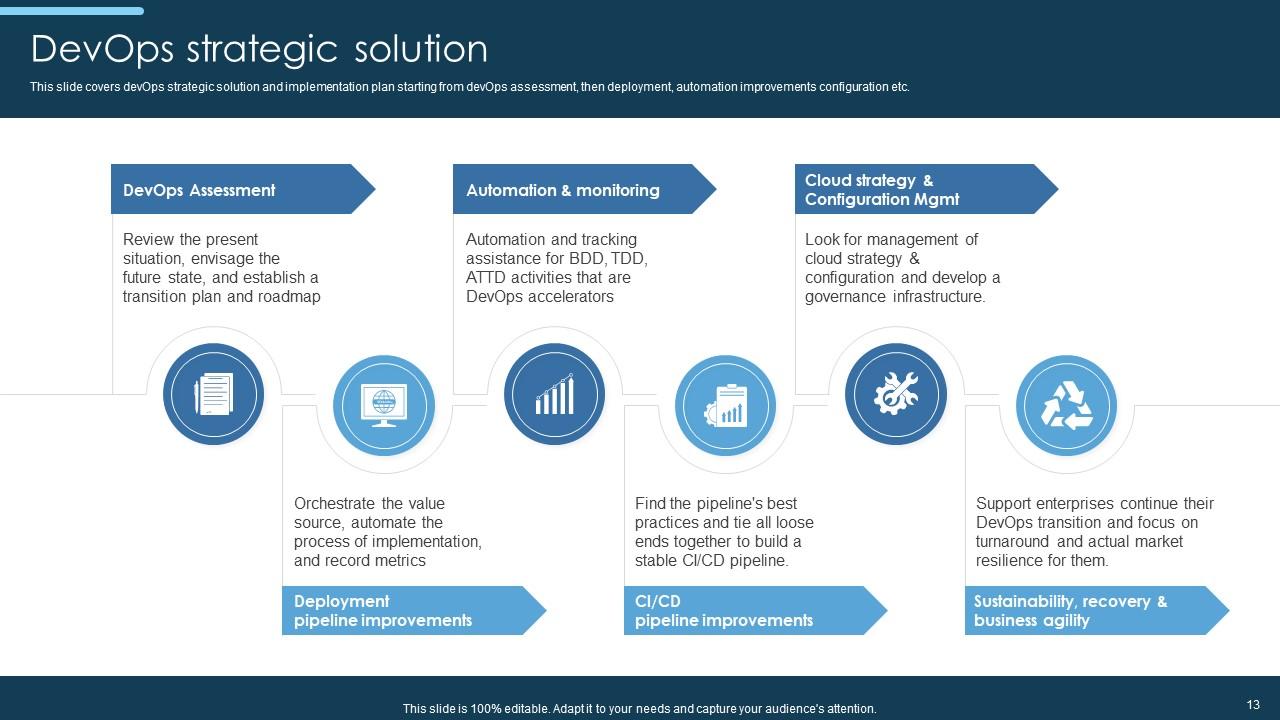
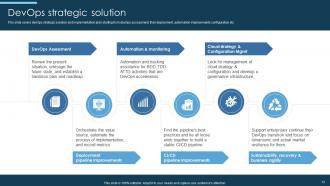
Slide 13: This slide portrays the devOps strategic solution and implementation plan starting from devOps assessment.
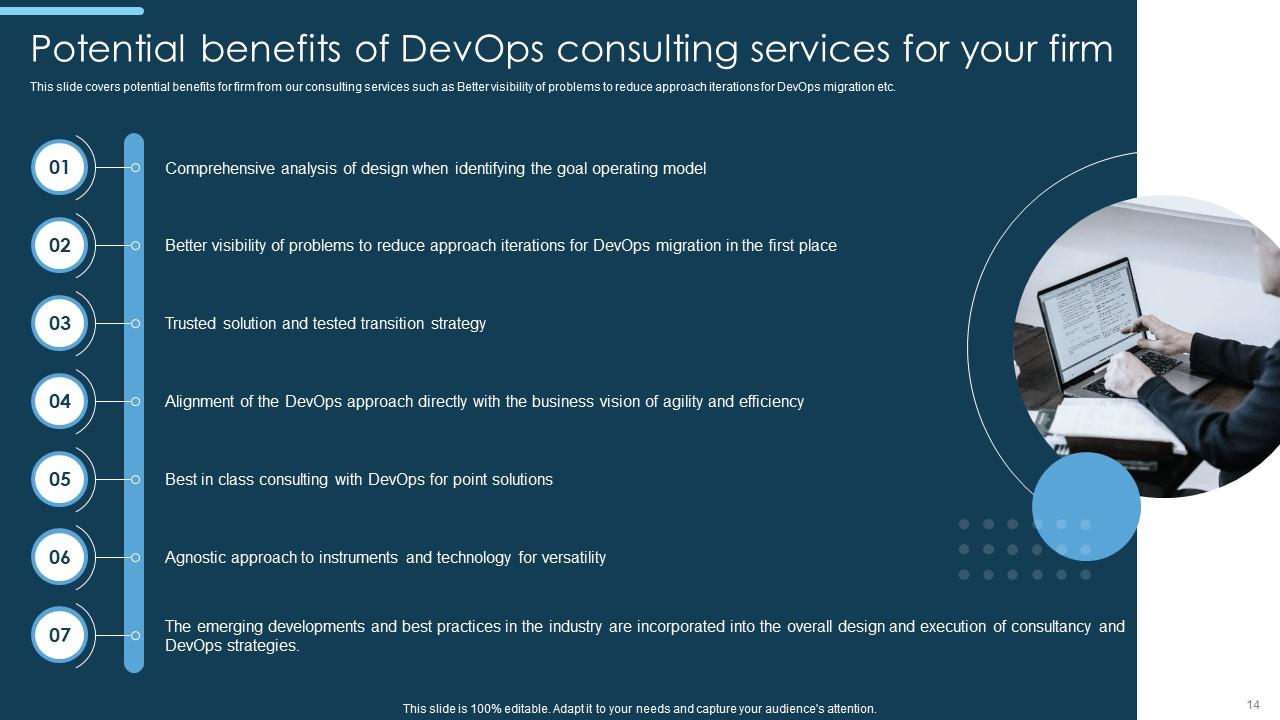
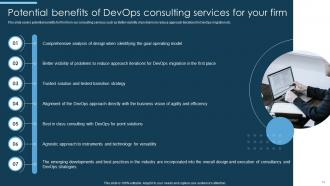
Slide 14: This slide exhibits the Potential benefits of DevOps consulting services for your firm.
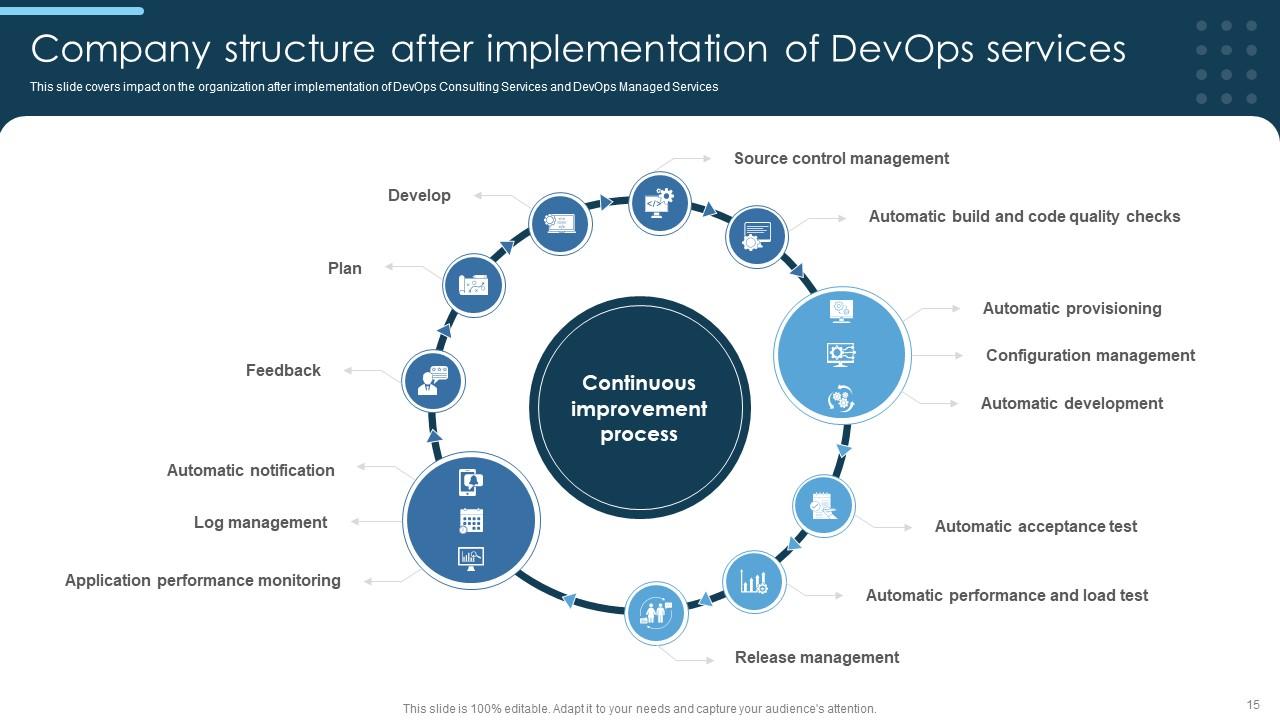
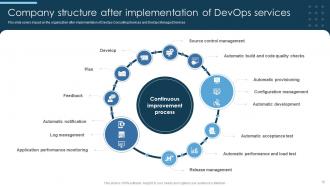
Slide 15: This slide reveals the impact on the organization after implementation of DevOps Consulting Services and DevOps Managed Services.
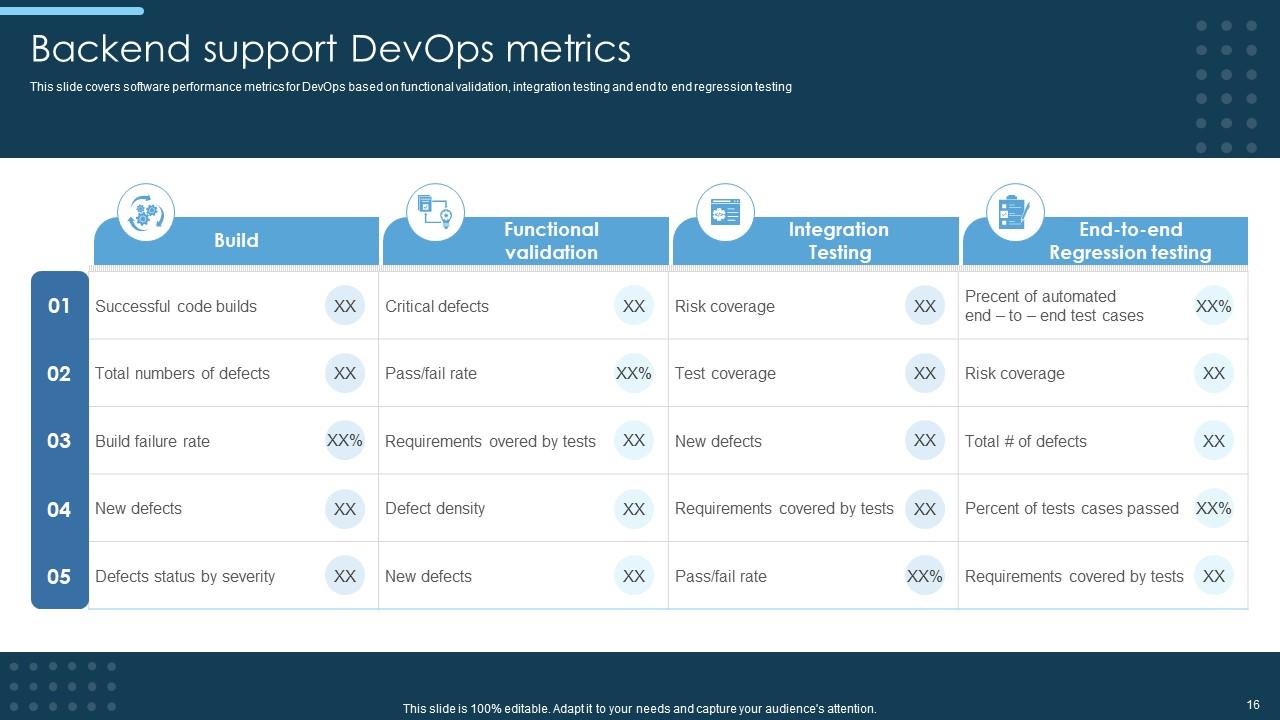
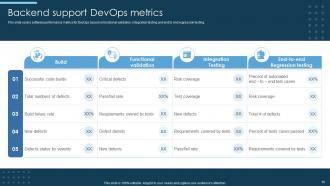
Slide 16: This slide highlights the Backend support DevOps metrics.
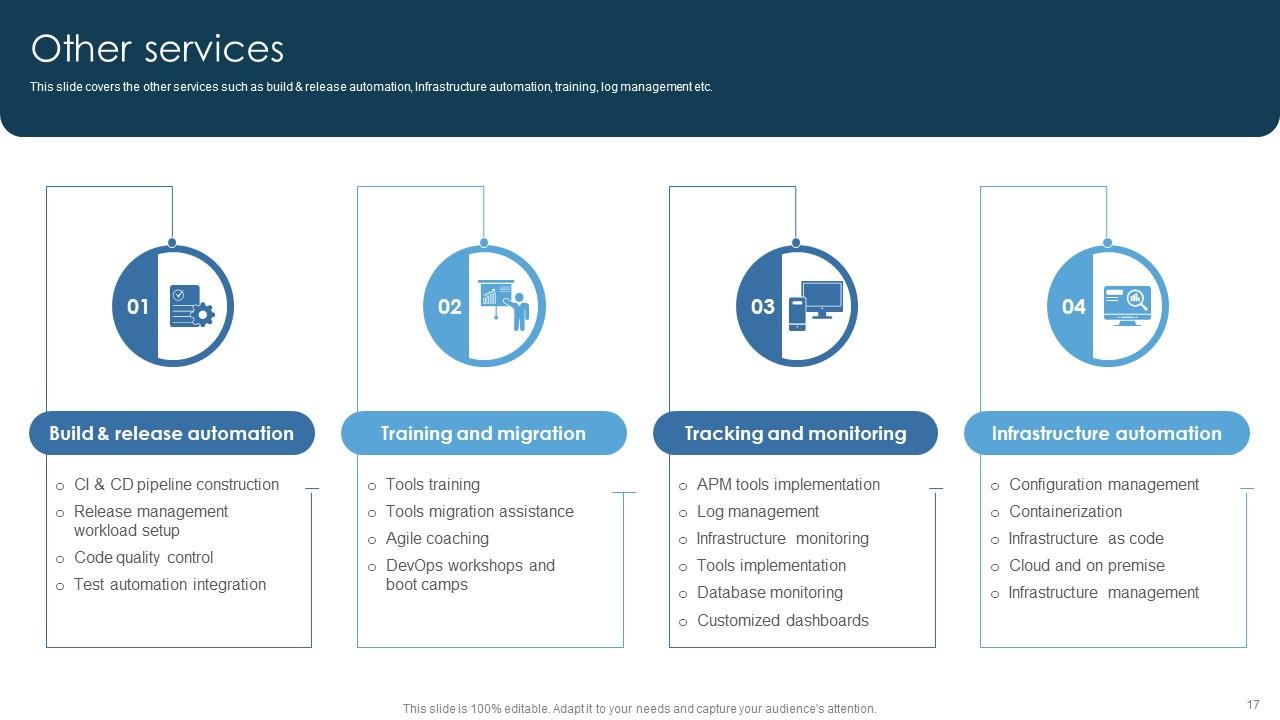
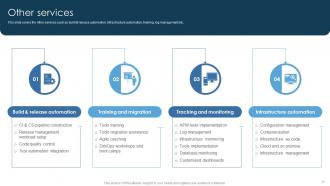
Slide 17: This slide covers the other services such as build & release automation, Infrastructure automation, training, log management etc.
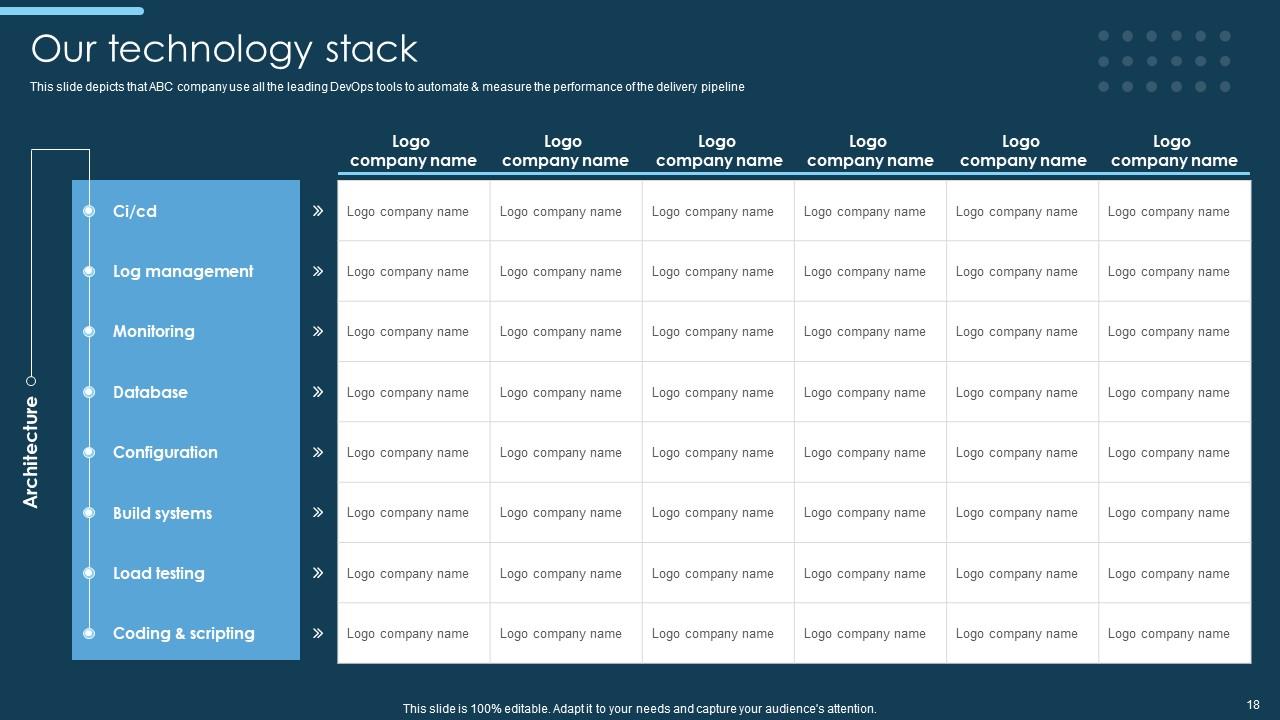
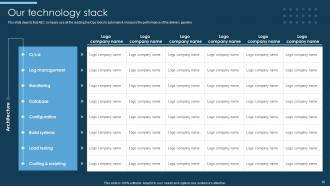
Slide 18: This slide displays that ABC company uses all the leading DevOps tools to automate & measure the performance of the delivery pipeline.
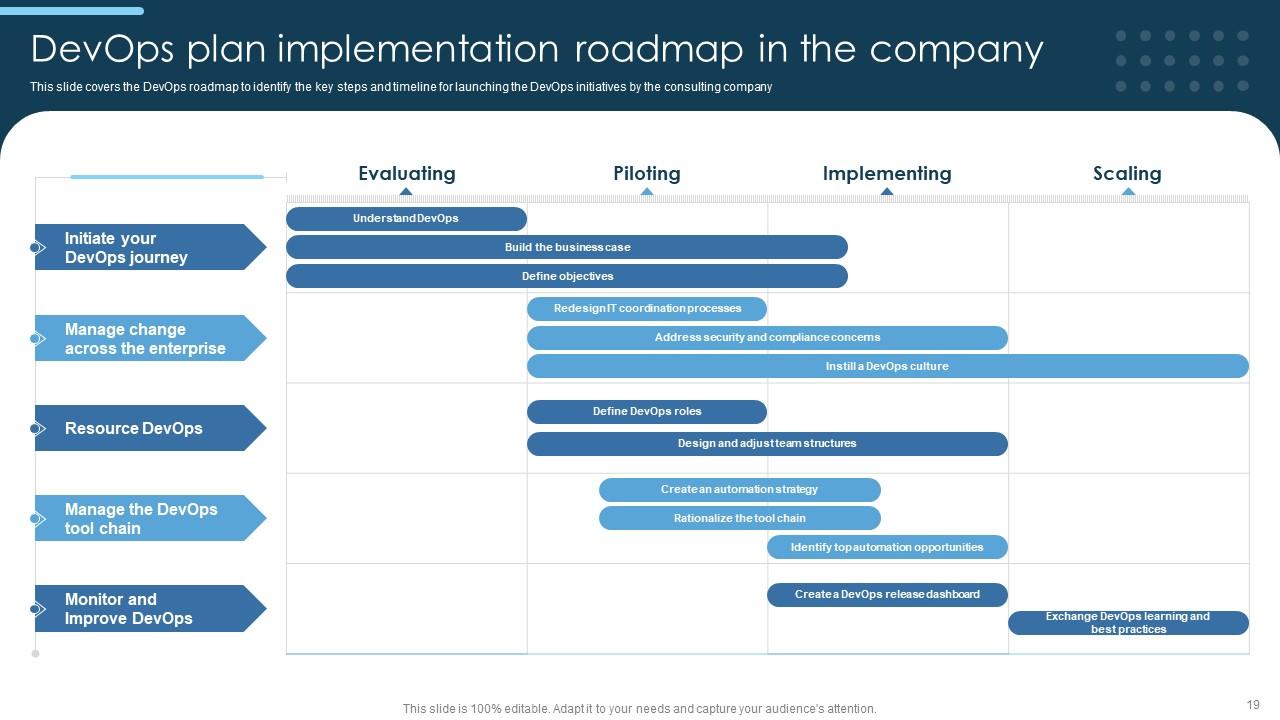
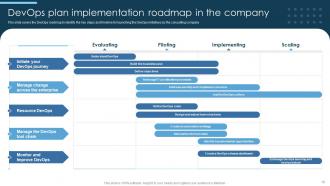
Slide 19: This slide shows the DevOps roadmap to identify the key steps and timeline for launching the DevOps initiatives by the consulting company.
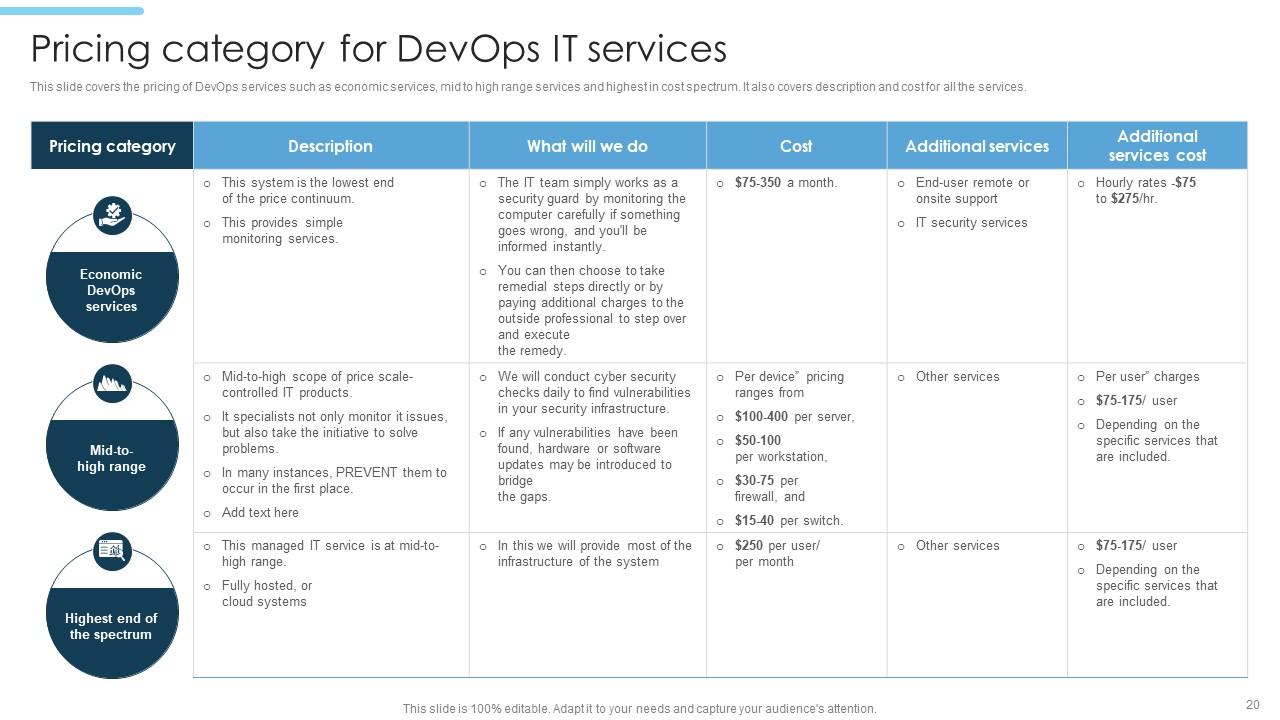
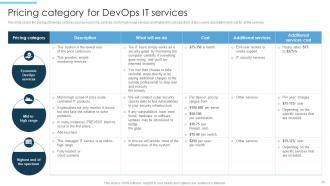
Slide 20: This slide talks about the Pricing category for DevOps IT services.
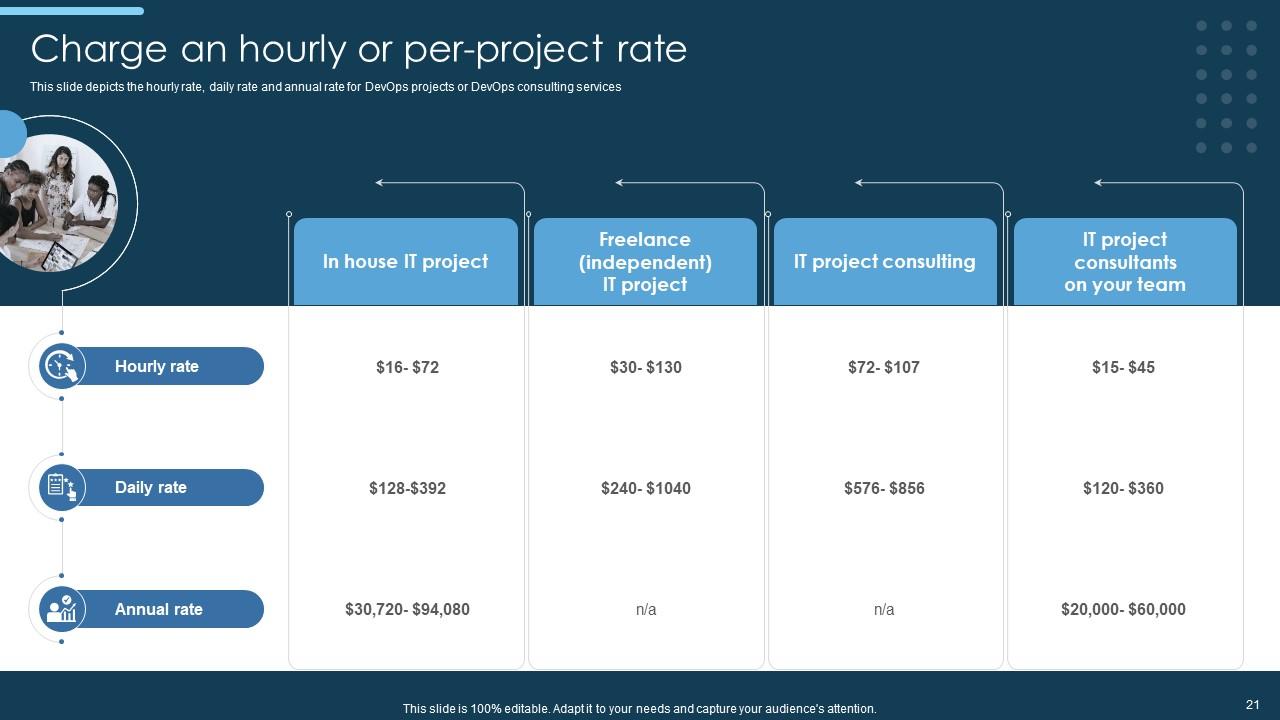
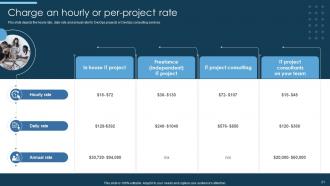
Slide 21: This slide depicts the hourly rate, daily rate and annual rate for DevOps projects or DevOps consulting services.
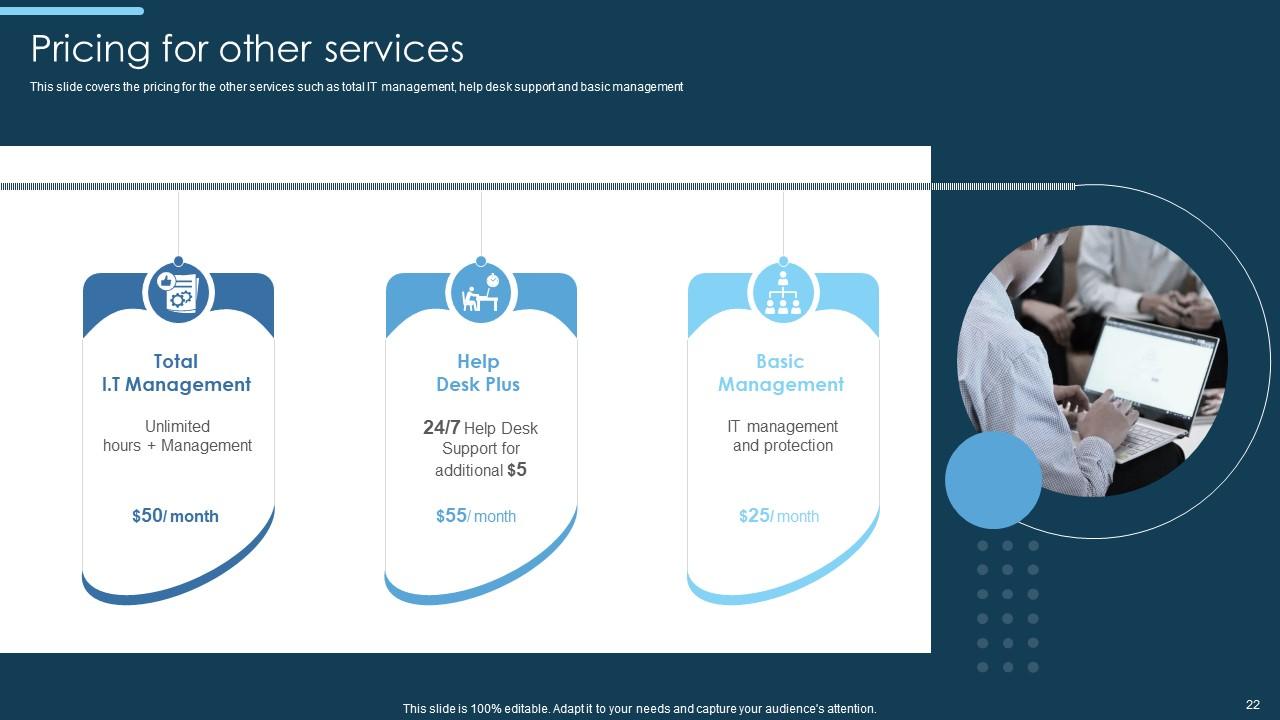
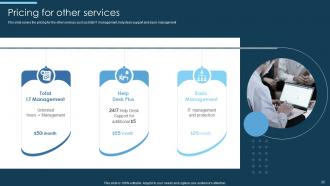
Slide 22: This slide deals with Pricing for other services.
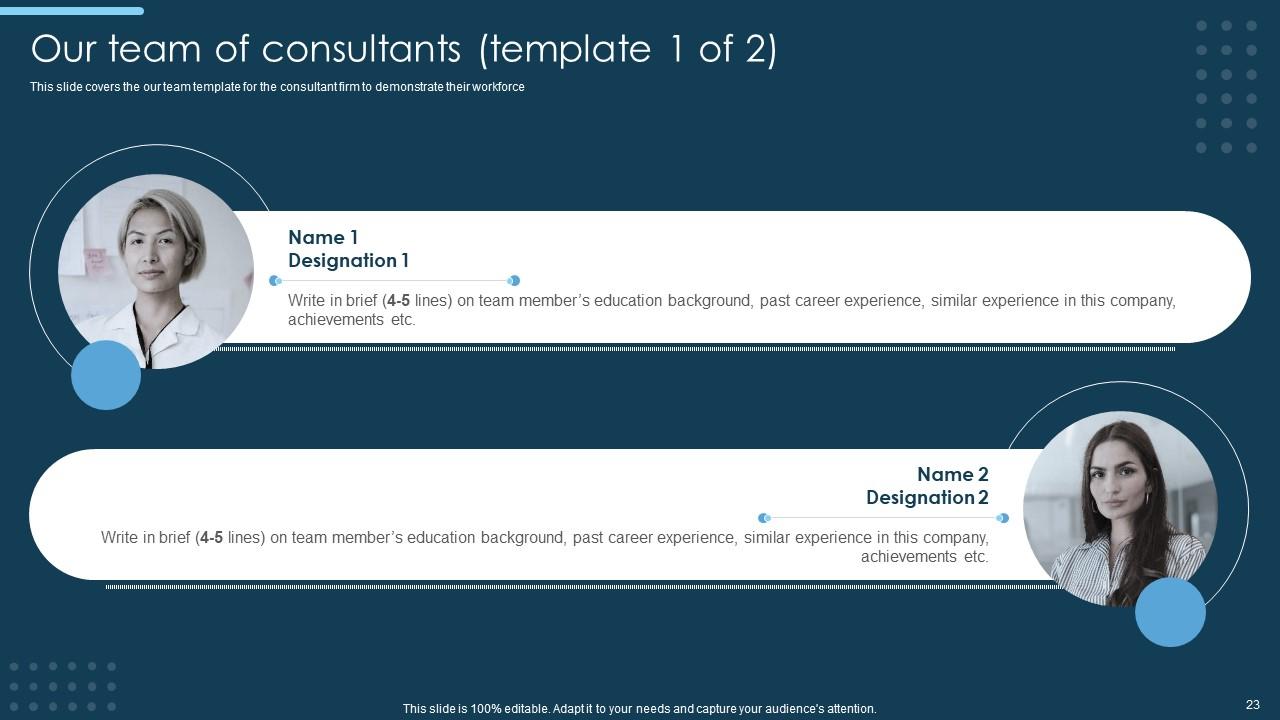
Slide 23: This is our team template for mentioning about the organization's team members.
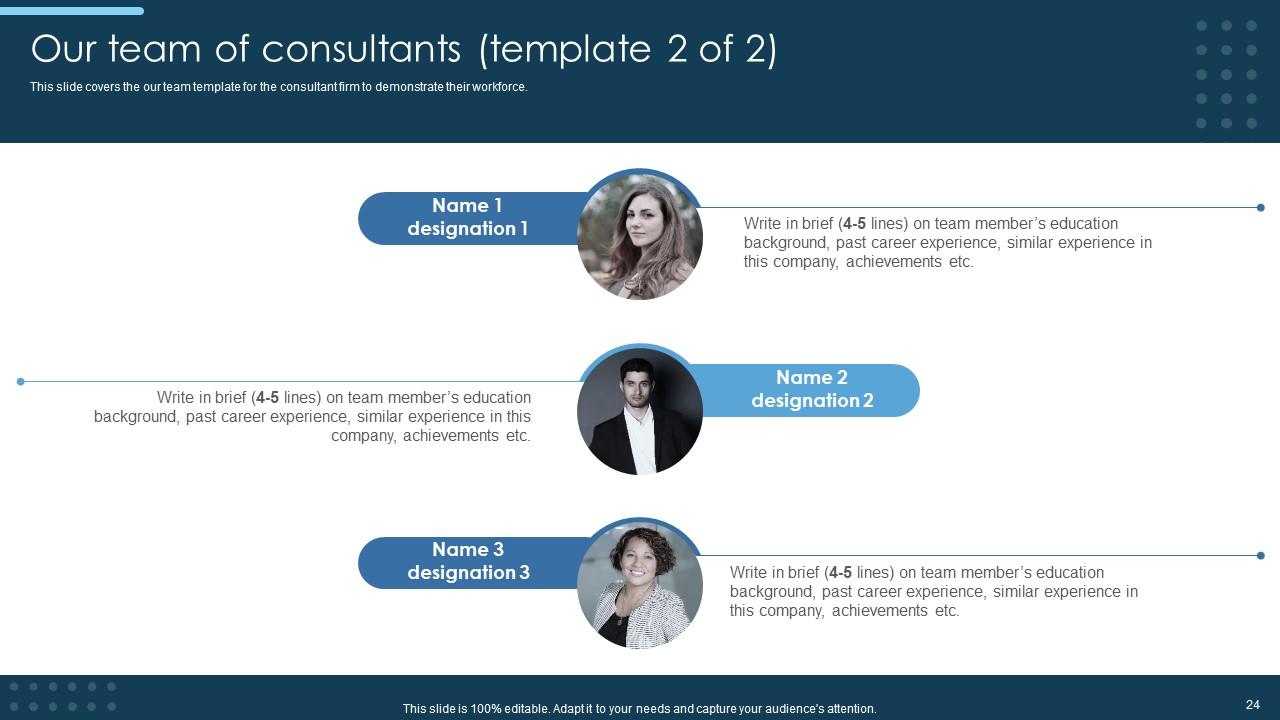
Slide 24: This slide continues our team template for the consultant firm to demonstrate their workforce.
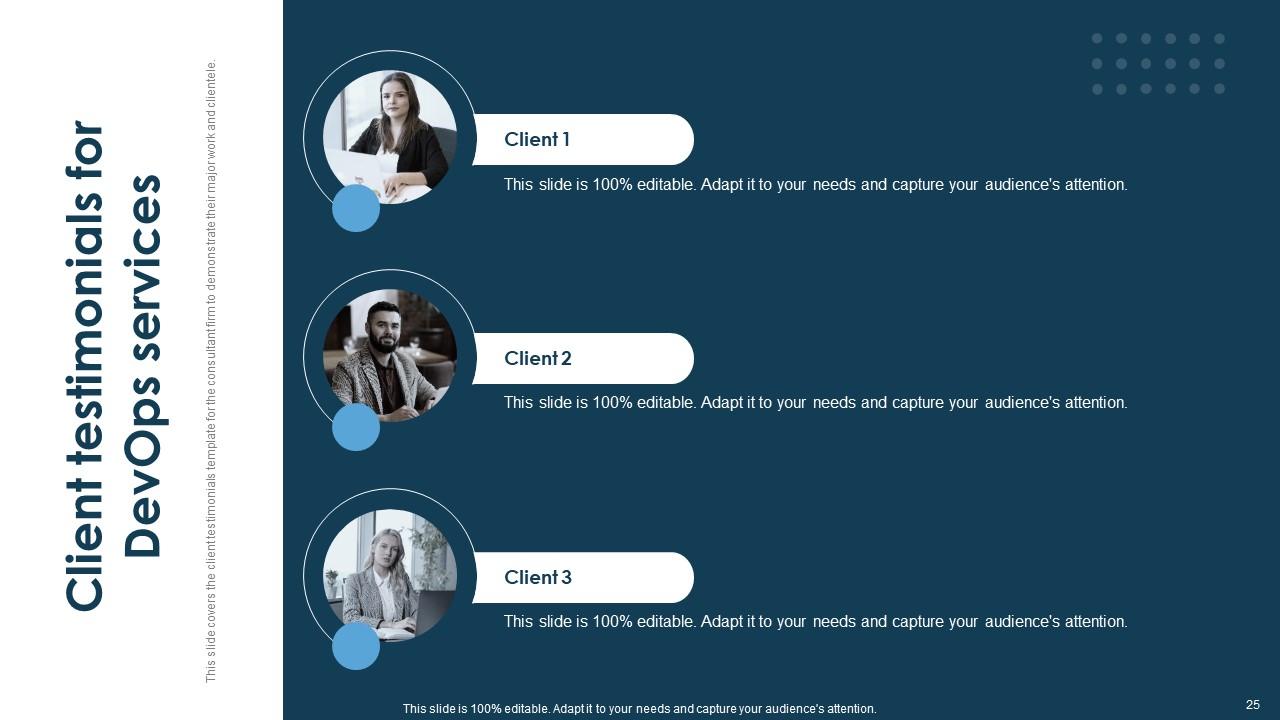
Slide 25: This slide showcases the client testimonials template for the consultant firm to demonstrate their major work and clientele.
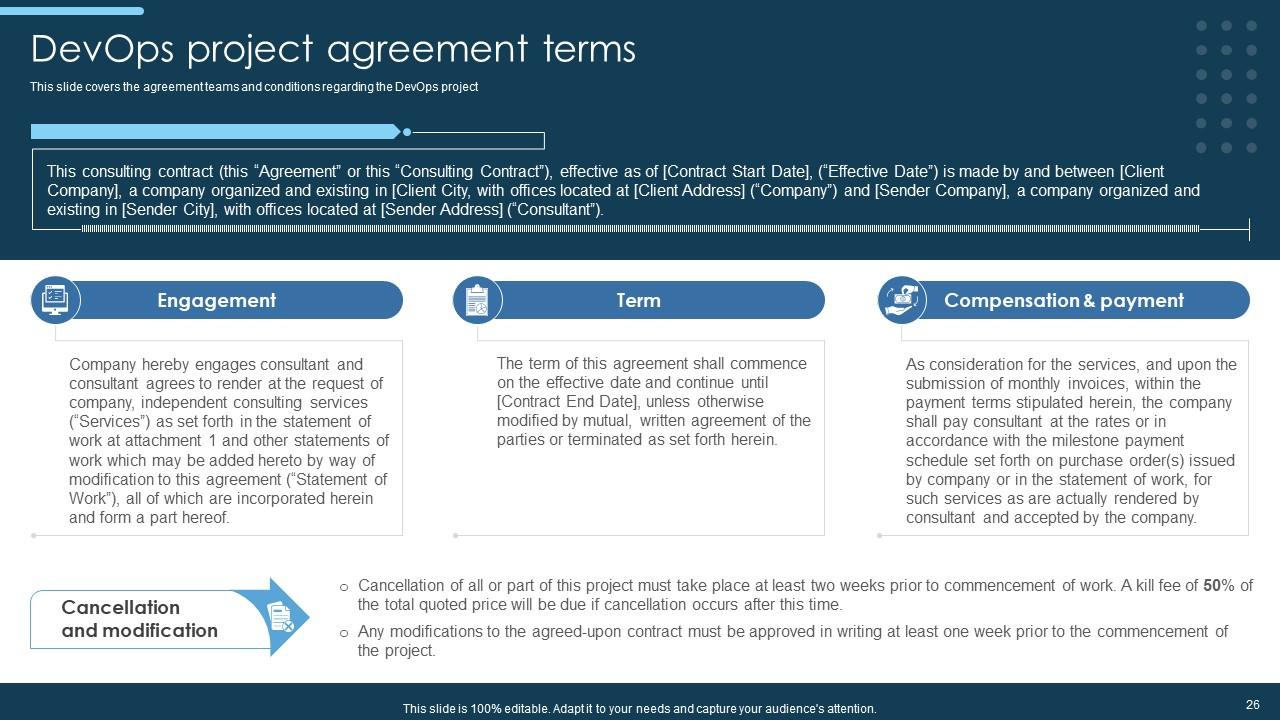
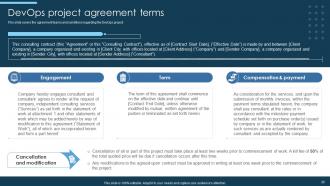
Slide 26: This slide covers the agreement teams and conditions regarding the DevOps project.
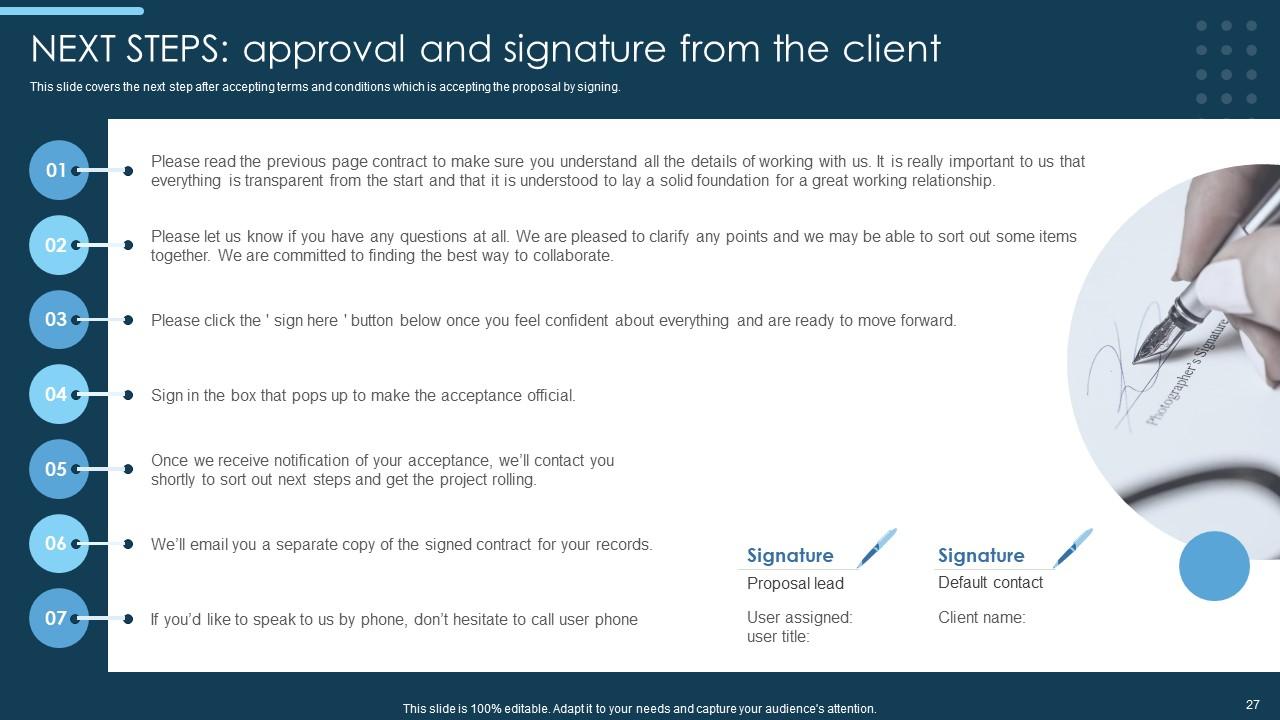
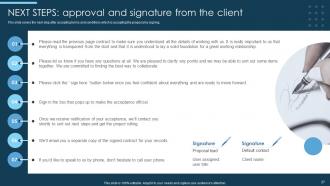
Slide 27: This slide portrays the next step after accepting terms and conditions which is accepting the proposal by signing.
Slide 28: This slide reveals the firm's contact details.
Slide 29: This slide is used for depicting some Additional information.
Slide 30: This is the Icons slide containing all the Icons used in the plan.
Slide 31: This is the About us slide. State your company-related information here.
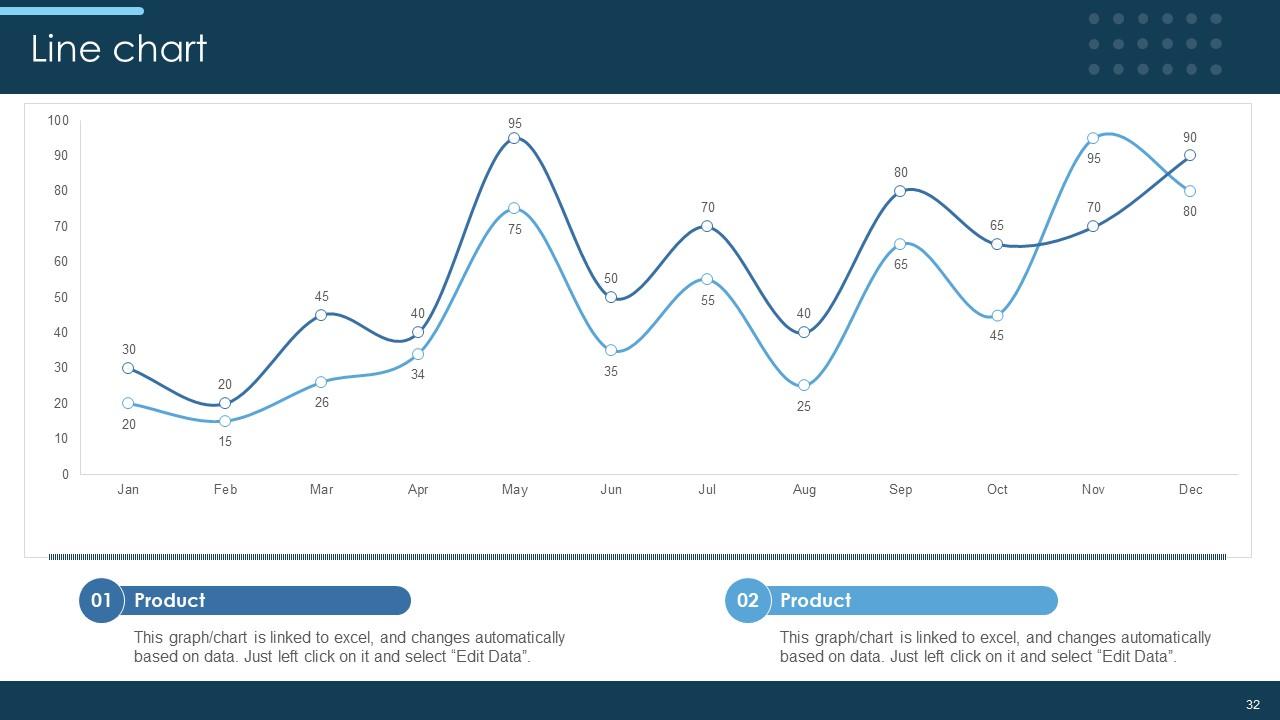
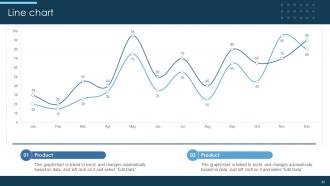
Slide 32: This slide presents the Line chart.
Slide 33: This is the Target slide. State your organization's targets here.
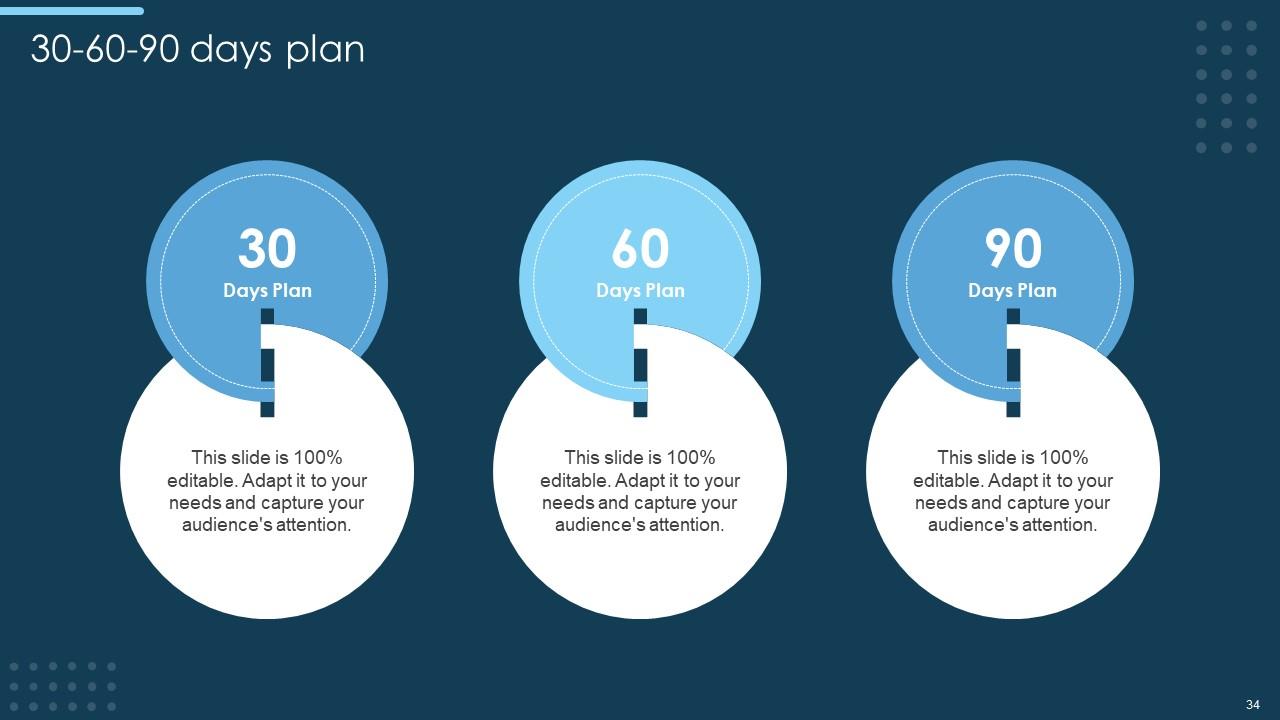
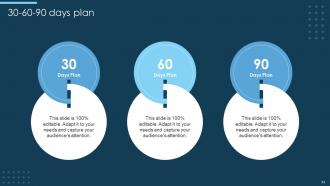
Slide 34: This is the 30-60-90 days plan slide for effective planning.
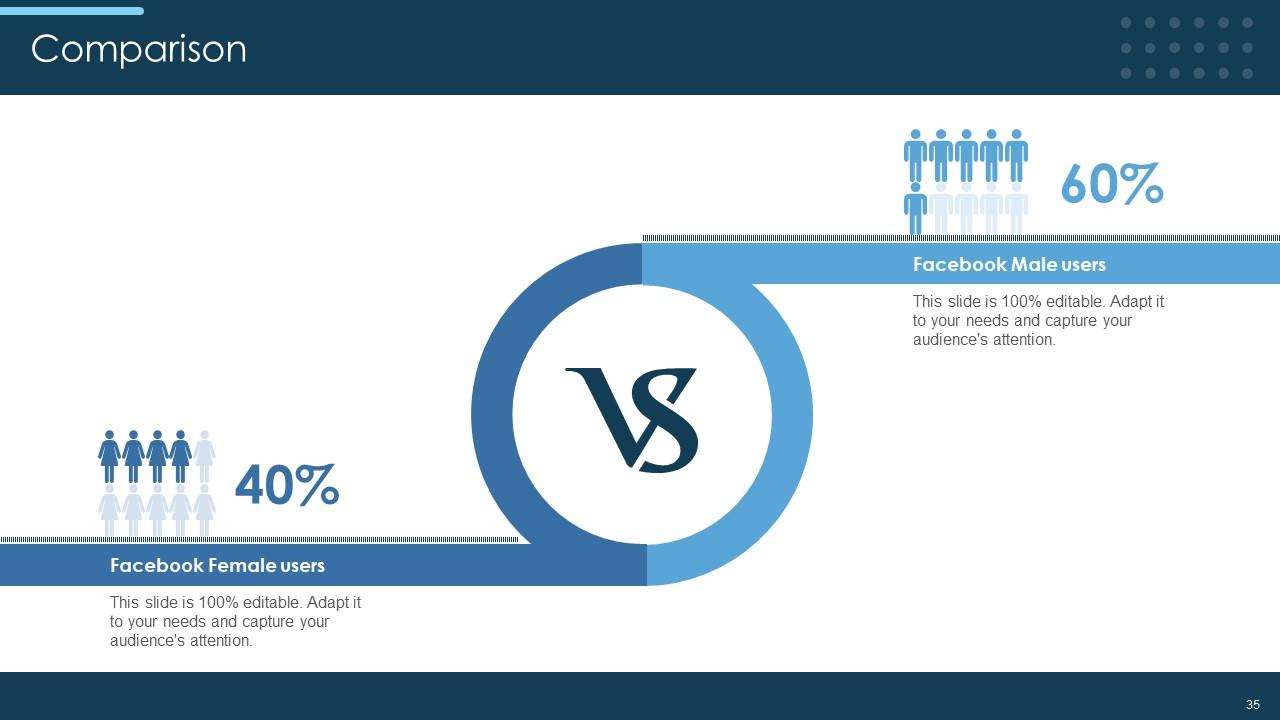
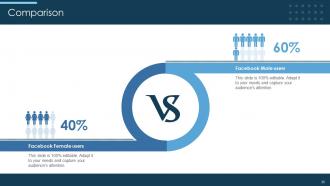
Slide 35: This slide is used for the purpose of Comparison.
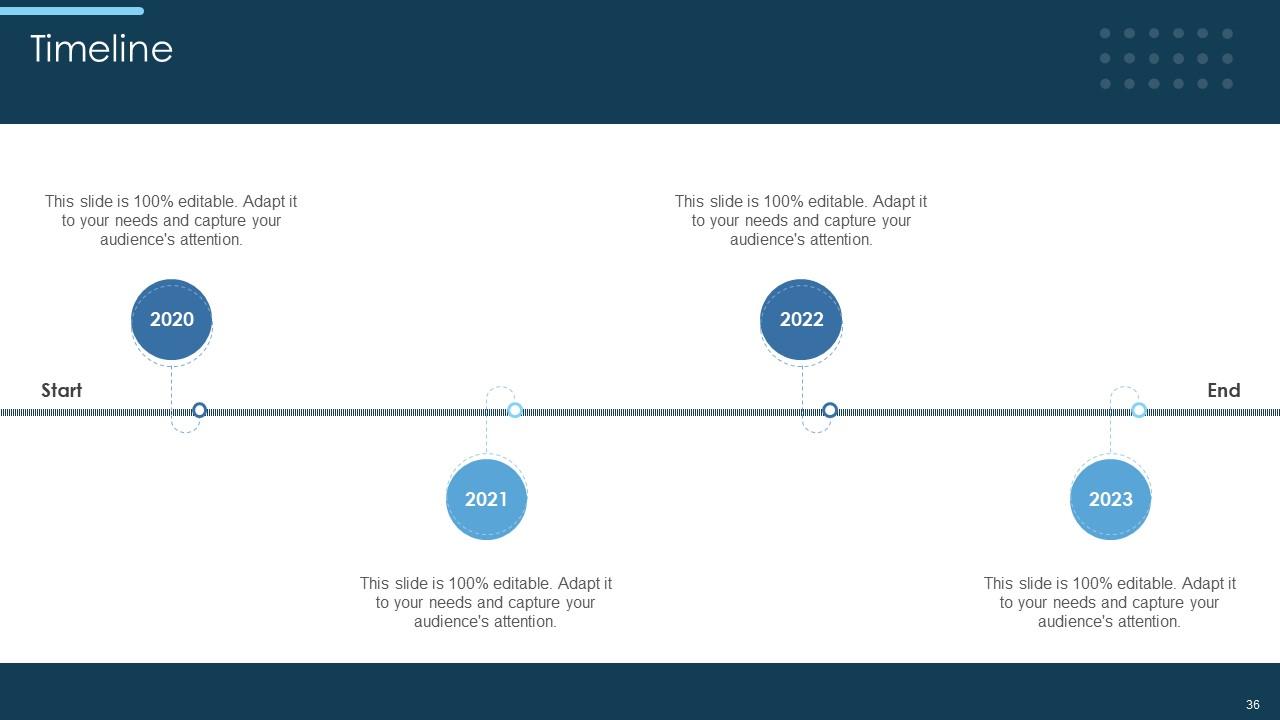
Slide 36: This slide reveals the Company Timeline.
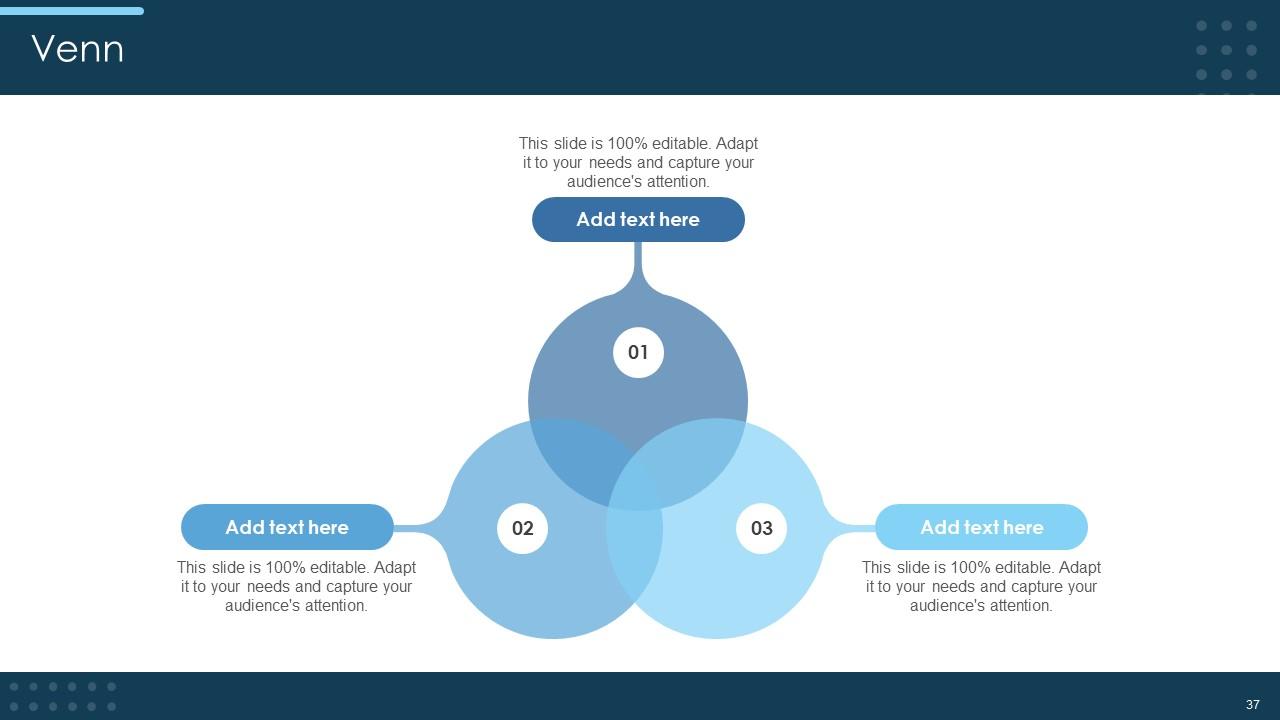
Slide 37: This is the Venn Diagram slide.
Slide 38: This is the Puzzle sldie with related imagery.
Slide 39: This slide contains the Post it notes for reminders nad deadlines.
Slide 40: This is the Thank You slide for acknowledgement.
DevOps Implementation And Transformation Services Consultancy Proposal Powerpoint Presentation Slides with all 45 slides:
Use our DevOps Implementation And Transformation Services Consultancy Proposal Powerpoint Presentation Slides to effectively help you save your valuable time. They are readymade to fit into any presentation structure.
-
The slides are remarkable with creative designs and interesting information. I am pleased to see how functional and adaptive the design is. Would highly recommend this purchase!
-
Amazing slides! Unique, attractive, and easy to understand.
