Devops Infinity für einen konstanten Herstellungsprozess
Try Before you Buy Download Free Sample Product
Audience
Editable
of Time
Unsere Devops Infinity für einen konstanten Herstellungsprozess wurden aktuell entwickelt, um jedem Thema einen attraktiven Hintergrund zu bieten. Verwenden Sie sie, um wie ein Präsentationsprofi auszusehen.
Funktionen dieser PowerPoint-Präsentationsfolien:
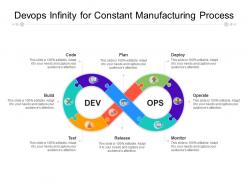
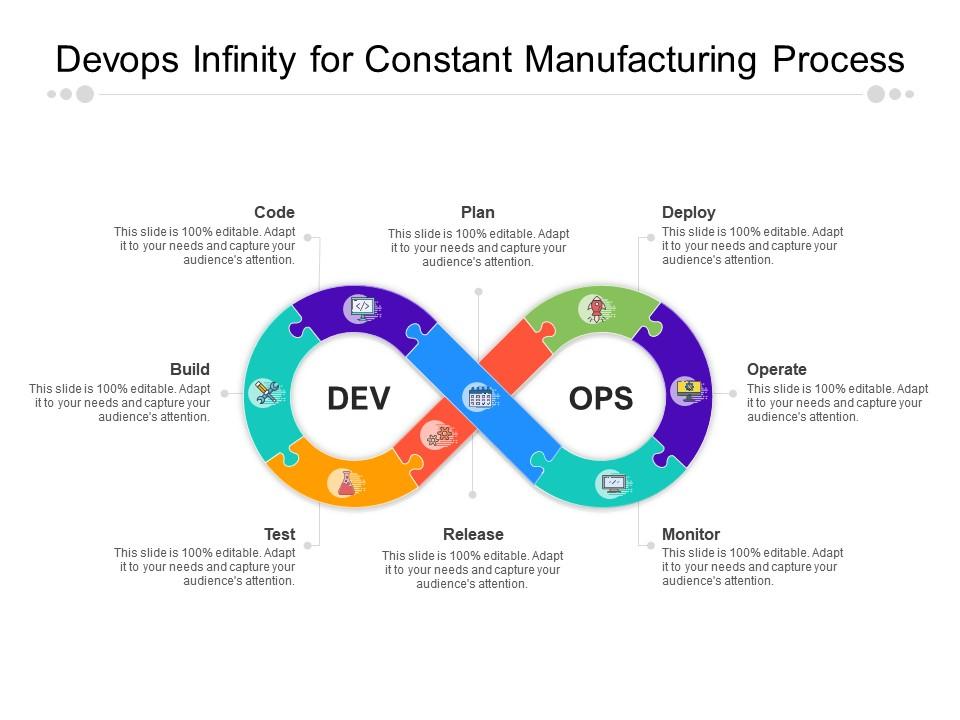
Diesen Foliensatz mit dem Namen Devops Infinity For Constant Manufacturing Process präsentieren. Dies ist ein achtstufiger Prozess. Die Phasen in diesem Prozess sind Planen, Bereitstellen, Betreiben, Überwachen, Freigeben, Testen, Erstellen und Programmieren. Dies ist eine vollständig editierbare PowerPoint-Präsentation und steht zum sofortigen Download zur Verfügung. Laden Sie es jetzt herunter und beeindrucken Sie Ihr Publikum.
People who downloaded this PowerPoint presentation also viewed the following :
Devops Infinity für einen konstanten Herstellungsprozess mit allen 2 Folien:
Nutzen Sie unseren Devops Infinity For Constant Manufacturing Process, um Ihre wertvolle Zeit effektiv zu sparen. Sie sind vorgefertigt, um in jede Präsentationsstruktur zu passen.
FAQs for Devops infinity for
Honestly, it's mostly about speed and getting teams to actually talk to each other. Traditional manufacturing keeps everyone separated - dev, ops, production all doing their own thing. DevOps tears that down completely. You get continuous integration instead of those awful waterfall projects that drag on forever. Catching problems early becomes way easier. Manual stuff gets automated, monitoring happens in real-time, and teams collaborate from the start rather than throwing things over the fence. Oh, and pro tip - find one small handoff between your teams right now. That's where you'll want to automate first.
So basically you need your manufacturing and IT people to stop working in separate bubbles. Get them doing joint planning sessions and sharing dashboards so they can see what each other is dealing with. Cross-functional teams work great too. The automation part is where things get interesting - both sides start making sense to each other when they're automating stuff. Same tools mean everyone's looking at identical data, which honestly just makes life easier. I'd say pick one small manufacturing process and have both teams automate it together first. Then expand from there once you've got momentum.
Dude, CI/CD is seriously worth looking into for manufacturing. It automates all those software updates to your production systems, so you're not dealing with manual deployments and the downtime that comes with them. Firmware updates, quality control tweaks, process changes - everything rolls out way faster. The best part? You'll catch problems through automated testing before they mess up your actual production line. And if something does break (which happens, let's be real), you can roll back quick instead of panicking at 2am trying to fix things. My advice - test it on just one line first. Once you see how smooth it runs, you'll want it everywhere.
So automation is what actually makes DevOps work in manufacturing. It connects your dev cycles with the physical production stuff. You can test control systems automatically, push software updates to production lines without stopping everything, monitor equipment - all that good stuff. Trust me, coordinating between IT and ops teams manually is absolute hell. I'd definitely start small though - maybe just one production line? Get the deployment pipeline working there first, then expand once you've got proof it actually works. Makes the whole thing way less overwhelming.
So basically, real-time monitoring in DevOps gives you instant eyes on what's happening in production right now. Instead of waiting weeks for some useless monthly report, you'll spot bottlenecks and quality issues as they're actually happening. All your sensor data and performance metrics flow straight into dashboards - honestly it's pretty sweet having that kind of visibility. You can make decisions based on current data instead of just guessing or going with your gut. My advice? Don't try to monitor everything at once. Pick your biggest headaches first and instrument those processes.
Honestly, legacy systems are your worst enemy here - they're ancient and hate everything modern. Compliance stuff makes everything slower too, which is super frustrating when you want to move fast. Your ops team will probably push back on the whole "break things" approach, but they're not wrong since we're talking real production equipment. Start with something that won't blow up if it fails. Automate your testing like crazy and get security scanning in place. Bring the operations people into planning early - they know things you don't. Go slow with integration instead of ripping everything out. Oh, and sell it as making things safer, not riskier.
So DevOps basically automates your whole development pipeline, which cuts down time-to-market like crazy. You'll get continuous integration for both software and hardware stuff, plus automated testing for manufacturing processes. The feedback loops between design and production teams get way faster too. Honestly, just cutting out all those manual handoffs saves tons of time - and don't get me started on how much bureaucracy disappears. Teams can iterate super quickly and catch problems early. Oh, and you can push updates to manufacturing systems without those nightmare release cycles we all hate. Set up the right automated workflows and you're looking at days instead of months from concept to production floor.
Honestly, breaking down those silos between OT and IT teams is your biggest headache right now. Start automating your testing and deployment stuff, but go slow - you're messing with production systems that actually matter. Cross-training is massive here. Your old-school engineers need to get software basics, and devs need to understand how manufacturing really works (they usually don't). Cultural shift takes forever, so celebrate the small wins. Show people DevOps cuts downtime instead of adding risk. Oh, and definitely start with non-critical systems first - build some confidence before you touch anything important.
DevOps basically automates your testing throughout the whole manufacturing pipeline, so you catch defects way earlier. Continuous integration runs quality checks automatically whenever you tweak production parameters or code. The feedback loops between production data and dev teams are honestly pretty amazing - you'll spot issues before they turn into expensive headaches. Quality improvements get deployed faster too. Oh, and it kind of reminds me of having a heads-up system for problems. I'd start by figuring out your most critical quality checkpoints first, then see where automation makes the most sense there.
Honestly, agile in manufacturing is pretty cool - you can pivot way faster when customers want something different. Instead of those massive quarterly changes, you're doing weekly tweaks and improvements. The weird thing is you can't just "undo" stuff like in software (imagine trying to rollback a thousand defective car parts lol). Your production and engineering teams actually start talking to each other more, which is huge. Plus you catch problems early instead of finding out months later. I'd definitely start with just one production line first though - test it out before going crazy with the whole operation.
Dude, cloud tech seriously transforms manufacturing DevOps. Your teams can collaborate in real-time through shared environments, and you'll handle massive production loads without buying a warehouse full of servers. Testing becomes instant instead of waiting forever for hardware approval - that bureaucracy is the worst. Faster deployments, better monitoring, everything from one spot. I'd honestly migrate your CI/CD pipelines first since that's usually the quickest win. Leadership loves seeing immediate ROI, and this delivers it pretty fast.
Honestly, start with your CI/CD pipelines - that's where hackers usually hit manufacturing setups. Get proper auth on your code repos and encrypt everything. The whole OT/IT thing is a pain because you're juggling regular IT security plus industrial systems. Don't hardcode API keys anywhere - use secrets management instead. Vulnerability scanning in your deployment pipeline is a must. I'd audit what you've got first though, then tackle the biggest holes. That way you're not just throwing fixes at random problems, you know?
So DevOps basically gives you real-time visibility into your entire manufacturing pipeline - it's pretty wild once you see it working. You'll get continuous monitoring of inventory, supplier performance, all that stuff through integrated dashboards. The automation part is where it gets interesting though. It can predict demand spikes and automatically reorder materials when you're running low. Plus your teams actually collaborate better since everyone's looking at the same live data instead of those ancient spreadsheets we all hate. I'd start by mapping out where you're still doing manual handoffs - that's usually the biggest pain point.
Dude, IoT makes your DevOps way more complex but also way cooler. Now you're handling thousands of devices pumping out data 24/7, so your monitoring has to be bulletproof. The upside? Real-time production insights that can auto-trigger deployments - pretty sweet. Downside is obvious though - more stuff breaks, more security holes to patch. Your CI/CD pipelines can't just handle servers anymore, they need edge deployments too. Honestly, I'd start small with just one IoT project and nail that before going crazy with it.
Oh definitely! Ford's been crushing it with DevOps for their production software - way less downtime now. Siemens has CI/CD pipelines running their industrial IoT stuff, which honestly sounds like a nightmare to set up but whatever works, right? GE's doing real-time manufacturing analytics with containers. BMW automated testing for assembly line controls too. My advice? Don't go crazy trying to fix everything at once. Pick one small piece of your deployment process and automate that first. Build momentum from there - it's less overwhelming and you'll actually see results instead of getting buried in complexity.
No Reviews