


Digital And Traditional Marketing Strategies For Brand Promotion MKT CD V




Try Before you Buy Download Free Sample Product
 Impress Your
 Audience
 100%
100% Editable
 Save Hours
 of Time


Outbound marketing strategy aims to reach potential customers and increase awareness about the brand. Grab our Digital and traditional marketing strategies for brand promotion template. It helps promote new products and services, generating new leads through non-targeted marketing campaigns. Our Traditional marketing deck initially showcases key benefits and processes to formulate an outbound marketing campaign. It also shows an implementation of traditional and digital outbound marketing techniques. Online strategies include native, display, social media, and advertising to reach potential customers in markets. Additionally, our Digital advertisement PPT presents the execution of traditional marketing techniques, which can help to reach local audiences. After executing the strategies, it highlights the timeline to run and manage the outbound marketing campaigns. Further, our Inbound marketing module shows budget allocation and roles, plus the responsibilities of employees to execute outbound marketing strategies. Lastly, it evaluates the results and impact of implementing outbound promotion strategies and contains dashboards to analyze the effectiveness of outbound advertisement strategy implementation. Access this powerful deck right away.
People who downloaded this PowerPoint presentation also viewed the following :
Content of this Powerpoint Presentation
Slide 1: This slide introduces Digital and traditional marketing strategies for brand promotion. Commence by stating Your Company Name.
Slide 2: This slide depicts the Agenda of the presentation.
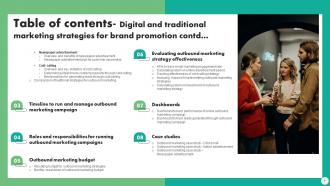
Slide 3: This slide incorporates the Table of contents.
Slide 4: This is yet another slide continuing the Table of contents.
Slide 5: This slide highlights the Title for the Topics to be covered further.
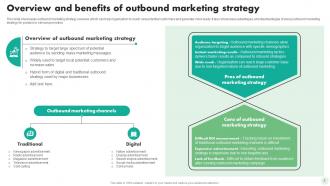
Slide 6: This slide presents the Overview and benefits of outbound marketing strategy.
Slide 7: This slide showcases comparative assessment of inbound and outbound marketing.
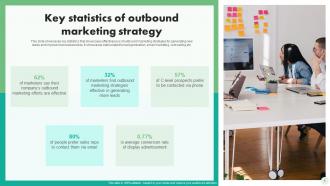
Slide 8: This slide highlights the Key statistics of outbound marketing strategy.
Slide 9: This slide showcases process that can help organization to formulate outbound marketing strategy for promoting new product or service.
Slide 10: This slide indicates the Heading for the Contents to be discussed in the following template.
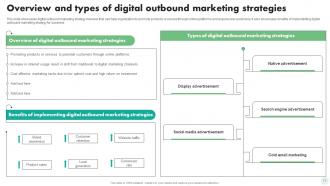
Slide 11: This slide presents the Overview and types of digital outbound marketing strategies.
Slide 12: This slide depicts the Title for the Ideas to be covered in the following template.
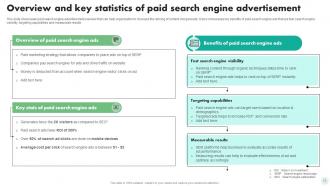
Slide 13: This slide highlights the Overview and key statistics of paid search engine advertisement.
Slide 14: This slide states the Platforms to run search engine advertisement.
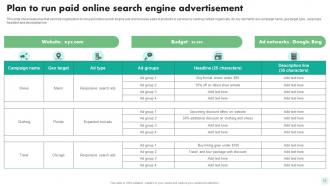
Slide 15: This slide reveals a Plan to run paid online search engine advertisement.
Slide 16: This slide presents a Roadmap to formulate content marketing plan.
Slide 17: This slide mentions the Heading for the Ideas to be discussed in the next template.
Slide 18: This slide showcases the Overview and statistics of social media advertisement.
Slide 19: This slide displays the Comparison of social media platforms to run online advertisement.
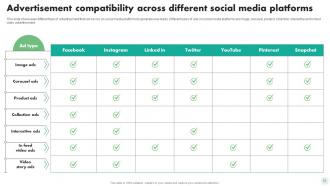
Slide 20: This slide states the Types of advertisement on social media platforms.
Slide 21: This slide showcases different type of advertisement that can be run on social media platforms to generate new leads.
Slide 22: This slide talks about Social media advertisement plan to generate leads.
Slide 23: This slide includes the Title for the Contents to be covered further.
Slide 24: This slide presents the Overview and key statistics of display advertisement.
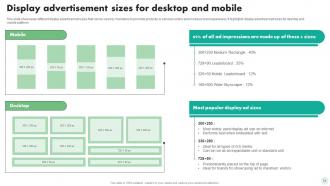
Slide 25: This slide represents the Display advertisement sizes for desktop and mobile.
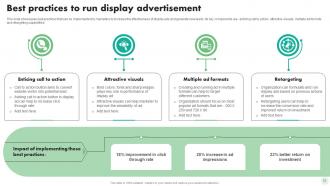
Slide 26: This slide exhibits the Best practices to run display advertisement.
Slide 27: This slide portrays the Display advertisement plan to acquire potential customers.
Slide 28: This slide contains the Heading for the Topics to be discussed next.
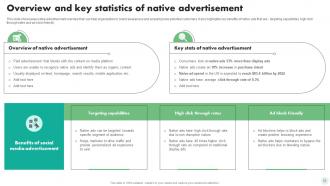
Slide 29: This slide indicates the Overview and key statistics of native advertisement
Slide 30: This slide shows the Digital platforms to run native advertisement.
Slide 31: This slide deals with Determining ideal placement for native ads.
Slide 32: This slide reveals Native advertisement plan for brand building.
Slide 33: This slide includes the Title for the Topics to be covered in the following template.
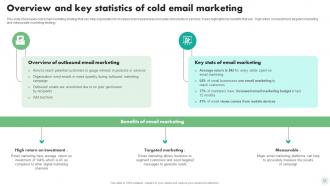
Slide 34: This slide exhibits the Benefits of email marketing
Slide 35: This slide deals with Determining ideal time to send cold marketing emails.
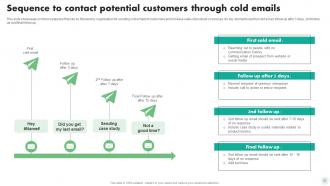
Slide 36: This slide portrays the Sequence to contact potential customers through cold emails.
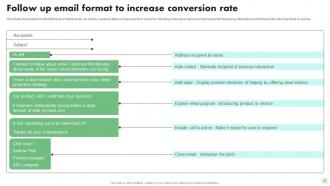
Slide 37: This slide showcases format of follow up email that can be sent by business after no response from customer.
Slide 38: This slide reveals the Cold email marketing plan for brand awareness.
Slide 39: This slide indicates the Heading for the Contents to be discussed further.
Slide 40: This slide shows the Comparison of digital strategies for outbound marketing.
Slide 41: This slide mentions the Title for the Ideas to be covered next.
Slide 42: This slide highlights the Overview and types of traditional outbound marketing strategies.
Slide 43: This slide depicts the Heading for the Ideas to be discussed further.
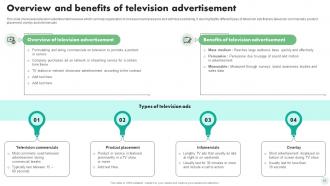
Slide 44: This slide showcases television advertisement overview which can help organization to increase brand presence and optimize positioning.
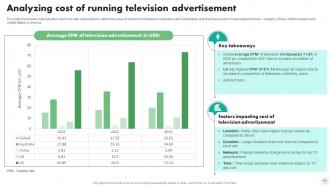
Slide 45: This slide focuses on Analyzing cost of running television advertisement.
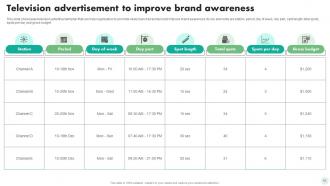
Slide 46: This slide indicates the Television advertisement to improve brand awareness.
Slide 47: This slide presents the Title for the Contents to be covered in the following template.
Slide 48: This slide highlights the Overview and key statistics of magazine advertisement.
Slide 49: This slide displays the Advertisement sizes for promoting products through magazines.
Slide 50: This slide showcases magazine advertisement plan that can help organization to generate new leads and improve brand awareness.
Slide 51: This slide highlights the Heading for the Topics to be discussed further.
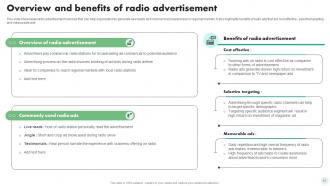
Slide 52: This slide reveals the Overview and benefits of radio advertisement.
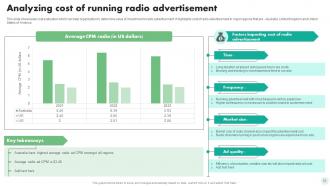
Slide 53: This slide focuses on Analyzing cost of running radio advertisement.
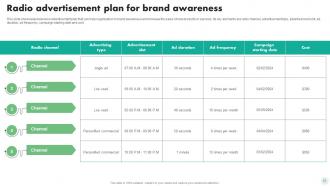
Slide 54: This slide presents the Radio advertisement plan for brand awareness.
Slide 55: This slide depicts the Title for the Topics to be covered next.
Slide 56: This slide showcases overview of newspaper advertisement that can help organization to generate new leads and improve brand awareness.
Slide 57: This slide portrays the Newspaper advertisement plan for customer awareness.
Slide 58: This slide exhibits the Heading for the Ideas to be discussed further.
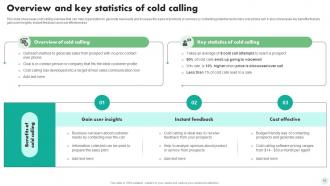
Slide 59: This slide highlights the Overview and key statistics of cold calling.
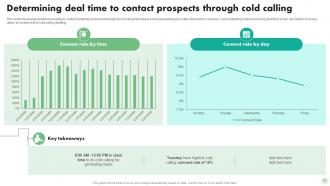
Slide 60: This slide emphasizes on Determining deal time to contact prospects through cold calling.
Slide 61: This slide depicts the Best practices for generating leads through cold calling.
Slide 62: This slide displays the Title for the Contents to be covered next.
Slide 63: This slide reveals the Comparison of traditional strategies for outbound marketing.
Slide 64: This slide states the Heading for the Topics to be discussed further.
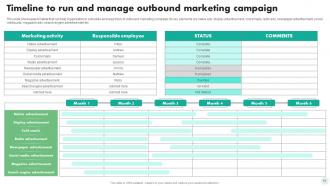
Slide 65: This slide shows the Timeline to run and manage outbound marketing campaign.
Slide 66: This slide indictaes the Heading for the Topics to be discussed in the following template.
Slide 67: This slide lists the Roles and responsibilities for running outbound marketing campaigns.
Slide 68: This slide mentions the Title for the Topics to be covered in the next template.
Slide 69: This slide focuses on Allocating budget for outbound marketing strategies.
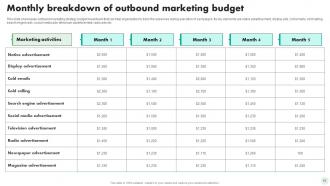
Slide 70: This slide illustrates the Monthly breakdown of outbound marketing budget.
Slide 71: This slide portrays the Heading for the Contents to be discussed further.
Slide 72: This slide reveals the KPIs to track email marketing engagement rate.
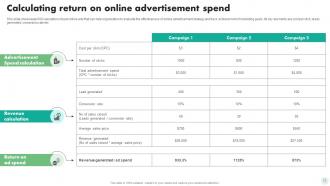
Slide 73: This slide deals with Calculating return on online advertisement spend.
Slide 74: This slide showcases tracking of cold calling strategy.
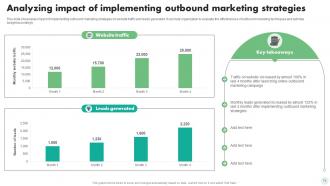
Slide 75: This slide states the impact of implementing outbound marketing strategies on website traffic and leads generated.
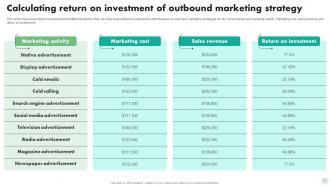
Slide 76: This slide focuses on Calculating return on investment of outbound marketing strategy.
Slide 77: This slide includes the Title for the Ideas to be covered next.
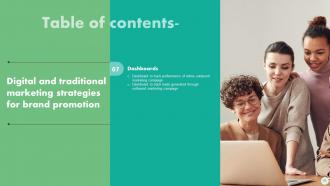
Slide 78: This slide showcases dashboard that can help organization to track performance of digital outbound marketing strategies.
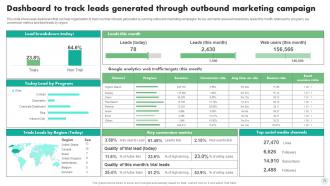
Slide 79: This slide illustrates the Dashboard to track leads generated through outbound marketing campaign.
Slide 80: This slide indicates the Heading for the Ideas to be discussed in the following template.
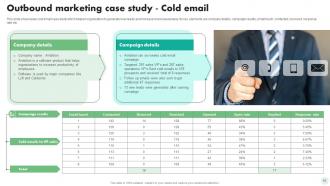
Slide 81: This slide presents the cold email case study which helped organization to generate new leads and increase brand awareness.
Slide 82: This slide states native advertisement case study which helped organization to increase in product sales and build brand credibility.
Slide 83: This slide mentions newspaper advertisement case study which helped organization to generate sales from local customers.
Slide 84: This is the Icons slide containing all the Icons used in the plan.
Slide 85: This slide is used for depicting some Additional information.
Slide 86: This is the About us slide for stating your company-related information.
Slide 87: This slide incorporates the organization's Timeline.
Slide 88: This is the 30 60 90 days plan for effective planning.
Slide 89: This slide elucidates the Line chart.
Slide 90: This slide illustrates the Clustered column chart.
Slide 91: This is the Venn diagram slide.
Slide 92: This slide contains the Post it notes for reminders and deadlines.
Slide 93: This is the Puzzle slide with related imagery.
Slide 94: This is the Idea generation slide for encouraging fresh ideas.
Slide 95: This is the Thank you slide for acknowledgement.
Digital And Traditional Marketing Strategies For Brand Promotion MKT CD V with all 92 slides:
Use our Digital And Traditional Marketing Strategies For Brand Promotion MKT CD V to effectively help you save your valuable time. They are readymade to fit into any presentation structure.









































FAQs for Digital And Traditional Marketing Strategies For Brand Promotion
The most effective digital marketing channels for brand promotion include social media advertising, search engine optimization, email marketing, content marketing, and influencer partnerships. These channels streamline brand visibility by targeting specific audiences, enhancing customer engagement, and delivering measurable ROI, with many organizations finding that strategic combinations across multiple platforms ultimately accelerate brand recognition and drive sustainable growth.
Social media influencers enhance brand visibility by leveraging their established audiences, creating authentic content that resonates with target demographics, and providing credible endorsements that drive engagement. Through strategic partnerships, brands access niche markets, amplify their messaging across multiple platforms, and generate user-generated content, ultimately delivering increased awareness and customer acquisition in an increasingly competitive digital landscape.
Content marketing serves as the foundation of modern brand promotion strategies, building trust, authority, and customer relationships through valuable, educational, and entertaining content across multiple channels. Through blogs, videos, social media posts, and podcasts, businesses enhance brand visibility, drive organic traffic, and nurture leads throughout the customer journey, with many companies finding that consistent content marketing delivers significantly higher engagement rates and long-term customer loyalty than traditional advertising methods.
A strong brand identity influences consumer perception by establishing trust, creating emotional connections, and differentiating products in competitive markets through consistent visual elements, messaging, and values. Companies like Apple and Nike demonstrate how cohesive branding strategies enhance customer loyalty, command premium pricing, and drive purchase decisions, ultimately delivering sustained competitive advantage and increased market share.
Businesses should track brand awareness metrics, engagement rates, website traffic, conversion rates, customer acquisition costs, and social media reach to measure promotion effectiveness. Through analytics tools, companies can monitor lead generation, sales attribution, and brand sentiment across channels, while retail and healthcare organizations increasingly find that tracking customer lifetime value and retention rates delivers clearer ROI insights.
Partnerships and collaborations boost brand recognition by expanding audience reach, sharing resources and expertise, and creating cross-promotional opportunities that amplify marketing efforts. Through strategic alliances, brands access new customer segments, enhance credibility through association, and reduce promotional costs, with many companies finding that collaborative campaigns generate significantly higher engagement rates and market penetration than standalone efforts.
Visual storytelling in brand promotion delivers enhanced emotional connection, improved message retention, increased engagement rates, simplified complex communication, and stronger brand memorability. Through compelling visuals and narratives, companies like Nike and Coca-Cola create deeper customer relationships, drive higher conversion rates, and differentiate themselves in crowded markets, ultimately building lasting brand loyalty and competitive advantage.
Targeted advertising campaigns improve brand awareness by reaching specific demographics with personalized messaging, utilizing data analytics to optimize ad placement, and delivering content across multiple channels where audiences are most active. Through precision targeting on platforms like social media and search engines, businesses achieve higher engagement rates, reduce advertising waste, and build stronger brand recognition among their ideal customers, ultimately delivering measurable ROI and competitive market positioning.
Customer engagement significantly strengthens brand loyalty by creating emotional connections, fostering trust, and encouraging repeat interactions through personalized experiences and responsive communication. Companies with strong engagement strategies, particularly in retail and hospitality sectors, see higher customer retention rates, increased lifetime value, and stronger word-of-mouth referrals, ultimately delivering sustainable competitive advantage.
Brands can leverage user-generated content by incorporating customer reviews, social media posts, testimonials, video content, and influencer collaborations into their marketing campaigns. This strategic approach enhances authenticity and trust while reducing content creation costs, with many retail, hospitality, and fashion brands finding that UGC delivers higher engagement rates and builds stronger community connections than traditional promotional methods.
Cost-effective brand promotion strategies for startups include social media marketing, content creation, influencer partnerships, email campaigns, and community engagement. These approaches streamline brand building by leveraging organic reach, targeted messaging, and authentic connections, with many emerging businesses finding that strategic social media presence and valuable content ultimately deliver significant customer acquisition while minimizing traditional advertising costs.
Offline marketing tactics complement digital brand promotion by creating multi-touchpoint experiences, building authentic personal connections, and reinforcing online messaging through tangible interactions. Through strategic integration of events, print advertising, and experiential marketing, companies enhance brand recall, reach audiences less engaged digitally, and create memorable moments that drive online engagement, ultimately delivering stronger brand recognition and customer loyalty.
Creative event-based brand promotion techniques include interactive experiences, gamification elements, social media integration, influencer partnerships, and immersive storytelling activations. These approaches enhance brand engagement by creating memorable touchpoints, encouraging user-generated content, and fostering authentic connections, with many organizations finding that experiential marketing delivers significantly higher brand recall and customer loyalty than traditional advertising methods.
Consistency in branding builds customer trust by establishing reliable expectations, delivering predictable experiences, and reinforcing brand promises across all touchpoints. This reliability creates emotional connections with customers, strengthens brand recognition, and reduces decision-making uncertainty, with many companies finding that consistent branding ultimately increases customer retention rates and drives long-term loyalty.
Rebranding challenges include maintaining customer loyalty, managing implementation costs, ensuring consistent messaging across channels, navigating legal complexities, and minimizing market confusion during transition periods. These obstacles can be overcome through comprehensive market research, phased rollout strategies, and clear communication campaigns, with many organizations finding that strategic planning, stakeholder engagement, and consistent brand experiences ultimately deliver stronger market positioning and competitive advantage.
-
The PPT layout is great and it has an effective design that helps in presenting corporate presentations. It's easy to edit and the stunning visuals make it an absolute steal!
-
I had them make a presentation for an office retirement party. They were very helpful in understanding what we wanted and delivered the perfect presentation. Highly recommended!