


Digital Banking System To Optimize Financial Transaction Process Powerpoint Presentation Slides
Digital banking refers to a banking method that uses electronic or internet based transactions. Grab our Digital banking system to optimize the financial transaction process template. It lets banks digitally record customer details and account information, reducing operational costs and time. Our Internet banking deck provides a comprehensive overview of e banking trends, gap analysis, and the process flow for online banking systems. It covers various types of e banking, including Internet banking, mobile banking, ATMs, plastic money, direct deposits, pay by phone systems, and point of sales transfer terminals. Additionally, our Electronic clearing system PPT highlights e banking services, such as telephone banking, electronic clearing systems, electronic fund transfers, insurance payments, and bill payments. It also discusses the e governance model, principles, e banking security threats and measures, and the process flow for the cheque truncation system and its impact. Finally, our Mobile Banking module features the e banking team, training plan, budget plan, and financial statements, including income statements, balance sheets, cash flow, and metric dashboards. Grab this fully editable and customizable, compatible with Google Slides, and available for download. Gain access now and streamline your digital banking services.
Digital banking refers to a banking method that uses electronic or internet based transactions. Grab our Digital banking sy..















-

- Google Slides is a new FREE Presentation software from Google.
- All our content is 100% compatible with Google Slides.
- Just download our designs, and upload them to Google Slides and they will work automatically.
- Amaze your audience with SlideTeam and Google Slides.
-

Want Changes to This PPT Slide? Check out our Presentation Design Services
-

- WideScreen Aspect ratio is becoming a very popular format. When you download this product, the downloaded ZIP will contain this product in both standard and widescreen format.
-

- Some older products that we have may only be in standard format, but they can easily be converted to widescreen.
- To do this, please open the SlideTeam product in Powerpoint, and go to
- Design ( On the top bar) -> Page Setup -> and select "On-screen Show (16:9)” in the drop down for "Slides Sized for".
- The slide or theme will change to widescreen, and all graphics will adjust automatically. You can similarly convert our content to any other desired screen aspect ratio.
Compatible With Google Slides

Get This In WideScreen
You must be logged in to download this presentation.


Do you want to remove this product from your favourites?
PowerPoint presentation slides
Deliver this complete deck to your team members and other collaborators. Encompassed with stylized slides presenting various concepts, this Digital Banking System To Optimize Financial Transaction Process Powerpoint Presentation Slides is the best tool you can utilize. Personalize its content and graphics to make it unique and thought-provoking. All the Seventy Six slides are editable and modifiable, so feel free to adjust them to your business setting. The font, color, and other components also come in an editable format making this PPT design the best choice for your next presentation. So, download now.

People who downloaded this PowerPoint presentation also viewed the following :
Content of this Powerpoint Presentation
Slide 1: This slide introduces Digital banking system to optimize financial transaction process. State your company name and begin.
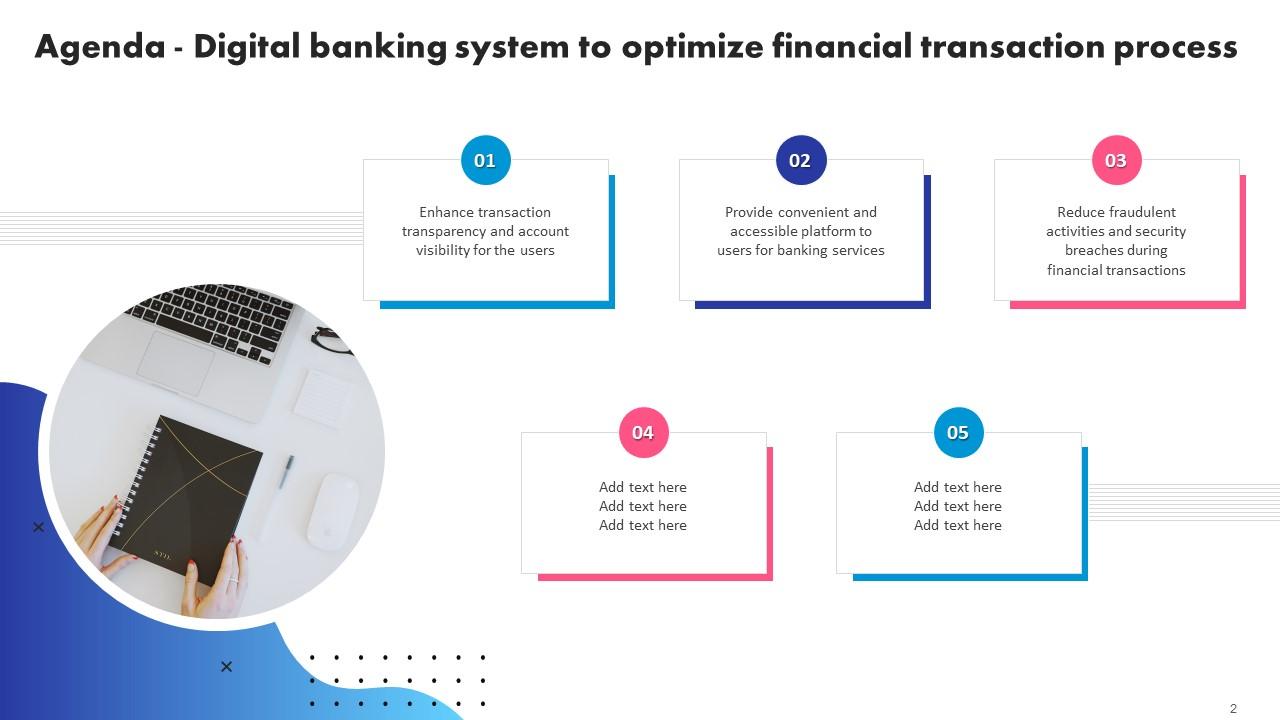
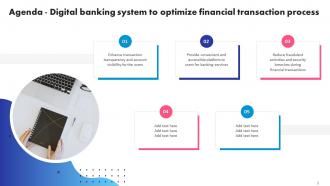
Slide 2: This slide states Agenda of the presentation.
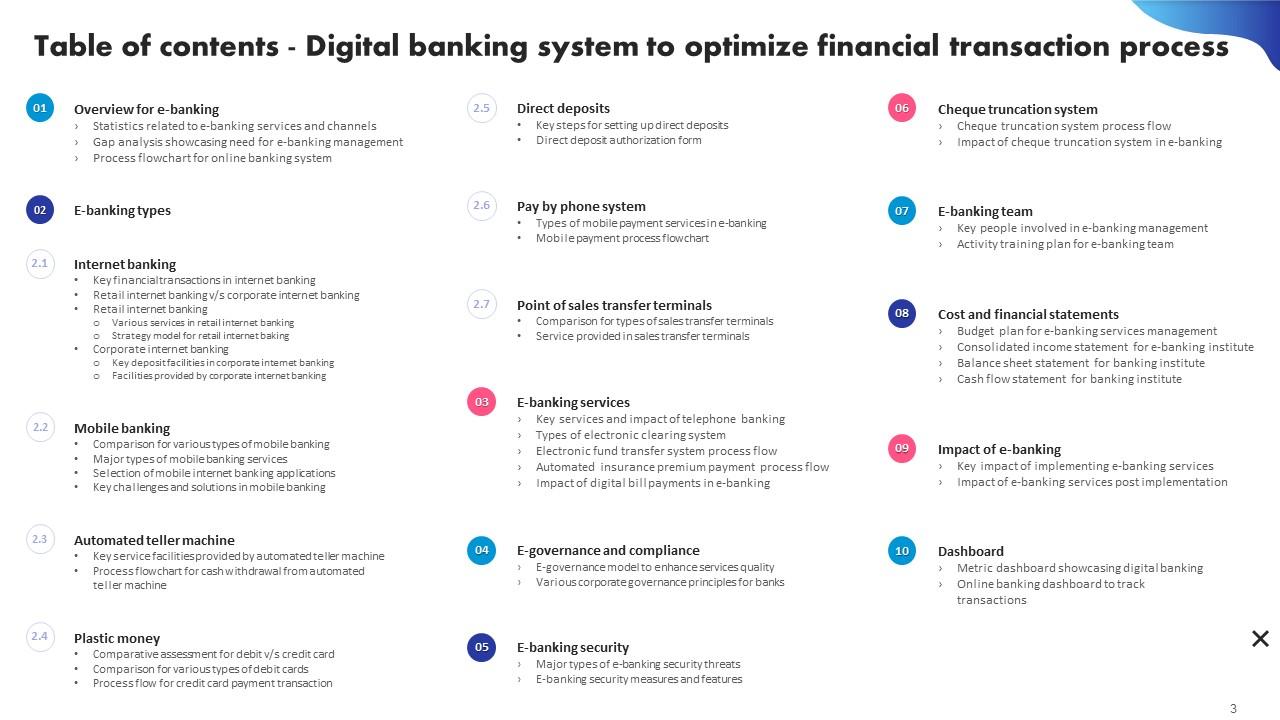
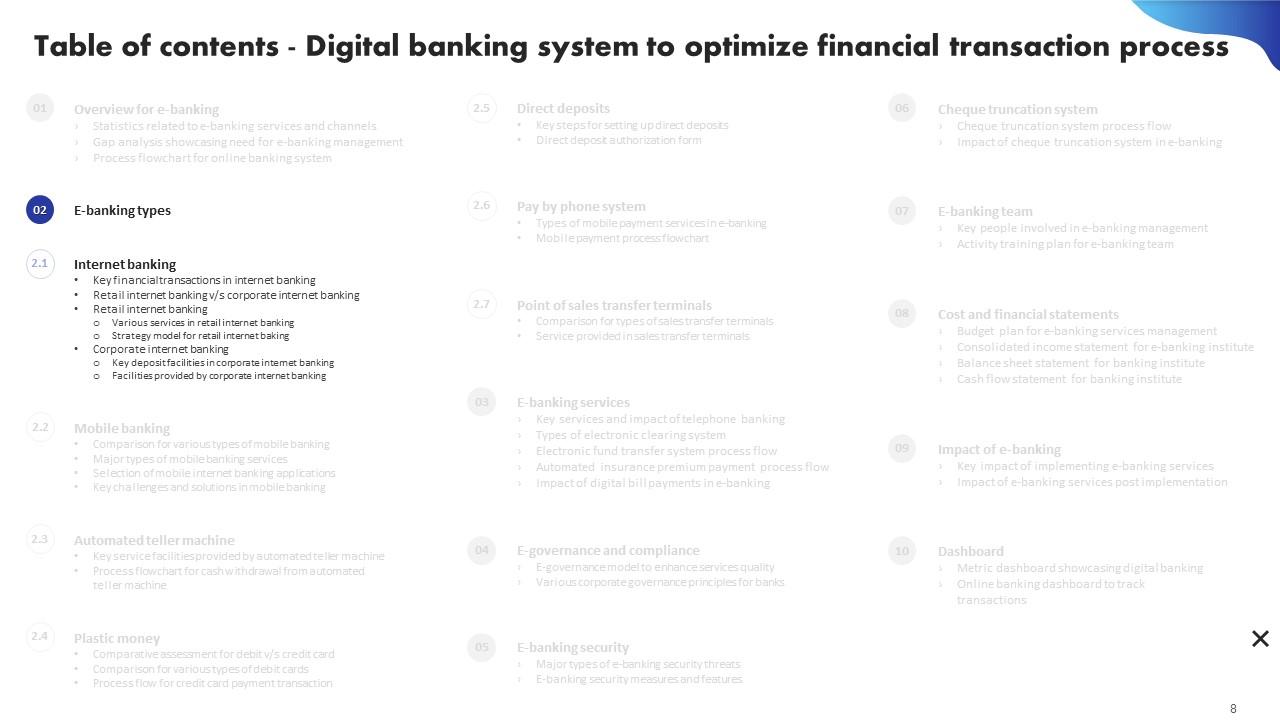
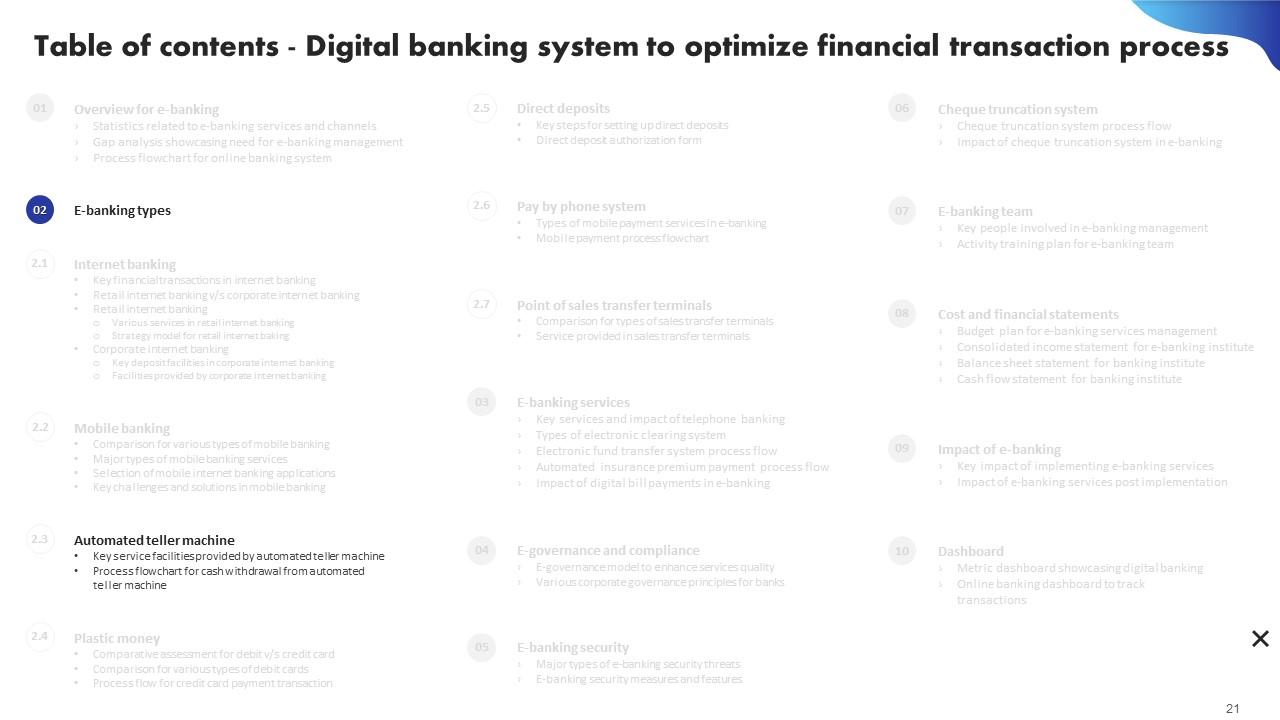
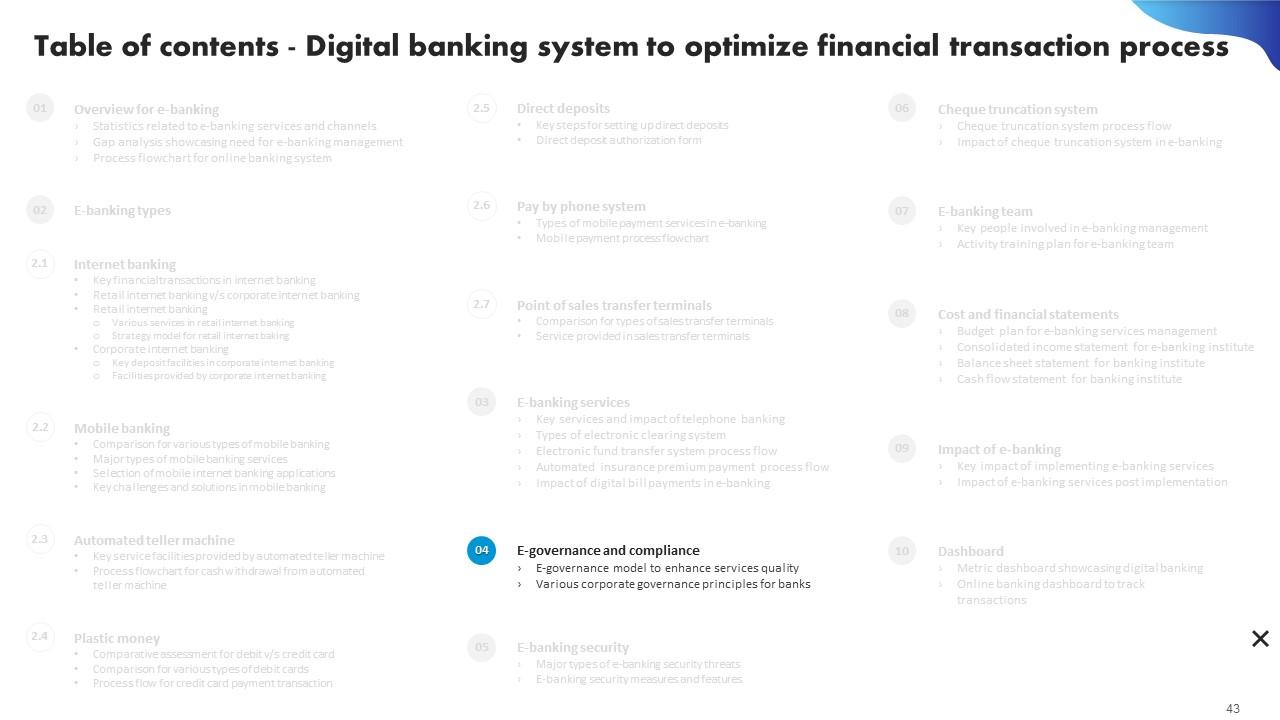
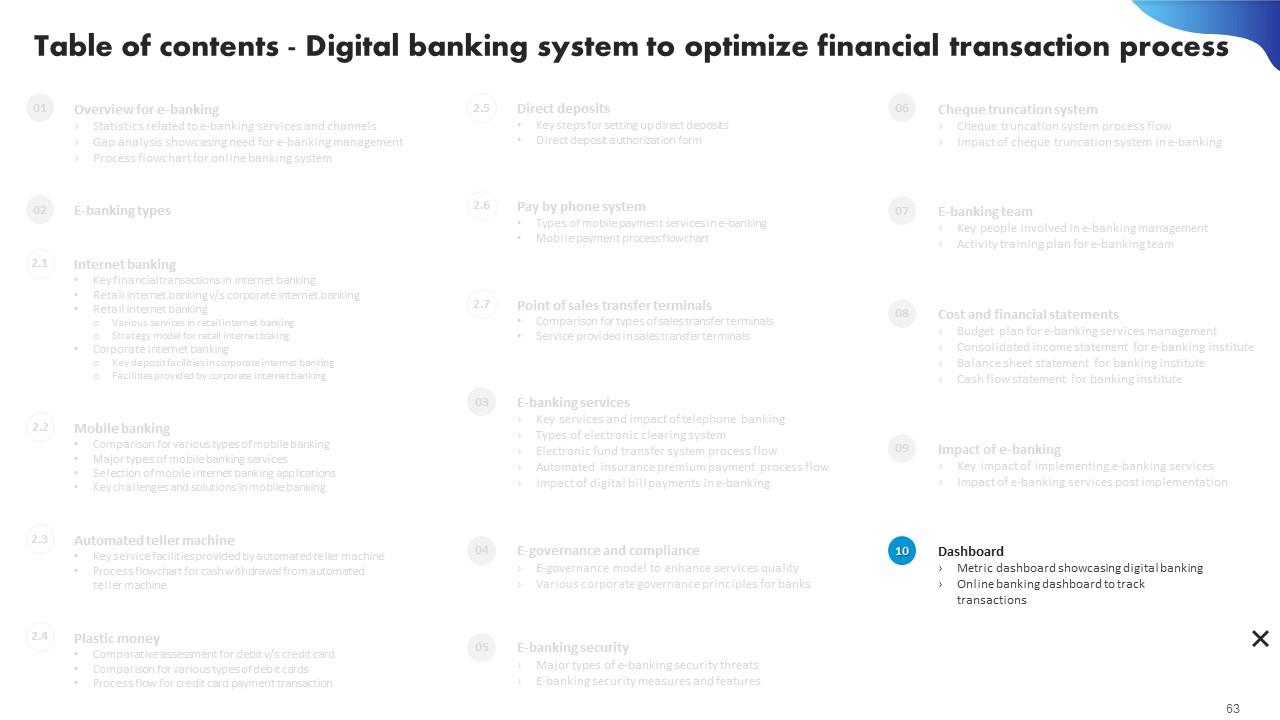
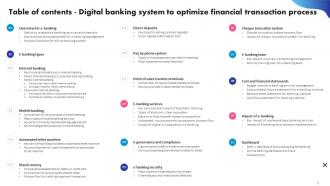
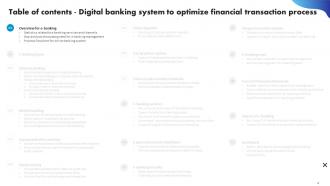
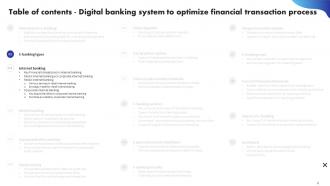
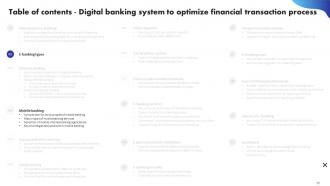
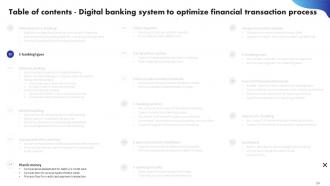
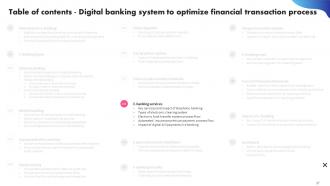
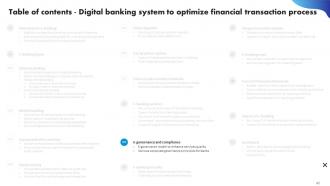
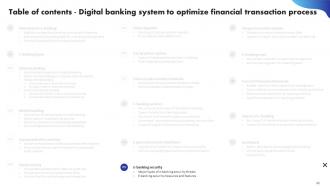
Slide 3: This slide shows Table of Content for the presentation.
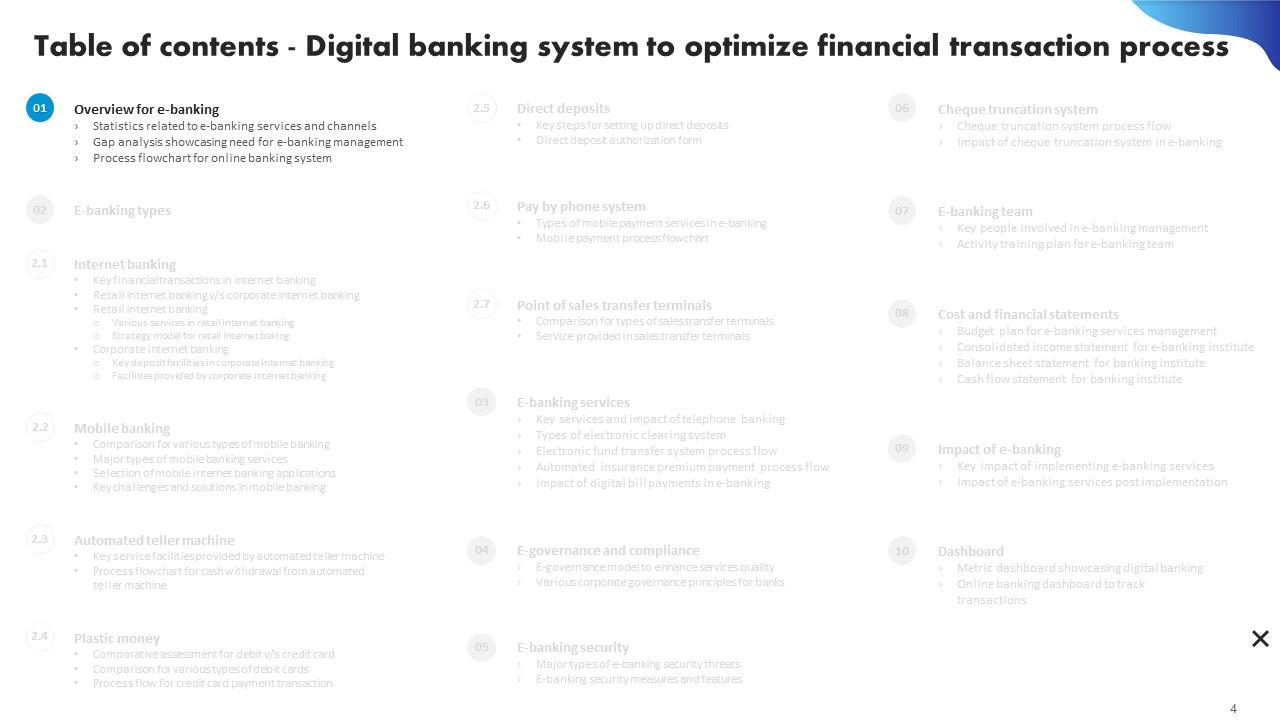
Slide 4: This slide depicts title for three topics that are to be covered next in the template.
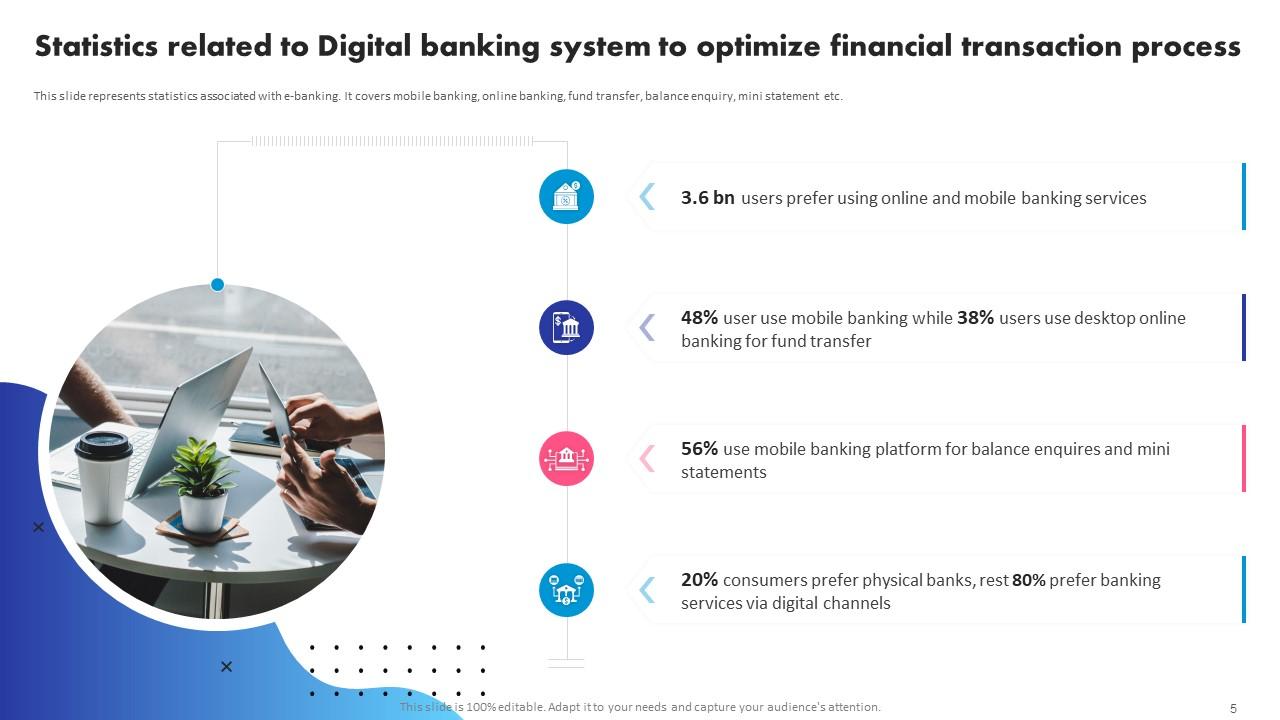
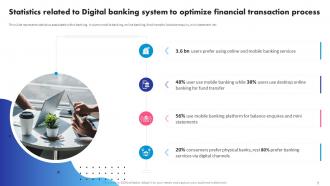
Slide 5: This slide represents statistics associated with e-banking.
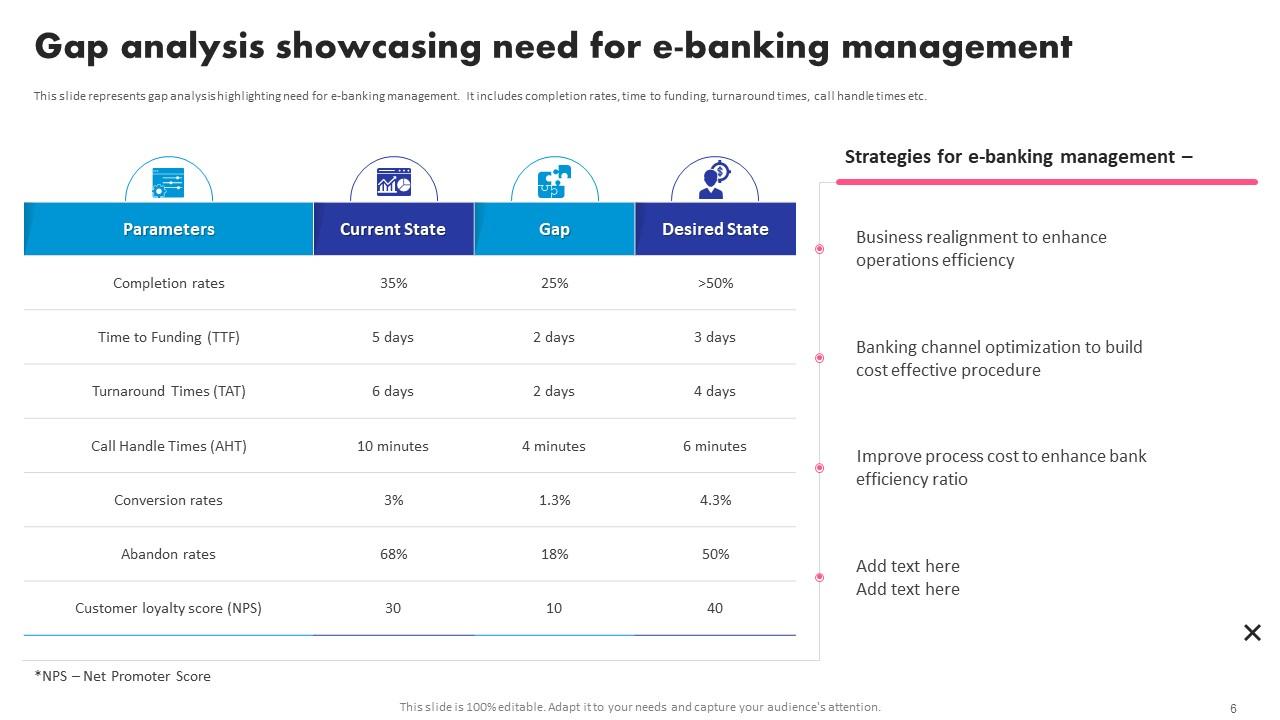
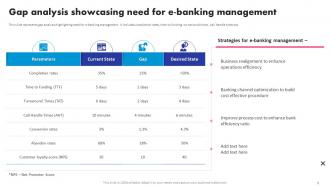
Slide 6: This slide represents gap analysis highlighting need for e-banking management.
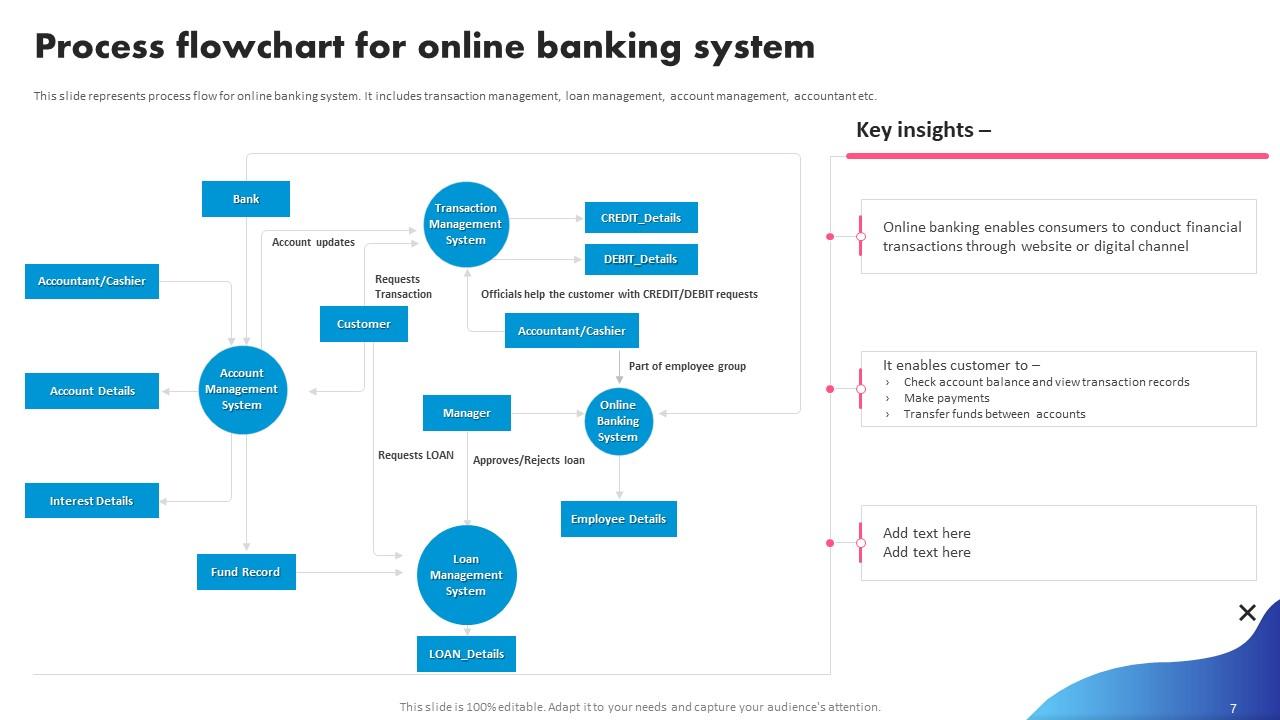
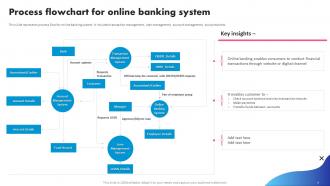
Slide 7: This slide represents process flow for online banking system.
Slide 8: This slide depicts title for seven topics that are to be covered next in the template.
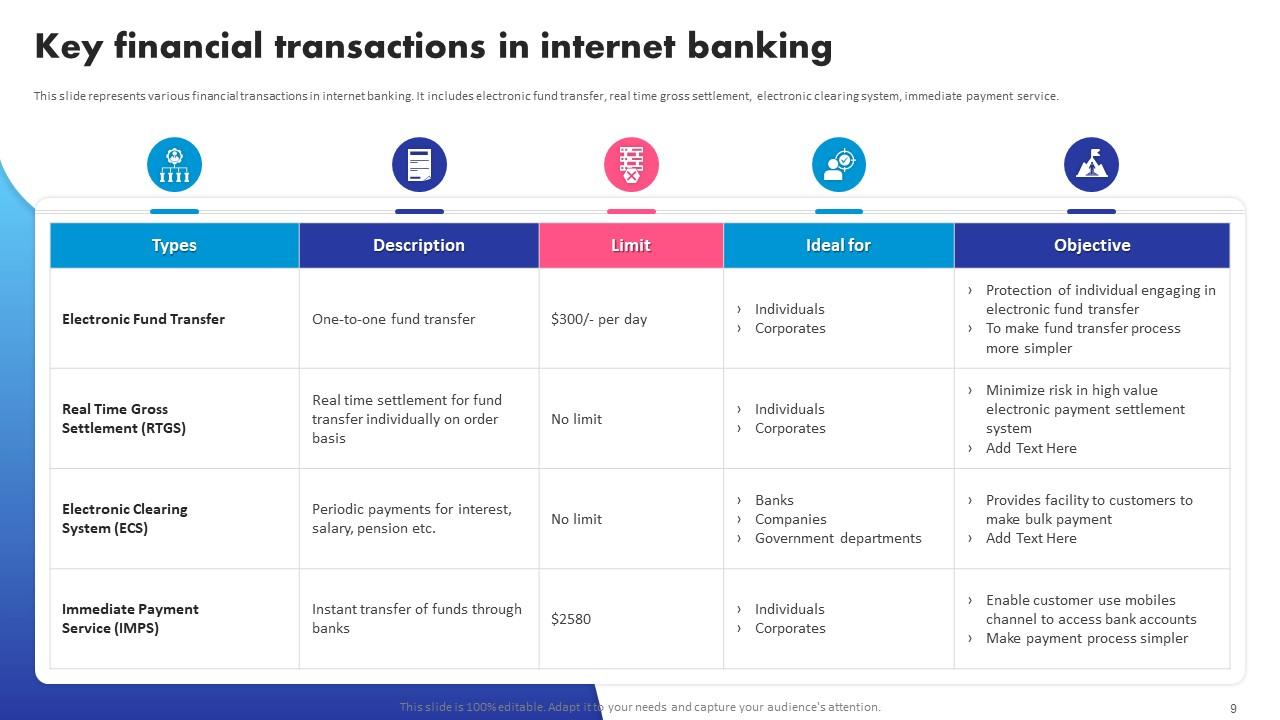
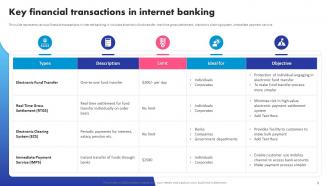
Slide 9: This slide represents various financial transactions in internet banking.
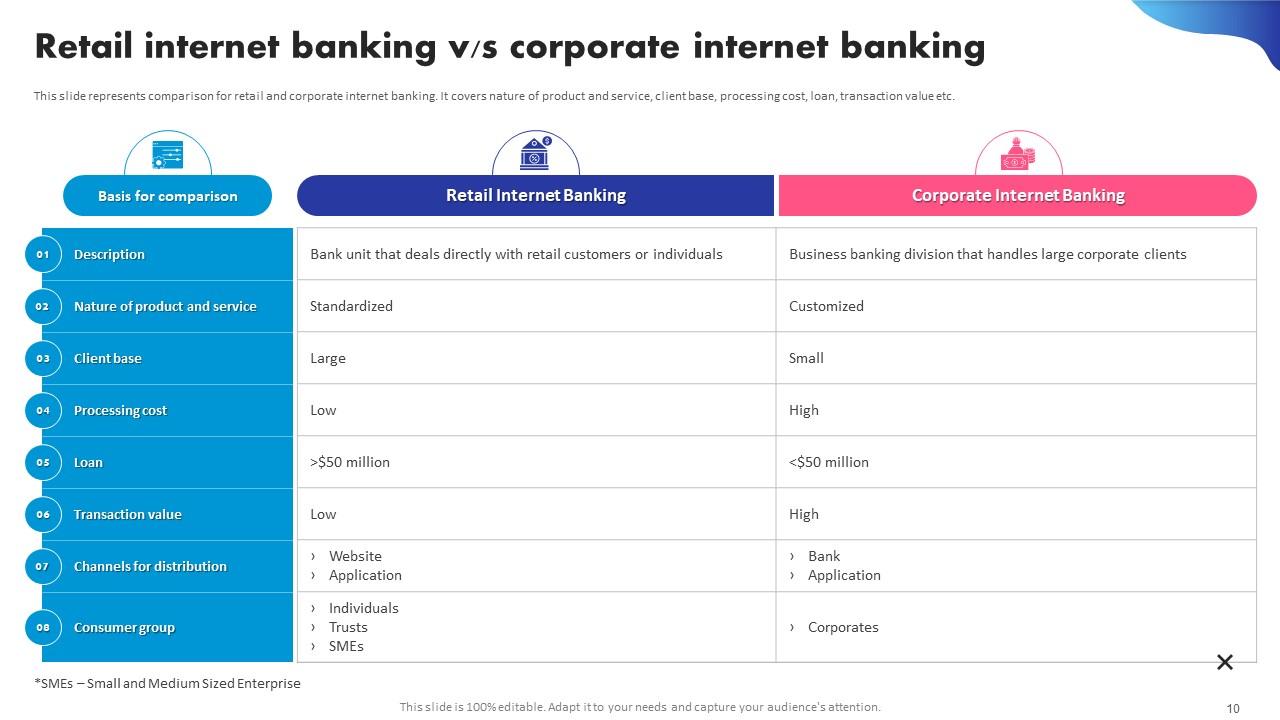
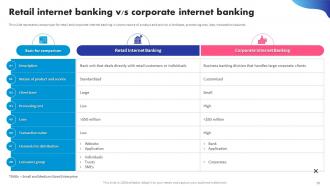
Slide 10: This slide represents comparison for retail and corporate internet banking.
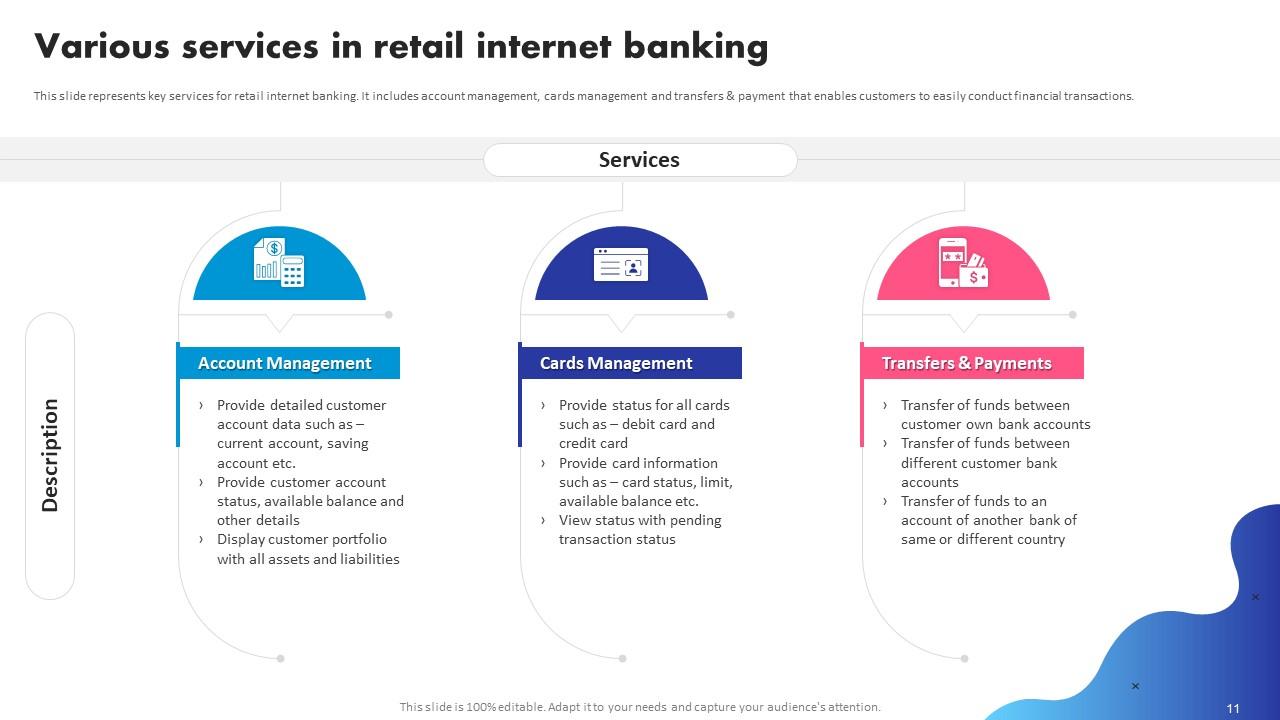
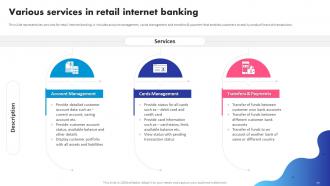
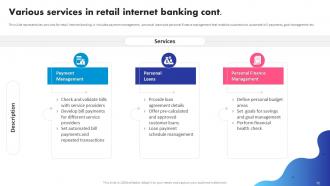
Slide 11: This slide represents key services for retail internet banking.
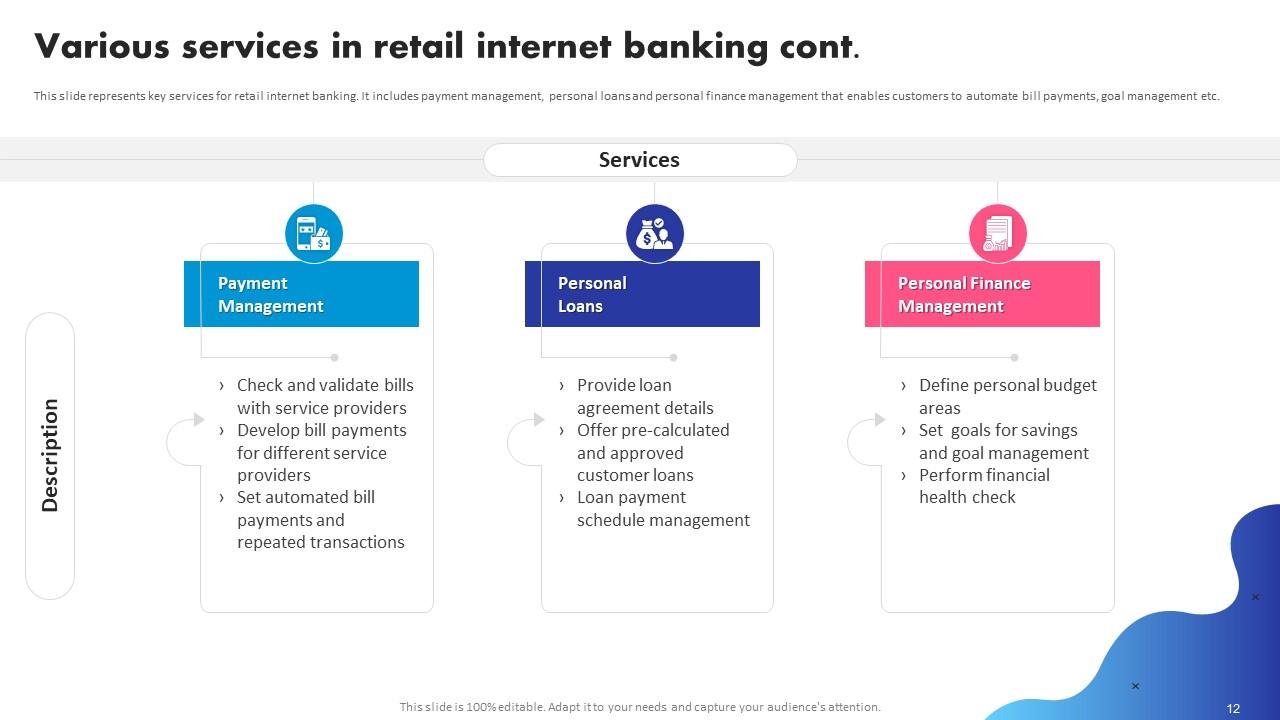
Slide 12: This slide represents key services for retail internet banking.
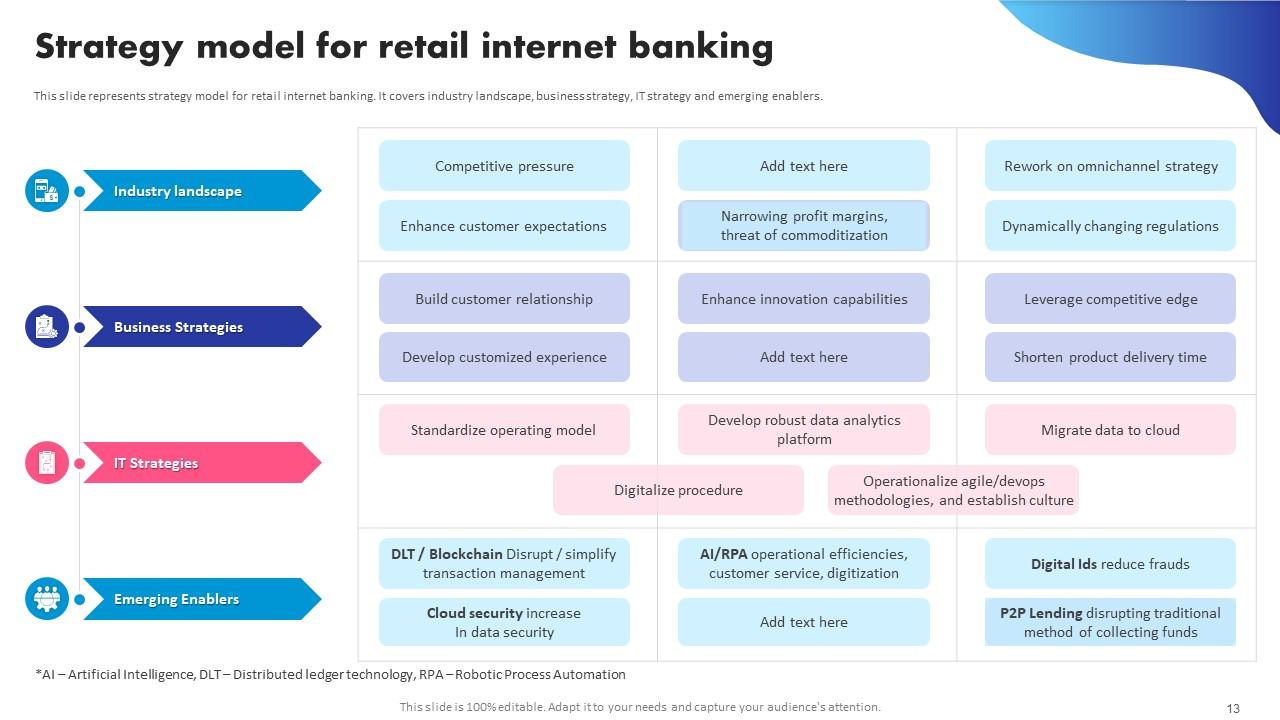
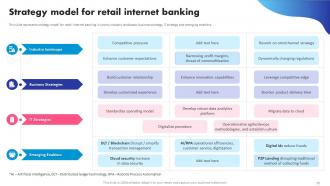
Slide 13: This slide represents strategy model for retail internet banking.
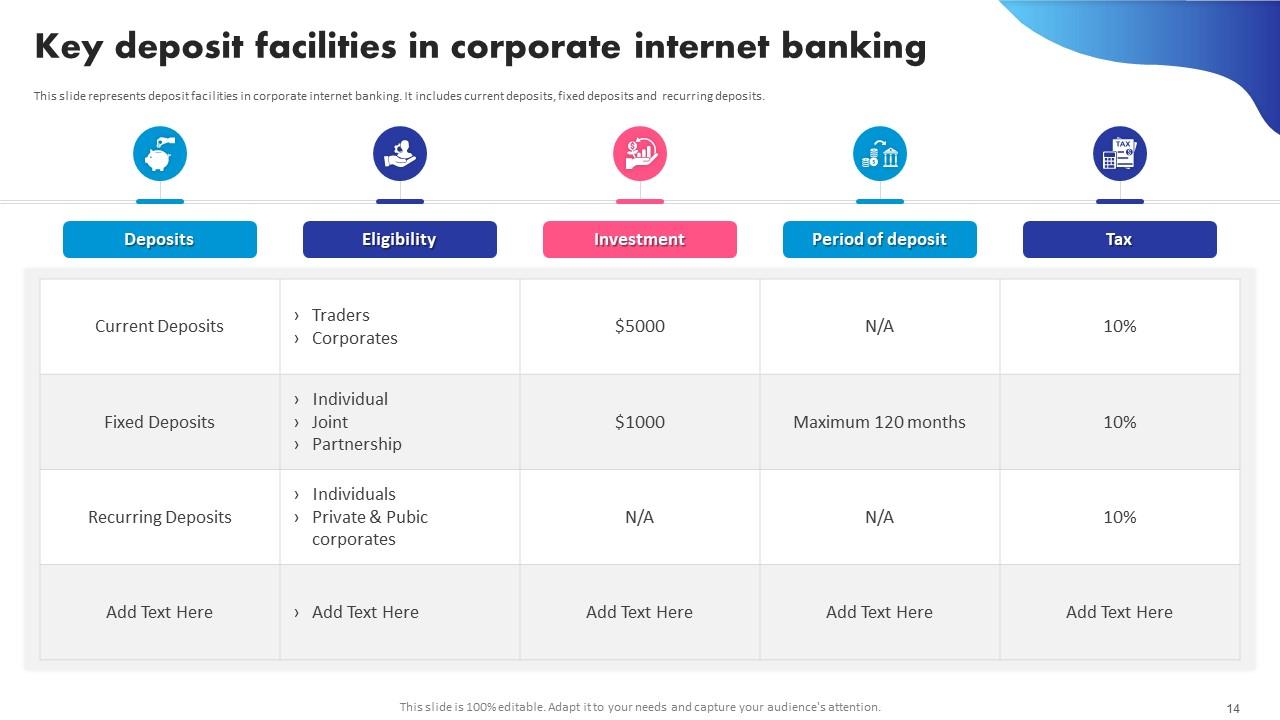
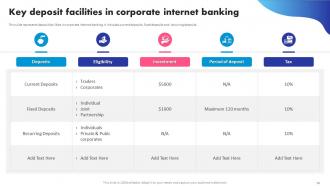
Slide 14: This slide represents deposit facilities in corporate internet banking.
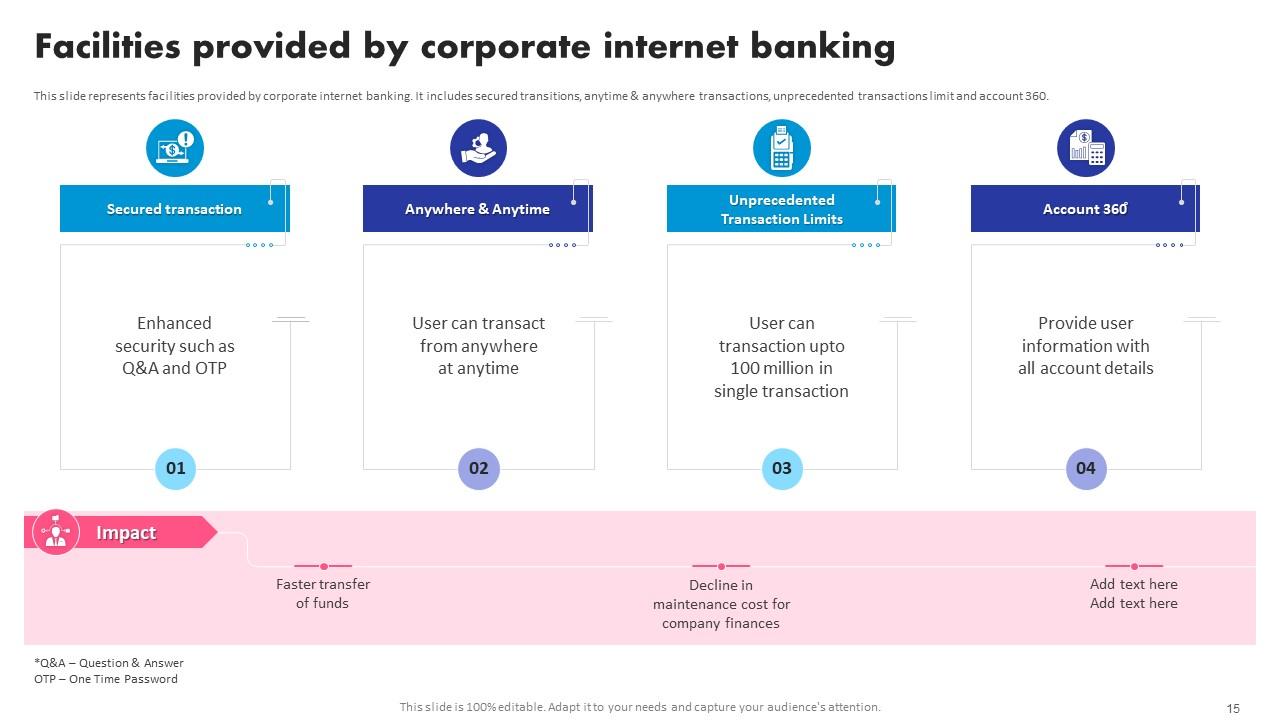
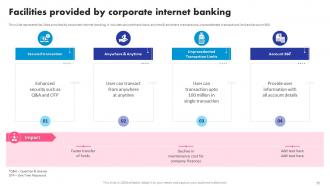
Slide 15: This slide represents facilities provided by corporate internet banking.
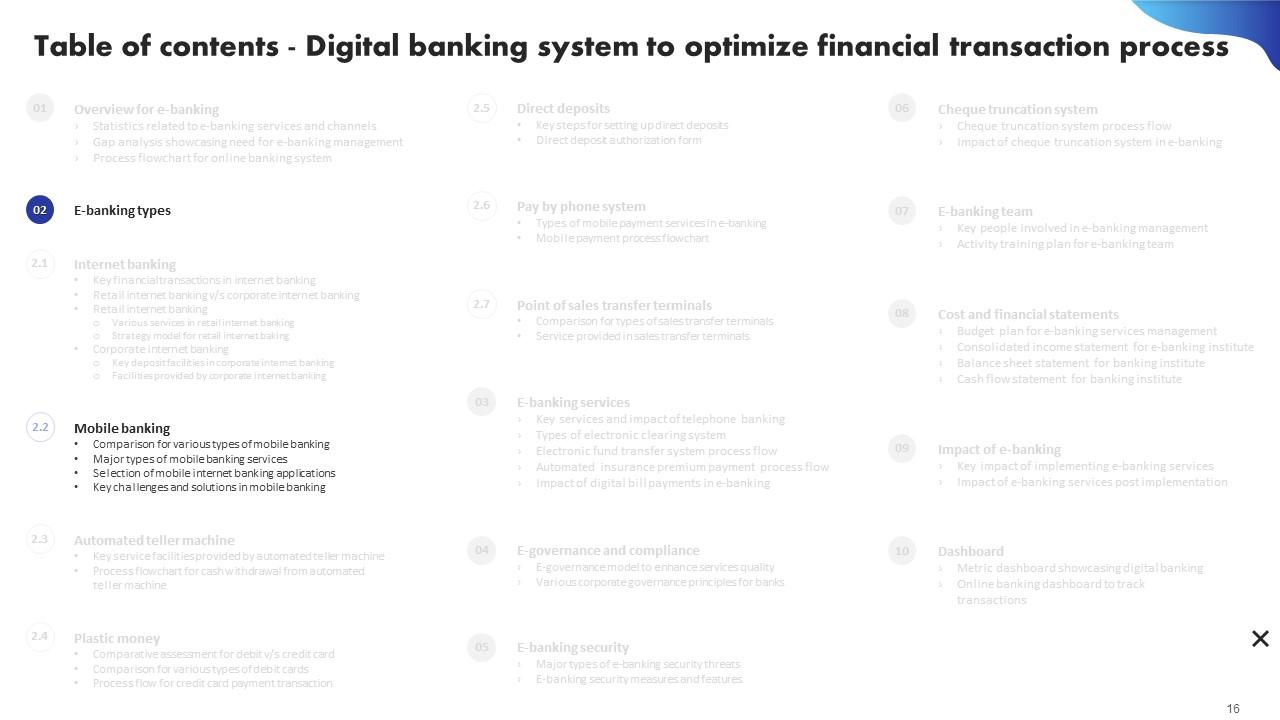
Slide 16: This slide depicts title for four topics that are to be covered next in the template.
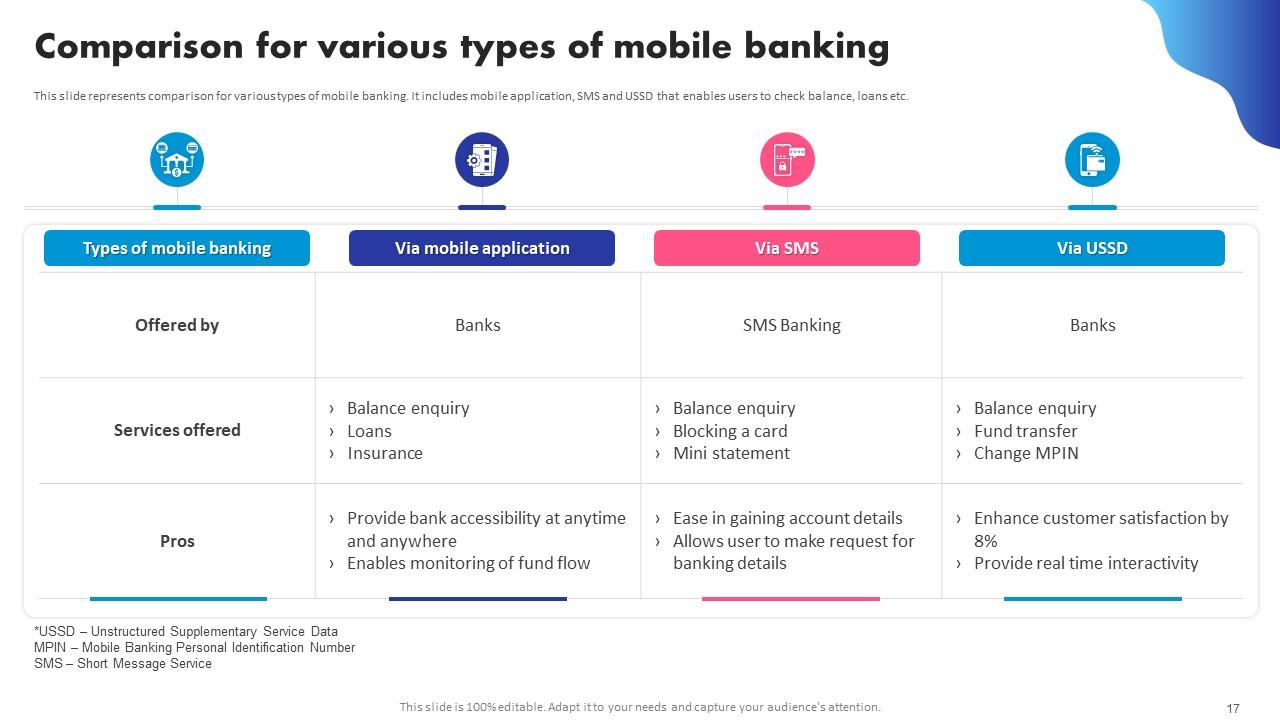
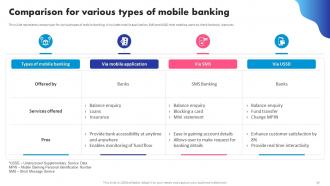
Slide 17: This slide represents comparison for various types of mobile banking.
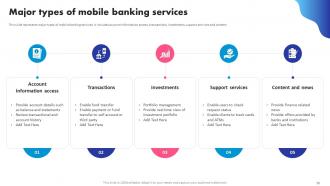
Slide 18: This slide represents major types of mobile banking services.
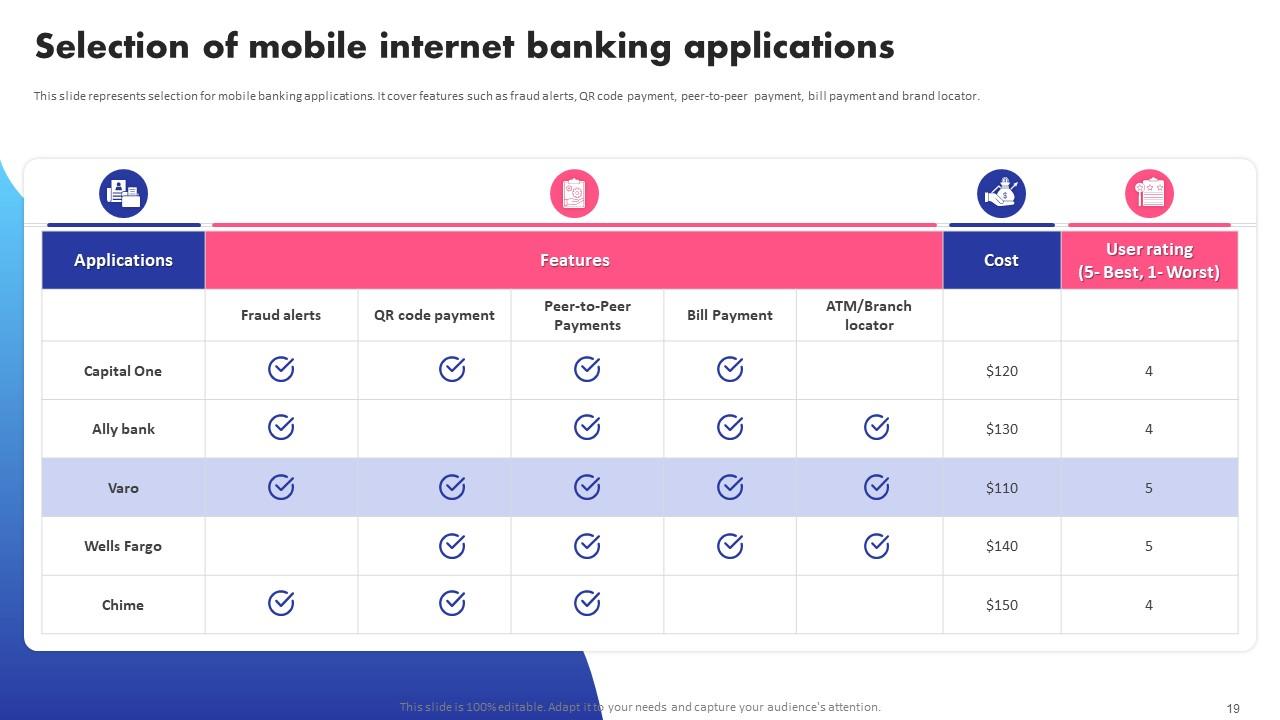
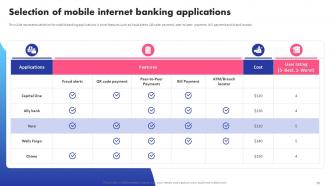
Slide 19: This slide represents selection for mobile banking applications.
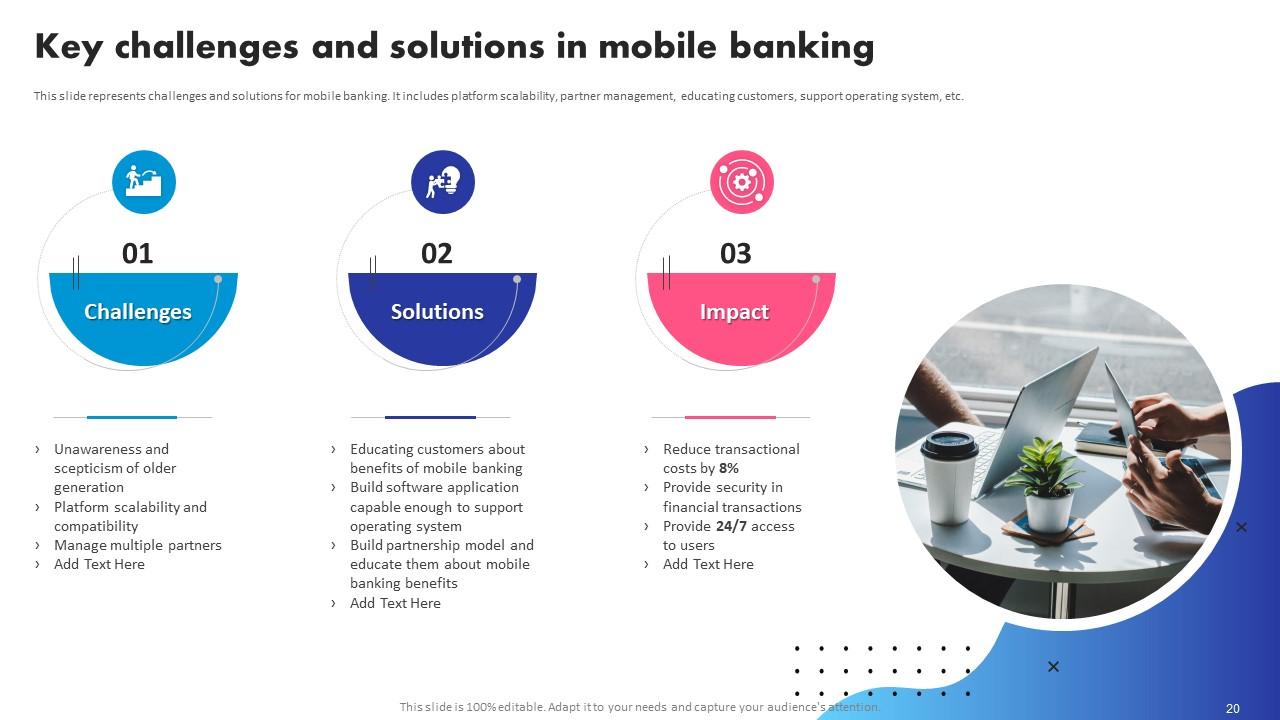
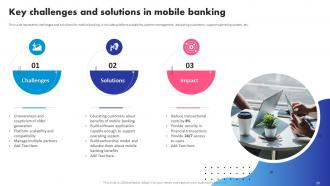
Slide 20: This slide represents challenges and solutions for mobile banking.
Slide 21: This slide depicts title for two topics that are to be covered next in the template.
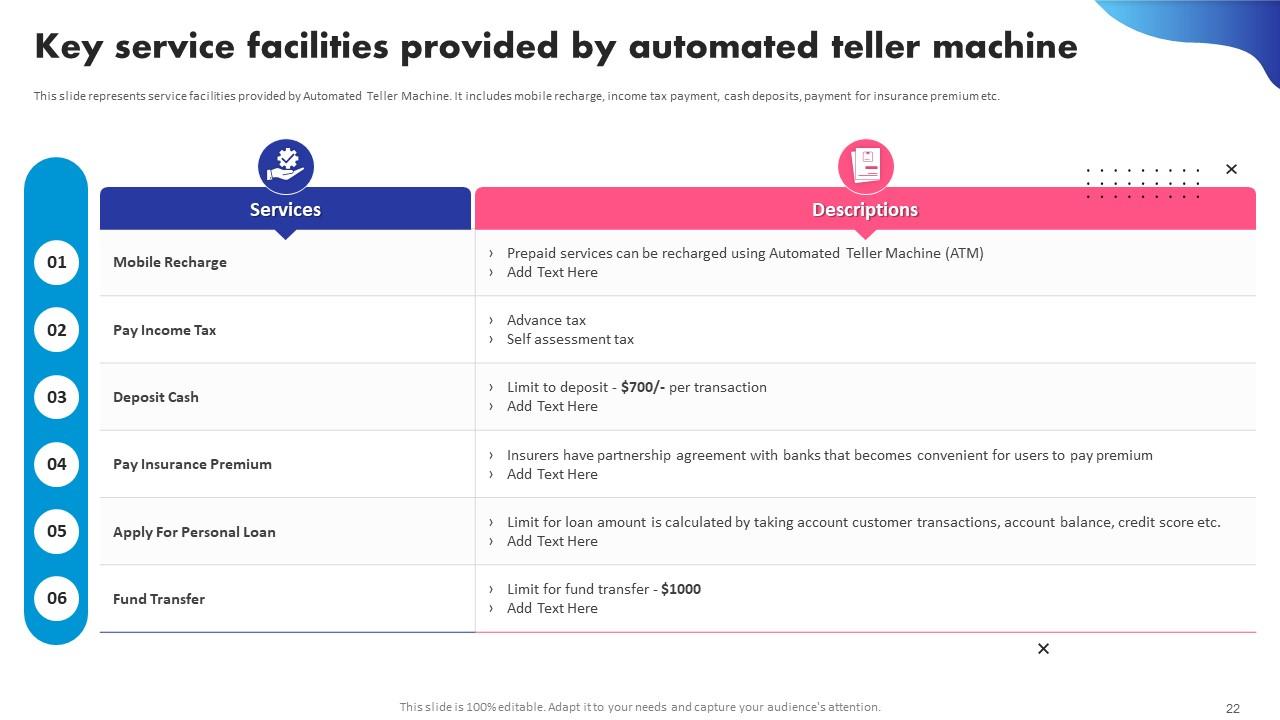
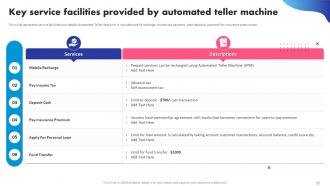
Slide 22: This slide represents service facilities provided by Automated Teller Machine.
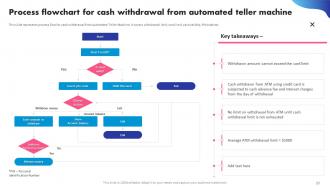
Slide 23: This slide represents process flow for cash withdrawal from Automated Teller Machine.
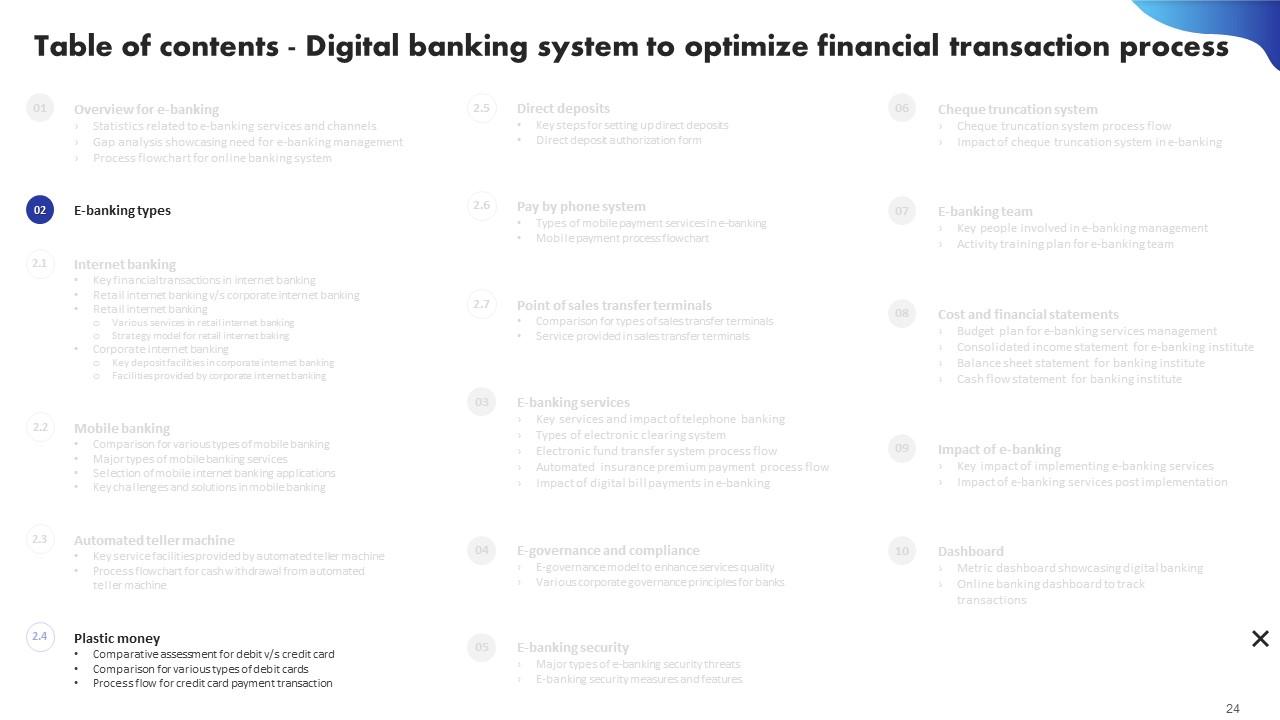
Slide 24: This slide depicts title for three topics that are to be covered next in the template.
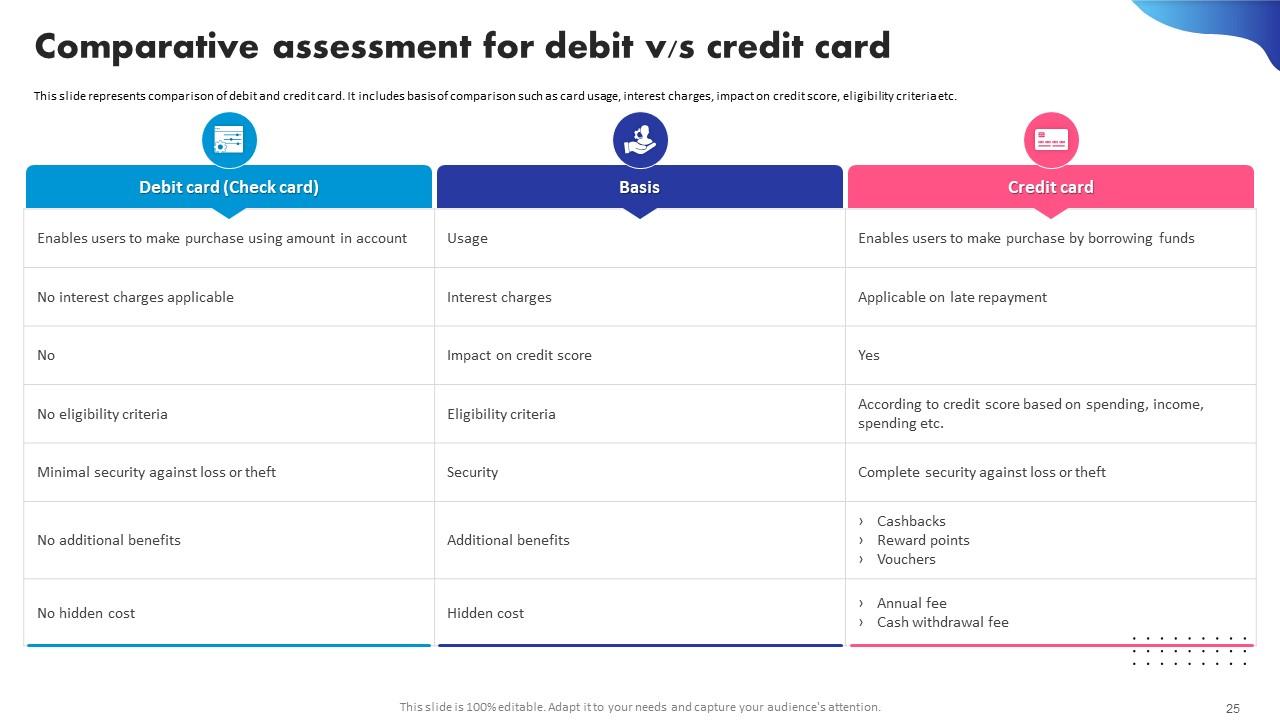
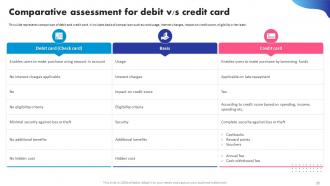
Slide 25: This slide represents comparison of debit and credit card.
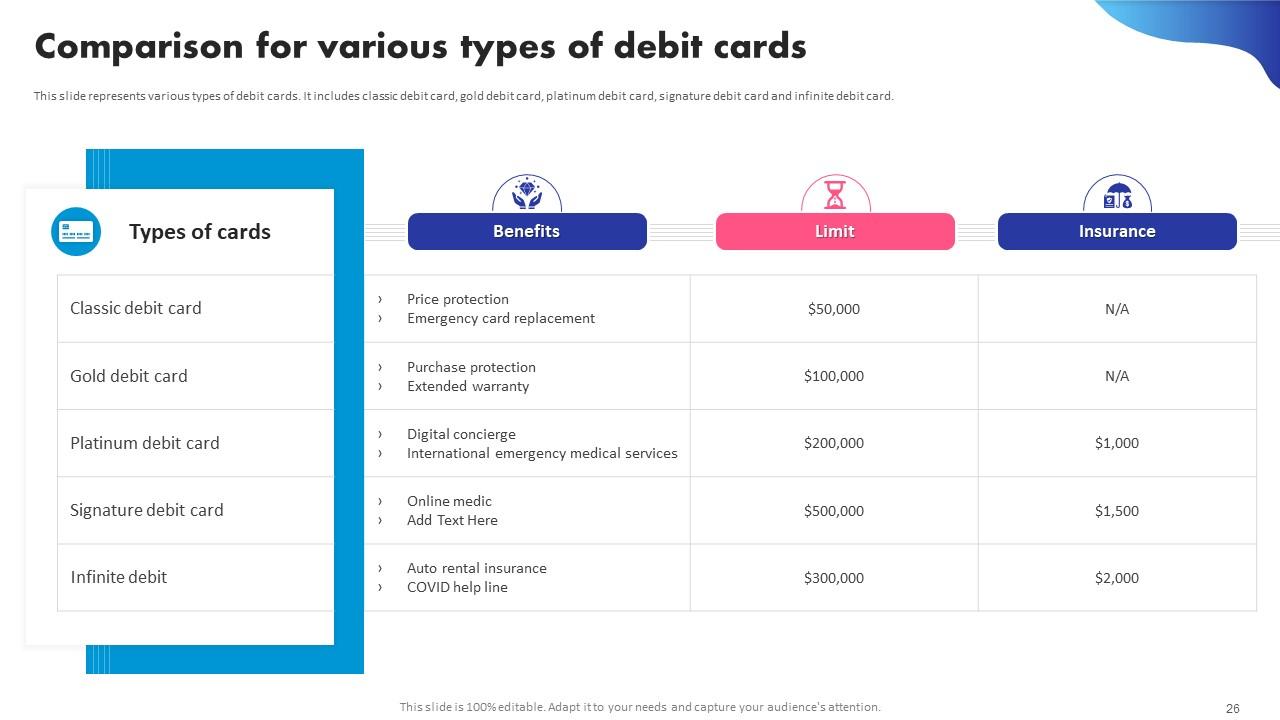
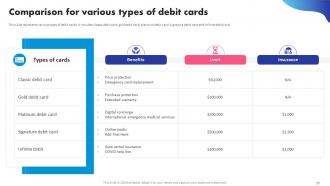
Slide 26: This slide represents various types of debit cards.
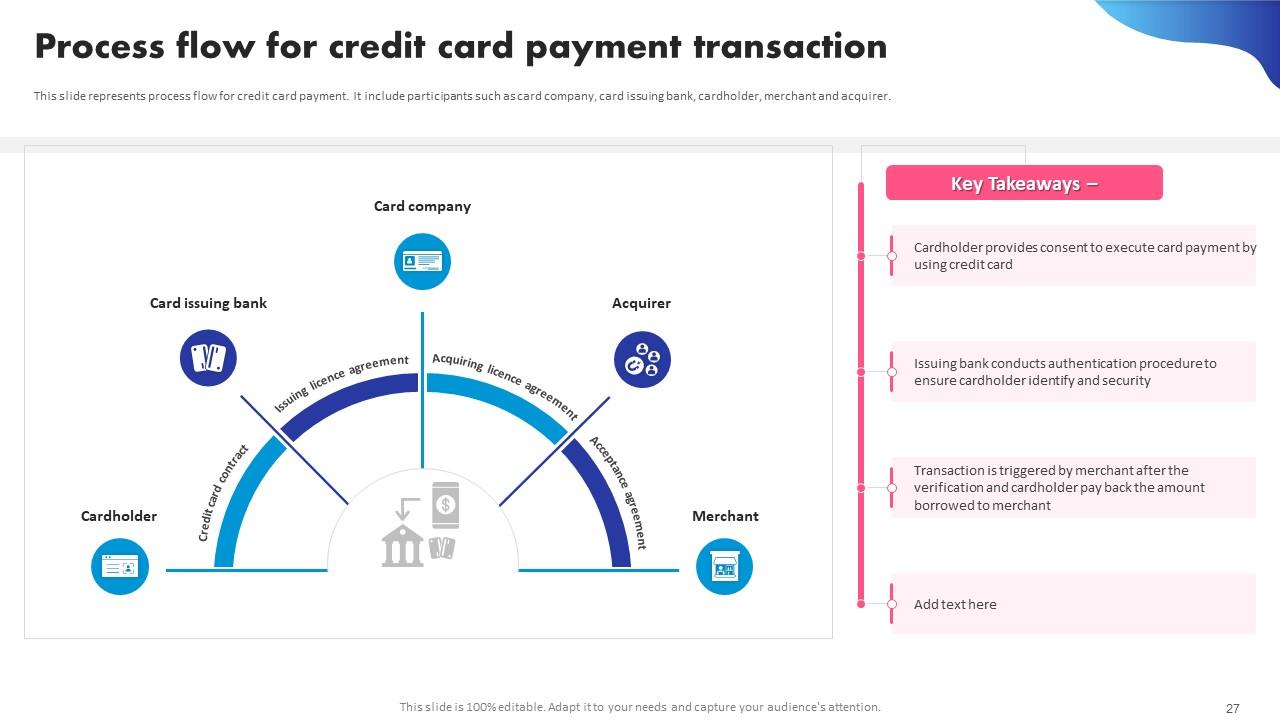
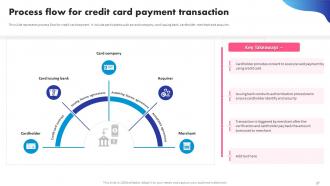
Slide 27: This slide represents process flow for credit card payment.
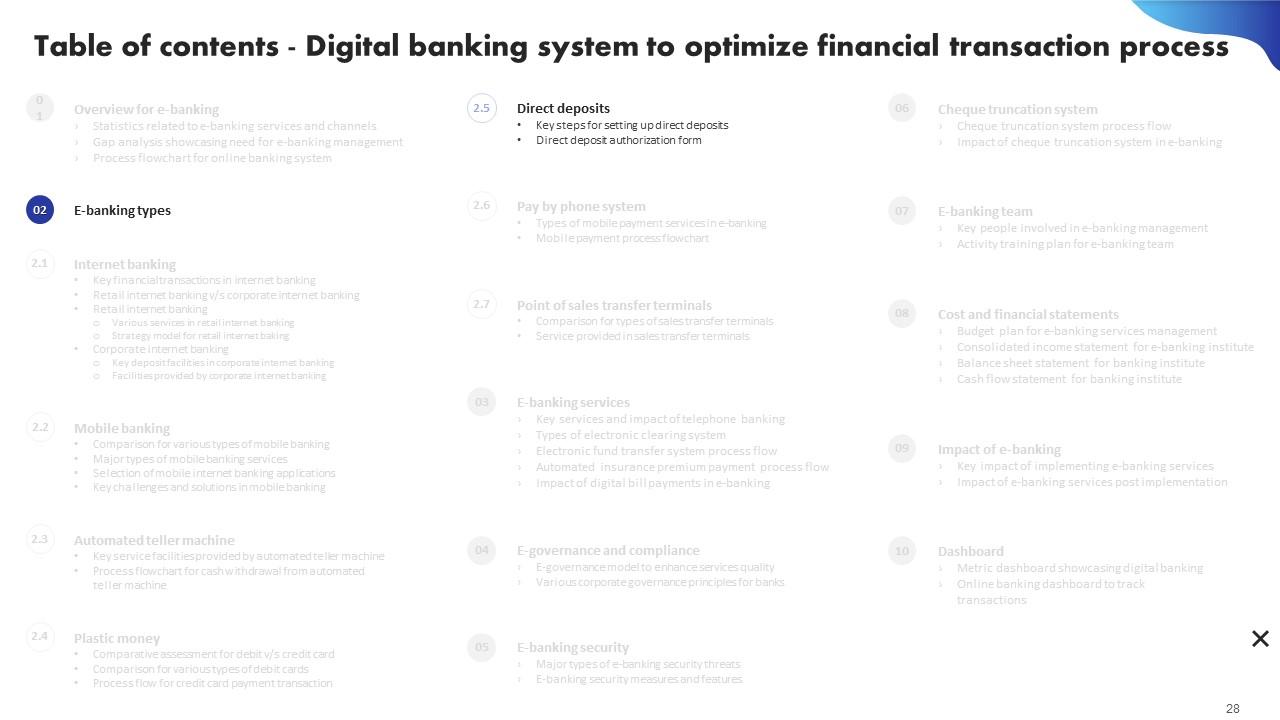
Slide 28: This slide depicts title for two topics that are to be covered next in the template.
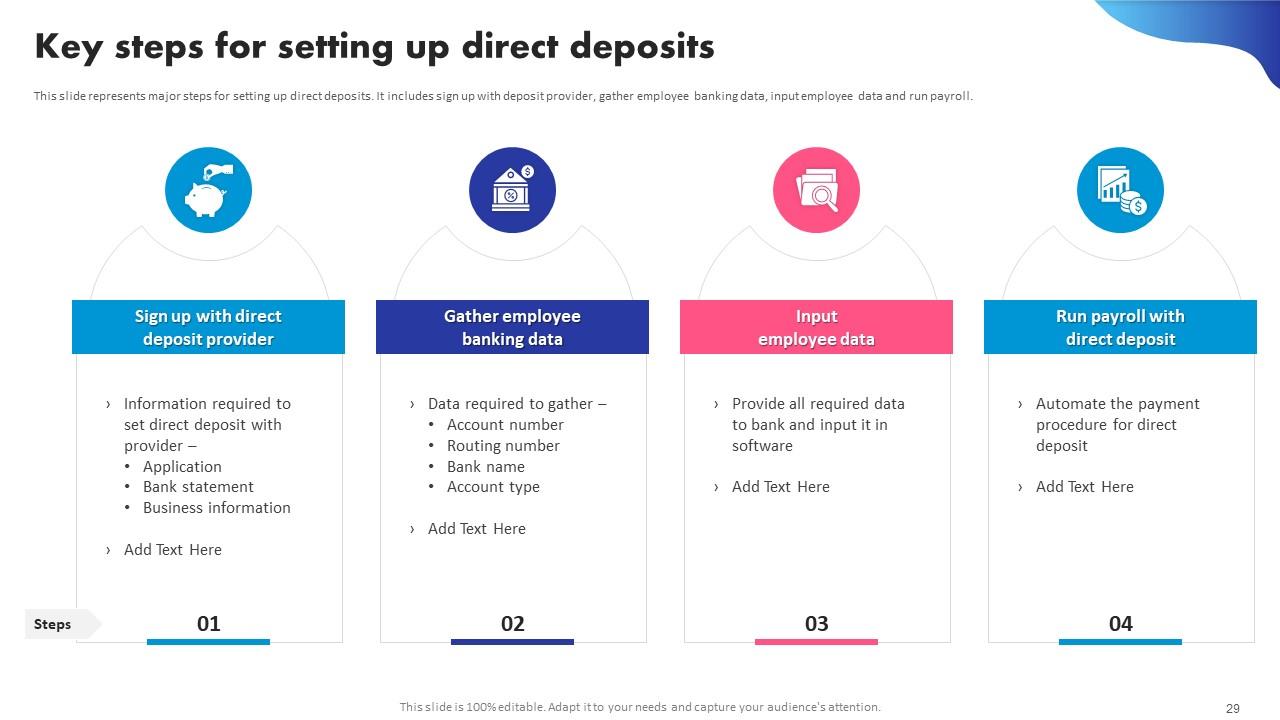
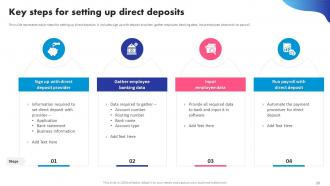
Slide 29: This slide represents major steps for setting up direct deposits.
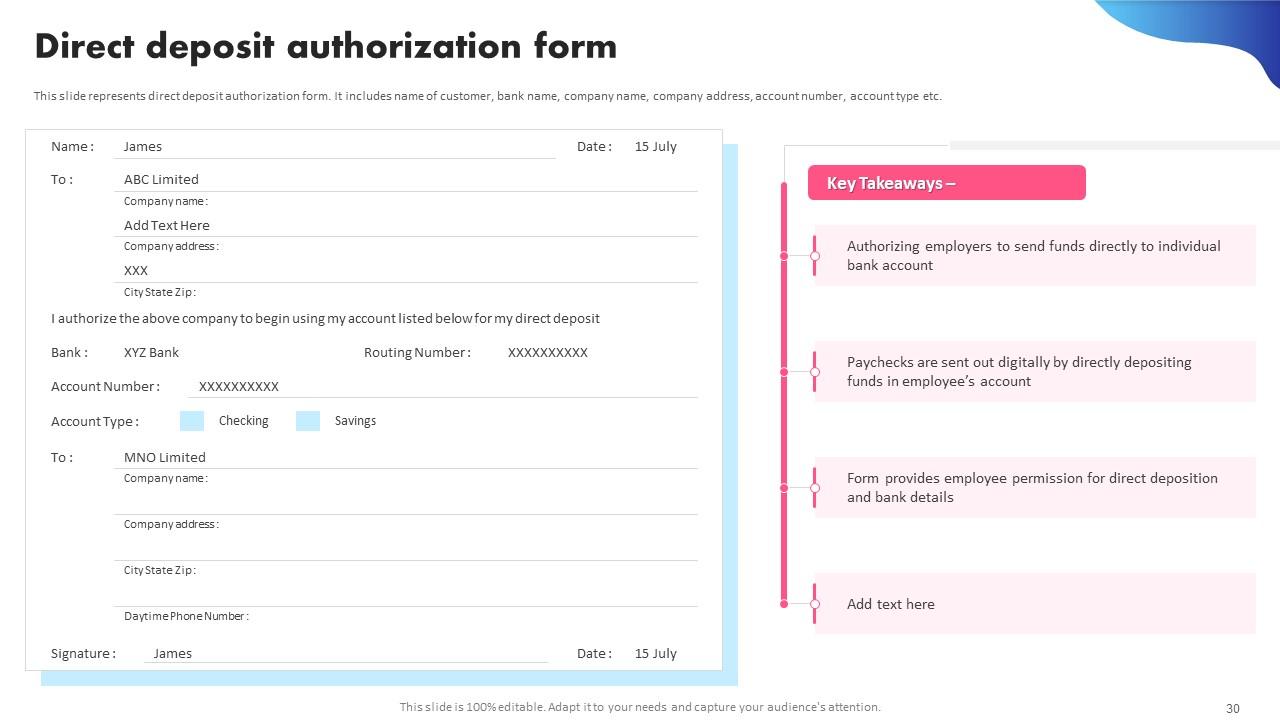
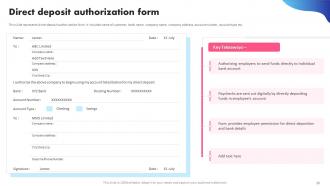
Slide 30: This slide represents direct deposit authorization form.
Slide 31: This slide depicts title for two topics that are to be covered next in the template.
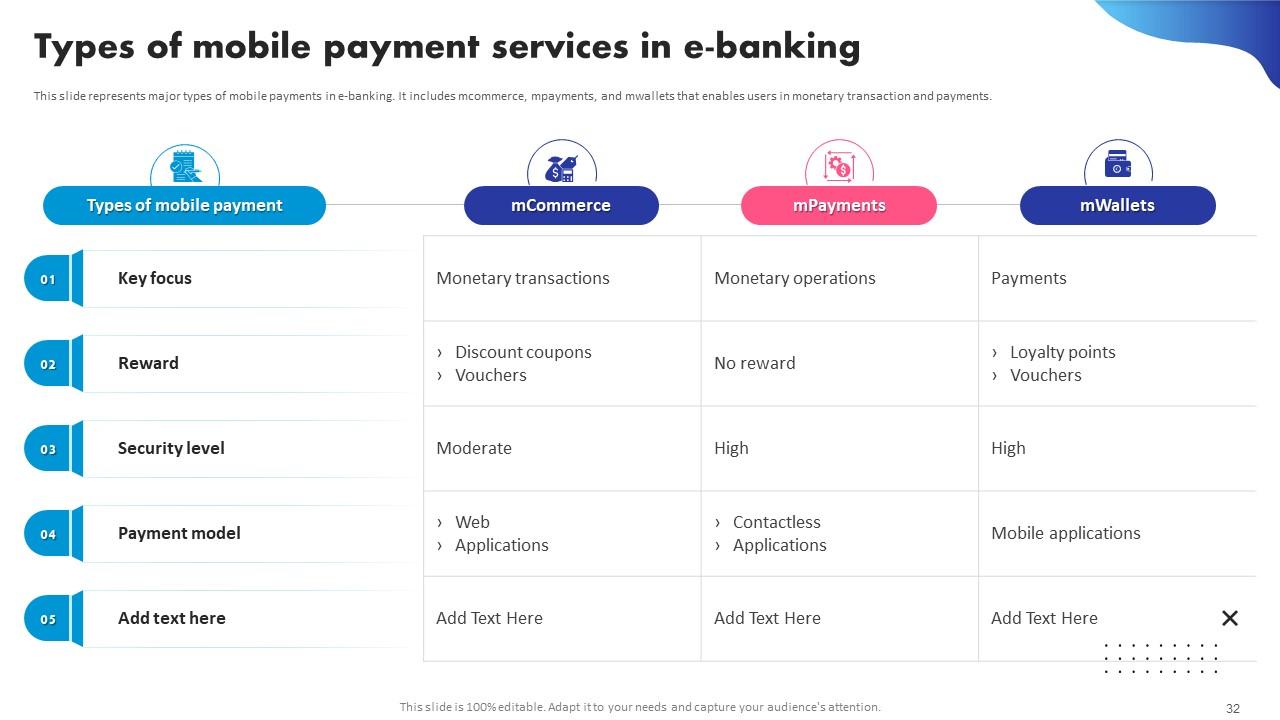
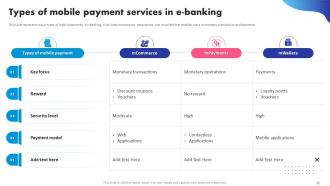
Slide 32: This slide represents major types of mobile payments in e-banking.
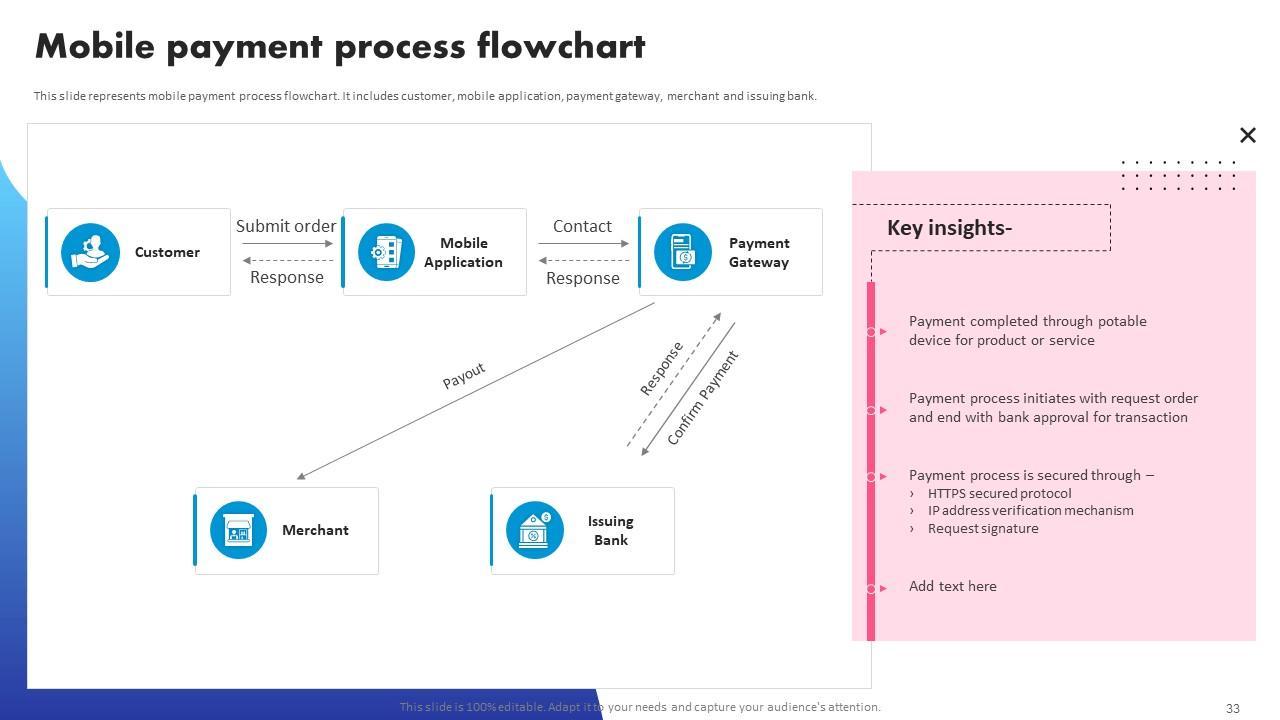
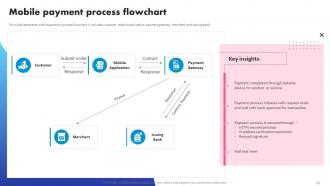
Slide 33: This slide represents mobile payment process flowchart.
Slide 34: This slide depicts title for two topics that are to be covered next in the template.
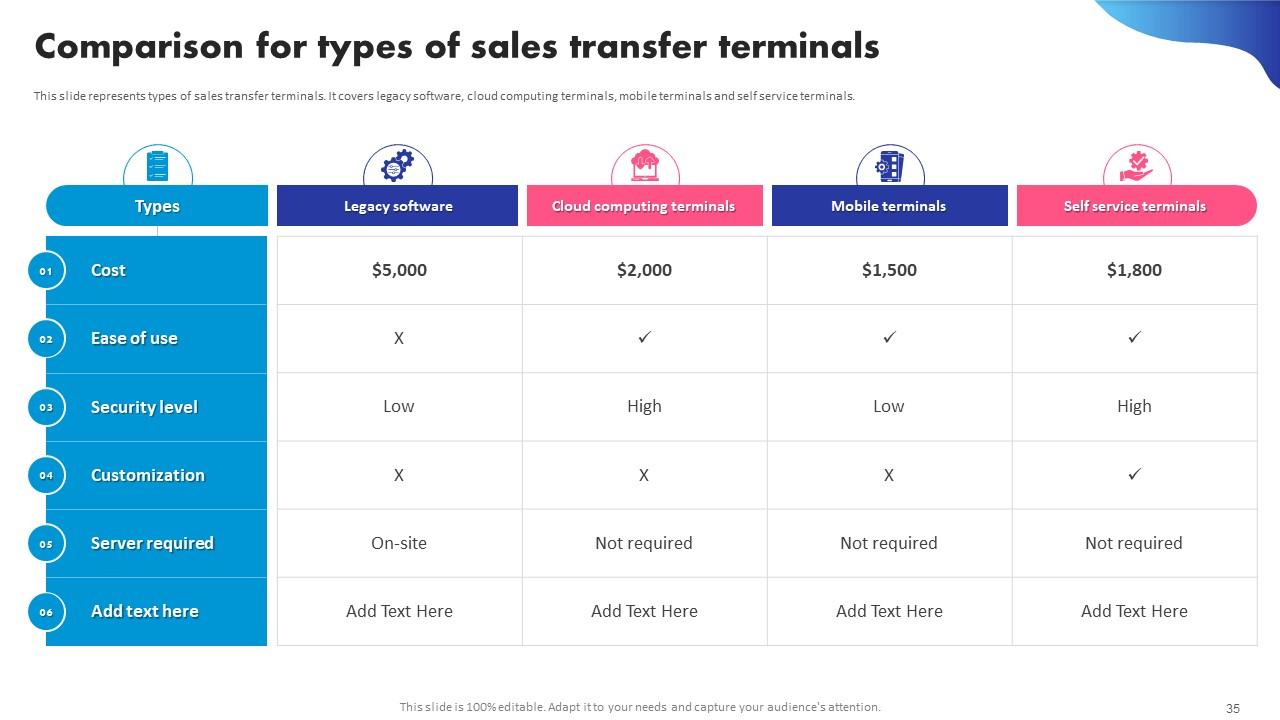
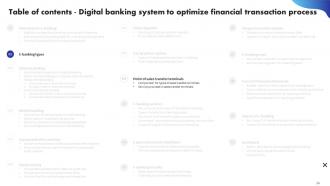
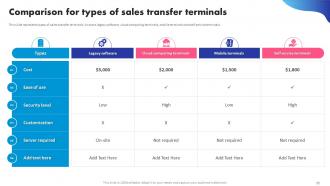
Slide 35: This slide represents types of sales transfer terminals.
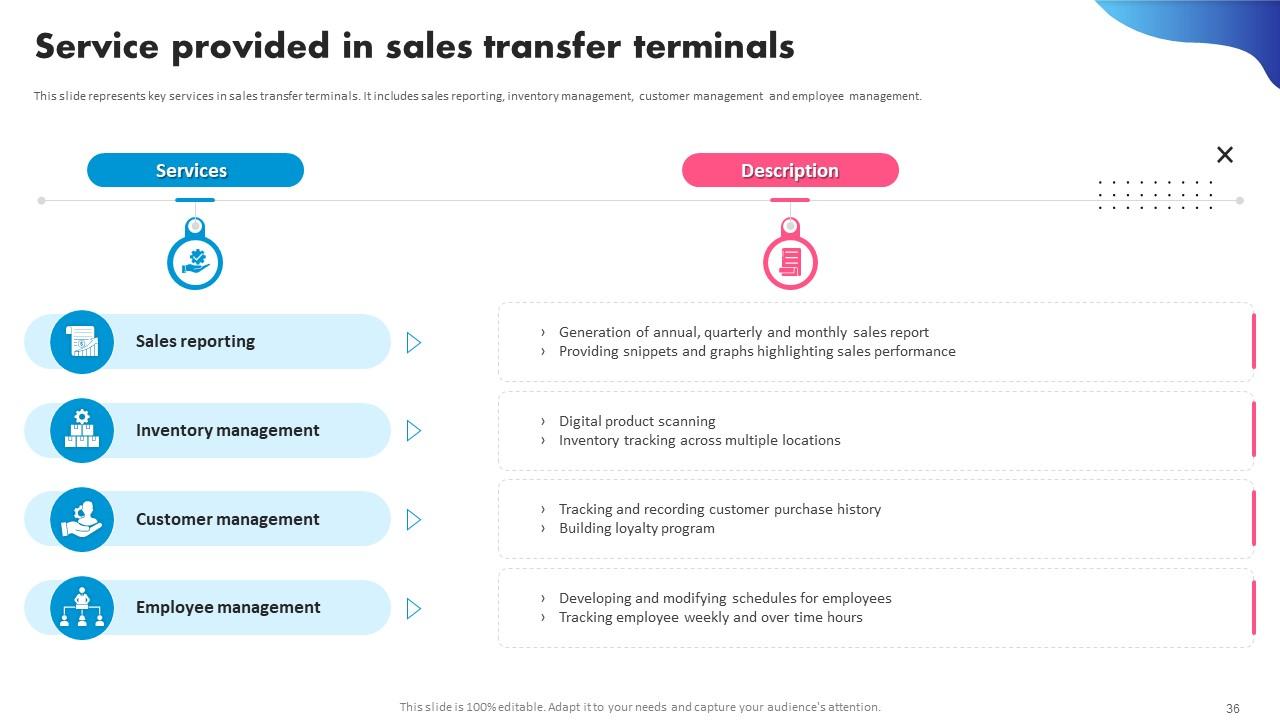
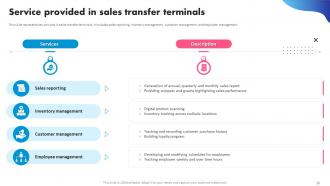
Slide 36: This slide represents key services in sales transfer terminals.
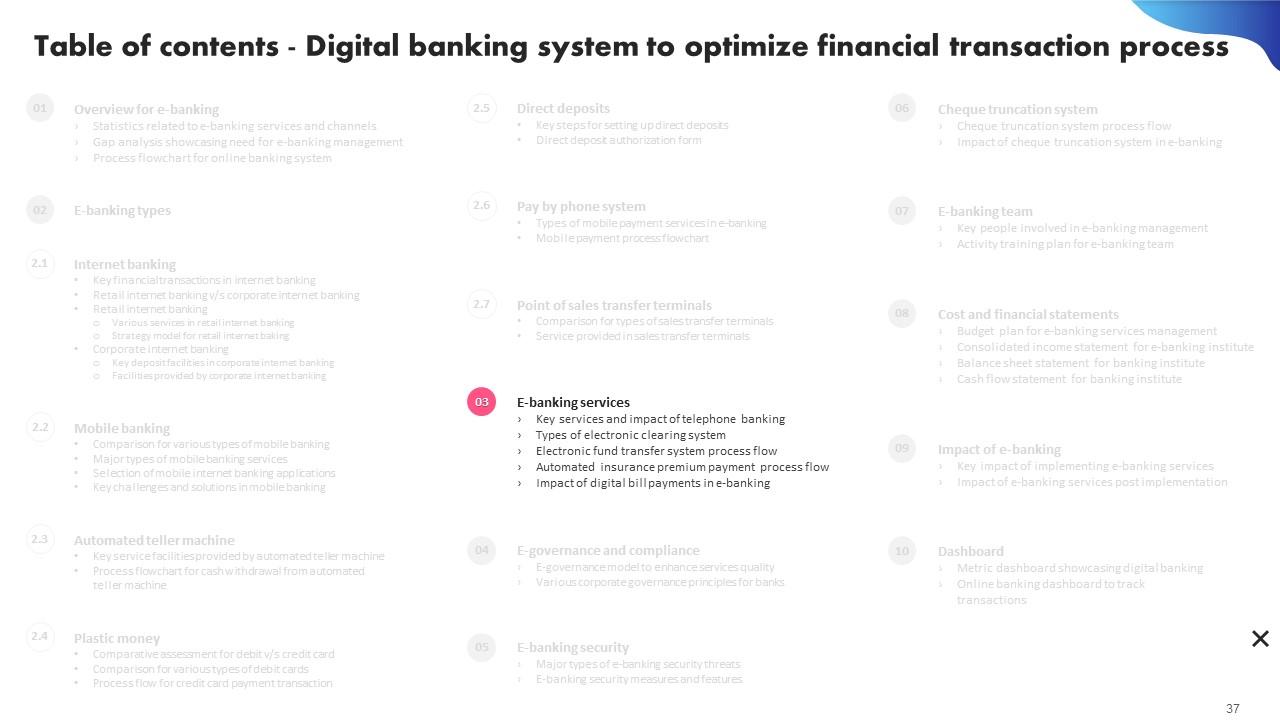
Slide 37: This slide depicts title for five topics that are to be covered next in the template.
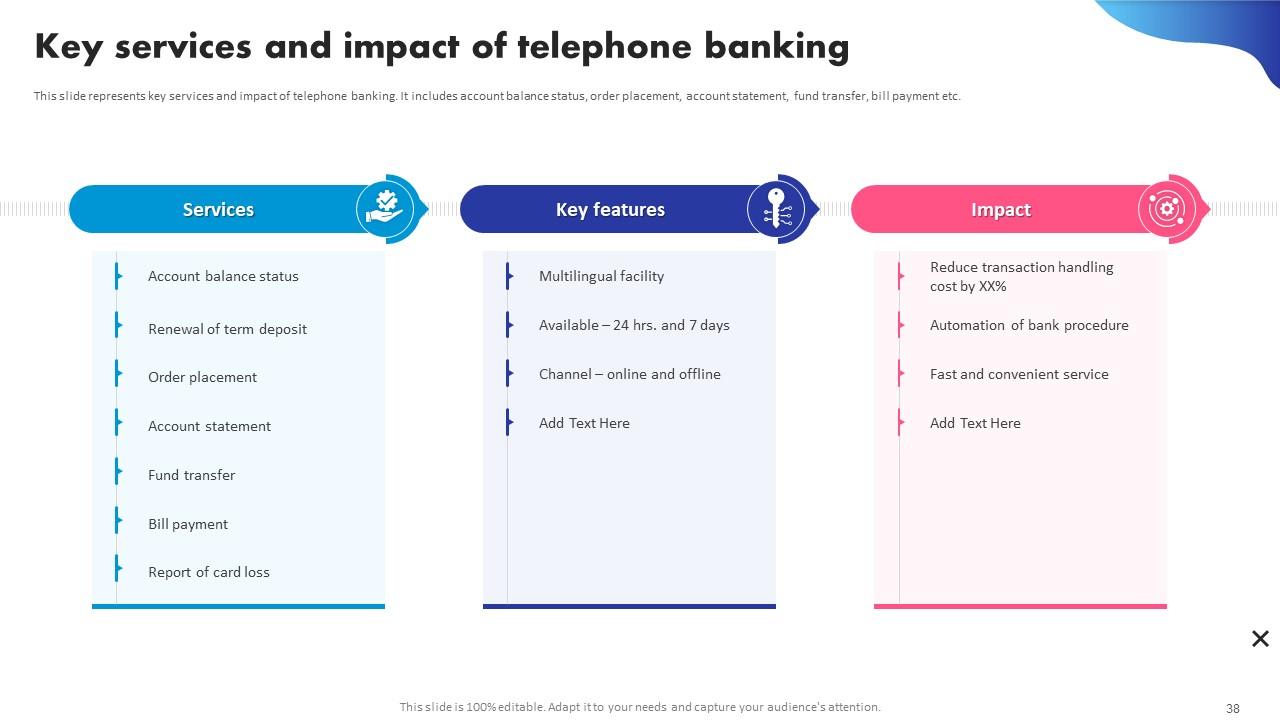
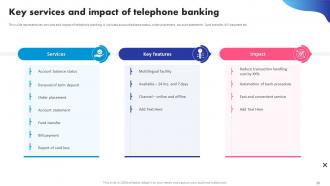
Slide 38: This slide represents key services and impact of telephone banking.
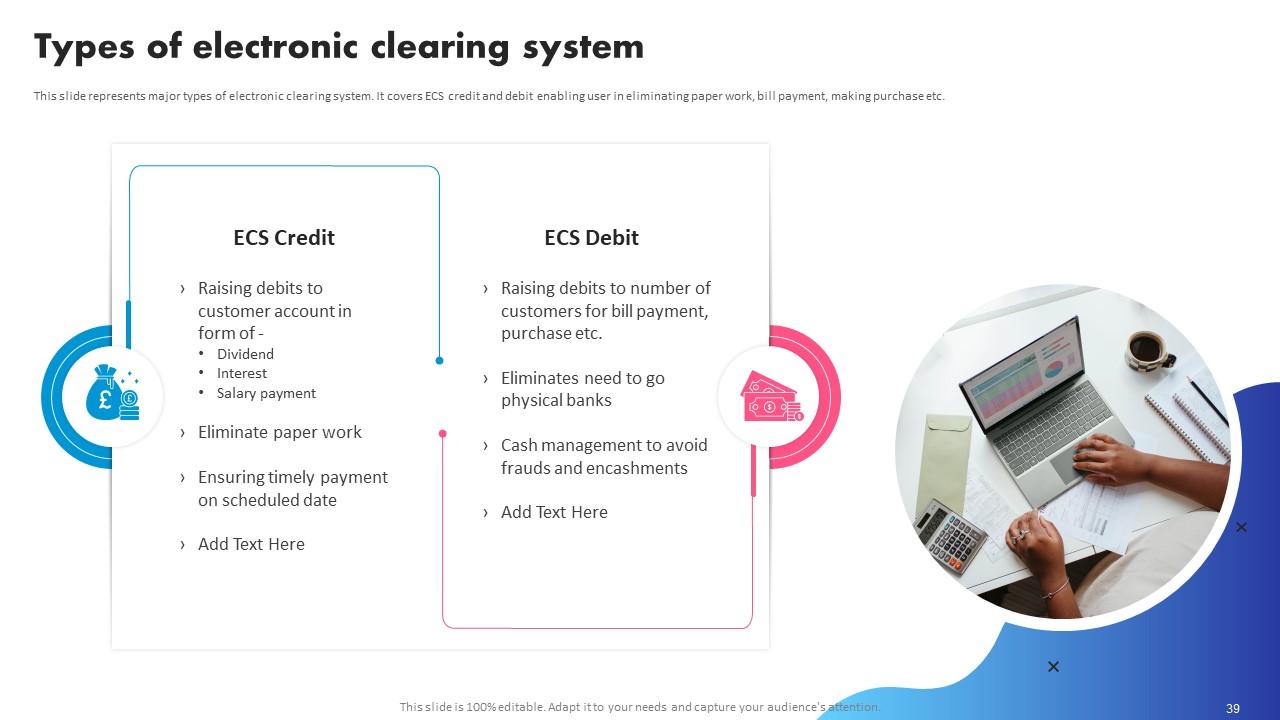
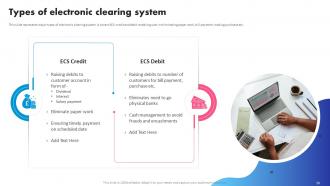
Slide 39: This slide represents major types of electronic clearing system.
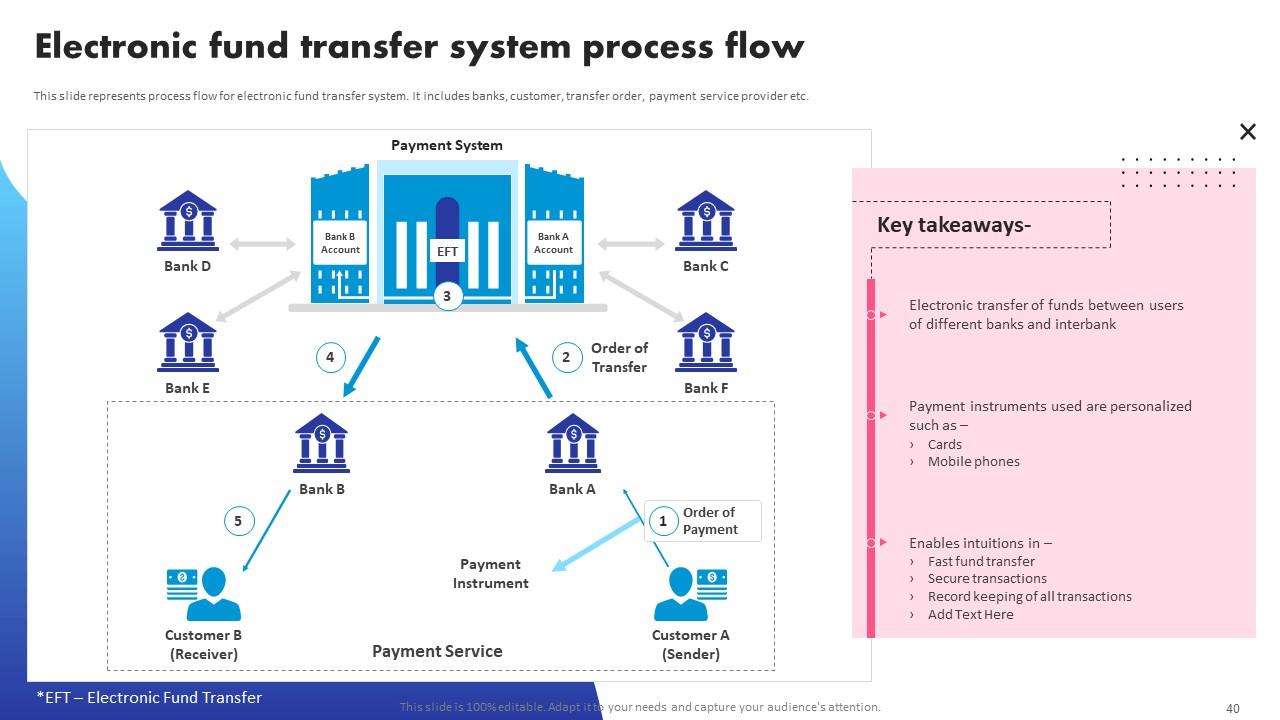
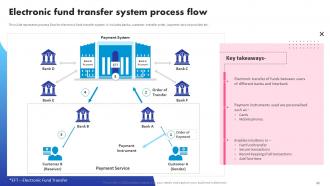
Slide 40: This slide represents process flow for electronic fund transfer system.
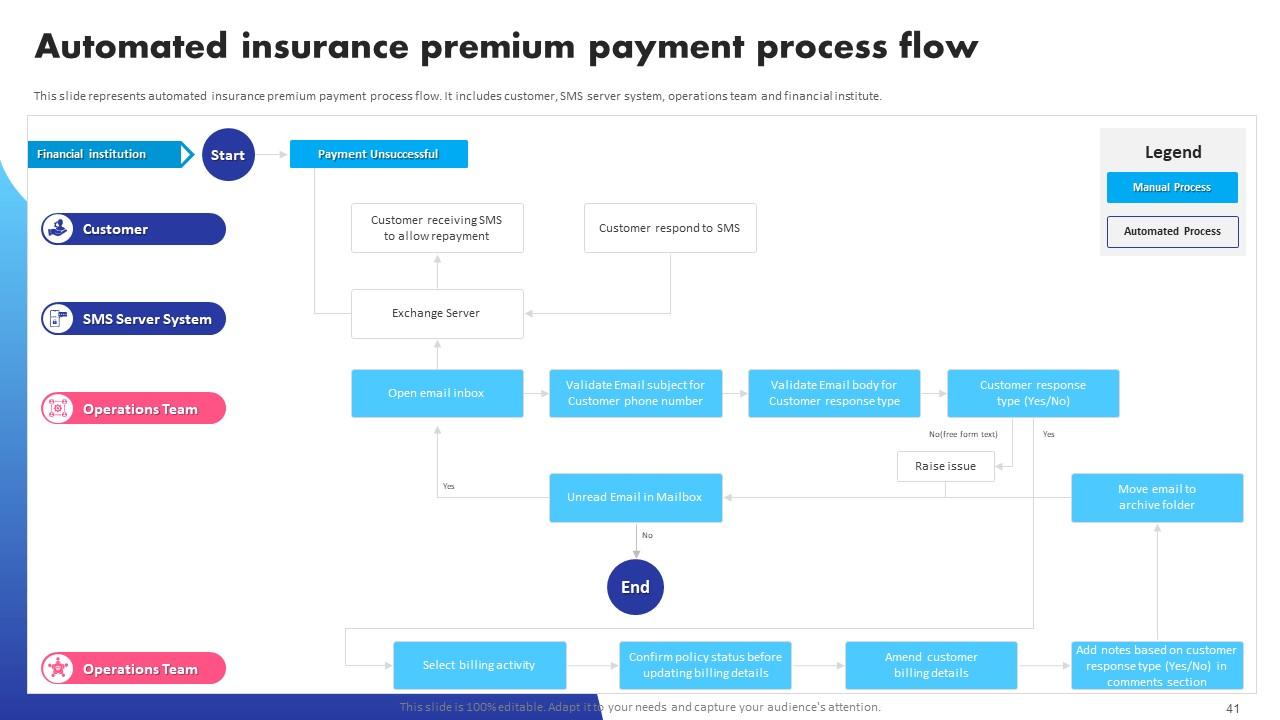
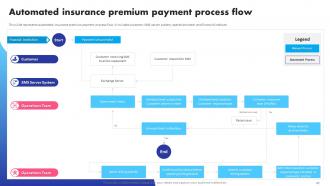
Slide 41: This slide represents automated insurance premium payment process flow.
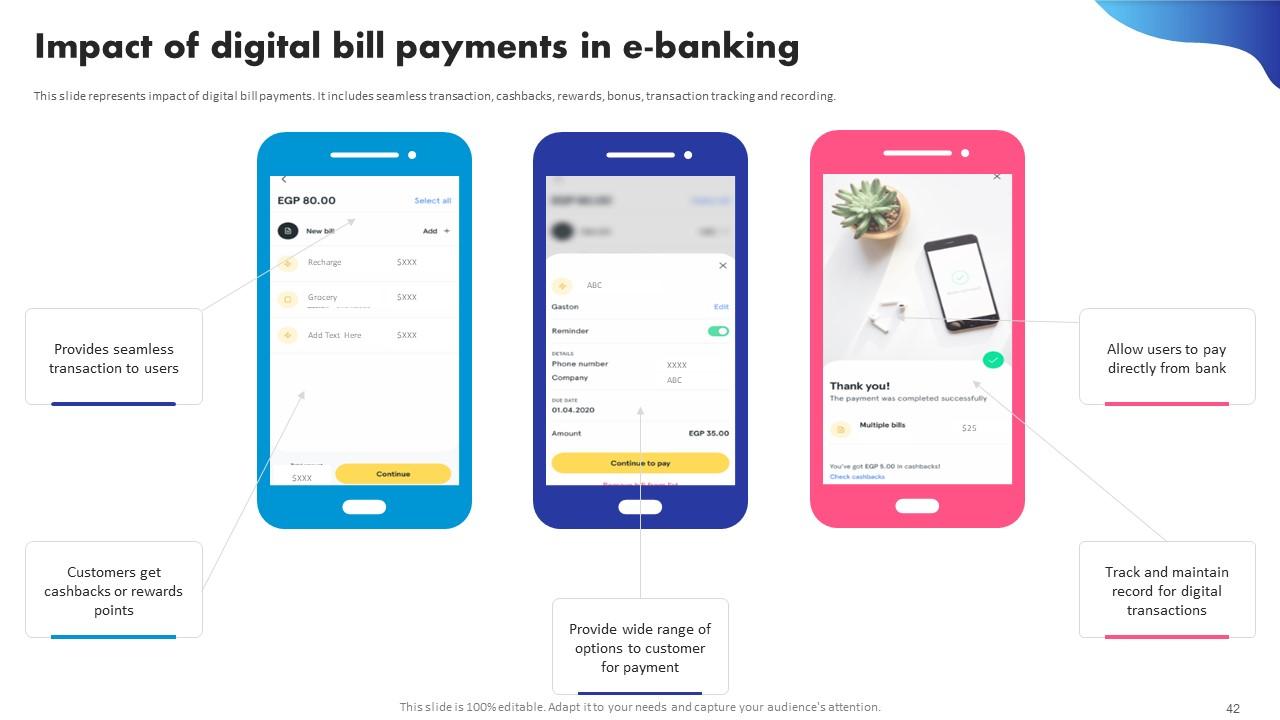
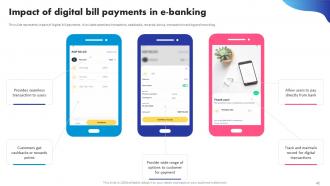
Slide 42: This slide represents impact of digital bill payments.
Slide 43: This slide depicts title for two topics that are to be covered next in the template.
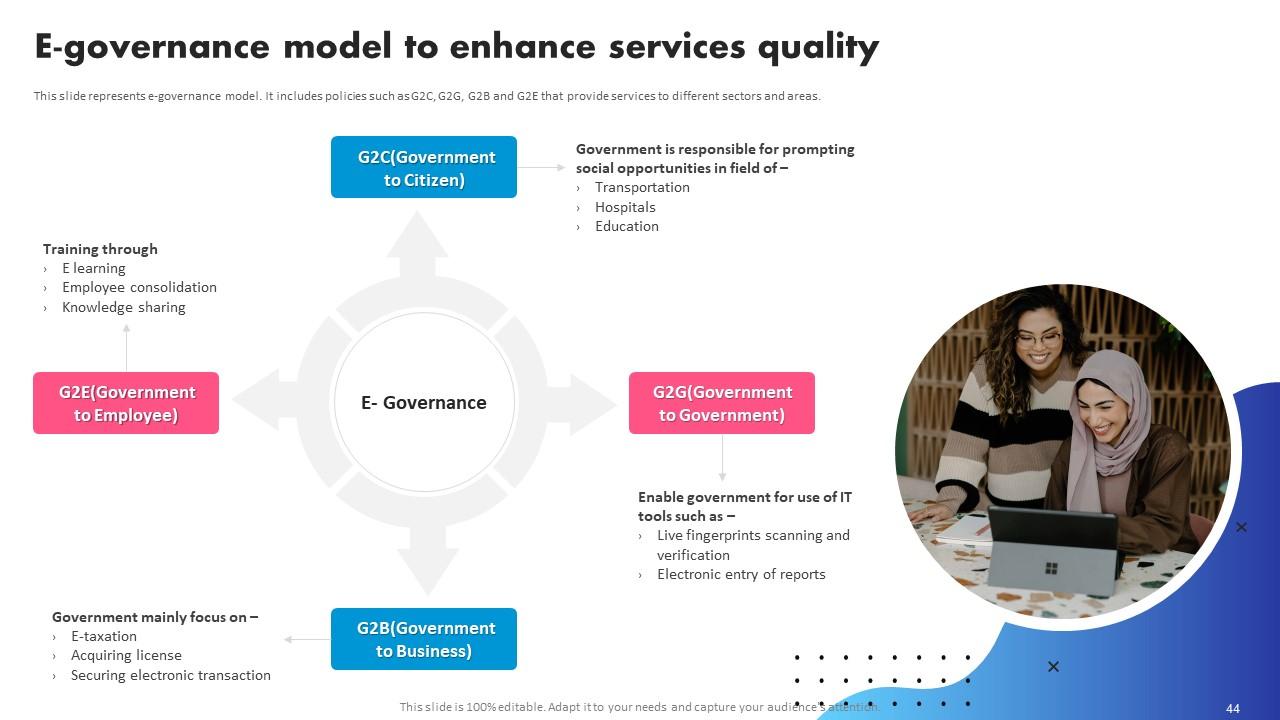
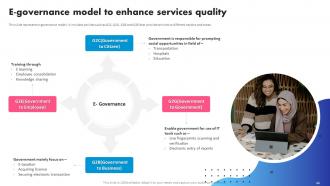
Slide 44: This slide represents e-governance model.
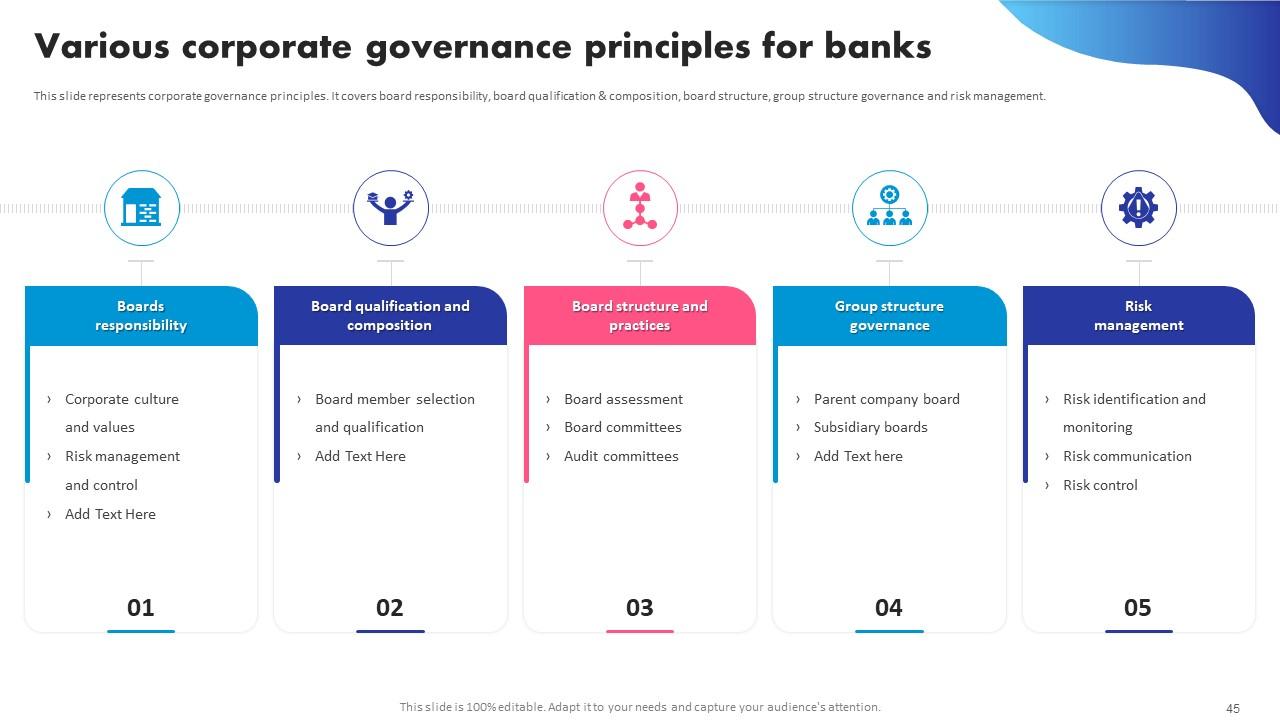
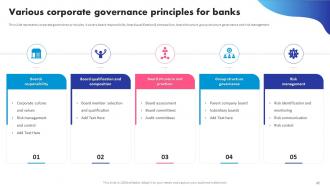
Slide 45: This slide represents corporate governance principles.
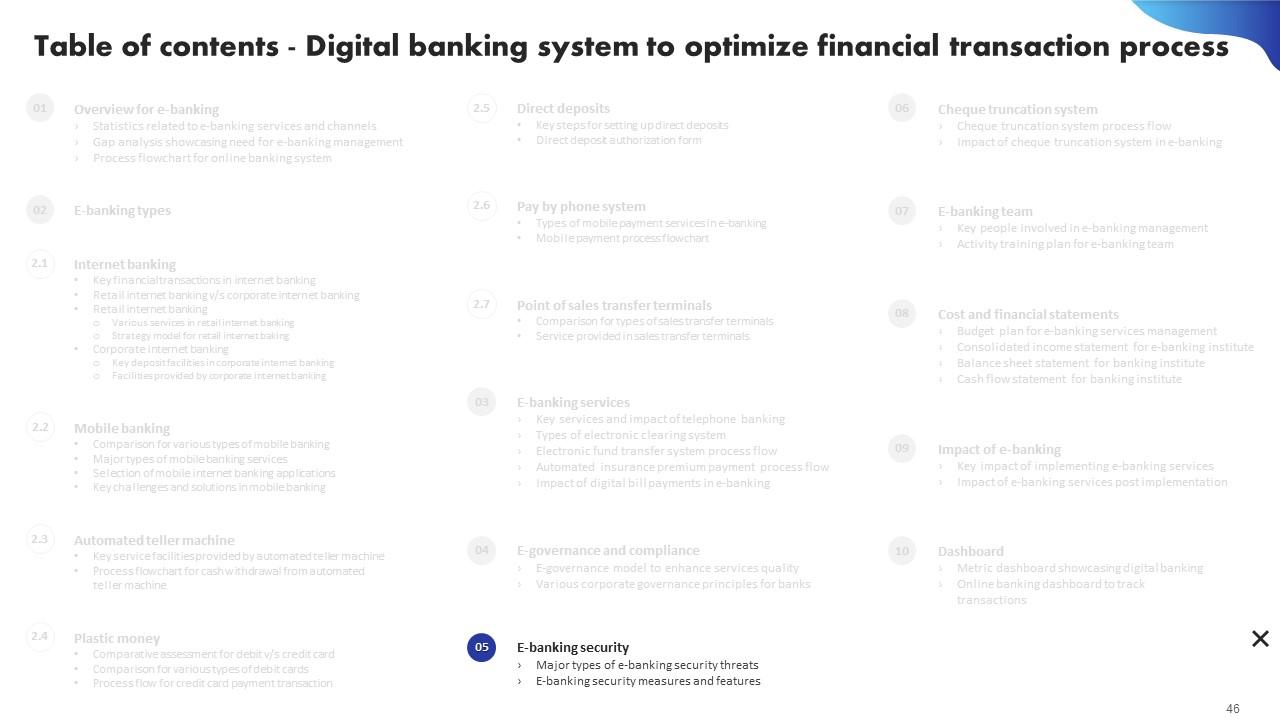
Slide 46: This slide depicts title for two topics that are to be covered next in the template.
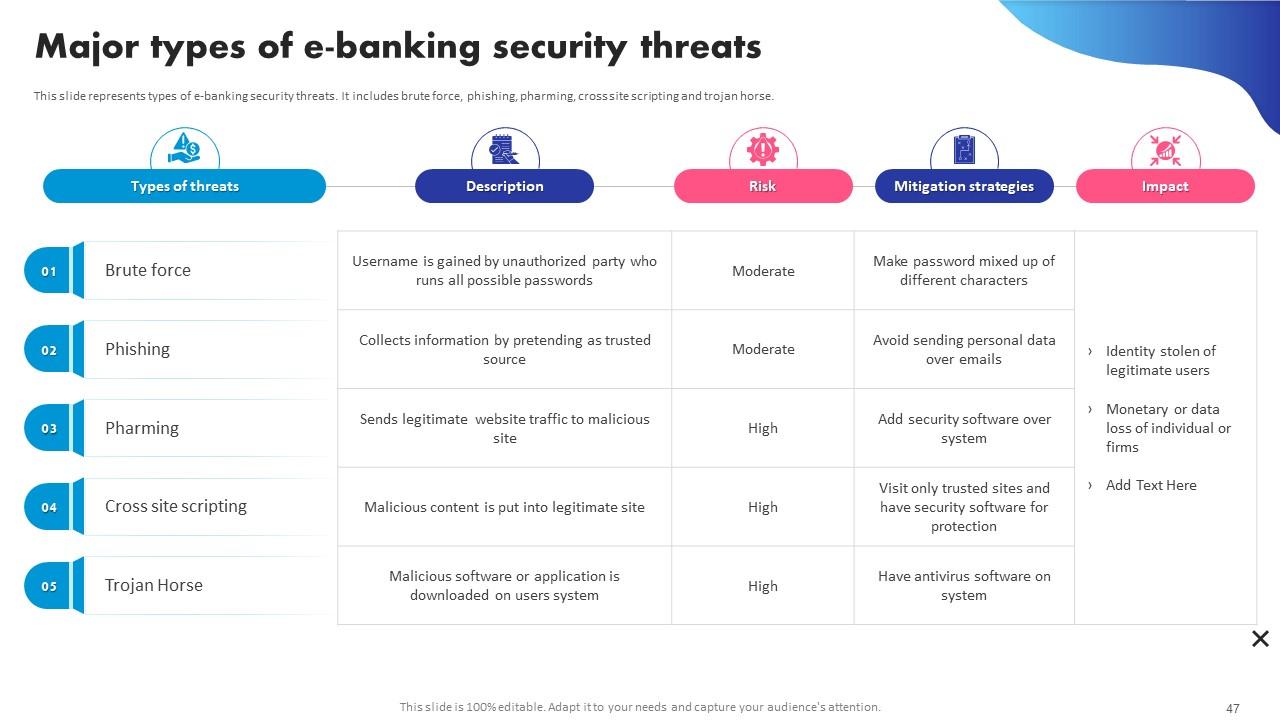
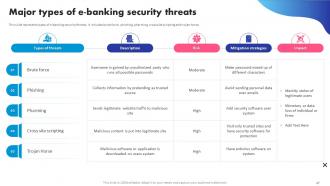
Slide 47: This slide represents types of e-banking security threats.
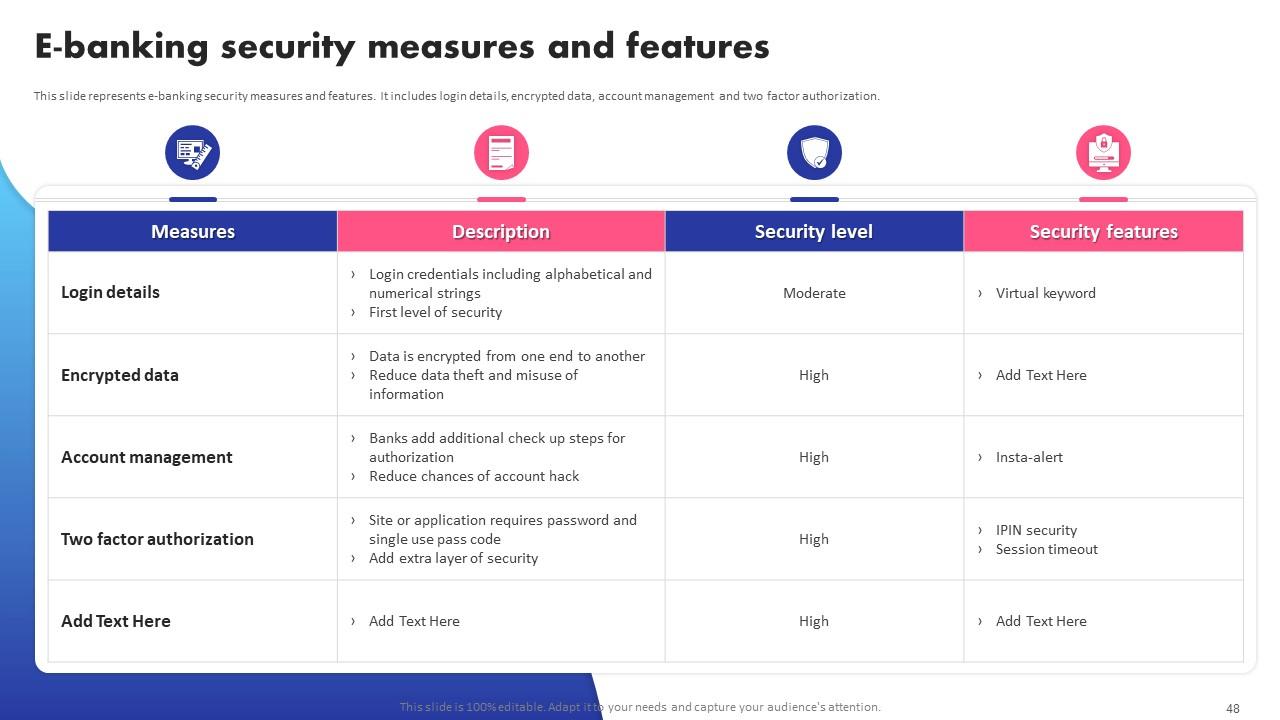
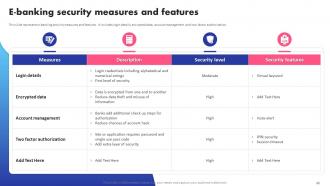
Slide 48: This slide represents e-banking security measures and features.
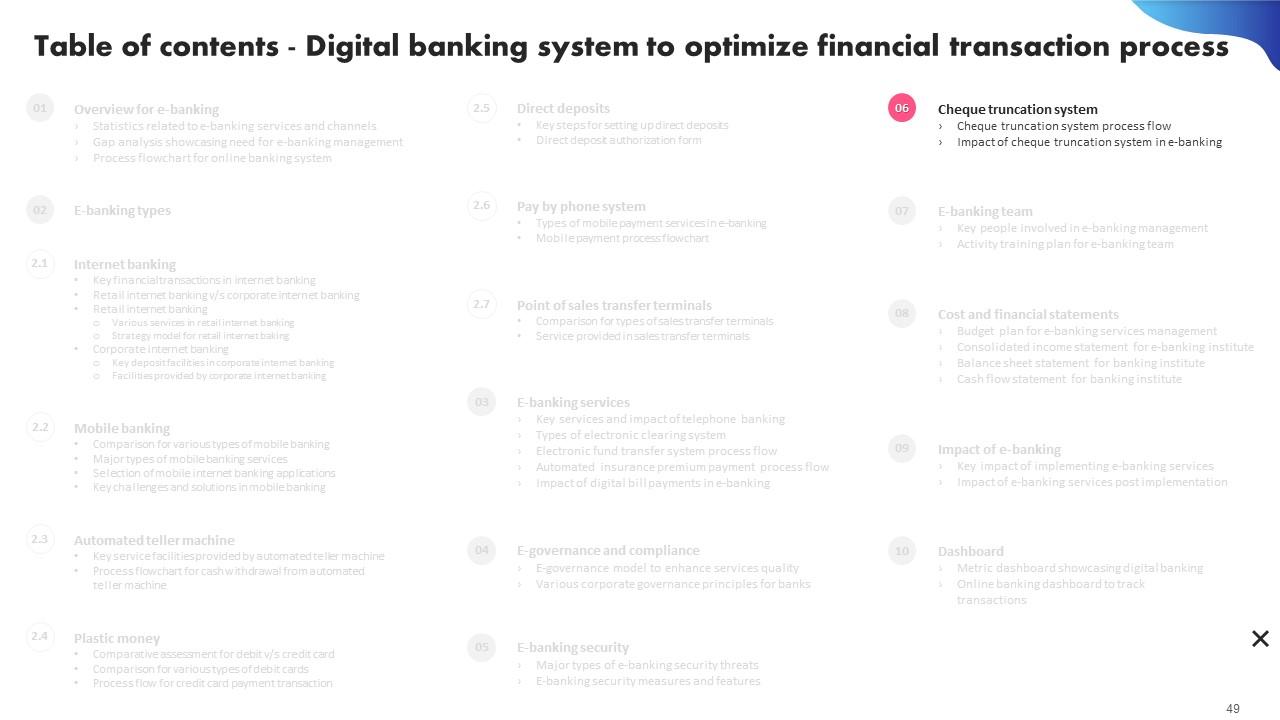
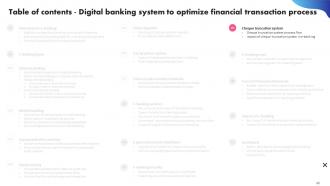
Slide 49: This slide depicts title for two topics that are to be covered next in the template.
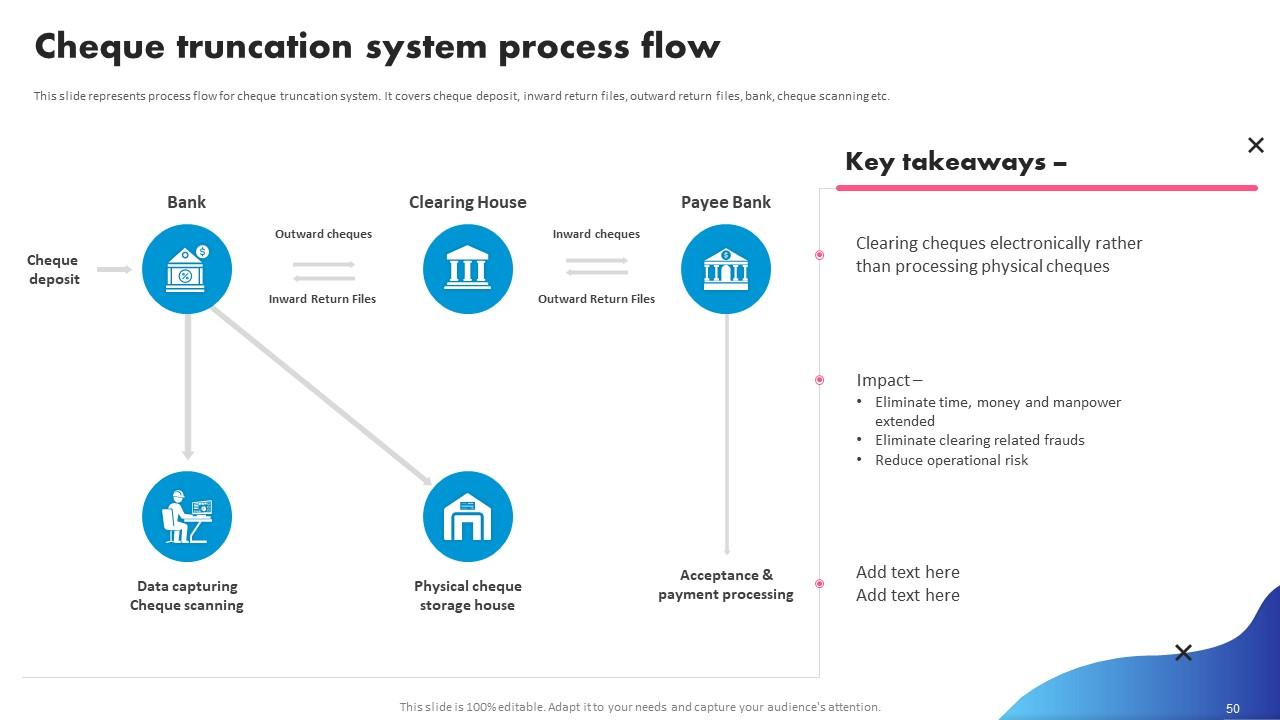
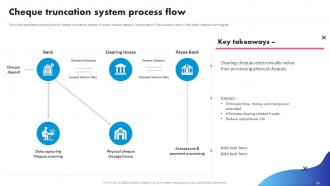
Slide 50: This slide represents process flow for cheque truncation system.
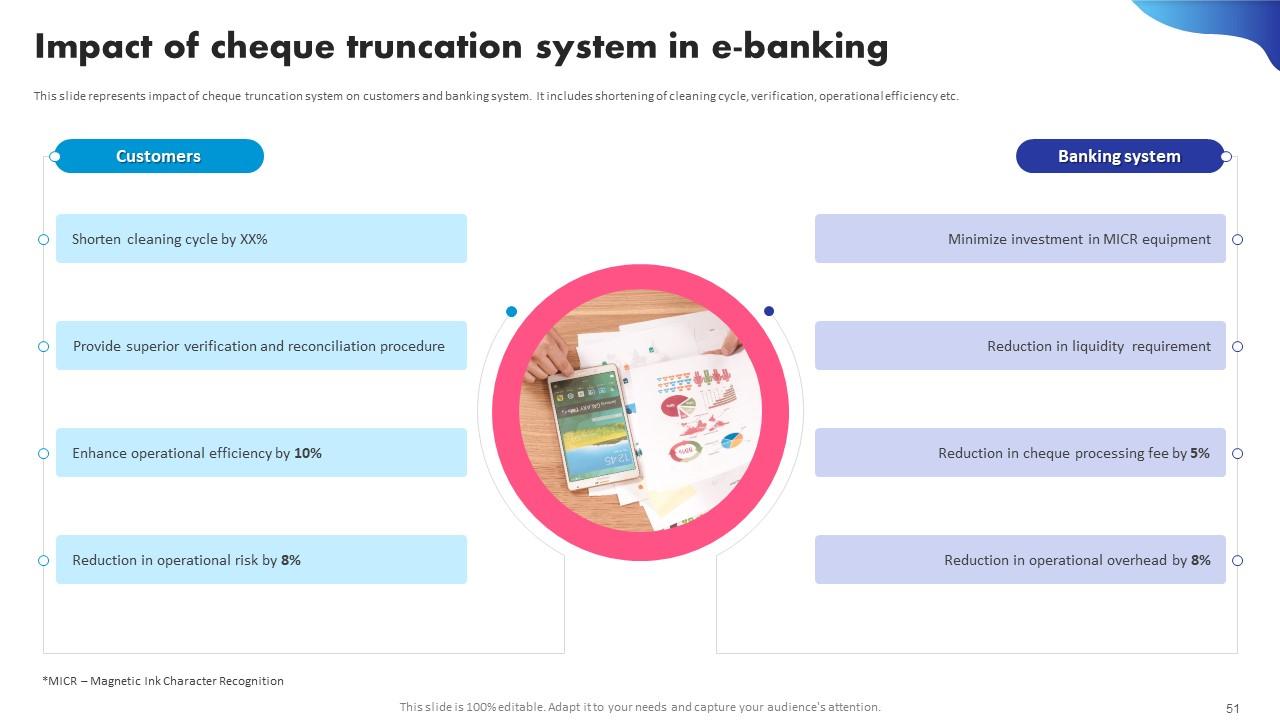
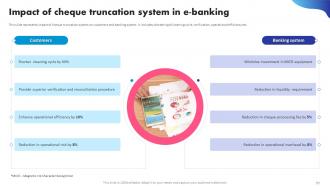
Slide 51: This slide represents impact of cheque truncation system on customers and banking system.
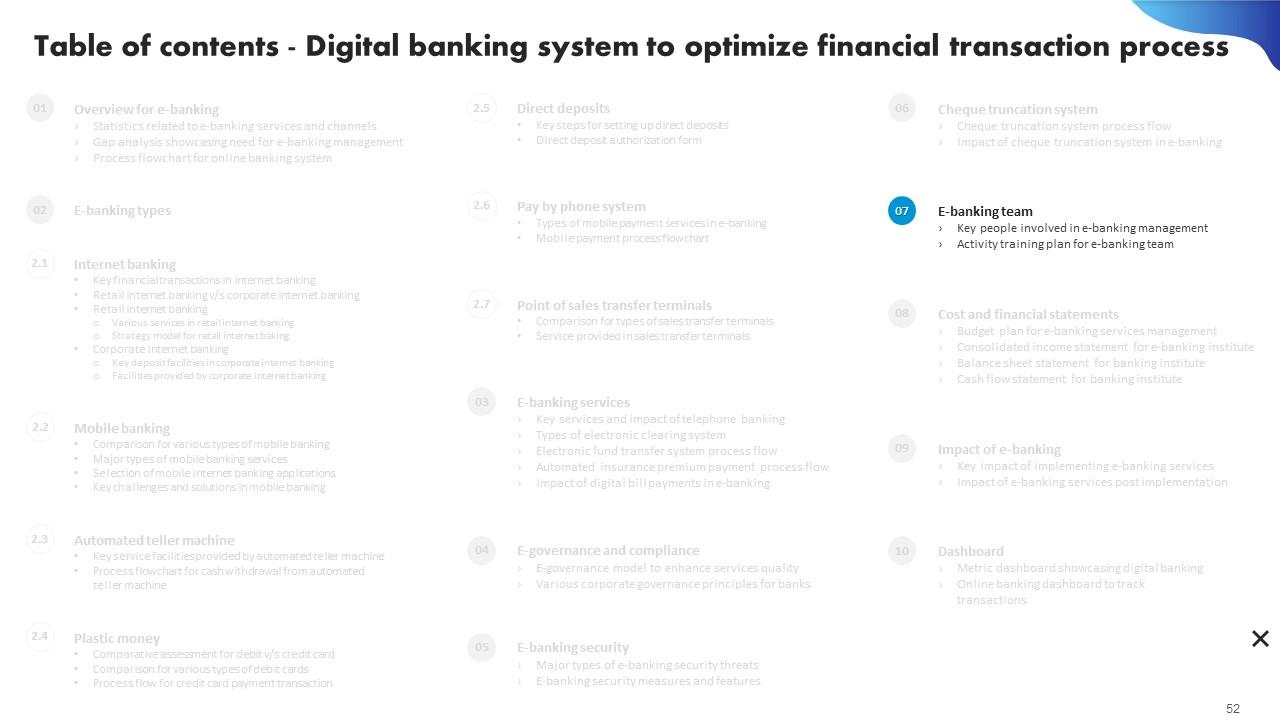
Slide 52: This slide depicts title for two topics that are to be covered next in the template.
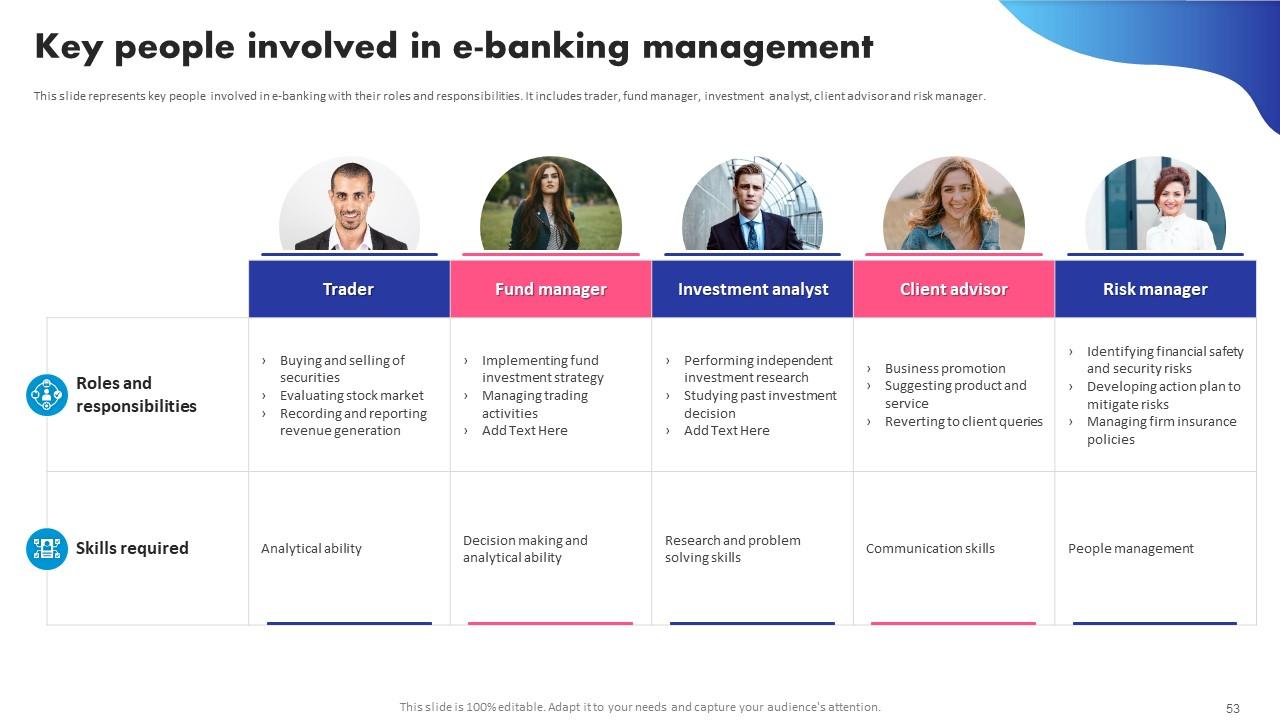
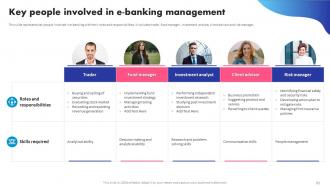
Slide 53: This slide represents key people involved in e-banking with their roles and responsibilities.
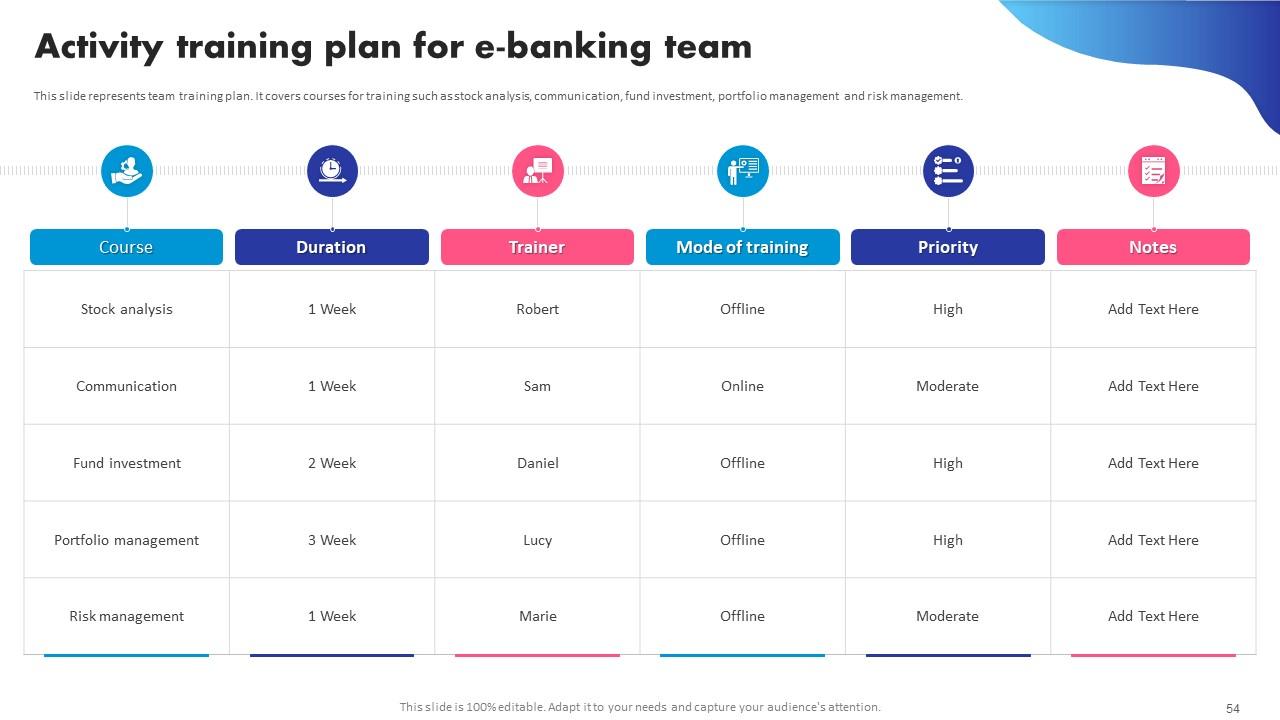
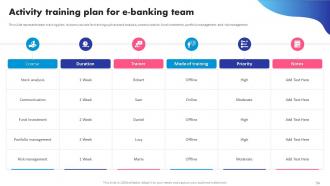
Slide 54: This slide represents team training plan.
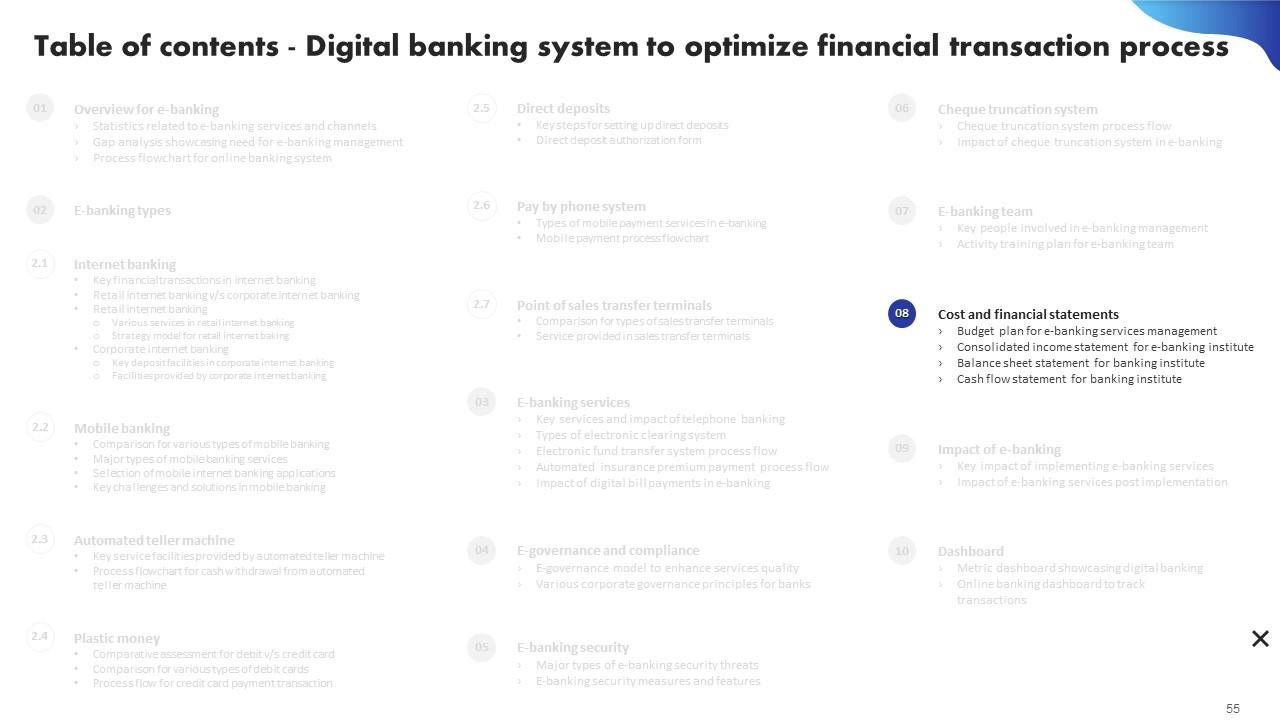
Slide 55: This slide depicts title for four topics that are to be covered next in the template.
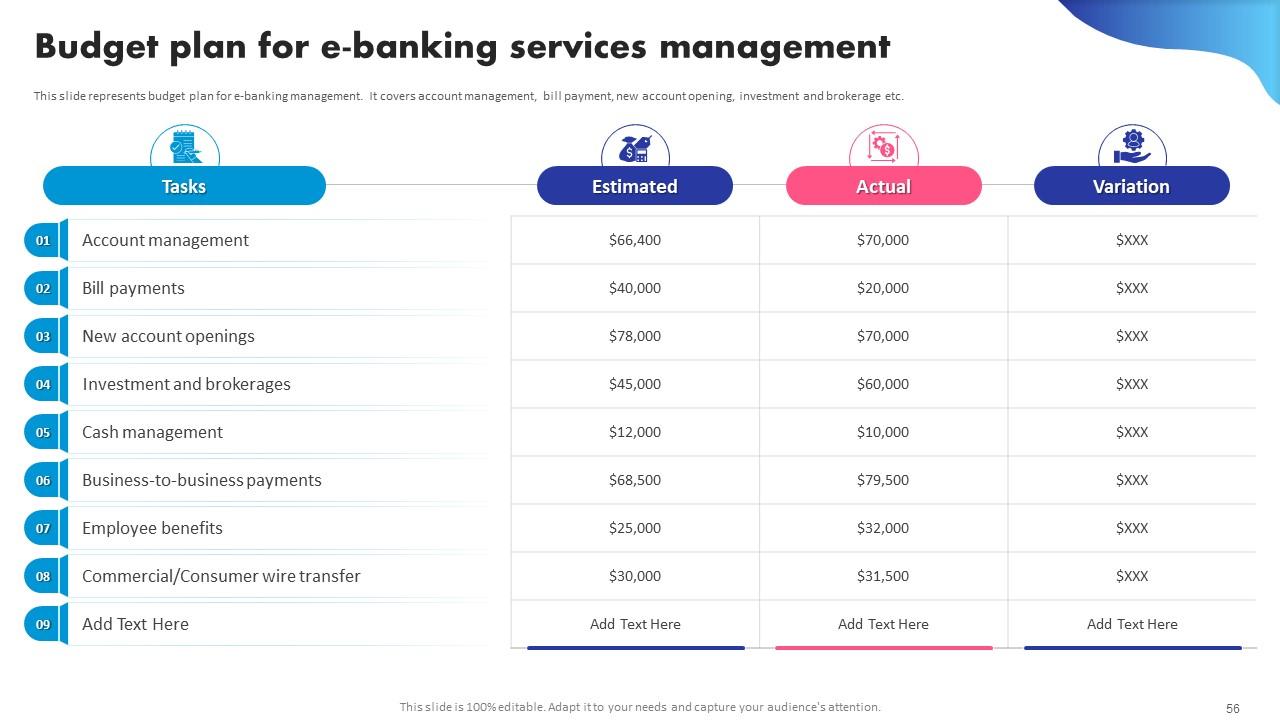
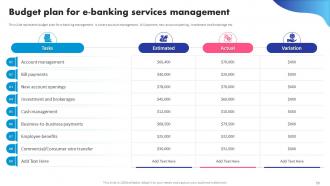
Slide 56: This slide represents budget plan for e-banking management.
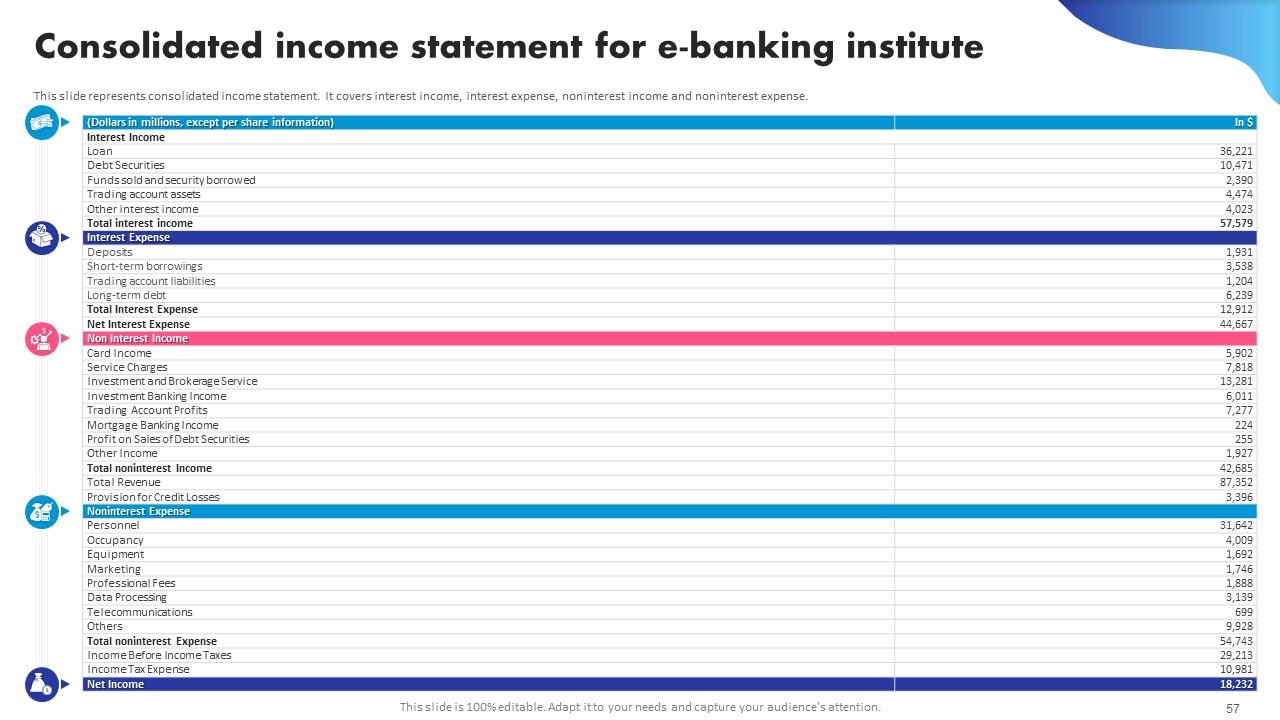
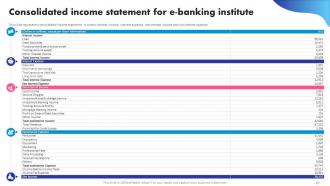
Slide 57: This slide represents consolidated income statement.
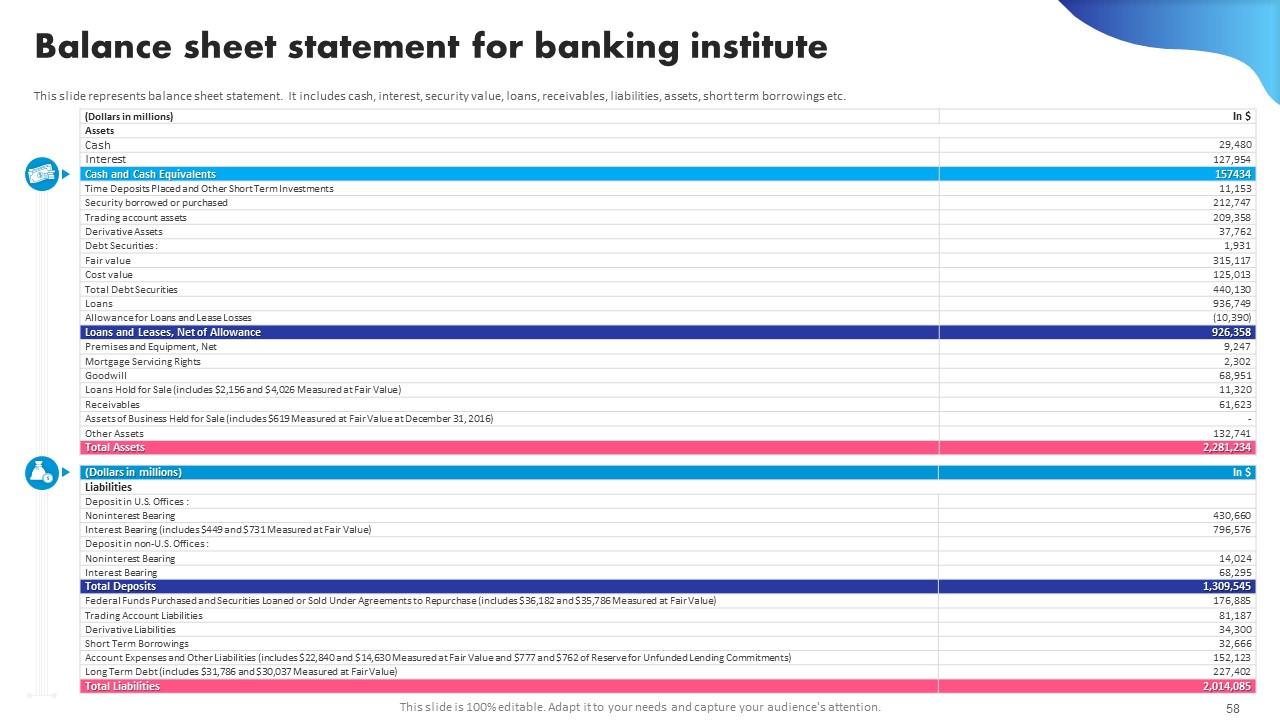
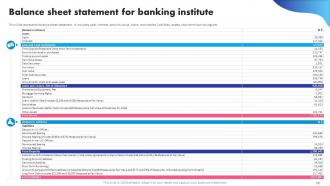
Slide 58: This slide represents balance sheet statement.
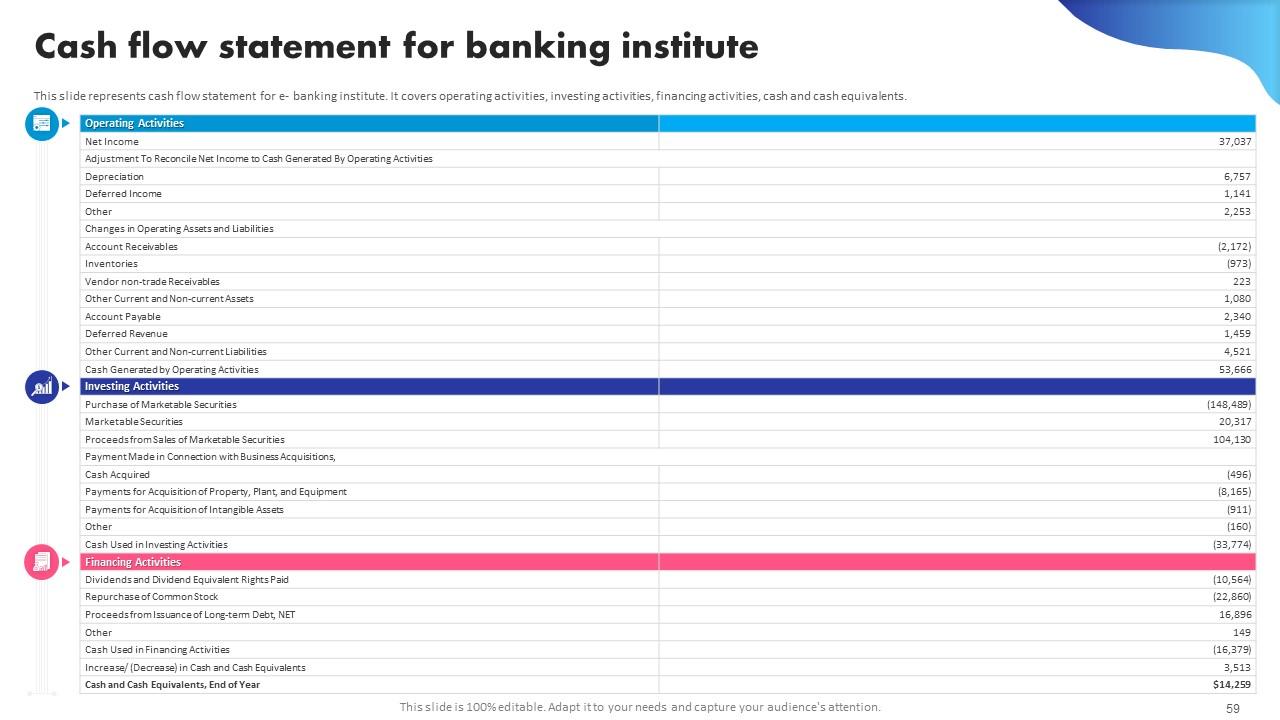
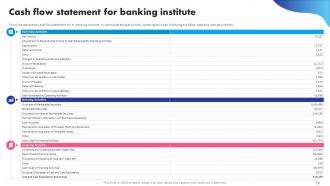
Slide 59: This slide represents cash flow statement for e- banking institute.
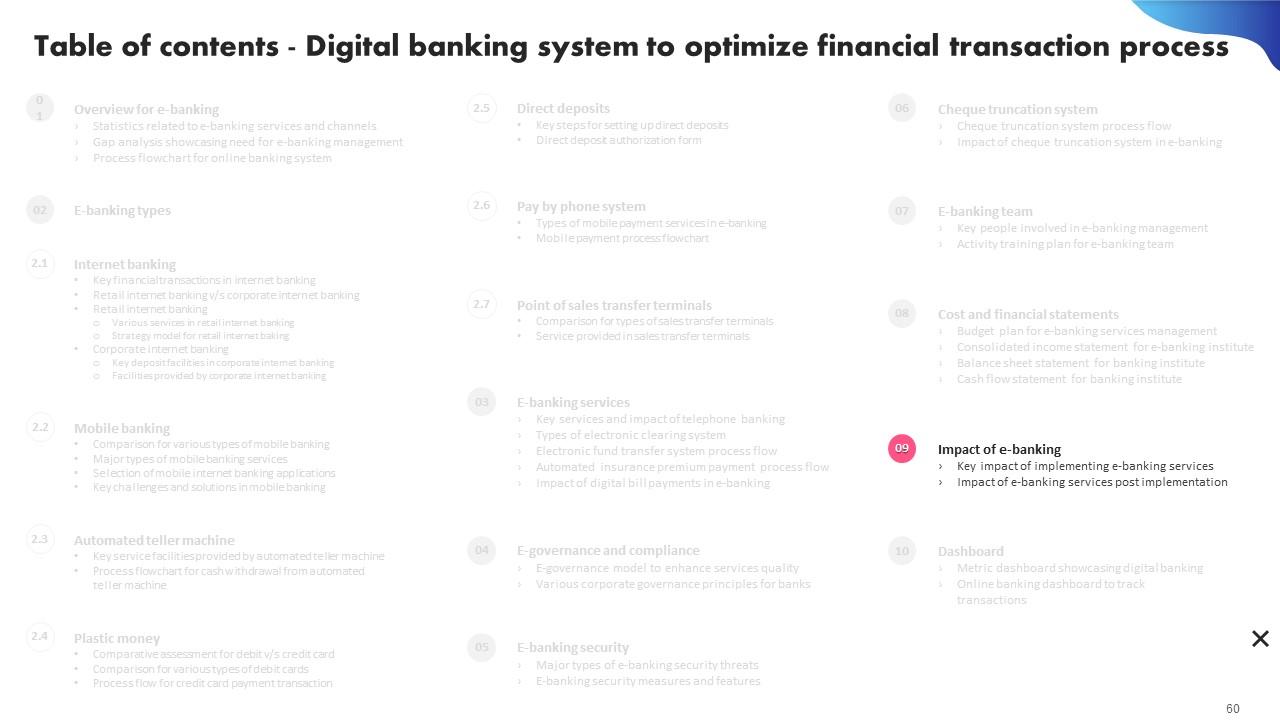
Slide 60: This slide depicts title for two topics that are to be covered next in the template.
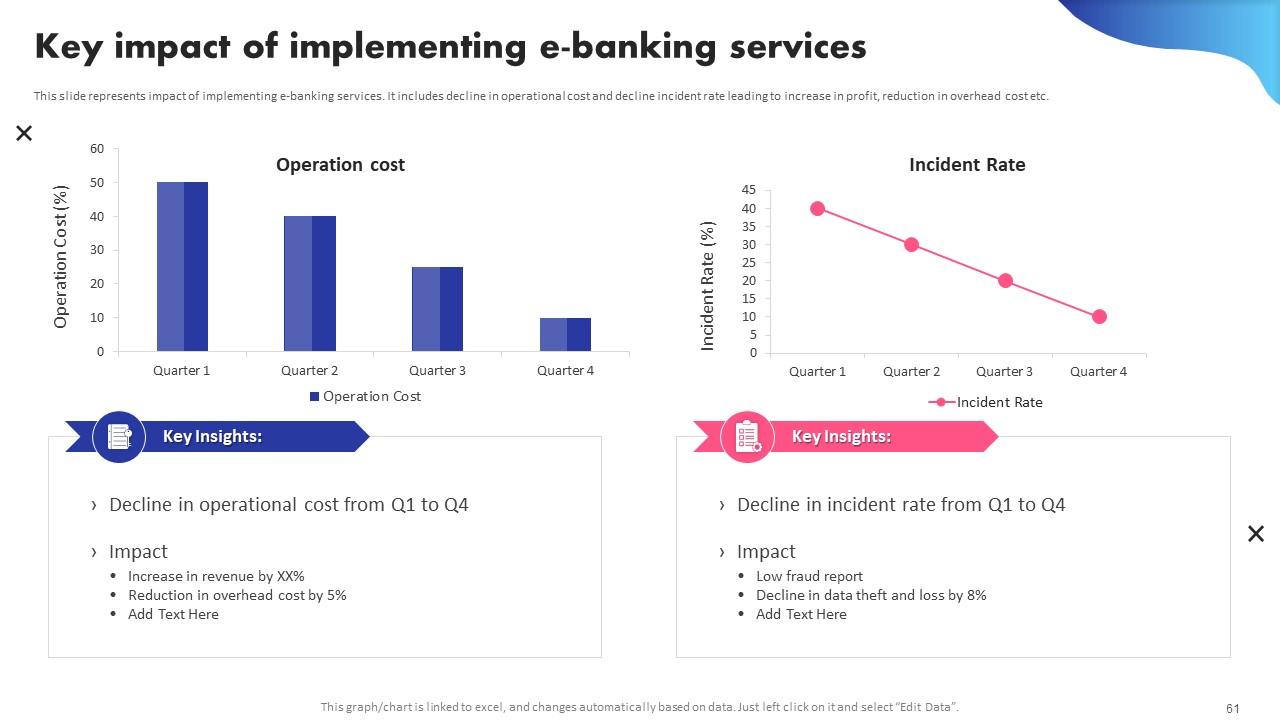
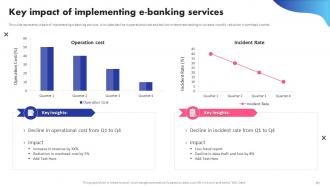
Slide 61: This slide represents impact of implementing e-banking services.
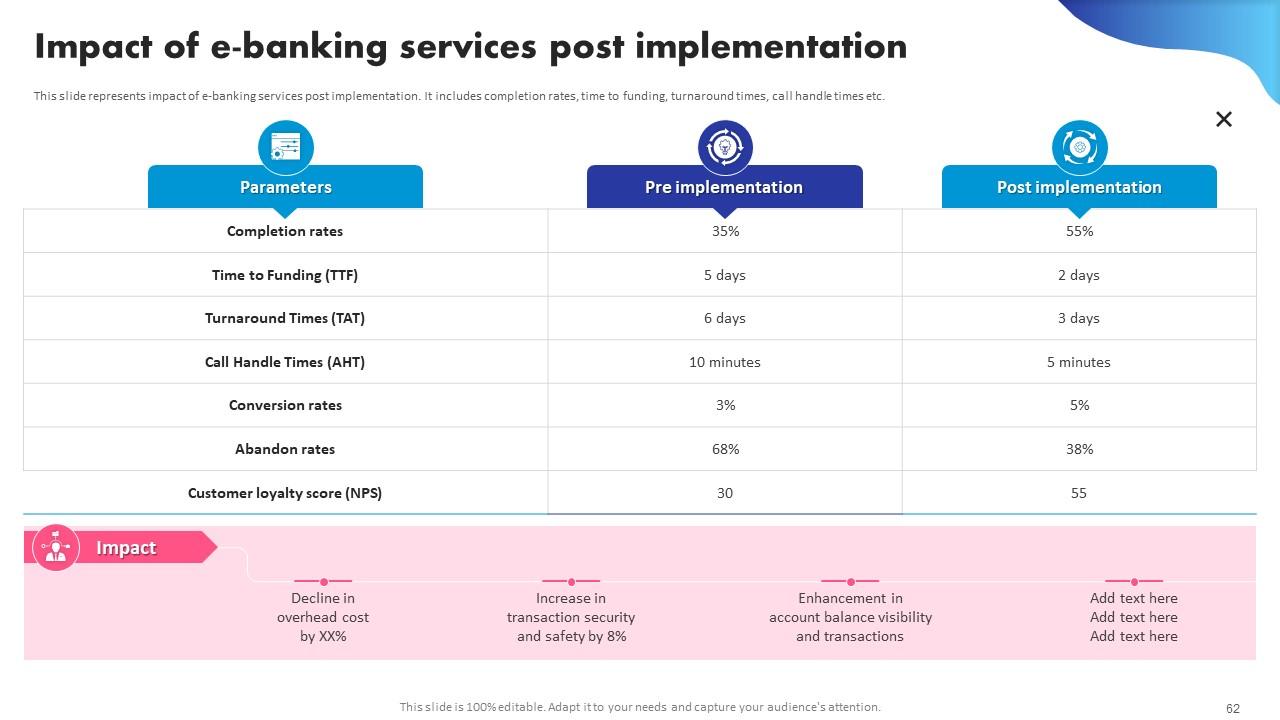
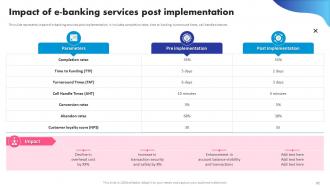
Slide 62: This slide represents impact of e-banking services post implementation.
Slide 63: This slide depicts title for two topics that are to be covered next in the template.
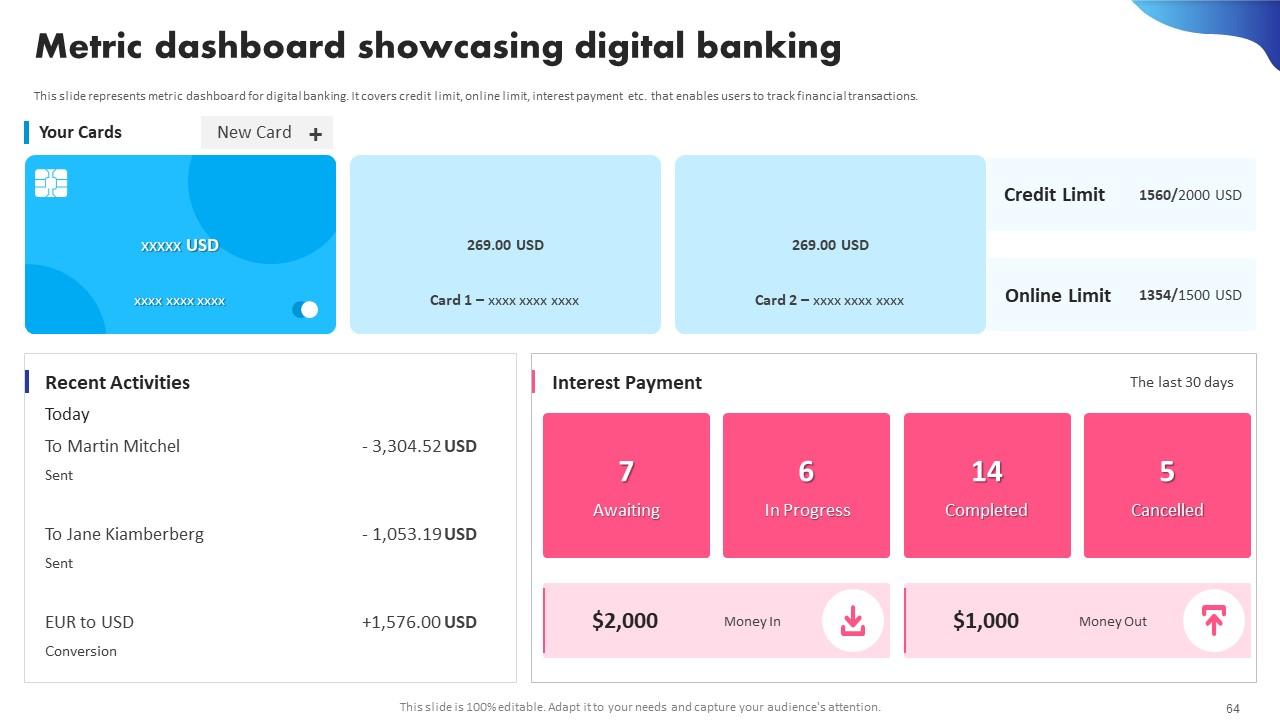
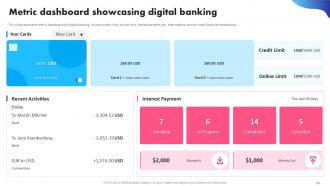
Slide 64: This slide represents metric dashboard for digital banking.
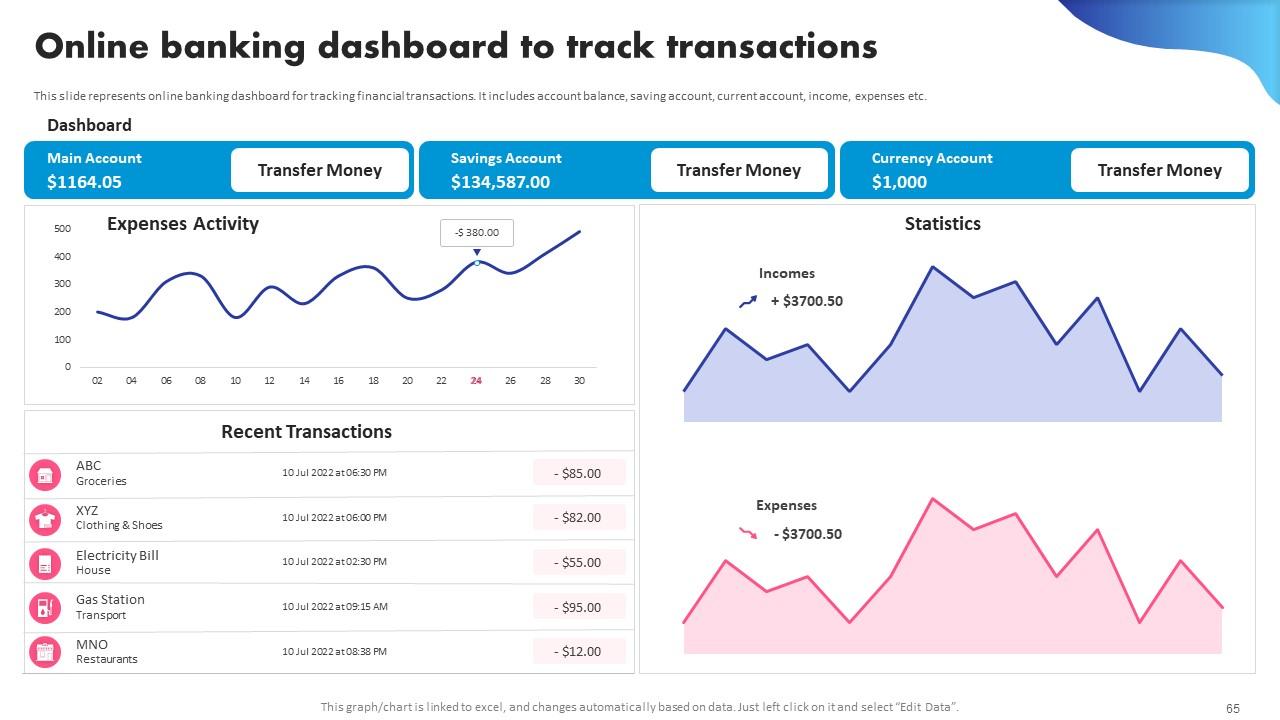
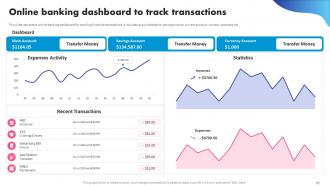
Slide 65: This slide represents online banking dashboard for tracking financial transactions.
Slide 66: This slide contains all the icons used in this presentation.
Slide 67: This slide is titled as Additional Slides for moving forward.
Slide 68: This is About Us slide to show company specifications etc.
Slide 69: This is Our Team slide with names and designation.
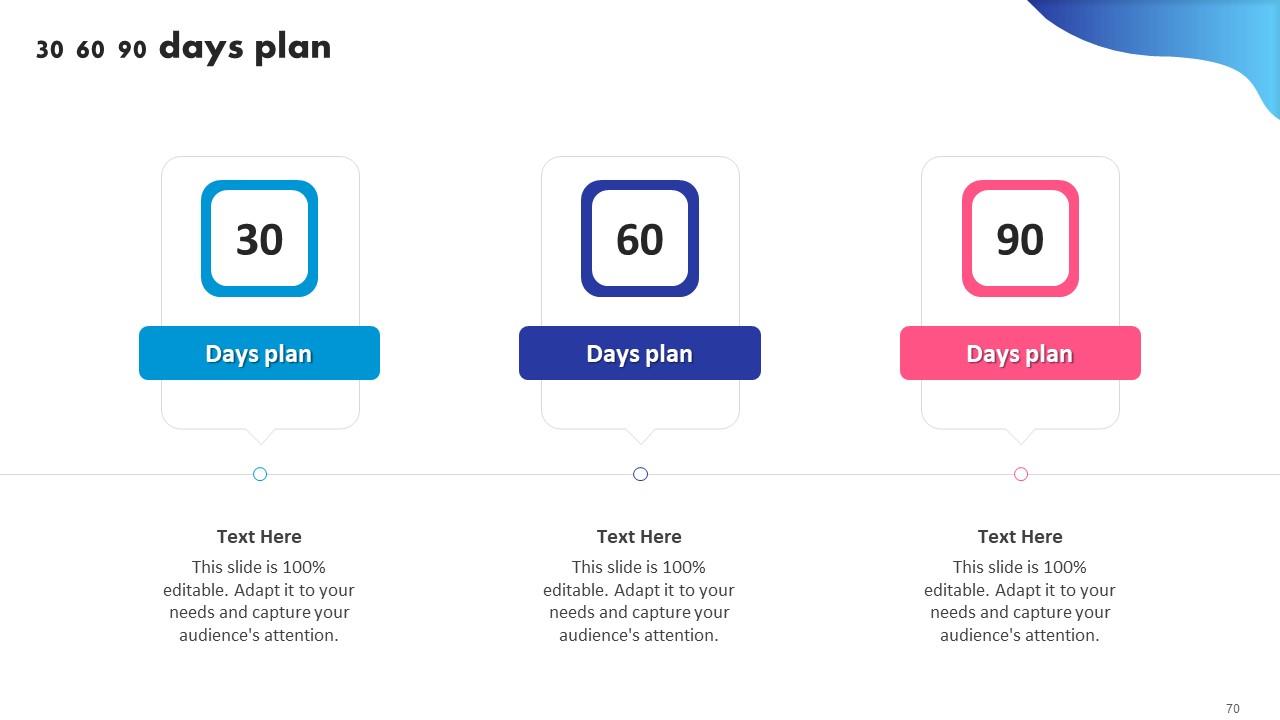
Slide 70: This slide provides 30 60 90 Days Plan with text boxes.
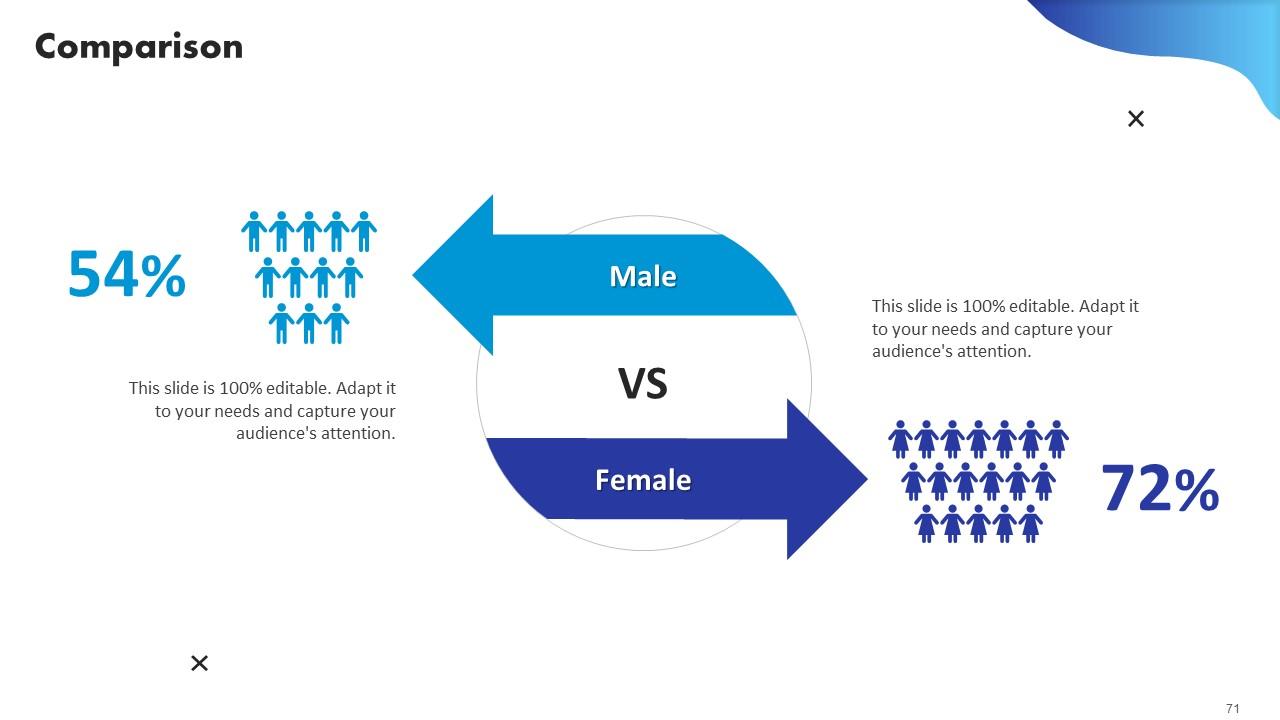
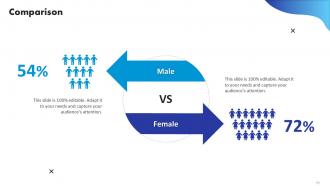
Slide 71: This is a Comparison slide to state comparison between commodities, entities etc.
Slide 72: This slide presents Roadmap with additional textboxes.
Slide 73: This slide shows Post It Notes. Post your important notes here.
Slide 74: This slide contains Puzzle with related icons and text.
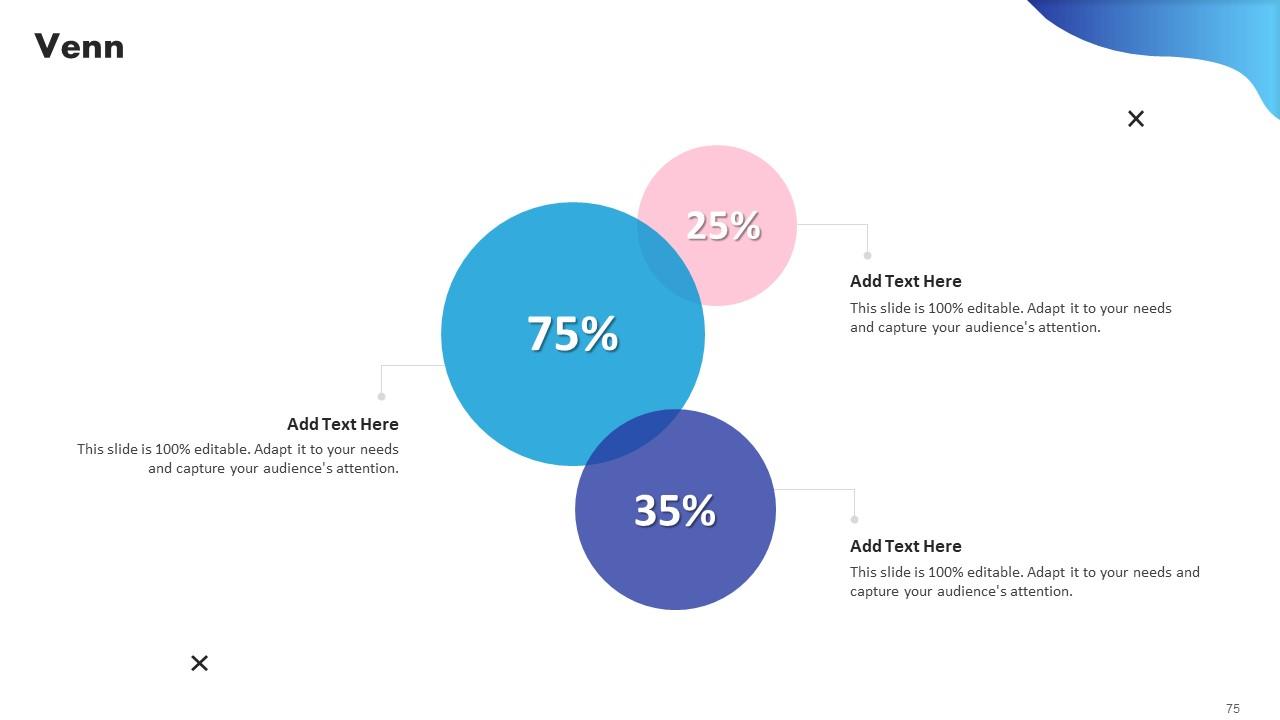
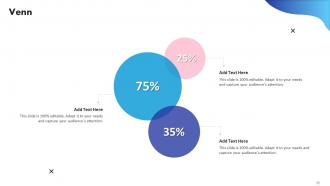
Slide 75: This slide depicts Venn diagram with text boxes.
Slide 76: This is a Thank You slide with address, contact numbers and email address.
Digital Banking System To Optimize Financial Transaction Process Powerpoint Presentation Slides with all 81 slides:
Use our Digital Banking System To Optimize Financial Transaction Process Powerpoint Presentation Slides to effectively help you save your valuable time. They are readymade to fit into any presentation structure.
-
The templates are handy and I can personalize them as per my needs. Glad to be your subscriber!
-
This PowerPoint layout is very helpful from a business point of view, and it's visually stunning too! I'm so happy with this product because it has helped me understand and deliver great presentations.
