


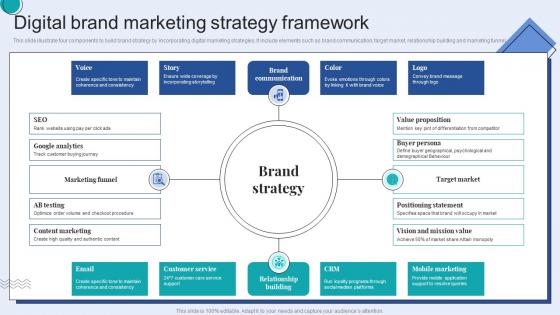
Digital Brand Marketing Strategy Framework




Try Before you Buy Download Free Sample Product
 Impress Your
 Audience
 100%
100% Editable
 Save Hours
 of Time


This slide illustrate four components to build brand strategy by incorporating digital marketing strategies. It include elements such as brand communication, target market, relationship building and marketing funnel
People who downloaded this PowerPoint presentation also viewed the following :
Digital Brand Marketing Strategy Framework with all 6 slides:
Use our Digital Brand Marketing Strategy Framework to effectively help you save your valuable time. They are readymade to fit into any presentation structure.






FAQs for Digital Brand
So first things first - nail down your brand voice and core messaging. Everything else builds from there. You'll need solid brand positioning, know exactly who you're targeting, and pick the right channels to reach them. Visual consistency across everything is key too. Content strategy is massive since that's literally how people experience your brand personality. Oh and measurement! Track brand awareness, engagement, sentiment - whatever makes sense for your goals. So many brands just wing it without any KPIs and wonder why nothing's working. Your value prop needs to actually differentiate you from competitors, not just sound good on paper.
Stop posting everywhere and actually pick where your people are - maybe 2-3 platforms max. I swear, half the brands I see just shout into the void instead of having real conversations. Ask questions, show some behind-the-scenes stuff, actually reply to comments like a human being. That 80/20 thing really works though - most of your content should be helpful, then sneak in the sales stuff occasionally. Oh, and check what's already working! Look at your posts that got people talking and do more of that. Consistency beats perfection every time, but don't spam people either.
Look, content marketing is basically how you build trust without being all pushy and sales-y. Create blogs, videos, whatever - just make sure it's actually useful to people. Way better than ads because your audience chooses to consume it. The trick? Figure out what questions your customers are always asking, then answer them better than your competitors do. I swear, consistency is huge here. Everything needs to match your brand voice too - can't sound like three different people wrote it. Oh and honestly, it takes time to see results but it's so worth it once it clicks.
Honestly, data analytics saves you from making decisions based on gut feelings that are usually wrong. You'll actually see which campaigns bring in customers instead of just clicks. Facebook ads eating your budget? Maybe Instagram's where your people actually buy stuff. I spent way too much time obsessing over follower counts before I realized conversions matter more. Track everything from the start with Google Analytics - you can add fancier tools later. Most valuable thing? Finding out which customer types spend the most money. Sounds boring but it's basically a cheat code for marketing.
Okay so first thing - get your SEO basics sorted out. Website optimization, Google Business Profile, all that foundation stuff. I'd honestly rather see you crush it on like 2-3 social platforms than spread yourself thin across everything. Quality over quantity, you know? Create content that's actually useful instead of just selling constantly. Reviews and user-generated stuff are honestly where the magic happens. Oh and definitely keep tabs on what people are saying about you online - quick responses matter way more than you'd think. Start by figuring out where you're at now, then tackle whatever's most broken first.
Think of SEO as making sure people can actually find you when they're looking. You know how nobody checks past the first page of Google? That's where good SEO saves you from getting buried. When you rank higher, more people see your stuff, which obviously means more traffic and brand recognition. Honestly, just showing up consistently makes you look legit - even if you're still figuring things out. The real magic happens when those visitors actually stick around because they were already searching for what you're offering. I'd start by tweaking your current content around words people are actually typing into Google.
Honestly, influencer marketing is a game changer for brand perception. It puts a human face on your company through people your audience already trusts. Way more effective than those annoying banner ads nobody clicks on anyway. The trick isn't chasing follower counts though - you want creators whose vibe actually matches yours. Their audiences can smell fake partnerships from a mile away. I'd start small with maybe 3-5 micro-influencers in your niche. Check how their followers respond to sponsored stuff first. When it works, you get that authentic credibility traditional advertising just can't buy.
Honestly, skip the vanity metrics and focus on what actually makes money. Track conversion rates, customer acquisition cost, and lifetime value first - those three will tell you everything. Click-through rates and time on site are decent too, but I've seen too many people obsess over follower counts that don't pay bills. Revenue attribution is where it gets interesting though - you really need to know which channels are bringing in actual sales. ROAS and organic growth are solid additions. Oh, and start simple with these basics before you go crazy with fancy analytics. Trust me on that one.
Dude, email marketing is seriously your best move here. Way cheaper than chasing new customers constantly, plus it's actually personal. Map out where people are in their customer journey first - that's your segmentation gold mine. Welcome emails, birthday stuff, follow-ups after they buy something... all that works. Don't just pitch sales though, nobody wants that spam. Actually give them something useful. I'd start simple - pick maybe 3 key moments when someone interacts with your brand and automate around those. The ROI is honestly insane once you get it dialed in.
Figure out your brand voice first - what's your vibe? Once you nail that down, think about how each platform tells a different piece of your story. LinkedIn gets the professional stuff, Instagram's more visual, but they should all feel connected somehow. Mixed messaging is honestly the worst - it just confuses people. I'd make some basic templates so your team doesn't go rogue with the messaging. Oh, and definitely check your content every few months to make sure you haven't wandered off track. It's easier to catch than you'd think!
Here's what I'd do - set up alerts so you catch problems early, like really early. Speed matters here because once something blows up, you're playing defense. Be real with people when you respond, none of that corporate robot stuff. Nobody's buying it anyway. Admit what went wrong, say how you're fixing it, and actually mean it. Oh and definitely have some kind of plan ready beforehand with templates and who makes what calls. Trust me, you don't want to be scrambling when everything's on fire. The whole point is staying ahead of the story instead of chasing it.
Honestly? Start with AI personalization - it's getting scary good at targeting people. Interactive stuff like polls and AR filters are blowing up too. Oh, and ditch the celebrity influencers. Micro-influencers actually get people to trust them, weird as that sounds. User-generated content feels way more authentic than polished ads. Voice search is everywhere now since we're all talking to our phones like they're best friends. Community building beats traditional ads every time. Don't try everything at once though - pick maybe two trends and test them out first.
Honestly, user-generated content is gold because people trust other customers way more than your polished ads. Like, when someone sees a real person posting about your stuff, it just hits different than corporate messaging. The engagement is usually insane too. Your customers feel appreciated when you reshare their posts, which turns them into those ride-or-die brand advocates. Oh, and definitely create a branded hashtag - makes it easier to find content to repost. Just pick stuff that actually matches your vibe, you know?
Honestly, start with Google Analytics 4 - it's free and tracks everything you need. For social media, Hootsuite or Sprout Social will save your sanity when posting across platforms. Get a decent CRM too (I'm partial to HubSpot but there are cheaper options). Email marketing still crushes it, so grab Mailchimp or something similar. Canva's perfect for quick graphics when you're not a designer. Oh, and don't forget project management software - trust me, you'll lose track of campaigns without it. These cover the basics, then you can get fancy with specialized tools later.
Honestly, you've got advantages they don't - speed and realness. Big brands move like dinosaurs and sound like robots half the time. You can jump on trends instantly, actually respond to your followers (not some social media manager), and tell your real story. Don't try competing everywhere though - that's their territory. Find your niche and own it. I'd pick maybe two platforms max and absolutely crush them rather than being mediocre on five. Your biggest edge? People can tell when something's authentic vs. corporate BS. Be yourself, share behind-the-scenes stuff, respond personally. It works.
-
“Easy to use. I always wanted to have a quick search for products and SlideTeam has helped me have it.”
-
I’m not a design person, so I couldn’t make a presentation to save my life. Thankfully, they have all kinds of templates that I regularly use for my work.