


Diapositives de présentation PowerPoint sur le changement numérique
Le changement numérique est la transformation des processus métier par le biais d'initiatives technologiques. Sélectionnez Digital Change PowerPoint Presentation Slides pour présenter le processus de transformation numérique. Le jeu complet PowerPoint du plan de changement technologique contient des diapositives conçues par des professionnels telles que les composants et les obstacles de la stratégie de changement numérique, les moyens de réaliser la transformation numérique, la feuille de route de la transformation, la répartition des tâches, le budget de transformation, la valeur ajoutée de la transformation, les camemberts, le graphique à barres, le graphique combiné, etc. Les graphiques de présentation de la transformation numérique couvrent divers sujets et mettent en évidence des concepts importants tels que la numérisation, l'intégration informatique, la transformation numérique, le plan de changement technologique, la révolution numérique, la révolution de l'information et bien d'autres. La présentation du plan d'intégration informatique comprend des tableaux et des graphiques qui permettent aux utilisateurs d'analyser les résultats et leur impact sur les employés et l'organisation. Les icônes utilisées dans les diapositives représentent efficacement chaque terme. Téléchargez des diapositives PPT sur le changement numérique pour faire une présentation commerciale impressionnante. Nos diapositives de présentation Powerpoint Digital Change peuvent être conçues sur mesure. Improvisez dessus pour mettre en valeur votre individualité.
Le changement numérique est la transformation des processus métier par le biais d'initiatives technologiques. Sélectio..
















-

- Google Slides is a new FREE Presentation software from Google.
- All our content is 100% compatible with Google Slides.
- Just download our designs, and upload them to Google Slides and they will work automatically.
- Amaze your audience with SlideTeam and Google Slides.
-

Want Changes to This PPT Slide? Check out our Presentation Design Services
-

- WideScreen Aspect ratio is becoming a very popular format. When you download this product, the downloaded ZIP will contain this product in both standard and widescreen format.
-

- Some older products that we have may only be in standard format, but they can easily be converted to widescreen.
- To do this, please open the SlideTeam product in Powerpoint, and go to
- Design ( On the top bar) -> Page Setup -> and select "On-screen Show (16:9)” in the drop down for "Slides Sized for".
- The slide or theme will change to widescreen, and all graphics will adjust automatically. You can similarly convert our content to any other desired screen aspect ratio.
Compatible With Google Slides

Get This In WideScreen
You must be logged in to download this presentation.


Do you want to remove this product from your favourites?
Caractéristiques de ces diapositives de présentation PowerPoint :
Présentation des diapositives de présentation PowerPoint Digital Change. Cette présentation contient 22 diapositives PPT visuellement attrayantes. Ces modèles PowerPoint sont 100 % modifiables. Les utilisateurs peuvent modifier les polices, les couleurs et l'arrière-plan des diapositives selon leurs besoins. Téléchargez les modèles de présentation en écran large et en écran standard. La présentation est compatible avec Google Slides. Il peut être facilement converti au format JPG ou PDF.

People who downloaded this PowerPoint presentation also viewed the following :
Contenu de cette présentation Powerpoint
Diapositive 1 : Il s'agit d'une diapositive d'introduction au changement numérique avec des images. Ajoutez le nom de l'entreprise et commencez.
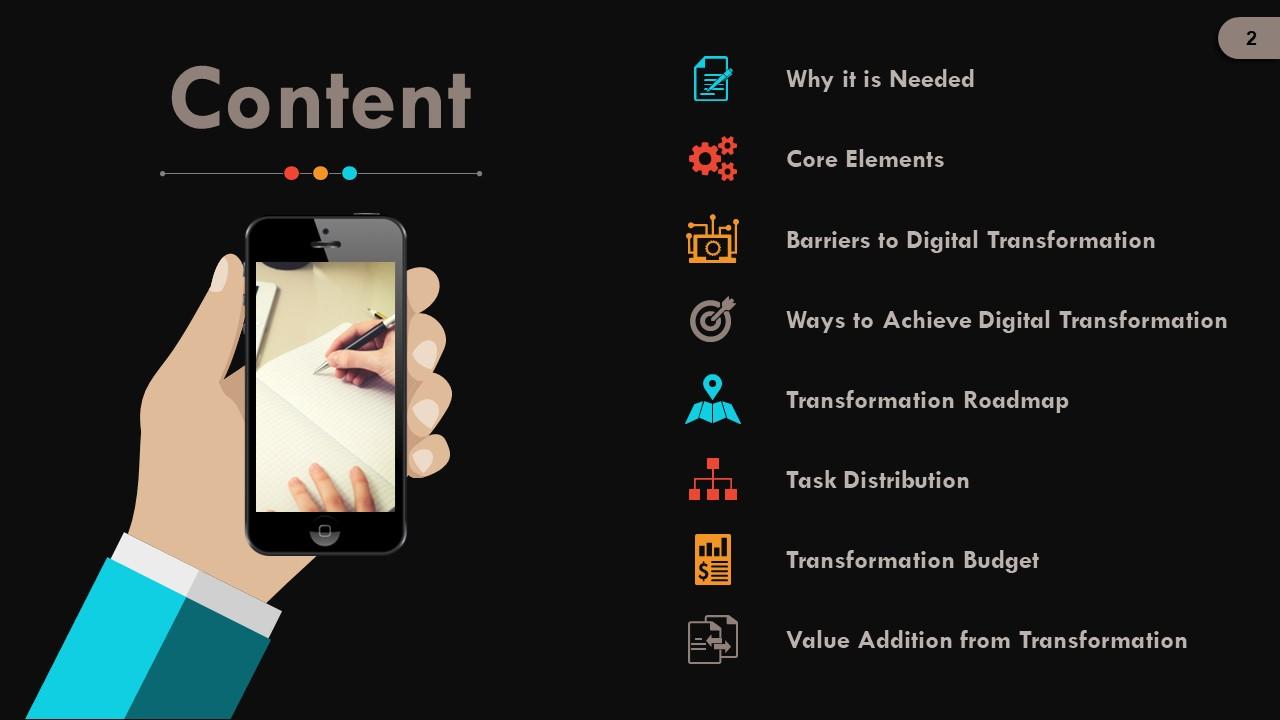
Diapositive 2 : Il s'agit d'une diapositive de contenu indiquant : Pourquoi cela est-il nécessaire, les moyens de réaliser la transformation numérique, les obstacles à la transformation numérique, les éléments clés, la feuille de route de la transformation, la répartition des tâches, le budget de la transformation, la valeur ajoutée de la transformation.
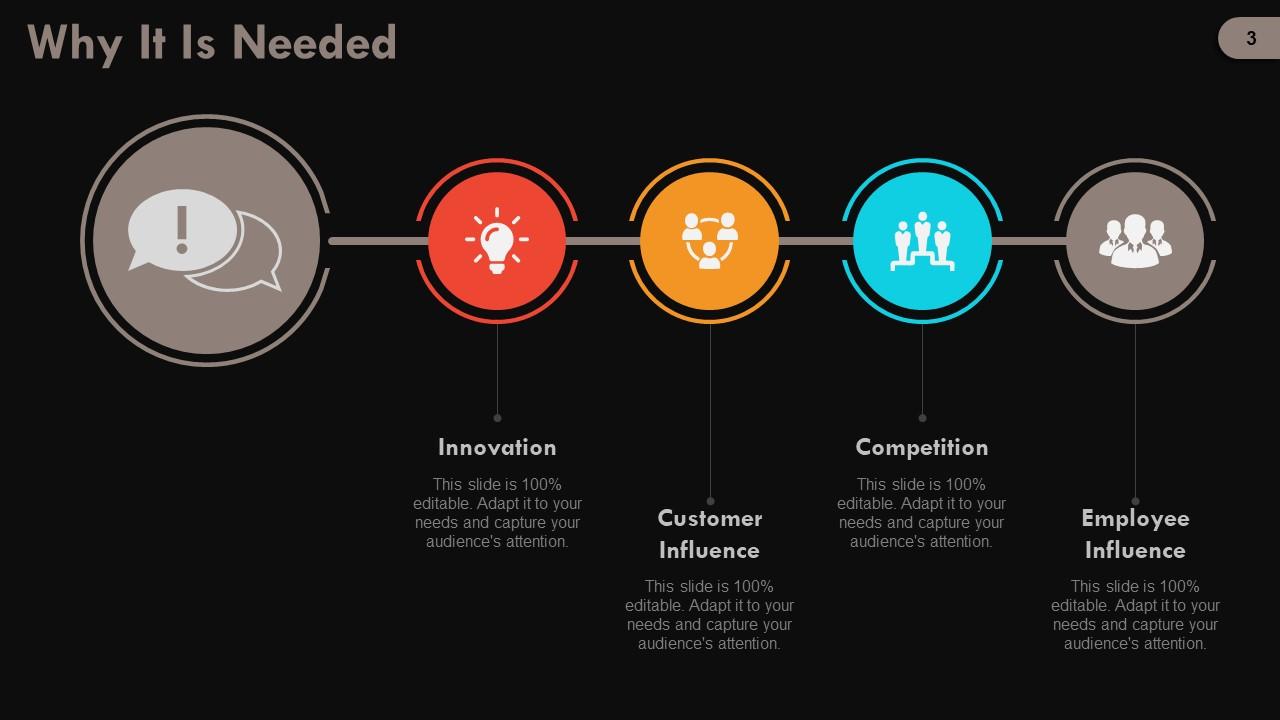
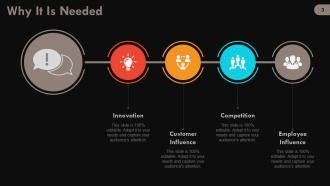
Diapositive 3 : Cette diapositive énonce les raisons pour lesquelles cela est nécessaire en ce qui concerne l'innovation, la concurrence, l'influence des clients et l'influence des employés.
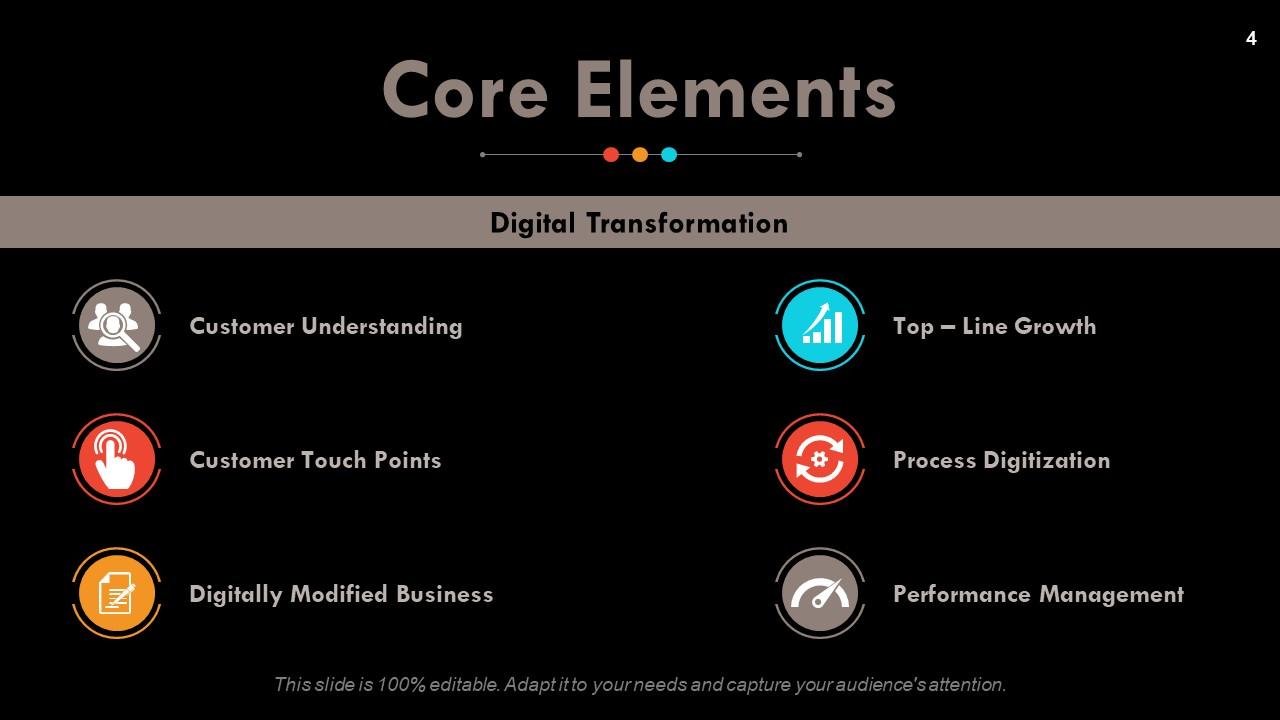
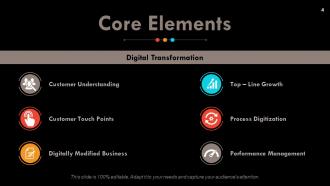
Diapositive 4 : Cette diapositive présente les éléments essentiels de la transformation numérique, la compréhension du client, les points de contact client, les activités modifiées numériquement, la croissance du haut de gamme, la gestion des performances, la numérisation des processus.
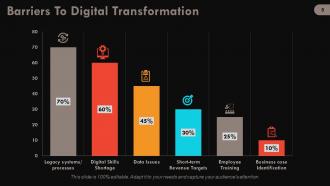
Diapositive 5 : Cette diapositive présente les obstacles à la transformation numérique sous forme de graphique à barres/graphique.
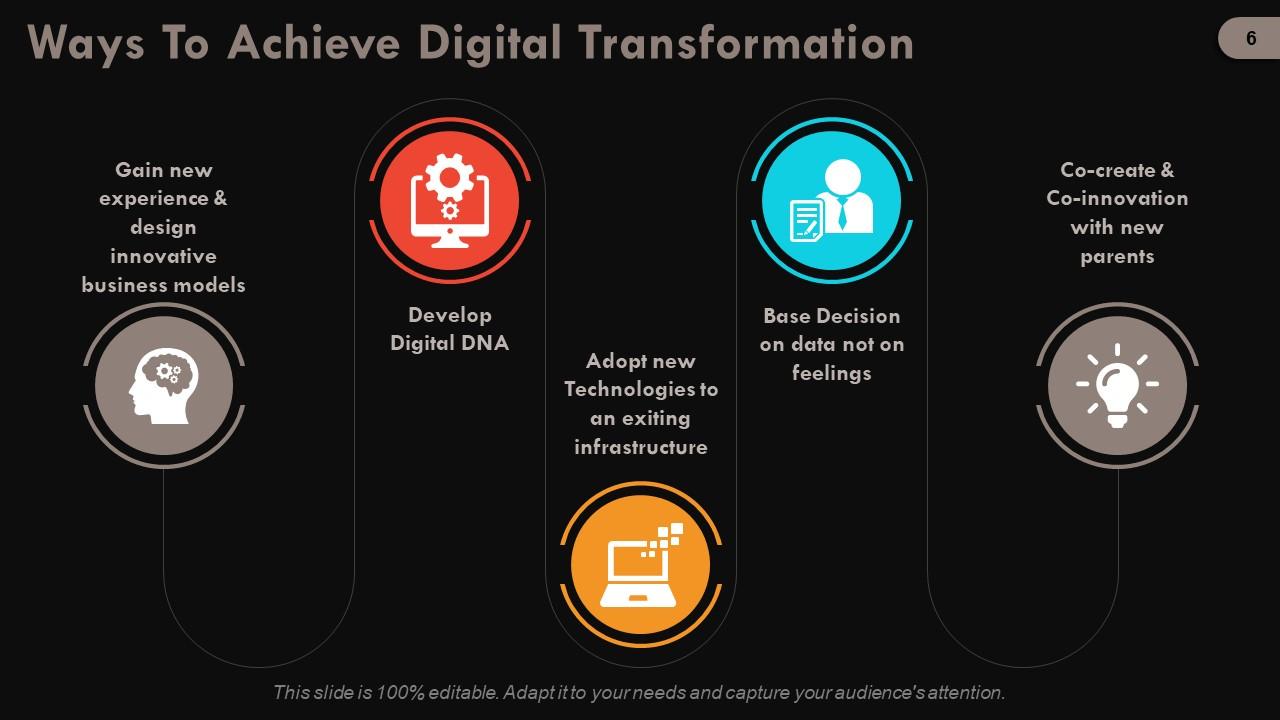
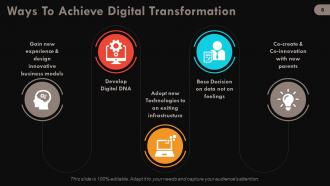
Diapositive 6 : Cette diapositive présente diverses manières de réaliser la transformation numérique, telles que : Acquérir une nouvelle expérience et concevoir des modèles commerciaux innovants, Développer l'ADN numérique, Co-créer et co-innover avec de nouveaux parents, Baser la décision sur des données et non sur des sentiments, Adopter de nouvelles technologies à une infrastructure existante.
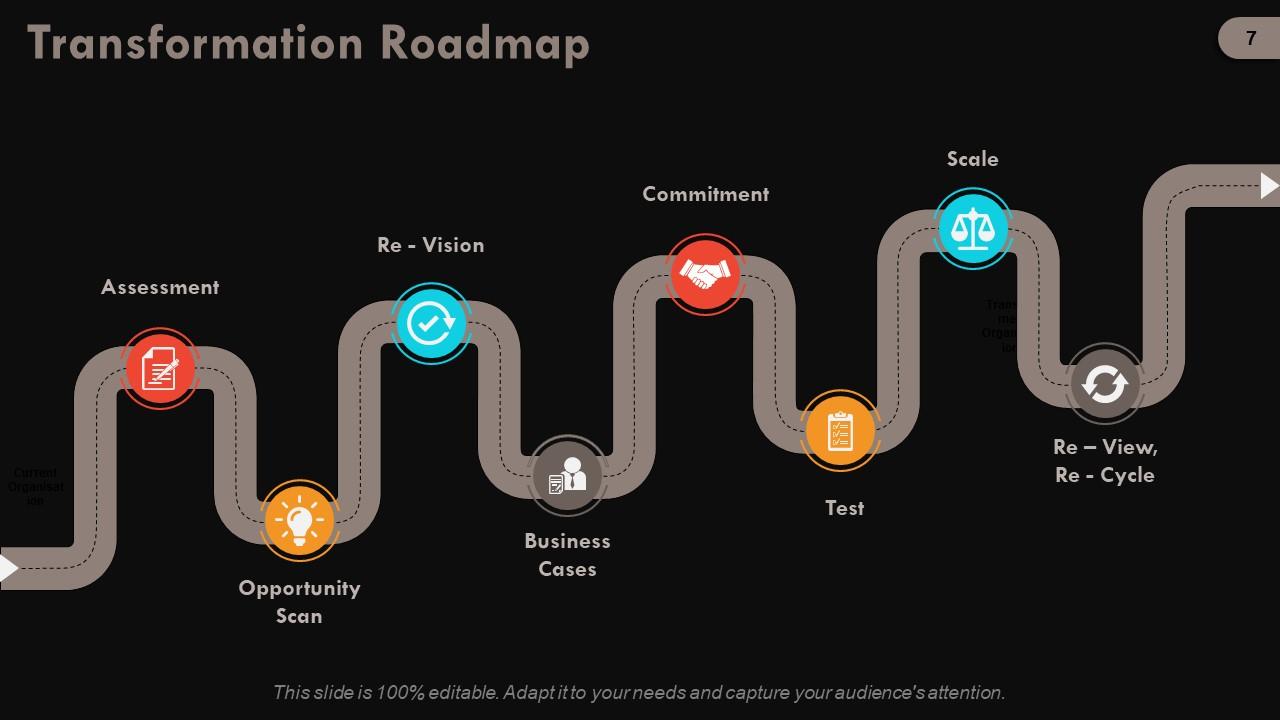
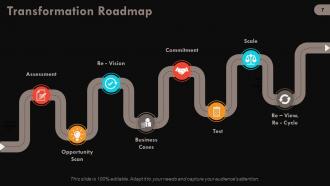
Diapositive 7 : Cette diapositive présente l'organigramme de la feuille de route de la transformation. Utilisez-le pour énoncer les points suivants : organisation actuelle, organisation transformée, évaluation, analyse des opportunités, révision, analyse de rentabilisation, engagement, test, échelle, révision, révision, cycle.
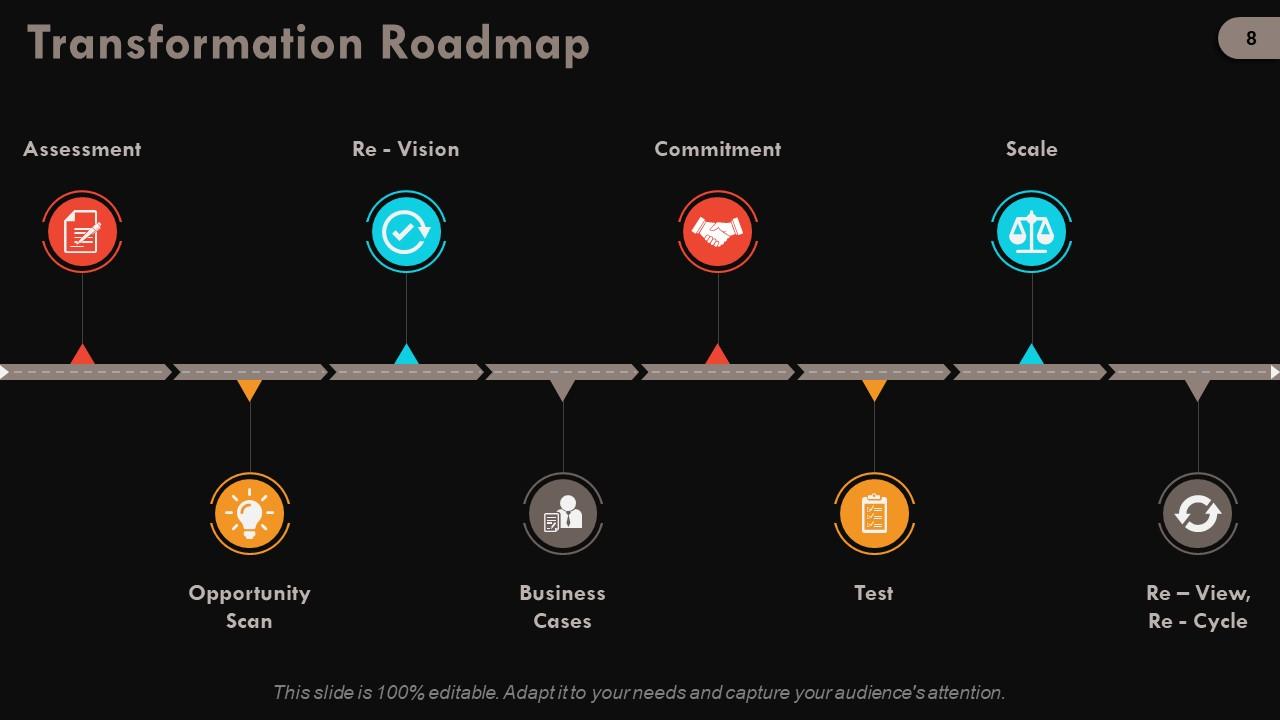
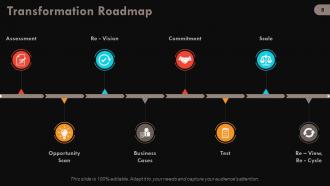
Diapositive 8 : Cette diapositive présente également la feuille de route de la transformation sous forme de chronologie.
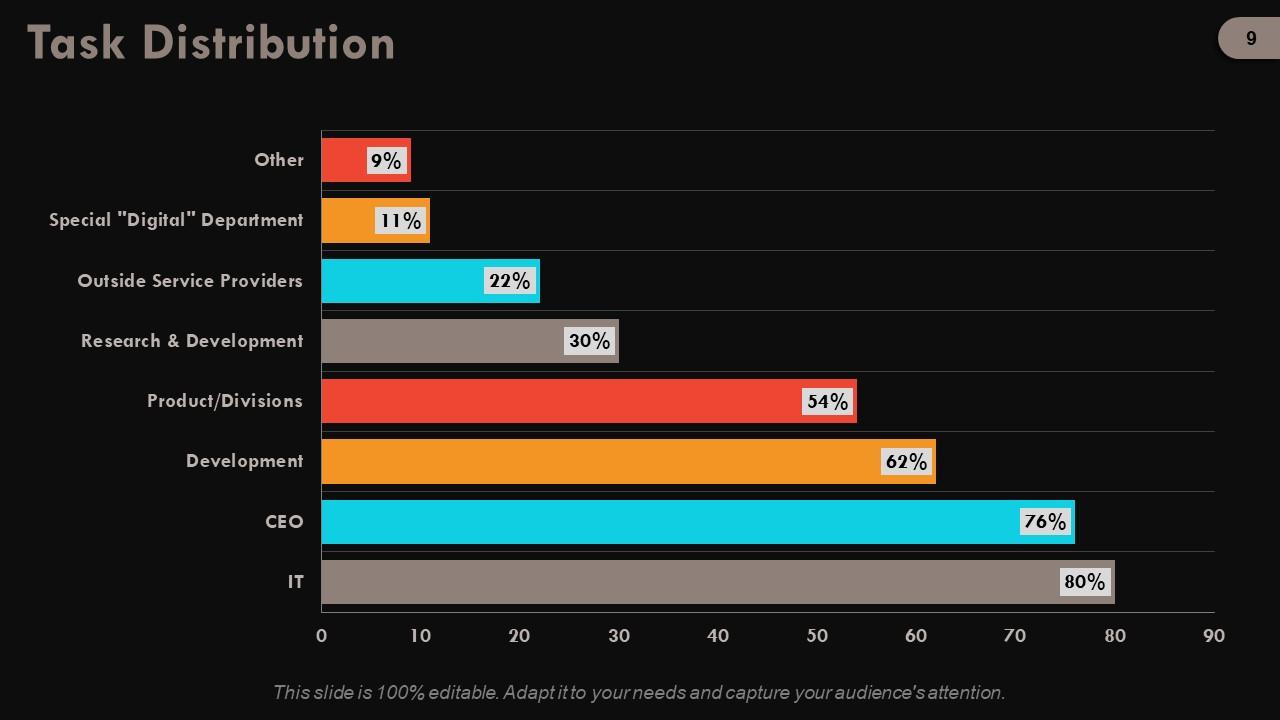
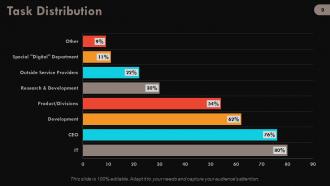
Diapositive 9 : Cette diapositive présente la répartition des tâches sous forme de graphique à barres/graphique.
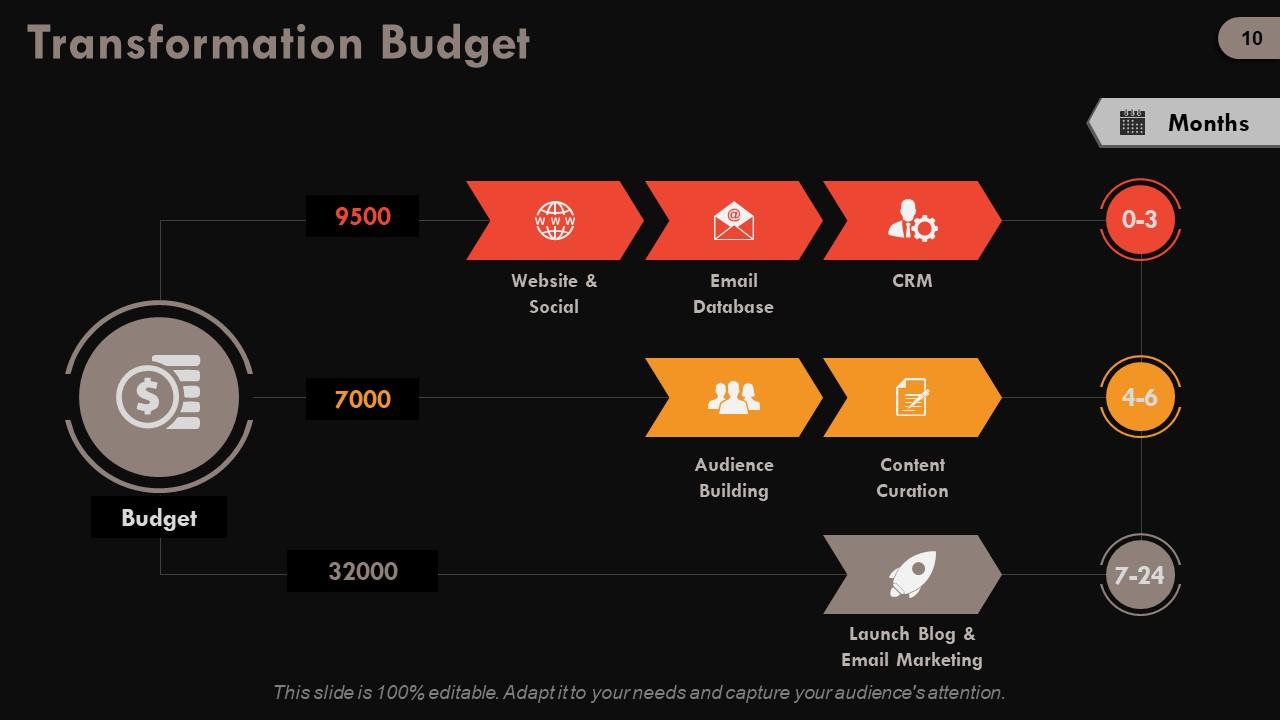
Diapositive 10 : Cette diapositive présente le budget de transformation.
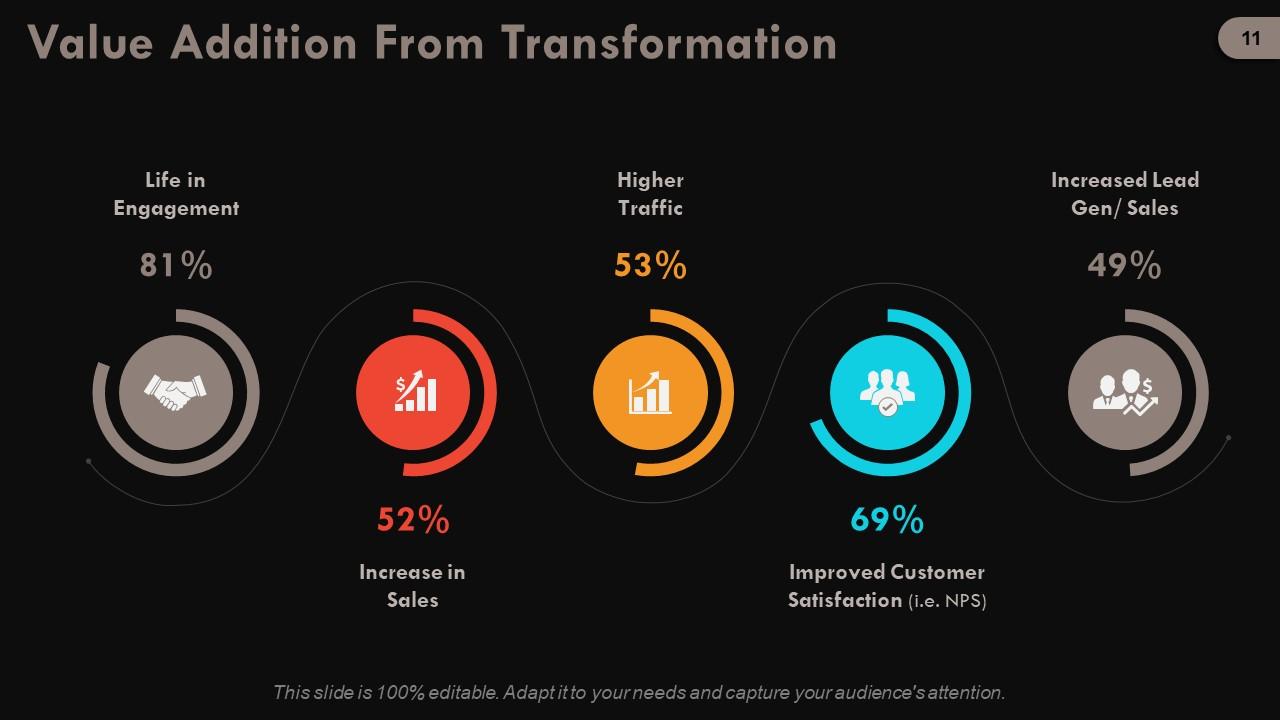
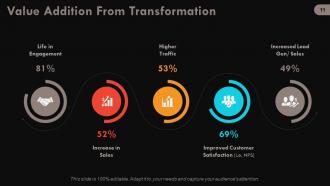
Diapositive 11 : Cette diapositive montre la valeur ajoutée issue de la transformation avec des images d'icônes.
Diapositive 12 : Il s'agit d'une diapositive de graphique à secteurs en beignet pour présenter la comparaison produit/entité, les spécifications, etc.
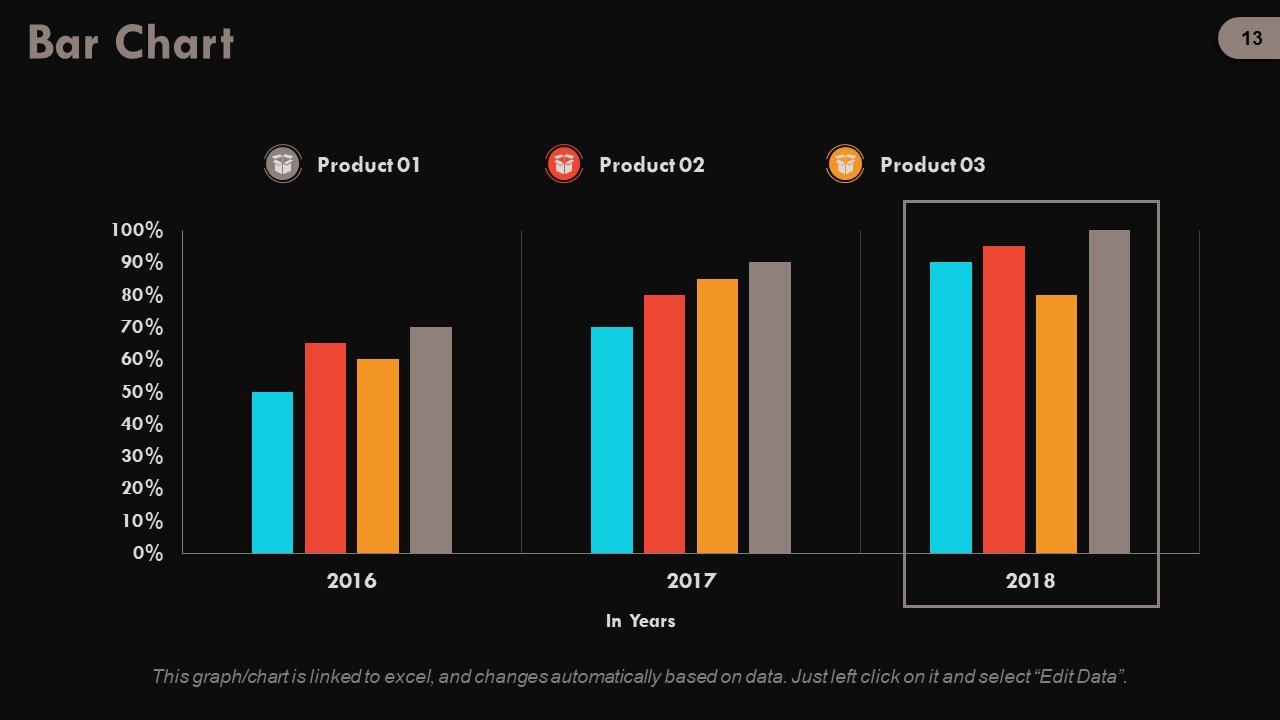
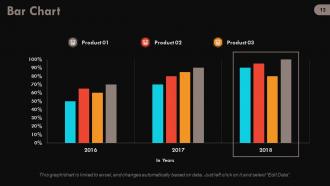
Diapositive 13 : Il s'agit d'une diapositive de graphique à barres pour présenter la comparaison produit/entité, les spécifications, etc.
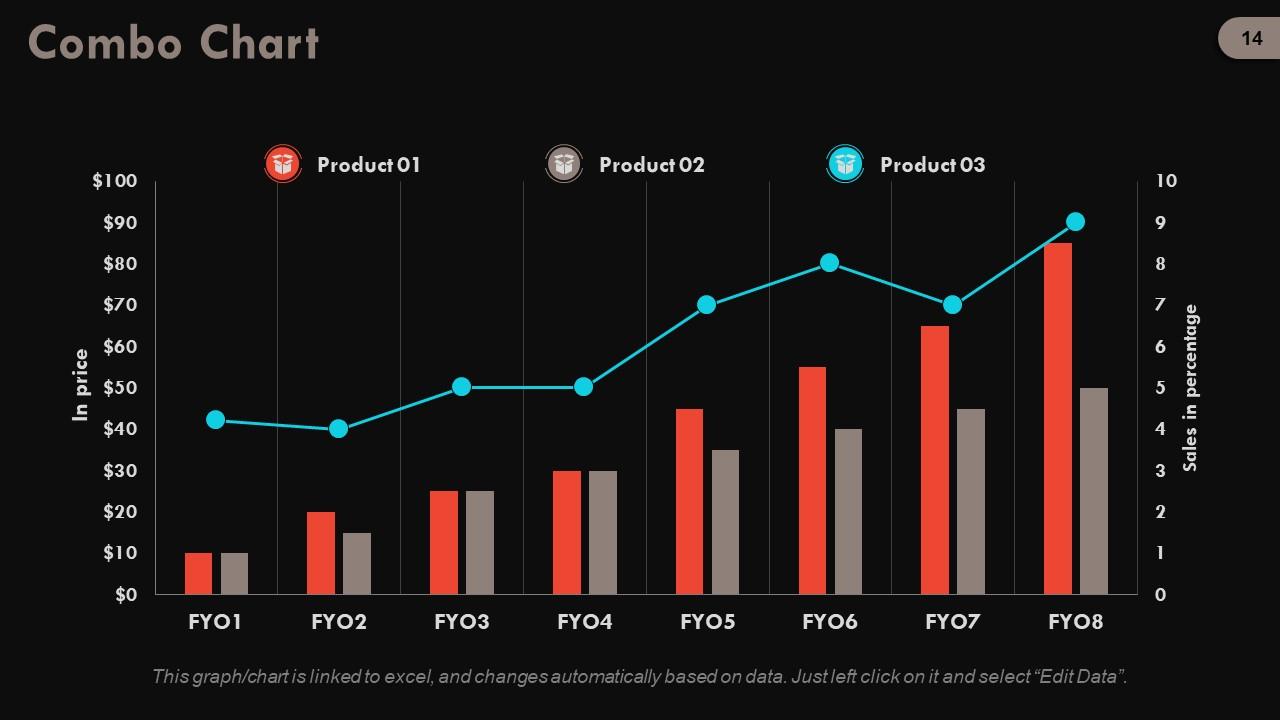
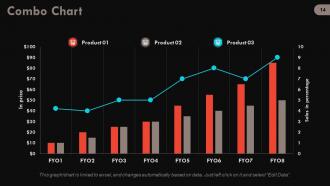
Diapositive 14 : Ceci est un graphique combiné pour présenter la comparaison produit/entité, les spécifications, etc.
Diapositive 15 : Cette diapositive s'intitule Diapositives supplémentaires pour avancer. Vous pouvez modifier le contenu selon vos besoins.
Diapositive 16 : Cette diapositive énonce notre mission avec des valeurs, des objectifs, etc.
Diapositive 17 : Cette diapositive présente notre équipe avec des cases de nom, de désignation et d'image.
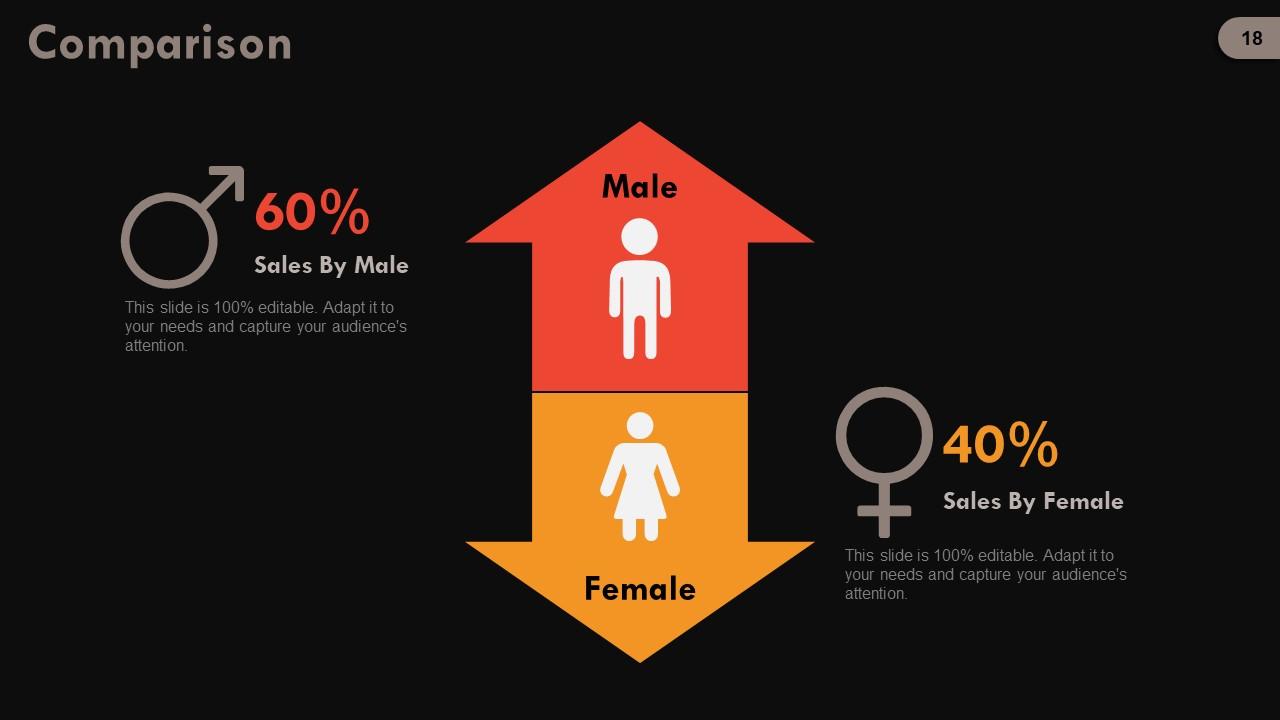
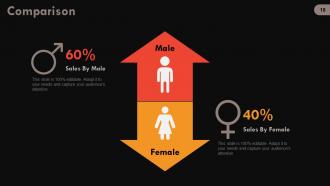
Diapositive 18 : Cette diapositive présente la comparaison de deux entités sous forme d'images masculines et féminines.
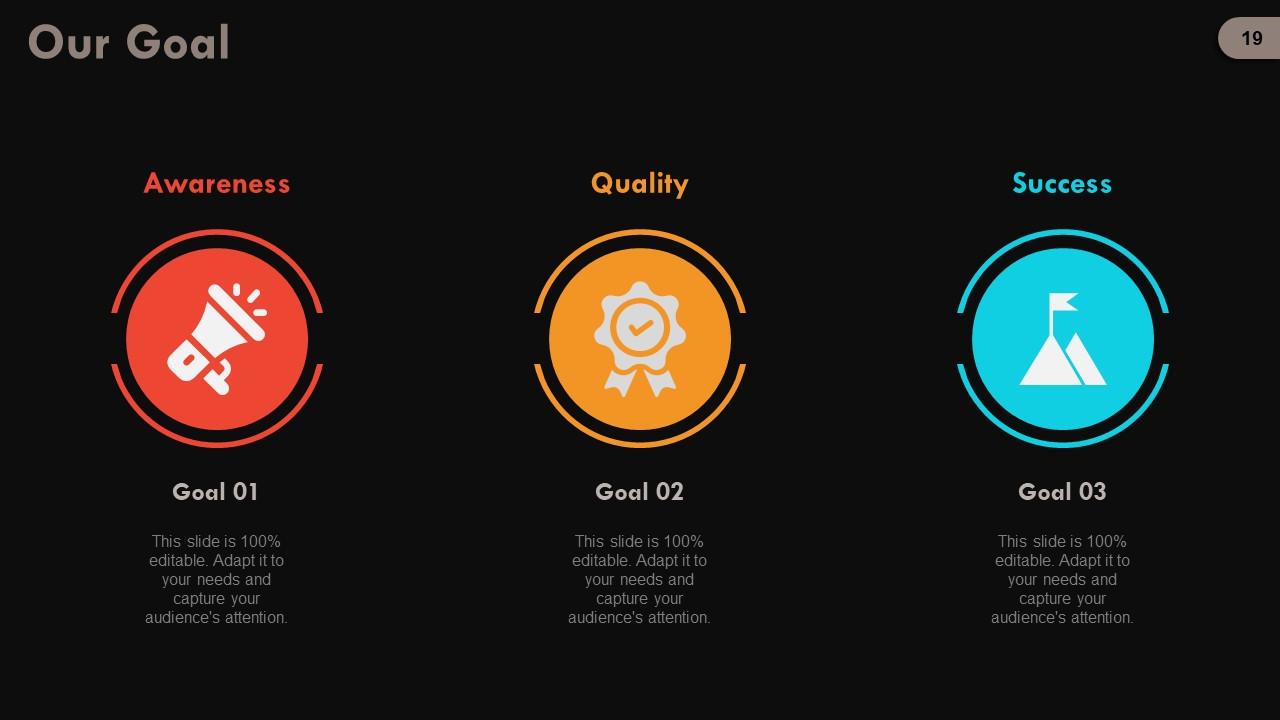
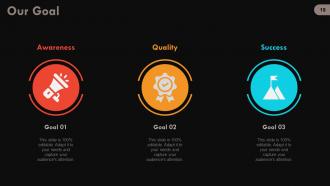
Diapositive 19 : Ceci est la diapositive Notre objectif. Énoncez vos objectifs ici.
Diapositive 20 : Il s'agit d'une diapositive de citations pour transmettre le message de l'entreprise / organisation, les croyances, etc. Vous pouvez modifier le contenu de la diapositive selon vos besoins.
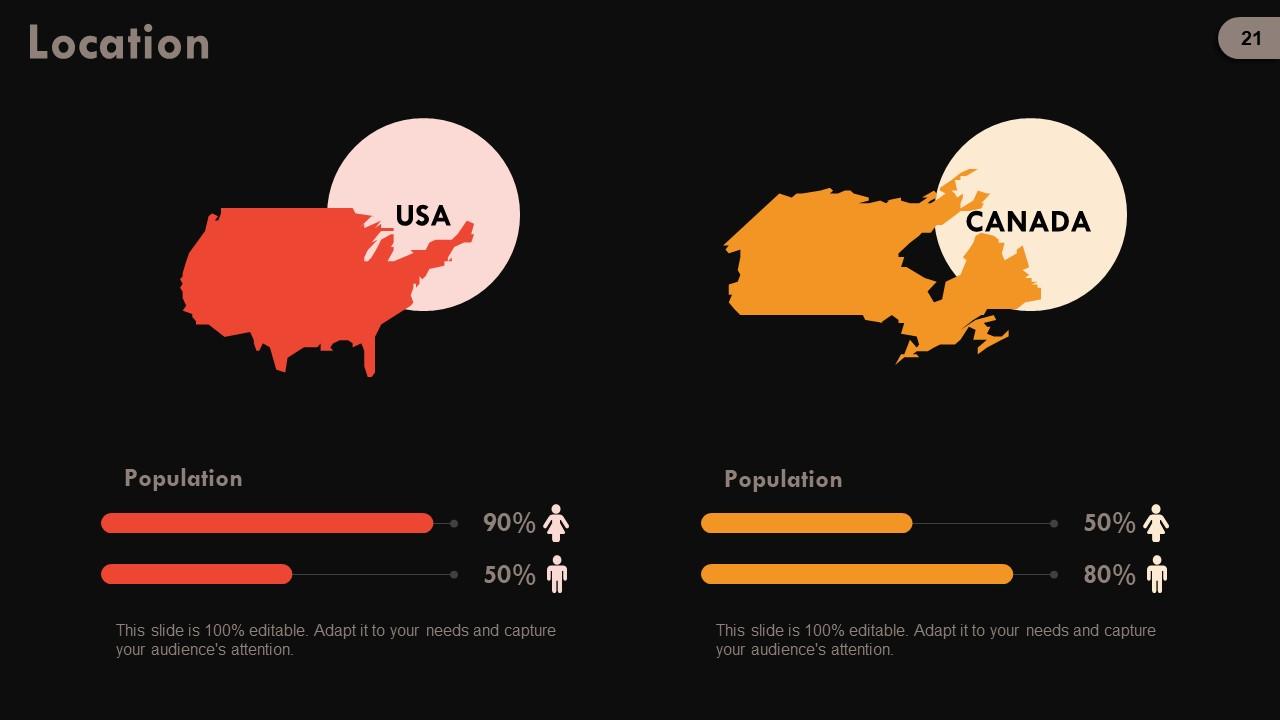
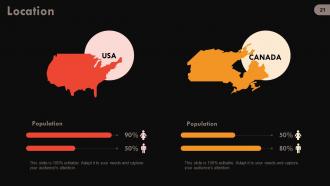
Diapositive 21 : Il s'agit d'une diapositive d'emplacement pour montrer la ségrégation globale, la présence, etc. sur une image de carte et des zones de texte pour la rendre explicite.
Diapositive 22 : Il s'agit d'une diapositive de remerciement avec le numéro de rue de l'adresse, la ville, l'état, les numéros de contact, l'adresse e-mail.
Digital Change Powerpoint Presentation Diapositives avec les 22 diapositives :
Élaborez sur le contrôle de l'intoxication avec nos diapositives de présentation PowerPoint sur le changement numérique. Conseiller les gens sur la toxicomanie.
No Reviews
