Digital Healthcare App Investment Pitch Deck Ppt Template

Rating:
90%
Digital Healthcare App Investment Pitch Deck Ppt Template
Slide 1 of 40
Favourites Favourites

Try Before you Buy Download Free Sample Product

Audience Impress Your
Audience
Editable 100%
Editable
Time Save Hours
of Time
The Biggest Sale is ending soon in
0
0
:
0
0
:
0
0
Rating:
90%
Provide your investors essential insights into your project and company with this influential Digital Healthcare App Investment Pitch Deck Ppt Template. This is an in-depth pitch deck PPT template that covers all the extensive information and statistics of your organization. From revenue models to basic statistics, there are unique charts and graphs added to make your presentation more informative and strategically advanced. This gives you a competitive edge and ample amount of space to showcase your brands USP. Apart from this, all the thirty two slides added to this deck, helps provide a breakdown of various facets and key fundamentals. Including the history of your company, marketing strategies, traction, etc. The biggest advantage of this template is that it is pliable to any business domain be it e-commerce, IT revolution, etc, to introduce a new product or bring changes to the existing one. Therefore, download this complete deck now in the form of PNG, JPG, or PDF.
People who downloaded this PowerPoint presentation also viewed the following :

Content of this Powerpoint Presentation

Slide 1: This slide introduces Digital Healthcare App Investment Pitch Deck. State Your Company Name and begin.
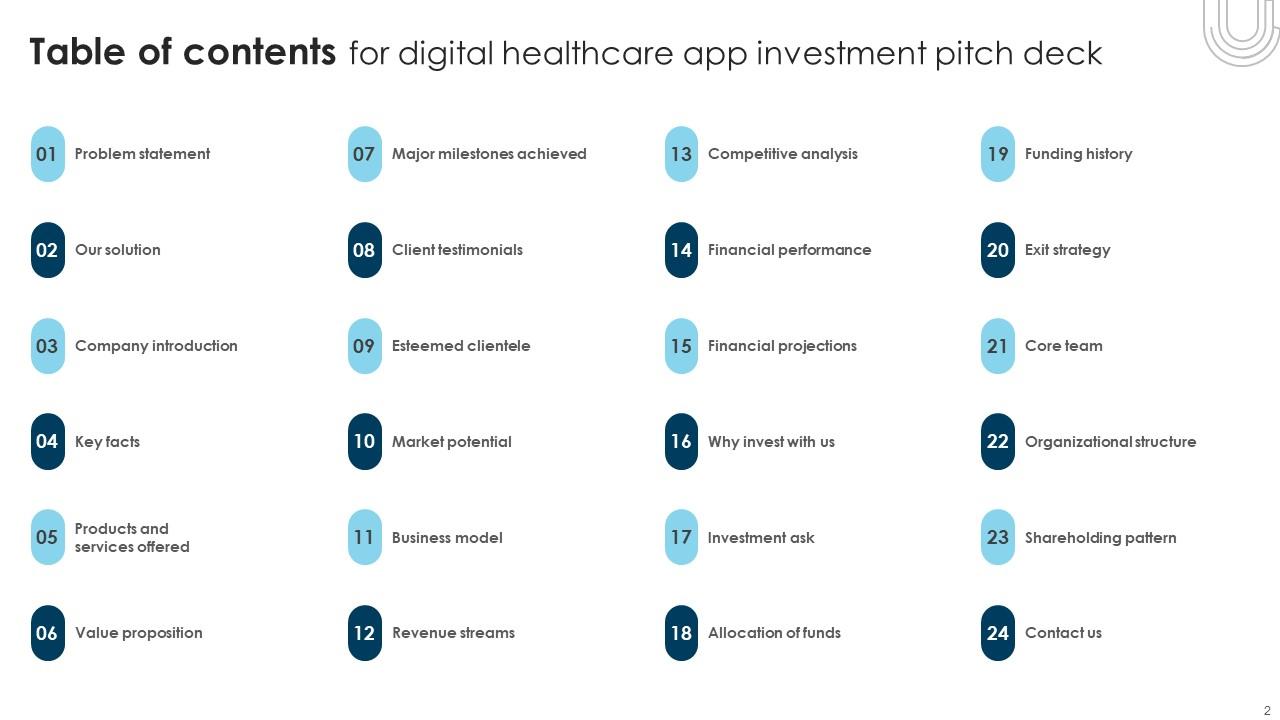
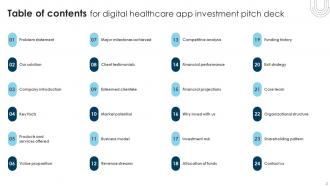
Slide 2: This slide shows a Table of Contents for the presentation.
Slide 3: This slide also shows a Table of Contents for the presentation and is in continuation with the previous slide.
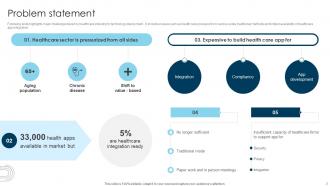
Slide 4: This slide highlights major challenges faced by the healthcare industry for technology deployment.
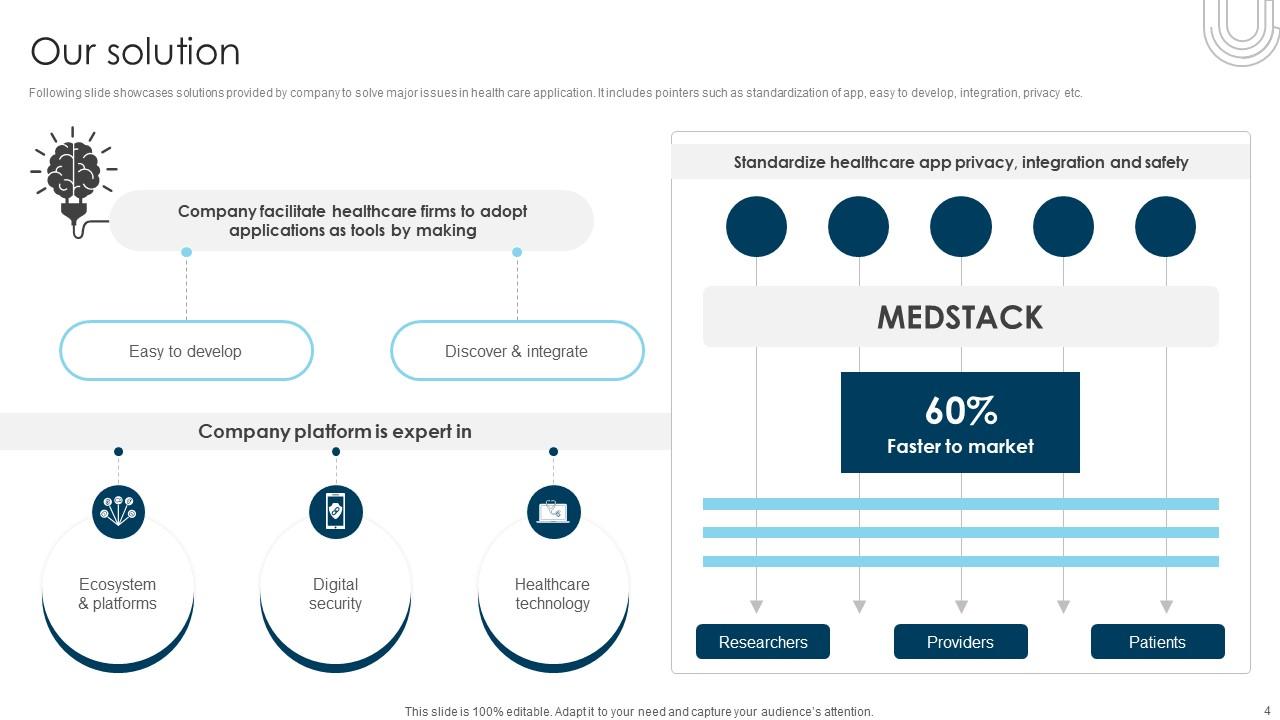
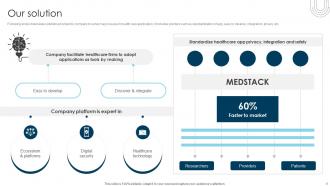
Slide 5: This slide showcases solutions provided by the company to solve major issues in healthcare applications.
Slide 6: This slide provides a comprehensive overview of the company.
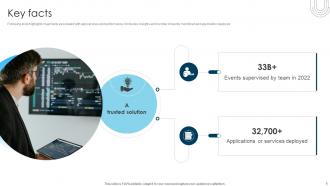
Slide 7: This slide portrays major facts associated with app services and performance.
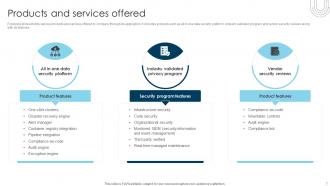
Slide 8: This slide exhibits various products and services offered by the company through its application.
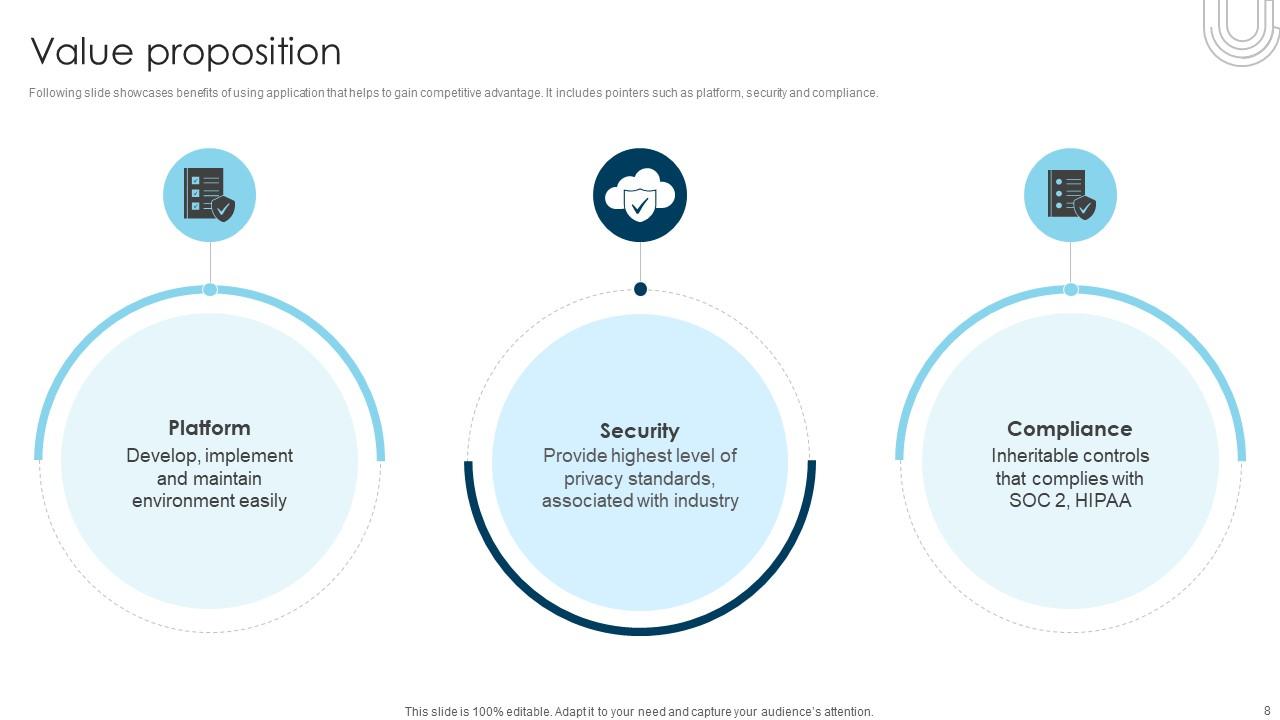
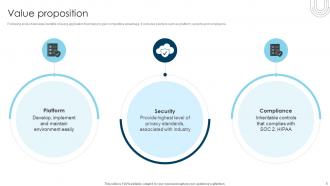
Slide 9: This slide showcases the benefits of using an application that helps to gain a competitive advantage.
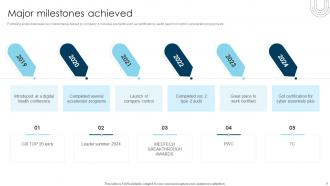
Slide 10: This slide caters to key milestones achieved by the company.
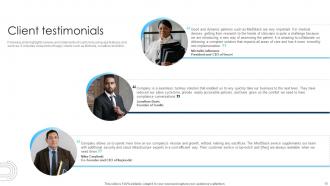
Slide 11: This slide highlights reviews and statements of customers using app features and services.
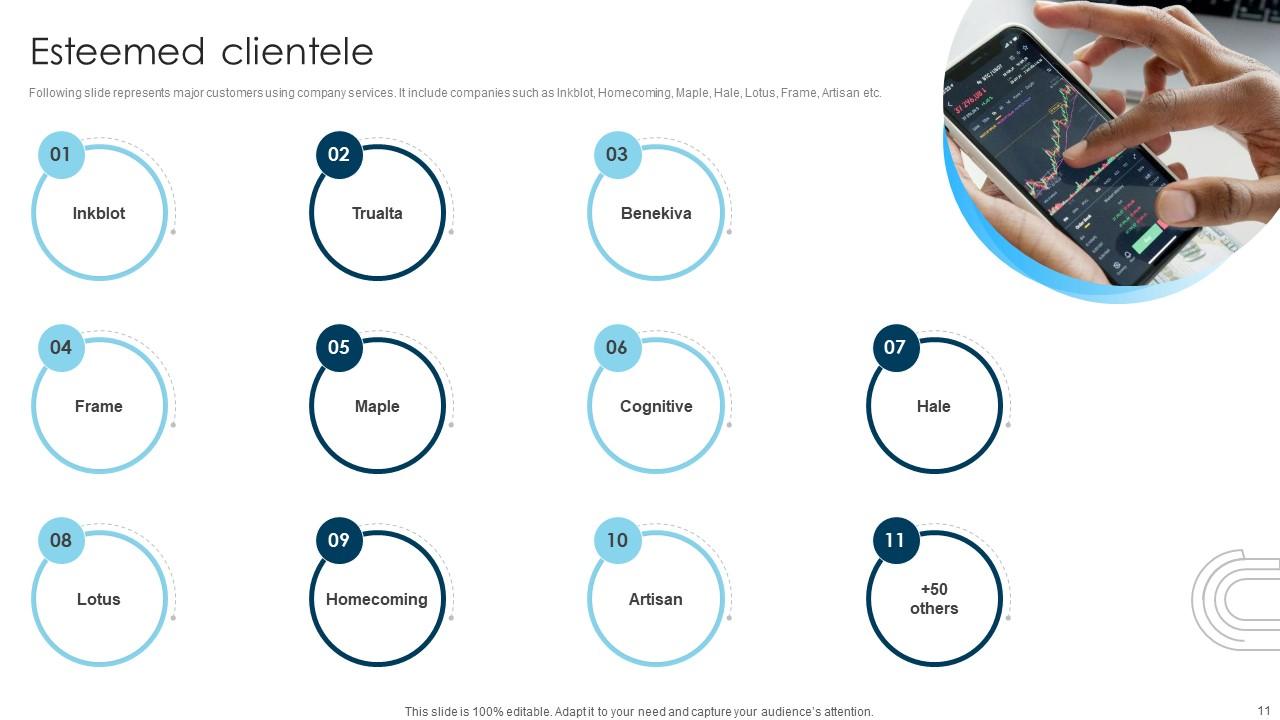
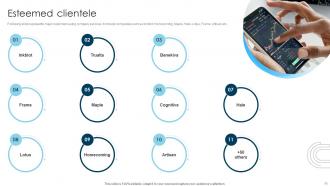
Slide 12: This slide represents major customers using company services.
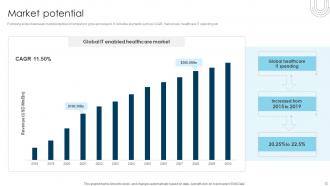
Slide 13: This slide presents the market potential of the company to grow and expand.
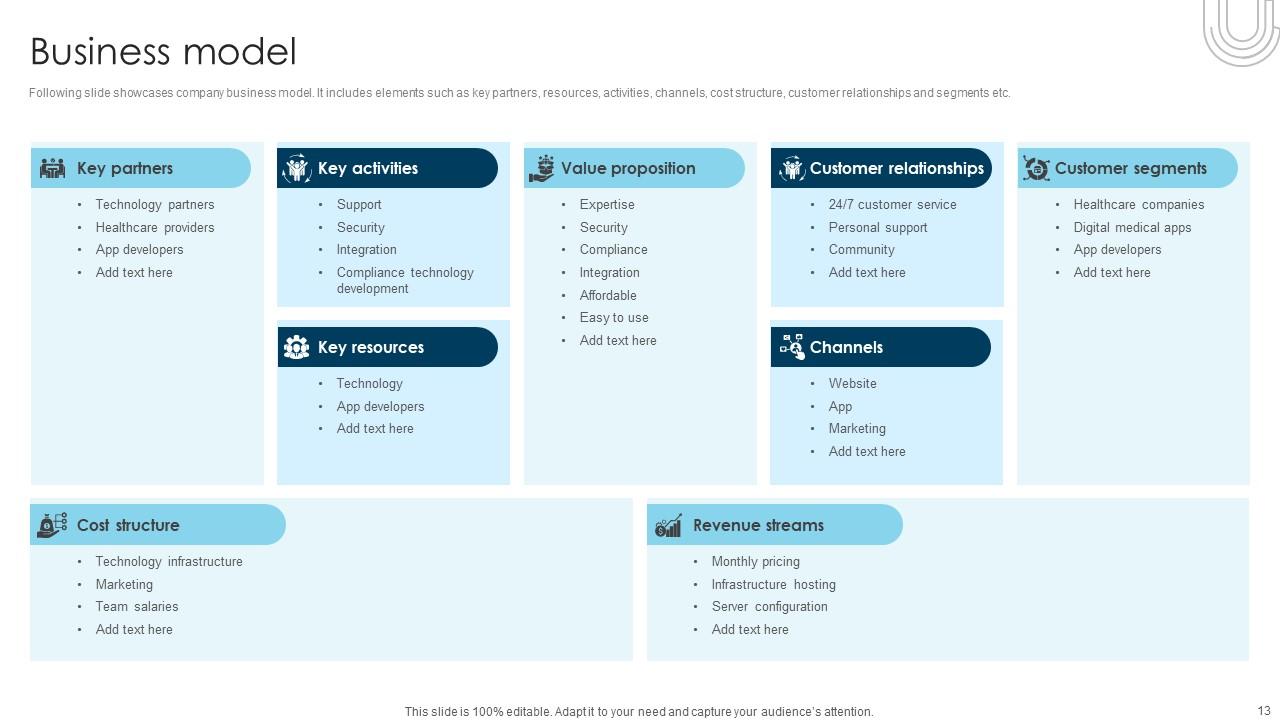
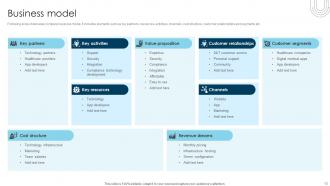
Slide 14: This slide contains the company's business model.
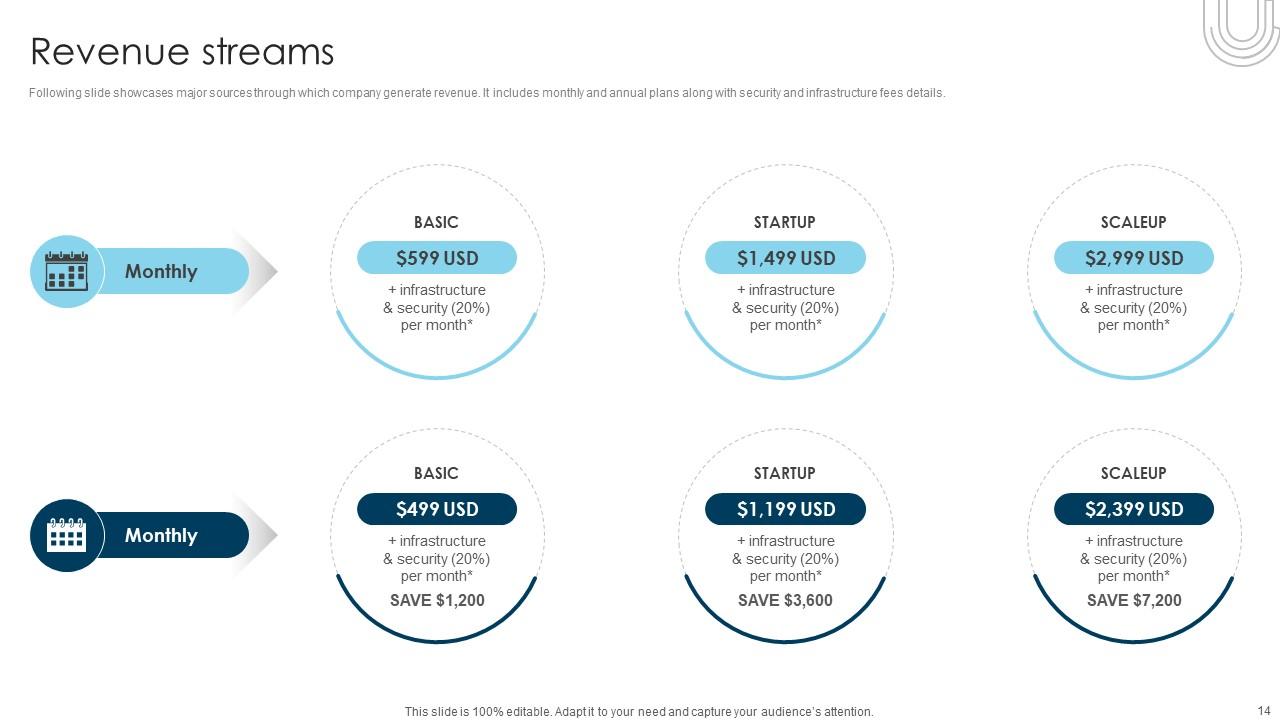
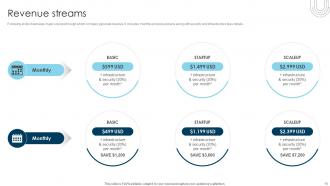
Slide 15: This slide describes major sources through which companies generate revenue.
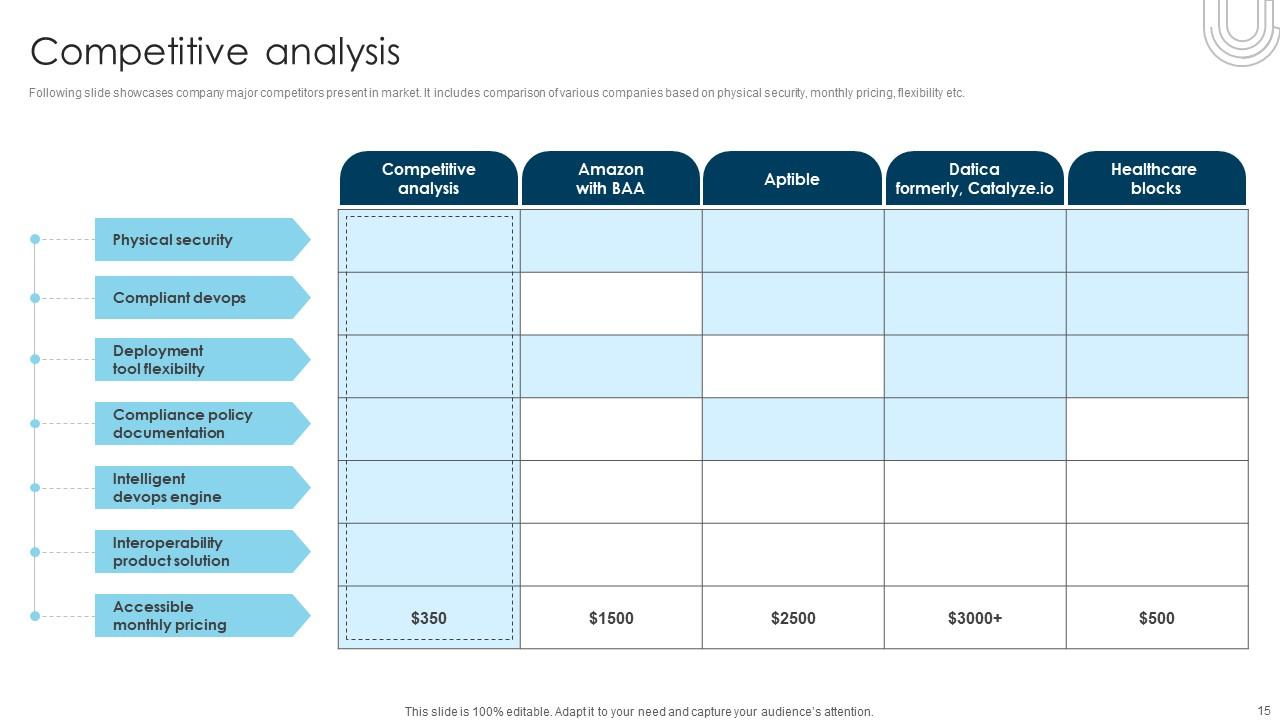
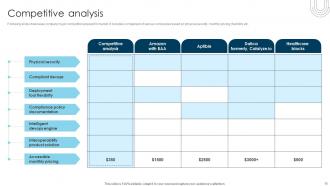
Slide 16: This slide details the company's major competitors present in the market.
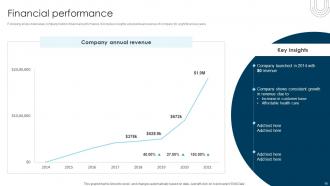
Slide 17: This slide shows the company's historic financial performance.
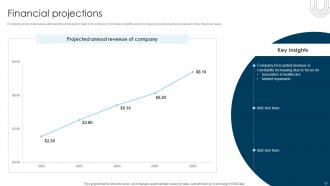
Slide 18: This slide presents the estimated financial performance of the company.
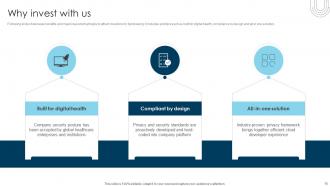
Slide 19: This slide showcases benefits and major reasons that help to attract investors for fundraising.
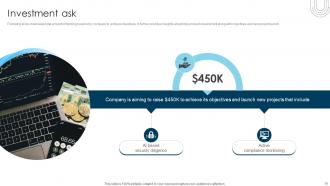
Slide 20: This slide portrays the total amount of funding required by the company to achieve objectives.
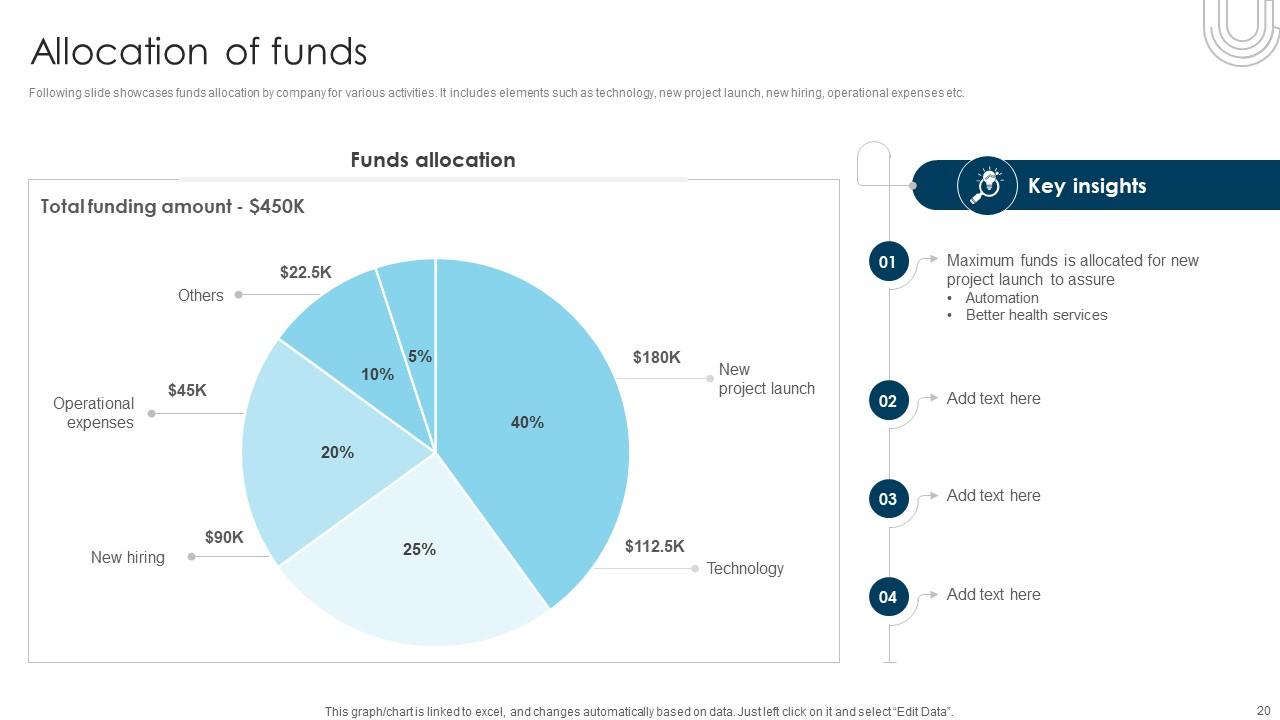
Slide 21: This slide caters to funds allocation by the company for various activities.
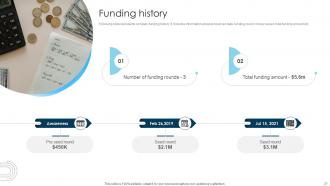
Slide 22: This slide represents the company's funding history.
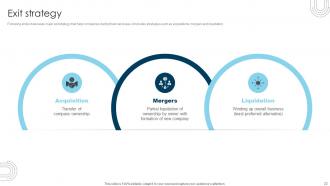
Slide 23: This slide contains a major exit strategy that helps companies during financial losses.
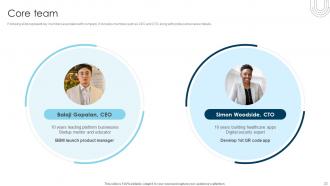
Slide 24: This slide describes key members associated with the company.
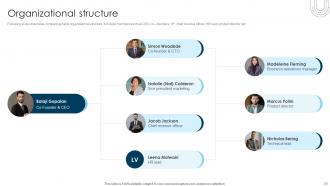
Slide 25: This slide showcases the company's general organizational structure.
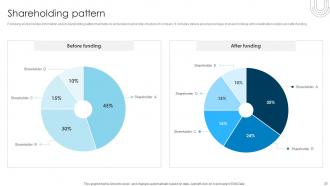
Slide 26: This slide entails information about the shareholding pattern that helps to understand the ownership structure of the company.
Slide 27: This slide shows all the icons included in the presentation.
Slide 28: This is a Contact Us slide. Add your Email Address, Contact, Social Media Handles, and Address.
Slide 29: This slide is a Quotes slide to convey messages, beliefs, etc.
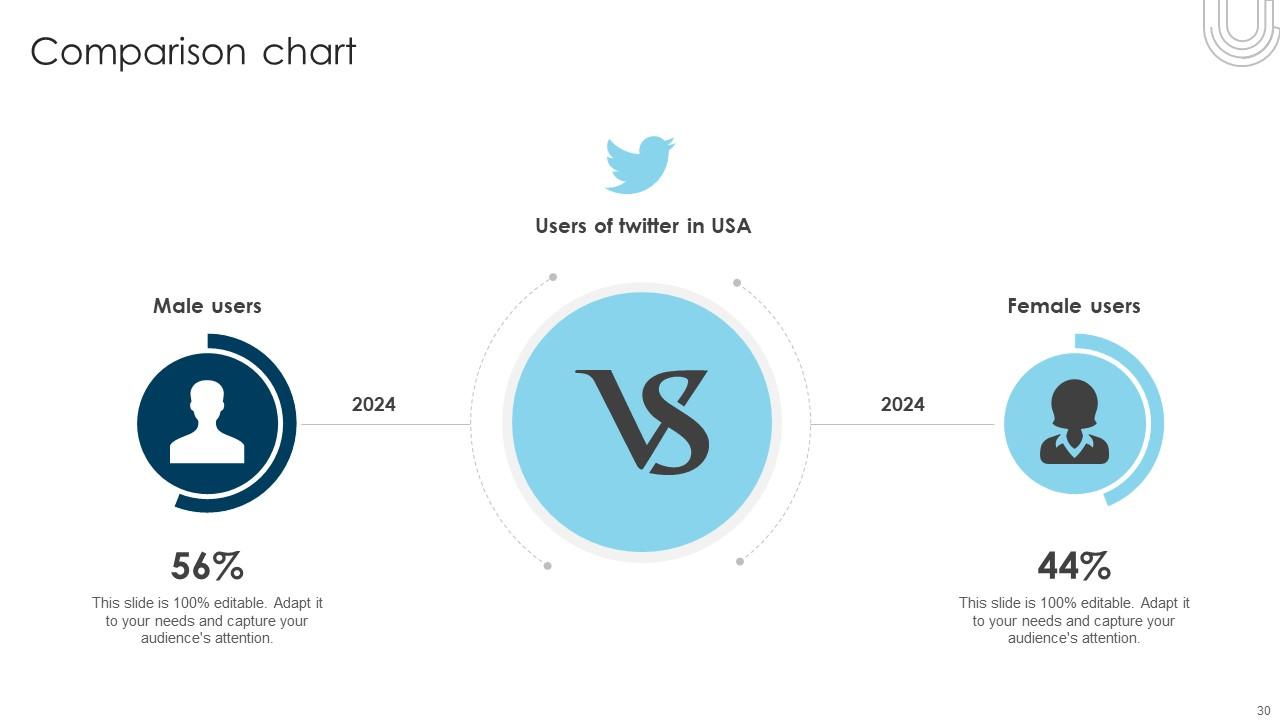
Slide 30: This slide shows Post-It Notes. Post your important notes here.
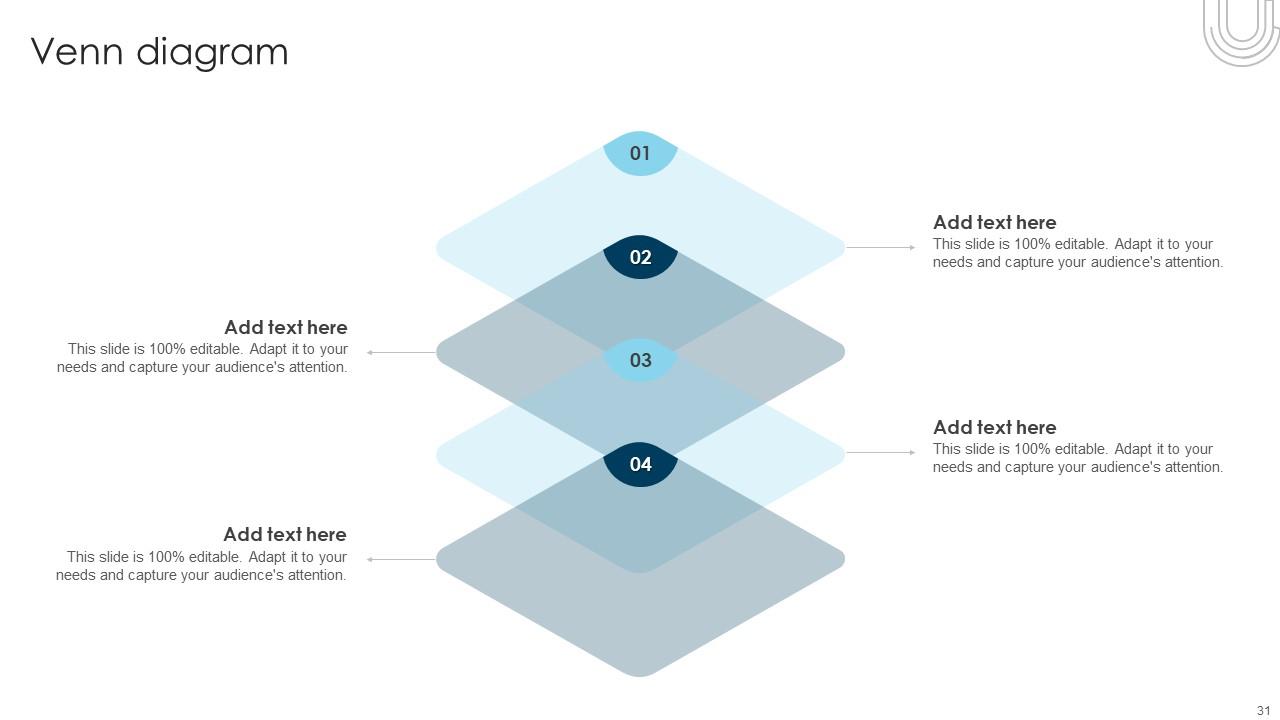
Slide 31: This slide is an Idea Generation slide to state a new idea or highlight information, specifications, etc.
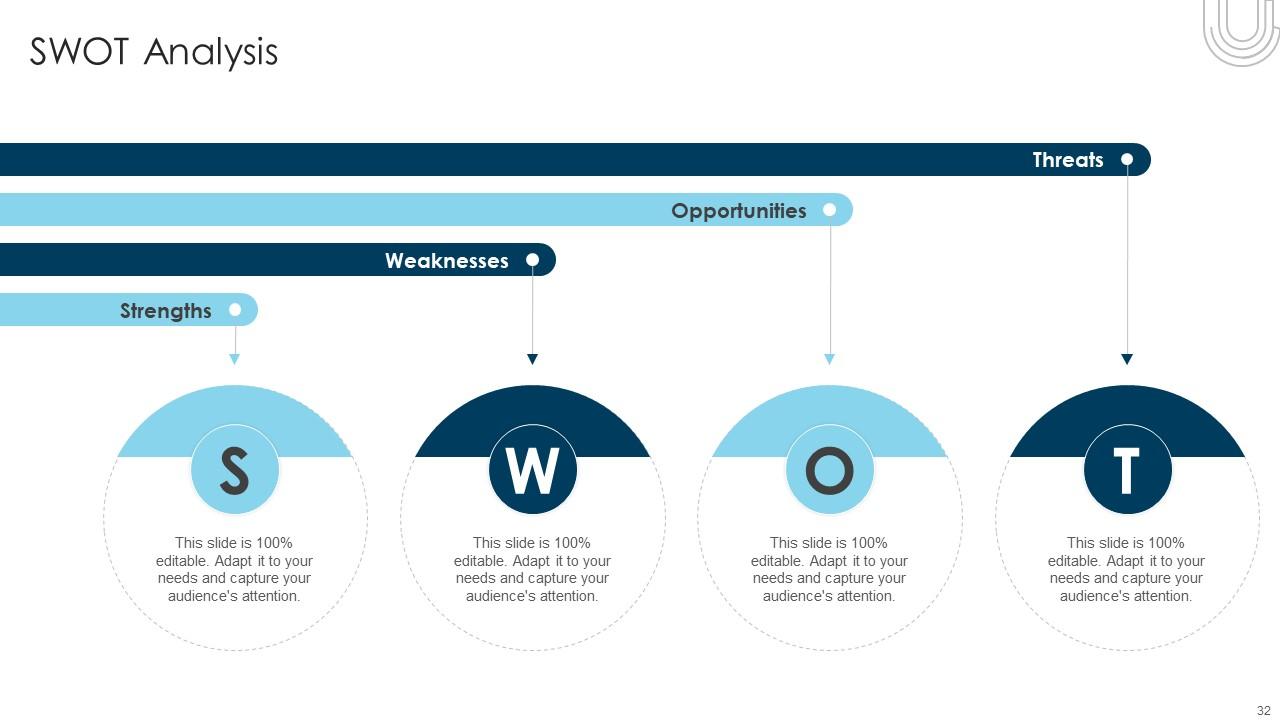
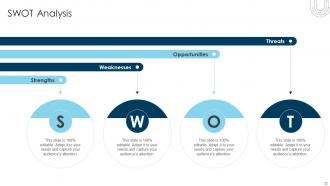
Slide 32: This slide shows SWOT describing- Strengths, Weakness, Opportunities, and Threats.

FAQs for Digital Healthcare App Investment Pitch

Honestly, start with navigation that doesn't make people hunt around for basic stuff. Secure messaging and appointment booking are obvious must-haves - but make the booking actually simple, not some 10-click nightmare. Medication reminders help tons. Test results need to be easy to find, and your telehealth better not freeze during calls (seriously, nothing's worse). Quick chart access saves providers so much time. Oh, and it has to work well on phones since that's what most people use anyway. If users get confused doing simple tasks, you're done for.

So most good healthcare apps are pretty obsessed with security (thank god). They've got HIPAA compliance, end-to-end encryption, secure cloud storage - the whole nine yards. Multi-factor authentication is standard now too. Role-based access means only certain people can see patient info. They run regular security audits and penetration testing, which honestly sounds scary but it's necessary. When you're shopping around, definitely ask about their certifications and check if they're SOC 2 compliant. That's usually my go-to test for whether they actually know what they're doing with data protection.

So telemedicine basically makes your health app way more useful - you're not just tracking stuff anymore, you can actually video chat with real doctors for appointments and check-ups. No more sitting in those awful waiting rooms! Your doctor can keep tabs on you remotely too and tweak your treatment if needed. Honestly, if you're shopping for a health app, make sure it has solid telemedicine features. That's what separates the basic step-counters from apps that'll actually help when you're sick. It's pretty much turned digital health from passive to active care.

Honestly, these health apps work because they make taking care of yourself feel way less boring. You get little nudges to take your meds, see your progress in charts and stuff, maybe earn some points - it's like gamifying being healthy. Your phone becomes this mini coach that's always there. The cool part is how they personalize everything and let you actually chat with your doctor, which makes you feel more involved. People love seeing their data improve over time too. Oh and don't go crazy with features at first - just pick one habit to focus on or you'll overwhelm people.

Honestly, it's mostly tech anxiety and tiny text that kills it for them. Privacy stuff freaks them out too - like, they don't want their blood pressure readings floating around somewhere. Cost's another thing. My mom can barely tap her phone screen thanks to arthritis, which is super common. They'd rather just call their doctor, you know? Way more trust there than some random app. Oh, and half the time they don't even see why they need it when their current system works fine. If you're building something, bigger fonts are non-negotiable. Keep it stupid simple and maybe add phone support.

So regulatory stuff is gonna determine how much bureaucracy you're stuck with and timeline-wise. FDA approval? That's months or years if your app diagnoses anything or gives treatment advice. Total nightmare but yeah, patient safety and all that. You gotta bake compliance in from the start - encryption, audit trails, clinical studies. Figure out early if you're actually a medical device or just wellness because honestly that decision changes everything about your pathway and budget. Like, completely different worlds.

So instead of just seeing patients for like 15 minutes every few months, you'd get their health data 24/7. Heart rate, sleep, steps - all that stuff flows in continuously from Apple Watch, Fitbit, whatever they're already wearing. Honestly, users get pretty obsessed with watching their own numbers, which is great for engagement. The real payoff though? You can spot problems early and actually see what they're doing day-to-day, not just what they remember telling you. Way more personalized treatment that way. I'd start with the popular wearables first - better adoption rates.

Healthcare analytics basically takes all that patient data and turns it into stuff you can actually use. You'll catch patterns in vitals, med compliance, symptoms - things that are super easy to miss otherwise. The predictive models are honestly pretty wild now. They flag at-risk patients before anything bad even happens. Real-time alerts beat waiting weeks for appointments, that's for sure. I'd say start with whatever metrics matter most for your patients. Once you see how it guides treatment decisions, you kinda can't go back to flying blind.

Multi-language support is huge - don't just translate text, make sure the whole interface makes sense culturally. High contrast modes and scalable fonts help tons of people see better. Keep navigation super simple since tech skills vary wildly. Offline functionality matters more than you'd think (crazy how spotty internet still is). Voice interfaces and screen readers are clutch for accessibility. Here's the thing though - actually test with real diverse users instead of guessing what they need. I've seen so many apps miss obvious stuff because they never asked actual people.

Yeah, these apps save money on both ends but differently. Patients skip unnecessary office visits and get way cheaper virtual consultations. Plus the medication reminders actually help people stick to their prescriptions. On the provider side, there's way less admin work - patients book their own appointments, refill prescriptions online, do basic health tracking themselves. It's pretty much like having everyone manage the routine stuff digitally. Oh and the continuous monitoring thing catches problems early, which honestly prevents way more expensive issues down the road. Just make sure whatever app you pick plays nice with your current systems.

Honestly, go after doctors first - they're gonna be your best bet for credibility with patients. Build content that actually shows clinical results, like case studies and real outcome data. LinkedIn crushes Instagram for medical stuff, trust me on that one. Try partnering with medical associations for their newsletters or conferences. Patient testimonials are amazing once you get them, just don't mess up HIPAA compliance. Oh, and figure out which medical specialties would actually use your app most. Start there and build those relationships - way more effective than casting a wide net.

Honestly, these health apps are pretty solid for staying connected with your doctor. You get secure messaging and video calls, plus instant access to test results - no more waiting around for someone to call you back. Quick questions about meds or symptoms? Just shoot them a message. The coolest part is sharing real-time stuff like your blood pressure readings so they can actually see what's happening between appointments. My sister uses hers constantly now. Check if your doctor's office has their own app first - most do these days.

Honestly, AI is making these health apps way smarter than they used to be. Instead of just tracking basic stuff, they're actually learning from patient data and giving personalized treatment suggestions. The predictive stuff is pretty cool too - flagging health risks before they get serious. Plus automated symptom analysis saves doctors so much time (my sister's a nurse and she's obsessed with this). These chatbots are getting weirdly realistic now. What's really crazy is how they spot patterns in huge datasets that doctors would totally miss. My advice? Don't go crazy - just pick one AI feature that fixes your biggest headache first.

Honestly, these apps are pretty life-changing if you've got a chronic condition. You can track everything - symptoms, meds, blood pressure, whatever - and your doctor gets to see it all instead of you trying to remember at appointments. The medication reminders alone are worth it (I'm terrible at remembering pills). Most connect to fitness trackers too, which is kind of neat. The real benefit is having everything in one spot rather than scattered notes everywhere. Just make sure whatever app you pick actually talks to your doctor's system, otherwise you're just collecting data for yourself. Trust me on that one.

Dude, feedback is everything for healthcare apps - you're literally dealing with people's health here. I'd set up in-app surveys and do user testing with both patients and doctors. Here's the thing though: healthcare moves at a snail's pace while app dev is lightning fast, so you'll need to find that sweet spot between iterating quickly and not breaking safety rules. Start with usability fixes first because if people can't figure out how to use your app, they'll just delete it. Get feedback every couple weeks and focus on stuff that actually helps patients or makes doctors' jobs easier. Trust me, frustrated users don't stick around.

Ratings and Reviews

90% of 100
Write a review
Most Relevant Reviews
  1. 100%

    by Curt Bryant

    I am glad to have come across Slideteam. I was searching for some unique presentations and templates for my business. There are a lot of alternatives available here.
  2. 80%

    by Dewayne Nichols

    “You have the structure in place that are easy to explore new opportunities.I will be recommending your services to other people.”

2 Item(s)

per page: