


Digital Restaurant Reservation Company Profile Powerpoint Presentation Slides CP CD V




Try Before you Buy Download Free Sample Product
 Impress Your
 Audience
 100%
100% Editable
 Save Hours
 of Time


Our Digital Restaurant Reservation Company Profile Powerpoint Presentation Slides CP CD V are topically designed to provide an attractive backdrop to any subject. Use them to look like a presentation pro.
People who downloaded this PowerPoint presentation also viewed the following :
Content of this Powerpoint Presentation
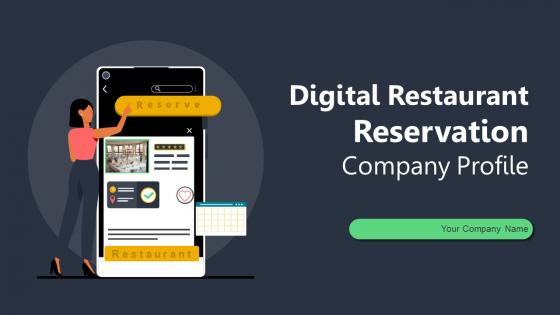
Slide 1: This slide introduces Digital Restaurant Reservation Company Profile. State your company name and begin.
Slide 2: This slide shows Table of Content for the presentation.
Slide 3: This slide provides executive summary of business which presents the company description, key statistics, executive members, and global presence.
Slide 4: This slide displays information about company overview. It includes key components such as company name, website link, founded year, established year etc.
Slide 5: This slide provides information about company guiding values. It includes vision statement and customer centric principles.
Slide 6: This slide presents information about key statistics associated with company. It includes statistics such as gross order value, orders, average monthly transacting customers etc.
Slide 7: This slide provides information about company historical journey. It includes key elements such as product launched, milestones, acquisitions, etc.
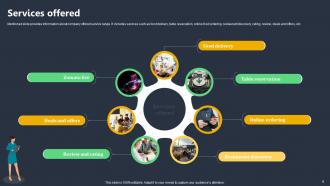
Slide 8: This slide provides information about company offered service range. It includes services such as food delivery, table reservation, online food ordering, restaurant discovery etc.
Slide 9: This slide demonstrates company business model canvas. It includes key elements such as key partners, key activities, key resources, value proposition, customer relations etc.
Slide 10: This slide provides information about company global presence by serving areas. It includes key elements such as business presence by countries and number cities served.
Slide 11: This slide displays information about company senior management team. It includes key members such as founder, chairman, managing director, CEO etc.
Slide 12: This slide provides organization chart. It includes subsidiary companies by business models. It includes business model such as business to customers and business to business.
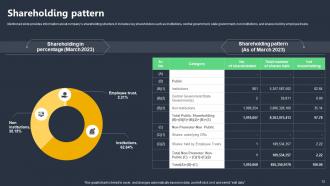
Slide 13: This slide displays information about company’s shareholding structure. It includes key shareholders such as Institutions, central government, state government etc.
Slide 14: This slide provides information about company partnerships and strategic alliances. It includes partnerships with companies such as Battery Smarts, ICICI ban, TVS motors, and InCred.
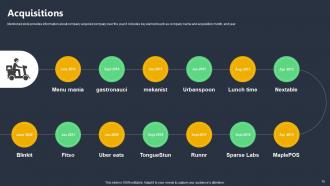
Slide 15: This slide displays information about company acquired company over the year.it includes key element such as company name and acquisition month, and year.
Slide 16: This slide provides information about company direct subsidiaries. It includes key components such as subsidiaries name, country of incorporation, and principle activities.
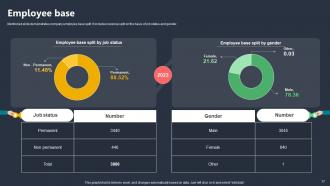
Slide 17: This slide demonstrates company employee base split. It includes revenue split on the basis of job status and gender.
Slide 18: This slide provides information about company esteemed customer base. It includes customers such as smartphone users, college students,
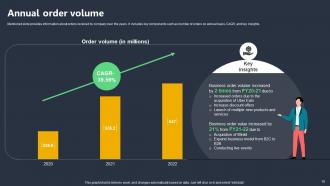
Slide 19: This slide displays information about orders received by company over the years. It includes key components such as number of orders on annual basis, CAGR, and key insights.
Slide 20: This slide demonstrates company operating metrics to determine company performance. It includes key metrics such as average order volume and average monthly transacting customers annually.
Slide 21: This slide provides information about company active food delivery restaurant partners. It includes key components such as average monthly active restaurant partners, CAGR, and key insights.
Slide 22: This slide displays information about company average monthly delivery partners. It includes key components such as number of average monthly delivery partners, CAGR, and key insights.
Slide 23: This slide provides information about company competitors. It includes key competitors such as Doordash, Swiggy, just eat, delivery hero, etc.
Slide 24: This slide presents information about food delivery companies comparative assessment. It includes key parameters such as founded year, location, employee base etc.
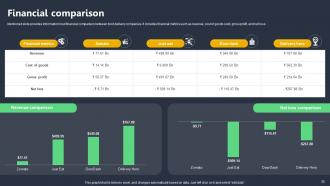
Slide 25: This slide displays information bout financial comparison between food delivery companies. It includes financial metrics such as revenue, cost of goods sold, gross profit, and net loss.
Slide 26: This slide provides information about company revenue growth over the years. It includes key components such as annual revenue, years of growth, CAGR, and key insights.
Slide 27: This slide demonstrates business revenue bifurcation over the years. It includes revenue split by revenue from operations and other income.
Slide 28: This slide provides information about business expenses. It includes expenses such as inventory purchase and depreciation and amortization.
Slide 29: This slide demonstrates business losses over the years. It includes business annual losses, years, and reasons for losses.
Slide 30: This slide provides information about company total assets over the years. It includes assets such as property, plant and equipments, and goodwill.
Slide 31: This slide displays information about company total liabilities and shareholders’ equity. It includes liability split by noncurrent and current liabilities.
Slide 32: This slide demonstrates cash flow and generation from various business activities. It includes activities such as operating, investing, and financing.
Slide 33: This slide provides information about company adopted marketing strategies to increase business profitability. It includes key strategies such as SEO,
Slide 34: This slide displays insights into company strengths to determine business position in the market. It includes strengths such as brand awareness, a large user base etc.
Slide 35: This slide provides information about company weaknesses. It includes weaknesses such as single market dependency, high customer acquisition cost, and cyber risk.
Slide 36: This slide presents information about company opportunities for enhanced business growth. It includes key opportunities such as expand into new markets, develop new services areas etc.
Slide 37: This slide provides information about threats faced by company. It includes threats such as competitors, technological disruption, and regulatory changes.
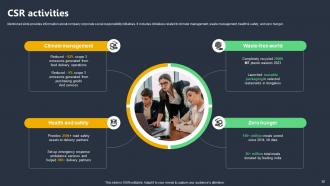
Slide 38: This slide displays information about company corporate social responsibility initiatives. It includes initiatives related to climate management, waste management, health & safety etc.
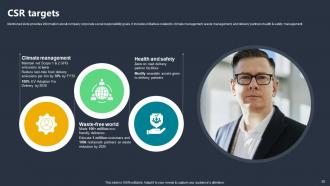
Slide 39: This slide provides information about company corporate social responsibility goals. It includes initiatives related to climate management, waste management etc.
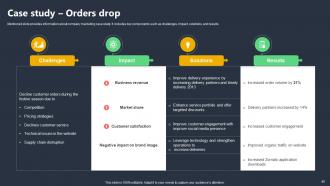
Slide 40: This slide displays information about company marketing case study. It includes key components such as challenges, impact, solutions, and results.
Slide 41: This is a Contact Us slide to show company's contact information.
Slide 42: This slide shows all the icons included in the presentation.
Slide 43: This slide is titled as Additional Slides for moving forward.
Slide 44: This slide provides 30 60 90 Days Plan with text boxes.
Slide 45: This slide showcases Magnifying Glass to highlight, minute details, information, specifications etc.
Slide 46: This slide depicts Venn diagram with text boxes.
Slide 47: This is a Thank You slide with address, contact numbers and email address.
Digital Restaurant Reservation Company Profile Powerpoint Presentation Slides CP CD V with all 55 slides:
Use our Digital Restaurant Reservation Company Profile Powerpoint Presentation Slides CP CD V to effectively help you save your valuable time. They are readymade to fit into any presentation structure.
























FAQs for Digital Restaurant Reservation Company Profile Powerpoint Presentation Slides
Successful digital restaurant reservation platforms include real-time availability management, automated confirmation systems, customer preference tracking, integrated payment processing, and comprehensive analytics dashboards. These technologies streamline operations by reducing no-shows, optimizing table turnover, and enhancing customer experiences, with many restaurants finding that strategic integration ultimately delivers improved operational efficiency and increased revenue per seat.
Technology enhances the reservation process by streamlining booking workflows, providing real-time availability updates, and enabling personalized dining preferences. Through mobile apps and AI-powered systems, restaurants deliver faster confirmations, automated reminders, and seamless table management, while customers enjoy 24/7 booking convenience, ultimately reducing wait times and improving overall satisfaction.
Restaurants should evaluate digital reservation systems based on booking conversion rates, no-show reduction percentages, table turnover optimization, customer data analytics capabilities, and integration efficiency with existing POS systems. These metrics enable restaurants to measure revenue impact, operational streamlining, and customer experience enhancement, with many establishments finding that comprehensive analytics ultimately deliver increased profitability and competitive advantage.
Digital reservation platforms help restaurants manage peak times by optimizing table allocation, providing real-time availability updates, enabling waitlist management, and offering predictive analytics for demand forecasting. These systems streamline operations by reducing wait times, maximizing seating efficiency, and automating booking confirmations, with many restaurants finding that strategic table turnover optimization increases revenue while enhancing customer satisfaction.
User interface design significantly impacts customer retention by ensuring intuitive navigation, seamless booking processes, mobile optimization, and personalized experiences that reduce friction and abandonment rates. A well-designed interface streamlines reservation management, enables quick modifications, and provides clear confirmation processes, with many restaurants finding that user-friendly systems increase repeat bookings and customer loyalty.
Data analytics enhances restaurant decision-making by analyzing booking patterns, customer preferences, table turnover rates, and revenue optimization opportunities through digital reservation platforms. These insights enable restaurants to adjust staffing levels, optimize menu offerings, and implement dynamic pricing strategies, with many establishments finding that data-driven approaches increase operational efficiency and customer satisfaction significantly.
Best practices for integrating reservation systems include ensuring API compatibility, maintaining real-time data synchronization, implementing staff training protocols, establishing backup procedures, and conducting thorough testing phases. These integrations streamline operations by connecting front-of-house booking data with kitchen management, inventory systems, and customer databases, with many restaurants finding that seamless integration reduces overbooking incidents while enhancing overall operational efficiency.
Restaurants can utilize customer feedback from reservation systems by analyzing dining preferences, service quality ratings, and operational insights to enhance menu offerings, staff training, and overall experiences. This data enables targeted marketing campaigns, personalized recommendations, and proactive issue resolution, with many establishments finding that systematic feedback integration ultimately delivers higher customer satisfaction, increased repeat bookings, and improved operational efficiency.
Essential security measures include SSL encryption, PCI DSS compliance, two-factor authentication, secure payment gateways, and regular security audits. These technologies enhance customer trust by protecting personal information, securing payment transactions, and preventing data breaches, with many restaurants finding that robust security ultimately delivers competitive advantage and increased online bookings.
Mobile apps streamline the reservation process by enabling instant bookings, real-time table availability, and seamless payment integration, while providing restaurants with valuable customer data and preferences. These platforms enhance operational efficiency through automated confirmations, waitlist management, and customer communication, with many establishments finding that mobile-first approaches significantly increase booking rates and customer retention.
Emerging trends in digital reservations include AI-powered demand forecasting, dynamic pricing models, integrated waitlist management, personalized guest experiences, and real-time table optimization systems. These technologies streamline operations by reducing no-shows, maximizing revenue per seat, and enhancing customer satisfaction, with many restaurants finding that strategic adoption delivers competitive advantages and improved operational efficiency.
Social media integration enhances reservation visibility by enabling direct booking through platforms like Facebook and Instagram, automated sharing of dining experiences, and targeted promotional campaigns. This strategic combination streamlines customer acquisition, reduces booking friction, and amplifies word-of-mouth marketing, with many restaurants finding that integrated systems deliver increased reservations and enhanced customer engagement across multiple touchpoints.
Restaurants can encourage repeat bookings through personalized email campaigns, loyalty rewards programs, targeted promotions based on dining history, seamless mobile app experiences, and automated follow-up communications after visits. These digital strategies streamline customer engagement by offering exclusive perks, birthday discounts, and preferred seating options, with many establishments finding that integrated reservation platforms ultimately deliver higher customer retention and increased revenue per guest.
Payment gateways significantly impact customer trust and convenience by determining transaction security, processing speed, and payment flexibility options available during booking. Well-established gateways like Stripe, PayPal, and Square enhance customer confidence through robust fraud protection and familiar interfaces, while multiple payment methods streamline the reservation process, ultimately reducing booking abandonment rates and improving overall customer satisfaction for restaurants.
A reservation system significantly enhances restaurant marketing by capturing customer data, enabling targeted email campaigns, tracking dining preferences, and facilitating personalized promotions based on visit history. These platforms streamline promotional distribution through automated confirmations and follow-ups, while providing analytics on campaign effectiveness, ultimately delivering improved customer retention and measurably higher revenue per guest.
-
Qualitative and comprehensive slides.
-
“The presentation template I got from you was a very useful one.My presentation went very well and the comments were positive.Thank you for the support. Kudos to the team!”