


Diapositives de présentation PowerPoint sur la transformation numérique
Augmentez vos chances de l'obtenir correctement avec nos diapositives de présentation PowerPoint sur la transformation numérique. Vous afficherez une plus grande cohérence.
Augmentez vos chances de l'obtenir correctement avec nos diapositives de présentation PowerPoint sur la transformation..















-

- Google Slides is a new FREE Presentation software from Google.
- All our content is 100% compatible with Google Slides.
- Just download our designs, and upload them to Google Slides and they will work automatically.
- Amaze your audience with SlideTeam and Google Slides.
-

Want Changes to This PPT Slide? Check out our Presentation Design Services
-

- WideScreen Aspect ratio is becoming a very popular format. When you download this product, the downloaded ZIP will contain this product in both standard and widescreen format.
-

- Some older products that we have may only be in standard format, but they can easily be converted to widescreen.
- To do this, please open the SlideTeam product in Powerpoint, and go to
- Design ( On the top bar) -> Page Setup -> and select "On-screen Show (16:9)” in the drop down for "Slides Sized for".
- The slide or theme will change to widescreen, and all graphics will adjust automatically. You can similarly convert our content to any other desired screen aspect ratio.
Compatible With Google Slides

Get This In WideScreen
You must be logged in to download this presentation.


Do you want to remove this product from your favourites?
Caractéristiques de ces diapositives de présentation PowerPoint :
Notre jeu de diapositives de présentation PowerPoint sur la transformation numérique spécifique à un sujet contient vingt-quatre diapositives pour formuler le sujet avec une bonne compréhension. Ce deck PPT est ce sur quoi vous pouvez miser. Avec des diapositives diverses et professionnelles à vos côtés, ne vous inquiétez pas pour une présentation powerpack. Une gamme de diapositives modifiables et prêtes à l'emploi avec toutes sortes de tableaux et de graphiques pertinents, des aperçus, des modèles de sous-thèmes et des modèles d'analyse le rend d'autant plus intéressant. Cette plate-forme affiche des diapositives créatives et professionnelles de toutes sortes. Que vous soyez membre d'une équipe assignée ou d'un responsable désigné à la recherche de diapositives impactantes, il s'adresse à tous les domaines professionnels.

People who downloaded this PowerPoint presentation also viewed the following :
Contenu de cette présentation Powerpoint
Diapositive 1 : Il s'agit d'une diapositive d'introduction à la transformation numérique avec des images. Ajoutez le nom de votre entreprise et commencez.
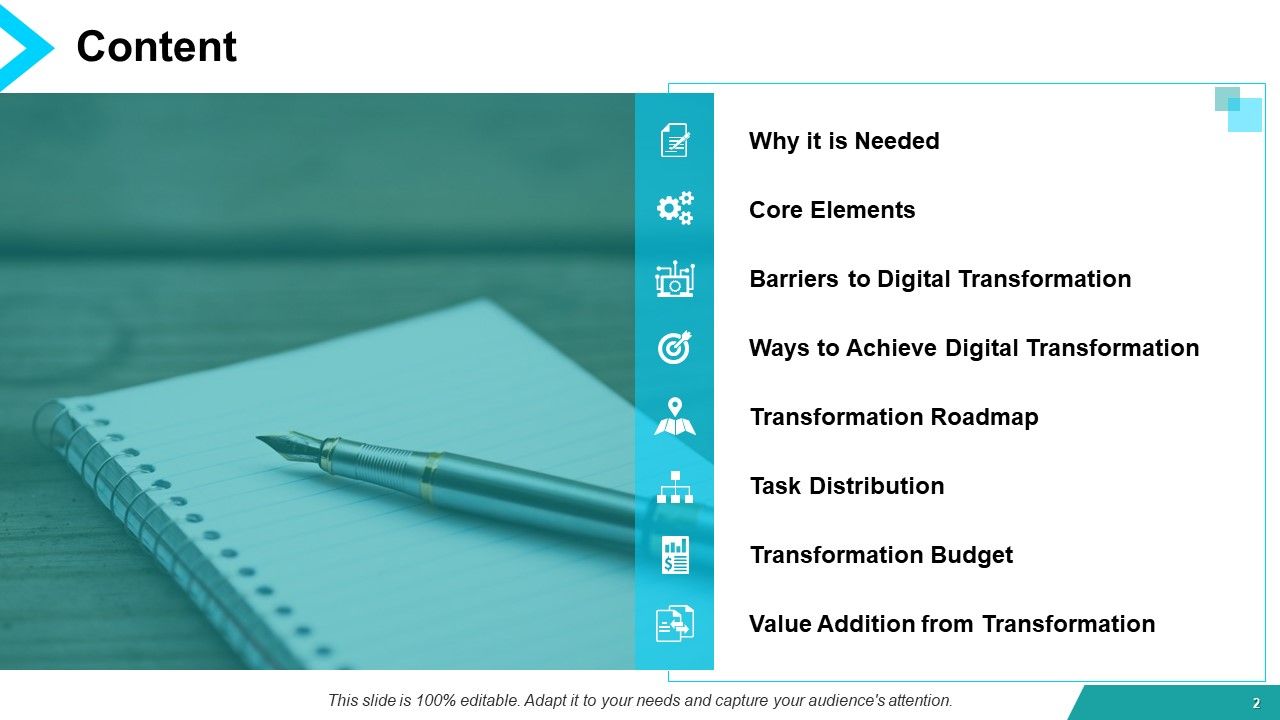
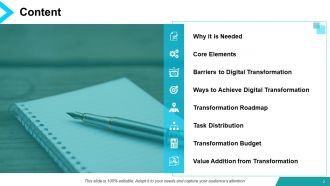
Diapositive 2 : Cette diapositive présente le contenu avec les points suivants à présenter : valeur ajoutée issue de la transformation, pourquoi est-elle nécessaire, éléments essentiels, obstacles à la transformation numérique, moyens de réaliser la transformation numérique, feuille de route de la transformation, répartition des tâches, budget de transformation
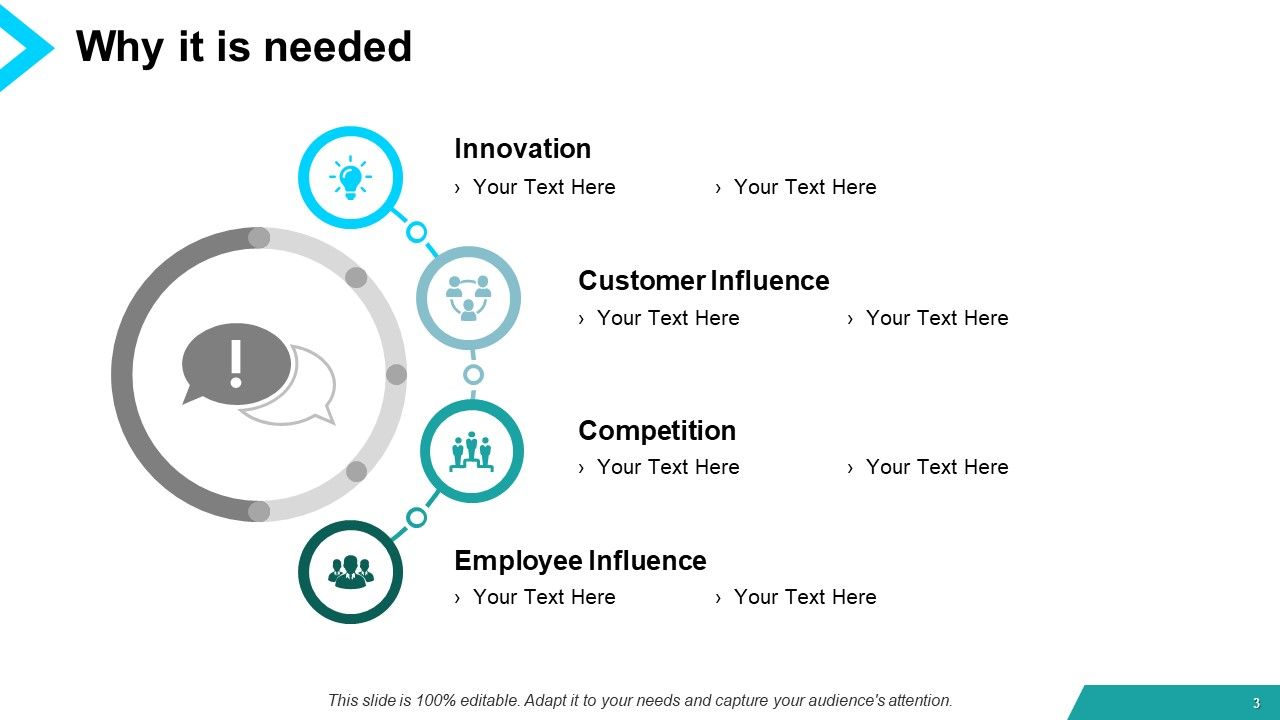
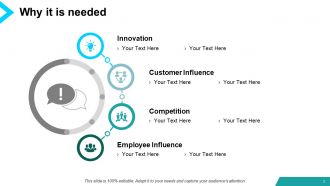
Diapositive 3 : Cette diapositive explique pourquoi la transformation numérique est nécessaire avec les points suivants : Influence client, Concurrence, Influence des employés, Innovation.
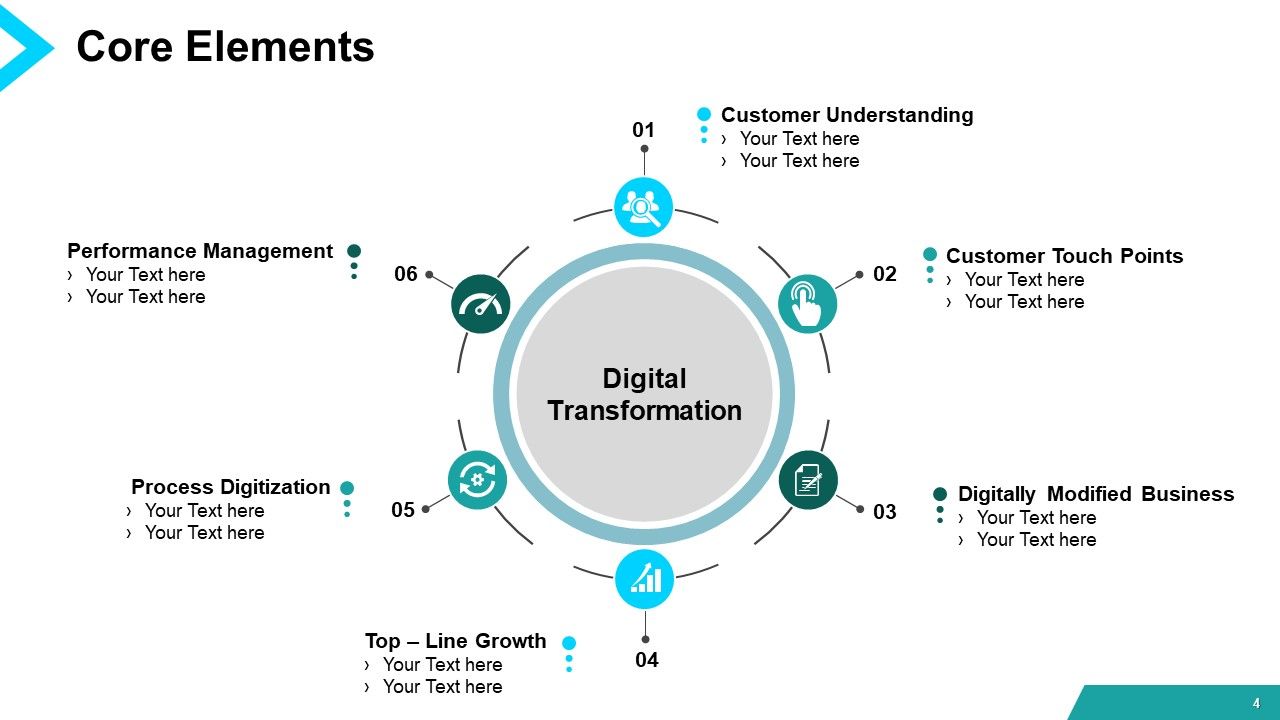
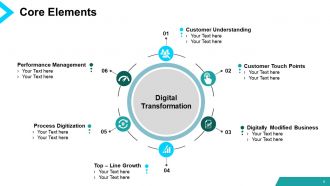
Diapositive 4 : Cette diapositive présente une liste des éléments essentiels de la transformation numérique. Il s'agit notamment de l'entreprise modifiée numériquement, de la numérisation des processus, de la compréhension du client, des points de contact client, de la croissance du haut de gamme, de la gestion des performances.
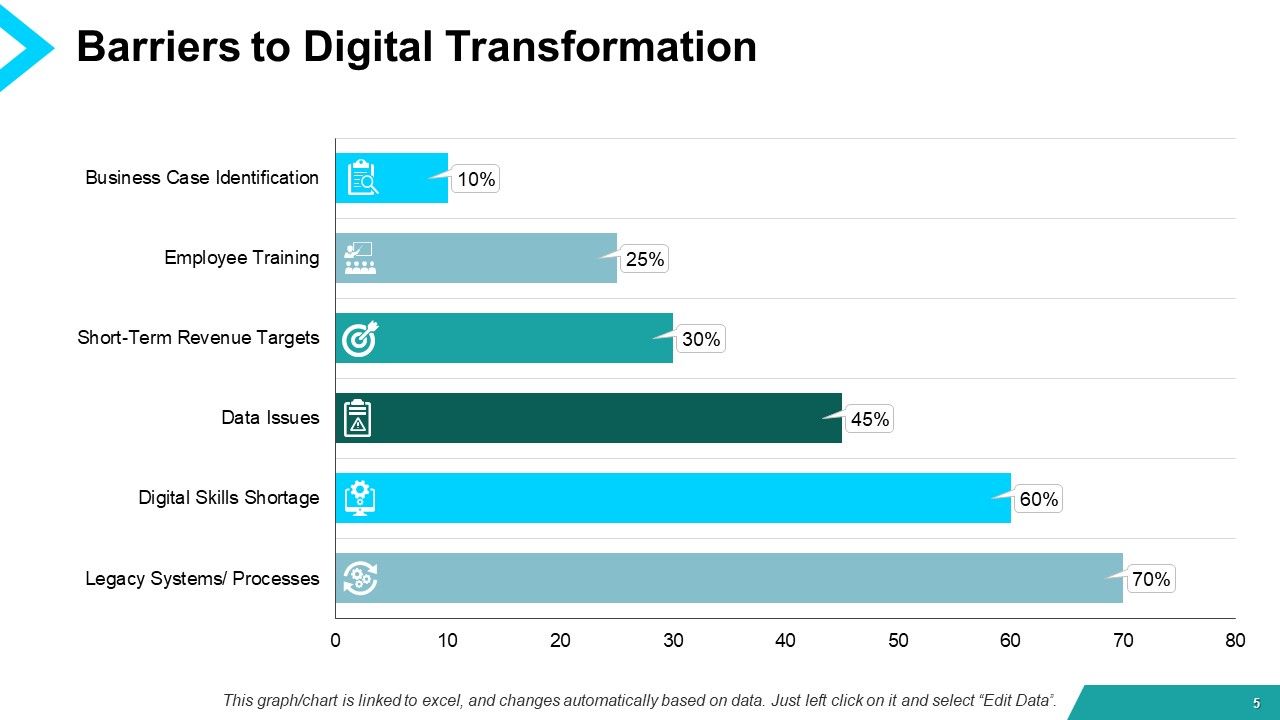
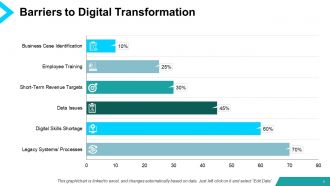
Diapositive 5 : Cette diapositive montre graphiquement les obstacles à la transformation numérique. Utilisez-le en conséquence.
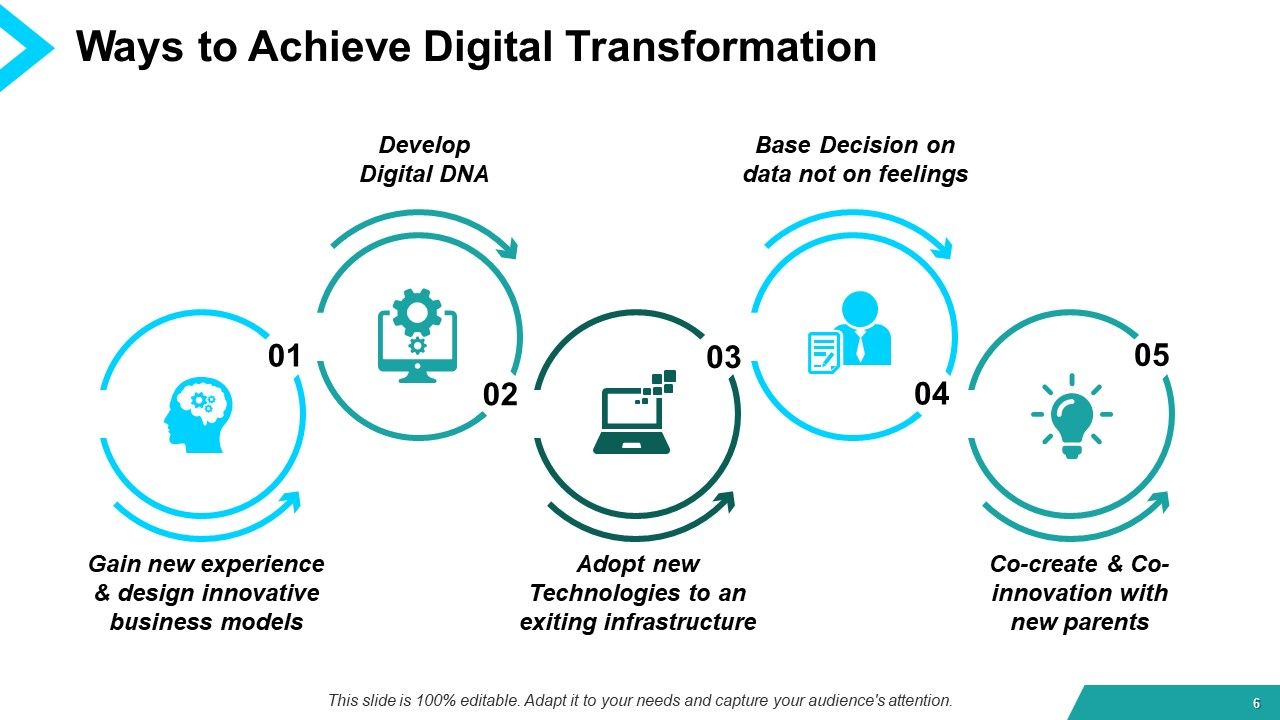
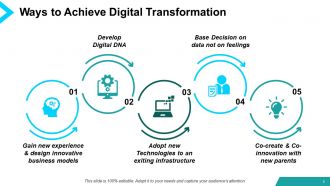
Diapositive 6 : Cette diapositive montre les moyens de réaliser la transformation numérique avec leurs icônes respectives. Nous en avons mentionné cinq pour votre référence. Vous pouvez en ajouter d'autres si votre entreprise l'exige.
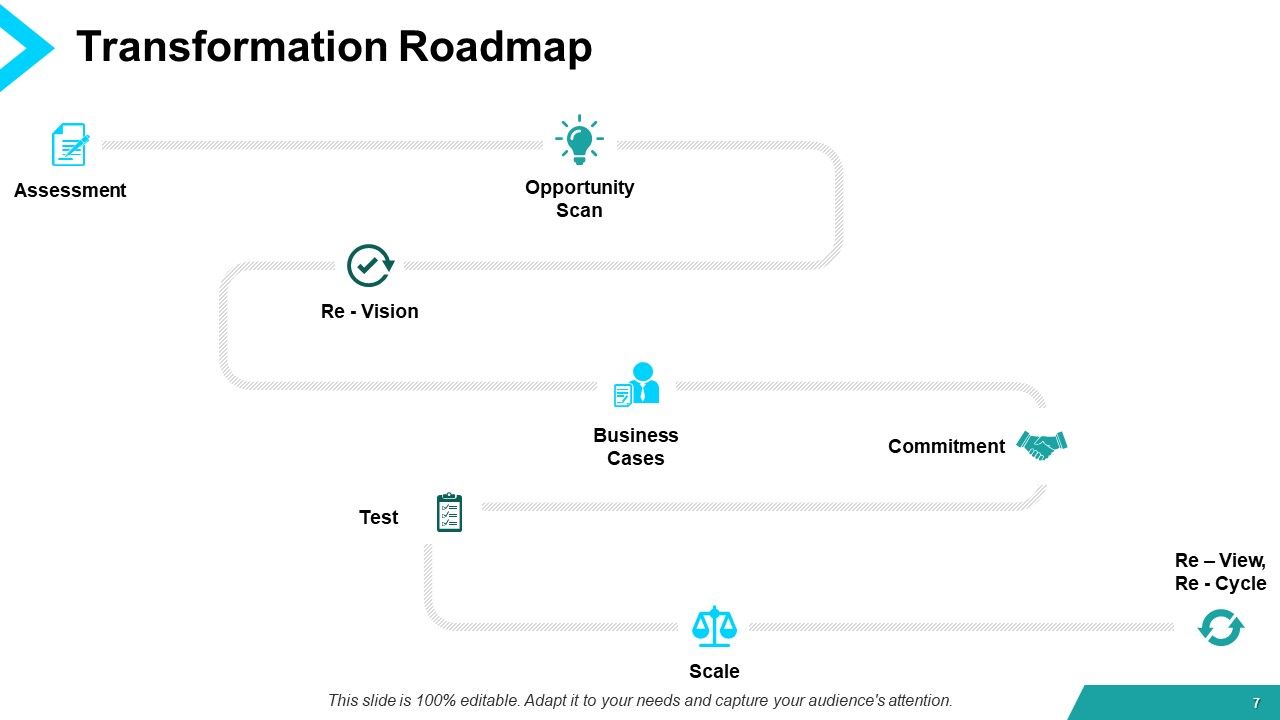
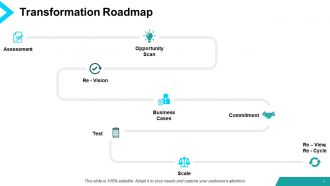
Diapositive 7 : Cette diapositive affiche la feuille de route de la transformation avec les étapes mentionnées : évaluation, analyse des opportunités, révision, analyse de rentabilisation, engagement, test, mise à l'échelle, révision, révision, cycle.
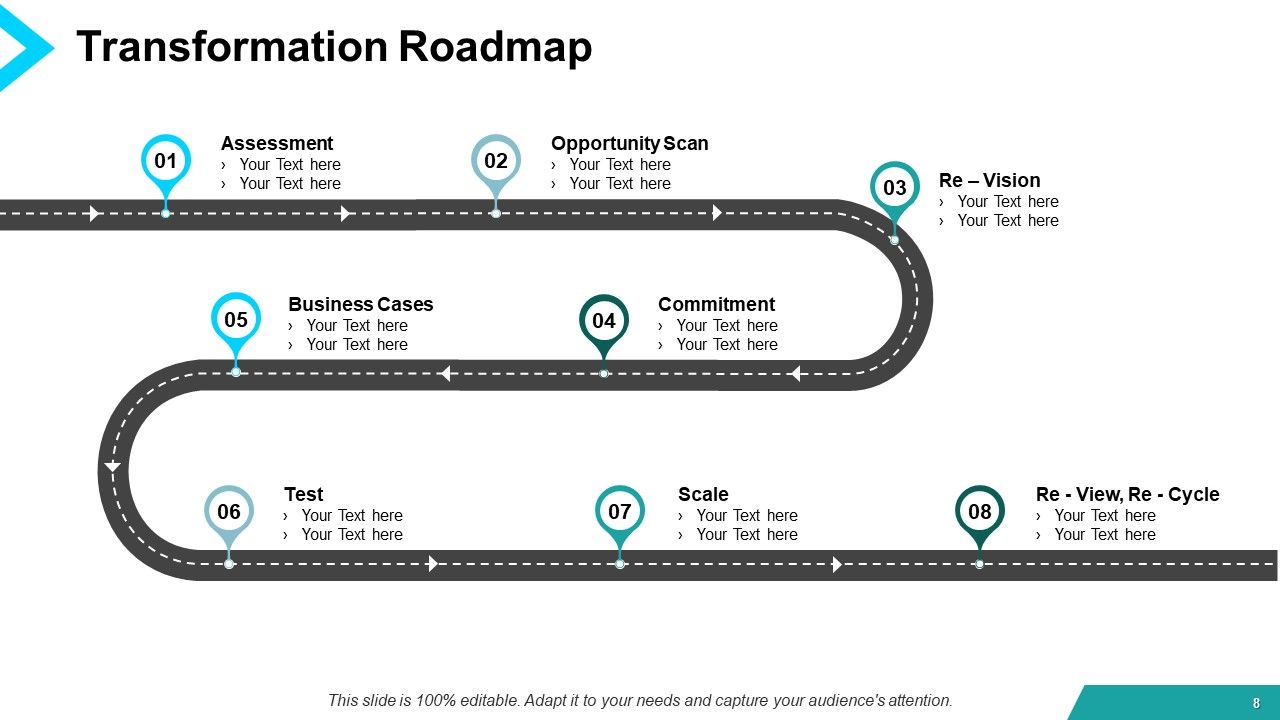
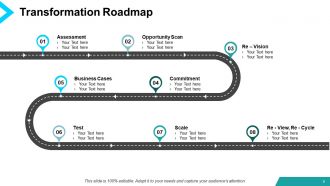
Diapositive 8 : Il s'agit d'une autre diapositive montrant la feuille de route de la transformation avec les étapes mentionnées. Utilisez selon vos besoins.
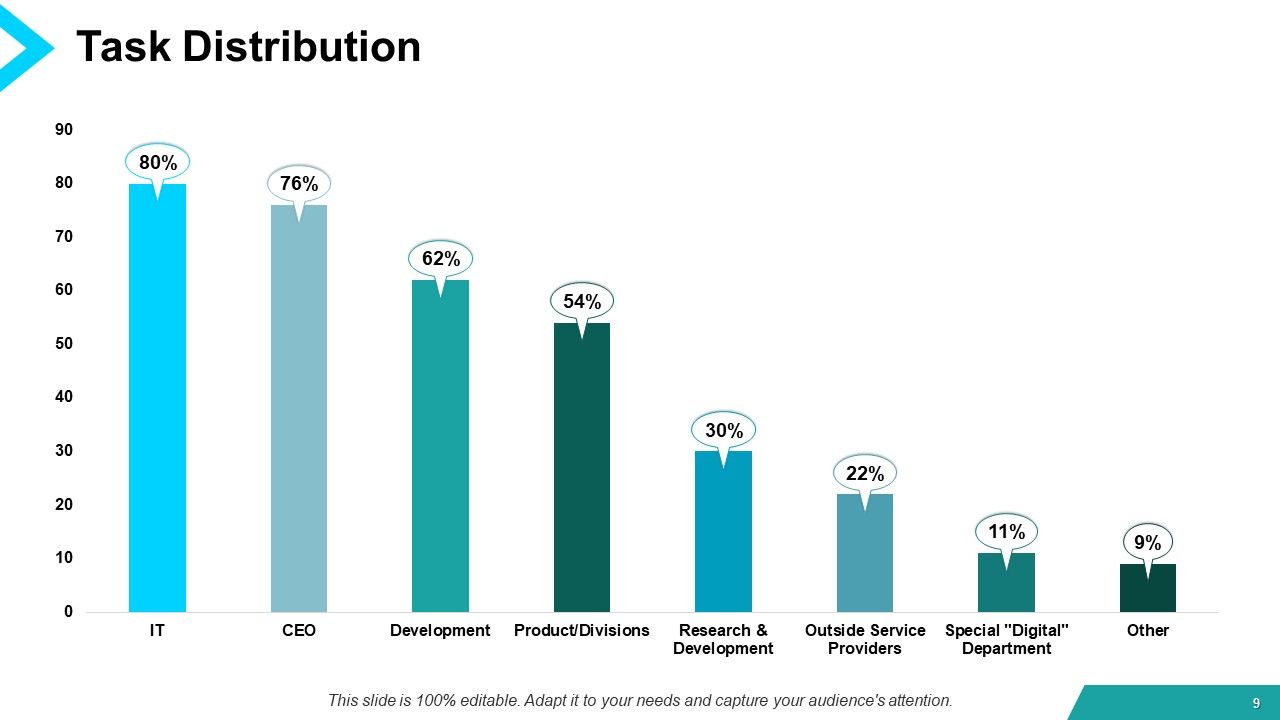
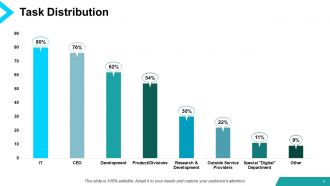
Diapositive 9 : Cette diapositive affiche la répartition des tâches sous la forme d'un graphique à barres/graphique. Utilisez-le en fonction des besoins de votre entreprise.
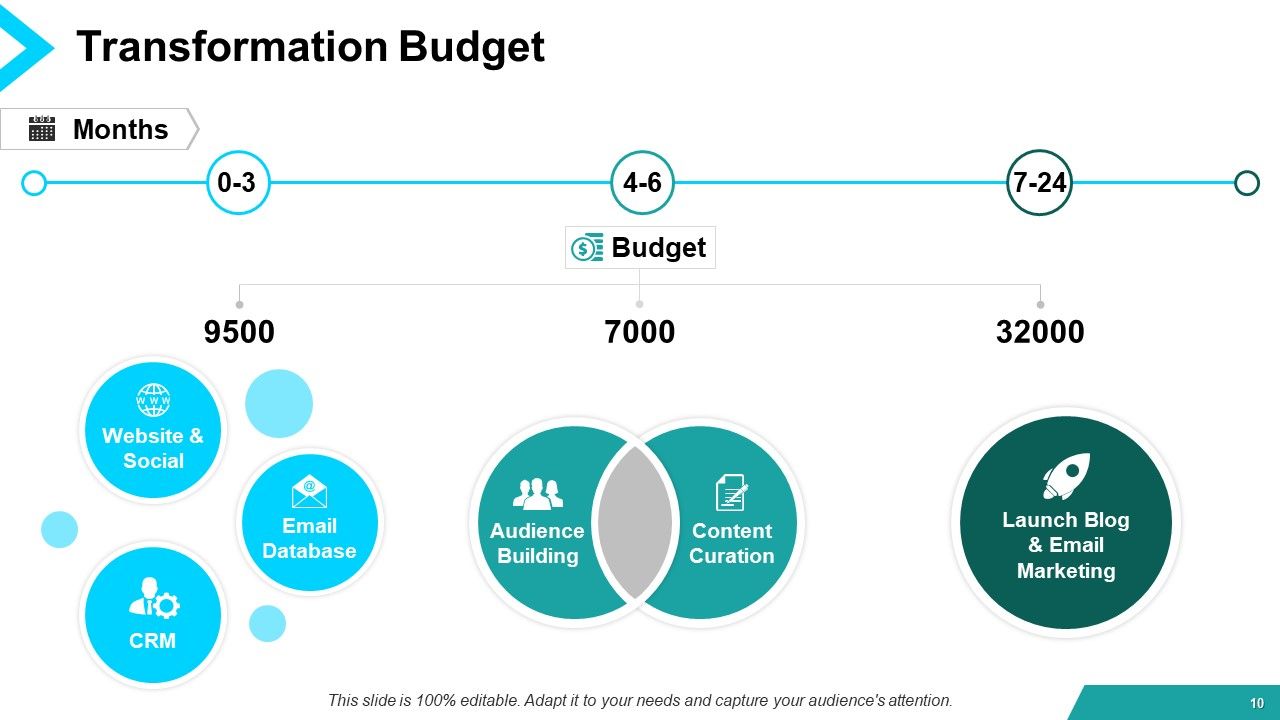
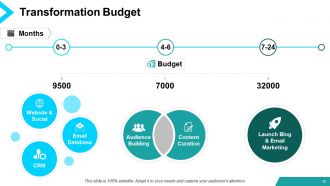
Diapositive 10 : Cette diapositive montre le budget de transformation mensuel composé de : site Web et réseaux sociaux, CRM, base de données de courrier électronique, blog de lancement et marketing par courrier électronique, création d'audience, conservation de contenu. Vous pouvez modifier ces chiffres en fonction des besoins de votre entreprise.
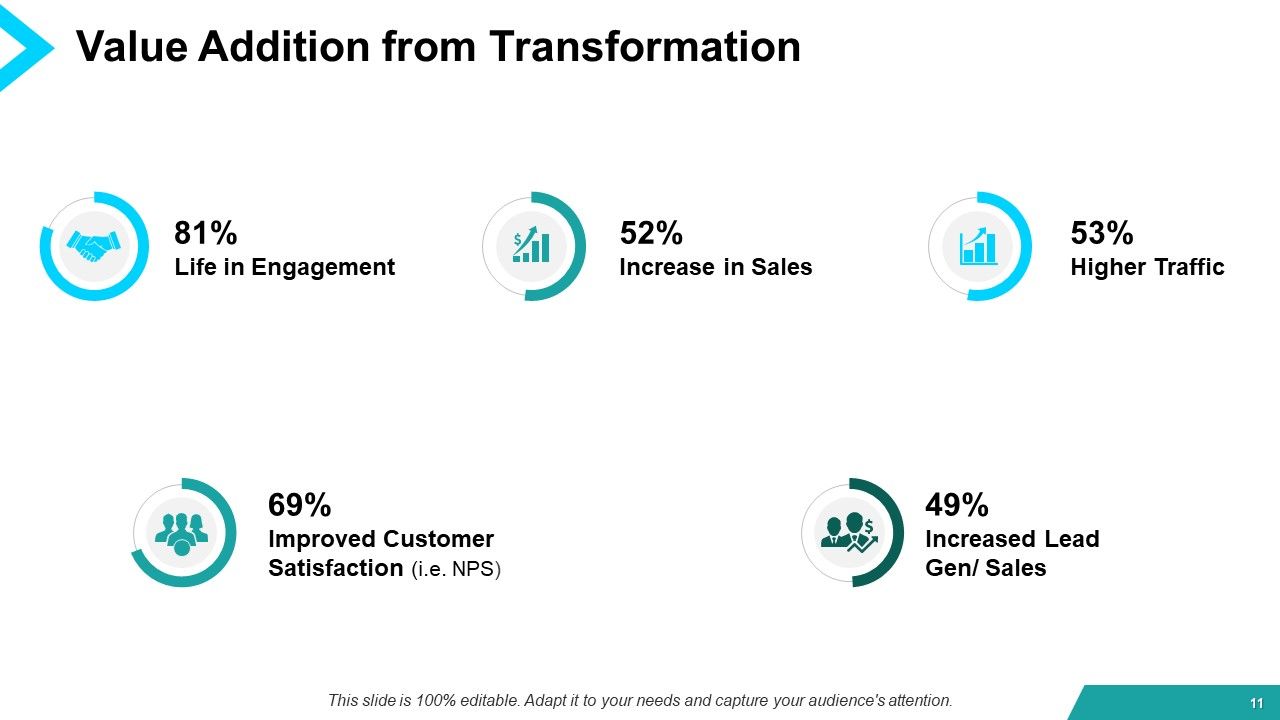
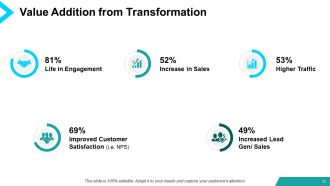
Diapositive 11 : Cette diapositive montre la valeur ajoutée issue de la transformation composée des informations suivantes en pourcentage : durée de vie de l'engagement, augmentation des ventes, augmentation du trafic, augmentation de la génération de prospects/des ventes, amélioration de la satisfaction client (c.-à-d. NPS).
Diapositive 12 : Ceci est la diapositive d'icône de transformation numérique. Modifiez selon vos besoins.
Diapositive 13 : Cette diapositive est en avance sur les diapositives supplémentaires. Modifiez le contenu de la diapositive selon vos besoins.
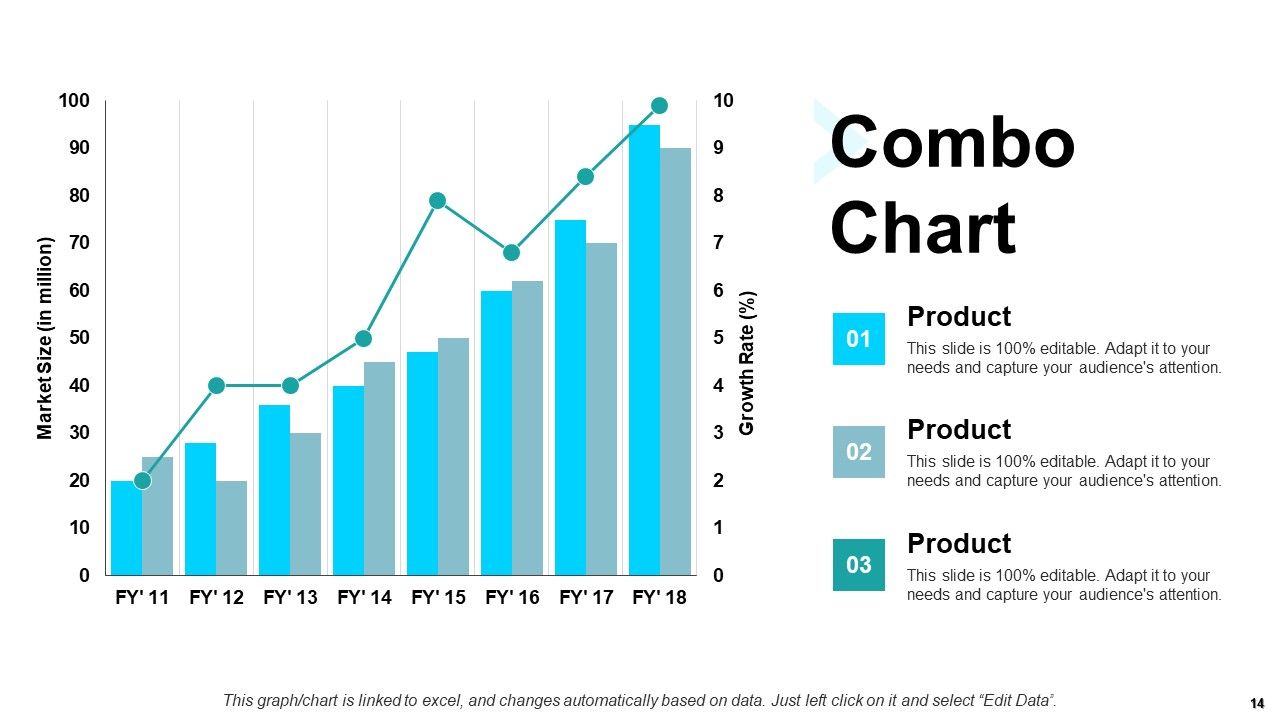
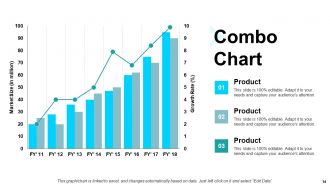
Diapositive 14 : Cette diapositive présente un graphique combiné pour montrer la croissance du produit/entité, la comparaison, etc.
Diapositive 15 : Cette diapositive représente notre mission. Énoncez votre mission, vos objectifs, etc.
Diapositive 16 : Cette section de diapositives affiche Notre équipe géniale pour indiquer les membres de l'équipe/la personne responsable du projet. Mettez Nom, Désignation pour l'équipe à introduire.
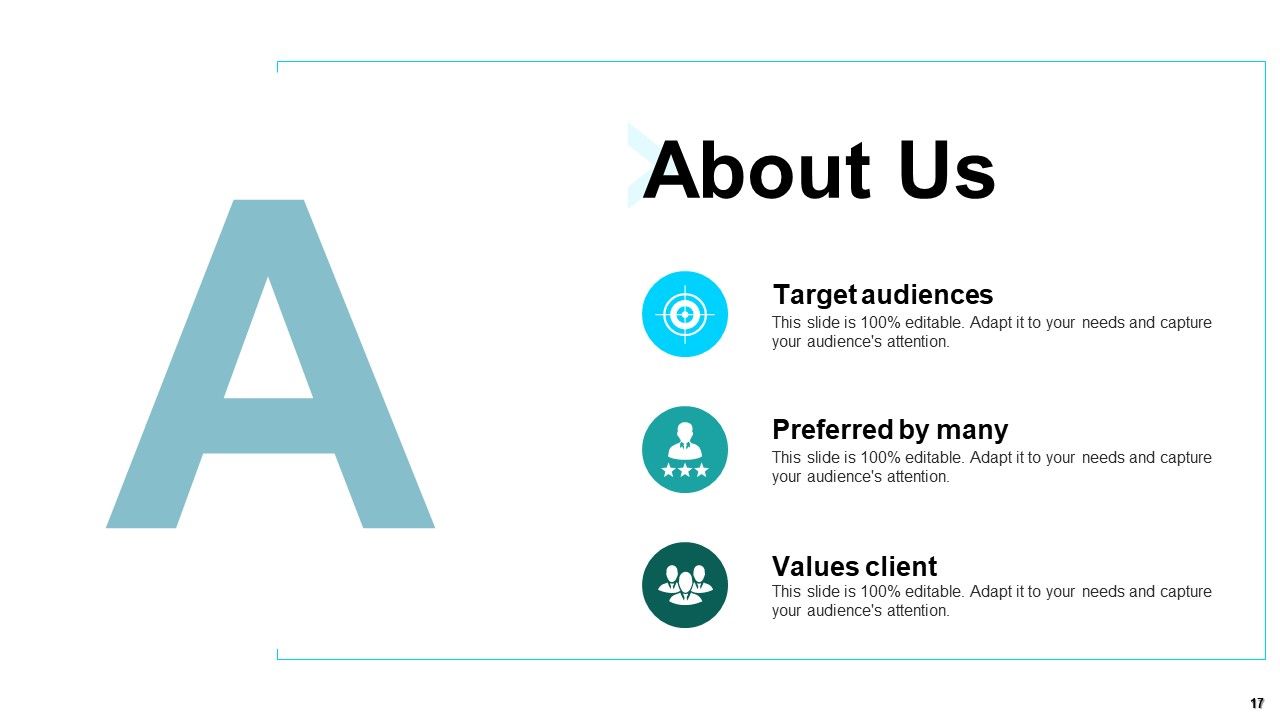
Diapositive 17 : Il s'agit d'une diapositive À propos de nous montrant les publics préférés de beaucoup, les valeurs client et les publics cibles à titre d'exemples.
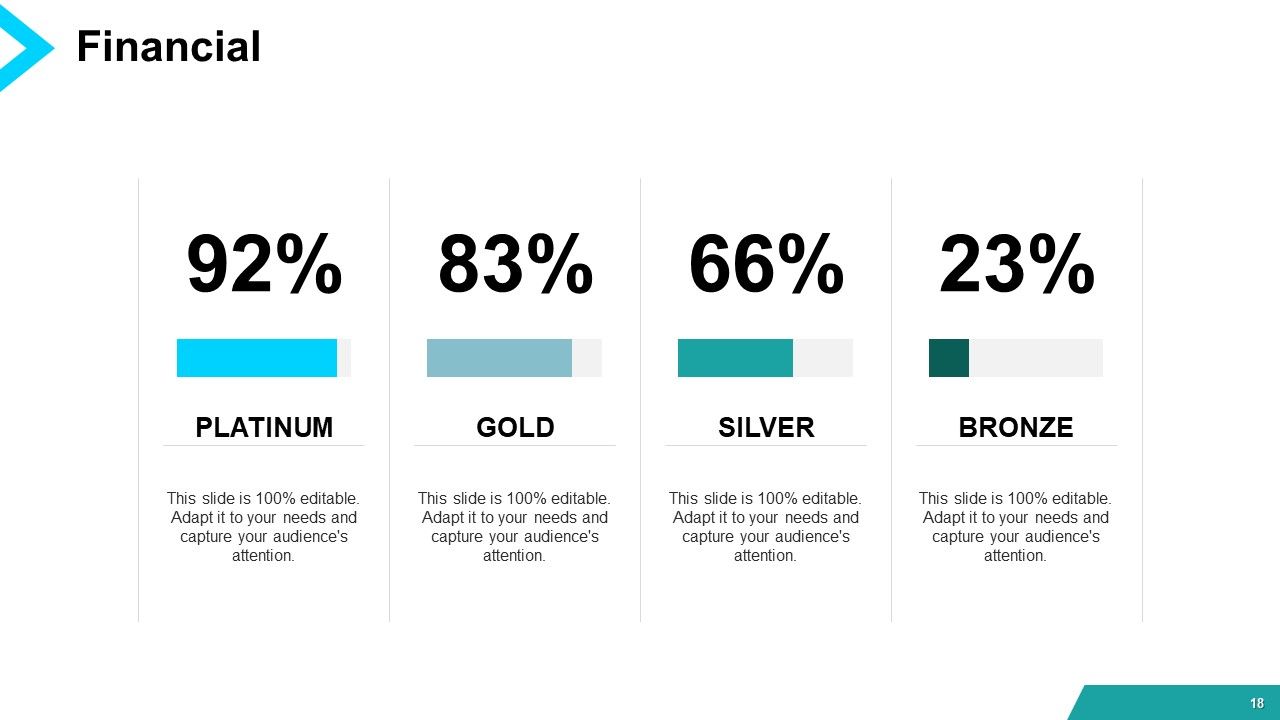
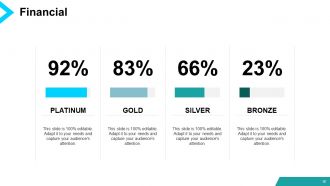
Diapositive 18 : Cette diapositive montre les aspects financiers de votre entreprise.
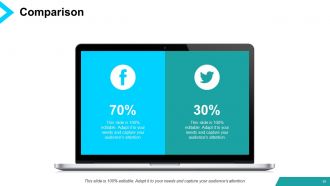
Diapositive 19 : Ceci est une diapositive de comparaison pour comparer les produits/entités, etc.
Diapositive 20 : Il s'agit d'une diapositive de citations. Indiquez ici le message commercial, les croyances, etc.
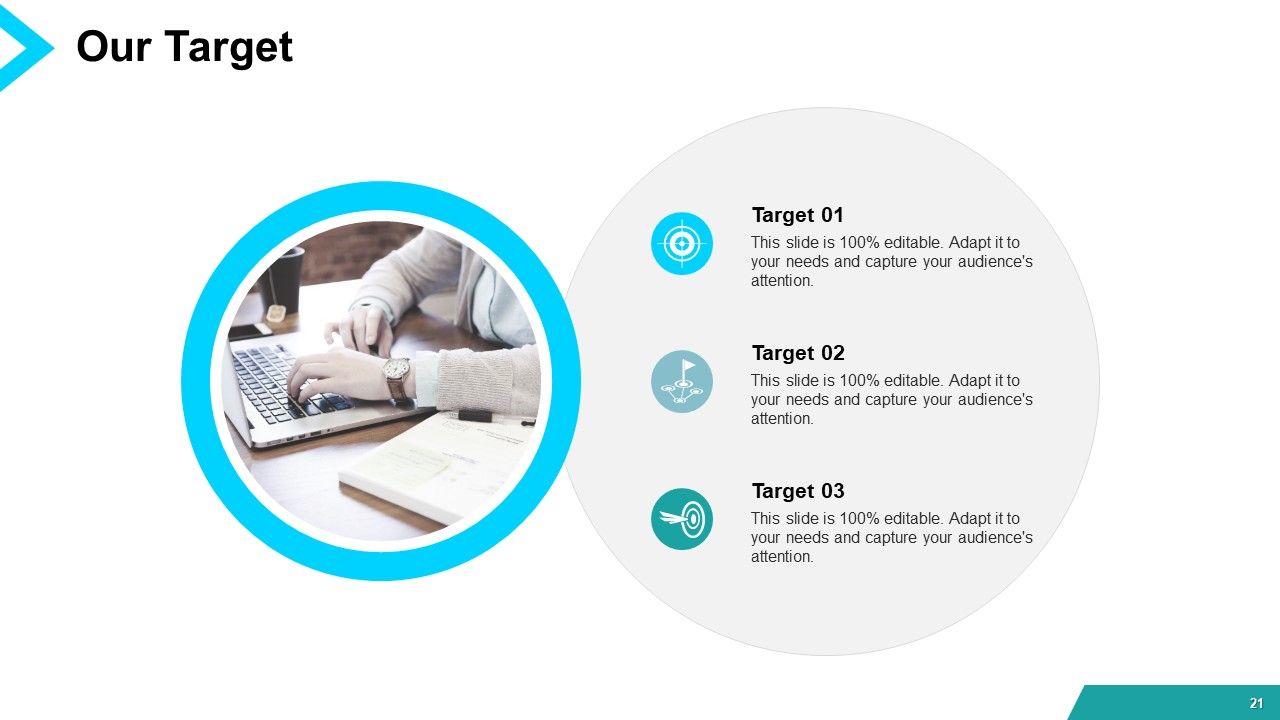
Diapositive 21 : Ceci est notre diapositive cible. Indiquez ici vos objectifs.
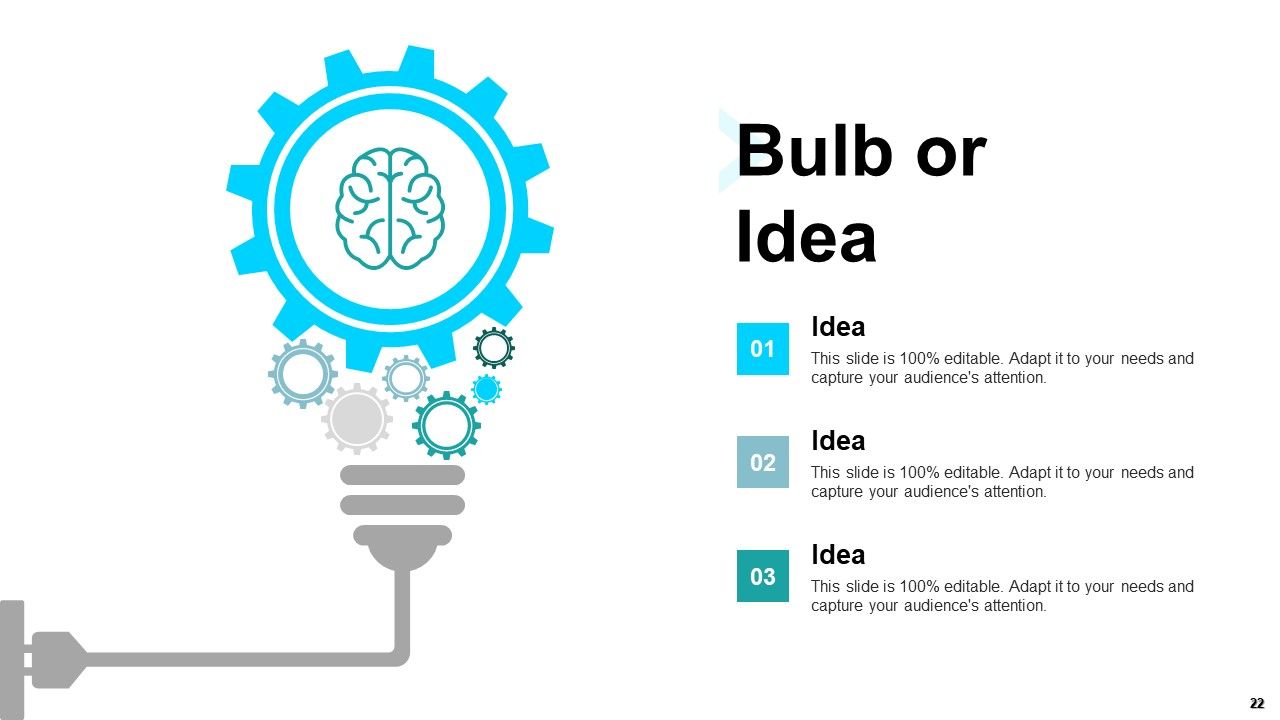
Diapositive 22 : Il s'agit d'une diapositive créative Bulb ou Idea pour énoncer une nouvelle idée ou mettre en évidence des spécifications/informations, etc.
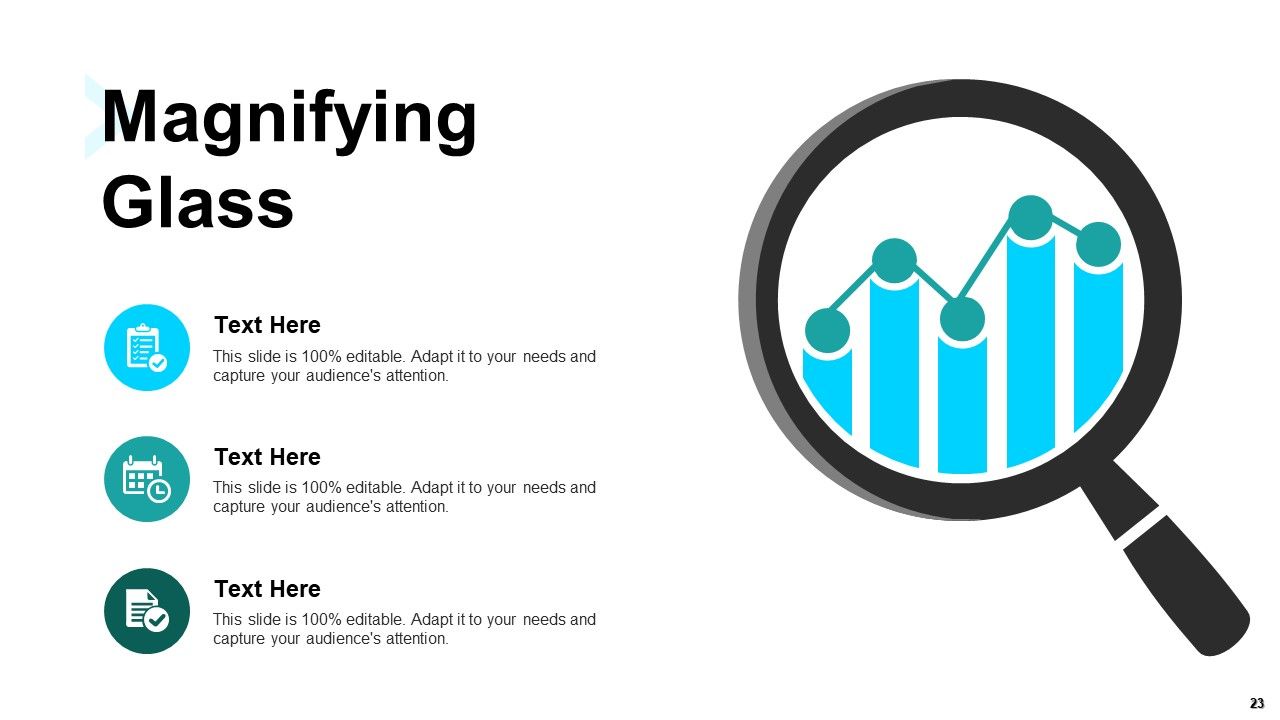
Diapositive 23 : Il s'agit d'une diapositive d'image en forme de loupe pour afficher des informations, des aspects de la portée, etc.
Diapositive 24 : Il s'agit d'une diapositive Contactez-nous avec l'adresse e-mail, le numéro de rue, la ville, l'état et les numéros de contact.
Diapositives de présentation PowerPoint sur la transformation numérique avec les 24 diapositives :
Vous avez une passion motrice pour exceller dans votre domaine. Nos diapositives de présentation PowerPoint sur la transformation numérique s'avéreront des véhicules idéaux pour vos idées.
FAQs
The core elements of digital transformation are: Digitally Modified Business, Process Digitization, Customer Understanding, Customer Touch Points, Top – Line Growth, and Performance Management.
Some common barriers to digital transformation include: lack of leadership commitment, resistance to change, outdated technology, and insufficient budget and resources.
A digital transformation roadmap typically involves the following steps: Assessment, Opportunity Scan, Re-Vision, Business Cases, Commitment, Test, Scale, Re-View, and Re-Cycle.
Some ways to achieve digital transformation include: investing in technology and infrastructure, embracing a customer-centric approach, fostering a culture of innovation, upskilling employees, and collaborating with external partners.
Some benefits of digital transformation include: improved customer satisfaction, increased sales and revenue, higher website traffic and engagement, enhanced performance management, and more efficient business processes.
No Reviews
