DISC Assessment Profile Worksheet Of An Effective Leader
Try Before you Buy Download Free Sample Product
Audience
Editable
of Time
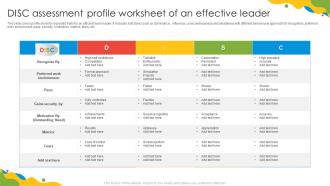
This slide covers profile sheet for expected traits for an efficient team leader. It includes trait styles such as dominance, , influence, conscientiousness and steadiness with different behavioural approach for recognition, preferred work environment, pace, security, motivation, metrics, fears, etc.
People who downloaded this PowerPoint presentation also viewed the following :
DISC Assessment Profile Worksheet Of An Effective Leader with all 6 slides:
Use our DISC Assessment Profile Worksheet Of An Effective Leader to effectively help you save your valuable time. They are readymade to fit into any presentation structure.
FAQs for DISC Assessment Profile Worksheet Of
So DISC basically measures four personality styles - Dominance, Influence, Steadiness, and Conscientiousness. D people are super direct and love getting results. I types are the social butterflies who get everyone excited. S folks really value teamwork and don't like chaos. Then you've got C types who are all about precision and doing things right. Most of us are actually a mix though, which makes total sense - like I'm probably S with some C thrown in. The whole point is figuring out your main style so you can play to your strengths and communicate better with different personality types.
DISC is honestly a game-changer for understanding your team. Like, when you realize Sarah's super direct because she's high-D and Mike needs more relationship time as a high-S, everything clicks. You stop taking their different styles personally and start working WITH them instead of against them. Tasks get assigned better, conflicts make more sense, and communication flows way smoother. I mean, some people think it's a bit corporate-y but it genuinely works. Get everyone to take the assessment first, then talk through the results together - that's where the magic happens.
So DISC is pretty straightforward once you get it. **D** types are all about getting shit done - they're direct, want control, and hate wasting time. **I** people? Total social butterflies who think out loud and get everyone pumped up. **S** folks love stability and steady progress (honestly my favorite type to work with). **C** types need all the details before they'll make any decision - super analytical. Here's the trick: just watch if someone's more people-focused or task-focused, then see if they move fast or take their time. Once you figure that out, you'll know exactly how to talk to them. Makes everything so much easier.
Don't replace your regular interviews with DISC - just add it in between your first screening and final rounds. That timing's perfect because you can actually dig into the results when you meet face-to-face. So many companies I've worked with treat these like some pass/fail test, which honestly drives me nuts. The real value is understanding how people communicate and figuring out team fit. Be upfront about why you're using it too. DISC should help you ask smarter questions, not automatically boot candidates. Think of it as getting a conversation starter, not a verdict.
Oh man, so many people get DISC wrong! They think it boxes you in forever, but your style totally shifts depending on the situation or how stressed you are. Also - and this bugs me - people assume some styles are "better" when they're literally just different ways of communicating. It's not measuring how smart you are or your actual skills either. Just behavioral stuff. Don't use it for hiring decisions though, that's not what it's for. Think of it more like a cheat sheet for figuring out how to talk to your teammates better.
So with DISC, you basically read the room first then match their vibe. D-types hate fluff - just give them the facts straight up. I-styles are the opposite, they're all about that personal connection so definitely ask about their kids or whatever. S-styles need you to slow your roll and not pressure them into anything too fast. And C-styles? They want ALL the data, so come with your spreadsheets ready lol. It's honestly pretty simple once you get the hang of spotting who's who. Just don't try to rush an S-type because that'll backfire every time.
Okay so DISC assessments basically show you why people on your team are driving each other nuts. Like, those super direct D-types? They're gonna get annoyed when you give them a 20-minute explanation for something simple. S-people need way more time to adjust to changes, while C-types want to overthink every single detail first. Once you know someone's style, you can actually work with it instead of against it. Give the D's just the main points, reassure the S's when things are changing, and throw some data at the C's - they eat that stuff up. Honestly changed how I handle disagreements at work.
Culture totally changes how DISC shows up. High D behavior might seem aggressive in Japan but normal in NYC - I found that out the awkward way with our Tokyo office! When someone takes the assessment, their cultural background affects their answers AND how others read their style. Like, people from collectivist cultures often downplay assertiveness even if they're naturally direct. Hierarchical societies? Whole different game for how people express themselves. So definitely ask your team members how their style actually plays out in their culture instead of just assuming. Makes a huge difference in getting it right.
So basically, figure out everyone's DISC style first. Your D people want tough projects and straight-up feedback - no sugarcoating. S types? They're all about steady work and team vibes. I personalities are the ones who'll literally beam when you praise them in front of others (honestly, it's pretty cute). C folks need all the details upfront and hate being rushed into decisions. Don't try to manage everyone the same way - that's where most people mess up. Once you know who's who, just tweak how you talk to them and hand out work. Makes everything so much smoother.
Start with what they already know about their style - gets them talking right away. Lead with strengths, then get specific with real examples instead of just saying "you're direct" or whatever. I've watched so many of these go wrong when people feel boxed in. Frame everything as behavioral preferences, not flaws. Show how their style actually plays out at work, then tackle blind spots carefully so they don't get defensive. Oh, and always wrap up by having them pick one thing they'll actually do differently based on their results.
Honestly? Every 2-3 years is plenty, or whenever someone switches roles big time. I retook mine after getting promoted and wow, totally different results. People change! But here's the thing - don't obsess over constant retesting. Way better to actually use what you already know about your team day-to-day. If you're suddenly having communication issues or the team vibe feels off, that's when I'd consider doing it again rather than just marking it on some calendar. The insights only work if you're applying them regularly anyway.
Oh totally! DISC works great for personal stuff too. Like, understanding why your partner drives you crazy sometimes - it's usually just clashing communication styles. I've used it to figure out family drama before, honestly pretty helpful. High-D people need different motivation than high-S types, so it helps with personal goals too. Even decision-making gets easier when you know your style. Try thinking about how your DISC type shows up in friendships or big life choices. Makes way more sense than just thinking everyone should communicate like you do.
DISC definitely has some blind spots worth knowing about. It only looks at behavior - completely ignores skills, smarts, or what actually motivates people. People can totally game it too if they figure out the "right" answers. Oh, and there's the whole cultural thing since it was basically built around Western office culture. Honestly, I'd never use it alone for hiring decisions. Way better for development stuff. Mix it with other assessments, and don't treat the results like they're set in stone - people's styles shift over time anyway. Your team needs to get that it's just one piece of the puzzle, not the whole picture.
DISC is way more workplace-focused than those other tests. Like, MBTI gets into all that cognitive function stuff and Big Five covers these huge personality dimensions, but honestly? Kind of abstract when you're dealing with actual team drama. DISC cuts straight to the practical stuff - is this person direct or more collaborative, do they focus on details or see the big picture. I've found it's the only one where you can immediately use what you learn to work better with specific people. The others are better for like, personal reflection and figuring out your career path.
Sales teams love this stuff - they're always trying to read clients better. Healthcare and tech companies use it tons too. Financial services jumped on it because their people deal with so many different personality types daily. Even manufacturing got into it recently, which surprised me honestly. Retail's big on it now since their workforce is all over the place. Really though, any company where people have to work together closely or talk to customers constantly benefits from it. I'd start with whatever department has the most drama first.
-
I am extremely pleased with these PPT slides that we used for our event. They were easy to modify and came out great in all aspects!
-
Design layout is very impressive.