Document Process Automation Powerpoint PPT Template Bundles
Try Before you Buy Download Free Sample Product
Audience
Editable
of Time
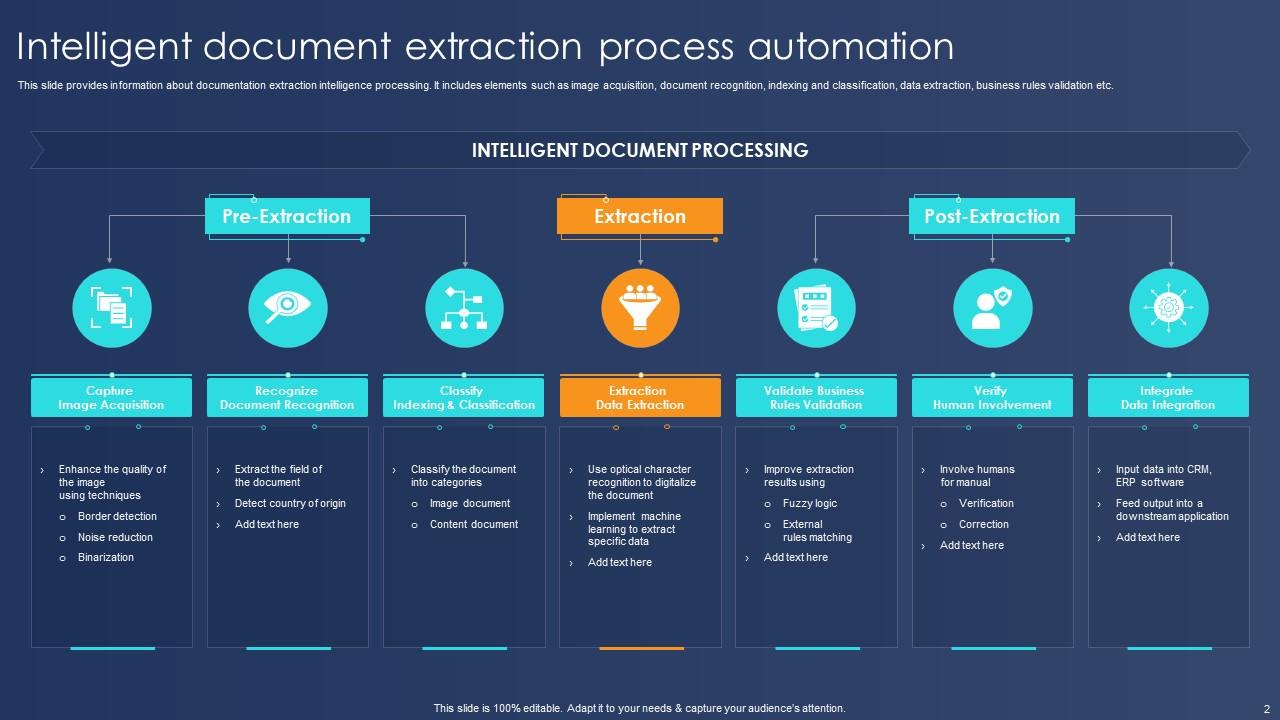
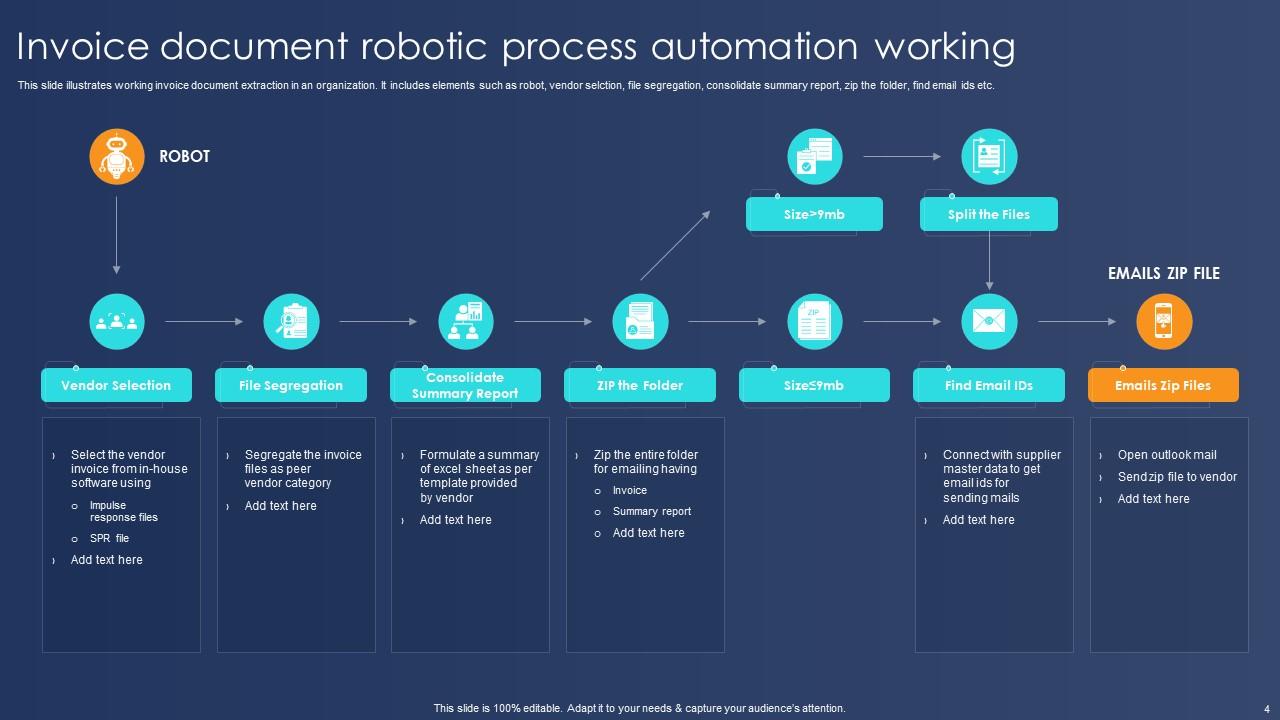
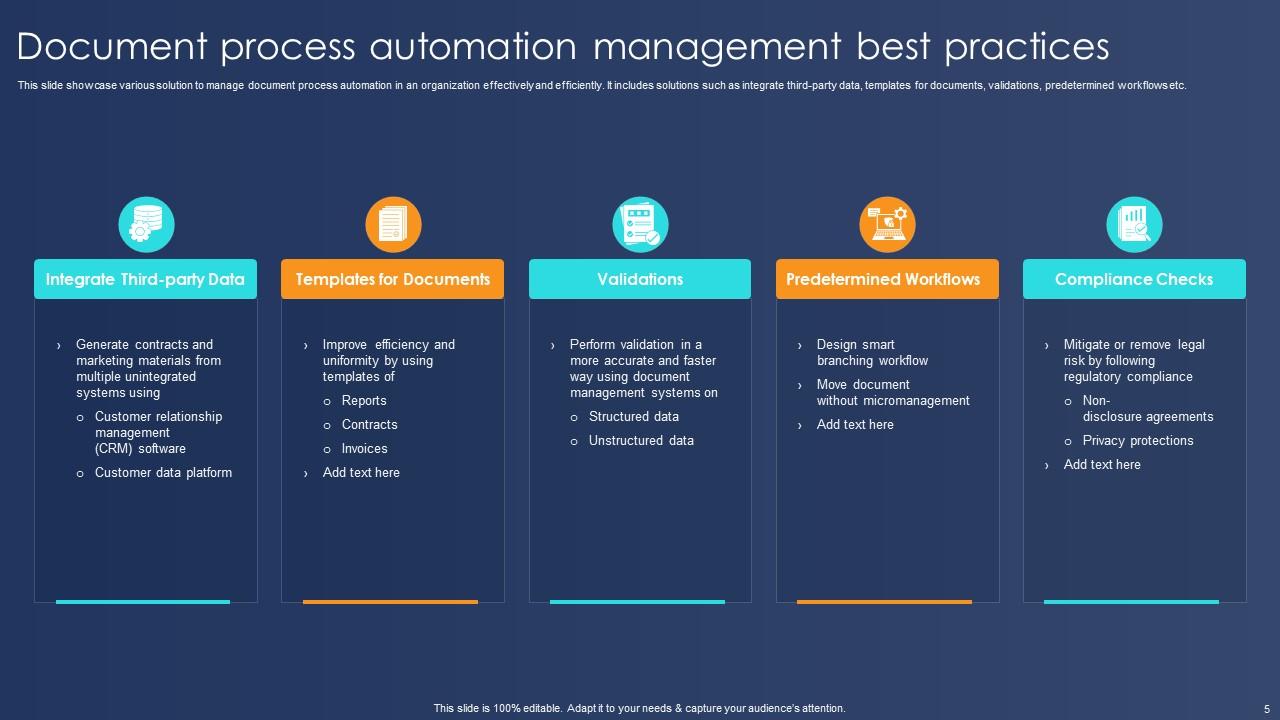
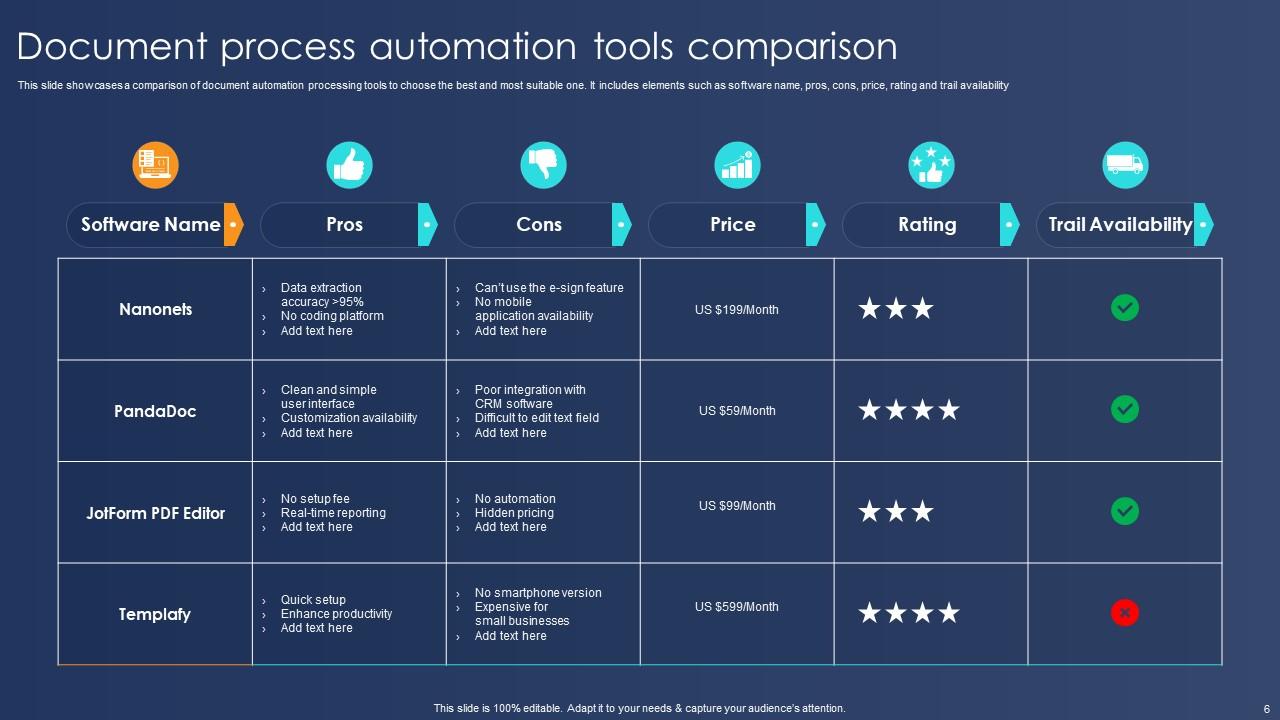
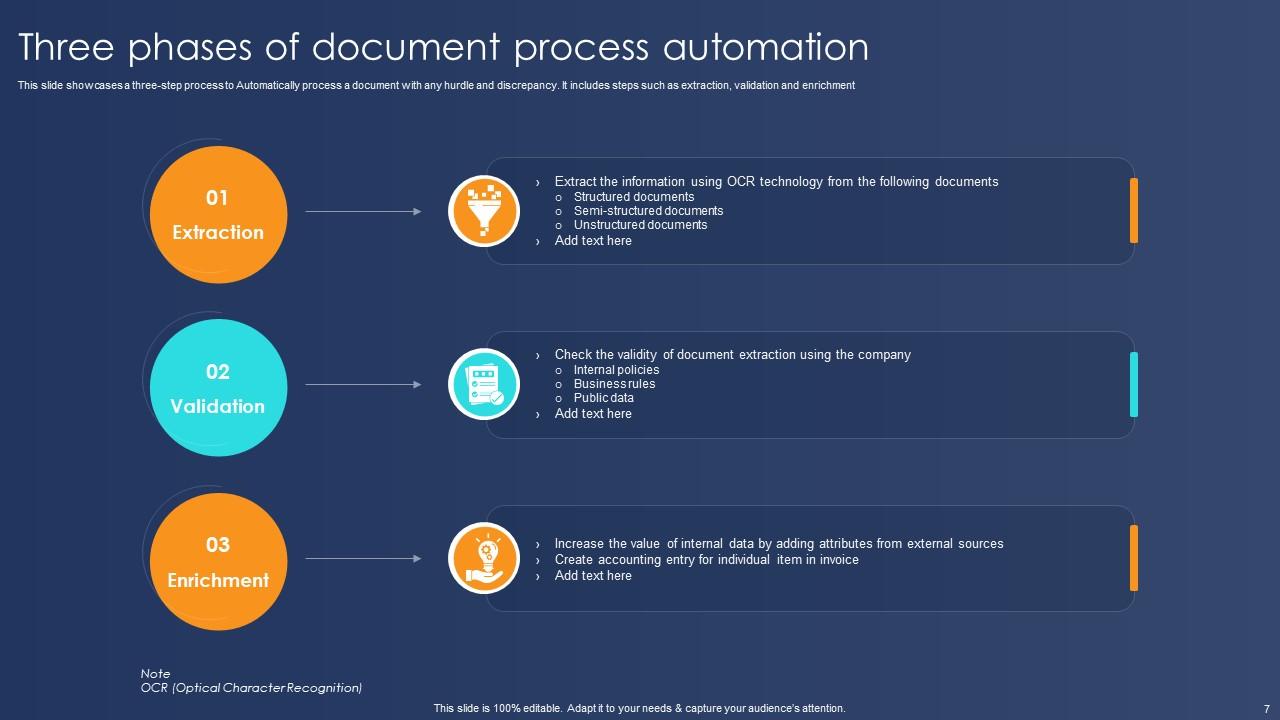
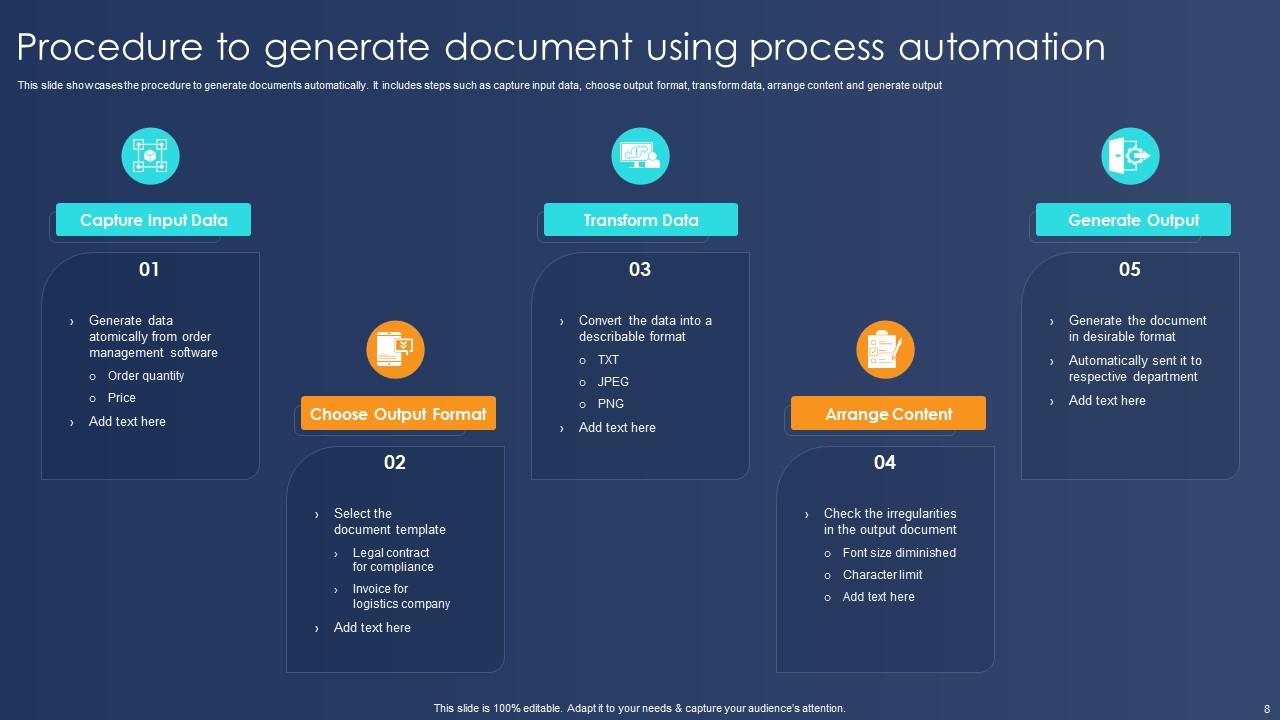
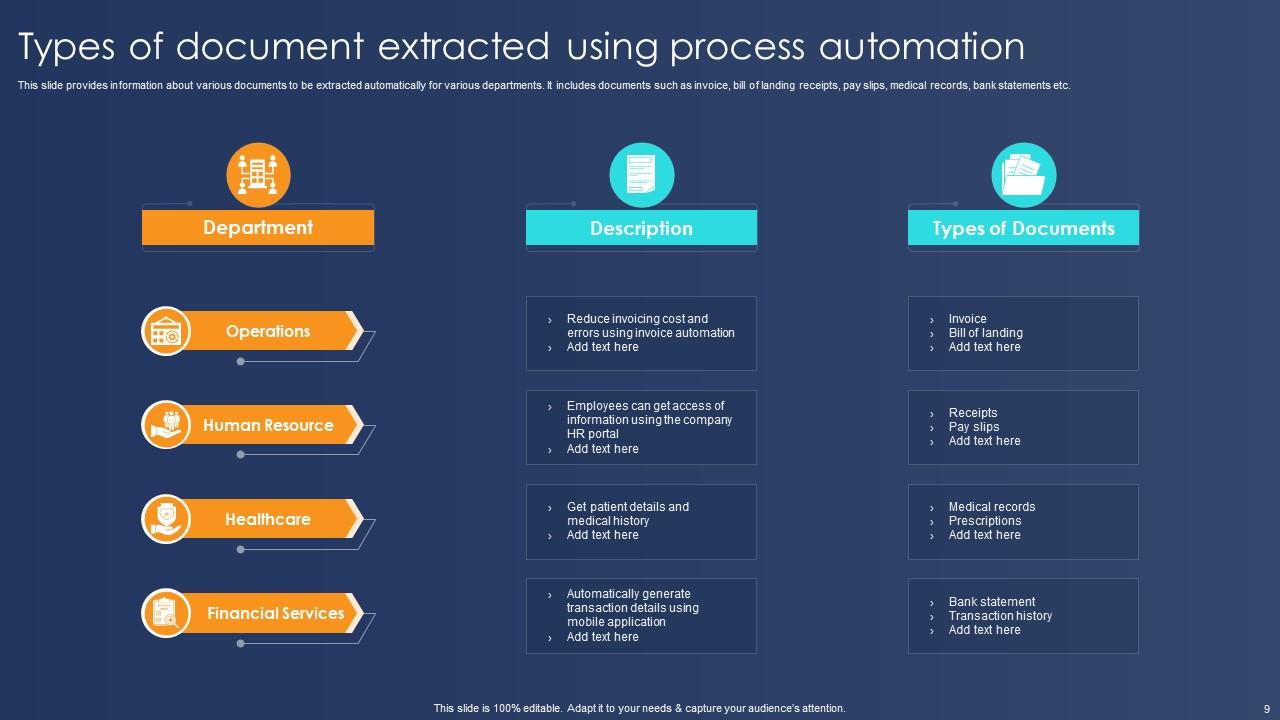
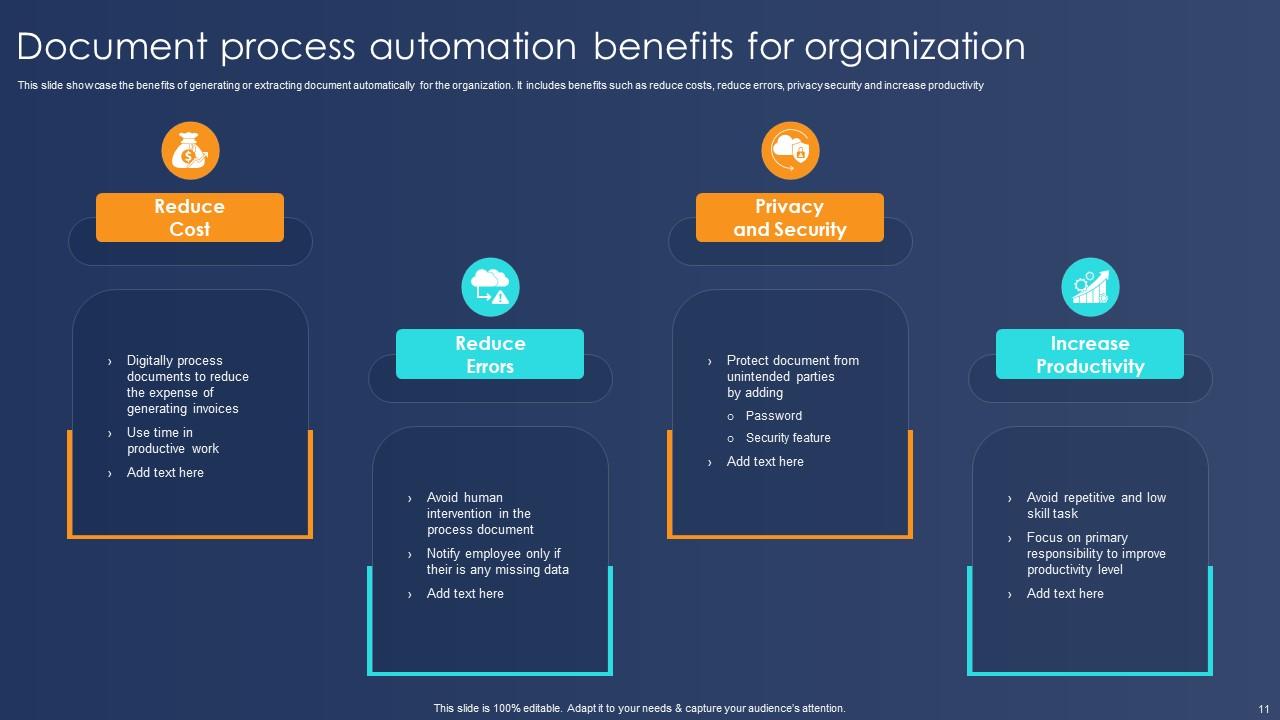
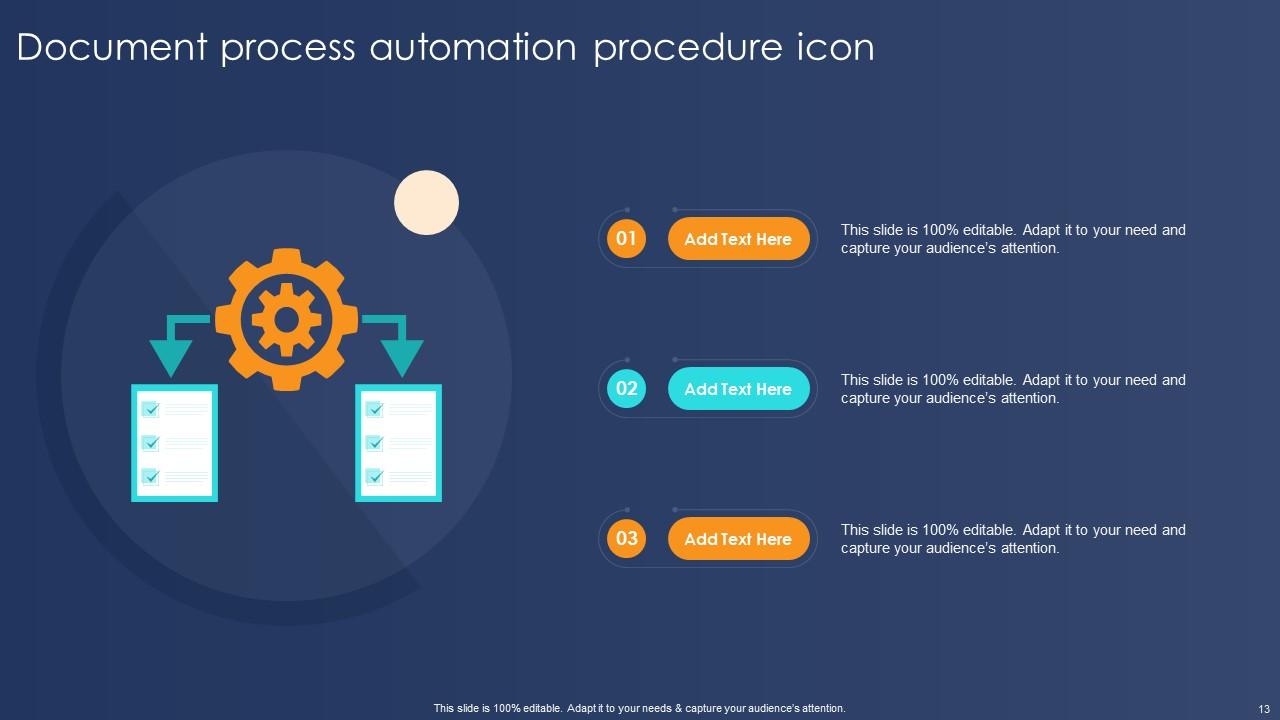
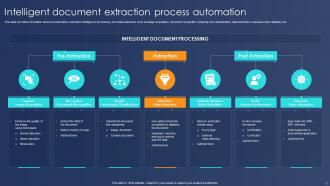
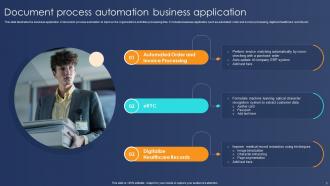
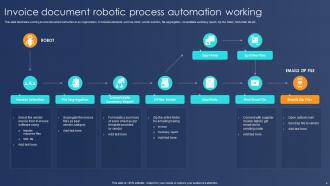
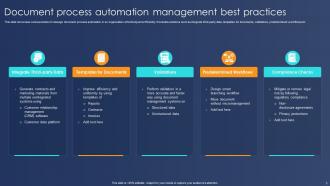
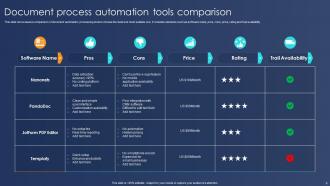
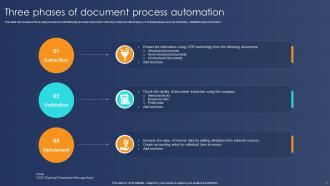
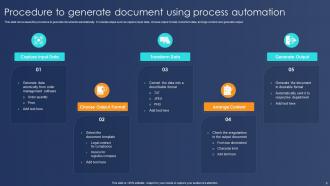
Introducing our comprehensive Document Process Automation PowerPoint PPT presentation, designed to revolutionize the way organizations handle document centric processes. This informative slide deck covers essential keywords such as Document Extraction, Invoice Automation, Document Automation, Document Robotic Process Automation, and Document Processing Tools. With visually appealing slides and concise content, our PPT offers a deep dive into the strategies and technologies involved in automating document based workflows. Whether youre a business owner, process analyst, or technology enthusiast, this resource will enhance your understanding of how document process automation can streamline operations, increase efficiency, and reduce errors. Discover the power of intelligent data extraction, automated document routing, and seamless integration with existing systems. Maximize the potential of document automation tools to transform your business processes and achieve significant time and cost savings. Empower your organization with our user friendly Document Process Automation PPT and unlock the full potential of automated document processing.
People who downloaded this PowerPoint presentation also viewed the following :
Document Process Automation Powerpoint PPT Template Bundles with all 19 slides:
Use our Document Process Automation Powerpoint PPT Template Bundles to effectively help you save your valuable time. They are readymade to fit into any presentation structure.
FAQs for Document Process Automation Powerpoint
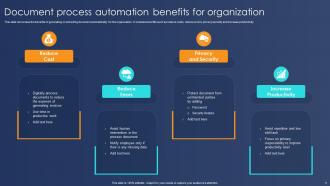
Document process automation delivers reduced processing time, enhanced accuracy, improved compliance tracking, lower operational costs, and increased employee productivity. Through intelligent workflows and digital integration, organizations streamline data extraction, minimize manual errors, and accelerate approval cycles, with many financial institutions and healthcare providers finding that automation ultimately enables faster customer service and significant resource reallocation.
Document process automation enhances compliance by standardizing workflows, maintaining detailed audit trails, and automatically applying regulatory requirements across all document handling processes. Through intelligent validation and automated checks, organizations streamline compliance reporting, minimize manual data entry errors, and ensure consistent policy enforcement, ultimately delivering greater operational accuracy and reducing costly compliance violations.
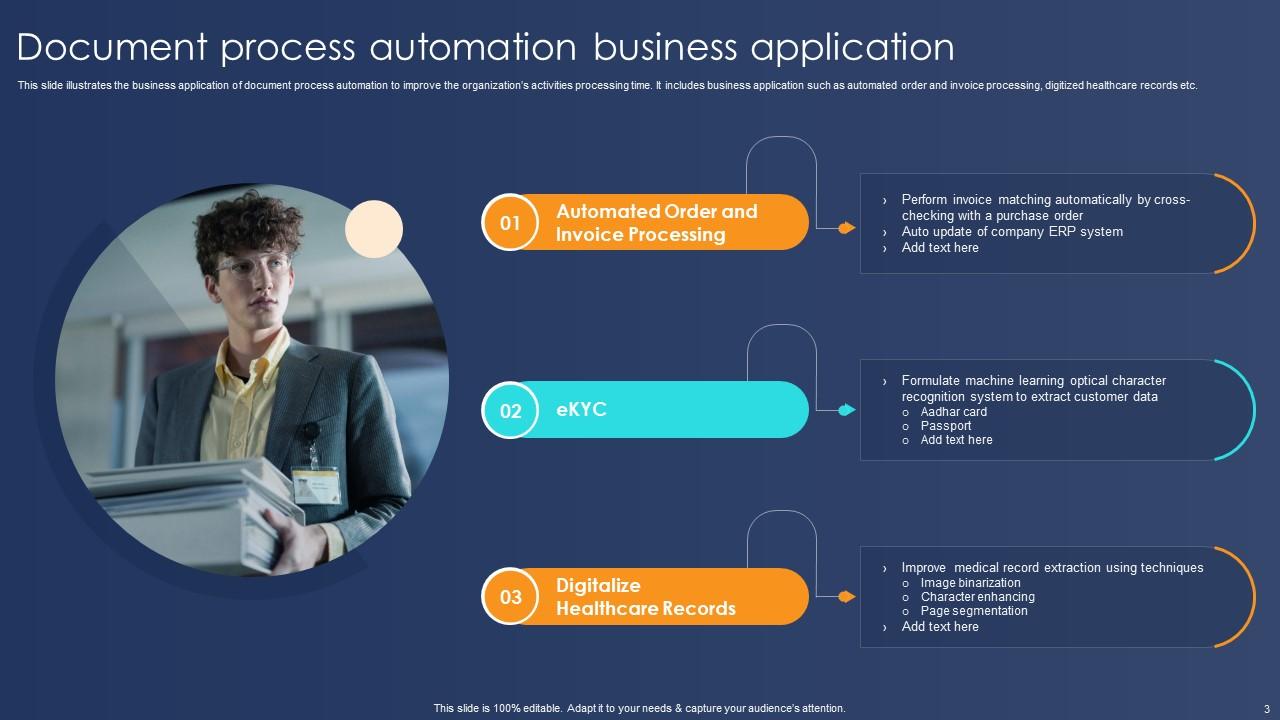
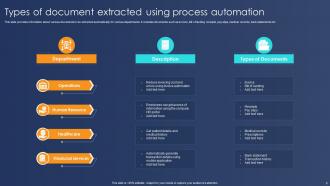
Commonly automated business documents include invoices, purchase orders, contracts, employee onboarding forms, compliance reports, customer service tickets, and insurance claims. These documents streamline operations by reducing manual data entry, accelerating approval workflows, and minimizing processing errors, with many organizations finding that automating high-volume transactional documents delivers significant cost savings and faster customer service.
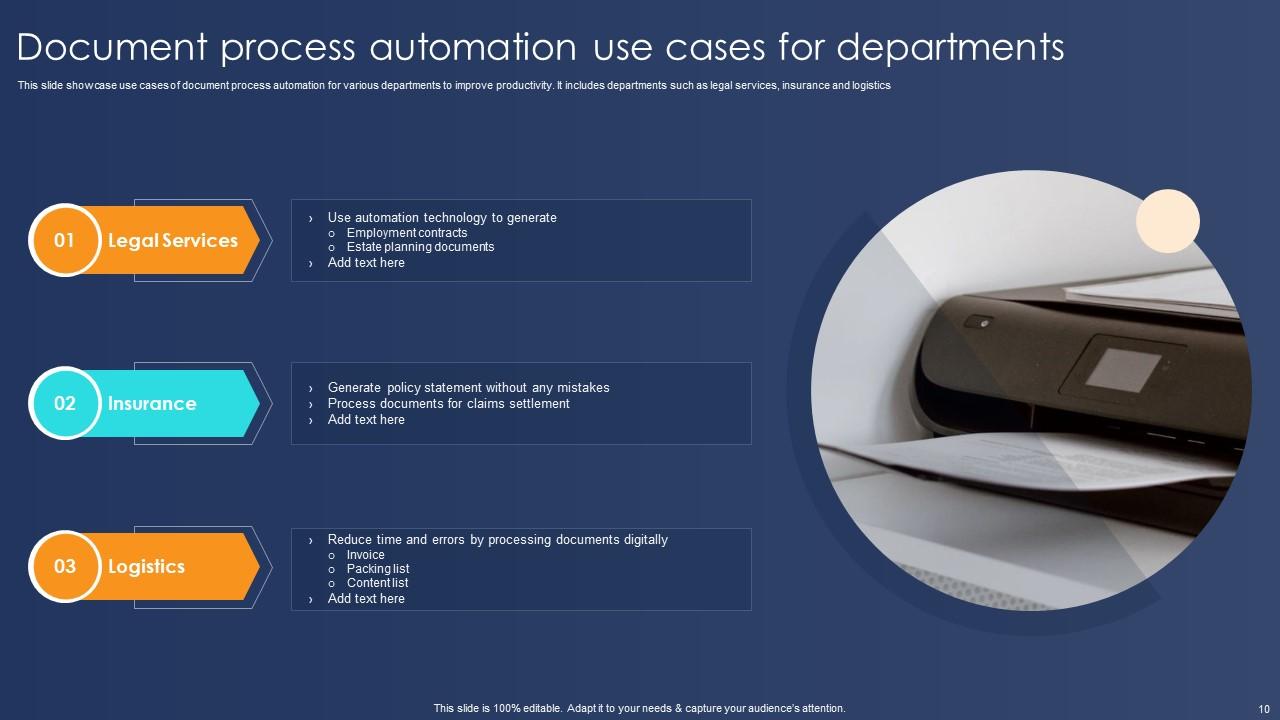
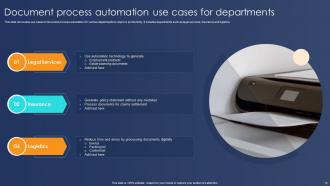
Healthcare, financial services, insurance, manufacturing, and legal sectors have successfully adopted document process automation to streamline operations and reduce manual workloads. Through automated invoice processing, claims management, and patient record handling, these industries enhance accuracy, accelerate service delivery, and achieve significant cost reductions while improving customer experiences and operational efficiency.
Machine learning enhances document process automation by enabling intelligent data extraction, automated classification, and predictive processing workflows. Through pattern recognition and natural language processing, organizations streamline invoice processing, contract analysis, and compliance documentation, while continuously improving accuracy, reducing manual intervention, and ultimately delivering faster processing times and enhanced operational efficiency.
Organizations can measure document process automation ROI through time savings analysis, cost reduction tracking, error rate improvements, employee productivity metrics, and customer satisfaction scores. By comparing pre- and post-automation benchmarks across processing speeds, labor costs, and compliance accuracy, companies typically find 30-70% efficiency gains, with financial services and healthcare organizations often seeing payback within 6-12 months through streamlined operations.
Companies transitioning to document process automation commonly face integration complexities with existing systems, employee resistance to workflow changes, data migration concerns, and initial cost investments. While these challenges require strategic planning, organizations in banking, healthcare, and manufacturing find that phased implementations, comprehensive staff training, and selecting scalable platforms ultimately deliver streamlined operations and significant efficiency gains.
Document process automation streamlines remote workflows by digitizing paper-based processes, enabling real-time collaboration, automating approvals and routing, and providing centralized document access from any location. Through cloud-based platforms, remote teams can eliminate manual handoffs, reduce processing delays, and maintain seamless coordination across time zones, ultimately delivering faster turnaround times and enhanced productivity.
Essential security measures include end-to-end encryption, role-based access controls, audit trails, secure data storage, and compliance frameworks like SOX or HIPAA. These protocols work together by protecting data in transit and at rest, tracking all document interactions, and ensuring regulatory compliance, with many financial institutions and healthcare organizations finding that comprehensive security frameworks ultimately deliver both operational efficiency and risk mitigation.
Document process automation integrates with existing enterprise systems through APIs, middleware platforms, and cloud-based connectors that enable seamless data flow between applications. These integration capabilities allow organizations to connect DPA solutions with ERP systems, CRM platforms, and databases, while maintaining existing workflows and security protocols, ultimately delivering enhanced operational efficiency and reduced manual intervention across departments.
Best practices for selecting a document process automation solution include evaluating integration capabilities, scalability requirements, security features, user interface design, and total cost of ownership. Organizations should prioritize solutions that seamlessly connect with existing systems, handle increasing document volumes, and deliver robust compliance features, with many enterprises finding that pilot testing across departments ensures optimal workflow alignment and user adoption.
Businesses ensure automated document quality through robust validation rules, automated testing protocols, continuous monitoring systems, and regular audits of output accuracy. By implementing multi-stage verification processes, organizations across sectors like banking and healthcare maintain compliance standards while reducing manual oversight, ultimately delivering consistent results and enhanced operational efficiency.
Successful document process automation adaptation requires digital literacy, workflow understanding, system-specific training, and change management skills. Through comprehensive training programs, employees develop technical proficiency with automation tools, process optimization capabilities, and collaborative problem-solving abilities, with many organizations finding that structured upskilling initiatives enhance productivity while reducing resistance to technological transformation.
Document process automation significantly reduces environmental impact by eliminating paper-based workflows, minimizing printing requirements, and streamlining digital document management across organizations. Through automated systems, companies achieve substantial cost savings, faster processing times, and enhanced operational efficiency, with many financial institutions and healthcare organizations finding that digital transformation delivers both environmental benefits and competitive advantages in an increasingly sustainability-focused business landscape.
Organizations should anticipate AI-powered intelligent document processing, blockchain-based verification systems, cloud-native automation platforms, conversational AI interfaces, and predictive analytics integration. These emerging technologies enhance accuracy through machine learning, streamline compliance workflows, and enable real-time decision-making, with many enterprises finding that early adoption delivers significant competitive advantages in operational efficiency.
-
Time saving slide with creative ideas. Help a lot in quick presentations..

-
My presentations were a bit amateur before I found SlideTeam’s designs. I’ve been able to find slides for nearly every topic I’ve had to present. Thanks, Slideteam!