


Effective Employee Engagement Initiatives For Small Business Complete Deck




Try Before you Buy Download Free Sample Product
 Impress Your
 Audience
 100%
100% Editable
 Save Hours
 of Time


Employee engagement is the participation and enthusiasm of employees towards their work and helps achieve better business outcomes. Grab our Effective employee engagement initiatives for small business template. It helps in showcasing the level of commitment employees display at work. Our Workforce participation deck covers the organizations significant challenges and issues due to disengaged employees. It includes employee engagement survey results to assess staff participation and satisfaction rate. Additionally, our Employee job satisfaction PPT highlights the critical industry stats to determine the importance of employee engagement. It will aid companies in developing an improved employee engagement action plan to achieve desired goals and objectives. Further, our Employee experience presentation offers the best strategies to improve productivity, retention, satisfaction, and participation rate. It mainly focuses on optimizing effective communication practices and employee work-life balance. The module also incorporates implementing best reward and recognition programs, compensation and benefits, training and development opportunities, etc. Lastly, our HR engagement strategies template provides various metrics to measure the impact of implementing employee engagement activities. Get access now.
People who downloaded this PowerPoint presentation also viewed the following :
Content of this Powerpoint Presentation
Slide 1: This slide introduces Effective employee engagement initiatives for small business. Commence by stating Your Company Name.
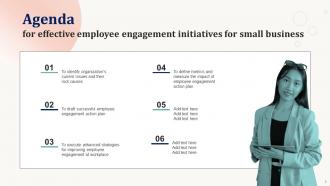
Slide 2: This slide depicts the Agenda of the presentation.
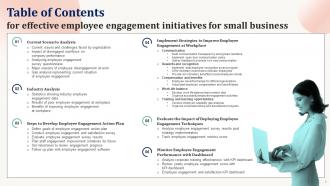
Slide 3: This slide incorporates the Table of Contents.
Slide 4: This slide highlights the Title for the Topics to be covered next.
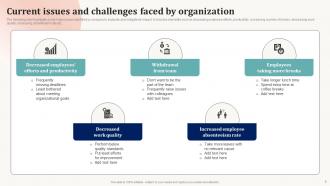
Slide 5: This slide depicts the Current issues and challenges faced by organization.
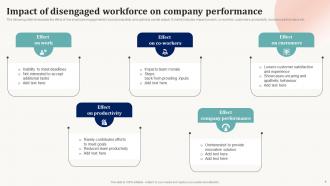
Slide 6: This slide reveals the Impact of disengaged workforce on company performance.
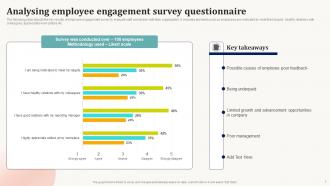
Slide 7: This slide deals with Analysing employee engagement survey questionnaire.
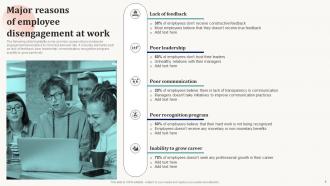
Slide 8: The following slide highlights some common causes of poor employee engagement at workplace to minimize turnover rate.
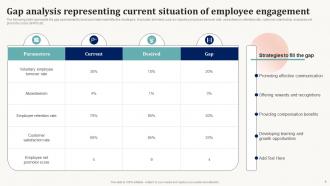
Slide 9: This slide exhibits the Gap analysis representing current situation of employee engagement.
Slide 10: This slide portrays the Heading for the Contents to be discussed further.
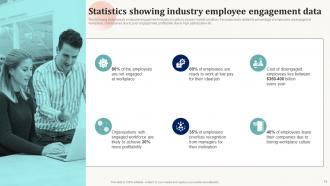
Slide 11: The following slide reveals employee engagement industry insights to assess market condition.
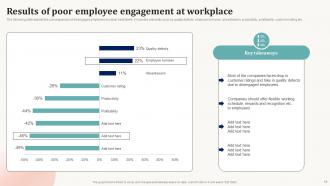
Slide 12: This slide incorporates the Results of poor employee engagement at workplace.
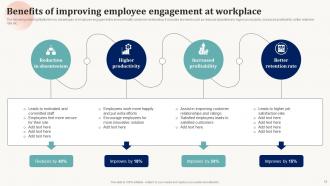
Slide 13: This slide exhibits the Benefits of improving employee engagement at workplace.
Slide 14: This slide mentions the Title for the Ideas to be covered in the following template.
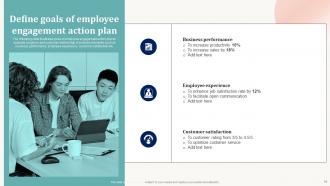
Slide 15: This slide illustrates the goals of employee engagement action plan to evaluate progress and customer relationship.
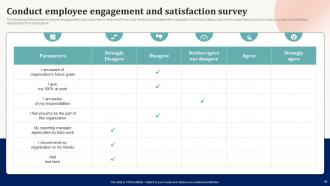
Slide 16: This slide presents the Conduct employee engagement and satisfaction survey.
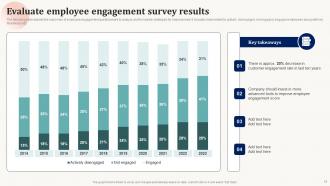
Slide 17: This slide depicts the outcomes of employee engagement questionnaire to analyze and formulate strategies for improvement.
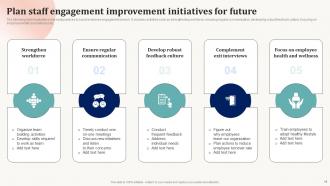
Slide 18: This slide talks about the Plan staff engagement improvement initiatives for future.
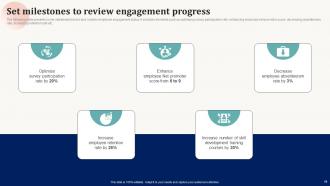
Slide 19: The following slide presents some milestones to track and monitor employee engagement status.
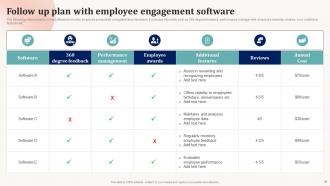
Slide 20: This slide focuses on the Follow up plan with employee engagement software.
Slide 21: This slide indicates the Heading for the Components to be discussed further.
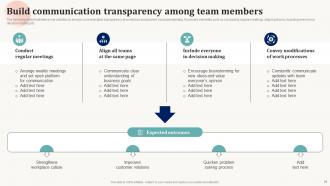
Slide 22: The following slide illustrates some activities to ensure communication transparency at workplace and prevent misunderstanding.
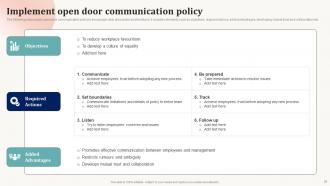
Slide 23: This slide covers open door communication policy to encourage clear discussion and feedback.
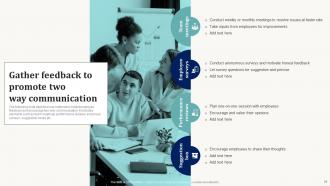
Slide 24: The following slide depicts some methods to collect employee feedback and encourage two-way communication.
Slide 25: This slide elucidates the Title for the Contents to be covered in the forth-coming template.
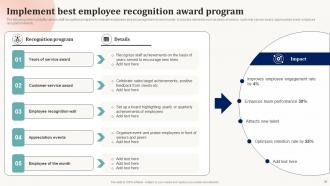
Slide 26: This slide highlights various staff recognition programs to motivate employees and encourage them to work harder.
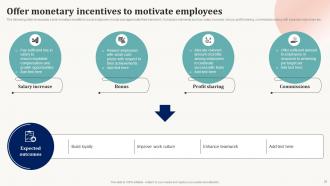
Slide 27: This slide showcases some monetary benefits to boost employee morale and appreciate their hard work.
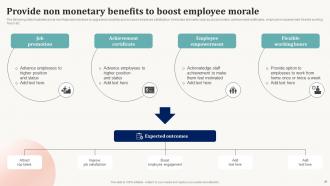
Slide 28: This slide illustrates some non-financial incentives to upgrade productivity and increase employee satisfaction.
Slide 29: This slide depicts the Heading for the Topics to be covered further.
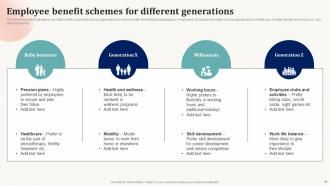
Slide 30: This slide deals with the Employee benefit schemes for different generations.
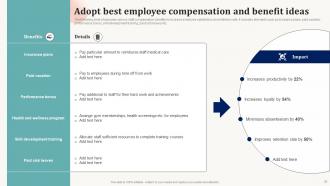
Slide 31: This slide states the various staff compensation benefits to increase employee satisfaction and retention rate.
Slide 32: This slide incorporates the Title for the Ideas to be discussed in the upcoming template.
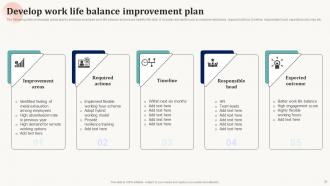
Slide 33: The following slide highlights the action plan to enhance employee work life balance and ensure healthy life style.
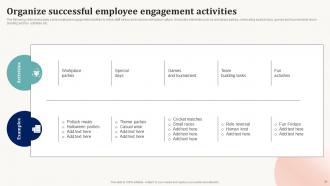
Slide 34: This slide indicates some employee engagement activities to relive staff stress and improve workplace culture.
Slide 35: This slide displays the Heading for the Ideas to be covered in the following template.
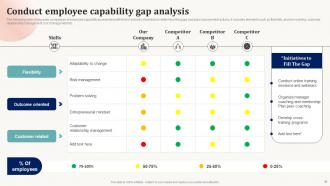
Slide 36: The following slide showcases comparison of employee capability assessment with that of industry standards to determine the gaps and plan improvement actions.
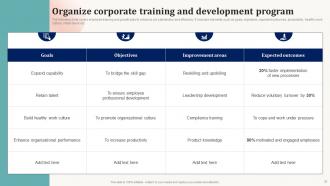
Slide 37: This slide covers the employee training and growth plan to enhance job satisfaction and efficiency.
Slide 38: This slide reveals the Title for the Components to be discussed further.
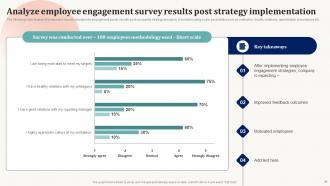
Slide 39: The following slide displays the expected results of employee engagement survey results post successful strategy execution.
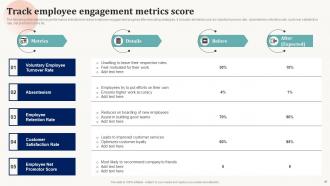
Slide 40: This slide shows the key performance indicators to review employee engagement progress after executing strategies.
Slide 41: This slide contains the Heading for the Topics to be covered further.
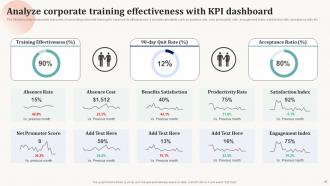
Slide 42: The following slide showcases outcomes of conducting corporate trainings to measure its effectiveness.
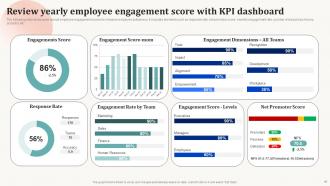
Slide 43: This slide showcases the annual employee engagement scores to measure employee activeness.
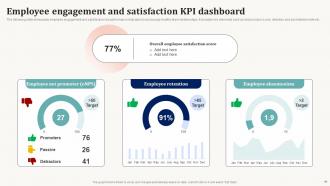
Slide 44: This slide reveals the Employee engagement and satisfaction KPI dashboard.
Slide 45: This is the Icons slide containing all the Icons used in the plan.
Slide 46: This slide is used for showing some Additional information.
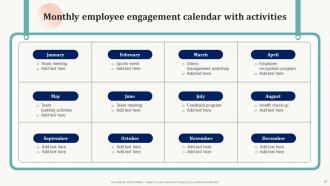
Slide 47: This slide provides information about the Monthly employee engagement calendar with activities.
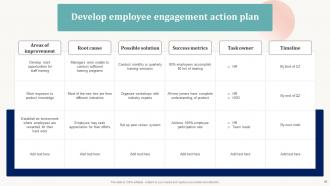
Slide 48: This slide focuses on the Development of employee engagement action plan.
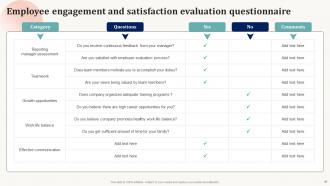
Slide 49: This slide outlines the Employee engagement and satisfaction evaluation questionnaire.
Slide 50: This slide represents the Doughnut chart with related imagery.
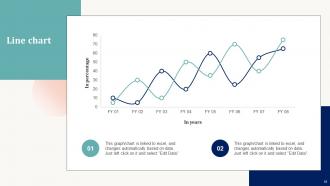
Slide 51: This slide shows the Line chart.
Slide 52: This slide indicates the Clustered column with line.
Slide 53: This is the About us slide for showcasing the Company information.
Slide 54: This is Meet our team slide. State the information related to your team members here.
Slide 55: This is the 30 60 90 Days plan slide for effective planning.
Slide 56: This slide incorporates the firm's Vision, mission, and goals.
Slide 57: This slide is used for the purpose of Comparison.
Slide 58: This slide exhibits information related to the Financial topic.
Slide 59: This slide presents the organization's Mind map.
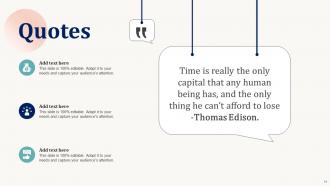
Slide 60: This is the Quotes slide for motivation.
Slide 61: This slide depicts the Company Location across the globe.
Slide 62: This slide contains the Post it notes for reminders and deadines.
Slide 63: This slide illustrates the Circular process.
Slide 64: This slide presents the SWOT analysis.
Slide 65: This is the Venn diagram slide.
Slide 66: This is the Idea generation slide for encouraging fresh ideas.
Slide 67: This slide elucidates the Timeline process.
Slide 68: This is Our target slide. Mention your firm's targets here.
Slide 69: This is the Puzzle diagram slide.
Slide 70: This is the Thank You slide for acknowledgement.
Effective Employee Engagement Initiatives For Small Business Complete Deck with all 62 slides:
Use our Effective Employee Engagement Initiatives For Small Business Complete Deck to effectively help you save your valuable time. They are readymade to fit into any presentation structure.










FAQs for Effective Employee Engagement Initiatives For Small
Key indicators of effective employee engagement include high retention rates, consistent productivity levels, active participation in company initiatives, positive feedback scores, and strong internal communication patterns. These metrics work together by reflecting employee satisfaction, commitment to organizational goals, and willingness to contribute beyond basic requirements, with many organizations finding that engaged employees ultimately deliver improved customer experiences and enhanced competitive advantage.
Leadership significantly influences employee engagement through transparent communication, active listening, regular feedback, consistent messaging, and approachable dialogue styles that build trust and clarity. When leaders adopt open communication practices, they create environments where employees feel valued and informed, ultimately fostering stronger commitment, improved performance, and enhanced organizational loyalty across all departments.
Organizational culture serves as the foundation for employee engagement by establishing shared values, communication practices, trust levels, and recognition systems that directly impact motivation. A positive culture creates psychological safety, career development opportunities, and meaningful connections between individual contributions and company mission, with organizations like Southwest Airlines and Google demonstrating how strong cultures drive exceptional engagement and retention.
Effective feedback and recognition programs enhance employee engagement through regular one-on-one check-ins, peer-to-peer recognition platforms, milestone celebrations, performance-based rewards, and transparent goal-setting processes. These structured approaches streamline communication between managers and teams while delivering personalized acknowledgment, with many organizations finding that consistent, meaningful recognition ultimately drives higher retention rates and improved productivity across departments.
Innovative strategies for remote teams include virtual coffee chats, gamified project management, cross-departmental collaboration sessions, mentorship programs, and interactive skill-sharing workshops. These approaches enhance engagement by fostering personal connections, creating friendly competition, and enabling continuous learning, with many organizations finding that strategic combination of social interaction and professional development ultimately delivers higher productivity and employee satisfaction.
Career development opportunities significantly enhance employee engagement by providing clear advancement pathways, skill-building programs, mentorship initiatives, and leadership training that demonstrate organizational investment in individual growth. Companies offering structured development programs, particularly in sectors like technology and healthcare, experience higher retention rates, increased productivity, and stronger employee loyalty, ultimately reducing recruitment costs while building more capable, motivated teams.
Employee engagement can be measured through pulse surveys, performance metrics, retention rates, productivity indicators, and 360-degree feedback systems tailored to industry-specific requirements. While healthcare organizations track patient satisfaction scores alongside employee metrics, retail companies monitor customer service ratings and sales performance, with many finding that combining quantitative data with qualitative insights delivers more accurate engagement assessments.
Employee engagement initiatives can be customized through flexible communication channels, varied recognition programs, multigenerational learning approaches, diverse mentorship structures, and culturally inclusive wellness offerings. Organizations across healthcare, technology, and financial services increasingly tailor benefits packages, career development paths, and feedback mechanisms to different age groups, cultural backgrounds, and work preferences, ultimately enhancing retention and productivity.
Best practices for conducting employee engagement surveys include ensuring anonymity, using clear and relevant questions, timing surveys strategically, communicating purpose transparently, and selecting appropriate frequency intervals. Analysis involves segmenting responses by department and demographics, identifying key trend patterns, benchmarking against industry standards, and creating actionable improvement plans, with many organizations finding that combining quantitative metrics with qualitative feedback ultimately delivers deeper insights and more targeted engagement strategies.
Aligning individual goals with organizational objectives significantly enhances engagement by creating shared purpose, increasing motivation, and fostering personal investment in company success. Through strategic goal-setting frameworks, employees across industries like healthcare, financial services, and manufacturing experience greater job satisfaction, improved performance metrics, and stronger commitment to organizational outcomes, ultimately delivering enhanced productivity and retention rates.
Workplace environment and design significantly influence employee engagement by affecting productivity, collaboration, and overall job satisfaction through thoughtful space planning, ergonomic considerations, and cultural elements. Well-designed offices with open collaboration areas, quiet focus zones, and comfortable amenities enhance employee morale and retention, with many organizations finding that strategic workplace investments ultimately deliver improved performance and competitive advantage.
Managers can be trained through engagement assessment workshops, active listening techniques, regular feedback sessions, recognition program development, and data-driven performance analysis. These training approaches enable leaders to identify disengagement signals, conduct meaningful one-on-ones, and implement targeted retention strategies, with many organizations finding that trained managers significantly enhance team productivity and reduce turnover rates.
Organizations can leverage employee engagement platforms, pulse survey tools, internal communication apps, recognition and rewards software, and learning management systems. These technologies streamline feedback collection, enhance transparent communication, and automate recognition programs, with many companies finding that integrated digital solutions deliver improved employee satisfaction, reduced turnover, and ultimately stronger organizational performance.
Storytelling enhances employee engagement by creating emotional connections, communicating company values through relatable narratives, and making abstract concepts memorable through personal experiences. Organizations across industries use storytelling in onboarding, leadership communications, and recognition programs, with many companies finding that authentic narratives increase retention, strengthen culture alignment, and ultimately deliver higher productivity and workplace satisfaction.
Common pitfalls include lack of leadership commitment, one-size-fits-all approaches, focusing on surveys without action, inadequate communication, and treating engagement as a one-time initiative rather than ongoing culture. Organizations often struggle with insufficient budget allocation, ignoring diverse workforce needs, and failing to measure meaningful outcomes, with many companies finding that superficial programs actually decrease trust and morale.
-
A perfect platform for all your presentation needs. Unlimited products at an affordable price.
-
I loved the hassle-free signup process. A few minutes and, I had this giant collection of beautiful designs.