


Electrical Engineering Company Profile Powerpoint Presentation Slides CP CD V




Try Before you Buy Download Free Sample Product
 Impress Your
 Audience
 100%
100% Editable
 Save Hours
 of Time


Our Electrical Engineering Company Profile Powerpoint Presentation Slides CP CD V are topically designed to provide an attractive backdrop to any subject. Use them to look like a presentation pro.
People who downloaded this PowerPoint presentation also viewed the following :
Content of this Powerpoint Presentation
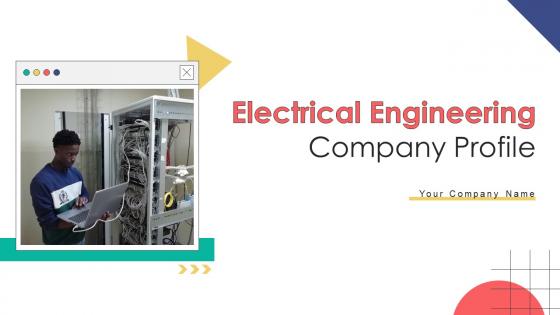
Slide 1: This slide introduces Electrical Engineering Company Profile. State your company name and begin.
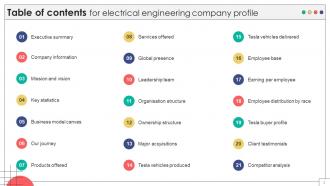
Slide 2: This slide shows Table of Content for the presentation.
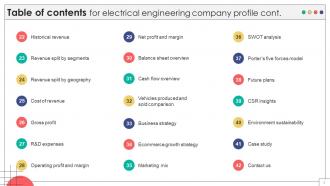
Slide 3: This slide continues showing Table of Content for the presentation.
Slide 4: This slide provides executive summary of tesla company which present company overview, products offered, key statistics, store around globe, and subsidiaries.
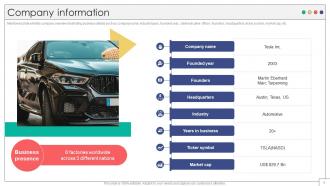
Slide 5: This slide exhibits company overview illustrating business details such as company name, industry types, founded year, chief executive officer, founders etc.
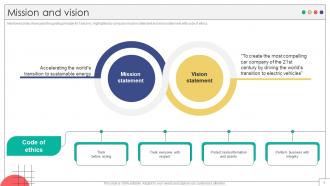
Slide 6: This slide showcases the guiding principle for Tesla Inc. highlighted by company mission statement and vision statement with code of ethics.
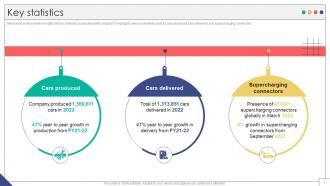
Slide 7: This slide provides insights into key statistics associated with company. It highlights various elements such as cars produced, cars delivered, and supercharging connectors.
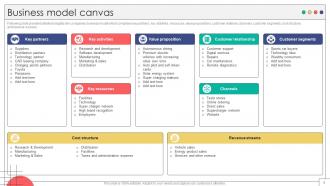
Slide 8: This slide displays detailed insights into companies business model which comprises key partners, key activities, resources, value propositions etc.
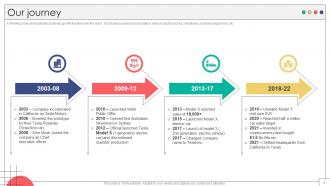
Slide 9: This slide demonstrates business growth timeline over the years. It includes business incorporation, new product launches, milestones, business expansion, etc.
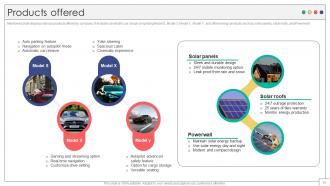
Slide 10: This slide displays various products offered by company. It includes an electric car range comprising Model S, Model 3, Model X, Model Y etc.
Slide 11: This slide provides information about various services provided by company to customers. It includes services such as financial services, after sales services etc.
Slide 12: This slide presents information about company presence across global. It highlights business headquarters, number of stores worldwide, etc.
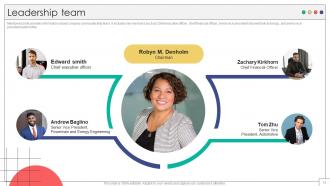
Slide 13: This slide provides information about company core leadership team. It includes key members such as Chief executive officer, chief financial officer etc.
Slide 14: This slide showcases tesla company organization chart. It includes key members such as chairman, CEO, CFO, CTO, Chief accounting officer etc.
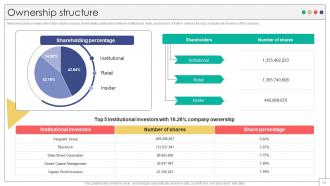
Slide 15: This slide provides information about company shareholding distribution between institutional, retail, and insiders.
Slide 16: This slide displays information about various companies acquired by tesla in recent years. It includes key points such as year of acquisition, acquiring amount etc.
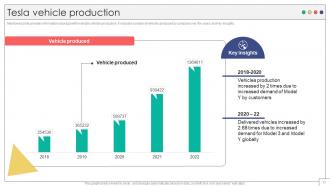
Slide 17: This slide provides information about growth in electric vehicle production. It includes number of vehicles produced by company over the years and key insights.
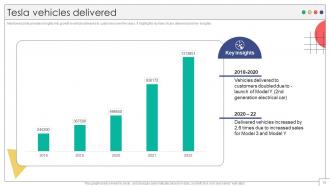
Slide 18: This slide displays insights into growth in vehicle delivered to customers over the years. It highlights number of cars delivered and key insights.
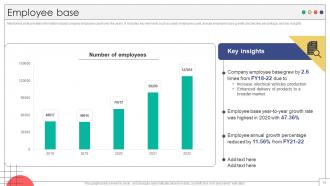
Slide 19: This slide provides information about company employee count over the years. It includes key elements such as yearly employee count, annual employee base growth etc.
Slide 20: This slide includes information about revenue earned by every employee. It includes key components such as revenue in US dollars and years.
Slide 21: This slide provides insights into Tesla company employee diversity statistics. It includes various communities such as white, American India etc.
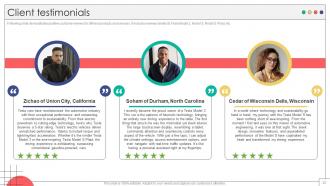
Slide 22: This slide demonstrates positive customer reviews for offered products and services. It includes reviews related to Tesla Model 3, Model S, Model S Plaid, etc.
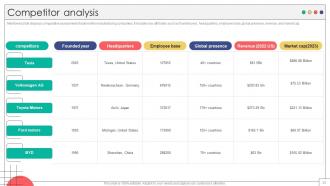
Slide 23: This slide displays comparative assessment of automotive manufacturing companies. It includes key attributes such as founded year, headquarters etc.
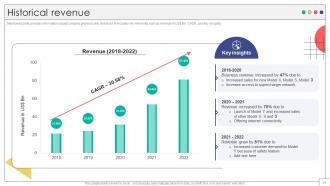
Slide 24: This slide provides information about company previous year revenues. It includes key elements such as revenue in US$ Bn, CAGR, and key insights.
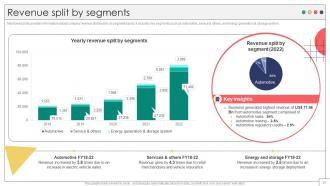
Slide 25: This slide presents information about company revenue distribution on segment bases. It includes key segments such as automotive, service & others etc.
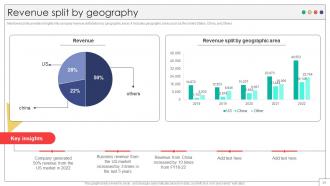
Slide 26: This slide provides insights into company revenue distribution by geographic areas. It includes geographic areas such as the United States, China, and Others.
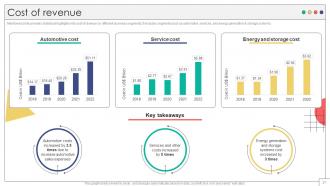
Slide 27: This slide illustrates statistical highlights into cost of revenue by different business segments. It includes segments such as automotive, services etc.
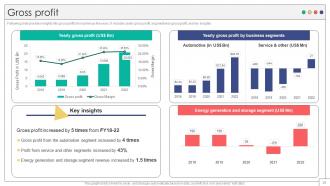
Slide 28: This slide provides insights into gross profits from previous five years. It includes yearly gross profit, segment wise gross profit, and key insights.
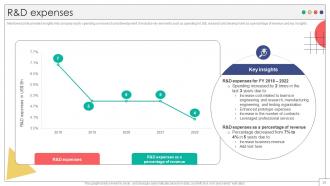
Slide 29: This slide displays insights into company yearly spending on research and development. It includes key elements such as spending in US$ etc.
Slide 30: This slide demonstrates company operating profit growth over the last 5 years. It includes operating profit in US$ Bn, operating margin, and key insights.
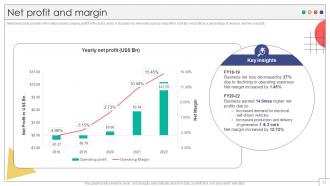
Slide 31: This slide provides information about company profit for the last 5 years. It includes key elements such as net profit in US$ Bn, net profit as a percentage of revenue etc.
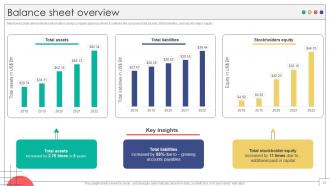
Slide 32: This slide demonstrates information about company balance sheet. It outlines the company total assets, total liabilities, and stockholders’ equity.
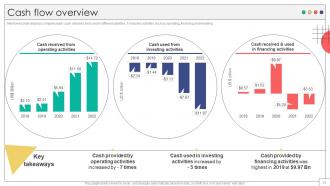
Slide 33: This slide displays company yearly cash obtained and used in different activities. It includes activities such as operating, financing and investing.
Slide 34: This slide displays comparative analysis of automotive companies In the basis of vehicles produced and delivered to customers in 2022.
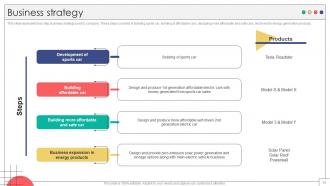
Slide 35: This slide represents four step business strategy used by company. These steps consists of building sports car, building of affordable cars etc.
Slide 36: This slide provides information about ecommerce growth tactics of company. It includes tactics such as ERP software development switch to an online sales model etc.
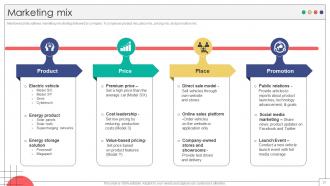
Slide 37: This slide outlines marketing mix strategy followed by company. It comprises product mix, place mix, pricing mix, and promotion mix.
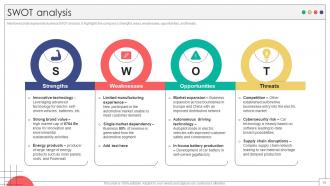
Slide 38: This slide represents business SWOT analysis. It highlights the company’s strengths areas, weaknesses, opportunities, and threats.
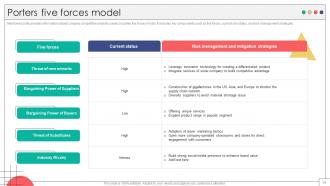
Slide 39: This slide provides information about company competitive analysis based on porter five forces model.
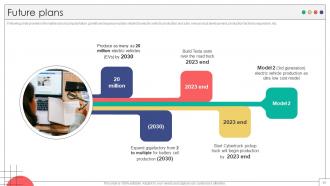
Slide 40: This slide displays information about company future growth and expansion plans related to electric vehicle production and sale, new product development etc.
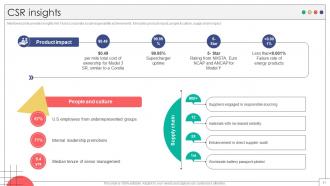
Slide 41: This slide provides insights into Tesla’s corporate social responsibility achievements. It includes product impact, people & culture, supply chain impact etc.
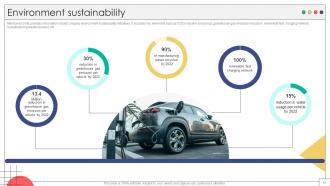
Slide 42: This slide displays information about company environment sustainability initiatives. It includes key elements such as CO2 emission avoidance etc.
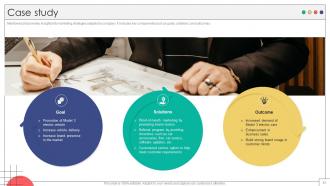
Slide 43: This slide provides insights into marketing strategies adopted by company. It includes key components such as goals, solutions, and outcomes.
Slide 44: This is a Contact Us slide to show company's contact information.
Slide 45: This slide shows all the icons included in the presentation.
Slide 46: This slide is titled as Additional Slides for moving forward.
Slide 47: This is a Timeline slide. Show data related to time intervals here.
Slide 48: This slide contains Puzzle with related icons and text.
Slide 49: This slide shows Post It Notes for reminders and deadlines. Post your important notes here.
Slide 50: This is Our Target slide. State your targets here.
Slide 51: This slide is titled as Additional Slides for moving forward.
Slide 52: This slide depicts Venn diagram with text boxes.
Slide 53: This is a Thank You slide with address, contact numbers and email address.
Electrical Engineering Company Profile Powerpoint Presentation Slides CP CD V with all 61 slides:
Use our Electrical Engineering Company Profile Powerpoint Presentation Slides CP CD V to effectively help you save your valuable time. They are readymade to fit into any presentation structure.


















FAQs for Electrical Engineering Company Profile Powerpoint Presentation Slides
Hey! Most electrical engineering companies do power system design, commercial/industrial building installations, and automation stuff. They also handle maintenance and troubleshooting when things go wrong. Solar projects are becoming huge now - seems like everyone's getting into renewables. Oh, and they deal with all the boring compliance and safety audit stuff too, which honestly is probably more important than it sounds. If you're hiring one, definitely check their certifications first. That matters way more than you'd think depending on what you need done.
Dude, we basically bake sustainability into everything from the start - LED retrofits, solar installs, smart building systems. The automation stuff alone cuts energy use by like 30-40%, which is wild. Clients are obsessed with the cost savings (honestly, sometimes more than the environmental stuff). We stick to equipment that'll last forever and materials you can actually recycle. Oh, and if you're starting a new project? Hit me up about the sustainability checklist - I've got it memorized at this point but it seriously makes a difference.
So we work with three main types of clients - manufacturing, healthcare, and commercial real estate. Most of our projects are factory automation, hospital electrical work, and office buildings. Healthcare honestly pays the best since those jobs are super complex and they can't really wait around when something breaks. Manufacturing companies are pretty picky about price but they keep coming back. Commercial stuff is all over the place depending how the market's doing. Oh, and if you're trying to figure out where to focus your sales efforts? I'd definitely hit up hospitals and medical facilities first - they always need electrical work done ASAP.
Honestly, the smart grid stuff we're doing now is pretty wild - everything's connected and the monitoring systems can actually predict when something's gonna fail. Drones have been huge for inspections too, way faster than climbing around massive installations. We're doing tons of solar and wind integration, plus all the EV charging stations everyone wants now. Oh and the energy storage work is picking up like crazy. Power management software has gotten so much better at this stuff. If you need specifics for your project just text me and I'll hook you up with whoever knows that area best.
So we're pretty strict about electrical safety - no getting around it. Every project hits mandatory safety reviews at different stages, and certified inspectors check that everything's up to NEC, OSHA, and local codes before installation. The paperwork's honestly brutal at first, but it's saved our butts so many times. All field staff do annual safety training too, plus we document everything. Oh, and definitely check that compliance checklist in your project folder when you start - it breaks down exactly which inspections and certs you'll need. Trust me on that one.
Look, here's how we actually handle timelines - we break everything into phases with built-in buffer time because stuff always comes up. You'll get updates through our project portal constantly. Our project managers are kind of nuts about planning ahead and spotting problems early, which honestly works out great for everyone. Most electrical jobs finish 5-10% early since we expect the unexpected. The weird thing is you can actually trust our dates. If anything changes, you'll know right away instead of us calling the night before going "oops, we need three more days."
Honestly, you guys have crushed some major projects. The downtown metro power grid thing was huge - totally transformed that whole area. Then there's the solar farm for the tech campus, which was actually pretty cool to see come together. That hospital backup generator project though? What a pain with all the red tape, but somehow you made it work. Those three really show off what you can do with big infrastructure and clean energy stuff. Definitely worth looking at the case studies in your project gallery - they get into all the nitty-gritty details about how you solved the tricky parts.
So they've got three big R&D areas: smart grid tech, renewable energy integration, and IoT electrical components. Smart grid is where they really kill it - perfect for your automation background honestly. They're pouring money into solar/wind integration too, plus these cool sensors that predict when equipment's about to fail. Pretty neat stuff. They reinvest like 15% of revenue back into R&D each year, which is solid. Oh and grab their quarterly R&D reports if you want all the nitty-gritty details.
So we do a bunch of stuff that actually works pretty well. Cross-functional teams are huge here - hardware, software, and systems people work together from the start instead of that weird silo thing. Weekly brown bag sessions are honestly where the magic happens - people just chat about their projects over lunch and boom, best ideas ever. Oh, and there's shared digital workspaces plus quarterly hackathons that totally shake up normal team dynamics. Start with those lunch sessions though, that's my vote.
Client feedback is like your north star - tells you if you're actually nailing it or completely off track. We build feedback loops into every project phase, from early design stuff to those follow-up calls after installation. Some of our coolest innovations honestly came from clients calling out problems we totally missed. Their input helps us tweak our approach and catch issues before they turn into budget nightmares. Oh, and here's the thing - ask for specific feedback instead of just "how's it going?" You'll get way better info that you can actually use.
So we do a bunch of stuff to stay current. Engineers hit up conferences like IEEE events, and we're members of the major electrical engineering associations. Honestly, the team leads are kind of addicted to industry publications and tech blogs - which is great for the rest of us. There's also webinars and online forums where people actually talk through real problems, not just theory. Oh, and our university partnerships are clutch for getting early looks at new research. Bottom line is you'll have access to all the latest standards and tech through our knowledge-sharing sessions and resource library.
Hey! So the training here is actually pretty decent. You can get certified in electrical stuff, project management, plus there's mandatory safety training every year. Tuition reimbursement exists too, though honestly the approval takes forever sometimes. Most teams do monthly lunch-and-learns where the senior engineers basically show off new tech - some are boring but you pick up useful stuff. Oh, and they'll stick you with a mentor your first six months which is clutch. I'd just hit up the internal portal to see what's coming up, or ask your manager what makes sense for where you want to go.
So we always kick off with a thorough hazard assessment - electrical stuff, timeline issues, you name it. The safety team helps spot problems early, then we bake those fixes right into the plan. Trust me, it beats scrambling later when something goes sideways. Throughout the project we're doing regular audits and staying on top of electrical codes and OSHA regs. Risk assessment isn't some one-and-done thing either - it's happening the whole time. Oh, and definitely check out that risk management toolkit in the shared drive before your kickoff meeting.
Honestly, urban electrification is such a pain because cities are just chaos - cables everywhere, zero space to work with. What we do is focus on underground networks and these compact substations that actually fit in tight spots. Smart grid tech helps too, especially when you're dealing with crazy population density. The modular approach works best since neighborhoods are always changing. But here's the thing - you absolutely have to get city planners involved early. I can't stress this enough. Retrofitting later will drain your budget like nothing else. The whole mess with existing infrastructure makes it tricky, but if you plan for growth and keep things adaptable, you'll save yourself major headaches down the road.
So we're pretty obsessed with energy efficiency, honestly. High-efficiency motors and LED systems are a must, plus smart controls that adjust automatically based on how you're actually using the space. During design, we run these comprehensive energy audits - you'd be shocked how much waste gets buried in the details if nobody's paying attention. Variable frequency drives are clutch when they work for your setup. Our team uses modeling software to optimize everything and cut losses. Definitely bug your project manager to show you our efficiency checklist next time you meet.
-
The designs are very attractive and easy to edit. Looking forward to downloading more of your PowerPoint Presentations.
-
SlideTeam, Please don’t stop sharing discount coupons! I love your occasional discounts and tend to buy your products around that corner.