

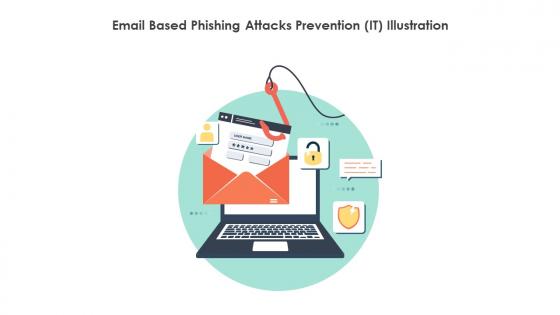
Email Based Phishing Attacks Prevention IT Illustration




Try Before you Buy Download Free Sample Product
 Impress Your
 Audience
 100%
100% Editable
 Save Hours
 of Time


Use this Email based phishing attacks prevention it illustration and create amazing PowerPoint presentations or graphics with ease. This downloaded file is available in all the editable formats such as EPS, PNG and Powerpoint pptx.
People who downloaded this PowerPoint presentation also viewed the following :
Email Based Phishing Attacks Prevention IT Illustration with all 6 slides:
Use our Email Based Phishing Attacks Prevention IT Illustration to effectively help you save your valuable time. They are readymade to fit into any presentation structure.





FAQs for Email Based Phishing Attacks
Common phishing attacks include email phishing, spear phishing, whaling, smishing, vishing, and clone phishing targeting individuals and organizations. These sophisticated techniques exploit trust through personalized messaging, fake websites, and social engineering tactics, with many financial institutions, healthcare providers, and retail companies finding that comprehensive employee training and multi-layered security protocols significantly reduce successful breach attempts.
Individuals can identify phishing emails by examining sender addresses for inconsistencies, checking for urgent language demanding immediate action, spotting grammatical errors and poor formatting, verifying suspicious links before clicking, and questioning unexpected attachments or requests for sensitive information. These red flags, when recognized early, enable users to avoid credential theft, financial fraud, and malware infections, ultimately protecting both personal and organizational security in an increasingly sophisticated threat landscape.
Social engineering techniques form the psychological foundation of phishing attacks, manipulating human emotions like urgency, fear, curiosity, and trust to bypass security awareness. These methods include impersonating authority figures, creating false emergencies, exploiting current events, and leveraging personal information from social media, with many organizations finding that employee education combined with technical controls delivers the most effective defense against these sophisticated manipulation tactics.
Businesses can educate employees about phishing through regular security training, simulated phishing exercises, real-time awareness campaigns, clear reporting protocols, and interactive workshops focusing on identifying suspicious emails. These comprehensive approaches enhance organizational security by building employee vigilance, reducing human error, and strengthening defense mechanisms, with many companies finding that consistent education programs significantly decrease successful phishing attacks.
Anti-phishing tools include email filtering systems, web security gateways, DNS protection services, browser security extensions, and AI-powered threat detection platforms. These technologies streamline cybersecurity by automatically blocking suspicious emails, analyzing website authenticity, and monitoring user behavior patterns, with many organizations finding that integrated security solutions significantly reduce phishing incidents while enhancing overall digital protection.
Two-factor authentication is critically important in phishing prevention, serving as a robust secondary defense when credentials are compromised through deceptive emails, fake websites, or social engineering attacks. Even when attackers successfully obtain usernames and passwords through sophisticated phishing campaigns, 2FA significantly reduces breach risks by requiring additional verification steps, with many financial institutions and healthcare organizations finding that multi-layered authentication approaches enhance security while maintaining user accessibility.
If someone falls victim to a phishing scheme, immediate steps include changing all compromised passwords, contacting financial institutions to monitor accounts, reporting the incident to relevant authorities, and running comprehensive security scans on affected devices. Organizations should implement incident response protocols, conduct employee retraining sessions, and enhance email filtering systems, with many companies finding that swift response minimizes damage while strengthening overall cybersecurity posture.
Website owners can protect their sites through SSL certificates, domain monitoring, email authentication protocols like SPF and DMARC, regular security audits, and user education initiatives. These measures streamline security by detecting unauthorized domain usage, preventing email spoofing, and enhancing user awareness, with many organizations finding that proactive monitoring ultimately delivers stronger brand protection and customer trust.
Businesses failing to protect customers from phishing face significant legal consequences including regulatory fines, data breach penalties, customer lawsuits, and compliance violations under laws like GDPR, CCPA, and industry-specific regulations. These legal risks extend beyond monetary penalties to include reputational damage, loss of customer trust, and potential business license revocations, with many organizations finding that proactive phishing prevention ultimately delivers lower legal exposure and stronger competitive positioning.
Phishing simulations enhance organizational security awareness by identifying vulnerable employees, measuring baseline security knowledge, and providing targeted training opportunities based on real-world attack scenarios. Through these controlled exercises, organizations strengthen their human firewall, reduce successful breach rates, and create security-conscious cultures, with many companies finding that regular simulations significantly improve employee threat recognition and response capabilities.
Organizations can implement comprehensive email filtering, regular employee security training, multi-factor authentication, incident response protocols, and phishing simulation exercises to minimize risks. Through these strategic measures, companies across sectors like banking and healthcare enhance security awareness, reduce successful attacks, and strengthen overall cybersecurity posture, ultimately protecting sensitive data while maintaining operational efficiency.
VPNs and secure connections mitigate phishing threats by encrypting data transmissions, masking IP addresses, and blocking access to malicious websites through filtered DNS servers. These technologies enable organizations to create secure tunnels for remote workers, automatically redirect suspicious traffic, and maintain encrypted communications, with many financial institutions and healthcare providers finding that VPN-protected connections significantly reduce successful phishing attacks.
Phishing targets broad audiences with generic emails, spear phishing focuses on specific individuals or organizations using personalized information, and whale phishing targets high-profile executives with sophisticated, tailored attacks. These escalating threat levels require increasingly robust security measures, with many financial institutions and healthcare organizations finding that layered email filtering, employee training, and executive protection protocols significantly reduce successful attacks while enhancing overall cybersecurity posture.
Remote work has significantly increased phishing attacks by expanding attack surfaces, reducing IT oversight, and creating security gaps in home networks and personal devices. Cybercriminals exploit these vulnerabilities through targeted campaigns mimicking work-from-home tools, VPN services, and collaboration platforms, with many organizations finding that distributed workforces face 300% more phishing attempts than traditional office environments.
Reporting suspicious emails enables organizations to strengthen their security posture by updating threat detection systems, training security teams on emerging attack patterns, and protecting other employees from similar threats. Through collective intelligence sharing, IT departments can enhance email filters, improve phishing simulations, and develop targeted awareness campaigns, ultimately creating a more resilient defense ecosystem across the organization.
-
The slides are remarkable with creative designs and interesting information. I am pleased to see how functional and adaptive the design is. Would highly recommend this purchase!
-
Understandable and informative presentation.