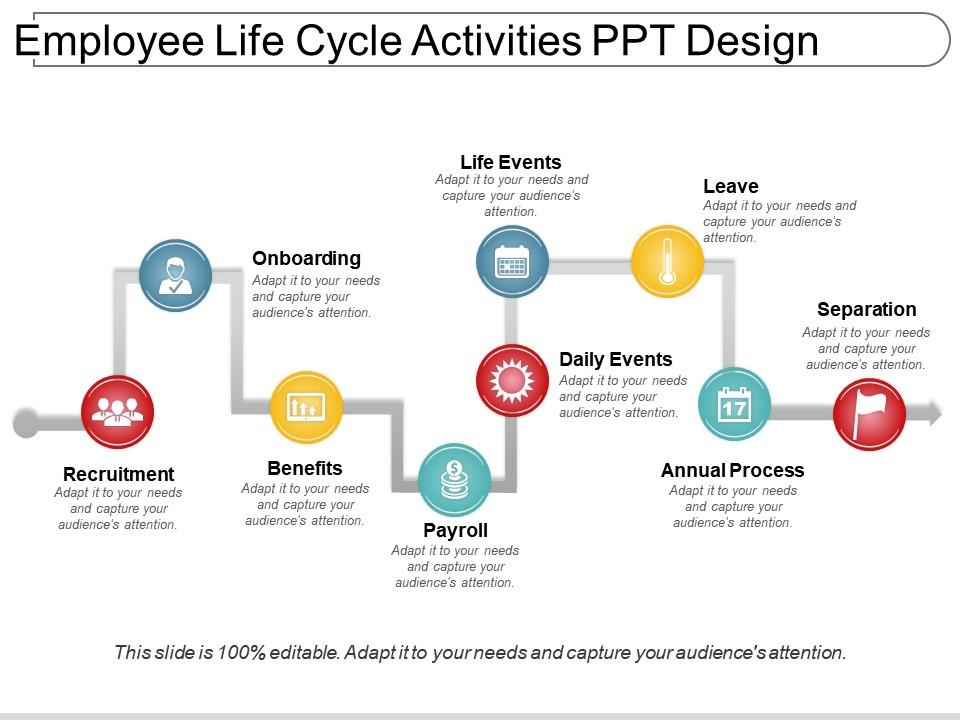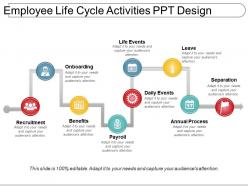
Aktivitäten im Mitarbeiterlebenszyklus Ppt-Design

Rating:
90%
Employee life cycle activities ppt design
Slide 1 of 5
Favourites Favourites

Try Before you Buy Download Free Sample Product

Audience Impress Your
Audience
Editable 100%
Editable
Time Save Hours
of Time
The Biggest Sale is ending soon in
0
0
:
0
0
:
0
0
Rating:
90%

Merkmale dieser PowerPoint-Präsentationsfolien:

Präsentation von Aktivitäten des Mitarbeiterlebenszyklus PPT-Design. Die Folie ist mit Google-Folien kompatibel und kann auch in PowerPoint angepasst werden. Sie können den Dummy-Inhalt durch Ihren eigenen ersetzen. Die Formen, Symbole und Bilder können bearbeitet werden. Die Vorlage ist in Standard- und Breitbildgrößen verfügbar. Auch Firmenname und Logo lassen sich problemlos einfügen. Einfach per Mausklick herunterladen!

FAQs for Employee life cycle

So there are five main stages companies go through with employees: recruiting, onboarding, development, keeping people around, and when they leave. Most places obsess over hiring but then totally drop the ball on everything else - which is honestly backwards. Good onboarding gets people productive faster. Development keeps their skills fresh. Retention stuff prevents you from constantly replacing people (expensive btw). Even how you handle departures matters for your reputation. Really though, you should map out what you're actually doing at each stage. I bet you'll find some obvious gaps where you're bleeding talent or just wasting time.

Honestly, start before they even show up - send a welcome package with their first week mapped out. Nobody wants to walk in totally clueless. Pair them with someone who isn't their boss, just a regular person who knows where the decent coffee is and can answer weird questions. Tell them the unwritten rules upfront because awkward situations suck for everyone. Oh, and definitely do check-ins throughout that first month, not just the boring HR meetings. Give them something small they can actually finish in two weeks - builds confidence way better than throwing them into some massive project.

Dude, continuous feedback is a game changer for employee development. Instead of waiting for those awful annual reviews that nobody remembers, you're giving people real-time help to grow. Course-correct problems early, celebrate wins as they happen - way better than letting things slide for months. New employees adapt faster with regular check-ins. Mid-level people stay engaged instead of getting bored. Even senior folks can work toward leadership roles. I'd start with quick 15-minute weekly chats focusing on just one development area. Nothing fancy, just consistent touchpoints that actually matter.

Different survey types work better at each stage, honestly. New hires? Track satisfaction scores and how long it takes them to actually be productive. For people who've been around longer, pulse surveys and career feedback make more sense. Most companies just do those huge annual surveys and think they're done - which is kind of lazy if you ask me. Peak performers need retention tracking and internal mobility data. When someone's already checked out mentally, stay interviews might save them (or at least exit surveys help you learn). Oh, and match your approach to what actually matters at each stage instead of using the same boring survey for everyone.

That tricky 30-60 day window is where you lose people - they stop asking questions but aren't really settled in yet. Set up regular check-ins with their actual manager, not just HR stuff. Most people mentally check out way before they quit, honestly. Get them a buddy who sticks around past week one, maybe give them something meaningful to work on around day 45. Their manager should be grabbing coffee with them regularly too. The whole thing is about showing them where they're headed and making sure they actually feel part of the team. Oh, and start measuring engagement at 60 days.

Dude, career development is SO key for keeping people motivated. People want to see they have a future beyond just doing the same job forever, you know? Training, mentorship, promotions - whatever fits. Without growth opportunities, your best people will bounce. I've seen it happen way too many times. The trick is actually having real conversations about where they want to go career-wise and then - this is the important part - following through with actual plans. Don't just talk about it and forget. Short version: show them a path forward or watch them find one somewhere else.

Wait like 1-2 weeks after someone quits - emotions cool down but they'll still remember everything clearly. Don't have their old boss do it though, that's awkward. Get someone neutral. Ask open stuff like what made them leave, what you could've done better, which parts of working there sucked vs didn't suck. People are weirdly honest when they think it'll help the next person! Look for patterns across multiple interviews instead of getting hung up on one person's drama. The real useful stuff is figuring out if your onboarding process is broken or if certain managers are consistently terrible.

Honestly, you've got to weave training right into your onboarding from day one - don't treat them like separate things. Map out what skills people are missing early on, then build learning paths that go way past those first couple weeks. Too many places just run through a boring checklist and call it done. Get them into your learning system right away. Pair them with a mentor or buddy. Then do check-ins at 30, 60, 90 days to see how they're doing and what training they need next. It should feel like one smooth process, not like onboarding suddenly stops and training randomly starts.

Look, I've used a bunch of these systems and BambooHR is solid for smaller teams. Workday's more enterprise-level but crazy powerful. ADP's everywhere for payroll stuff. The thing is, once you have everything centralized instead of random spreadsheets, it's such a relief. If your main system sucks at recruiting, Greenhouse is worth checking out. Same with 15Five for performance tracking - though honestly I think their name is kind of weird. Before you buy anything though, figure out what's actually driving you nuts right now. No point getting fancy features you won't use.

Honestly, workforce demographics change everything about how you manage people. Gen Z wants totally different onboarding than Boomers do. Remote workers? They need virtual integration that actually works. Your recruitment has to be way more inclusive now too - which is overdue if you ask me. Different generations value completely different benefits and career paths, so retention gets tricky. Development programs are probably the hardest part since you're dealing with people who have vastly different tech comfort levels. I learned this the hard way at my last job. Bottom line: you can't use the same approach for everyone when four generations are working together.

Think of succession planning as your backup plan for when people leave - retirement, promotions, whatever. You're basically spotting internal talent who could fill key roles before they're empty. I learned this the hard way when our best manager left with zero notice! Map out who might step into critical positions while you're still developing your team. High performers love seeing a clear path up, so it actually helps keep them around. Short sentences work better here - identify your must-have roles first. Then figure out who's got potential to fill them.

Honestly, you've gotta tailor your reviews to where people actually are in their careers. New hires? Focus on how they're picking things up and what skills they need. Your veterans should get evaluated on bigger picture stuff - can they lead, do they think strategically. The middle-career people are honestly the trickiest because they're trying to grow but also want some stability. And for folks close to retirement - forget the aggressive targets. Look at how well they're sharing knowledge and mentoring others instead. Different templates for each group saves you so much headache.

Honestly, your workplace culture touches everything. Candidates will stalk your company online before even applying - they can spot toxic vibes instantly. New hires either gel with your culture in those first 90 days or they're already eyeing the exit. A good culture keeps people engaged and growing. Bad culture? Kills productivity fast. I've seen it happen so many times. When employees leave, they'll either recommend you to friends or trash you on Glassdoor. Culture's working for you or against you - there's really no middle ground. Fix it early because it affects literally every part of the employee experience.

Track metrics at each stage and actually use them. Recruitment - watch your sourcing channels and how long hiring takes. Onboarding completion rates tell you if people are getting what they need early on. The retention stuff gets pretty detailed - performance trends, satisfaction surveys, who might quit soon. Exit interviews are clutch for understanding why people bail. I know it sounds like a lot, but connecting these dots across the whole employee journey helps you catch problems before they blow up. Short version: measure everything, spot the patterns, fix things proactively.

So mentoring programs work because they create these support networks that keep people from jumping ship. New hires don't feel lost when they've got someone showing them the ropes. Mid-career people get help figuring out their next move - honestly, most companies are terrible at this part. Even senior folks benefit since they get to feel useful again by teaching others. The trick is actually matching personalities, not just throwing random people together. Oh, and you'll want to check in sometimes to make sure it's not just awkward coffee meetings where nobody knows what to talk about.

Ratings and Reviews

90% of 100
Review Form
Write a review
Most Relevant Reviews
  1. 100%

    by Dante Wells

    Top Quality presentations that are easily editable.
  2. 80%

    by Domenic Spencer

    Topic best represented with attractive design.

2 Item(s)

per page: