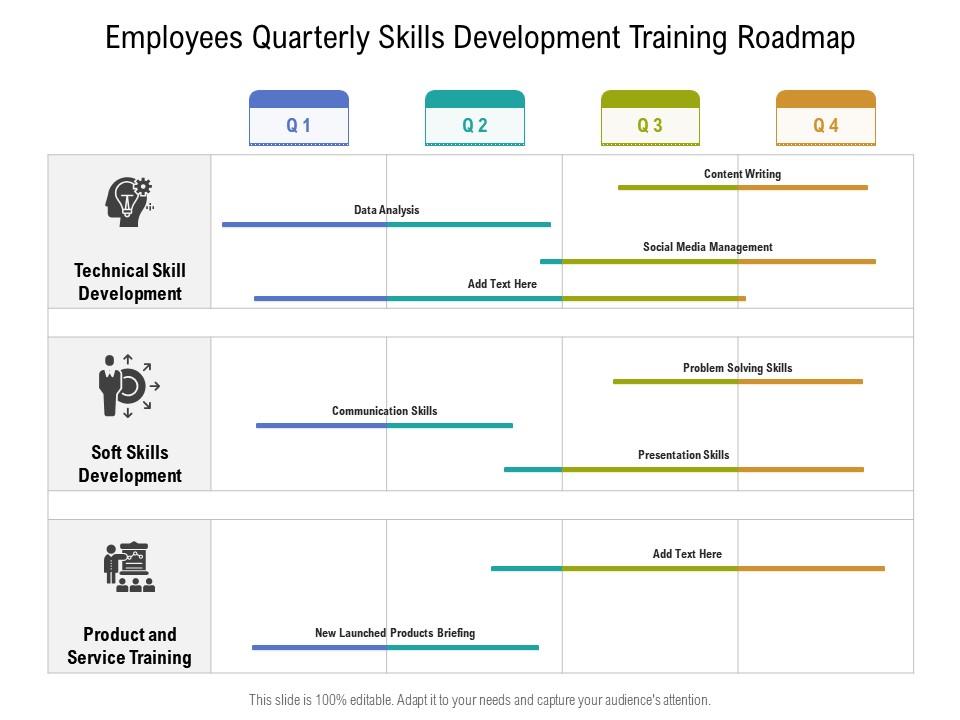
Roteiro Trimestral de Treinamento de Desenvolvimento de Competências dos Colaboradores

Employees quarterly skills development training roadmap
Slide 1 of 2
Favourites Favourites

Try Before you Buy Download Free Sample Product

Audience Impress Your
Audience
Editable 100%
Editable
Time Save Hours
of Time
The Biggest Sale is ending soon in
0
0
:
0
0
:
0
0

Características destes slides de apresentação do PowerPoint:

Apresentando o Roteiro de Treinamento de Desenvolvimento de Habilidades Trimestral dos Funcionários Slide do PowerPoint que é 100 por cento editável. Você pode alterar a cor, o tamanho da fonte, o tipo de fonte e as formas deste layout PPT de acordo com suas necessidades. Este modelo PPT é compatível com o Apresentações Google e está disponível nas proporções de 4,3 e 16,9. Esta apresentação PowerPoint pronta para uso pode ser baixada em vários formatos, como PDF, JPG e PNG.

FAQs for Employees quarterly skills

Four things you'll want to nail down: figure out what skills you actually have now, pick specific ones that match where you want your career to go, set a realistic timeline (this is where everyone screws up tbh), and choose how you'll learn - courses, mentors, projects, whatever works. Most people go way too hard on timelines and burn out. Build in check-ins every few weeks to see how it's going. Oh, and think about what might derail you early - money, time, all that fun stuff. Honestly? Just pick one skill for the next three months and start there.

Honestly, most companies get this backwards - they look at skills gaps based on where they are now instead of where they're going. Figure out your 2-3 year strategic priorities first. What capabilities will you actually need? Work backwards from there to see what your people should be learning today. Getting leadership bought in early is clutch because then they'll see how skills investment connects to real business results (makes those budget asks so much smoother). Build learning paths that tie directly to your strategic goals. Oh, and track whether you're developing the right stuff - don't just assume it's working.

Honestly, tech is a game-changer for learning new skills. You get personalized paths that adapt to how you learn, plus real-time tracking so you actually know where you stand. AI spots your weak areas and suggests courses that'll help - no more guessing what to study next. VR training is insane too, lets you mess up in complex scenarios without real consequences. Oh and forget waiting weeks for feedback, you get results instantly. Just pick platforms that fit your workflow and focus on ones measuring actual skills, not just "congrats you finished the course" certificates.

Honestly, just work backwards from where you wanna be. Grab some job descriptions for roles you want and see what skills they're asking for. Most people actually love talking about their work if you ask nicely - weird but true. Check your old performance reviews for gaps too. LinkedIn stalking helps here (in a professional way obviously). Industry reports are solid goldmines. Don't skip the soft skills either - they matter more than people think. Throw everything into a basic spreadsheet. What you've got vs what you need. Then focus on the biggest gaps that keep showing up everywhere. That's your roadmap right there.

Track completion rates and before/after skill tests - that's your baseline data. Manager feedback matters way more than people think though. Also check confidence surveys and how long it takes people to actually get competent. Honestly, retention rates tell you if the training was actually worth it. Business stuff like fewer errors or productivity bumps are gold if you can measure them. Oh, and don't go crazy with metrics - pick 3 or 4 good ones for a simple dashboard. Otherwise you'll just get lost in spreadsheets and nobody wants that.

Honestly, the biggest thing is making it not feel like homework. Give people actual time - maybe 20% of their week or dedicated learning Fridays. Sounds dorky but celebrating when someone learns something new actually gets people excited about it. Set up mentorship programs and do casual lunch-and-learns where people can show off what they've picked up. Your managers need to be doing this too though - if leadership isn't visibly learning, nobody else will bother. Oh and tie learning budgets to career growth. Makes it feel less optional.

Don't just grab any mentor - that's where most people mess up. You want someone who actually fills your specific skill gaps. Need better coding skills? Find a senior dev. Struggling with stakeholders? Get a product manager to mentor you. I learned this the hard way tbh. Drive the relationship yourself though. Come with real questions, not just "how's your day" stuff. Ask for actual projects to work on together or shadow opportunities. Regular check-ins work way better when you've got clear goals and you're updating them on what you've been practicing since last time.

Start with a real skills assessment - figure out exactly what gaps you're dealing with first. Most places just throw random training at people and then act surprised when nothing changes, which drives me crazy. Map out what each role actually needs vs what your team currently has. That gap is basically your game plan. Mix things up with formal training, mentoring, and actual hands-on stuff that connects to their real work. Don't just check boxes. Track how it's going and tweak things - oh, and make sure it's relevant to what they do daily or they'll tune out completely.

You definitely need to get employee feedback on your training programs. Without it, you're basically throwing darts in the dark - how else will you know what's actually helping people vs. what's a complete waste of time? I've seen so many companies roll out these fancy training modules that nobody finds useful for their actual job. Quick pulse surveys after each session work great. The feedback tells you which programs are working, what skills you're missing entirely, and honestly? It helps you stop wasting money on stuff that doesn't matter. People appreciate when you actually listen and adjust things based on what they're telling you.

Honestly, start by figuring out what skills each role actually needs - like really break it down. Week one should just be the bare basics because nobody retains info when they're drowning in it. Get them paired up with someone solid who won't mind the constant questions (there will be SO many). Mix things up with actual hands-on stuff, quick training sessions, and regular check-ins. I've seen too many places just throw people in and hope for the best. Make sure everyone knows what hitting their goals looks like. The whole thing should feel like support, not chaos.

Dude, blended learning is honestly a game-changer. You can knock out the boring theory stuff online whenever you want - like at 2am if that's your thing. Then the in-person parts are actually useful since you're practicing real skills and getting feedback. Way better than those soul-crushing all-day training marathons we used to sit through. I think the mix just clicks better in your brain, you know? You're not just passively absorbing info. Figure out what topics work better online first, then build from there.

Honestly, start by figuring out which companies actually hire people with those skills you're building. They'll know what's really needed better than anyone. Reach out to local businesses, trade groups, maybe some schools too - a lot of them are dying to partner up because it helps them find good people later. Set up apprenticeships or bring in guest speakers. Oh, and mentorship programs work great if you can swing it. The trick is being super specific about what you want to develop first, then finding partners who've got the real-world experience your team's missing. Most places are surprisingly open to it.

Don't try to fix inclusion after the fact - build it in from the start. Check your current programs for barriers first (different learning styles, language stuff, who can actually access the tech). Your employee resource groups will give you way better feedback than those generic leadership surveys ever will. Mix up how you deliver content - some people love live sessions, others need self-paced modules. Use diverse examples in your materials too, not just the same cookie-cutter case studies. Here's what really matters though: track who's actually participating by demographics. When you spot gaps, pivot fast.

Honestly, this stuff can't just live in annual reviews - that's where skills development goes to die. Have real one-on-ones where you actually ask what they want to learn, then help them practice it in their day-to-day work. Too many managers just say "sounds great!" and never follow up. Give stretch assignments. Connect people with mentors. When someone picks up a new skill, celebrate it - even the small stuff matters. Oh, and learn new things yourself too. Your team will notice if you're not practicing what you preach.

AI's taking over learning platforms everywhere right now. Micro-learning is huge too - nobody wants hour-long training sessions anymore. Companies are finally waking up and hiring based on what you can actually do instead of where you went to school (about time, honestly). Soft skills matter way more now - adaptability, emotional intelligence, all that stuff. Oh, and forget annual training cycles. Everything's continuous learning now. Start by figuring out what skills your team's missing, then create short learning chunks they can use immediately. Works so much better than traditional approaches.

Ratings and Reviews

0% of 100
Review Form
Write a review
Most Relevant Reviews

No Reviews