


Enabling IT Intelligence Framework Powerpoint Presentation Slides




Try Before you Buy Download Free Sample Product
 Impress Your
 Audience
 100%
100% Editable
 Save Hours
 of Time


The PowerPoint template is a useful tool in presenting intelligence infrastructure in order to optimize assets through digitization and utilization of integrated technology solutions. The business transformation will allow the firm in enhancing customer experience and optimizing processes such as data center management and enhancing security standards. Herss well-researched template Enabling IT Intelligence Framework comes in handy. It covers details regarding the current potential implications faced by firms in terms of infrastructure cost, service delay, service failure, increase security threats, and data breaches. It portrays information regarding the challenges faced in term of budget, lack of talent and expertise, and absence of advanced tools. It caters to comparative analysis for checking the extent of existing infrastructure intelligence and technological assessment. The template covers information regarding the categories such as system, network, and storage management and components such as computer hardware and software applications, and data management platforms involved in IT infrastructure management. The template covers details regarding workplace optimization. It will cover details regarding the budget assessment of technology advancement to functional areas. And dashboard analysis for intelligence activities and cyber security management. Get access now.
People who downloaded this PowerPoint presentation also viewed the following :
Content of this Powerpoint Presentation
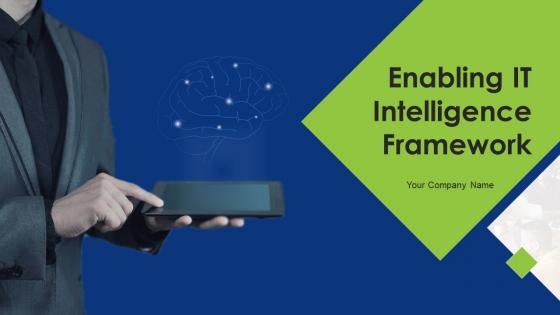
Slide 1: This slide display the title Enabling IT Intelligence Framework.
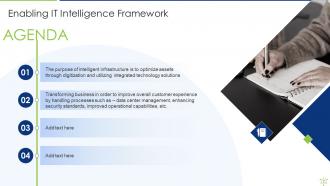
Slide 2: This slide display Agenda.
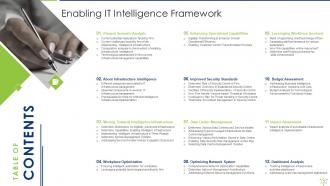
Slide 3: This slide exhibits Table of Contents.
Slide 4: This slide exhibits Table of Contents- Present Scenario Analysis.
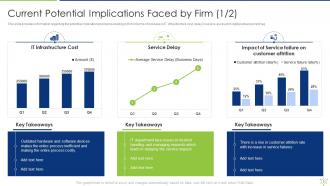
Slide 5: This slide showcase Current Potential Implications Faced by Firm.
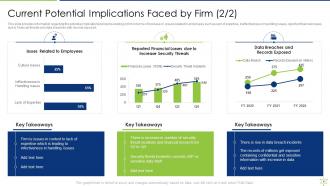
Slide 6: This slide also showcase Current Potential Implications Faced by Firm.
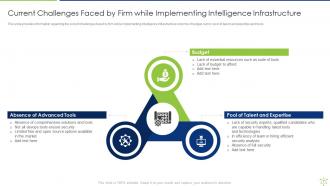
Slide 7: This slide shows current challenges faced by firm while implementing intelligence infrastructure.
Slide 8: This slide provide details about Comparative Analysis to Check Extent of Existing Infrastructure Intelligence.
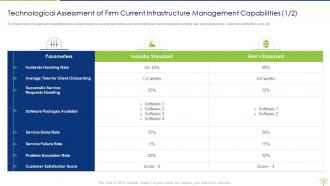
Slide 9: This slide shows Technological Assessment of Firm Current Infrastructure Management Capabilities.
Slide 10: This slide also shows Technological Assessment of Firm Current Infrastructure Management Capabilities.
Slide 11: This slide exhibits Table of Contents- About Infrastructure Intelligence.
Slide 12: This slide covers information regarding the various categories associated to IT infrastructure management.
Slide 13: This slide covers vital components involved in IT infrastructure management.
Slide 14: This slide covers Prerequisites for Firms for Effective Intelligence Infrastructure Implementation.
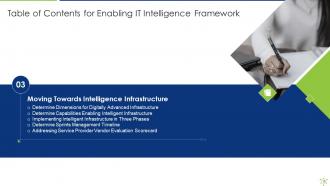
Slide 15: This slide exhibits Table of Contents- Moving Towards Intelligence Infrastructure.
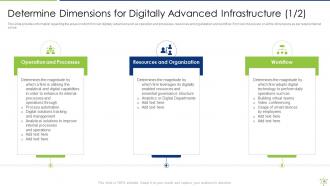
Slide 16: This slide Determine Dimensions for Digitally Advanced Infrastructure.
Slide 17: This slide also Determine Dimensions for Digitally Advanced Infrastructure.
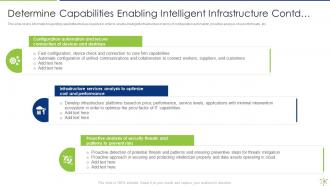
Slide 18: This slide Determine Capabilities Enabling Intelligent Infrastructure.
Slide 19: This slide Determine Capabilities Enabling Intelligent Infrastructure Contd.
Slide 20: This slide covers Implementing Intelligent Infrastructure in Three Phases.
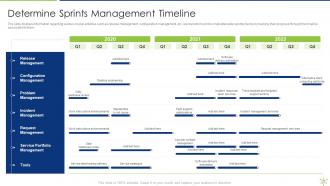
Slide 21: This slide Determine Sprints Management Timeline.
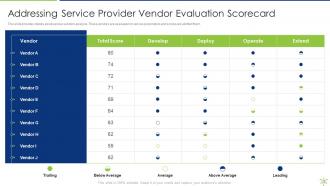
Slide 22: This slide Address Service Provider Vendor Evaluation Scorecard.
Slide 23: This slide exhibits Table of Contents- Workplace Optimization.
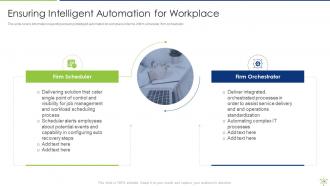
Slide 24: This slide covers information regarding ensuring intelligent automation for workplace.
Slide 25: This slide ensures intelligent automation for workplace in terms of network automation and cloud automation.
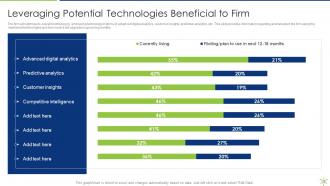
Slide 26: This slide shows Leveraging Potential Technologies Beneficial to Firm.
Slide 27: This slide exhibits Table of Contents- Enhancing Operational Capabilities.
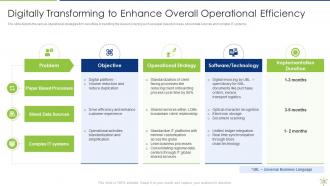
Slide 28: This slide depicts Digitally Transforming to Enhance Overall Operational Efficiency.
Slide 29: The slide covers information regarding the customer centric transformation process.
Slide 30: This slide exhibits Table of Contents- Improved Security Standards.
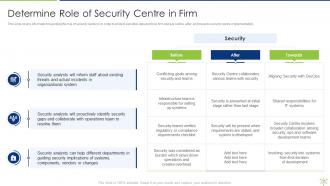
Slide 31: This slide Determine Role of Security Centre in Firm.
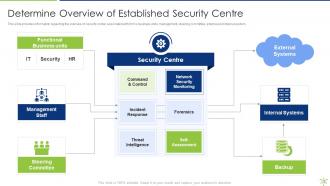
Slide 32: This slide Determine Overview of Established Security Centre.
Slide 33: This slide portrays Facilities Offered by Implementation of Security Centre.
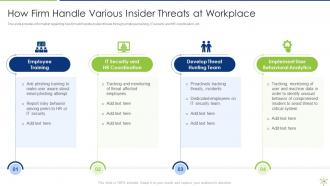
Slide 34: This slide provides information regarding how firm will handle insider threats.
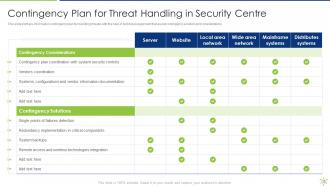
Slide 35: This slide portrays Contingency Plan for Threat Handling in Security Centre.
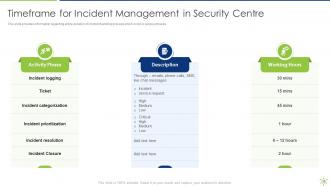
Slide 36: This slide portrays Timeframe for Incident Management in Security Centre.
Slide 37: This slide Determine Various Data Centres and Service Models.
Slide 38: This slide covers details about different data center and service models.
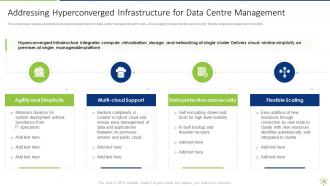
Slide 39: This slide covers details about hyperconverged infrastructure for data center management.
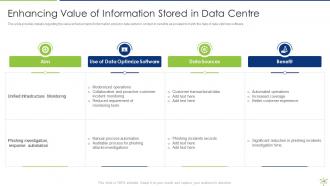
Slide 40: This slide provide details of Enhancing Value of Information Stored in Data Centre.
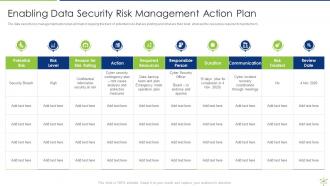
Slide 41: This slide Enable Data Security Risk Management Action Plan.
Slide 42: This slide help firm in Selecting Data Centre Management Solution.
Slide 43: This slide exhibits Table of Contents- Optimizing Network System.
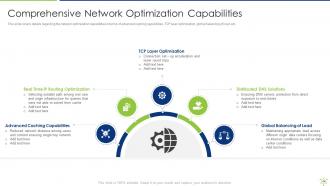
Slide 44: This slide covers details regarding the network optimization capabilities.
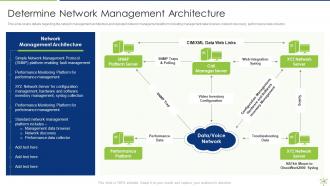
Slide 45: This slide covers details regarding the network management architecture.
Slide 46: This slide covers details about different network management functions.
Slide 47: This slide exhibits Table of Contents- Leveraging Workforce Involved.
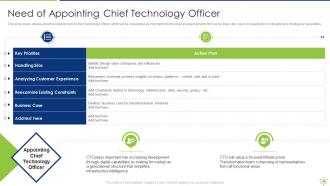
Slide 48: This slide covers details about the requirement of Chief Technology Officer.
Slide 49: This slide helps in Assessing Staff Performance on Various Parameters.
Slide 50: This slide showcase How Firm Capabilities will be Resourced?
Slide 51: This slide Determine Staff Training Schedule for Skills Enhancement.
Slide 52: This slide exhibits Table of Contents- Budget Assessment.
Slide 53: This slide provides information regarding the various business intelligence solution with cost.
Slide 54: This slide shows budget for technological advancement by optimizing various functional areas.
Slide 55: This slide exhibits Table of Contents- Impact Assessment.
Slide 56: This slide depicts the impact of successful implementation of infrastructure intelligence.
Slide 57: This slide exhibits Table of Contents- Dashboard Analysis.
Slide 58: This slide portrays Tracking Intelligence Infrastructure Activities Dashboard.
Slide 59: This slide Address Cyber Risk Management Dashboard.
Slide 60: This is the icons slide.
Slide 61: This slide presents title for additional slides.
Slide 62: This slide depicts 30-60-90 days plan for projects.
Slide 63: This slide display Weekly Timeline with Task Name.
Slide 64: This slide display Roadmap For Process Flow.
Slide 65: This slide shows details of team members like name, designation, etc.
Slide 66: This slide presents your company's vision, mission and goals.
Slide 67: This slide display Post it Notes.
Slide 68: This slide display Roadmap.
Slide 69: This slide shows puzzle for displaying elements of company.
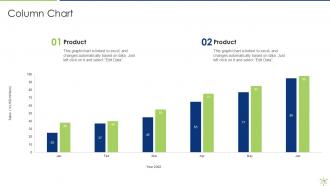
Slide 70: This slide exhibits yearly sales stacked column charts for different products.
Slide 71: This slide display Timeline.
Slide 72: This is thank you slide & contains contact details of company like office address, phone no., etc.
Enabling IT Intelligence Framework Powerpoint Presentation Slides with all 77 slides:
Use our Enabling IT Intelligence Framework Powerpoint Presentation Slides to effectively help you save your valuable time. They are readymade to fit into any presentation structure.





























FAQs for Enabling IT Intelligence Framework
Core components of an IT Intelligence Framework include data collection systems, analytics engines, monitoring dashboards, predictive modeling tools, and automated reporting mechanisms. These technologies streamline organizational decision-making by providing real-time insights, identifying performance bottlenecks, and enabling proactive resource management, with many enterprises finding that integrated frameworks ultimately deliver enhanced operational efficiency and strategic competitive advantage.
An IT Intelligence Framework enhances organizational decision-making by integrating data analytics, predictive modeling, performance monitoring, and automated reporting systems to provide real-time insights. Through comprehensive dashboards and intelligent alerts, executives can identify trends, assess risks, and optimize resource allocation more effectively, with many enterprises finding that data-driven decisions significantly improve operational efficiency and strategic outcomes.
Data integration serves as the foundation of an effective IT Intelligence Framework, enabling seamless consolidation of information from multiple sources, systems, and applications across the organization. Through unified data pipelines, businesses streamline analytics processes, enhance decision-making accuracy, and eliminate operational silos, with many enterprises finding that integrated frameworks deliver significantly faster insights and improved strategic outcomes.
Real-time analytics enables IT teams to monitor system performance, detect anomalies, and respond to incidents as they occur, rather than discovering issues hours or days later. This immediate visibility streamlines troubleshooting, enhances system reliability, and minimizes downtime costs, with many organizations finding that proactive monitoring ultimately delivers faster resolution times and improved user experiences.
Machine learning and AI technologies revolutionize IT Intelligence Frameworks by enabling predictive analytics, automated threat detection, intelligent resource optimization, and real-time decision-making capabilities. These technologies streamline operations by processing vast datasets, identifying patterns human analysts might miss, and delivering proactive insights, with many organizations finding that AI-enhanced frameworks significantly reduce response times while improving operational efficiency.
Organizations face challenges including data silos, legacy system integration complexities, resource constraints, cultural resistance to change, and skills gaps in analytics capabilities. While these obstacles can initially slow implementation, many enterprises find that phased rollouts, comprehensive staff training, and strategic partnerships with technology providers ultimately deliver enhanced operational efficiency, better decision-making processes, and significant competitive advantages.
An IT Intelligence Framework enhances cybersecurity by centralizing threat detection, automating incident response, and providing real-time security analytics across all organizational systems. Through predictive monitoring and integrated data analysis, organizations can identify vulnerabilities before exploitation, streamline security protocols, and reduce response times significantly, with many financial institutions and healthcare providers finding substantial improvements in threat prevention and operational security efficiency.
Organizations should evaluate their IT Intelligence Framework using metrics like system uptime, incident response times, resource utilization rates, security breach detection speed, and operational cost reduction. These performance indicators enable businesses to measure framework effectiveness across infrastructure monitoring, predictive maintenance, and strategic decision-making, with many enterprises finding that comprehensive metrics ultimately deliver enhanced operational efficiency and competitive advantage.
An IT Intelligence Framework facilitates better collaboration by providing shared visibility into IT performance metrics, aligning technology investments with business objectives, and establishing common communication protocols between departments. Through centralized dashboards and standardized reporting, organizations streamline decision-making processes, reduce miscommunication, and enable faster project approvals, ultimately delivering enhanced operational efficiency and strategic alignment across business units.
Organizations should establish clear data governance protocols, implement real-time monitoring systems, ensure cross-departmental integration, define measurable KPIs, and create automated reporting mechanisms when designing IT Intelligence Frameworks. These practices enable companies to streamline decision-making, enhance operational visibility, and minimize system vulnerabilities, with many enterprises finding that strategic frameworks ultimately deliver faster incident response and improved resource allocation across their IT infrastructure.
Organizations ensure scalable and adaptable IT Intelligence Frameworks through modular architecture, cloud-based infrastructure, standardized APIs, and flexible data models that accommodate growth. These frameworks enable seamless integration of new technologies, automated scaling during demand spikes, and rapid adaptation to changing business requirements, with many enterprises finding that strategic modularity delivers enhanced operational efficiency and competitive advantage.
Cloud computing significantly accelerates IT Intelligence Framework development by providing scalable infrastructure, real-time data processing capabilities, and enhanced integration across distributed systems. Through cloud-native analytics and machine learning services, organizations streamline framework deployment, reduce operational costs, and enable seamless cross-platform intelligence gathering, with many enterprises finding that cloud environments deliver faster insights and improved strategic decision-making capabilities.
Regulatory compliance and data governance intersect with IT Intelligence Frameworks through automated monitoring, policy enforcement, audit trail generation, and real-time risk assessment capabilities. These frameworks enable organizations to maintain compliance standards, ensure data quality and lineage, while streamlining reporting processes, with financial services and healthcare institutions finding that integrated governance delivers both regulatory adherence and operational efficiency.
Visualizations and dashboards enhance IT Intelligence Frameworks by transforming complex data into intuitive, real-time insights, enabling faster decision-making, trend identification, and performance monitoring across network infrastructure. These visual tools streamline operational oversight by consolidating metrics from multiple systems, with many IT departments finding that interactive dashboards significantly reduce response times and improve strategic resource allocation.
Organizations should approach training through role-specific programs targeting data analysts, IT managers, and end-users, combined with hands-on workshops, certification tracks, and continuous learning modules. This strategic combination enables teams to leverage predictive analytics, automate decision-making processes, and interpret complex data insights effectively, with many enterprises finding that structured skill development ultimately delivers faster implementation timelines and higher framework adoption rates.
-
It’s really cool, and you can find pretty much everything you could need for your work or school.
-
Easily Understandable slides.