Energy Efficiency Strategies In Construction And Building Industry

Rating:
90%
Energy Efficiency Strategies In Construction And Building Industry Energy Efficiency Strategies In Construction And Building Industry
Slide 1 of 9
Favourites Favourites

Try Before you Buy Download Free Sample Product

Audience Impress Your
Audience
Editable 100%
Editable
Time Save Hours
of Time
The Biggest Sale is ending soon in
0
0
:
0
0
:
0
0
AI-Ready
Upload this template to AI and ask it to make any changes to content or color
100% editable Powerpoint Template for AI-assisted presentations. Finish your work in less time. ​
Works with
Microsoft PowerPoint
Microsoft 365
Claude for PowerPoint
ChatGPT
Google Slides
Microsoft Copilot
Rating:
90%
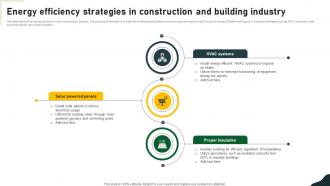
This slide depicts the energy efficiency in the construction industry. The purpose of this slide is to help the architects and builders induce energy savings through the use of energy efficient techniques. It includes strategies such as HVAC systems, solar powered panels, and proper insulation. Introducing our premium set of slides with Energy Efficiency Strategies In Construction And Building Industry. Ellicudate the three stages and present information using this PPT slide. This is a completely adaptable PowerPoint template design that can be used to interpret topics like HVAC Systems, Solar Powered Panels, Proper Insulation. So download instantly and tailor it with your information.

People who downloaded this PowerPoint presentation also viewed the following :

FAQs for Energy Efficiency Strategies In Construction

The most effective strategies include advanced insulation systems, high-performance windows, energy-efficient HVAC systems, LED lighting, and smart building technologies. These approaches streamline energy consumption by minimizing heat loss, optimizing climate control, and automating resource management, with many developers finding that strategic combinations deliver significantly lower operational costs and enhanced competitive advantage in increasingly sustainability-focused markets.

Passive design significantly enhances energy efficiency in residential buildings by optimizing natural light, strategic window placement, thermal mass integration, and cross-ventilation systems. Through thoughtful orientation and insulation strategies, homeowners achieve reduced heating and cooling costs, improved indoor comfort, and lower utility bills, with many residential developments finding that passive design delivers up to 40% energy savings while increasing property values.

Building materials significantly impact energy efficiency through insulation properties, thermal mass, air sealing capabilities, reflective surfaces, and moisture management systems. Strategic material selection, including high-performance insulation, energy-efficient windows, and advanced concrete formulations, enables construction projects to reduce heating and cooling costs by 20-40%, while delivering improved occupant comfort and long-term operational savings.

Latest energy-efficient building technologies include smart HVAC systems, advanced insulation materials, LED lighting with sensors, solar panel integration, and energy management software. These technologies streamline operations by reducing consumption, automating climate control, and optimizing resource allocation, with many construction companies finding that strategic implementation delivers significant cost reductions and competitive advantage.

Energy modeling tools assist architects by simulating building performance, analyzing HVAC systems, evaluating insulation materials, optimizing window placement, and predicting energy consumption patterns throughout design phases. These technologies streamline decision-making by identifying cost-effective solutions, reducing operational expenses, and ensuring compliance with green building standards, with many architectural firms finding that early-stage modeling ultimately delivers significant energy savings and competitive advantage.

Energy audits in existing construction identify inefficiencies through systematic assessment of heating, cooling, lighting, and insulation systems, revealing opportunities for strategic upgrades and operational improvements. These comprehensive evaluations enable property owners to prioritize cost-effective renovations, reduce energy consumption by 20-30%, and enhance building performance, with many commercial facilities finding that targeted improvements deliver significant cost savings and competitive advantage.

Renewable energy sources can be integrated through solar panels, wind turbines, geothermal systems, biomass heating, and energy storage solutions installed during construction phases. These technologies enhance building performance by reducing operational costs, minimizing carbon footprints, and ensuring long-term sustainability, with many commercial developers finding that integrated renewable systems deliver significant competitive advantages and regulatory compliance benefits.

Energy efficiency standards include International Energy Conservation Code (IECC), ASHRAE 90.1, state-specific building codes, ENERGY STAR certification requirements, and local green building ordinances. These codes streamline compliance by establishing minimum insulation levels, HVAC efficiency ratings, and lighting standards, with many construction firms finding that exceeding baseline requirements delivers competitive advantages and long-term operational savings.

Building orientation and layout significantly impact energy consumption through solar heat gain, natural lighting optimization, and airflow patterns. Strategic positioning maximizes winter sun exposure while minimizing summer heat, with properly designed layouts reducing HVAC loads by up to 30%, ultimately delivering lower operational costs and enhanced occupant comfort for commercial and residential developments.

Financial incentives for energy-efficient construction include federal tax credits, state rebates, utility company incentives, green building grants, and low-interest financing programs. These incentives streamline project costs by reducing upfront investments, lowering operational expenses, and enhancing property values, with many developers finding that strategic combinations of multiple programs ultimately deliver significant cost savings and competitive market advantages.

Building automation systems optimize energy use by monitoring occupancy patterns, automatically adjusting HVAC and lighting based on real-time demand, and integrating renewable energy sources with smart grid technologies. Through centralized control platforms, commercial buildings achieve 20-30% energy reductions, streamline operational costs, and enhance tenant comfort, with many office complexes and retail centers finding that predictive maintenance capabilities ultimately deliver significant competitive advantages in increasingly sustainability-focused markets.

Effective insulation practices include using high R-value materials, ensuring continuous thermal barriers, sealing air leaks, installing vapor barriers, and employing proper installation techniques. These approaches streamline energy consumption by minimizing heat transfer, reducing HVAC loads, and maintaining consistent indoor temperatures, with many commercial buildings and residential developments finding that strategic insulation delivers significantly lower operating costs and enhanced occupant comfort.

Energy-efficient construction significantly reduces environmental impact by minimizing energy consumption, lowering greenhouse gas emissions, and optimizing resource utilization throughout building lifecycles. These sustainable practices enable construction companies to deliver reduced operational costs, enhanced building performance, and improved indoor air quality, while meeting increasingly stringent environmental regulations and securing competitive advantages in green building markets.

Occupant behavior significantly impacts building energy efficiency through lighting usage, temperature control preferences, equipment operation, and space utilization patterns. While well-designed energy-efficient buildings provide the foundation, occupants can increase or decrease energy consumption by 30-50%, with many commercial and residential properties finding that targeted behavior programs, smart building technologies, and user education ultimately deliver substantial cost savings and enhanced operational performance.

Landscaping and site planning contribute to energy savings through strategic tree placement for natural shading, windbreaks to reduce heating costs, and optimal building orientation to maximize solar gain. These approaches streamline cooling and heating demands by leveraging natural elements, with many commercial developments finding that thoughtful landscape design ultimately delivers 10-15% reductions in operational energy costs while enhancing property values.

Ratings and Reviews

90% of 100
Review Form
Write a review
Most Relevant Reviews
  1. 100%

    by Cornelius Alexander

    Helpful product design for delivering presentation.
  2. 80%

    by Clark Ruiz

    I'm happy to discover your PowerPoint presentations and templates. They met my expectations precisely. Very innovative!

2 Item(s)

per page: