Equipment Maintenance Budget And Cost Sheet

Rating:
90%
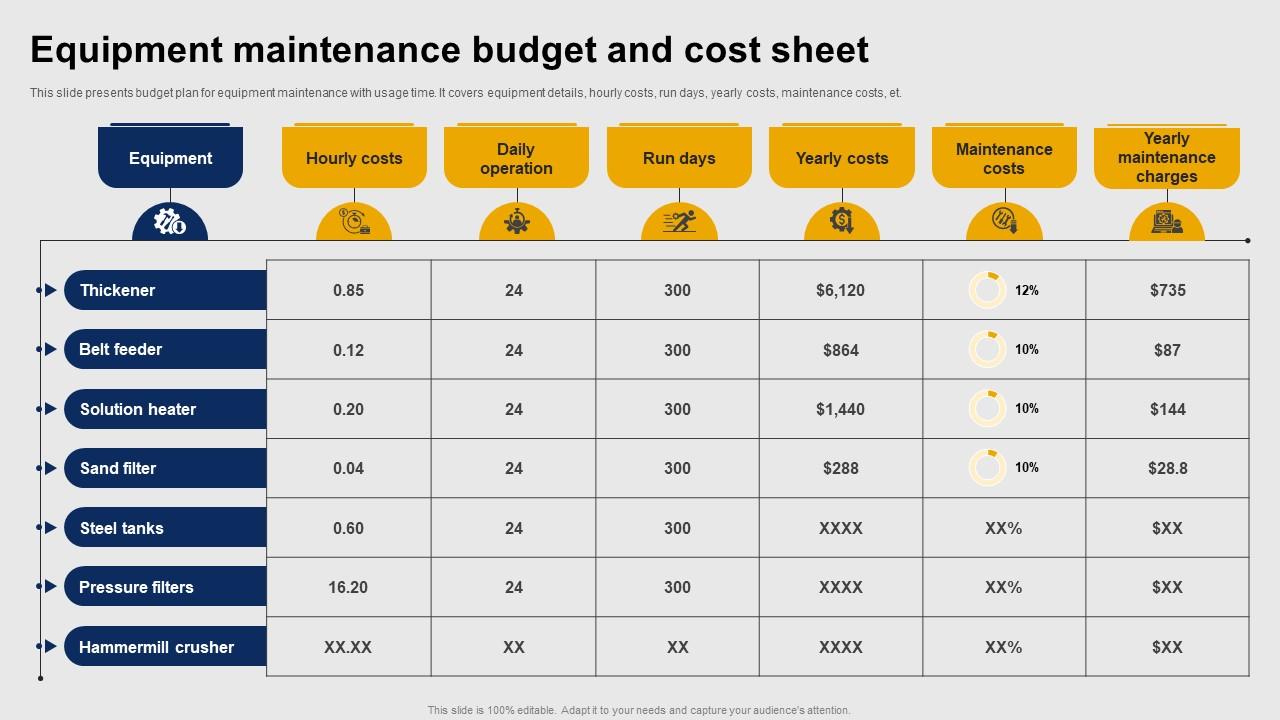
A slide detailing equipment maintenance costs with hourly rates, daily operations, run days, yearly costs, and maintenance percentages
Slide 1 of 9

or

Favourites Favourites

Try Before you Buy Download Free Sample Product

Audience Impress Your
Audience
Editable 100%
Editable
Time Save Hours
of Time
The Biggest Sale is ending soon in
0
0
:
0
0
:
0
0
Rating:
90%
This slide presents budget plan for equipment maintenance with usage time. It covers equipment details, hourly costs, run days, yearly costs, maintenance costs, et. Introducing our Equipment Maintenance Budget And Cost Sheet set of slides. The topics discussed in these slides are Equipment, Daily Operation, Maintenance Costs This is an immediately available PowerPoint presentation that can be conveniently customized. Download it and convince your audience.

FAQs for Equipment Maintenance Budget

Here's how I'd break it down: preventive stuff first (inspections, oil changes), then corrective repairs for when things inevitably break. Parts inventory is huge too - can't tell you how many times we've been stuck waiting on some random gasket. Labor costs are the other big chunk. Oh, and compliance maintenance - that regulatory stuff will bite you if you ignore it. Older equipment obviously needs more attention, so factor that in based on your machine ages. Track your real costs for a few months to see what you're actually spending. Then tack on like 10-15% extra because something always breaks at the worst possible time. Trust me on that one.

Honestly, your best bet is digging into whatever maintenance records you've got from the last few years. I know, sounds super fun right? But that's where the real numbers live - oil changes, filters, all that routine stuff plus any surprise breakdowns. Industry standard is usually around 2-4% of what your equipment's worth annually, which gives you a decent ballpark. The trick is keeping planned and emergency costs separate when you're tracking things. If you're not logging this stuff already, start now. Trust me, you'll be so glad you did when you're trying to figure out budgets down the road.

Honestly, think of preventive maintenance like getting oil changes for your car - annoying but way cheaper than buying a new engine. Do regular inspections and replace parts on schedule, and you'll dodge those nightmare breakdowns that cost 3-5x more to fix. The upfront spending feels painful, I get it, but you're actually saving money long-term by keeping everything running smooth. Start with your most critical equipment first and build a maintenance schedule around those. Trust me, it beats dealing with emergency repairs and all that downtime stress. Your future self will thank you.

Look at what would completely screw you if it broke down - that's your priority list right there. I always tell people to check maintenance records for the stuff that's constantly giving you headaches. Age isn't everything though - I've seen 20-year-old machines outlast brand new ones that turned into money pits. Score each piece of equipment based on how critical it is, failure risk, and what repairs actually cost you. Don't just fix whatever's making the most noise this week. Update your list every few months so you're not scrambling when something major dies.

So for tracking maintenance costs, I'd probably go with CMMS software first - UpKeep or Fiix are solid choices since they handle everything from work orders to parts inventory in one spot. But honestly? Don't sleep on a good Excel spreadsheet if you're just getting started. Works better than you'd think. Bigger companies usually end up with ERP systems like SAP that have maintenance stuff built in. QuickBooks is decent too for basic expense sorting. I mean, start simple and see what you actually need - no point overcomplicating it right away. You can always upgrade later when things get messier.

Yeah so older stuff just breaks way more often and costs more to fix each time. I'd budget like 60-70% extra for your aging equipment vs the new stuff. Group everything by age and condition first - makes it easier to see where your money's going. The real headache is figuring out when to stop throwing cash at something that's basically done for. My buddy kept dumping money into this ancient forklift when he should've just replaced it months ago. You gotta weigh those repair costs against just buying new equipment. That way you won't get blindsided when your 15-year-old conveyor finally calls it quits.

Honestly, start with just 2-3 metrics or you'll drive yourself crazy tracking everything. OEE is solid - gives you availability, performance, and quality in one number. MTBF and MTTR are classics too, they show if you're preventing failures and how fast you bounce back. I always tell people to track maintenance cost per unit since that's what actually matters for your bottom line. The planned vs unplanned ratio is key - more scheduled stuff, fewer "oh crap" moments. Pick what makes sense for your setup and stick with it consistently.

Look, maintenance is basically insurance - not just another expense eating your budget. Figure out what equipment actually matters for keeping things running vs the stuff that's just convenient to have. Put most of your money toward preventing failures on the critical gear. I've watched way too many companies get burned when something important dies unexpectedly. Document what your preventive work saves you - that's how you prove it's worth it. The 80/20 thing works well: throw 80% at your most vital equipment. You can stretch some intervals on less important stuff when money's tight, but don't mess around with safety maintenance.

Honestly, skimping on maintenance is like asking for trouble. Your equipment breaks down way more often, so you're stuck paying for emergency fixes instead of cheap routine stuff. Machines die early too - I've watched companies toss perfectly good equipment because they ignored basic upkeep. The safety thing worries me most though. Operations get disrupted constantly from all the downtime. Oh, and definitely pad your budget by 10-15% above what you think you need. Trust me on that one.

Dude, proper maintenance budgeting can seriously double how long your equipment lasts - plus you'll see productivity jump 15-20%. Here's the thing: when you plan for regular upkeep, you catch problems early instead of dealing with expensive breakdowns that shut everything down. I've watched teams completely transform from always putting out fires to actually running smoothly. Just budget around 2-4% of what it'd cost to replace your equipment each year. Honestly, you're just swapping small predictable expenses for those brutal surprise costs that nobody wants. Check what you're spending on emergency fixes right now - that'll make it crystal clear why planning ahead is worth it.

Check your maintenance records from the past few years first - you'll spot patterns and seasonal stuff that way. Older equipment breaks more (obviously), so factor that in. Condition monitoring is huge if you can swing it - vibration checks, oil tests, thermal scans. Honestly, predictive maintenance saves so much headache down the road. Don't forget inflation when you're crunching numbers. I'd throw in at least 10-15% extra because Murphy's Law is real - things always fail right before a holiday weekend or during your busiest season.

Honestly, proper training is probably the smartest money you'll spend on maintenance. Your operators won't break stuff as much when they actually know what they're doing. Trained staff catch problems early too - like way before they turn into those nightmare repair bills. I've watched companies save serious cash this way. Also they'll actually stick to maintenance schedules instead of just... hoping for the best? Anyway, figure out which equipment gives you the biggest headaches and start your training there.

Most companies screw up by using last year's numbers without thinking about inflation or aging equipment. Seasonal spikes always catch people off guard too - like when the AC dies during the hottest week of summer, obviously. Don't lump routine maintenance with major overhauls in the same budget bucket, that's asking for trouble. Downtime costs are huge but somehow everyone forgets about them. I'd add a 20% buffer for the inevitable disasters. Oh, and track monthly so you're not flying blind all year.

Yeah, seasonal changes totally wreck maintenance budgets. Your equipment gets hammered during busy seasons - longer hours, harder use, the whole deal. Then weather throws curveballs at you. Winter = heating repairs, summer = AC bills through the roof. It's honestly pretty predictable once you look at past years though. What I'd do is dig through your old records to find the patterns. Build some extra cash into each season's budget. Oh, and try scheduling big maintenance stuff during your slow months - way easier when you're not scrambling to keep everything running.

Honestly, vendor management can save you tons on maintenance costs. Start by auditing what you're currently spending - I bet you'll find some overlap. Consolidating contracts gets you better rates and volume discounts. Build relationships with solid suppliers who'll actually help optimize your schedules instead of just taking orders. Watch out though, some will try to upsell you on stuff you don't need. Track how they're performing against your budget. If they're not delivering value, don't hesitate to switch. Oh, and those long-term partnerships? They're worth it if you find the right people.

Ratings and Reviews

90% of 100
Review Form
Write a review
Most Relevant Reviews
  1. 100%

    by Chase Howard

    Amazing product with appealing content and design.
  2. 80%

    by Cyril Gibson

    I discovered this website through a google search, the services matched my needs perfectly and the pricing was very reasonable. I was thrilled with the product and the customer service. I will definitely use their slides again for my presentations and recommend them to other colleagues.

2 Item(s)

per page: