

Event Risk Assessment And Management Planning




Try Before you Buy Download Free Sample Product
 Impress Your
 Audience
 100%
100% Editable
 Save Hours
 of Time


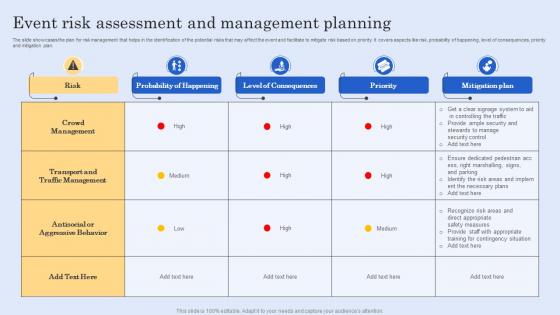
The slide showcases the plan for risk management that helps in the identification of the potential risks that may affect the event and facilitate to mitigate risk based on priority.It covers aspects like risk, probability of happening, level of consequences, priority and mitigation plan.
People who downloaded this PowerPoint presentation also viewed the following :
Event Risk Assessment And Management Planning with all 6 slides:
Use our Event Risk Assessment And Management Planning to effectively help you save your valuable time. They are readymade to fit into any presentation structure.





FAQs for Event Risk Assessment
Start by listing out every possible disaster - weather, tech crashes, vendor no-shows, security problems, whatever. Then figure out how likely each one is and how badly it'd mess things up. I know it sounds super pessimistic, but trust me on this. Focus on the worst risks first and come up with backup plans for each. You'll want clear procedures with people assigned to handle stuff, plus communication plans when things go sideways. Oh, and definitely do a practice run beforehand - like a fake emergency drill but less awkward.
Honestly, tech makes risk assessment so much easier these days. Start with predictive analytics and real-time monitoring - they'll catch problems before they spiral. Weather APIs are clutch for outdoor events, and crowd sensors help too. Social media sentiment tracking sounds fancy but it actually works for spotting brewing issues. Digital incident reporting beats the hell out of trying to reach people by phone when everything's going wrong. Risk management software lets you build solid contingency plans and test different scenarios. My advice? Pick one or two solutions that tackle your biggest headaches first, then expand from there.
Honestly, good communication is like having a bunch of extra eyes and ears on your event. Get your vendors, staff, and attendees talking to you about what they're seeing - they'll catch stuff you miss. When things inevitably go sideways (because they always do), you'll already have those relationships built so people actually respond when you need them. I learned this the hard way at my first big event. Set up regular check-ins beforehand, but more importantly, make sure everyone feels comfortable hitting you up when something seems off. Being ahead of problems beats scrambling to fix them every time.
Honestly, just walk through your timeline and ask "what if" at every single step. Corporate events? Tech always crashes and speakers flake - plus catering gets messy. Weddings are weather nightmares plus vendor chaos, and don't even get me started on family drama. Festivals mean crowd issues, permit headaches, safety stuff. Here's what really helps though - dig up incident reports from similar events nearby. Seriously, they'll show you problems you'd never think of. Each event type has its own special way of going sideways, so think about what makes yours different.
Get a lawyer to look at your liability waivers ASAP - those generic ones online are basically useless. Your insurance needs to cover the specific stuff you're doing, not just general event coverage. Oh, and double-check if you need to add the venue as "additional insured" because that's always a pain if you miss it. Don't forget permits obviously, plus ADA compliance. If there's booze involved, that's a whole other licensing mess. Local noise rules can bite you too. Honestly, way better to sort this legal stuff early than panic when something goes wrong.
Honestly, I'd just grab a spreadsheet and dump every nightmare scenario you can think of - rain, caterers bailing, sound system dying, whatever. Rate each one on how likely it is and how screwed you'd be if it happened. The really weird stuff that seems impossible but would totally destroy everything? Those go on the list too. Get your team involved because they'll catch things you missed (they always do). Focus your energy on maybe the top 10-15 worst offenders and figure out backup plans for each. Write it all down or you'll forget something important when you're stressed later.
Get your team together within a week - trust me, wait longer and people forget half the details. Grab all your incident reports, feedback, complaints, the whole mess. Compare what actually went down against your original risk planning. Did your prep work save you or did you just get lucky? I always look at the stuff that DIDN'T go wrong too, not just the disasters. Create some basic template so you're not reinventing this process every time. Oh, and update that master risk list while it's all still rattling around in your head.
Okay so first things first - map out your evacuation routes and figure out where medical stations will be. I'd also walk through the venue beforehand because you'll spot weird hazards you never thought of. Get your communication sorted with local emergency services and make sure everyone on your team knows what they're doing if stuff hits the fan. Practice some scenarios during briefings too. Oh and definitely set up a command center where you can coordinate everything - trust me, you don't want to be running around with your phone trying to manage chaos. Keep emergency contacts handy and pick backup decision-makers in case you're stuck somewhere.
Dude, the big stuff that'll bite you: cost overruns, vendors flaking, and nobody showing up. Budget at least 10-15% extra for random disasters - trust me on this one. Get event insurance (boring but necessary) and write contracts with solid cancellation terms. Don't pay everything upfront either. For the attendance thing, maybe do tiered pricing or lock in sponsors early so you've got some guaranteed cash coming in. Oh, and start finding backup vendors now because scrambling when your caterer ghosts you two weeks out is actual hell.
Okay so you've gotta think way beyond just the usual stuff going wrong. Tech crashes, hackers, people getting bored and dropping off - that's your new reality. Virtual events need backup streaming services and multiple internet options, obviously. Hybrid is honestly a nightmare because literally everything can break at once. I'd do tons of tech rehearsals and have like 3 different ways to reach people. Oh and definitely plan how you'll pivot if you suddenly need to go full virtual or vice versa. Just map out every single thing that could fail (there's so many now) then figure out your backup plan for each.
Start with risk assessment training - that's your baseline. Get a few key people first aid certified, then work on emergency response protocols. Don't sleep on crisis communication training though, seriously. Half the time that's what makes or break you when stuff hits the fan. Make sure everyone knows the legal stuff they need to follow and how to report incidents properly. Oh and create those laminated quick guides or whatever - the kind people actually grab during chaos, not those thick binders nobody reads. You don't need everyone trained to expert level right away, just build out from your core team.
Dude, cultural stuff will totally mess with your risk planning if you're not careful. Something that seems super safe here could be a disaster somewhere else - think dietary restrictions or religious stuff. I bombed a conference in Dubai once because of this! Get local partners early, they'll catch things you'd never think of. Different places have weird expectations about timing, how formal to be, all that. Some cultures freak out over uncertainty while others just roll with it. Oh, and communication styles vary like crazy too. Basically don't assume anything translates directly - do your homework first.
Honestly, insurance is just your backup plan when everything else goes sideways. You can plan for weather issues, vet your vendors, beef up security - but sometimes a vendor randomly goes bankrupt or someone slips and decides to sue. That's when insurance saves your butt. Don't rely on it as your main strategy though. It's more like the safety net under your tightrope act. Oh, and actually read through your policy with your broker beforehand - I learned that one the hard way. Make sure it covers the weird stuff that could actually happen at your specific event.
Honestly, start documenting what goes wrong after each event - even the small stuff. I keep this super basic spreadsheet (yeah I know, total nerd move) but it's saved my ass so many times. Track incidents, vendor screwups, tech failures, whatever. After a few events you'll notice patterns like "oh great, we always have sound issues" or staffing problems that keep happening. Those become your main things to plan around next time. Grab feedback from your team right after too, while everyone still remembers the chaos. Trust me, even if your last event went smooth, start this now.
Honestly, there's three things you can't ignore anymore. Cybersecurity is massive now - hackers are going after event registration systems and payment data like crazy. Climate stuff is becoming standard too since weird weather keeps screwing up events (I swear it's every other one these days). Mental health planning is also part of the safety checklist now, especially for big or stressful events. You'll want to start connecting with cybersecurity people and meteorologists ASAP. Oh, and throw some mental health resources into your regular safety protocols too.
-
“I really like the convenient operation and professionalism I saw on the SlideTeam website. I want to express my regards and appreciation to the team.”
-
I want to express my gratitude to SlideTeam’s presentation design services team for helping me create the best presentation of my life!