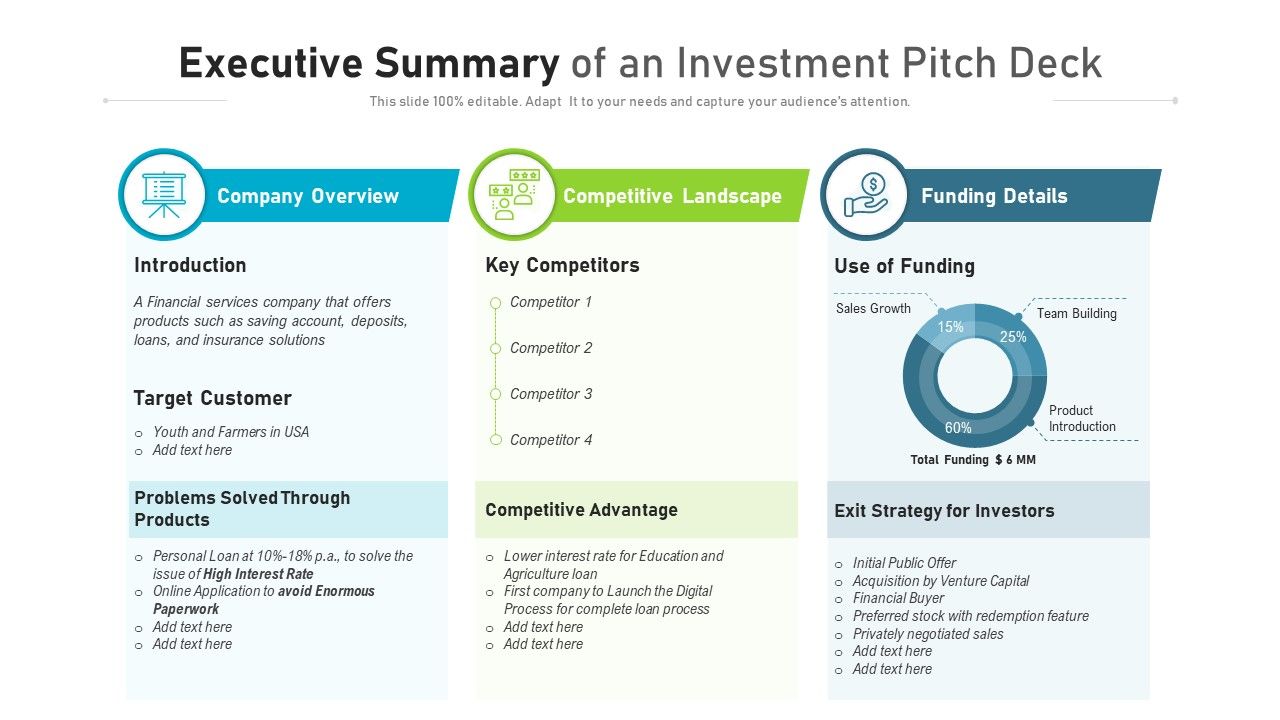
Resumo executivo de uma apresentação de argumento de venda

Rating:
86%
Executive summary of an investment pitch deck
Slide 1 of 2
Favourites Favourites

Try Before you Buy Download Free Sample Product

Audience Impress Your
Audience
Editable 100%
Editable
Time Save Hours
of Time
The Biggest Sale is ending soon in
0
0
:
0
0
:
0
0
Rating:
86%

Recursos desses slides de apresentação do PowerPoint:

Apresentando nosso conjunto de slides com Resumo executivo de um argumento de venda de investimento. Isso exibe informações sobre três etapas do processo. Este é um modelo de PowerPoint fácil de editar e com design inovador. Portanto, baixe imediatamente e destaque as informações sobre Financeiro, Taxa de Juros, Processo.

FAQs for Executive summary of an

You need four main things: the problem, your fix, why it matters, and some numbers. Make the problem super obvious - why should anyone care? Then explain your solution and what value it actually brings. Numbers really help here, so throw in realistic financial stuff or ROI estimates. One page max though - executives get distracted easily, trust me. Oh, and don't forget to actually ask for something specific at the end, whether that's money, approval, whatever. It's basically your elevator pitch but written down instead of spoken.

Okay so basically you gotta tailor everything to your audience. Investors? Hit them with ROI and financial stuff right up front. Your team needs the operational details and when things are happening. Board members are obsessed with strategy and risk management - give them that big picture vision they crave. Same facts every time, but you're just flipping which ones you lead with. CEOs want the headline in like two sentences max, but department heads actually need enough meat to figure out how this messes with their staff. Oh and honestly? Always start with whatever that specific person cares about most, then fill in the rest.

Hey! So the biggest mistake people make is writing these things like novels - keep it short and punchy. Lead with your main point right away, don't bury it halfway through. Skip all the industry jargon too, not everyone speaks your language. Here's what really bugs me though: people just recap what they did instead of explaining what it actually means. Your exec summary isn't a diary entry, it's supposed to help people make decisions. Focus on the "so what" and next steps. And honestly? Write it so it makes sense on its own.

Look, busy execs are drowning in paperwork, so visuals are a lifesaver. A good chart shows trends instantly instead of making them read three paragraphs of numbers. People zone out fast these days - I mean, who has time to read walls of text? Breaking things up with graphs or infographics keeps them engaged. Your visuals should be like movie trailers for your data. They need to actually support your points though, not just look pretty. I've seen too many reports with random charts that don't add anything meaningful.

Okay so the executive summary is literally your proposal's elevator pitch - busy execs read this to figure out if your whole document deserves their attention. Pack your main problem, solution, benefits, and what you're asking for into those first couple pages. Most decision-makers won't read past that anyway, let's be real. Think of it as your hook - either you get a "yeah, let's discuss this" or your proposal gets tossed. Here's the weird part: write it last even though it goes first. That way you can pull out your best points after you've hammered through all the details.

Keep your executive summary to 1-2 pages max - around 300-500 words works well. I usually go with one page for every 10-20 pages of the full report, but honestly? Shorter wins every time. Executives don't have time to read novels. Most will just skim anyway, so make it count. Hit the problem you're solving, your solution, main findings, and what you need from them. Bullet points are your friend here - they make everything way more scannable. Don't overthink it. Just give them what they need to say yes.

Okay so here's the deal with executive summaries - they're basically your shortcut to getting decisions made. Most C-suite people won't read past page one anyway (let's be real). You want to front-load all your big findings and recommendations right at the top. Make it super scannable with bullet points and bold the crucial stuff they can't ignore. It's like your elevator pitch but on paper. When you lay out clear options with the pros and cons, you're literally handing them the decision on a silver platter. Honestly, I've seen 50-page reports get approved based solely on a solid two-paragraph summary.

Pick 3-5 metrics tops that actually connect to your business goals. Revenue growth and customer acquisition costs are obvious ones. Conversion rates matter too. I'd throw in something about operational stuff - maybe time-to-market or cost savings since execs eat that up. Don't dump a spreadsheet on them though. They want the story, not every single data point you've collected. Make sure each metric ties back to strategic priorities and be ready to explain why it deserves their attention. The whole point is showing clear impact, not impressing them with how much you can measure.

Tone is huge for exec summaries - it literally makes or break how people perceive your whole project. Too casual? Stakeholders think you're not serious. Too formal and corporate-y? You'll bore them to death before they hit the main points. Find that middle ground where you sound confident but not like you swallowed a business dictionary. I always aim for "smart coworker explaining something important" vibes. Match your audience too - a startup pitch hits different than a board presentation. Honestly, just picture who's actually reading this and write like you're talking to them.

So I've been doing this for years - treat your exec summary like a movie trailer. Start with the problem that's keeping everyone up at night. Then hit them with what happens if nobody does anything about it (this is where you get dramatic lol). After that, boom - your solution swoops in to save the day. Skip the fluffy corporate speak and use actual numbers instead. Real scenarios work way better than vague concepts. Trust me, people will actually read the whole thing instead of just pretending they did. It's honestly the difference between getting buried in someone's inbox and getting that meeting you want.

So abstracts are for academic stuff - helping other researchers figure out if your paper's worth their time. Executive summaries? Those are for business docs when you need executives to actually make decisions. Abstracts get pretty technical and structured (kinda boring tbh). But executive summaries focus on the big wins, recommendations, and what it means for the bottom line. You want language your boss would get without a PhD. Use abstracts for research papers. Executive summaries work for reports, proposals, business plans - that kind of thing. Honestly, just match your style to whoever's reading it and what they're trying to get out of it.

Quarterly minimum, but monthly's way better if you can manage it. Things move so fast that six-month-old summaries are basically useless - I've watched execs make terrible calls because they were working off ancient data that completely missed huge market changes. Focus on what's actually shifting in your business, not just updating dates for the sake of it. Set up a calendar reminder and stick to it like you would any other must-do task. Trust me, your leadership team will appreciate having current info instead of stale reports. It's one of those things that seems minor but makes a huge difference.

Dude, consulting and finance are huge for this - those people literally make decisions off executive summaries. Tech startups? They're basically gambling their whole future on how well they can pitch ideas to investors in like two pages. Investment firms won't even look at your full proposal if the summary sucks. Healthcare and manufacturing deal with so much regulatory BS that clean summaries are goldmines for busy stakeholders. Honestly though, any industry where executives are buried under mountains of reports will love you for being concise. Just make yours easy to scan and tell them exactly what to do next.

Oh dude, this is so true - cultural stuff can make or break your executive summary. Japanese and German audiences want all the background details laid out methodically. But Americans? Just hit them with your main point right away, they hate wading through setup. You've also got to think about formality levels. Some cultures expect you to kiss up to hierarchy with fancy language, others are totally fine with casual directness. I swear, half the failed proposals I've seen bombed because someone wrote like they were talking to their Ohio coworkers when presenting to, say, Korean executives. Research your audience first!

Honestly, I'd just start with whatever you're already comfortable with - Google Docs or Notion work fine for templates and collaboration. Hemingway Editor is clutch for cutting out wordy BS (I use it way too much probably). Grammarly's decent too but less aggressive about trimming fat. ChatGPT or Claude can help if you're totally stuck on structure or need a rough draft to work from. Power BI and Tableau are solid if you've got data to visualize - execs eat that stuff up. But seriously, don't overthink the tool choice. Pick something simple, write it out, then run it through Hemingway before you send it off.

Ratings and Reviews

86% of 100
Review Form
Write a review
Most Relevant Reviews
  1. 80%

    by Brown Murphy

    Good research work and creative work done on every template.
  2. 80%

    by Clemente Myers

    Designs have enough space to add content.
  3. 100%

    by Davies Rivera

    Wonderful templates design to use in business meetings.
  4. 80%

    by David Snyder

    Great quality product.
  5. 80%

    by Colton Fisher

    Top Quality presentations that are easily editable.
  6. 80%

    by Douglas Lane

    Best Representation of topics, really appreciable.
  7. 80%

    by Cornell Hamilton

    Great quality slides in rapid time.
  8. 100%

    by Jones Adams

    It saves your time and decrease your efforts in half.
  9. 80%

    by O'Ryan Edwards

    Appreciate the research and its presentable format.
  10. 100%

    by Darrick Simpson

    Great quality slides in rapid time.

10 Item(s)

per page: