


Extensive Business Strategy Of KPMG Powerpoint Presentation Slides Strategy CD V
Check out our professionally designed Extensive Business Strategy of KPMG PPT, encompassing many KPMG marketing strategies to optimize business objectives, enhance lead generation, and foster increased engagement within the target audience. This encompassing KPMG strategies PPT comprises diverse strategies and unveils a campaign initiated by the company as part of its overarching marketing approach. Moreover, the KPMG operational strategies presentation elucidates KPMGs operating strategy, offering insights into global performance highlights, revenue metrics, total commitments, and the incorporation of code of conduct principles. Additionally, the KPMG ESG strategies presentation encompasses KPMGs Environmental, Social, and Governance ESG strategies, delineating the companys commitment to responsible business practices. Lastly, this comprehensive KPMG Financial Strategies PowerPoint touches upon essential aspects such as KPMG marketing, operational, ESG, and financial strategies, providing valuable insights into KPMGs multifaceted approach to business enhancement and growth. Customize this 100 percent editable template with our highly skilled research or design team. Get access now.
Check out our professionally designed Extensive Business Strategy of KPMG PPT, encompassing many KPMG marketing strategies ..

































































-

- Google Slides is a new FREE Presentation software from Google.
- All our content is 100% compatible with Google Slides.
- Just download our designs, and upload them to Google Slides and they will work automatically.
- Amaze your audience with SlideTeam and Google Slides.
-

Want Changes to This PPT Slide? Check out our Presentation Design Services
-

- WideScreen Aspect ratio is becoming a very popular format. When you download this product, the downloaded ZIP will contain this product in both standard and widescreen format.
-

- Some older products that we have may only be in standard format, but they can easily be converted to widescreen.
- To do this, please open the SlideTeam product in Powerpoint, and go to
- Design ( On the top bar) -> Page Setup -> and select "On-screen Show (16:9)” in the drop down for "Slides Sized for".
- The slide or theme will change to widescreen, and all graphics will adjust automatically. You can similarly convert our content to any other desired screen aspect ratio.
Compatible With Google Slides

Get This In WideScreen
You must be logged in to download this presentation.


Do you want to remove this product from your favourites?
PowerPoint presentation slides
Enthrall your audience with this Extensive Business Strategy Of KPMG Powerpoint Presentation Slides Strategy CD V. Increase your presentation threshold by deploying this well-crafted template. It acts as a great communication tool due to its well-researched content. It also contains stylized icons, graphics, visuals etc, which make it an immediate attention-grabber. Comprising sixty eight slides, this complete deck is all you need to get noticed. All the slides and their content can be altered to suit your unique business setting. Not only that, other components and graphics can also be modified to add personal touches to this prefabricated set.

People who downloaded this PowerPoint presentation also viewed the following :
Content of this Powerpoint Presentation
Slide 1: The slide introduces Extensive Business Strategy of KPMG. State your company name.
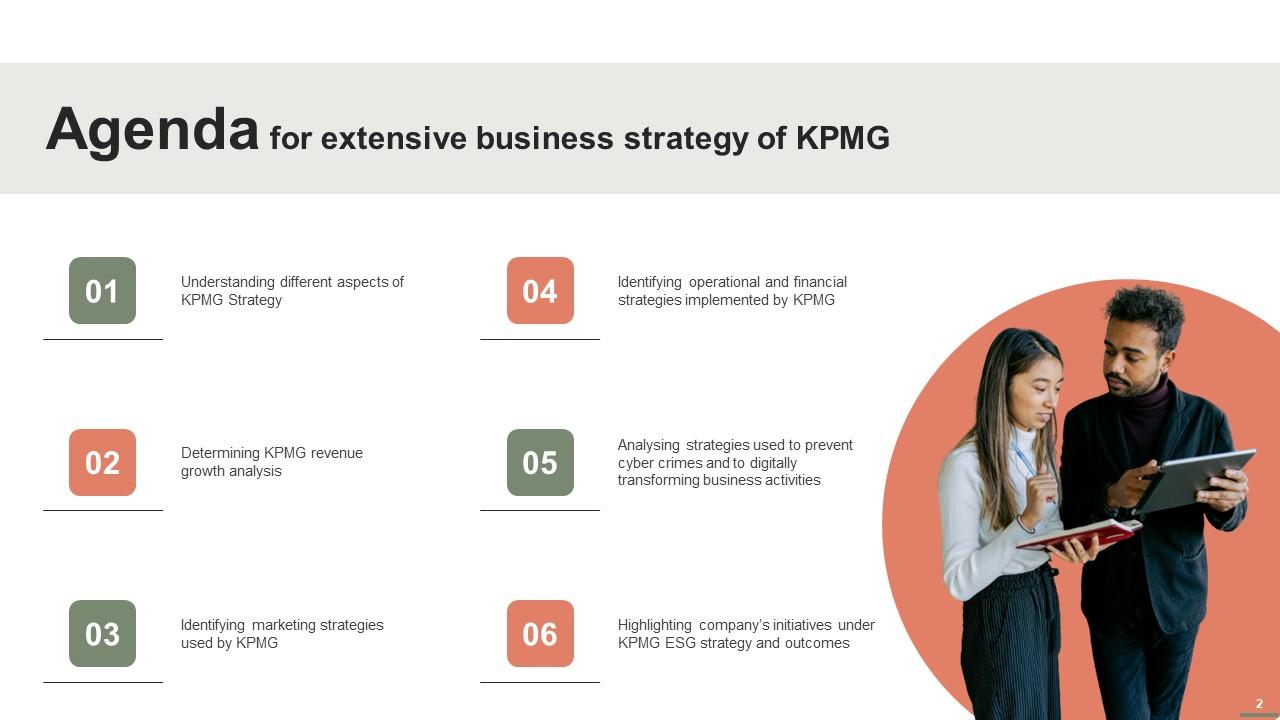
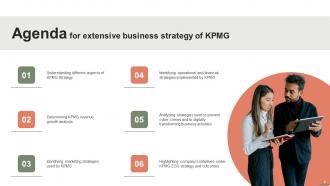
Slide 2: This is an Agenda slide. State your agendas here.
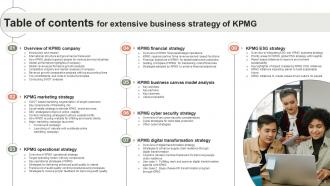
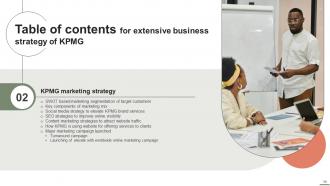
Slide 3: The slide displays Table of contents for presentation.
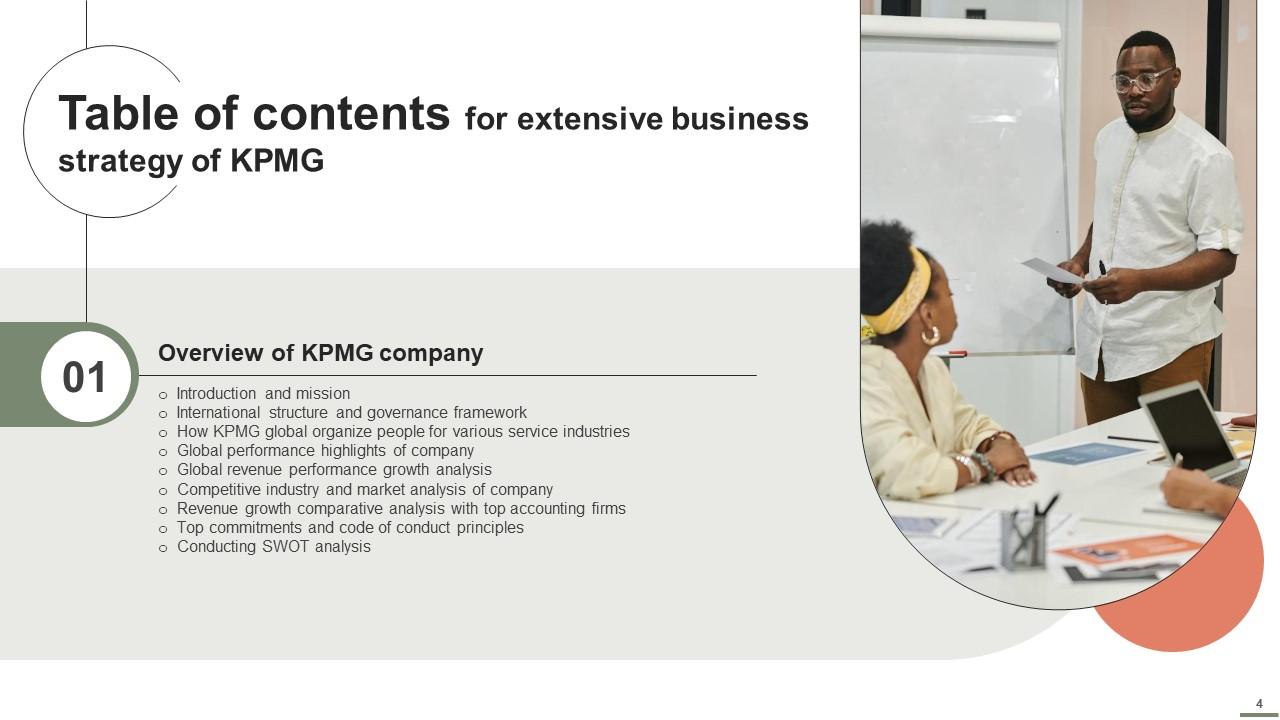
Slide 4: The slide depicts another Table of contents for presentation.
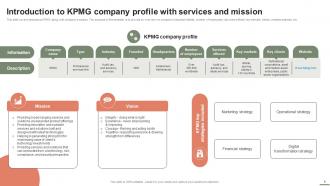
Slide 5: This slide covers facts about KPMG along with company’s mission.
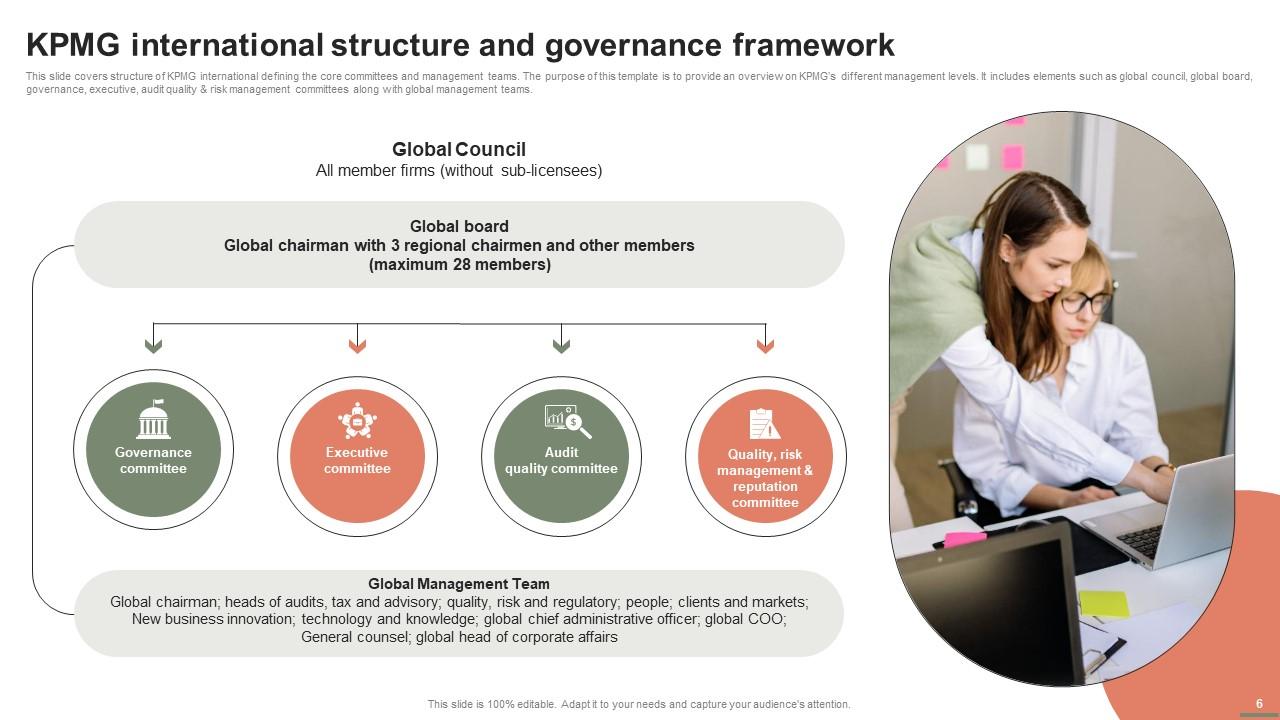
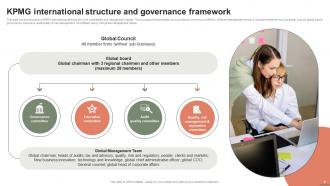
Slide 6: This slide displays structure of KPMG international defining the core committees and management teams.
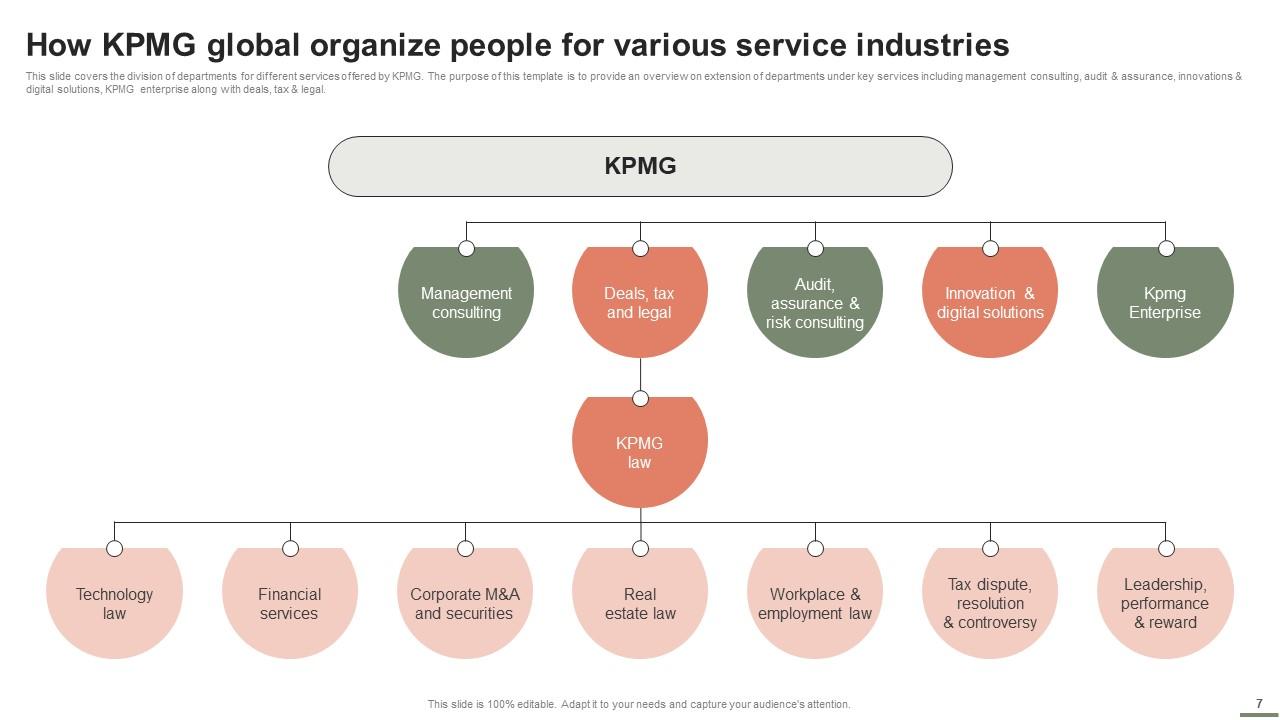
Slide 7: The slide shows the division of departments for different services offered by KPMG.
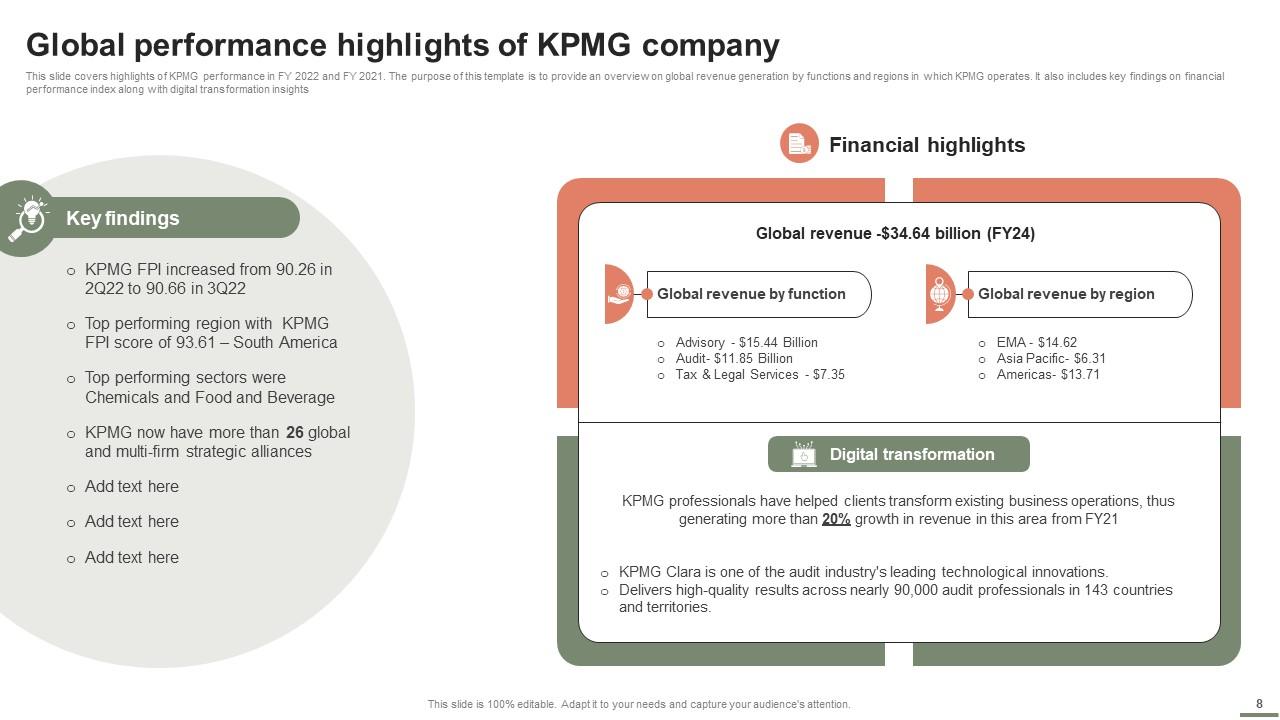
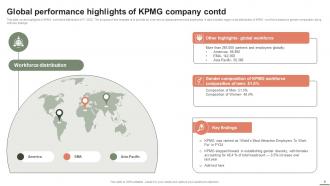
Slide 8: The slide covers highlights of KPMG performance in FY 2022 and FY 2021.
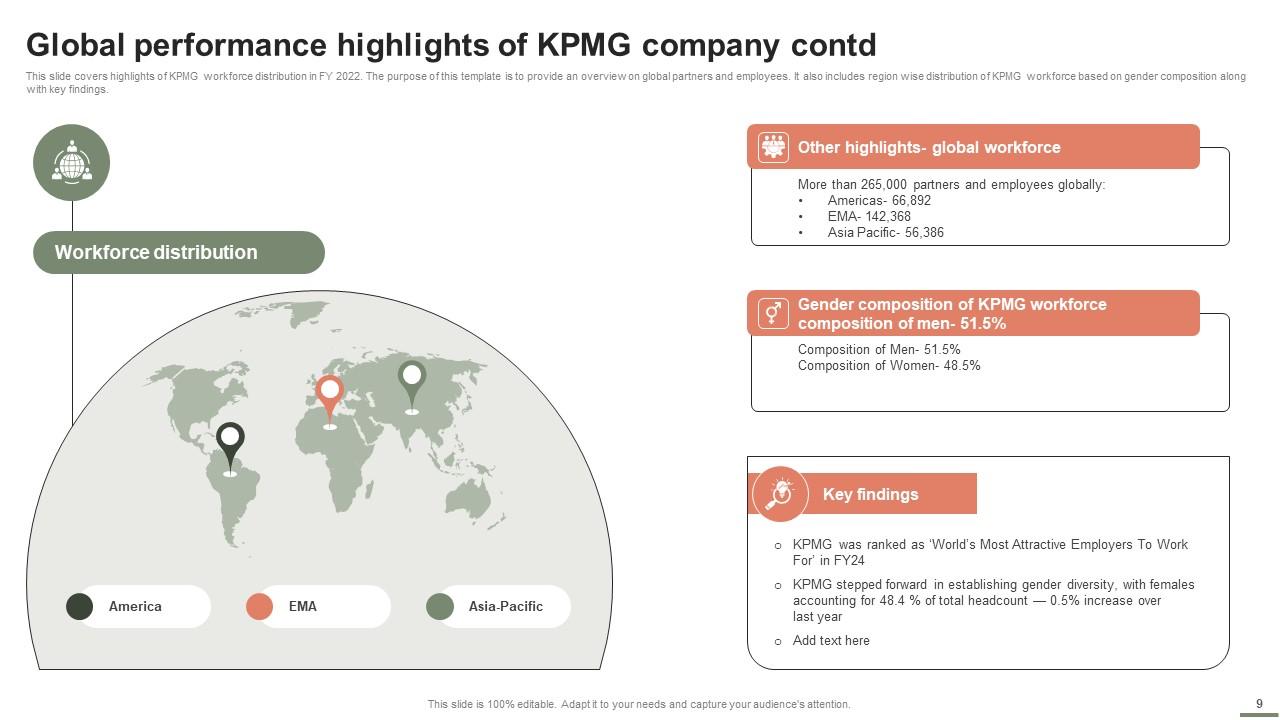
Slide 9: The slide highlights of KPMG workforce distribution in FY 2022.
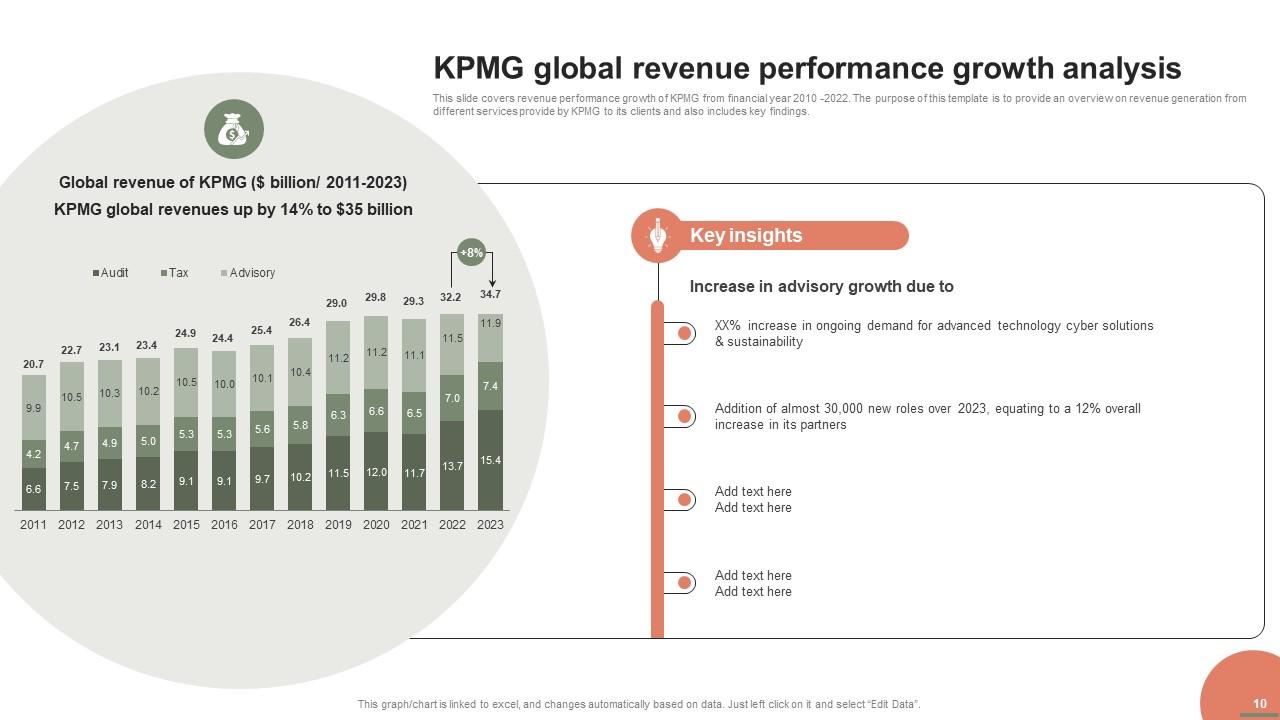
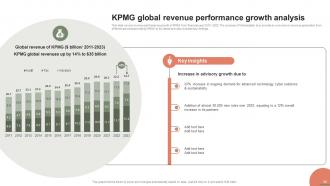
Slide 10: This slide covers revenue performance growth of KPMG from financial year 2010 -2022.
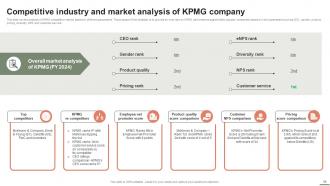
Slide 11: This slide covers analysis of KPMG competitive market based on different parameters.
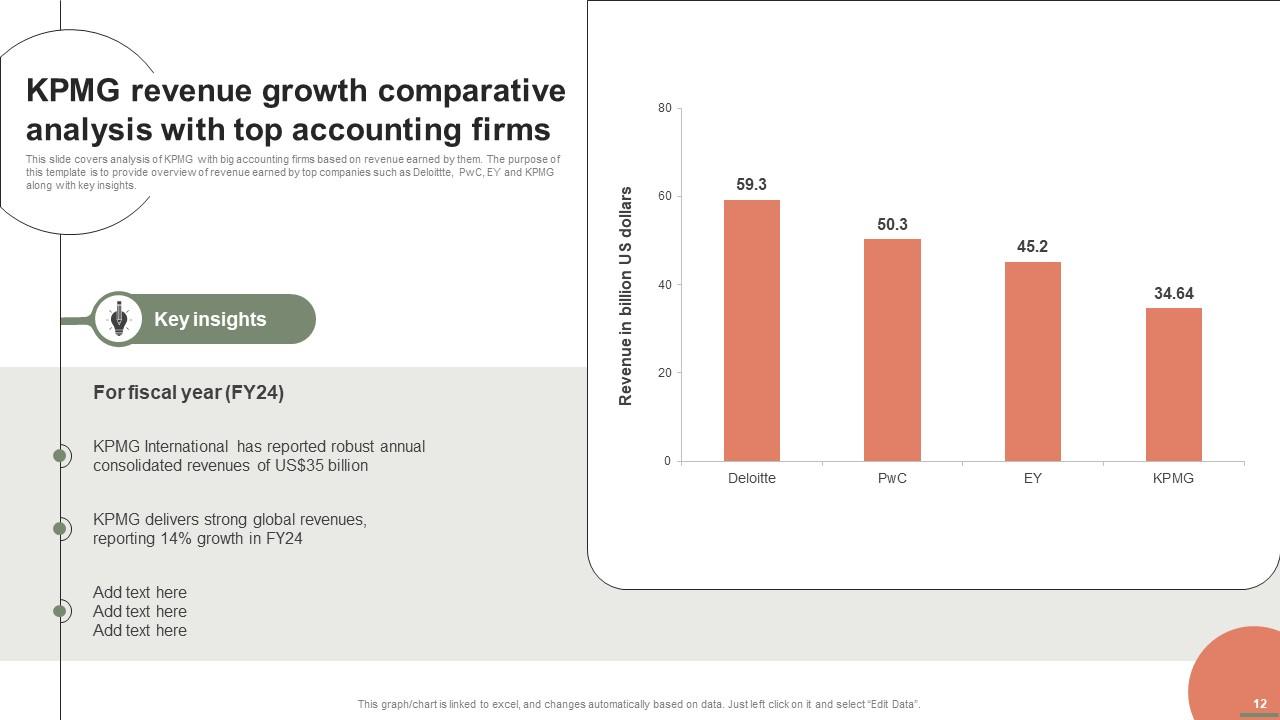
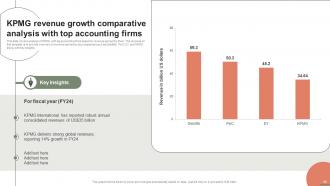
Slide 12: This slide covers analysis of KPMG with big accounting firms based on revenue earned by them.
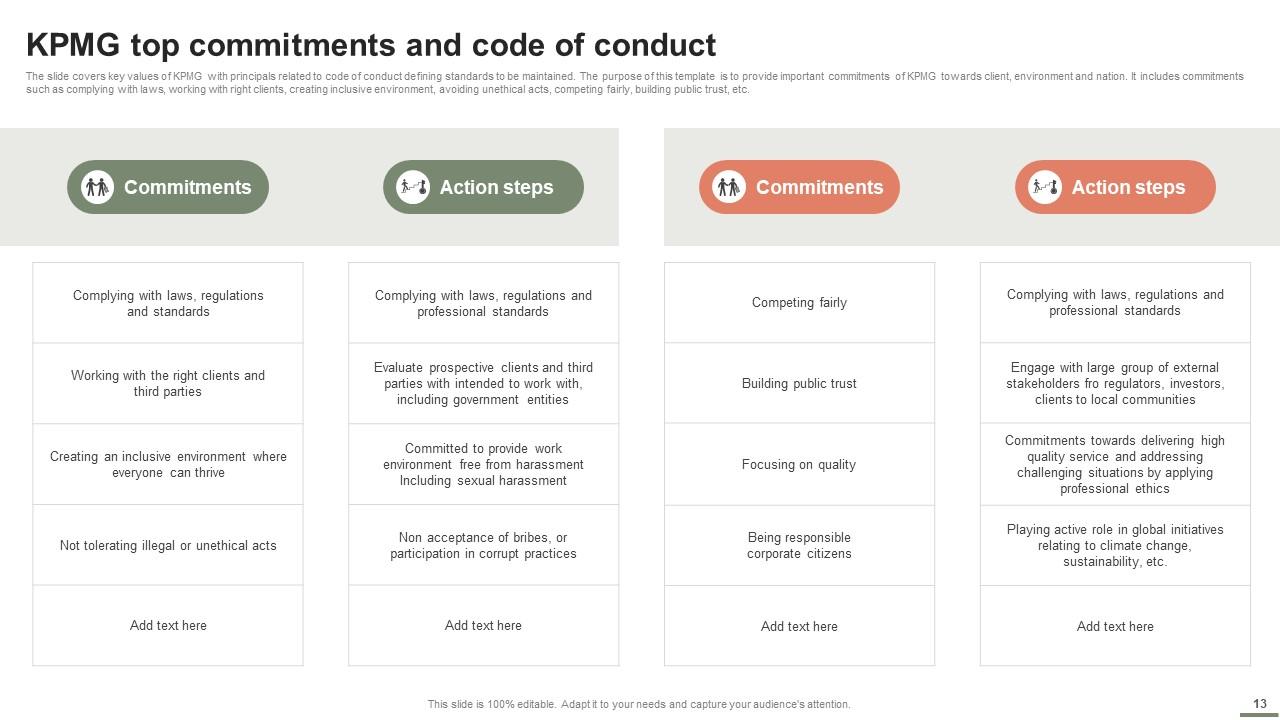
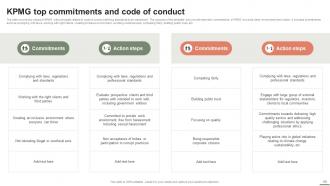
Slide 13: The slide covers key values of KPMG with principals related to code of conduct defining standards to be maintained.
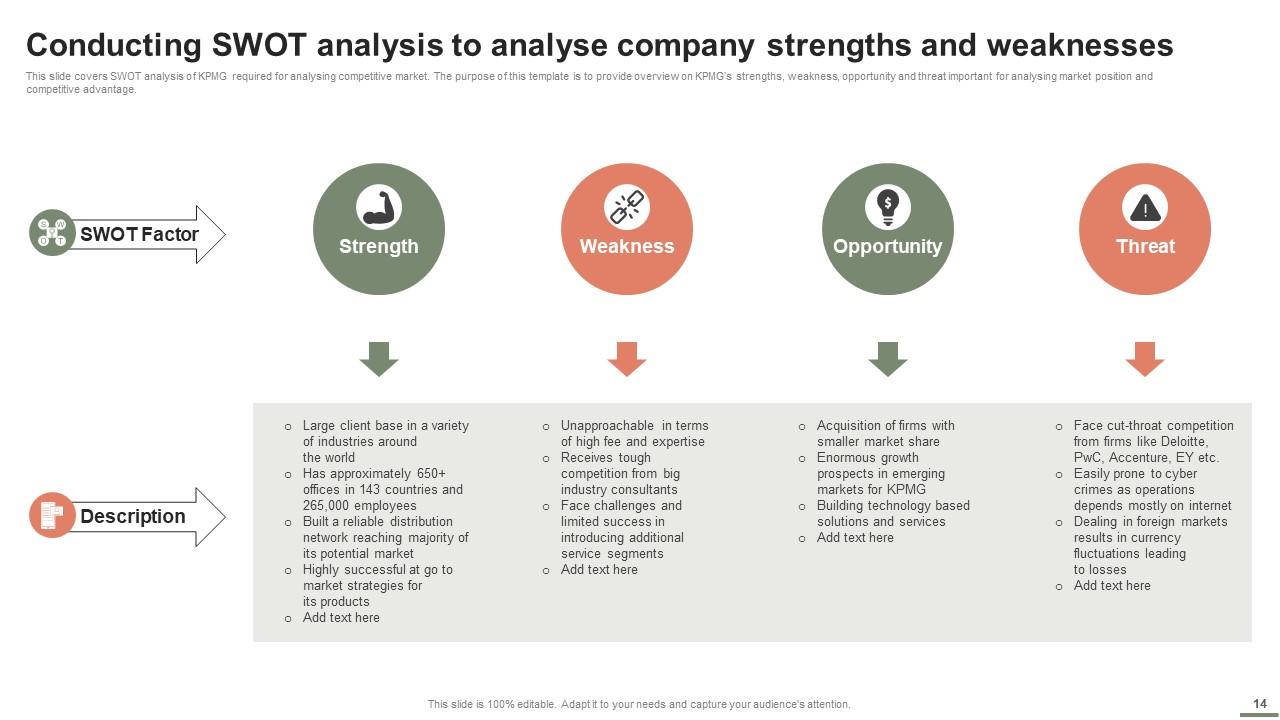
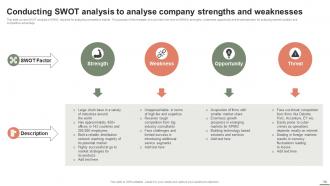
Slide 14: This slide covers SWOT analysis of KPMG required for analysing competitive market.
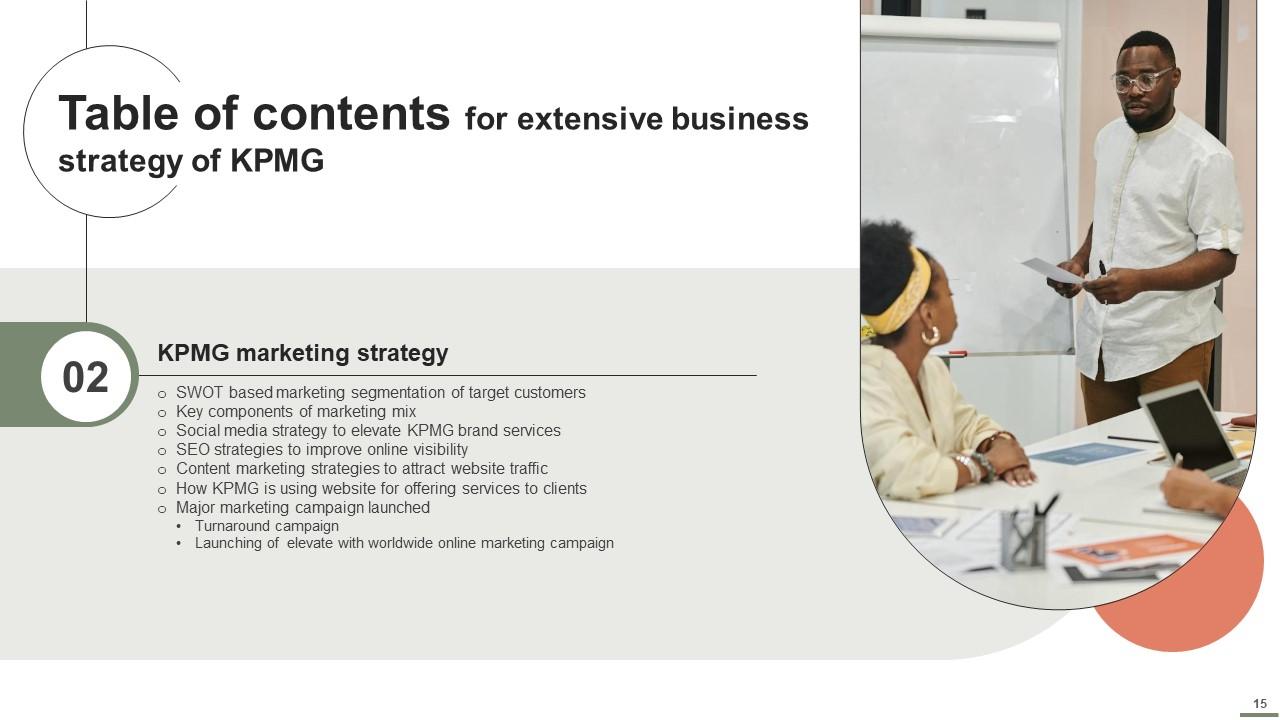
Slide 15: The slide again displays Table of contents.
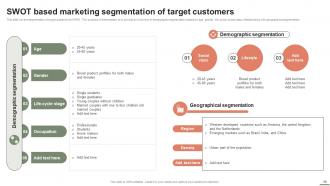
Slide 16: This slide covers segmentation of target audience for KPMG.
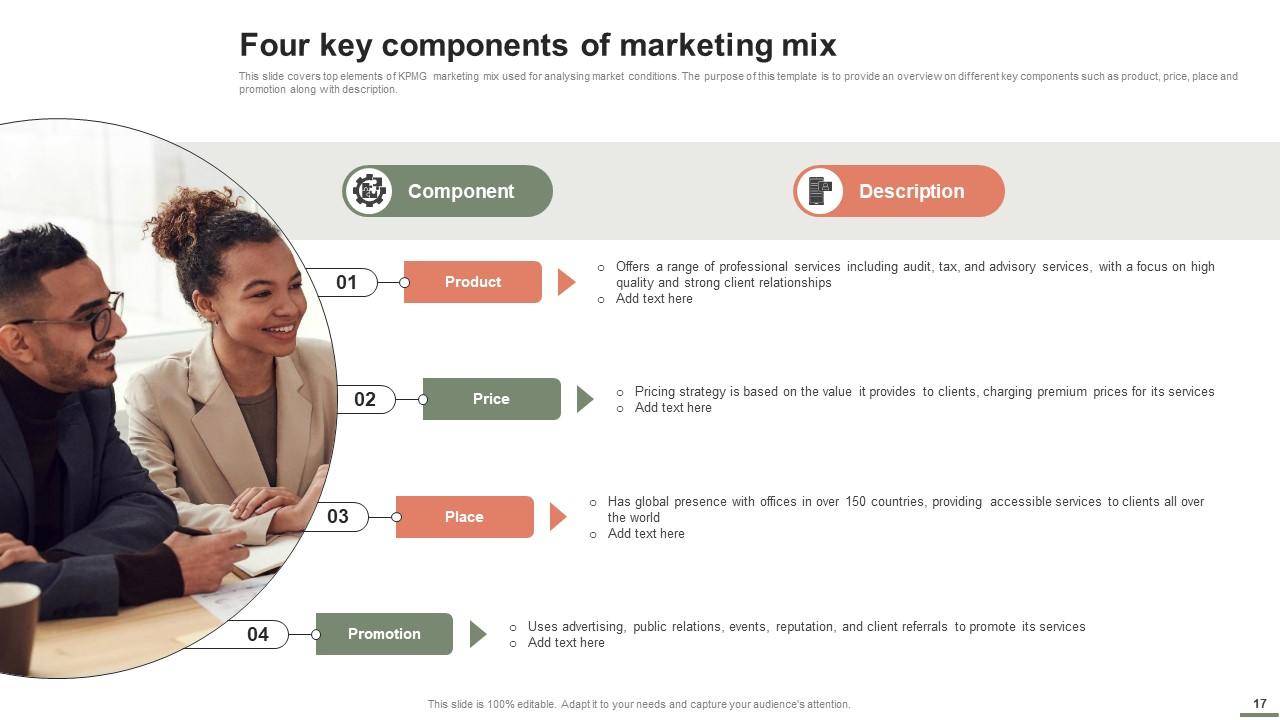
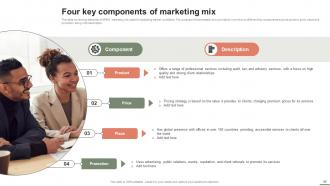
Slide 17: This slide covers top elements of KPMG marketing mix used for analysing market conditions.
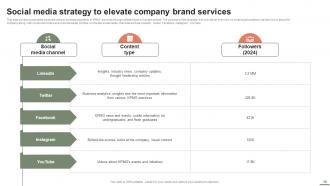
Slide 18: This slide covers social media channels used to increase popularity of KPMG services through different type of content posted.
Slide 19: This slide covers techniques to enhance KPMG digital visibility and increasing traffic to website.
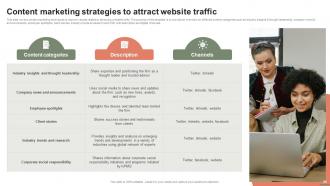
Slide 20: This slide covers content marketing techniques to improve results related to attracting website traffic.
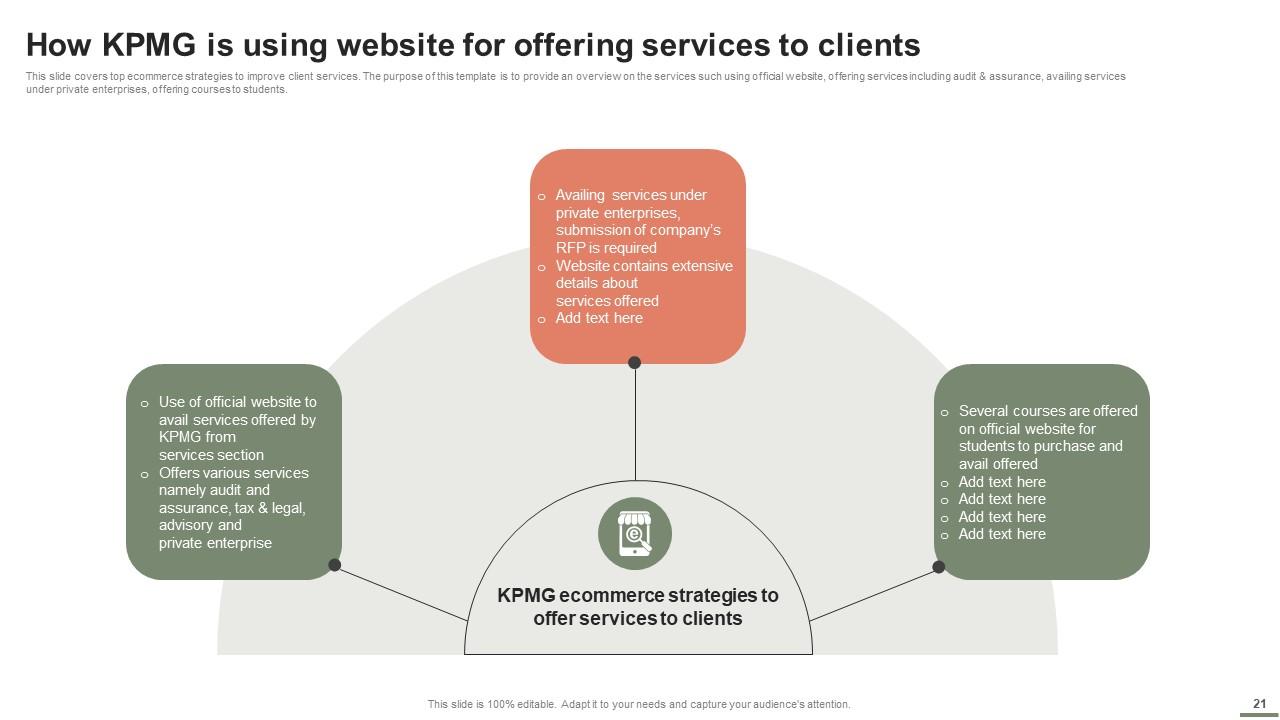
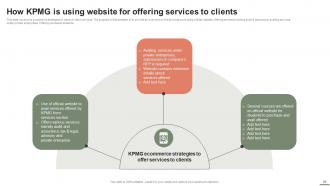
Slide 21: This slide covers top ecommerce strategies to improve client services.
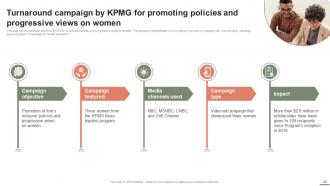
Slide 22: This slide covers campaign launched by KPMG to promote policies and progressive views on females.
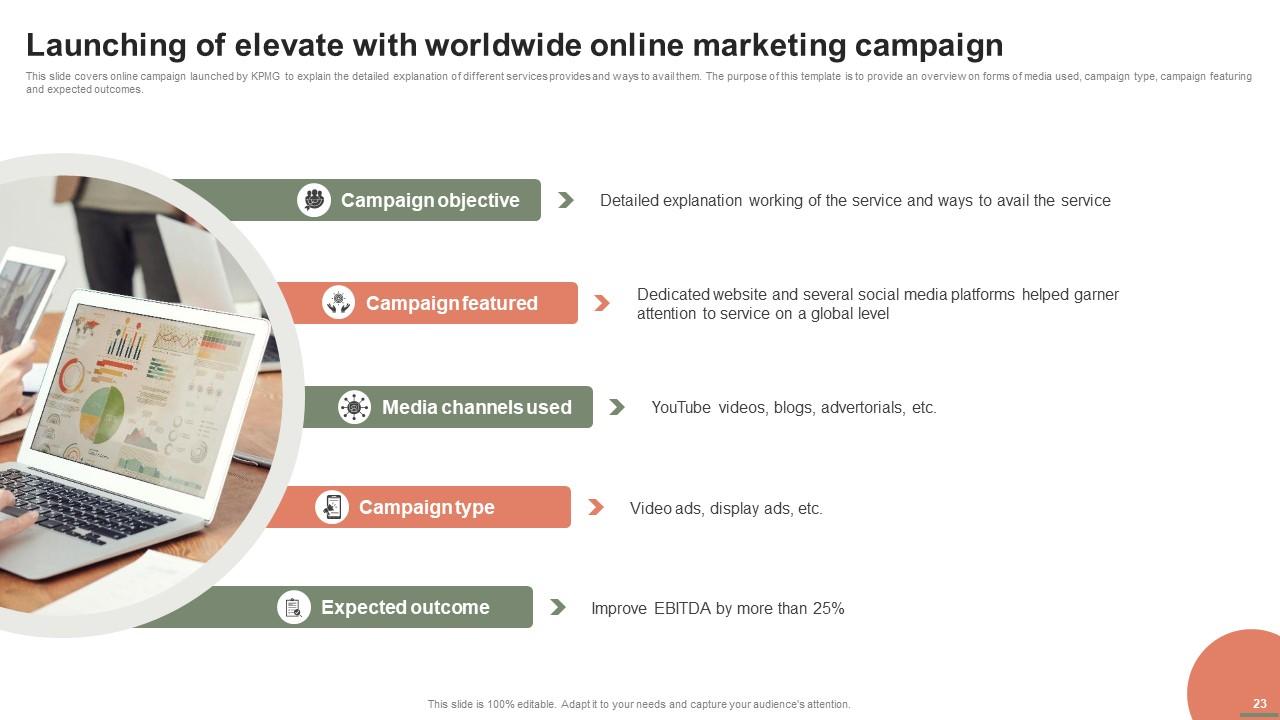
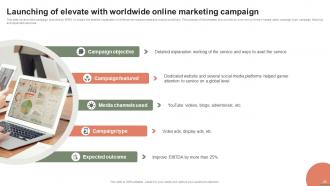
Slide 23: This slide covers online campaign launched by KPMG to explain the detailed explanation of different services.
Slide 24: The slides depicts another Table of contents.
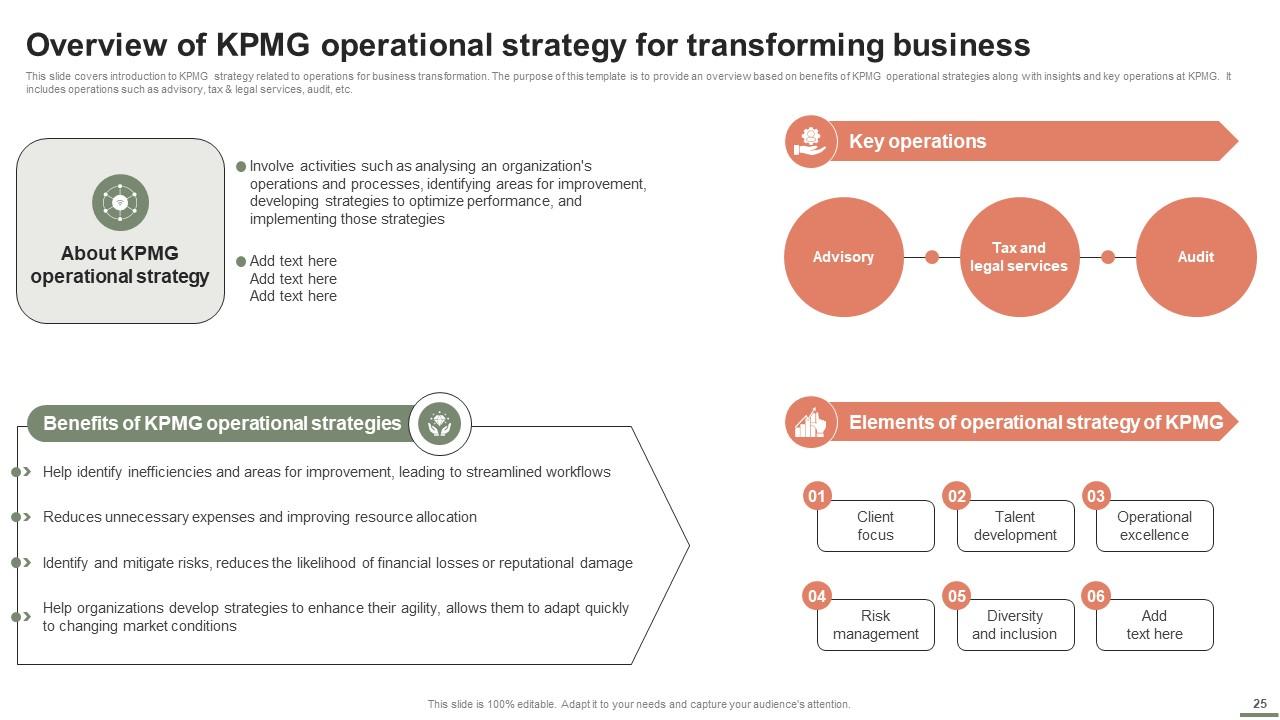
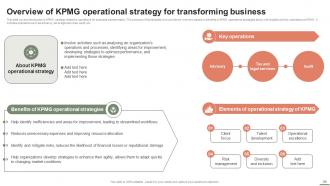
Slide 25: This slide covers introduction to KPMG strategy related to operations for business transformation.
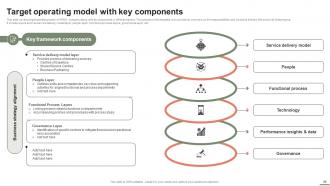
Slide 26: This slide covers target operating model of KPMG company along with its components in different layers.
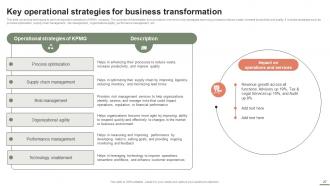
Slide 27: This slide covers top techniques to perform important operations of KPMG company.
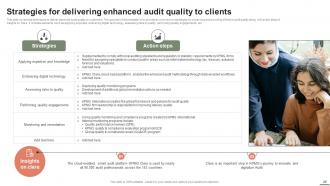
Slide 28: This slide covers top techniques to deliver improved audit quality to customers.
Slide 29: This slide covers framework representing key strategies that will improve KPMG audit quality control procedures.
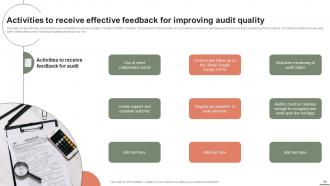
Slide 30: This slide covers activities conducted to receive feedback to enhance quality of audits for KPMG company.
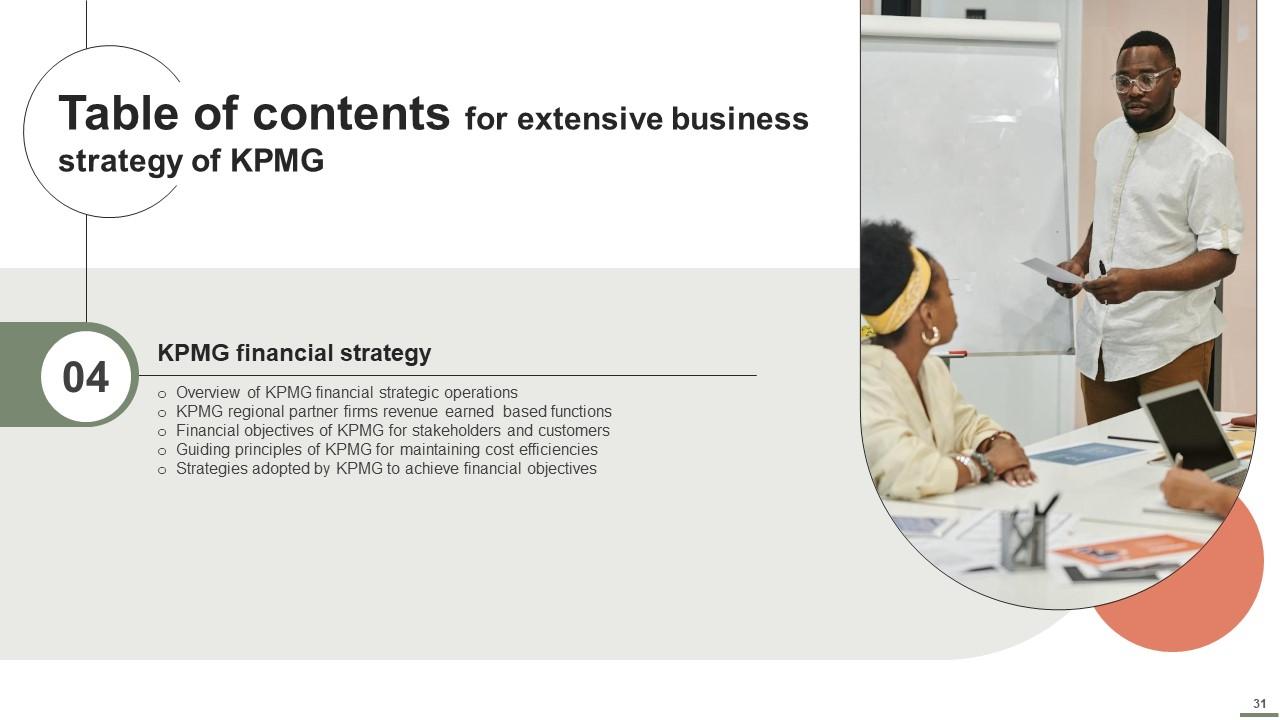
Slide 31: The slide shows Table of contents which is to be discussed further.
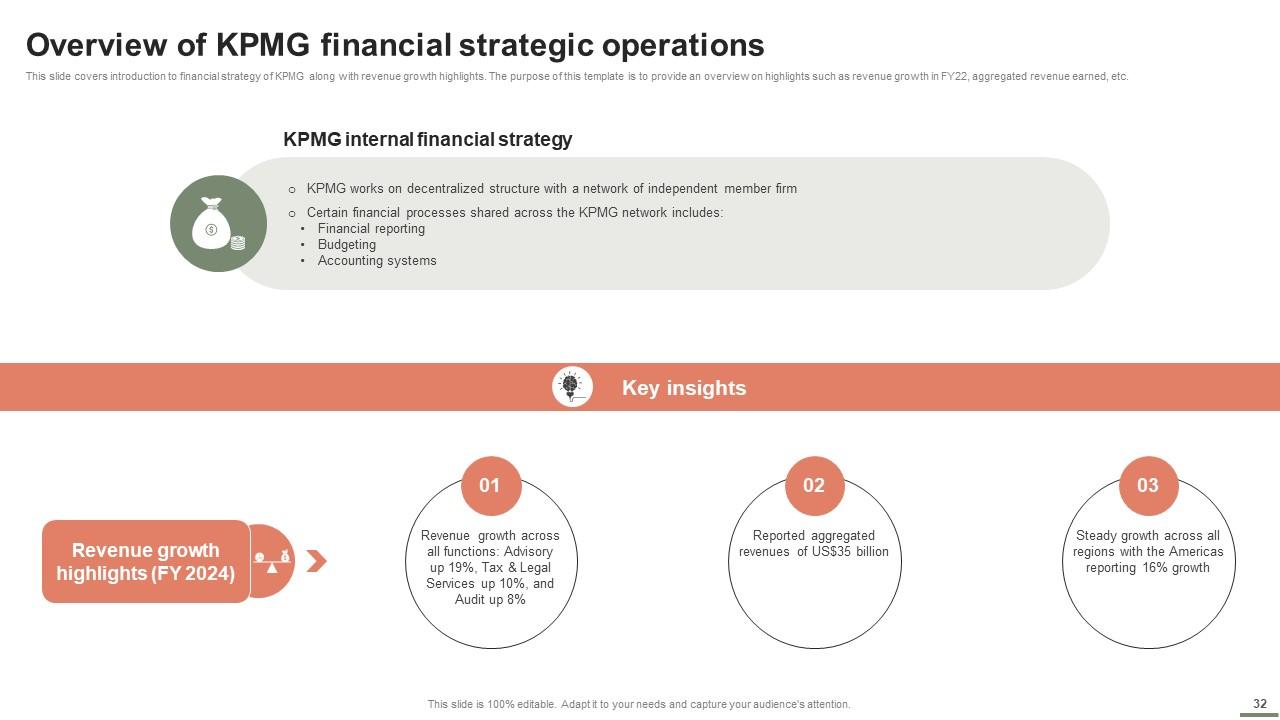
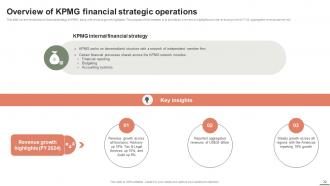
Slide 32: This slide covers introduction to financial strategy of KPMG along with revenue growth highlights.
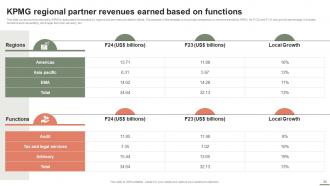
Slide 33: This slide covers revenue earned by KPMG’s associated firms based on regions and services provided to clients.
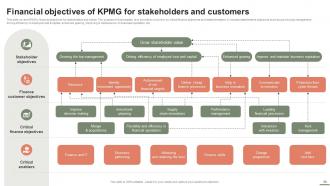
Slide 34: This slide covers KPMG’s financial objectives for stakeholders and clients.
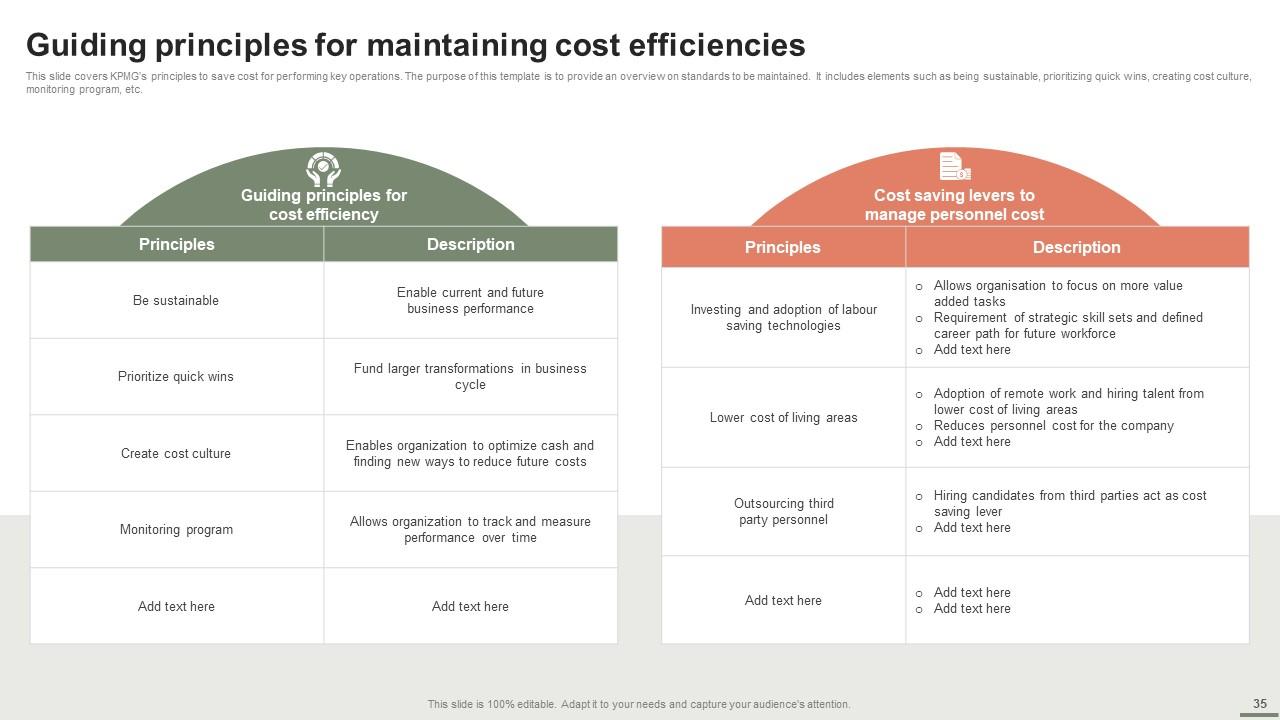
Slide 35: This slide covers KPMG’s principles to save cost for performing key operations.
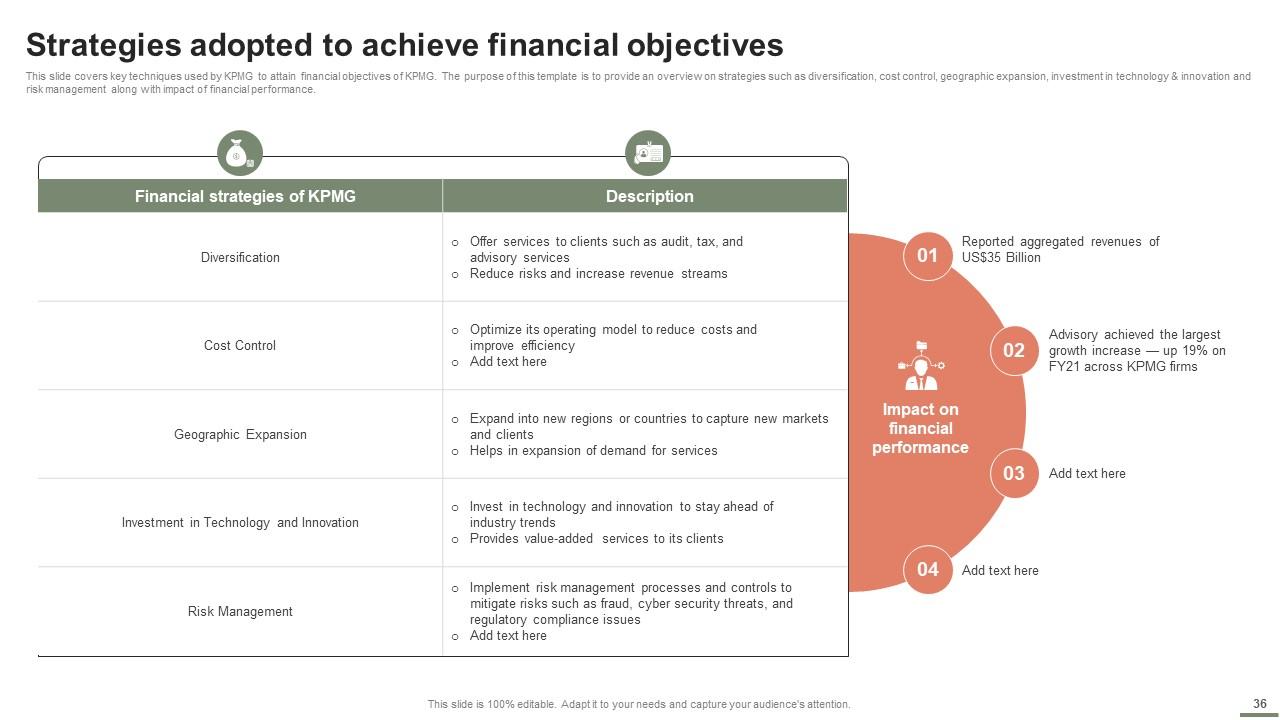
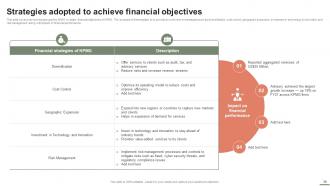
Slide 36: This slide covers key techniques used by KPMG to attain financial objectives of KPMG.
Slide 37: The slide continues Table of contents.
Slide 38: This slide covers canvas business model of KPMG company.
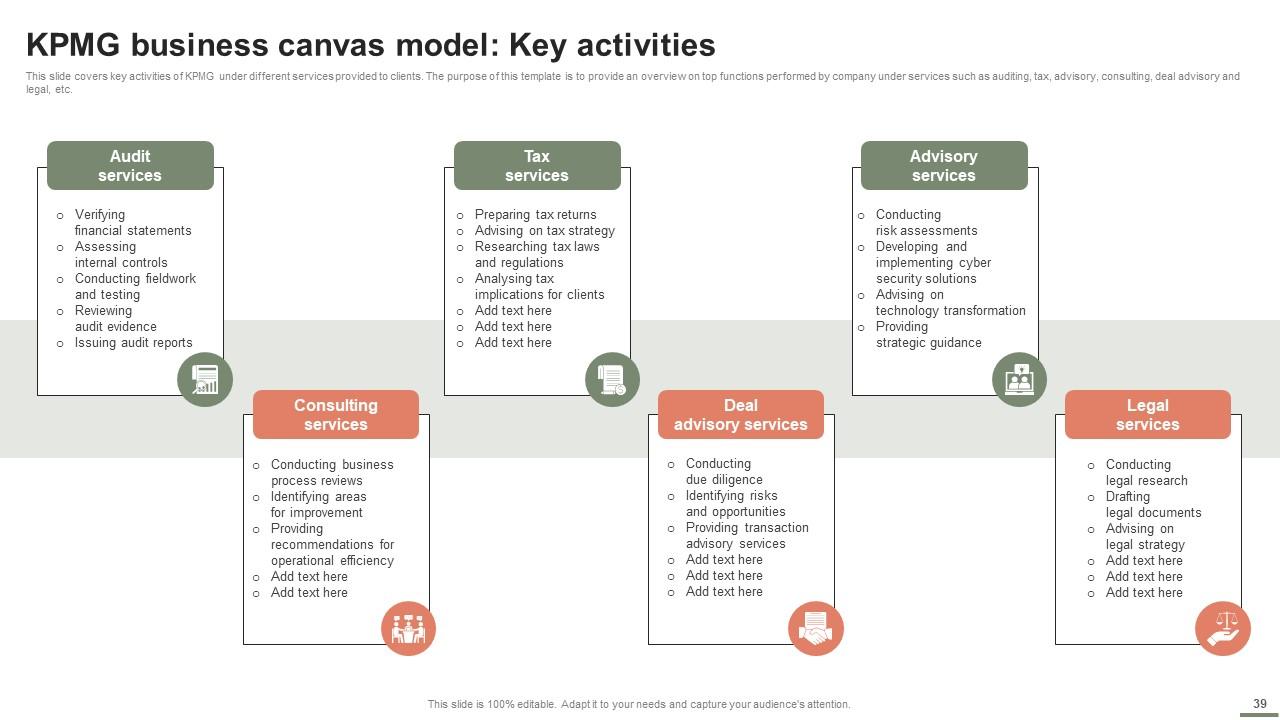
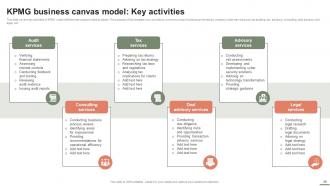
Slide 39: This slide covers key activities of KPMG under different services provided to clients.
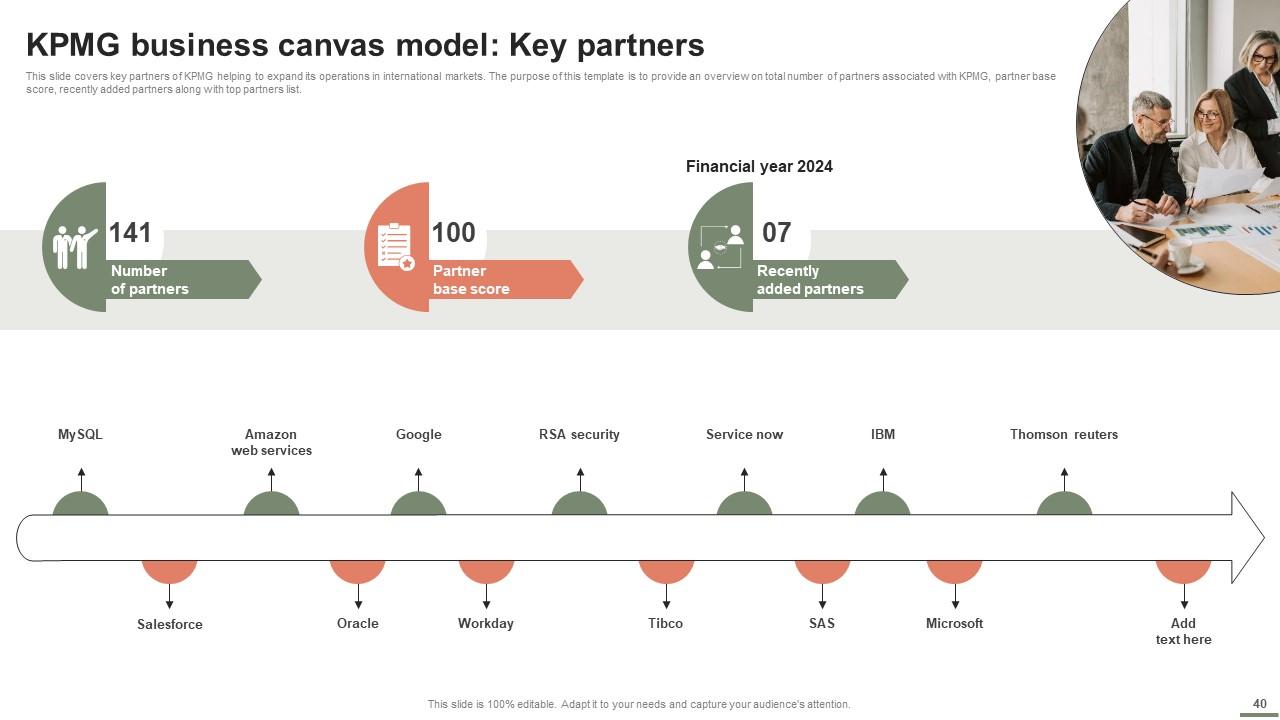
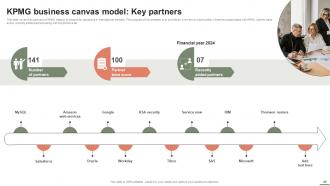
Slide 40: This slide exhibits key partners of KPMG helping to expand its operations in international markets.
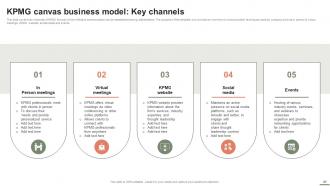
Slide 41: This slide shows key channels of KPMG through which effective communication can be established among stakeholders.
Slide 42: This slide contains key elements of value proposition under KPMG canvas business model.
Slide 43: The slide again displays Table of contents.
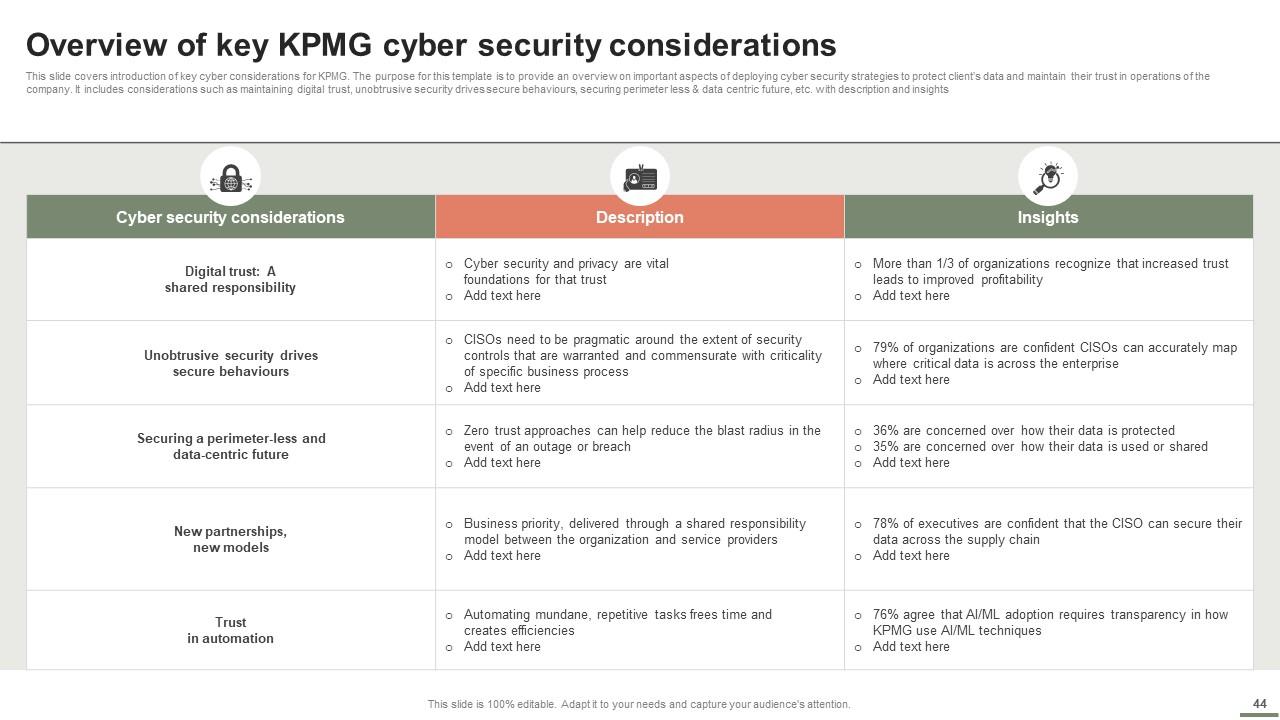
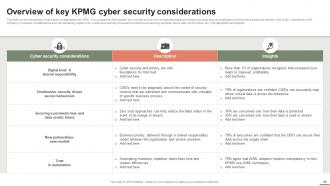
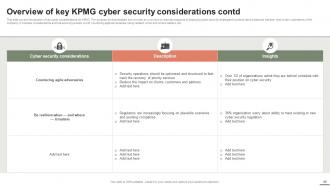
Slide 44: This slide covers introduction of key cyber considerations for KPMG.
Slide 45: This slide renders introduction of key cyber considerations for KPMG further.
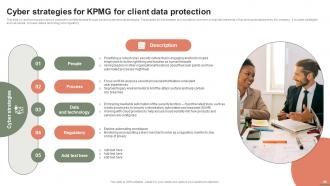
Slide 46: This slide describes techniques to secure customers confidential data through several cyber security strategies.
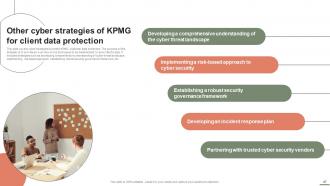
Slide 47: This slide covers cyber strategies to protect KPMG customer data protection.
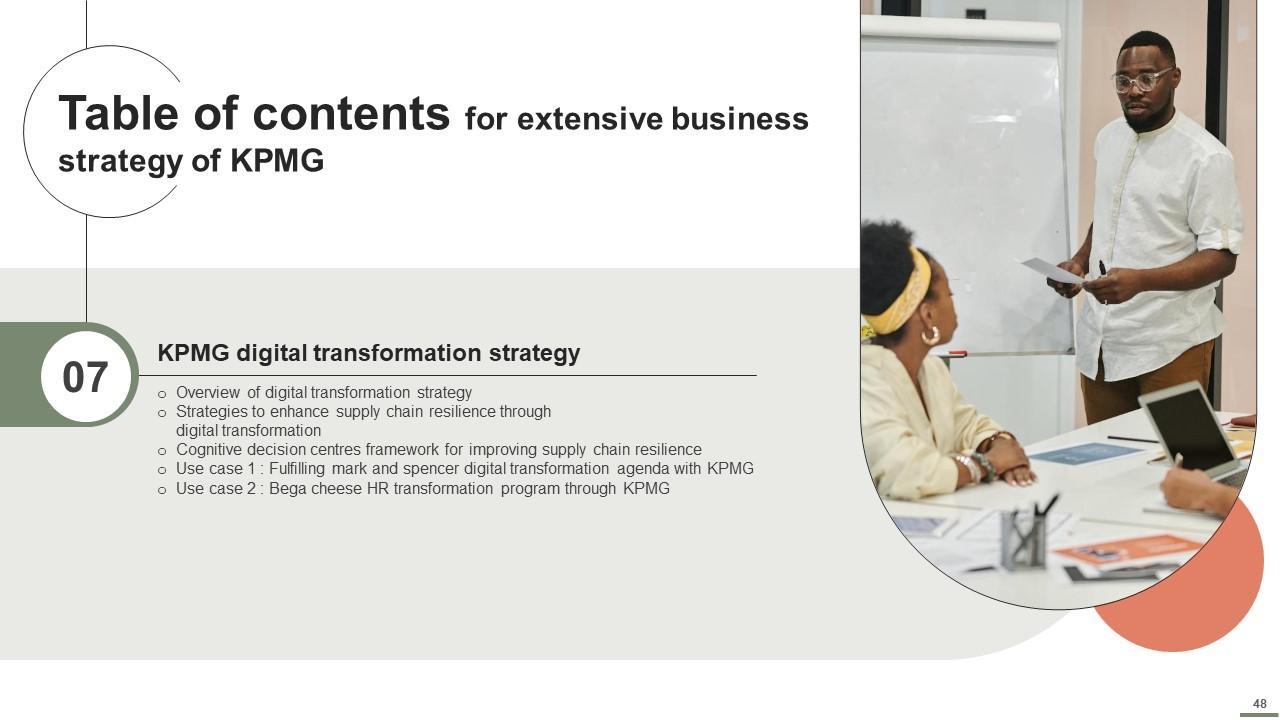
Slide 48: The slide highlights Table of contents further.
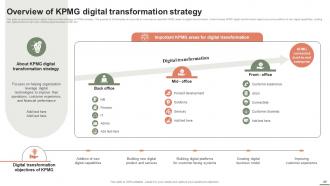
Slide 49: This slide covers introduction to digital transformation strategy of KPMG company.
Slide 50: This slide shows techniques to improve supply chain resilience via digital transformation.
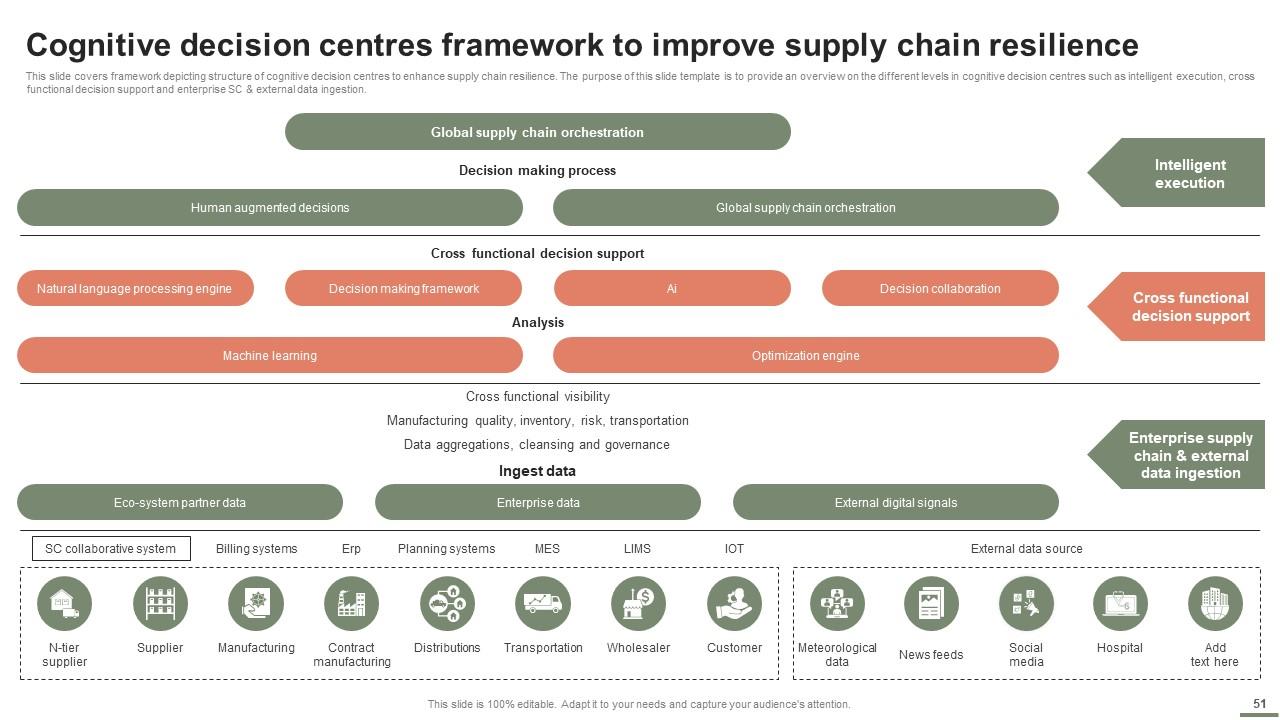
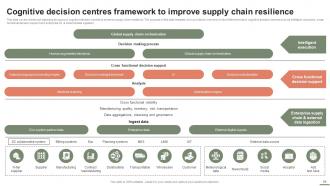
Slide 51: This slide covers framework depicting structure of cognitive decision centres.
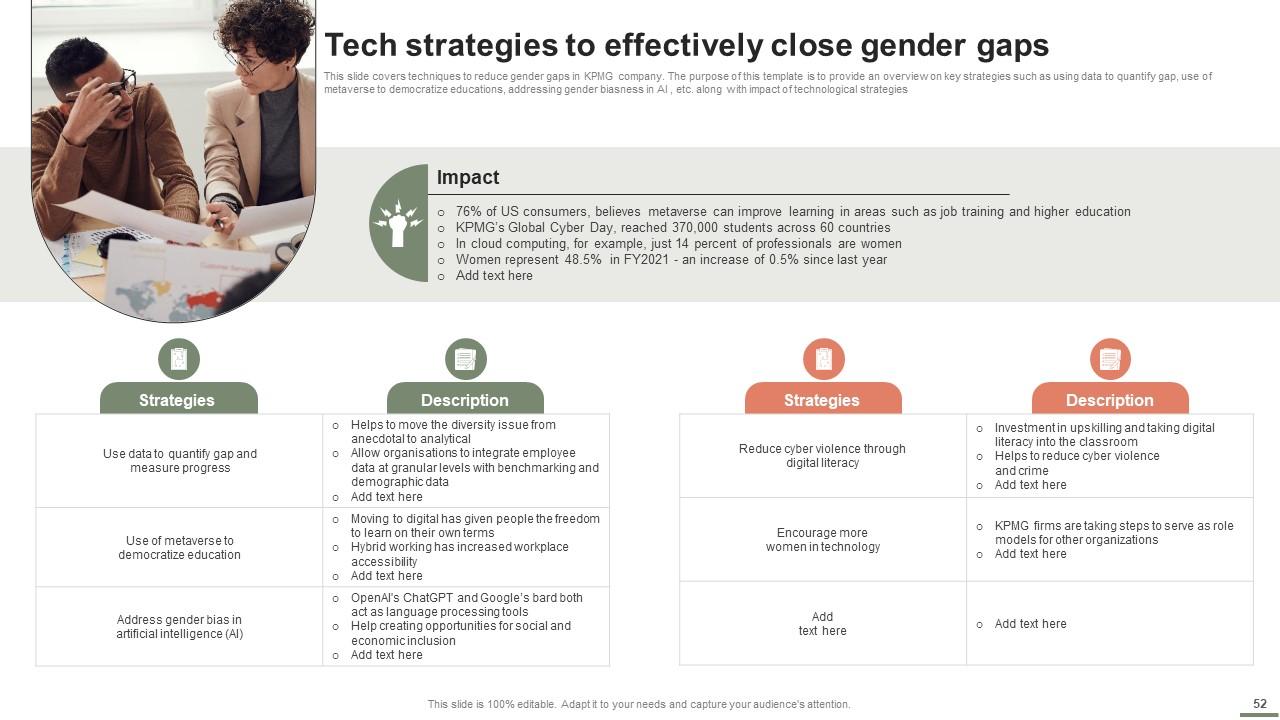
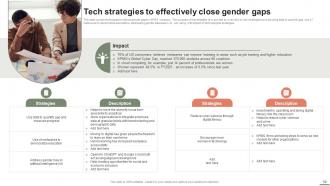
Slide 52: This slide demonstrates techniques to reduce gender gaps in KPMG company.
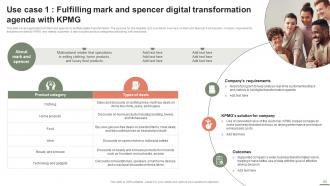
Slide 53: This slide covers applications of Mark and spencer to facilitate digital transformation.
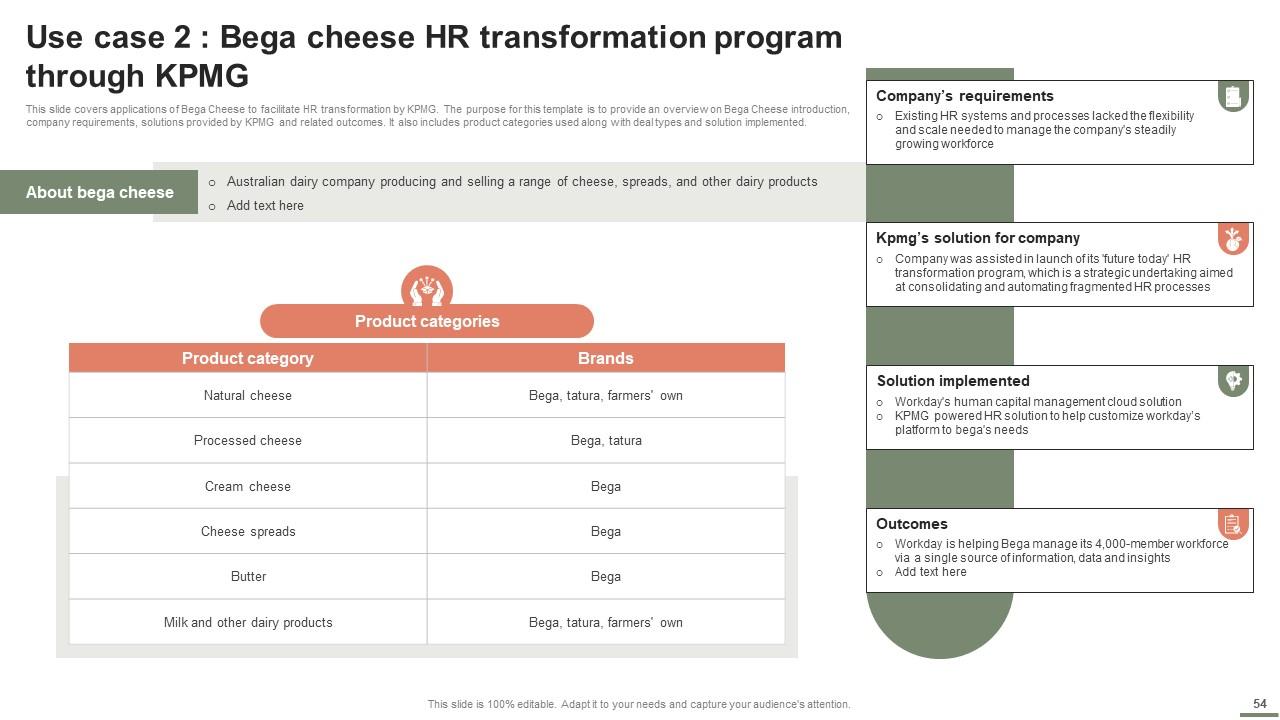
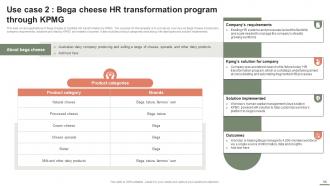
Slide 54: This slide contains applications of Bega Cheese to facilitate HR transformation by KPMG.
Slide 55: The slide shows Table of contents which is to be discussed further.
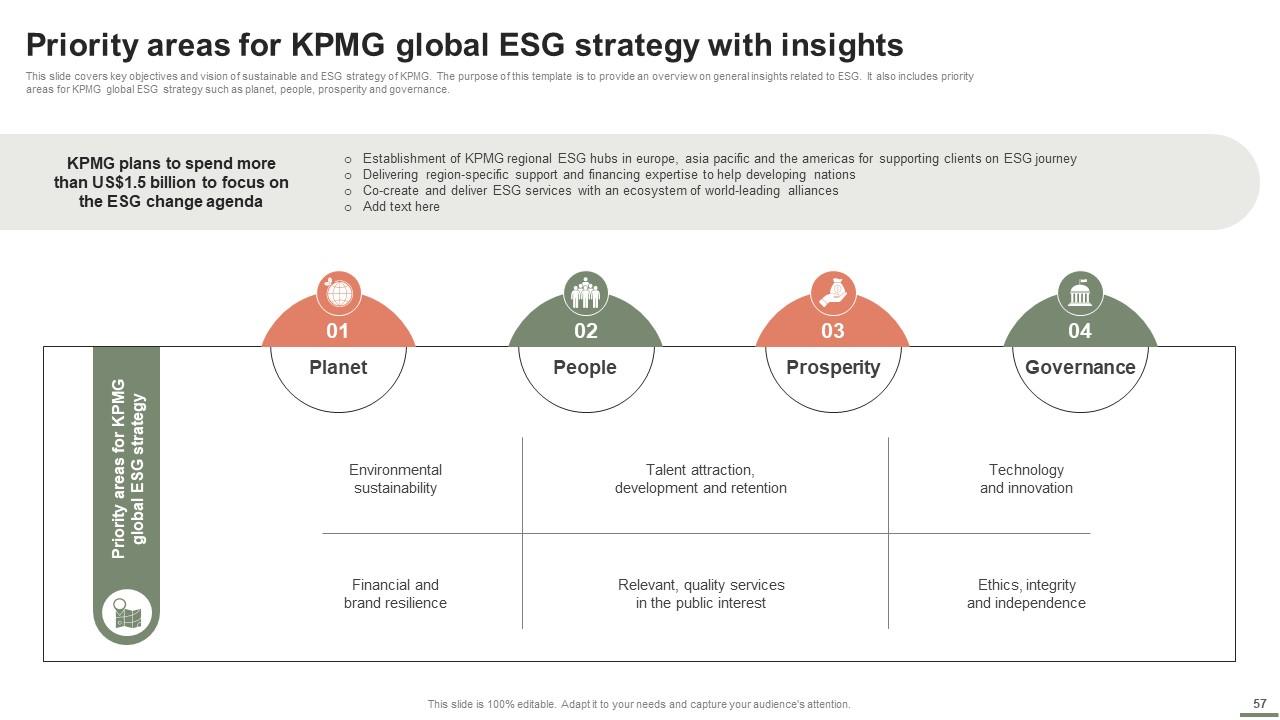
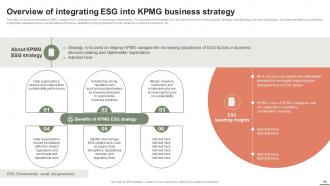
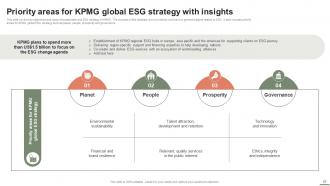
Slide 56: This slide covers key objectives and vision of sustainable and ESG strategy of KPMG.
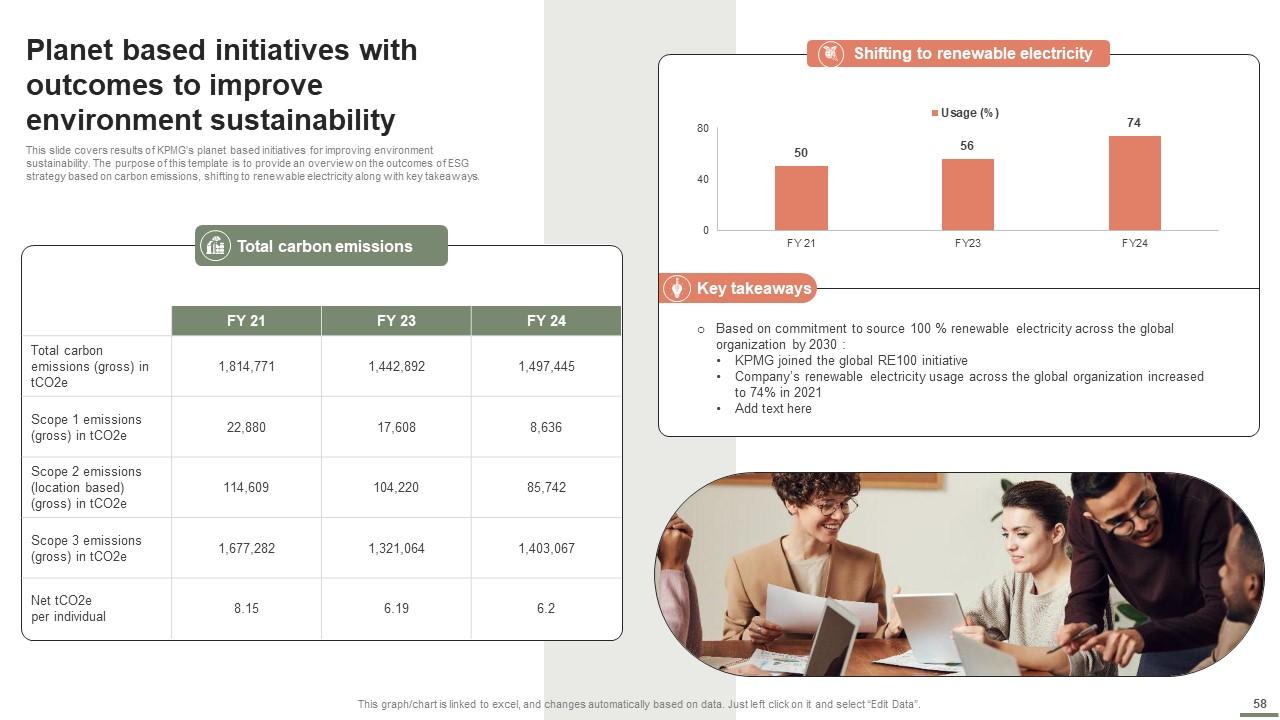
Slide 58: This slide renders results of KPMG’s planet based initiatives for improving environment sustainability.
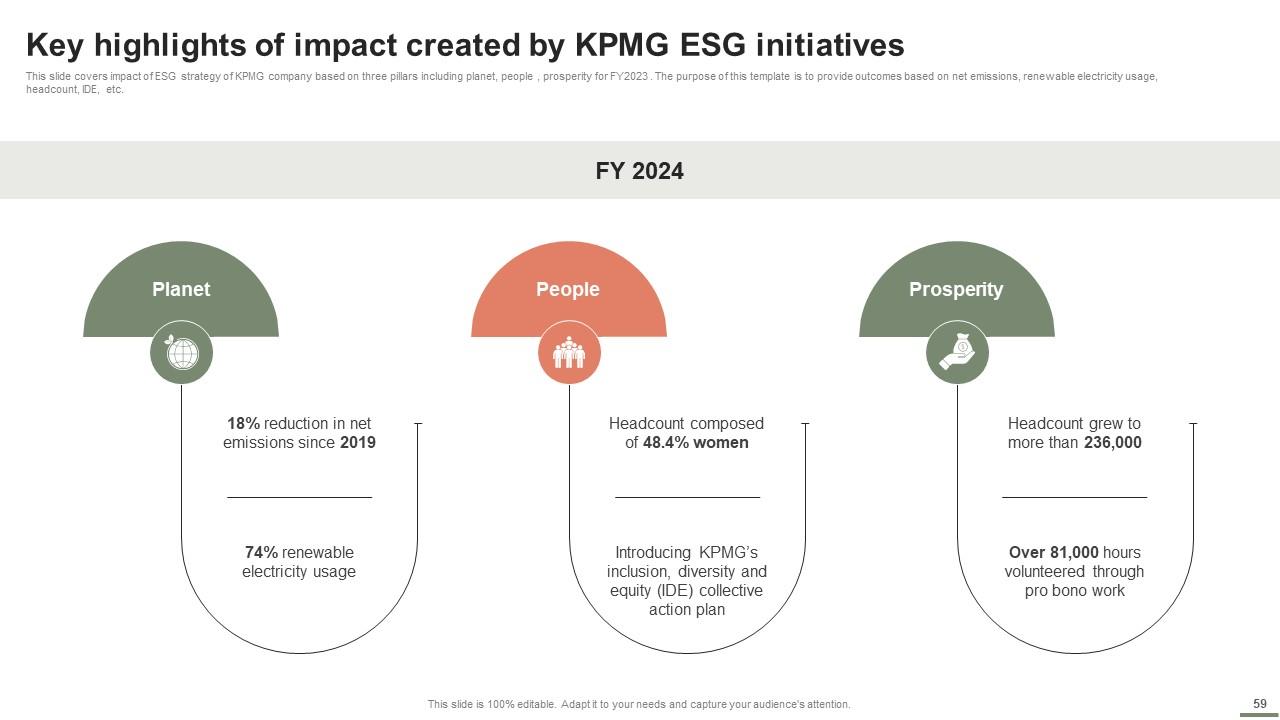
Slide 59: This slide highlights impact of ESG strategy of KPMG company based on three pillars.
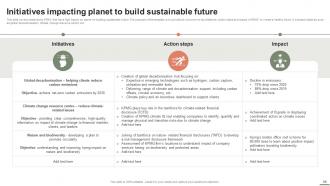
Slide 60: This slide presents initiatives by KPMG that have high impact on planet for building sustainable future.
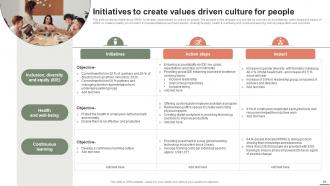
Slide 61: This slide showcases key initiatives by KPMG to develop values based on culture for people.
Slide 62: This slide shows all the icons included in the presentation.
Slide 63: This slide is titled as Additional Slides for moving forward.
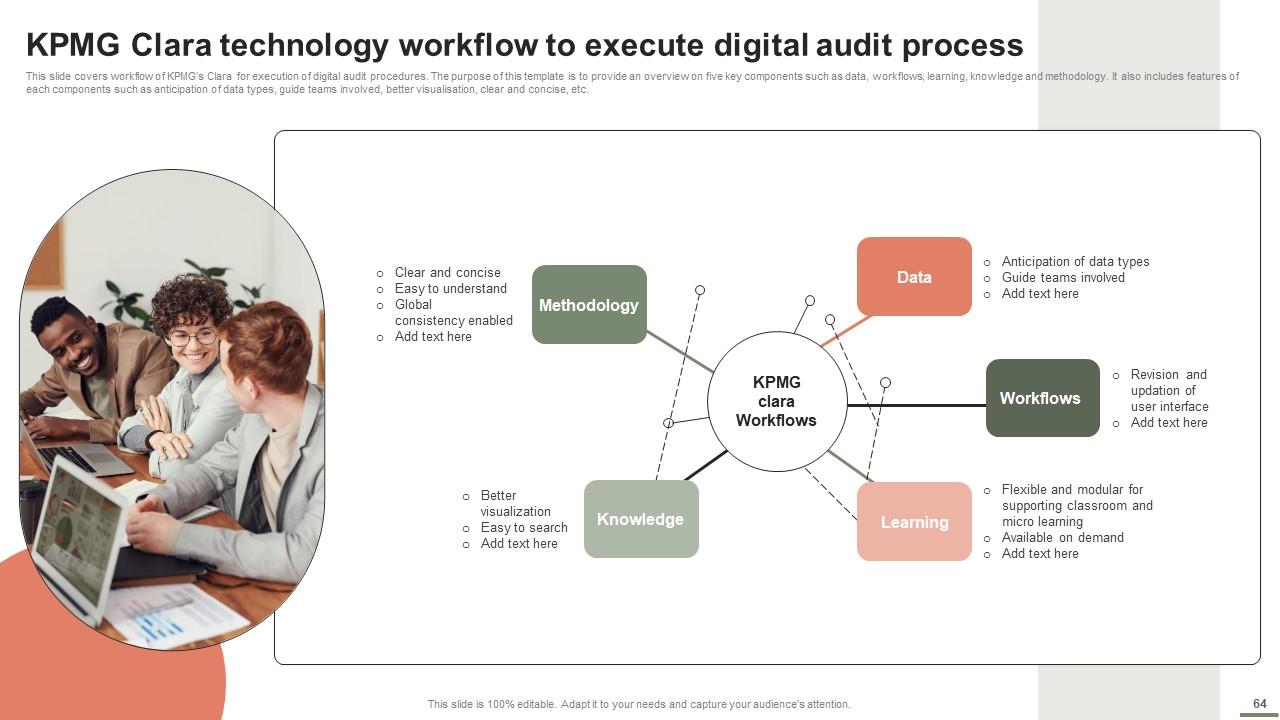
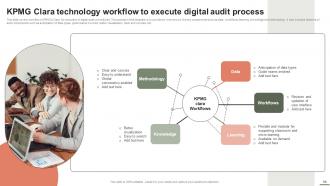
Slide 64: This slide covers workflow of KPMG’s Clara for execution of digital audit procedures.
Slide 65: This is About Us slide to show company specifications etc.
Slide 66: This is Our Mission slide with related imagery and text.
Slide 67: This slide displays Mind Map with related imagery.
Slide 68: This is a Comparison slide to state comparison between Facebook users and twitter users.
Slide 69: This slide contains Puzzle with related icons and text.
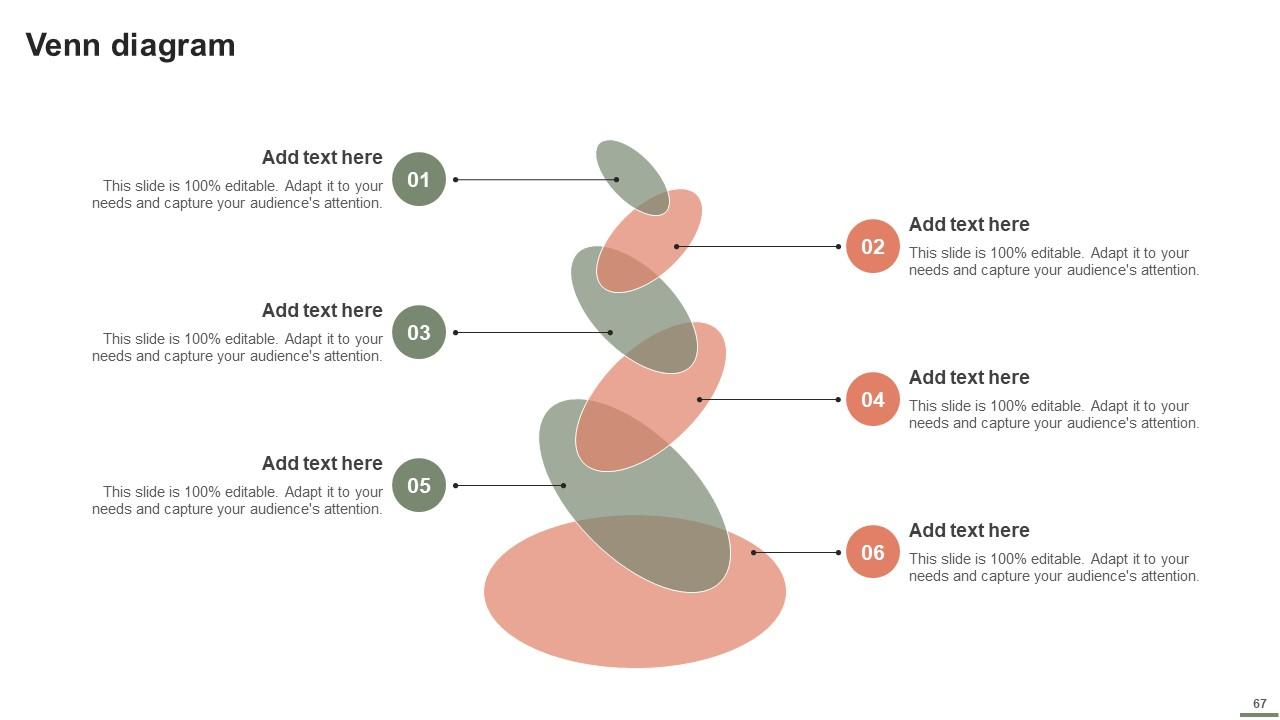
Slide 70: This slide depicts Venn diagram with text boxes.
Slide 71: This slide shows Post It Notes. Post your important notes here.
Slide 72: This slide displays Column chart with two products comparison.
Slide 73: This is Our Team slide with names and designation.
Slide 74: This is a Thank You slide with address, contact numbers and email address.
Extensive Business Strategy Of KPMG Powerpoint Presentation Slides Strategy CD V with all 77 slides:
Use our Extensive Business Strategy Of KPMG Powerpoint Presentation Slides Strategy CD V to effectively help you save your valuable time. They are readymade to fit into any presentation structure.
-
This visual representation is stunning and easy to understand. I like how organized it is and informative it is.
-
I can always count on your designs for my professional needs. I believe I found a one-stop-shop for PPTs.
