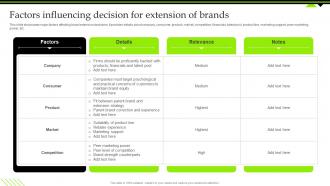
Factors Influencing Decision For Extension Of Brands Introduction To Extension Strategy
Try Before you Buy Download Free Sample Product
Audience
Editable
of Time
This slide showcases major factors affecting brand extension decisions. It provides details about company, consumer, product, market, competition, financials, talent pool, product line, marketing support, peer marketing power, etc.
People who downloaded this PowerPoint presentation also viewed the following :
Factors Influencing Decision For Extension Of Brands Introduction To Extension Strategy with all 6 slides:
Use our Factors Influencing Decision For Extension Of Brands Introduction To Extension Strategy to effectively help you save your valuable time. They are readymade to fit into any presentation structure.
FAQs for Factors Influencing Decision For Extension Of Brands Introduction
Honestly, it's all about three things: does it actually fit your brand, is there real demand, and can you execute it well? Like, when people see your new product they shouldn't be confused - it should make total sense. I've watched so many companies fail because they launched stuff just because they could, not because anyone actually wanted it. Your existing brand power has to transfer over meaningfully. Don't cheap out on quality or marketing either. Oh, and definitely test it with your current customers first - they'll shut down a bad idea real quick if it feels off.
Start with 2-3 core messages that don't change no matter what you're launching. Make a brand bible with your tone, visuals, messaging - but here's the thing, actually make people use it. I've watched so many just sit there doing nothing. Train everyone so they're all talking the same way. Set up reviews where teams can spot weird inconsistencies before stuff goes live. Oh, and pick someone to be the brand police - they need power to say "nope, that's not us" when something feels wrong. Honestly, that last part's probably the most important.
Honestly, consumer perception will make or break your brand extension faster than you think. People need to see a logical connection between your main brand and whatever new thing you're launching. Google nailed this with Maps and Gmail - total sense. But remember Google+? Yeah, that bombed because it felt completely random for them. Here's the thing though - if your extension feels forced, customers will shut it down immediately. They're pretty ruthless about this stuff. You want your audience thinking "oh yeah, of course they'd make that" when they see your new product. I'd definitely run some focus groups first before you dump money into it. Way better to find out early if people think you've lost your mind.
Build off what your customers already love about you - make the connection to your brand values super obvious. Honestly, I've watched so many companies crash and burn by straying too far from what made them special in the first place. Survey your best customers first to see what they'd actually want from you. Then give them insider access before anyone else gets it. Use your email lists and customer data for targeted launches. The whole trick is making loyal fans feel like this new thing was created just for them. Don't overthink it.
Honestly, the biggest risk is just confusing people about what your brand actually does. Like when celebrities randomly start selling pasta sauce - nobody gets it. You'll also water down what makes you special if you stretch too far. Brand extensions can totally backfire if they compete with your main products too. I've seen companies accidentally hurt their bestsellers this way. My advice? Stay close to what you're already good at. Maybe run a small test first before going all-in. The connection should feel obvious - if you're explaining why it makes sense for ten minutes, it probably doesn't.
Honestly, market research is what stops you from throwing money at a terrible idea. Focus groups will tell you if people think your brand makes sense in that new space - some extensions feel obvious, others just confuse everyone. I'd start there, then do surveys to back it up with real numbers. You'll also figure out what people expect to pay, which is huge. Companies always think customers will follow them into any category, but that's not how it works. Oh, and you might discover competitors you didn't even know existed. Don't skip this step - I've watched too many brands crash because they assumed wrong.
Honestly, keeping your brand values consistent is everything when you're extending into new stuff. Without that thread connecting things, customers get confused and you end up watering down what actually worked in the first place. Crystal Pepsi, anyone? That was a disaster. Your core values are like bumpers at a bowling alley - they keep you from going completely off track. New products need to feel authentic to people who already buy from you. Quick gut check before launching anything: would my existing customers look at this and think "yeah, that makes sense for this brand"? If not, don't do it.
Apple's the perfect example - they went from computers to iPods to iPhones because design was always their thing. Virgin's wild too, jumping from music to airlines to literal space travel, but it works since they're all about shaking up boring industries. Disney crushed it expanding from cartoons to theme parks to cruises. Honestly, the biggest mistake is chasing money instead of staying true to your brand. You've got to figure out what your brand actually means to people first. Then find categories where that same vibe would make sense. Don't just pick whatever's profitable - it'll backfire if it feels fake.
Check your usual numbers first - sales, market share, profits vs what you projected. But here's what people miss: you've gotta survey customers and monitor social media to see if this new thing is hurting your main brand. Cannibalization is brutal and sneaks up on you. Track how much you're spending to get new customers for this product line, plus retention rates. Honestly, quarterly check-ins saved my butt when I launched something similar. Compare everything to your pre-launch data and don't be stubborn about changing course if customers start associating weird stuff with your brand.
Lifestyle brands totally crush this game - fashion, food, personal care, that whole world. People already feel connected to those brands emotionally, so it's way easier to picture them doing new stuff. Disney's probably the gold standard here, jumping from movies to theme parks to basically everything else. Tech companies do pretty well too when there's obvious overlap. Apple nailed it going computers → phones → watches. Makes total sense, right? Honestly though, the biggest thing is just staying true to what your brand actually stands for. Don't just throw your logo on random crap and hope it works.
Honestly, just think about what you're already known for. Tesla killed it with cars, so moving into energy storage was a no-brainer - same tech, different product. That's vertical. But Disney? They went horizontal because parents basically trust them with anything kid-related, doesn't matter if it's movies or theme parks or whatever. Here's what I'd do - listen to how your customers actually talk about you when they're telling their friends. That weird little detail usually tells you which direction makes sense. Also, don't overthink it too much, you know?
So first thing - definitely track brand awareness stuff, both aided and unaided recall. Brand perception surveys are clutch too, focusing on quality and trust scores. Customer acquisition costs will tell you if this extension is actually helping your main brand or just creating confusion (honestly happens more than you'd think). Revenue cannibalization is probably the biggest thing though - people might just be switching from your original products instead of bringing in new sales. Also track social sentiment and your share of voice. Oh, and set this all up before you launch so you can actually see what changed. Monthly dashboard makes it way easier to spot trends.
Honestly, social media is huge for brand extensions - it'll make or break you. When people love something, the buzz spreads crazy fast and builds real momentum. But if they hate it? Oof, you've seen those viral disasters where products get absolutely roasted before they even launch. Here's the thing - everyone can voice their opinion instantly now. Comments, shares, reviews... it all influences what other people think. You basically lose control of your own story. My take? Watch social sentiment like a hawk during launch. Have a game plan ready for both damage control AND boosting the good stuff when it happens.
Oh yeah, cultural stuff can totally tank your brand extension if you're not careful. Like, what works here might be completely wrong somewhere else. I remember reading about how white means purity to us but represents death in parts of Asia - yikes. A luxury brand going mainstream? Could work great in places where everyone's equal, but bomb somewhere that's all about status. Your colors, messaging, even the whole vibe could offend people without you realizing it. Definitely test things out with local groups first and maybe find someone who actually gets the culture there to help you out.
Start with what customers already love about your brand, then add just enough new stuff to keep it interesting. Apple nailed this going from iPod to iPhone - kept that clean design language but added crazy new features. First, figure out what people actually associate with you (the non-negotiables). Those need to stay. Everything else? Fair game for experimenting with features or how it looks. Honestly, I'd map out what you can't touch vs. where you can play around. Then test some rough ideas with your current customers early on - they'll tell you if you're going too far or not far enough.
-
SlideTeam’s pool of 2Million+ PPTs has really benefited my team, everyone from the IT department to HR. We are lucky to have crossed ways with them.
-
I'm happy to discover your PowerPoint presentations and templates. They met my expectations precisely. Very innovative!