


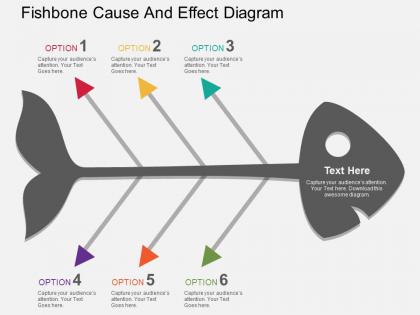
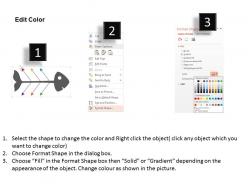
Fishbone cause and effect diagram flat powerpoint design




Try Before you Buy Download Free Sample Product
 Impress Your
 Audience
 100%
100% Editable
 Save Hours
 of Time


Realistic in design and practical in approach is what is termed as the USP of our fishbone cause and effect diagram flat PowerPoint design. Make use of this Ishikawa PPT PowerPoint presentation model to develop a comprehensive list of causes. Preparation and delivering of proper cause and effect PowerPoint presentation example ensures a step ahead in the remedial path. Either you will get a transparent solution to your problem or at least you will be able to come up with more exploration options to solve the issue further. Construct a CE cause and effect Fishikawa PPT diagram whenever there is need to investigate the causes or factors contributing towards an effect which is of concern to your organization. The benefits of using a fishbone tool PowerPoint model are that you will be able to concentrate the attention of your team towards a specific problem area. Secondly, it will help you in pooling, reflecting back and thinking and thirdly you can actually construct a picture of the problem on our predesigned slide, without undergoing the hassle of compiling a flowchart.Coil your thoughts around our Fishbone Cause And Effect Diagram Flat Powerpoint Design. Create a magnetic effect on your audience.
People who downloaded this PowerPoint presentation also viewed the following :
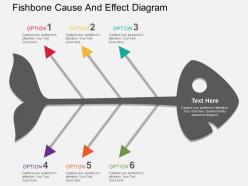
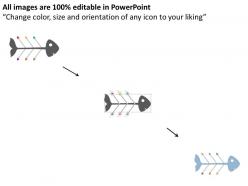
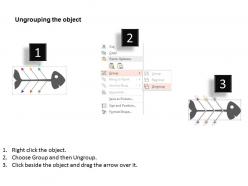
Fishbone cause and effect diagram flat powerpoint design with all 4 slides:
Empires are made in a second in the presentation world. These Fishbone Cause And Effect Diagram Flat Powerpoint Design are designed to make you look like a king.
FAQs for Fishbone cause and effect diagram
So basically, a fishbone diagram helps you find the actual root causes instead of just slapping band-aids on symptoms. Draw a skeleton with your problem as the head, then branch out different cause categories like people, process, materials, equipment - stuff like that. Honestly, it's weirdly fun to map out once you get going. Your team won't jump straight to the obvious answer and miss something important. Forces you to think through everything systematically, which... let's be real, most of us don't naturally do. Try it next time you're stuck on a problem - it actually works.
Honestly, fishbone diagrams are perfect for this - they stop your brainstorming from turning into total chaos. You can give each person their own "bone" to focus on instead of everyone just yelling random stuff. Quieter people actually participate more because there's a clear visual structure. It's weird how well it works. Plus nobody can dominate the conversation when everyone has their own category to own. I'd try giving each person or small team a specific section next time you meet. Way better than the usual free-for-all approach most teams do.
So basically you've got the "head" (your actual problem), then the "spine" (that main arrow), and all the "bones" branching off it. Most people use 6 categories - People, Process, Equipment, Materials, Environment, Methods. Though honestly, you can swap these out depending on what industry you're in. Each bone gets filled with specific causes that roll up into those bigger buckets. The whole diagram flows toward your main issue, showing how everything connects. I'd start with your problem and work backwards - you'll spot patterns you might've missed otherwise. Makes the whole mess way clearer.
You'll see fishbone diagrams everywhere - manufacturing, healthcare, software dev. Manufacturing teams use them for quality issues like defective parts. Healthcare applies them to patient safety incidents. Software folks love them for debugging system failures. They work so well because these industries deal with messy, multi-layered problems where you can't just wing it and hope for the best. I actually got hooked on them after using one to figure out why our printer kept jamming (turned out it was three different things). Try sketching one next time you're stuck on something tricky. You might be shocked what pops up.
Fishbone diagrams are great for brainstorming every possible cause upfront - you know, looking at people, process, materials, all that stuff. Gets you the big picture. 5 Whys is totally different though. It's like a drill that keeps asking "why" to dig deep into one specific chain. Honestly, I've seen people miss obvious stuff using just 5 Whys because they get tunnel vision. Start with Fishbone when you're completely stuck and need ideas. Then once you spot the most likely culprits, switch to 5 Whys to really dig in. Works way better that way.
Don't be vague about what problem you're actually solving - that's where most people mess up. Get your whole team in the room because you'll miss obvious stuff working alone. I've seen people throw completely random causes on there that make zero sense, so make sure everything actually connects. Here's what really matters though: keep digging deeper with "why" questions instead of just listing surface symptoms. Oh, and definitely nail down your problem statement first and get everyone on the same page before you start. Trust me on this one.
Start by putting your actual problem at the fish head, then map out potential causes using the main categories - People, Process, Materials, Equipment, Environment, Methods. Get your whole team in on this because honestly, they'll spot stuff you'd never think of. Don't shut down ideas while brainstorming, even the weird ones. Just dump everything onto the diagram first. After you've got all the bones filled out, pick the most realistic causes and keep asking "why" to dig deeper. Oh, and make sure you back up your hunches with actual data before you start fixing things.
Look, without data your Fishbone diagram is basically just fancy guessing. I've been down that road - it's not fun. You'll waste hours chasing problems that don't actually exist while the real issue sits there laughing at you. Get metrics for each branch first, then build your diagram. That way you can see which causes are genuinely happening vs. the ones that just *seem* problematic. The data shows you what's actually impacting your process. Otherwise you're solving the wrong puzzle entirely, which honestly happens more than anyone wants to admit.
Yeah, totally works! Digital fishbone diagrams are honestly way better than trying to decipher everyone's chicken scratch on a whiteboard. Miro's my go-to - super easy to use and your team can jump in from wherever. Lucidchart works too if you want something more polished. The best part? You can move stuff around without erasing everything and starting over like some kind of caveman. Oh, and if you're stuck with Microsoft everything at work, Visio does the job. Just grab a template first - trust me, don't waste time building the skeleton from scratch.
Pick categories that actually match your problem - don't just copy-paste the usual 6Ms if they don't fit. Like, if you're dealing with customer service issues, People/Process/Technology makes way more sense than Material and Machine, you know? I'd aim for 4-6 broad areas that cover everything without overlap. Start by thinking what could realistically cause this mess, then group those into buckets your team gets. The classic framework is fine as a starting point, but honestly? Your categories should feel natural for what you're actually trying to solve.
Honestly, you can't just trust your brainstormed ideas - you need real data to back them up. Grab some measurements, run surveys, or dig through old records to see which causes are actually happening. The 5 Whys technique works great for drilling down into your top suspects. Quick pilot tests are super helpful too - try fixing one thing and see if it actually moves the needle. Oh, and definitely get someone who wasn't in your original session to take a look. Fresh perspective catches stuff you're blind to. Focus on maybe 2-3 causes max instead of trying to validate everything.
Fishbone diagrams work great in both Lean and Six Sigma - I've seen teams use them all the time during the Analyze phase of DMAIC or when they're doing gemba walks. For Lean stuff, they're perfect for tracking down root causes of the seven wastes like overproduction and waiting. Six Sigma folks love them for brainstorming potential causes before diving into all the statistical work. They're honestly one of those tools that just works everywhere. Oh, and definitely get your whole cross-functional team involved when you're mapping it out - you'd be surprised how many obvious causes people miss when it's just one person thinking through it.
So Toyota basically perfected this with their manufacturing - they'd map out every possible reason for defects, then go fix them one by one. Works crazy well in other places too. This one hospital cut patient falls by 60% after realizing it was stuff like bad lighting and nurses not talking to each other properly. Manufacturing companies? They're cutting downtime by like 30-40% with this method. The catch is you can't just draw the thing and walk away (trust me, I've seen people try). You actually have to dig into each cause and test fixes. Pick something that's bugging you and give it a shot!
Yeah, cultural stuff totally impacts how teams use Fishbone diagrams. Direct cultures jump straight to root causes, while others want consensus first - takes forever but whatever works, right? Some teams get super uncomfortable discussing failures or anything that looks like blame. Power distance is huge too. People from hierarchical cultures won't speak up if it might make leadership look bad. I'd set up psychological safety first, make it clear you're analyzing processes not people. Try individual brainstorming before group work - you'll get way more honest input that way.
Okay so first thing - explain the problem super clearly upfront. Then go through each "bone" systematically instead of hopping around like a maniac (I've watched so many people confuse their audience doing this). Focus on your biggest root causes and actually back them up with real data or examples. Colors help tons for highlighting key stuff. You don't need to cover every single thing you brainstormed - honestly, less is more here. Wrap up by giving them 2-3 concrete next steps for tackling the top causes you found. That's what people really want anyway.
-
Wonderful templates design to use in business meetings.
-
Great experience, I would definitely use your services further.